“Myrto” under Scientific Evaluation: Transparency, Evidence and Human Oversight in Social Navigation for Oncology Patients

“Myrto” under Scientific Evaluation: Transparency, Evidence and Human Oversight in Social Navigation for Oncology Patients

The first closed scientific testing workshop of the Digital Health and Social Rights Navigator has been completed

Athens, 6 July 2026

The first closed scientific testing and evaluation workshop of “Myrto”, the Digital Health and Social Rights Navigator developed by the Cancer Patient Guidance Centre – Kapa3, was successfully completed.

The workshop was organised by the Cancer Patient Guidance Centre – Kapa3, with the support of René Descartes – Cnam College and the participation of SimasiaAI. It functioned as a dynamic scientific co-design workshop, bringing together specialised professionals from the fields of healthcare, social care, information technology and personal data protection.

The process was closed and strictly experimental in nature and did not constitute a public presentation of a completed product. Its purpose was to evaluate the behaviour of the application through hypothetical and fully anonymised scenarios, to record correct responses and areas requiring improvement, and to use expert feedback for the next phase of development.

The project “Myrto – Health and Social Rights Navigator” is being developed as a knowledge-based digital social navigation system, guided by the principles of explainable, transparent and human-centred Artificial Intelligence.

Its aim is to transform complex legal, administrative and social information into clear, evidence-based and practically useful guidance for oncology patients, caregivers and citizens.

“Myrto” does not replace professional social, legal, medical or clinical judgement. It operates as a supportive information and navigation tool, with clearly defined functional boundaries, human oversight and the possibility of referral to the competent services and professionals of Kapa3.

The programme is implemented with the support of the TIMA Charitable Foundation.

From Information to Understandable Knowledge

During the workshop, the need that led to the creation of “Myrto” was presented, along with the real barriers faced by patients and caregivers when seeking information on social rights, benefits and administrative procedures.

Particular emphasis was placed on addressing digital and informational exclusion. “Myrto” is designed to transform fragmented and often difficult-to-understand information into simple, structured and comprehensible guidance.

A Thematically Specialised and Curated Knowledge Base

The project’s technical partner, SimasiaAI, presented the operation of the application and the architecture used for information retrieval and synthesis.

“Myrto” uses a hybrid search mechanism that combines text retrieval and semantic search techniques, with the aim of identifying the information most relevant to the user’s question. The application operates on a thematically specialised and curated knowledge base.

A central element of its design is the traceability of information, namely the ability to link an answer to the source on which it is based. The use of validated sources reduces the risk of unsupported responses and enables the identification, review and correction of issues through a process of continuous maintenance, regular updating and adaptation to evolving guidelines and regulatory requirements.

Explainability and Human-Understandable Answers

The evaluation did not focus only on whether “Myrto” retrieves the correct information, but also on whether it can present that information in a clear, understandable and conceptually coherent way.

This approach strengthens trust, responsible use of the tool and the meaningful empowerment of citizens through a response-generation system that supports a transparent, evidence-based and human-supervised knowledge ecosystem, in which every piece of information is understandable, verifiable and connected to its source.

Data Protection and Compliance by Design

Personal data protection and regulatory compliance are embedded from the design stage of the application, in accordance with the principles of data protection by default and by design.

During the workshop, only hypothetical or fully anonymised cases were used. Particular emphasis was placed on the principles of data minimisation, anonymisation and secure processing. These principles are directly linked to contemporary requirements for the responsible development of Artificial Intelligence systems, the protection of special categories of data and compliance with the European regulatory framework.

Live Testing of Hypothetical Scenarios

The professionals who participated in the workshop tested the application individually and in small groups, using only hypothetical and fully anonymised cases. The testing was based on an approach that evaluated the behaviour of the system, examining not only whether the final answer was correct, but also whether the overall operation of the application was safe, understandable and appropriate for the specific request.

Disability Certification through KEPA

In one of the key scenarios, “Myrto” was asked to guide a hypothetical patient who did not know how to start the disability certification procedure through KEPA. The system retrieved the main steps of the process, organised the information in an understandable format and provided relevant references to the sources.

Participants evaluated:

  • the accuracy of the information,
  • the completeness of the steps,
  • the clarity of the language,
  • and the practical usefulness of the answer.

Travel from the Region for Treatment

In a second scenario, the case of an oncology patient who needed to travel from the region to another location for treatment was examined. The application identified relevant categories of socioeconomic support and benefits and presented possible next steps to the user.

The test allowed participants to assess:

  • the correct identification of the request,
  • the connection between different rights and benefits,
  • the completeness of the sources,
  • and the possibility of referral to the appropriate services.

At the same time, cases were also examined in which:

  • the question was unclear or incomplete,
  • the user did not know which right or benefit to look for,
  • clarifying questions were required,
  • medical or personalised legal advice was requested,
  • or immediate human intervention was necessary.

A Continuous Cycle of Scientific Feedback

The meeting concluded with a discussion of the testing results, a review of the technical logs and the presentation of key usage statistics for the application.

The participants’ observations are not treated as isolated comments, but as structured scientific feedback for improvement. In this way, a closed cycle of learning and feedback is created, in which technology, scientific knowledge and the experience of professionals interact continuously.

The continuous involvement of experts and the integration of structured feedback are considered critical for strengthening transparency, reliability and trust in Artificial Intelligence systems used in sensitive fields.

The Interdisciplinary Project Team

The development, scientific documentation and regulatory compliance of “Myrto” are supported by an interdisciplinary team from the fields of health services administration, information technology, personal data protection, language technology and software development. The workshop was attended by:

Evangeli Bista, Co-founder of Kapa3 and Head of Strategic Partnerships; Aristea Archontidou, Industrial Informatics Engineer with postgraduate specialisation in Health Policy and Health Services Planning; Anastasia Vlachopoulou, lawyer and member of the Thessaloniki Bar Association, specialised in personal data protection; Dimitris Papadakis, Co-founder and Sales Manager at SimasiaAI and Project Manager of the “Myrto” project; and Giannis Barous, Co-founder and CTO of SimasiaAI, PhD candidate in Computer Science based in San Francisco, who has undertaken the technical component of the project: how the system identifies the right information, how it connects it with reliable sources and how it provides answers that are evidence-based, useful and safe.

About Kapa3

The Cancer Patient Guidance Centre – Kapa3 is a social support, information and navigation organisation for oncology patients, survivors, caregivers and their families. Its aim is to contribute to equal access to oncology care, social protection and the rights associated with the cancer experience.

Every day, Kapa3 supports people who face not only the disease itself, but also a range of practical, administrative, social and psychosocial challenges. Through personalised social guidance, the organisation helps patients and caregivers learn about their rights, understand available benefits and services, navigate administrative procedures and connect with appropriate support structures.

The main pillars of Kapa3’s work include information on social and insurance rights, support in accessing health and social care services, guidance on benefits and procedures, empowerment of patients and caregivers, and connection with professionals, organisations and communities.

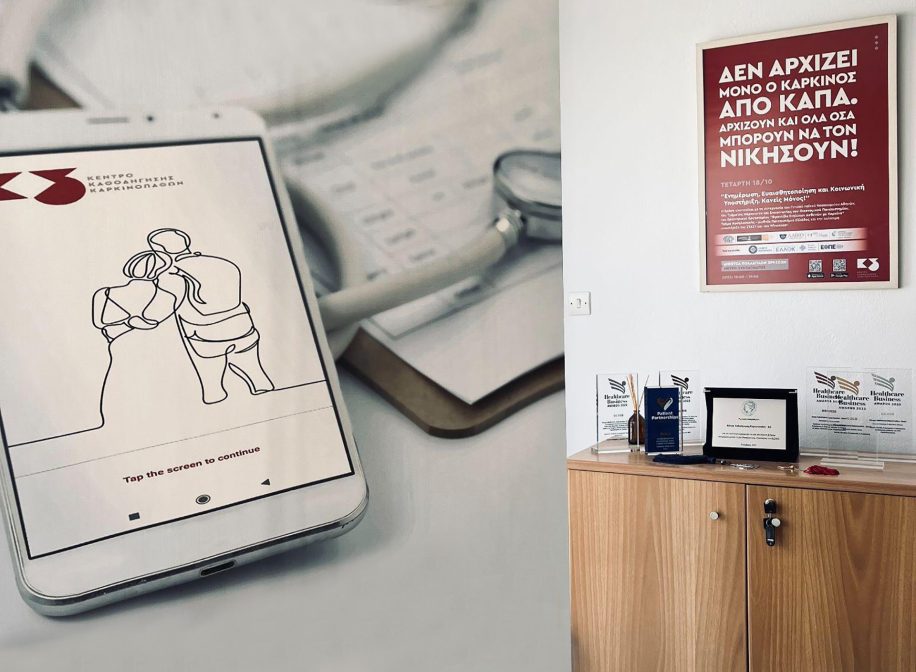
As part of its digital strategy, Kapa3 develops digital empowerment and social navigation tools, such as “Myrto”, the Digital Health and Social Rights Navigator. “Myrto” is designed to transform complex legal, administrative and social information into clear and evidence-based guidance for oncology patients, caregivers and citizens, always with human oversight, transparency and respect for the limits of technology.

Kapa3’s philosophy is based on the principle that care is not limited to medical treatment. It includes access to information, social protection, psychosocial support, dignity, empowerment and the ability of every person to know and claim their rights.

Through collaborations with health and social care professionals, academic and research institutions, civil society organisations, public structures, volunteers and communities, Kapa3 seeks to build bridges between the patient, information, services and real access.

Kapa3 Report for the First Half of 2026

As the first half of 2026 draws to a close, the Cancer Patient Guidance Center (Kapa3) continues to systematically expand its reach, thereby strengthening the system of care and information for both cancer patients and their caregivers.

During the first half of the year, the organization implemented a series of high-level initiatives and forged partnerships at both the national and European levels, thereby solidifying its position.

The organization’s activities got off to a strong start in January with the welcome of its European partners in the MELODIC Consortium project at a productive two-day workshop (January 19–20), hosted by the School of Public Health at the University of West Attica.

In early February, on the occasion of World Cancer Day, Kapa3 played an active role as a partner of René Descartes College in the webinar “Cancer, Patient Navigation & Health Management: From Prevention to Life Coordination.”

At the same time, significant initiatives were carried out in the local community, such as the “Knowledge Workshop in Megara—From Prevention to Life Coordination,” held on February 8 in collaboration with the Municipality of Megara.

In the area of scientific programs, the Cancer Patient Guidance Center, in collaboration with the Laboratory of Basic Health Sciences (EBEY) of the Department of Nursing at the University of the Peloponnese (PA.PEL), launched a series of online meetings running from February through June, focusing on mental health and nutrition.

The month concluded with the organization’s participation in the international conference “Mapping the Unknown in Oncology – From Hospitals to Homes, Mapping the Future of Oncology Care,” held on February 27 and 28.

March marked a strengthening of Kapa3’s “digital presence” with its official membership in the Hellenic Digital Health Cluster (HDHC), a strategic move aimed at linking healthcare with technological advancements. As an extension of this collaboration, the organization participated in a closed-door members’ meeting as part of Athens Digital Health Week 2026.

On March 11, representatives of the organization attended the diaNEOsis event “Facing the Challenge of Artificial Intelligence” at the Lighthouse of the Stavros Niarchos Foundation Cultural Center, while in the middle of the month, Kapa 3 played a prominent role in the scientific conference “Cancer in 2026: Challenges and Disruptions.” Furthermore, on March 19–20, the organization was represented at the 6th Western Macedonia Nursing Conference on the theme “Innovation and Empathy: Balancing Technology with Human Contact in Nursing.”

In parallel, the organization’s co-founder, Ms. Evangelia Bista, gave an interview on the show “All About Health” on Dion TV—which covered a variety of topics related to health, nutrition, autoimmune diseases, and more—the implementation of the free, 8-week Melodic pilot educational program began.

Kapa3’s scientific credibility was reaffirmed by the publication of the research paper “Person-First or Disease-First? Language Choices in Cancer Communication” in the journal *Nursing Reports*, as well as by Kapa3’s participation in the European project associated with Melodic, titled: “Educational Needs Regarding Mental Health of Professionals Working with Young Adults with Cancer: A European Survey,” which was also published; the organization also participated in the MELODIC Online Symposium 2026 on April 24, contributing to the dissemination of results in Greece.

May was marked by a strong outward focus and new collaborations, as the organization joined the European program Service Learning 2: 0:CoLab, was selected as one of six nonprofit organizations to receive financial support from the Alpha Bank-Match For Good initiative, and began its collaboration with the USTEP INSTITUTE.

At the same time, an awareness campaign was held in Soufli to highlight Kapa3’s activities; Ms. Bista gave an interview to iatronet.gr, and representatives of the organization participated in an international conference at the Medical School of the University of Coimbra in Portugal

Within the organization, the new Psychological Support team was established with great enthusiasm, while on the social media front, the Kapa3 team won six medals at the 4th Vouliagmeni Summer Swim.

As the semester came to a close, June began with the signing of an official cooperation agreement with the Department of Occupational Therapy at the University of West Attica, while partnerships were solidified with the non-profit organization “Karkinaki” and the PRAXI Network of the Foundation for Research and Technology – Hellas (FORTH) to strengthen international networking and access to modern funding tools.

Having completed five years of uninterrupted service in supporting cancer patients through digital guidance, Kapa 3 is entering a new era with the development of the innovative “Myrto” project. This is a pioneering Social Artificial Intelligence (Social AI) initiative in the field of care for cancer patients in Greece. “Myrto” will function as an advanced digital health and rights navigator (Patient Empowerment e-Navigator) for patients, caregivers, and healthcare professionals—a project for which the strategic partnership with SimasiaAi for its co-development was crucial. Finally, the first closed workshop of the MYRTO Al Health Innovation Lab was held for the “Myrto” application, with the support of René Descartes College.

The results of this first half-year clearly demonstrate that Kapa 3 serves as a link connecting innovation, scientific research, and the digital age in the field of oncology care. By combining academic knowledge, European partnerships, and technological development, Kappa 3 transforms every challenge into sustainable, people-centered solutions. Partnerships with leading organizations, investors, and partners who share the same values of social responsibility are also essential to realizing this vision, ensuring that every patient has immediate, reliable, and equitable access to healthcare and their rights.

The KAPA3 team stands steadfastly by patients and caregivers to provide guidance and safeguard their rights. For any information or support, please feel free to contact us.

You can contact the KAPA3 team

13 Kostis Palamas Street, 3rd floor (Hours: 9:00 a.m. – 5:00 p.m.).

Phone Numbers: 210 5221424 & 6906265170.

Email: info@kapa3.gr


Memorandum of Understanding between the University of West Attica—specifically the Department of Occupational Therapy—and the NGO KAPA3.

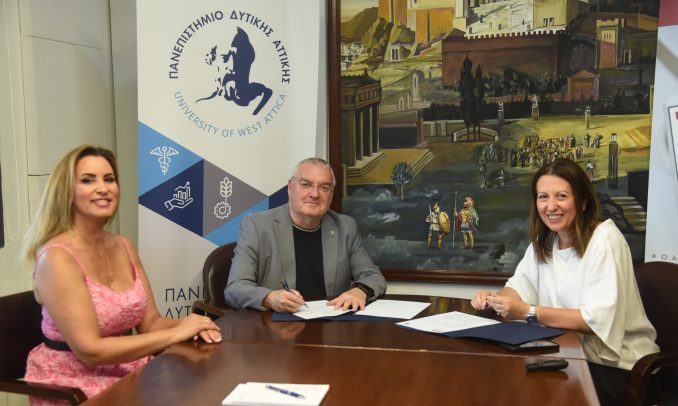
On Tuesday, June 9, a meeting was held to sign a Memorandum of Understanding between the University of West Attica—specifically the Department of Occupational Therapy—and the NGO KAPA3.

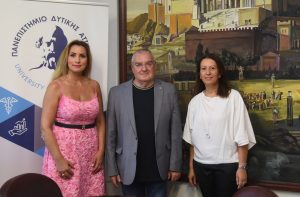
The meeting was attended by the Rector of the University of West Attica, Panagiotis Kaldis Penelope Vlotinou, Assistant Professor in the Department of Occupational Therapy Evangelia Bista, co-founder of the organization, as well as representatives from both organizations, including the interdisciplinary team of KAPA3: Despoina Chrysostomou, Psychologist Katerina Georgiopoulou, Social Worker Yiannis Kontogiorgis, Psychologist, and Eleftheria-Irini Polyzoti, an intern from the Department of Social and Educational Policy, as well as students from the Occupational Therapy Department.

During the meeting, a constructive discussion took place regarding the prospects for cooperation between the two organizations, with the aim of developing joint actions and initiatives that will contribute to strengthening education, research, social contribution, and the connection between the academic community and society.

In this context,  it was decided in April to jointly organize a major scientific conference, which will focus on an interdisciplinary and holistic approach to health, on combating social inequalities in healthcare, as well as on the management of chronic disease. The aim of this initiative is to raise community awareness, facilitate the exchange of expertise among professionals and scientific bodies, and disseminate scientific knowledge and information to the general public.

Special mention was made of the innovative work of KAPA3, the digital Health Navigator “Myrto,” a modern artificial intelligence tool currently under development and designed to support cancer patients, their families, and their caregivers. “Myrto” will function as a digital assistant (Chatbot) and Health and Rights Navigator, providing immediate, reliable, and personalized information on health, social welfare, rights, benefits, and available support services. The project aims to empower patients, improve their access to information, and reduce inequalities in health and social care through the use of digital technologies and artificial intelligence applications. The development of “Myrtos” represents a pioneering application of social artificial intelligence in the field of oncology care in Greece and is part of KAPA3’s strategy to promote innovation, accessibility, and the active participation of patients in managing their own health.

The meeting concluded in a particularly positive atmosphere of mutual appreciation and recognition. In this context, the Department of Occupational Therapy at the University of West Attica made a symbolic gesture toward the representative of KAPA3, Evangelia Bista, presenting her with a commemorative gift as a token of appreciation for her many years of valuable social contribution in the field of support for cancer patients. At the same time, as a gesture of hospitality and appreciation, the team was offered a specially produced wine, which is an original creation of the University of West Attica.


Alpha Bank and Its Employees Support Kapa3 through the Match for Good Initiative

The Cancer Guidance Center – Kapa3 warmly thanks Alpha Bank and its employees for their meaningful support through the Match for Good initiative, through which Alpha Bank doubled the contribution of its employees.

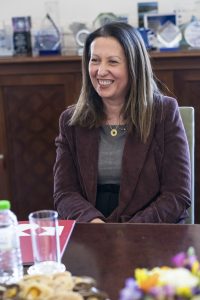
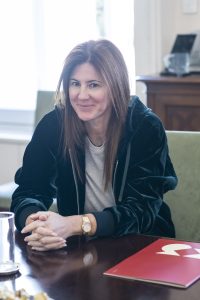
Through this initiative, six non-profit organisations from across Greece received financial support during a special event held at Alpha Bank’s headquarters, in the presence of representatives of the organisations. The event was hosted by the Chairman of Alpha Bank’s Board of Directors, Mr. Dimitris Tsitsiragos, and the Chief Human Resources Officer, Ms. Fragiski Melissa.

Mr. Dimitris Tsitsiragos highlighted that the Match for Good initiative puts into practice Alpha Bank’s commitment to consistently support organisations that create a positive social impact. He underlined that when the individual contribution of employees is combined with the Bank’s support, it becomes a collective force with tangible results.

Ms. Fragiski Melissa noted that Match for Good reflects the Bank’s new culture in practice, giving employees an active role in selecting, participating in and supporting initiatives with social value.

Kapa3 was represented by Ms. Evangeli Bista, co-founder of the Organisation, and Ms. Despoina Chrysostomidou, collaborating psychologist. During the event, they had the opportunity to present Kapa3’s work and discuss the social impact that can be created when corporate responsibility meets the active participation of employees.

For all of us at Kapa3, this support is particularly meaningful. It strengthens our daily effort to stand beside people with lived experience of cancer, as well as their families and caregivers, offering guidance, information, support in accessing rights and services, and practical empowerment tools.

Kapa3 acts as a navigation and support organisation for cancer patients, bridging the gap between need and information, between rights and real access. For many people, especially those living outside major urban centres, the challenge is not only the disease itself. It is uncertainty, bureaucracy, lack of information about available rights, financial burden, transportation difficulties, psychosocial pressure and the need for a reliable companion.

Through initiatives like this, social contribution gains multiplying power and becomes real support for those who need it. The support of Alpha Bank and its employees strengthens Kapa3’s mission: ensuring that no person is left alone when facing cancer, searching for information, navigating procedures or claiming a right they are entitled to.

Health is not only a medical act. It is access, information, dignity, social care and meaningful presence. Every contribution to Kapa3 becomes more guidance, more information, more empowerment and more care for people and families going through a difficult and demanding journey.

We warmly thank Alpha Bank and its employees for their trust, choice and support of Kapa3’s work.

Because when giving becomes collective, it can meaningfully change people’s everyday lives.


20260310 Match For Good Programme Part2 Alpha Bank Via Solid Havas / Thalia Galanopoulou

Match for Good – Alpha Bank (1)

MELODIC Online Symposium: completion of the pilot training phase and strengthening psychosocial cancer care

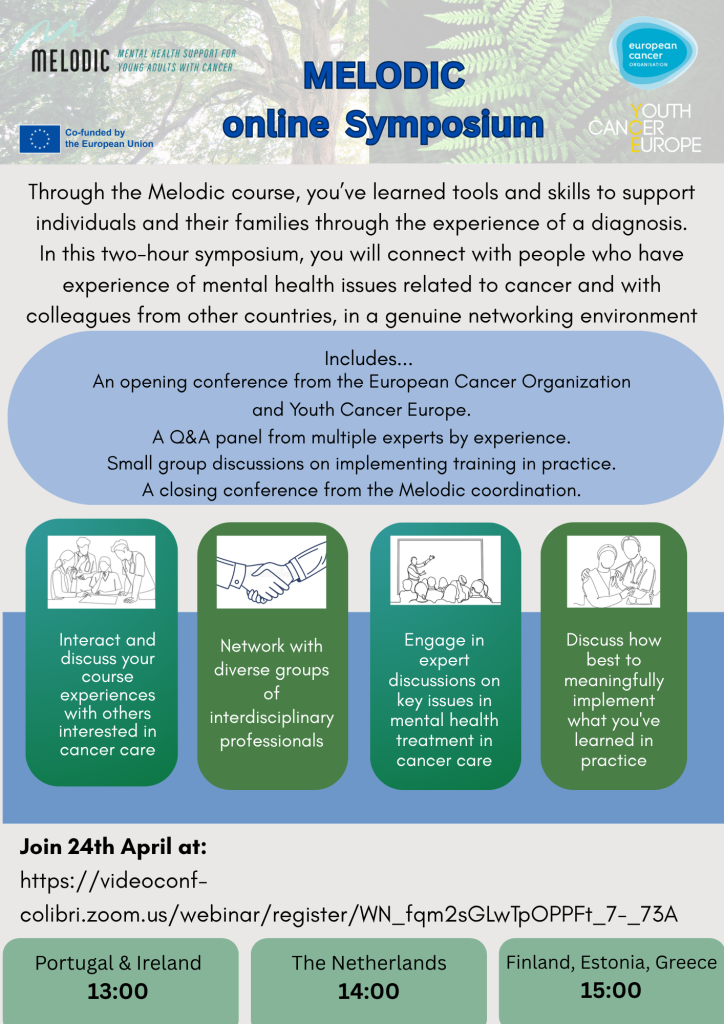
The European project MELODIC (Mental Health Support for Young Adults with Cancer), in which the Cancer Guidance Center – Kapa3 participates, is being implemented through distinct development phases. The pilot training programme for healthcare professionals is one of its core components, and within this framework, the MELODIC Online Symposium 2026, taking place on 24 April 2026, marks the completion of this educational phase.

The MELODIC project framework

MELODIC is a European project co-funded by the European Union, aiming to strengthen the mental health of young adults living with cancer, as well as to support their families. Through the collaboration of universities, research institutions and healthcare organizations across Europe, the project develops training and support tools for healthcare professionals.

More information about the project and its progress is available on the official Kapa3 website, in the dedicated project section.

The pilot training programme

The pilot training programme focused on enhancing the knowledge and skills of healthcare professionals in providing psychosocial support to young adults with cancer and their families.

As part of the programme, online sessions and contact lessons were delivered, aiming to strengthen interdisciplinary collaboration and support the practical application of tools in everyday clinical practice.

MELODIC Online Symposium 2026

The MELODIC Online Symposium 2026, a two-hour event, brings together participants from all partner countries and includes:

  • opening presentations from the European Cancer Organisation and Youth Cancer Europe
  • an “experts by experience” panel, where individuals share their lived experience
  • a networking panel with healthcare professionals from participating countries
  • discussion on how training can be applied in clinical practice
  • a closing session by the project coordination team

From training to clinical practice

A key objective of the MELODIC training programme is to strengthen the psychosocial dimension of cancer care, with particular focus on young adults.

The exchange of experiences among healthcare professionals contributes to more holistic approaches to care and supports the integration of psychosocial support into daily clinical practice.

The role of Kapa3

Kapa3 actively participates in the European MELODIC consortium, contributing to the implementation of the training activities and the dissemination of results in Greece. Through this involvement, the connection between scientific knowledge and the support of cancer patients is further strengthened, promoting the development of practical approaches to psychosocial care.

The MELODIC Online Symposium 2026 marks the transition from the pilot training phase to the next stage of utilizing its outcomes, reinforcing the link between education and real-world application in cancer care.

The Press Release here: PRESS-RELEASE-MELODIC SYMPOSIUM

Text/adaptation: Ifiyenia Anastasiou for Kapa3

Continuing the Journey: Online Group Sessions for Mental Health and Nutrition – Third Cycle with Kapa3 and the LB.H.Sc

Following the warm response to the second cycle of meetings (see the related article here ), focusing on Nutritional Guidance and Experiential Psychological Support, Kapa3 and the Laboratory of Basic Health Sciences (LB.H.Sc), Department of Nursing University of Peloponnese are delighted to continue their collaboration with a third series of online group sessions for mental health and nutrition, dedicated to the holistic care of body and mind, designed for people living with cancer and their caregivers.

In this third cycle, mental health and nutrition are approached as two complementary sides of the same care.

The mental health sessions help participants recognize and manage challenging emotions such as anxiety, fear, sadness, or guilt, strengthen resilience, and cultivate a deeper connection with themselves and others.

The nutrition sessions explore how mindful and balanced eating can support the body, improve energy and mood, and become a meaningful act of self-care. Food is not only a necessity but also a way to nurture the body, mind, and spirit.

Program of Online Sessions for Mental Health and Nutrition & Themes

  • Saturday, February 28, 2026, 17:30–19:00
    Myths and truths about “anti-cancer” diets. How to evaluate nutritional information and avoid risky practices.

  • Saturday, March 14, 2026, 17:30–19:00
    Stress and uncertainty: practical ways to manage them during treatments and exams.

  • Saturday, March 21, 2026, 17:30–19:00
    Giving space to emotions without being overwhelmed: recognizing and expressing fear, anger, sadness, and guilt.

  • Saturday, March 28, 2026, 17:30–19:00
    Nutritional support during treatment & the role of cachexia.

  • Saturday, April 25, 2026, 17:30–19:00
    Boundaries without guilt: protecting energy and mental resilience.

  • Saturday, May 9, 2026, 17:30–19:00
    Safe cooking practices & kitchen hygiene.

  • Saturday, May 23, 2026, 17:30–19:00
    Family and illness: changes in relationships and ways to support each other.

  • Saturday, June 6, 2026, 17:30–19:00
    The Tree of Life: who I am beyond the illness.

  • Saturday, June 13, 2026, 17:30–19:00
    What gives meaning to life now: discovering small but meaningful elements that sustain us.

Format & Participation

The meetings are held online, based on dialogue, experiential learning, and the sharing of personal experiences. Everyone participates at their own pace, in a warm environment of acceptance and trust. Consistent attendance helps build safety and confidence within the group.

To express your interest or join the first session of the third cycle (Saturday, February 28, 17:30–19:00): [Registration Link]

Text/adaptation: Ifiyenia Anastasiou for Kapa3

International Migrants Day – 18 December

Health without borders: equal access to care as a human right

International Migrants Day is observed every year on 18 December, marking the date in 1990 when the United Nations General Assembly adopted the International Convention on the Protection of the Rights of All Migrant Workers and Members of Their Families. The day is not only about population movement, but about fundamental rights, dignity, and—above all—equitable access to health care for all, regardless of origin or legal status.

Global Statistics

Globally, more than 281 million people currently live outside their country of birth, representing approximately 3.6% of the world’s population (International Organization for Migration – World Migration Report).

Migrants and refugees consistently face health inequalities driven by barriers such as language, limited health literacy, insecure housing and employment, and fear of exclusion from health systems. According to the World Health Organization, social determinants of health play a decisive role in access to prevention, early diagnosis and treatment, resulting in poorer health outcomes for migrant populations.

These inequalities are further compounded among particularly vulnerable groups, including children and young people, women, and individuals without stable legal status. In cases of serious or chronic illness—such as cancer—delayed diagnosis, interruptions in treatment and lack of psychosocial support can have a profound impact on disease outcomes and quality of life.

Situation in Greece

Within the Greek context, the country continues to serve as both a host and transit point for migrants and refugees. According to data from Eurostat and the Hellenic Statistical Authority, a significant proportion of the population residing in Greece consists of third-country nationals, while access to comprehensive health services remains uneven, particularly for young people and individuals with increased care needs. Despite existing legal provisions, practical barriers persist in prevention, continuity of care and psychosocial support.

In oncology, these challenges become even more pronounced. Cancer does not discriminate, yet access to care is often shaped by social and economic factors. The need for culturally sensitive, accessible and continuous health services is critical to ensure that no person is left unsupported when facing a cancer diagnosis.

In this context, Kapa3 has long worked to highlight social inequalities in health and to promote holistic cancer care for all people, regardless of background. In 2024, a targeted support initiative for refugees and migrants living with cancer was implemented through the programme Cancer May Control your Body for a While, But Not Your Soul, with the support of the King Baudouin Foundation.

The action focused on the regions of Macedonia and Thrace, addressing refugees and migrants in the area, with particular emphasis on the 15–24 age group, aiming to provide immediate primary care assistance and continuous support throughout the course of their treatment.

International Migrants Day is a reminder that health is a human right, not a privilege. Ensuring equitable access to care—especially for those most at risk—is a shared responsibility of institutions, health professionals and society as a whole.

A fair and healthy society is one that leaves no one behind.

Sources:

Text/Adaptation: Ifiyenia Anastasiou for Kapa3

International Volunteer Day – 5 December

Celebrating the people who give their time to make the world better

International Volunteer Day (IVD) is celebrated every year on 5 December, following a United Nations resolution that recognises the contribution of volunteers to peace, social cohesion, and sustainable development.
It is a day dedicated to acknowledging the millions of people who offer care, support, skills, and solidarity — quietly and consistently.

What volunteering means today

Volunteering goes far beyond goodwill.
It strengthens communities, bridges inequalities, supports public health systems and safety nets, and empowers people to take action where it’s needed most.

Across the world, volunteers contribute to:

  • health and patient support

  • social care and community services

  • disaster response and humanitarian aid

  • education and youth programmes

  • environmental protection and sustainability

  • advocacy for vulnerable groups

The scale of volunteering

Global landscape

According to UN Volunteers (UNV):

  • Around 862.4 million people aged 15+ volunteer every month worldwide.

  • This represents nearly 15% of the global working-age population.

  • The total global volume of volunteer work is equivalent to the labour of 109 million full-time workers.

  • Organised (formal) volunteering accounts for about 6.5%, while informal volunteering reaches 14.3% globally.

Volunteering in Greece

ILO (ILOSTAT, 2022) reports that in Greece:

  • 543,010 people engage in direct (informal) volunteering.

  • 669,712 people contribute through voluntary organisations.

These figures reflect a strong and active culture of solidarity, participation, and civic engagement across the country.

Volunteering and cancer care

In the field of cancer, volunteering plays a vital and deeply human role.
Volunteers offer:

  • practical assistance to patients and caregivers

  • support in navigating health services and rights

  • companionship during demanding procedures or appointments

  • participation in awareness and prevention activities

  • emotional support and empowerment

Their presence brings stability, trust, and hope during some of the most challenging moments in a patient’s journey.

Volunteering at Kapa3

International Volunteer Day highlights the dedication of Kapa3 volunteers and the fact that our volunteers are an essential part of our mission.
Through their contribution, they:

  • support patients and caregivers in their day-to-day needs

  • assist in awareness, prevention, and advocacy actions

  • strengthen our European programmes, research activities, and community outreach

  • bring compassion, knowledge, and willingness to every corner of our work

Thanks to them, our vision — no one should face cancer alone — becomes reality.

Become a volunteer at Kapa3

If you wish to support cancer patients and their families, contribute to your community, and become part of our mission, you can join our volunteer network.

Click here to join our volunteer team: here

On International Volunteer Day, the Kapa3 team honours those who not only give their time, care, and heart but also support patients and caregivers in countless ways.
To every volunteer: thank you for your kindness, your consistency, and your strength.
Thank you for helping us build a world of dignity and hope.

Text/Adaptation: Ifiyenia Anastasiou for Kapa3

Sources

United Nations Volunteers (UNV), State of the World’s Volunteerism Report (2022)

International Labour Organization (ILO) – ILOSTAT, Volunteer Work Statistics (Greece, 2022)

Trvst – Volunteering Facts & Global Volunteer Work Analysis

International Day for the Elimination of Violence against Women – 25 November

November 25 is recognized as the International Day for the Elimination of Violence against Women, a day that reminds us that gender-based violence remains a serious and persistent social problem. The purpose of this day is to raise awareness, promote prevention, support survivors, and foster a society where equality and respect are fundamental values.

According to the latest UN data, approximately one in three women worldwide has experienced physical or sexual violence in her lifetime. In Greece, official statistics indicate that a significant proportion of women have experienced domestic violence, and reports remain high. Economic crises and the pandemic have further increased social pressures, contributing to a rise in incidents.

Violence against women is not limited to physical or sexual abuse. It also includes psychological, economic, and social forms of violence, which are often invisible but leave deep and long-lasting effects on women’s health, self-esteem, and daily lives. Prevention, early recognition, and systematic support for survivors are critical.

Gender-based violence does not discriminate. It affects women of all ages and social groups, including trans women, who often face additional barriers in accessing safety, care, and support.

Research shows a bidirectional link between violence against women and cancer. Violence can increase cancer risk through chronic stress, unhealthy behaviors, or delays in preventive screenings. At the same time, a cancer diagnosis can make a woman more vulnerable to abuse, as she may rely on the perpetrator for daily needs, transportation, medication, or financial support. In some cases, the disease itself can be used as a tool for psychological pressure or control.

No woman should live in fear. It is essential for every woman to know that she is not at fault and does not need to face violence alone. Help is available — from support lines, shelters, and specialized centers, to people in her close environment who can offer guidance. If we perceive that a woman around us is at risk, we have a responsibility to speak up, stand by her, and encourage her to seek help. Silence perpetuates the cycle of violence; our voice can break it.

If you or a woman nearby needs immediate help, SOS Line 15900 operates 24/7 with trained professionals and can guide you to urgent services or safe shelters. For immediate intervention, call 100 (or send an SMS with your name, address, and brief description). Additionally, Counseling Centers and Shelters across Greece offer free psychosocial and legal support.

At Kapa3, we deeply believe that every woman deserves to feel safe, respected, and empowered. We support prevention, awareness, and empowerment initiatives, encouraging every woman to take the first step toward protection. Change begins when no one is left alone. Every conversation, every act of solidarity, contributes to building a society free from violence.

The International Day for the Elimination of Violence against Women reminds us that change requires awareness, education, and collective action. Violence is not a private matter — it is a social issue that needs everyone’s involvement, so that no woman fears seeking help.

Sources:

United Nations

European Institute for Gender Equality – Violence Against Women

World Health Organization

Violence against women increases cancer diagnoses: Results from a meta-analytic review

Text/Adaptation: Ifiyenia Anastasiou for Kapa3