Kapa3 at the 13th Panhellenic Oncology Nursing Symposium: From Knowledge to Practice, with People at the Centre of Care

Three scientific contributions highlighting healthcare professionals’ educational needs, the financial burden of cancer, and the importance of patient navigation in comprehensive oncology care.

30 October – 1 November 2026 | Montana Hotel, Karpenisi, Greece

Kapa3 – Cancer Guidance Centre will participate in the 13th Panhellenic Oncology Nursing Symposium, organised by the Oncology Nursing Sector of the Hellenic Nurses Association (ESNE), taking place from 30 October to 1 November 2026 in Karpenisi, Greece.

Under the central theme “Driving Change, Creating Hope,” this year’s Symposium will provide an important opportunity for scientific exchange, interdisciplinary collaboration and discussion on the future of oncology nursing and comprehensive cancer care.

Kapa3’s participation will include three confirmed scientific contributions, bringing together healthcare professional education, the socioeconomic consequences of cancer and the role of structured patient navigation in improving access to care.

Although these topics address different dimensions of oncology, they share a common objective: to explore how scientific knowledge can be translated into meaningful, accessible and measurable improvements in the care provided to people affected by cancer.

1. Educational Needs of Healthcare Professionals: From Knowledge Acquisition to Meaningful Change

Saturday, 31 October 2026 | 17:30–19:00

Open Scientific Discussion

“Educational Needs of Healthcare Professionals: A Critical Issue for Contemporary Oncology Care”

Moderator: Evangeli Bista, PhD(c), MBA, MSc, BSc, Co-founder of Kapa3 – Cancer Guidance Centre.

Modern oncology care is evolving rapidly. New therapeutic approaches, personalised care, increasing psychosocial needs, digital transformation and the integration of Artificial Intelligence are fundamentally changing the knowledge and competencies required of healthcare professionals.

However, participation in educational activities does not automatically translate into improvements in professional practice.

This scientific discussion will address a central challenge in continuing professional education: how to move beyond the delivery of scientific information towards the effective assimilation, application and evaluation of knowledge.

The discussion will follow a structured pathway:

Identifying Needs → Education → Knowledge Acquisition → Assimilation → Application → Evaluation → Improved Care

Particular attention will be given to absorptive capacity, knowledge translation, organisational learning, interdisciplinary collaboration and the development of professional and digital competencies.

An important dimension of the discussion concerns the organisational environment in which healthcare professionals are expected to apply their knowledge.

Leadership, trust, organisational culture, staffing, mentoring, access to information and opportunities for continuous learning can either facilitate or hinder the translation of scientific knowledge into everyday clinical practice.

The discussion will bring together the following participants:

  • Ourania Govina
  • Theocharis Konstantinidis
  • Giorgos Kapetanakis
  • Theodora Kappou
  • Maria Lavdaniti
  • Aikaterini Manousou
  • Aikaterini Papadimitriou
  • Dimitrios Papageorgiou

Drawing on different academic, clinical, professional, managerial and patient-centred perspectives, the discussion aims to identify shared priorities for continuing education in contemporary oncology care.

The central question is:

How can we move from delivering knowledge to ensuring its meaningful assimilation and practical application, while developing healthcare professionals and organisations capable of continuous learning and measurable improvement?

2. Accessibility in Cancer Care: The Intersection of Health, Society and Economy

Scientific Roundtable

“Access to Healthcare Services for Patients with Malignant Neoplastic Disease: A Health–Society–Economy Perspective”

Session Chairs: Ioanna Tsatsou and Maria Lavdaniti.

As part of this roundtable, Evangeli Bista will deliver a presentation entitled:

“The Financial Burden of Cancer on Patients and Their Families”

A cancer diagnosis is not solely a medical event. It frequently brings substantial social and financial consequences that affect both patients and their families.

Loss or reduction of income, frequent travel for treatment, additional healthcare-related expenses, caregiving responsibilities and difficulties maintaining employment can significantly affect quality of life and access to appropriate care.

The concept of financial toxicity describes the economic hardship and distress associated with cancer and its treatment.

Financial toxicity may contribute to psychological distress, financial insecurity, reduced social participation and inequalities in access to healthcare and supportive resources.

Drawing on Kapa3’s experience in social guidance, patient navigation and support for people affected by cancer, the presentation will explore financial burden as an essential dimension of person-centred oncology care.

The roundtable will also include:

  • Georgios Manomenidis: “Social Determinants of Access to Oncology Care”
  • Maria Lavdaniti: “The Role of Nurses and the Interdisciplinary Team in Reducing Barriers to Access”

Together, these contributions will examine accessibility from complementary perspectives, highlighting the complex relationship between health services, socioeconomic conditions and interdisciplinary collaboration.

Equitable access to care depends not only on the availability of healthcare services, but also on people’s actual ability to access and use them.

3. The Role of Patient Navigation in Oncology Care: A Systematic Review

Oral Scientific Presentation

“The Role of Patient Navigation in Oncology Care: A Systematic Review”

Authors:

Maria-Garyfallia Barka
Psychology student, Panteion University of Social and Political Sciences; Volunteer, Kapa3 – Cancer Guidance Centre.

Evangeli Bista
Social Scientist, PhD(c), MBA, MSc, BSc; Co-founder, Kapa3 – Cancer Guidance Centre.

This scientific contribution falls within the field of psychosocial oncology care and examines the role of structured patient navigation in improving continuity, coordination and accessibility throughout the cancer journey.

Cancer diagnosis and treatment are associated with multiple needs extending beyond clinical management.

Patients and their families often require assistance in understanding medical and administrative information, navigating healthcare services, accessing social rights and benefits, managing practical difficulties and obtaining psychosocial support.

The systematic review examines international scientific literature published between 2015 and 2026, drawing on searches conducted in PubMed and Embase.

The review focuses on patient navigation, psychosocial support, counselling and care coordination, exploring their contribution to comprehensive oncology care.

In addition, practice-based data collected through Kapa3’s activities are considered in order to connect international evidence with the needs of patients and caregivers in the Greek healthcare and social support context.

The findings highlight the importance of organised, interdisciplinary navigation models involving healthcare professionals, social workers, psychologists and other relevant professionals.

Patient navigation is not simply the provision of information.

It is a structured process of identifying needs, supporting decision-making, facilitating access to appropriate services and helping patients navigate the multiple challenges arising throughout their cancer journey.

The presentation reinforces the importance of developing coordinated and person-centred support pathways that address medical, psychological, social and practical needs.

From Scientific Research to Kapa3’s Everyday Practice

Kapa3’s three scientific contributions reflect the organisation’s commitment to connecting research, professional education and social support with the lived experiences of people affected by cancer.

The education of healthcare professionals, the recognition of cancer-related financial hardship and the implementation of structured patient navigation are not isolated priorities.

They represent interconnected dimensions of a broader approach to oncology care.

Effective professional education can strengthen the ability to identify patient needs. Recognition of socioeconomic barriers can improve the relevance of supportive services. Structured navigation can help connect patients with appropriate professionals, resources and care pathways.

Together, these elements contribute to a model of healthcare that is more coordinated, equitable and responsive to people’s real needs.

This approach is also reflected in the development of MYRTO – Kapa3’s AI-Supported Digital Social Navigator, an innovative initiative designed to improve access to evidence-informed information about social rights, benefits, administrative procedures and available support services.

MYRTO is developed in collaboration with SimasiaAI, with the valuable support of the TIMA Charitable Foundation.

The initiative demonstrates Kapa3’s commitment to combining digital innovation with human-centred guidance, health literacy, social inclusion and responsible use of Artificial Intelligence.

Driving Change, Creating Hope

For Kapa3, participating in the 13th Panhellenic Oncology Nursing Symposium represents another opportunity to strengthen scientific dialogue, share knowledge and develop collaborations between healthcare professionals, academic institutions and civil society organisations.

Patients’ lived experiences provide valuable insights into the challenges that healthcare systems must address.

When these experiences are systematically documented, examined through scientific research and incorporated into professional education and service development, they can become a powerful source of meaningful change.

Scientific progress creates real value when it translates into better everyday experiences, fewer barriers and more effective support for people living with cancer.

At Kapa3, we remain committed to advancing a model of oncology care that recognises the full complexity of patients’ needs and supports people throughout every stage of their cancer journey.

Because care does not end with treatment. It embraces the whole of life.


Symposium Information

13th Panhellenic Oncology Nursing Symposium
“Driving Change, Creating Hope”

Dates: 30 October – 1 November 2026
Venue: Montana Hotel, Karpenisi, Greece

Organiser: Hellenic Nurses Association (ESNE) – Oncology Nursing Sector

Official event website:
https://oncologynursingcongress.esne.gr/

Kapa3 – Cancer Guidance Centre
https://www.kapa3.gr

Explore MYRTO – Digital Social Navigator
https://kapa3-cag-rag-hybrid-deploy.onrender.com/
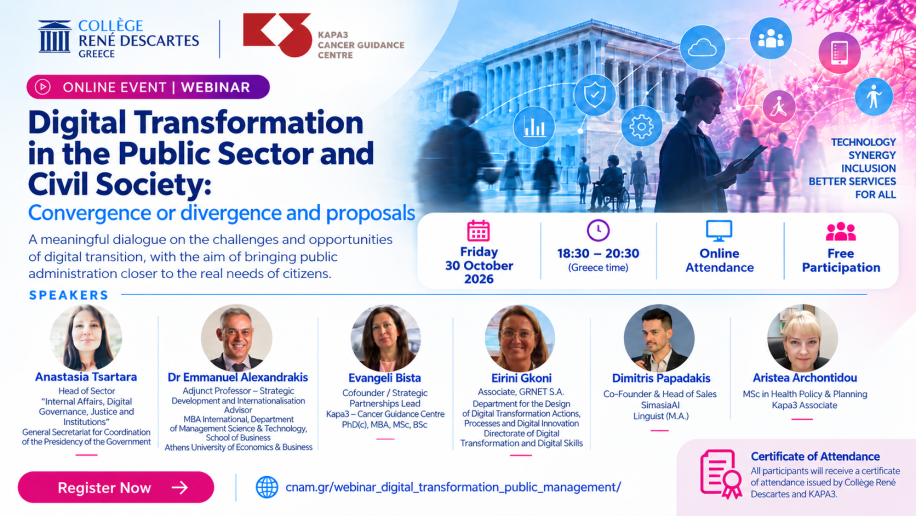
Online Webinar Digital Transformation in the Public Sector and Civil Society.Convergence or divergence and proposals

Kapa3 – Cancer Guidance Centre, in collaboration with Collège René Descartes, invites you to an online webinar entitled:

“Digital Transformation in the Public Sector and Civil Society: Convergence or divergence and proposals”

📅 Date: Friday, 30 October 2026
🕡 Time: 18:30 – 20:30
💻 Attendance: Online
🎫 Participation: Free of charge

Digital transformation is now a key factor shaping how public organisations operate, how services are delivered to citizens, and how social support and participation initiatives are developed. Although important progress has been made, the transition to a more digital environment does not unfold in the same way across all organisations and social groups.

This webinar aims to open a meaningful dialogue between theory and practice, examining digital transformation from both the perspective of the Public Sector and that of Civil Society. Special emphasis will be placed on:

  • the changes brought by digitalisation in the way organisations function,
  • the relationship between the state, organisations and citizens,
  • the opportunities created by digital technologies,
  • the challenges arising from unequal access to and use of digital tools,
  • and the need to develop sustainable, human-centred and inclusive digital solutions.

Main question of the discussion

Does digital transformation lead to greater convergence between the state, organisations and citizens, or does it create new forms of divergence and inequality?

Who should attend

The webinar is addressed to:

  • public sector professionals and employees,
  • representatives of civil society organisations,
  • professionals involved in the design or implementation of digital services,
  • management and human resources professionals,
  • social and humanitarian service professionals,
  • educators, researchers, academics and students,
  • and, more broadly, anyone interested in the relationship between technology, public administration and society.

Main topics

The webinar programme includes themes related to:

  • digital transformation as organisational change,
  • innovation in public administration,
  • practical experiences and good practices from the public sector,
  • inclusion, accessibility and social needs,
  • the relationship between the public sector and civil society,
  • artificial intelligence, data and new opportunities,
  • and proposals for a meaningful, sustainable and human-centred digital transition.

Speakers

The webinar features:

  • Anastasia Tsartara, Head of Sector “Internal Affairs, Digital Governance, Justice and Institutions”, General Secretariat for Coordination of the Presidency of the Government
  • Dr Emmanuel Alexandrakis, Adjunct Professor – Strategic Development and Internationalisation Advisor, Athens University of Economics & Business
  • Evangeli Bista, Cofounder / Strategic Partnerships Lead, Kapa3 – Cancer Guidance Centre
  • Eirini Gkoni, Associate, GRNET S.A.
  • Dimitris Papadakis, Co-Founder & Head of Sales, SimasiaAI
  • Aristea Archontidou, MSc in Health Policy & Planning, Kapa3 Associate.

Certificate of attendance

All participants will receive a certificate of attendance issued by Collège René Descartes and Kapa3.

Registration

Participation is free. You may register through the official form:
🔗 https://cnam.gr/webinar_digital_transformation_public_management/

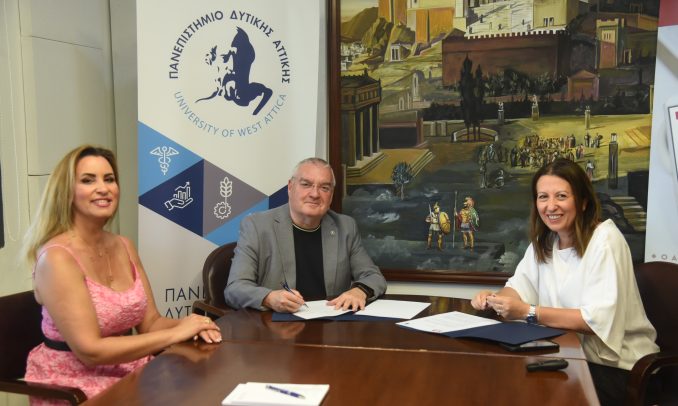
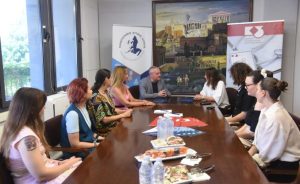
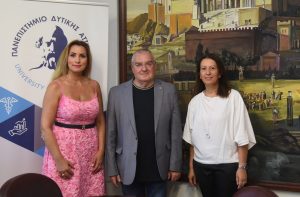
Memorandum of Understanding between the University of West Attica—specifically the Department of Occupational Therapy—and the NGO KAPA3.

On Tuesday, June 9, a meeting was held to sign a Memorandum of Understanding between the University of West Attica—specifically the Department of Occupational Therapy—and the NGO KAPA3.

The meeting was attended by the Rector of the University of West Attica, Panagiotis Kaldis Penelope Vlotinou, Assistant Professor in the Department of Occupational Therapy Evangelia Bista, co-founder of the organization, as well as representatives from both organizations, including the interdisciplinary team of KAPA3: Despoina Chrysostomou, Psychologist Katerina Georgiopoulou, Social Worker Yiannis Kontogiorgis, Psychologist, and Eleftheria-Irini Polyzoti, an intern from the Department of Social and Educational Policy, as well as students from the Occupational Therapy Department.

During the meeting, a constructive discussion took place regarding the prospects for cooperation between the two organizations, with the aim of developing joint actions and initiatives that will contribute to strengthening education, research, social contribution, and the connection between the academic community and society.

In this context,  it was decided in April to jointly organize a major scientific conference, which will focus on an interdisciplinary and holistic approach to health, on combating social inequalities in healthcare, as well as on the management of chronic disease. The aim of this initiative is to raise community awareness, facilitate the exchange of expertise among professionals and scientific bodies, and disseminate scientific knowledge and information to the general public.

Special mention was made of the innovative work of KAPA3, the digital Health Navigator “Myrto,” a modern artificial intelligence tool currently under development and designed to support cancer patients, their families, and their caregivers. “Myrto” will function as a digital assistant (Chatbot) and Health and Rights Navigator, providing immediate, reliable, and personalized information on health, social welfare, rights, benefits, and available support services. The project aims to empower patients, improve their access to information, and reduce inequalities in health and social care through the use of digital technologies and artificial intelligence applications. The development of “Myrtos” represents a pioneering application of social artificial intelligence in the field of oncology care in Greece and is part of KAPA3’s strategy to promote innovation, accessibility, and the active participation of patients in managing their own health.

The meeting concluded in a particularly positive atmosphere of mutual appreciation and recognition. In this context, the Department of Occupational Therapy at the University of West Attica made a symbolic gesture toward the representative of KAPA3, Evangelia Bista, presenting her with a commemorative gift as a token of appreciation for her many years of valuable social contribution in the field of support for cancer patients. At the same time, as a gesture of hospitality and appreciation, the team was offered a specially produced wine, which is an original creation of the University of West Attica.


Participation in CA21152 – Implementation Network Europe for Cancer Survivorship Care

Digital Health and Cancer Survivorship: Kapa3 at the INE-CSC 2026 Conference in Coimbra

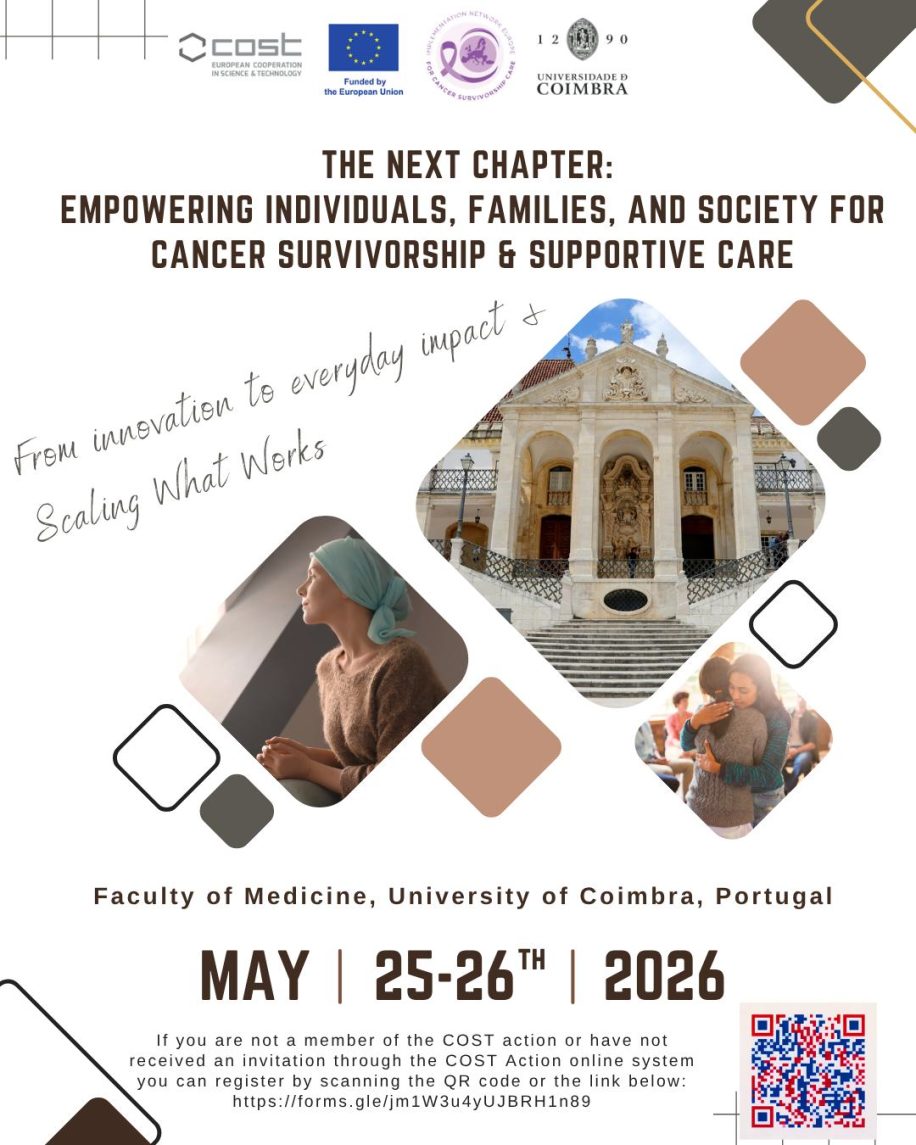
The Cancer Guidance Center – Kapa3 participated in the INE-CSC 2026 Conference, part of CA21152 – Implementation Network Europe for Cancer Survivorship Care (INE-CSC), held on 25–26 May 2026 at the Faculty of Medicine (Polo III), University of Coimbra, in Coimbra, Portugal.

The conference was held under the theme “The Next Chapter – Empowering Individuals, Families, and Society for Cancer Survivorship & Supportive Care”, highlighting the need for new approaches to cancer survivorship, supportive care and the translation of innovation into real-world impact for people living with and beyond cancer, their families and society.

Kapa3’s presence in Coimbra represents another important step in its European engagement and in its ongoing effort to connect everyday experience in supporting cancer patients in Greece with European knowledge, research, digital innovation and health policy.

A key highlight was the participation in a round table discussion on facilitators and barriers to the implementation of digital health tools in oncology. The discussion was co-organised by Aristea Kyriaki Ladas and Christos Frantzidis and brought together voices from different European countries and organisations, including representatives from Kapa3, Acreditar Portugal, Liga Portuguesa Contra o Cancro, ORCO / Madrid Regional Ministry of Health, as well as participants from Poland, Latvia and the United Kingdom.

Among the participants in the round table were Yannis Kontogiorgis and Despoina Pistiolis from Kapa3, Greece, contributing to the European dialogue on digital health, oncology navigation and the participatory development of solutions that respond to the real needs of patients and caregivers.

One of the key messages of the discussion was that digital innovation in oncology is not only a technological challenge. It is also a matter of policy, implementation, equity, trust and accessibility.

For digital tools to make a meaningful difference in cancer care and survivorship, they cannot remain isolated applications or pilot projects. They need to become part of real care pathways, be supported by appropriate policy environments, connect with interdisciplinary practice and be evaluated in terms of effectiveness, implementation readiness, accessibility, equity, sustainability and value.

The discussion also highlighted that digital tools must be designed around the real needs of patients and survivors, not only around technical possibilities. Accessibility across countries, languages, healthcare systems and levels of digital and health literacy must be built in from the beginning.

The role of patient organisations and cancer support communities was also identified as essential. These organisations can act as a bridge between technological innovation and the everyday reality of people affected by cancer. They understand the questions, barriers, fears and needs that are often not fully captured by formal care systems.

For Kapa3, this participation is directly linked to the development of Myrto, its digital health and rights navigator, designed as a tool for empowerment, guidance and support for cancer patients and their caregivers.

Myrto is not approached as a simple information tool. It is being designed as a participatory intervention built around the real needs of people with lived experience of cancer. It is connected to access to rights, social benefits, services, practical guidance and human escalation whenever needed.

The Coimbra experience strengthened the view that digital health must be human-centred, accessible, trustworthy and integrated into a broader ecosystem of care. Technology can meaningfully support cancer care only when it is designed with participation, trust, clear purpose and an equity-oriented approach.

Cancer survivorship is not only about completing treatment. It is about quality of life, mental health, social reintegration, work, family, everyday life, access to services and the feeling that no person is left alone after diagnosis or treatment.

Through its participation in European networks such as INE-CSC, Kapa3 continues to contribute to the dialogue on more equitable, participatory and person-centred cancer care. Care that uses technology without losing sight of the human being at its centre.

The future of cancer support will not depend only on better digital tools, but on better collaboration between patients, caregivers, healthcare professionals, researchers, technology partners, patient organisations and policymakers.

For Kapa3, this is at the heart of its mission: transforming knowledge into action, technology into support, and the voice of patients into services that respond to their real needs.

More information: INE-CSC – Implementation Network Europe for Cancer Survivorship Care.More information:
https://inecancersurvivorship.com

Patients’ Rights in Public Administration: Less Bureaucracy and More Transparency

With Law 5293/2026 (Government Gazette A’57), a new framework is introduced for the operation of Public Administration in Greece, directly linked to patients’ rights in public administration, aiming to create a more citizen-friendly, efficient and transparent system.

These changes affect everyday interactions with public services, improving the way citizens are served, informed and supported.

The main provisions of the law can be grouped into three key pillars:

1. Simplification of procedures and reduction of bureaucracy

A central element of the reform is the simplification of administrative processes.

Article 3 – Replacement of supporting documents

According to Article 3, citizens may, in several cases, replace official supporting documents with a solemn declaration, when these documents cannot be directly retrieved by public services.

In practice, this means:

  • fewer documents need to be submitted
  • public authorities are responsible for retrieving the required information
  • procedures can start immediately without delays

At the same time, verification mechanisms are in place, including checks and sanctions in cases of false declarations.

Article 5 – Faster processing of requests

Article 5 strengthens the obligation of public services to process requests within specific deadlines, reducing delays in administrative procedures.

2. Transparency and digital access to information

The second pillar focuses on improving transparency and access to information.

Article 5 – Case tracking

Citizens are given the ability to digitally monitor the progress of their requests.

They can access information such as:

  • the current stage of the process
  • the estimated completion time
  • the responsible department
  • contact details for further communication

Article 6 – Mandatory publication of circulars

All administrative circulars:

  • must be published online
  • are valid only after publication

This ensures that citizens have access to up-to-date and valid information.

Article 7 – Online publication of public service hours

Public authorities are required to publish and regularly update:

  • their operating hours
  • public service hours

This helps reduce unnecessary visits and waiting times.

3. A new way of operating public administration

The law also introduces a new approach to administrative procedures, aiming to increase efficiency.

Article 4 – Certified professionals

Public administration may collaborate with certified professionals who:

  • are registered in official registries
  • meet specific qualification and certification criteria
  • can prepare reports, certificates or draft decisions used in administrative processes

These professionals are subject to:

  • random checks
  • penalties and fines in case of errors
  • removal from the registry if necessary

At the same time, accountability mechanisms (particularly under Article 3) ensure the reliability of the system.

What this means for patients

While these measures apply to all citizens, they are particularly important in relation to patients’ rights in public administration.

Reducing bureaucracy, enabling digital access to information and speeding up procedures can significantly ease the burden for patients, especially in processes related to:

  • healthcare services
  • benefits and allowances
  • administrative approvals

Towards a more accessible public administration

Law 5293/2026 represents an important step towards a more efficient, transparent and accessible public administration.

For patients and their families, every improvement that reduces complexity and uncertainty is not just an administrative change, but a meaningful support in their daily lives.

You can find the Government Gazette A’57 here (Greek Text): ΦΕΚ Α 57 Ν 5293_2026

Text/adaptation: Ifiyenia Anastasiou for Kapa3