
Mapping the efficiency of cancer care in Greece: findings from the All.Can Greece report

Cancer care efficiency in Greece remains one of the most complex and pressing challenges for the Greek health system — not only in terms of its clinical burden, but also in how care is organized around the patient.

With approximately 63,000 new cancer cases diagnosed annually and more than 32,000 cancer-related deaths each year, Greece faces a steadily increasing oncological burden. Projections suggest that cancer incidence will rise by around 23% by 2040, further intensifying pressure on health services.

Against this backdrop, All.Can Greece has published a landmark report titled “Mapping the Efficiency of Cancer Care in Greece”, based on the pilot implementation of the All.Can Action Guide for Efficient Cancer Care.

Rather than simply describing the current situation, the report aims to measure it — identifying where efficiency is lost across the cancer care pathway and where targeted reforms could make the greatest impact.

Cancer care efficiency in Greece: delays in care delivery

One of the most critical findings of the report relates to delays in the patient journey.

Despite the existence of modern infrastructure and highly specialized oncology centres, significant delays persist between initial suspicion, diagnosis, and the start of treatment.

These delays are not the result of a single bottleneck, but of systemic fragmentation:

  • fragmented referral pathways,
  • limited coordination between levels of care,
  • and the absence of standardized clinical protocols.

A key structural weakness is the lack of systematic monitoring of waiting times and time-to-treatment indicators. As a result, inefficiencies remain partially invisible to the system itself, limiting the ability to implement targeted improvements.

Fragmentation across the care continuum

The report highlights a broader issue of fragmentation in cancer care delivery.

The patient journey from primary care to specialist oncology services is often not clearly structured or consistently coordinated. Referral pathways depend heavily on individual practice rather than standardized national protocols.

A major gap is the absence of structured patient navigation services. In practice, this means that patients and families are often left to navigate a complex system on their own, increasing delays and adding unnecessary psychological burden.

At the same time, multidisciplinary tumor boards represent a positive development, supporting collaborative clinical decision-making across specialties. However, systematic monitoring of their performance remains limited.

The development of Comprehensive Cancer Centers is identified as a promising step forward, although further regulatory strengthening and clearer governance structures are still needed to maximize their impact.

Patient-centered care: progress with remaining gaps

Greece has made notable progress in collecting Patient-Reported Outcome Measures (PROMs) and Patient-Reported Experience Measures (PREMs), reflecting a growing commitment to integrating patient perspectives into care delivery.

However, patients’ access to their own clinical data remains limited, restricting their ability to actively participate in decision-making processes.

In addition, patient education and shared decision-making are not yet systematically embedded across the health system.

Another important gap concerns survivorship care. As cancer survival rates improve, the lack of structured long-term follow-up pathways leaves many patients without continuous support after active treatment ends.

Key policy directions

The report outlines several strategic priorities for improving cancer care efficiency in Greece:

  • Development of a comprehensive national cancer strategy with clear targets and governance mechanisms
  • Strengthening coordination across all levels of care
  • Implementation of standardized clinical pathways with defined time-to-treatment and quality indicators
  • Investment in oncology workforce capacity, particularly in shortage specialties
  • Establishment of structured patient navigation programmes
  • Acceleration of Comprehensive Cancer Center development
  • Systematic use of health data for monitoring performance and accountability
  • Greater patient engagement through PROMs, PREMs, and shared decision-making

Conclusion: a system with strong foundations but limited integration

Greece has many of the essential building blocks for a high-performing cancer care system — including infrastructure, clinical expertise, and emerging digital health capabilities.

However, the key challenge lies not in the existence of these components, but in their integration.

The All.Can Greece report highlights a system that is still operating in silos: strong individual elements that do not yet function as a fully connected care pathway.

In oncology, this lack of integration is not merely an organizational issue. It directly affects timeliness, patient experience, and ultimately outcomes.

The opportunity now lies in moving from fragmented capacity to coordinated care — where patients no longer have to bridge the gaps between system components themselves.

Source: Mapping-the-Efficiency-of-Cancer-Care-in-Greece-FINAL

Text/adaptation: Ifiyenia Anastasiou for Kapa3

Person-centred cancer care: a new global report for more sustainable health systems

Cancer continues to place a growing burden on individuals, health systems, and society, making it essential to strengthen person-centred cancer care and rethink how care is delivered. New cancer diagnoses are expected to rise by nearly 77% by 2050, further straining already pressured healthcare systems.

Many countries report limited access to treatments, workforce shortages, and long waiting times as key challenges. In this context, policymakers must rethink how cancer care is delivered, ensuring that limited resources are used effectively while maintaining access to high-quality services.

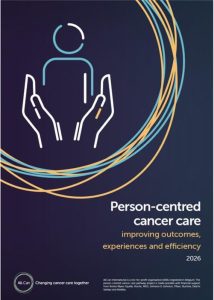
The report titled “Implementing Person-Centred Cancer Care to Improve Outcomes, Experiences and Efficiency”, published by All.Can International, is based on evidence and studies from 2018–2025. It brings together insights from experts across 11 countries and aims to support policymakers and health systems in redesigning cancer care towards a more person-centred and efficient model.

The report highlights that person-centred cancer care is a practical, high-impact approach that improves patient experience while strengthening the resilience of health systems. It places individuals at the centre of care, taking into account their needs, values, and goals, rather than relying on a one-size-fits-all clinical pathway.

The framework is structured around seven key areas of intervention, with a common goal: better care for patients and more sustainable health systems.

1. Early diagnosis and timely initiation of treatment

Late diagnosis remains a major global challenge. Limited health literacy, low participation in screening programmes, and weaknesses in primary care often lead to delays in treatment.

The report recommends more tailored public information, taking into account health literacy levels and cultural context. It also emphasises the co-design of screening programmes with communities to improve participation and enable earlier diagnosis.

2. Coordinated and multidisciplinary care

Lack of coordination between services leads to delays and unequal care provision. Strengthening multidisciplinary teams and introducing patient navigation can help individuals move more smoothly through the healthcare system and receive more consistent care.

3. Digital tools and system integration

Fragmented data management and limited interoperability between health systems remain major barriers. Developing integrated data infrastructures, national cancer registries, and using technologies such as artificial intelligence can improve efficiency and coordination.

4. Telemedicine and remote care

At the same time, digital health services can reduce geographical barriers and bring care closer to patients. However, investment in infrastructure and training is necessary to ensure equitable access.

The use of wearable health technologies and mobile applications can support continuous monitoring and care beyond hospital settings.

5. Communication and shared decision-making

Effective communication between healthcare professionals and patients remains a critical challenge. Shared decision-making models, the use of patient experience data, and culturally appropriate communication can strengthen trust and improve care quality.

At the same time, involving caregivers in communication processes is essential, as their needs are often overlooked.

6. Supportive care and survivorship

Access to psychosocial and supportive care remains limited in many settings, negatively affecting quality of life. Integrating support services throughout the care pathway is essential, especially as more people live with and beyond cancer.

The report also highlights the importance of advance care planning, which can reduce unnecessary hospitalisations and support patient autonomy.

7. Financial support and access to care

The financial burden of cancer remains a major barrier to accessing care. The report recommends improved reimbursement systems, financial navigation services, and support for indirect costs to reduce financial toxicity for patients and their families.

Person-centred cancer care in Greece

Although the report has a global scope, its findings are highly relevant for countries like Greece. Challenges such as delays in diagnosis, inequalities in access, workforce pressure, and limited system integration reflect real issues within the Greek healthcare system.

In this context, the transition towards more coordinated, digitally supported, and person-centred cancer care becomes particularly important.

Call to action

Therefore, policymakers must urgently embed person-centred care into national cancer strategies. Collaboration with people with lived experience of cancer is essential to designing more equitable, efficient, and sustainable health systems.

Adopting this approach can contribute to earlier diagnosis, improved quality of care, better use of resources, and ultimately more resilient health systems in the face of rising cancer burden.

You can read the full report here: Person-centred-cancer-care-improving-outcomes-experiences-and-efficiency-2

Text/Adaptation: Ifiyenia Anastasiou for Kapa3