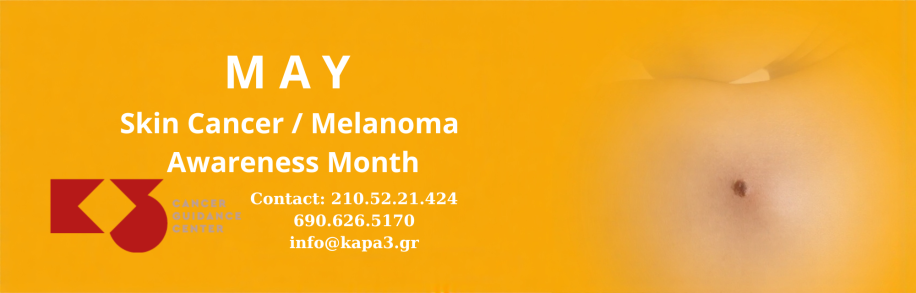
May, Melanoma Awareness Month: Prevention, awareness and early diagnosis

May is internationally recognized as Melanoma Awareness Month and Skin Cancer Awareness Month, dedicated to raising awareness about prevention, sun protection, and the importance of early diagnosis.

Skin cancer is the most common type of cancer worldwide, with melanoma being its most aggressive form. Although it accounts for a smaller proportion of skin cancer cases, it is responsible for the majority of skin cancer-related deaths.

Globally, in 2020 there were approximately 325,000 new cases of melanoma and around 57,000 deaths, with numbers expected to rise in the coming years if prevention and awareness efforts are not strengthened.

In Europe, melanoma remains one of the most common cancers, with more than 100,000 new cases annually and over 15,000 deaths each year. The incidence is higher in Northern and Western European countries, while overall UV radiation exposure is considered the main contributing factor for the majority of cases.

Excessive exposure to ultraviolet (UV) radiation, whether from the sun or artificial sources such as tanning beds, is the most significant risk factor for melanoma. Many cases could be prevented through proper sun protection and behavioral changes.

In countries like Greece, where sunlight exposure is high throughout much of the year, awareness and prevention are especially important. Regular skin self-examinations and dermatological check-ups can play a key role in identifying suspicious changes in moles (naevi) at an early stage.

Early diagnosis significantly improves survival rates. When detected in its initial stages, melanoma is highly treatable, whereas delayed diagnosis is associated with more aggressive disease progression. This highlights the critical importance of awareness and timely medical evaluation.

Preventive measures remain essential: using sunscreen, avoiding peak sun hours, wearing protective clothing, and avoiding artificial tanning can all significantly reduce risk.

Melanoma Awareness Month serves as an important reminder that skin health is not only an aesthetic concern but a vital part of overall health and cancer prevention.

Read also Kapa3’s article on Bladder Cancer Awareness Month.

Sources:

  • World Health Organization (WHO)
  • International Agency for Research on Cancer (IARC) – GLOBOCAN
  • European Cancer Information System (ECIS)
  • European Environment Agency (EEA)

Text/Adaptation: Ifiyenia Anastasiou for Kapa3

Bladder Cancer Awareness Month: Awareness, prevention and early diagnosis

May is internationally recognized as Bladder Cancer Awareness Month, an important initiative led by health organizations and patient advocacy groups worldwide to promote public awareness, prevention, and early diagnosis.

Bladder cancer is among the most common types of cancer globally, with hundreds of thousands of new cases diagnosed each year. In Europe, it is considered one of the most common urological cancers, affecting men significantly more often than women.

In Greece, the data remains particularly concerning. The country records the highest incidence rate in Southern Europe, with approximately 39.7 new cases per 100,000 men annually. In terms of mortality, an estimated 7–8 men per 100,000 lose their lives to the disease every year, placing Greece among the countries with the highest mortality rates in the region. These figures highlight the importance of prevention, awareness, and timely medical intervention.

Behind every statistic are people — patients and families facing the emotional, physical, and practical challenges that accompany a cancer diagnosis. Raising awareness is therefore not only about numbers, but also about supporting individuals throughout their journey.

Smoking remains the most significant risk factor for bladder cancer and is linked to a large percentage of cases. Long-term exposure to certain chemicals, especially in specific occupational environments, as well as chronic inflammation of the urinary tract, may also increase the risk of developing the disease.

Recognizing the symptoms early can make a critical difference. The most common warning sign is blood in the urine (hematuria), even when no pain is present. Other symptoms may include frequent urination, burning during urination, or a sudden urge to urinate. Although these symptoms may also be associated with less serious conditions, they should never be ignored.

When bladder cancer is diagnosed at an early stage, survival rates are significantly higher, underlining the importance of early detection. However, the disease is also known for its high recurrence rates, making long-term follow-up and monitoring essential even after treatment.

Prevention remains a key pillar in reducing the burden of the disease. Quitting smoking, limiting exposure to harmful chemicals, and increasing awareness of the symptoms can all contribute to lowering the risk.

In Greece, awareness initiatives are also supported by scientific organizations such as the Hellenic Genito-Urinary Cancer Group (HGUCG), contributing to public education and the promotion of early symptom recognition.

Bladder Cancer Awareness Month is an important opportunity to encourage open discussion around the disease. Awareness is more than information — it is a tool that can lead to earlier diagnosis, improved treatment outcomes, and ultimately, more lives saved.

Sources:

Text/adaptation: Ifiyenia Anastasiou for Kapa3

Person-centred cancer care: a new global report for more sustainable health systems

Cancer continues to place a growing burden on individuals, health systems, and society, making it essential to strengthen person-centred cancer care and rethink how care is delivered. New cancer diagnoses are expected to rise by nearly 77% by 2050, further straining already pressured healthcare systems.

Many countries report limited access to treatments, workforce shortages, and long waiting times as key challenges. In this context, policymakers must rethink how cancer care is delivered, ensuring that limited resources are used effectively while maintaining access to high-quality services.

The report titled “Implementing Person-Centred Cancer Care to Improve Outcomes, Experiences and Efficiency”, published by All.Can International, is based on evidence and studies from 2018–2025. It brings together insights from experts across 11 countries and aims to support policymakers and health systems in redesigning cancer care towards a more person-centred and efficient model.
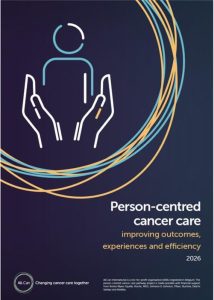
The report highlights that person-centred cancer care is a practical, high-impact approach that improves patient experience while strengthening the resilience of health systems. It places individuals at the centre of care, taking into account their needs, values, and goals, rather than relying on a one-size-fits-all clinical pathway.

The framework is structured around seven key areas of intervention, with a common goal: better care for patients and more sustainable health systems.

1. Early diagnosis and timely initiation of treatment

Late diagnosis remains a major global challenge. Limited health literacy, low participation in screening programmes, and weaknesses in primary care often lead to delays in treatment.

The report recommends more tailored public information, taking into account health literacy levels and cultural context. It also emphasises the co-design of screening programmes with communities to improve participation and enable earlier diagnosis.

2. Coordinated and multidisciplinary care

Lack of coordination between services leads to delays and unequal care provision. Strengthening multidisciplinary teams and introducing patient navigation can help individuals move more smoothly through the healthcare system and receive more consistent care.

3. Digital tools and system integration

Fragmented data management and limited interoperability between health systems remain major barriers. Developing integrated data infrastructures, national cancer registries, and using technologies such as artificial intelligence can improve efficiency and coordination.

4. Telemedicine and remote care

At the same time, digital health services can reduce geographical barriers and bring care closer to patients. However, investment in infrastructure and training is necessary to ensure equitable access.

The use of wearable health technologies and mobile applications can support continuous monitoring and care beyond hospital settings.

5. Communication and shared decision-making

Effective communication between healthcare professionals and patients remains a critical challenge. Shared decision-making models, the use of patient experience data, and culturally appropriate communication can strengthen trust and improve care quality.

At the same time, involving caregivers in communication processes is essential, as their needs are often overlooked.

6. Supportive care and survivorship

Access to psychosocial and supportive care remains limited in many settings, negatively affecting quality of life. Integrating support services throughout the care pathway is essential, especially as more people live with and beyond cancer.

The report also highlights the importance of advance care planning, which can reduce unnecessary hospitalisations and support patient autonomy.

7. Financial support and access to care

The financial burden of cancer remains a major barrier to accessing care. The report recommends improved reimbursement systems, financial navigation services, and support for indirect costs to reduce financial toxicity for patients and their families.

Person-centred cancer care in Greece

Although the report has a global scope, its findings are highly relevant for countries like Greece. Challenges such as delays in diagnosis, inequalities in access, workforce pressure, and limited system integration reflect real issues within the Greek healthcare system.

In this context, the transition towards more coordinated, digitally supported, and person-centred cancer care becomes particularly important.

Call to action

Therefore, policymakers must urgently embed person-centred care into national cancer strategies. Collaboration with people with lived experience of cancer is essential to designing more equitable, efficient, and sustainable health systems.

Adopting this approach can contribute to earlier diagnosis, improved quality of care, better use of resources, and ultimately more resilient health systems in the face of rising cancer burden.

You can read the full report here: Person-centred-cancer-care-improving-outcomes-experiences-and-efficiency-2

Text/Adaptation: Ifiyenia Anastasiou for Kapa3