Person-centred cancer care: a new global report for more sustainable health systems

Cancer continues to place a growing burden on individuals, health systems, and society, making it essential to strengthen person-centred cancer care and rethink how care is delivered. New cancer diagnoses are expected to rise by nearly 77% by 2050, further straining already pressured healthcare systems.

Many countries report limited access to treatments, workforce shortages, and long waiting times as key challenges. In this context, policymakers must rethink how cancer care is delivered, ensuring that limited resources are used effectively while maintaining access to high-quality services.

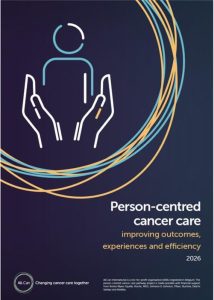
The report titled “Implementing Person-Centred Cancer Care to Improve Outcomes, Experiences and Efficiency”, published by All.Can International, is based on evidence and studies from 2018–2025. It brings together insights from experts across 11 countries and aims to support policymakers and health systems in redesigning cancer care towards a more person-centred and efficient model.

The report highlights that person-centred cancer care is a practical, high-impact approach that improves patient experience while strengthening the resilience of health systems. It places individuals at the centre of care, taking into account their needs, values, and goals, rather than relying on a one-size-fits-all clinical pathway.

The framework is structured around seven key areas of intervention, with a common goal: better care for patients and more sustainable health systems.

1. Early diagnosis and timely initiation of treatment

Late diagnosis remains a major global challenge. Limited health literacy, low participation in screening programmes, and weaknesses in primary care often lead to delays in treatment.

The report recommends more tailored public information, taking into account health literacy levels and cultural context. It also emphasises the co-design of screening programmes with communities to improve participation and enable earlier diagnosis.

2. Coordinated and multidisciplinary care

Lack of coordination between services leads to delays and unequal care provision. Strengthening multidisciplinary teams and introducing patient navigation can help individuals move more smoothly through the healthcare system and receive more consistent care.

3. Digital tools and system integration

Fragmented data management and limited interoperability between health systems remain major barriers. Developing integrated data infrastructures, national cancer registries, and using technologies such as artificial intelligence can improve efficiency and coordination.

4. Telemedicine and remote care

At the same time, digital health services can reduce geographical barriers and bring care closer to patients. However, investment in infrastructure and training is necessary to ensure equitable access.

The use of wearable health technologies and mobile applications can support continuous monitoring and care beyond hospital settings.

5. Communication and shared decision-making

Effective communication between healthcare professionals and patients remains a critical challenge. Shared decision-making models, the use of patient experience data, and culturally appropriate communication can strengthen trust and improve care quality.

At the same time, involving caregivers in communication processes is essential, as their needs are often overlooked.

6. Supportive care and survivorship

Access to psychosocial and supportive care remains limited in many settings, negatively affecting quality of life. Integrating support services throughout the care pathway is essential, especially as more people live with and beyond cancer.

The report also highlights the importance of advance care planning, which can reduce unnecessary hospitalisations and support patient autonomy.

7. Financial support and access to care

The financial burden of cancer remains a major barrier to accessing care. The report recommends improved reimbursement systems, financial navigation services, and support for indirect costs to reduce financial toxicity for patients and their families.

Person-centred cancer care in Greece

Although the report has a global scope, its findings are highly relevant for countries like Greece. Challenges such as delays in diagnosis, inequalities in access, workforce pressure, and limited system integration reflect real issues within the Greek healthcare system.

In this context, the transition towards more coordinated, digitally supported, and person-centred cancer care becomes particularly important.

Call to action

Therefore, policymakers must urgently embed person-centred care into national cancer strategies. Collaboration with people with lived experience of cancer is essential to designing more equitable, efficient, and sustainable health systems.

Adopting this approach can contribute to earlier diagnosis, improved quality of care, better use of resources, and ultimately more resilient health systems in the face of rising cancer burden.

You can read the full report here: Person-centred-cancer-care-improving-outcomes-experiences-and-efficiency-2

Text/Adaptation: Ifiyenia Anastasiou for Kapa3

Evangeli Bista on DION TV: Social Support and Kapa3’s Role in Guiding Oncology Patients

On March 19, 2026, Evangeli Bista, Co-founder of Kapa3, gave an interview to Christos Thanasainas, journalist and Scientific Director of Forlife Clinic, on Central Macedonia’s DION TV, during the daily program All About Health, which covers topics on health, nutrition, autoimmune diseases, and recent scientific developments.

The discussion highlighted the importance of social support for cancer patients and their families, both inside and outside the hospital, as well as the critical role of Kapa3 in guiding and providing holistic support to patients.

WHAT IS SOCIAL SUPPORT – TWO WORLDS:

Social support in cancer care is not a single, uniform concept. Inside the hospital, it mainly concerns assistance with the public healthcare system and bureaucratic procedures. Outside the hospital, real life begins: family, caregivers, and decisions the patient must make.

MAJOR SYSTEM CHALLENGES:

As Ms. Bista noted, hospitals face a significant shortage of social workers and related professionals. International literature suggests that there should be 10 social workers for every 2,500 residents—but this is not the case in Greece. In 92 municipalities, there is not a single social worker, while in areas where social workers exist, most are on fixed-term contracts or funded through programs (such as ESIF). The result is a maze of bureaucracy and uncertainty for the patient, who must understand medical and legal terms, make critical decisions, and manage financial consequences—often without support.

THE ROLE OF KAPA3 – SOLUTION, NOT JUST A SERVICE:

In this environment, Kapa3 provides holistic guidance and support, helping patients navigate procedural and practical issues—either independently, if they feel capable, or with active assistance from the organization at every step. Coverage is nationwide, although the complexity and fragmented structure of the system require ongoing study and time for effective support.

THE “HEAVY” MESSAGE – UNDERSTANDING VS. INFORMATION:

As Ms. Bista emphasized:

“The patient doesn’t need more information – they need understanding.”

The process is essentially behavioral: understanding reduces uncertainty, uncertainty reduces anxiety, anxiety affects behavior, and behavior determines health outcomes.

Kapa3 operates within this “maze,” offering holistic guidance and support. Intervention can be supportive, giving patients the ability to act on their own, or active, guiding them step by step. Kapa3 covers the entire country, addressing the growing needs of patients.

THE BIG CHALLENGE: “MYRTO”

“Myrto” represents Kapa3’s major initiative for 2026. After five years in oncology social support, Kapa3 addresses secondary digital exclusion with “Myrto”—a Digital Health Navigator designed to transform knowledge into practical understanding and provide real-time guidance for patients, avoiding the “chaotic wandering” through the healthcare system. The platform is currently in the study and design phase, aiming to meet the real needs of patients and their caregivers.

The interview highlighted the importance of social support, understanding over mere information, and the role of digital technology in modern oncology care. Kapa3 and Myrto strive to bring care from the hospital into patients’ daily lives through a holistic, personalized, and practical approach.

For more information and to watch the full interview, see the video on YouTube here.

(Note: Video in Greek with no English subtitles).

You can dowload our Press Release here

Text/adaptation: Ifiyenia Anastasiou for Kapa3

Kapa3 Participation in the 3rd “Mapping the Unknown in Oncology” Conference

Kapa3 actively participated in the conference “Mapping the Unknown in Oncology – From Hospitals to Homes, mapping the future of oncology care”, organized for its third year by the Medical Society for Research and Education under the auspices of HeSMO (Hellenic Society of Medical Oncologists) and the Hellenic Cancer Society, held on February 27–28, 2026 at the Golden Age Hotel in Athens.

During the events on Saturday, February 28, Ms. Evangelí Bista, Head of Operations and Development at the Kapa3 Cancer Patient Guidance Center, took part in the panel titled “e-Health Tools and Educational Platforms: New Paths for Doctors and Patients.” The panel was moderated by Ms. Z. Saridaki and included panelists G. Koukourakis, S. Peroukidis, F. Tyligadas, and Ch. Christodoulou.

In her presentation, titled “Digital Patient Education: The Patient as an Active Partner,” Ms. Bista highlighted the importance of digital transformation in healthcare, which shifts care from episodic to continuous support, moving healthcare from hospitals into patients’ daily lives and empowering patients to become active participants in managing their health.

In this context, Kapa3 announced that for 2026 it will be the only civil society organization fully integrating AI, cybersecurity, and high-performance computing into its processes and services, implementing:

  • An AI-powered digital assistant (chatbot) for immediate patient guidance and support

  • A voice-command system for website accessibility and text-to-speech conversion

  • Service redesign, simplifying processes and reducing bureaucracy

  • An AI-based recommendation system with usage data analysis to personalize services

Special emphasis was placed on patient navigation, as oncology patients need guidance: where to go, what they are entitled to, when to be concerned, and when to wait. Kapa3 addresses this gap, providing not just information but meaningful, personalized guidance within the healthcare system.

The goal is not to add another service but to unite existing services. The next evolution of this model is Myrto, the digital assistant that serves as a reference point, translating knowledge into daily action.

Because the future of oncology is not only personalized treatment but also personalized understanding.

Kapa3’s participation underscores the organization’s commitment to innovation, collaboration, and ethics, demonstrating how technology can significantly enhance the experience and care of oncology patients.


The “Myrto” Health Navigator : A New Era of Digital Support for Oncology Patients

The “Myrto” Health Navigator brings digital and AI-powered care closer to oncology patients, supporting personalization and equitable access to services.

On the occasion of the recent initiatives implemented by Kapa3 in the context of World Cancer Day, our organization once again highlighted the importance of access, empowerment, and meaningful support for oncology patients. Through awareness actions and public engagement, we reaffirmed our commitment to strengthening patients’ voices and improving their everyday reality.

Throughout its journey, Kapa3 has consistently demonstrated its dedication to supporting oncology patients by bridging gaps in information, accessibility, and social care. Building on this experience, we are now taking the next step forward.

After five years of continuous presence in empowering oncology patients through digital guidance, Kapa3 is expanding its footprint in the field of social accessibility by creating an innovative digital assistant: “Myrto.”
“Myrto” addresses the phenomenon of second-level digital exclusion, transforming digital information into a human, accessible, and meaningful experience. It represents the first Social Artificial Intelligence application in the field of social welfare for oncology patients in Greece.

It goes beyond providing information: it converses, guides, and evolves according to users’ real needs, with an emphasis on both accessibility and psychosocial support.

Our aim is to develop a fully functional chatbot integrated into the Kapa3 website, to train social workers and healthcare professionals in its use, and to substantially reduce the digital divide for vulnerable groups.

“Myrto” will offer holistic and personalized guidance to oncology patients as a true Patient Empowerment e-Navigator, through two main pillars:

  • Patient Advocate: Support with legal and administrative procedures (benefits, patient rights), facilitation of access to social welfare services, and guidance within the local healthcare system.

  • Health Navigator: Provision of essential information for health self-management.

At the same time, the platform will enhance communication, highlight available community resources, and incorporate an innovative health literacy assessment tool, enabling full personalization of the services provided.

The project will be developed, tested, and validated by oncology patients as well as by social workers, legal and financial experts, and consultants in health communication and psychology, both in person and online across Greece.

Your participation could substantially contribute to co-creating a personalized Navigator for every oncology patient, as a multidisciplinary perspective is a key factor in the project’s success.

Upon completion, we expect significant social, health, and scientific impact: improved patient quality of life, strengthened self-management, reduced resource requirements, and the creation of a network of experts and informed patients and professionals.

The Founding Sponsor of the “Myrto”Health Navigator is the TIMA Foundation.

We invite organizations, professionals, and stakeholders to become partners in this new chapter of the “Myrto” Health Navigator  by Kapa3 and contribute to building a more accessible, inclusive, and patient-centered healthcare environment.

Evangeli Bista, 

Co-founder Kapa3 – Head of Strategic Partnerships
PhD(c), MBA, MSc, BSc

Text/Adaptation: Ifiyenia Anastasiou for Kapa3

Holistic Cancer Care: Successful Webinar on Cancer, Patient Navigation & Health Management

The webinar “Cancer, Patient Navigation & Health Management: From Prevention to Life Coordination” was successfully completed, presenting contemporary challenges and practices in holistic oncology care, patient navigation, and patients’ digital literacy.

The online educational initiative, organized by René Descartes College in collaboration with the Kapa3 Cancer Patient Guidance Center, highlighted the importance of a human-centered approach to cancer, patient navigation, digital innovation, and the enhancement of patients’ digital literacy, combining scientific knowledge with practical support at every stage of the disease.

Holistic cancer care integrates scientific knowledge with practical support at all stages of the disease, enhancing patient engagement and quality of life.

During the webinar, the speakers shared valuable insights and experiences:

Maria Gazouli, PhD – Professor of Biology-Genetics-Nanomedicine:
She emphasized that cancer is a chronic, multifactorial disease where quality of life is as important as survival. The holistic approach treats the person as a whole—physically, psychologically, socially, and environmentally—and requires an interdisciplinary team with active patient participation in every decision. She highlighted the importance of personalized medicine and the role of family support.

Dr. Christos A. Frantzidis – Assistant Professor, University of Lincoln:
He presented CREATE, a comprehensive digital system that transforms patients’ daily experiences into valuable knowledge for clinicians, supporting timely interventions and personalized care. He stressed that artificial intelligence does not replace humans but assists clinicians in safe decision-making, reduces workload, and improves patients’ quality of life.

Dr. Maria Lavdaniti, PhD – Professor of Clinical Nursing, International Hellenic University (IHU):
She underscored the critical role of the oncology nurse in administering therapies, managing symptoms, and providing psychosocial support to patients and their families. She emphasized the importance of continuous patient education, managing long-term side effects, and interdisciplinary collaboration to improve quality of life.

Dr. Vasiliki Kapaki – Professor of Health Economics, René Descartes College:
She highlighted the role of technology in oncology, from prevention and screening to treatment and post-therapy care. She stressed that digital literacy is a prerequisite for health equity, enabling patients to understand risks, participate in decision-making, and safely follow their therapeutic pathways.

Evangelia Bista, PhD, Co-Founder of Kapa3:
She presented the work and mission of Kapa3, which supports over 7,000 families and 1,500 patients in Greece, offering guidance, information on patients’ rights, psychological support, and personalized digital tools. Her presentation included the main pillars of Kapa3’s work—website, request management, educational programs—as well as the organization’s 2026 action plans, such as Wellness in Motion, Cancer Wellness Open House Day, and digital innovations with AI and personalized service systems.

Ms. Bista highlighted that upgraded digital services with AI tools, such as Myrto, the first digital assistant/chatbot in Greece, part of Kapa3’s 2026 projects, will enable personalized services based on patient profiles, streamline processes, and reduce bureaucracy. It is clear that, combined with human guidance, the development of digital literacy is a key tool for equitable access, quality of life, and active patient engagement throughout the disease.

The webinar concluded with an open discussion and Q&A, giving participants the opportunity to interact with the speakers and exchange experiences. The initiative emphasized that technology and digital literacy do not replace humans but enhance guidance, safety, and equity in care, while holistic care remains at the center of every initiative.

We sincerely thank René Descartes College for hosting and flawlessly organizing the event, as well as all the outstanding speakers for sharing their knowledge and inspiration with the audience.

You can find some screenshots from the webinar below:

You can find the Press Release file here

Cancer: From Prevention to Life Coordination – Successful Knowledge Seminar in Megara with Kapa3

With great success and participation from citizens of all ages, the Knowledge Seminar in Megara – From Prevention to Life Coordination took place on Sunday, February 8, in the Council Chamber of the Megara City Hall, in celebration of World Cancer Day.

The event was organized by the Municipality of Megara in collaboration with the Kapa3 Cancer Guidance Center, which since 2020 provides guidance and support to oncology patients and their families, ensuring access to vital information and services.

The seminar opened with a speech by the Mayor of Megara, Panagiotis Margetis, who shared his family’s personal experience with cancer, emphasizing the importance of accurate information and support throughout the patient journey. Stamatis Georgakis, Deputy Mayor for Public Health and Social Protection, coordinated the seminar and highlighted the value of Kapa3 and its Guidance Station in informing, supporting, and advocating for patients’ rights.

Distinguished experts participated in the seminar, presenting key aspects of holistic cancer care:

  • Georgios Nintos, MD MSc, Oncologist: Prevention and early diagnosis, causes, and preventive measures.

  • Katerina Papakonstantinou, MD MSc PhD, Obstetrician-Gynecologist: Gynecologic cancer, importance of HPV vaccination and Pap test.

  • Andrea Paola Rochas, Assistant Professor of Biology, University of Peloponnese Nursing Department: Nutrition and cancer prevention, emphasizing the Mediterranean diet, exercise, and avoidance of processed foods.

  • Maria Lavdaniti, Professor and Head of Nursing Department, International University: Role of oncology nurses in holistic care.

  • Pinelopi Vlotinou, Assistant Professor of Occupational Therapy, University of West Attica: Daily living support and quality-of-life improvement through occupational therapy.

  • Ioanna Sideri, Psychologist MSc, PhD(c), University of Peloponnese: Psychological support for patients and caregivers, resilience, and crisis management.

  • Grigoria Zacharogianni, MD MSc PhD, Radiation Oncologist: Modern treatment options and importance of moderate exercise during therapy.

The presentation of Kapa3 was delivered by Evangelia Bista, Co-founder and Head of Strategic Partnerships, highlighting the importance of digital literacy and a holistic approach to patient care. Kapa3 has expanded its oncology support network by inaugurating the Cancer Guidance Station in Megara, with the significant support of Megara Resins. In its first year, the station has assisted over 100 beneficiaries, offering guidance on social rights, patient file management, and psychological support, free of charge.

For 2026, Kapa3 is strengthening its digital services with Myrto, Greece’s first AI-powered Health Digital Assistant, providing personalized guidance and voice control. Planned initiatives also include: Wellness in Motion, with 12 outdoor walks for mental wellbeing of young adult cancer patients, the Cancer Wellness Open House Day, and a conference on equitable access to care.

The Knowledge Seminar in Megara – From Prevention to Life Coordination highlighted the importance of prevention, holistic care, interdisciplinary collaboration, digital literacy, psychological support, and continuous patient rights education.

Kapa3 warmly thanks the Municipality of Megara for hosting and supporting the event, as well as all speakers, for their invaluable expertise and commitment to sharing knowledge and scientific know-how.

Explore the photo gallery here:

The Press Release document here

Kapa3 at the 6th Interdisciplinary Conference “Brain & Mind”

Kapa3 actively participated in the 6th Interdisciplinary Conference “Brain & Mind”, held from December 18 to 20, 2025, at the Book Tower of the Stavros Niarchos Foundation Cultural Center in Athens. The conference brought together scientists, healthcare professionals, and civil society organizations to highlight current challenges and solutions in neuroscience, psychology, and digital health.

During the Round Table “Digital Health and Artificial Intelligence: Current Challenges”, Kapa3 presented its approach to the human-centered dimension of digital healthcare. Litsa Bista emphasized the importance of digital literacy for patients and healthcare professionals, noting that:

Digital technology is evolving as a core pillar of modern, safe, and human-centered care, particularly in oncology. When patients and healthcare professionals have the appropriate digital skills, stress is reduced, access to reliable information is enhanced, treatment outcomes improve, and patient autonomy is strengthened. Reducing inequalities for vulnerable individuals remains a top priority for all of us.

Particular focus was placed on patients’ daily experiences, a key aspect of the therapeutic process. Support for mental resilience, self-management through digital applications, and strengthening self-confidence and self-efficacy were central messages of the intervention, highlighting the value of collaboration with healthcare professionals to achieve reliable, high-quality outcomes.

The discussion also highlighted the main challenges of digital health in Greece, including fragmented applications, difficulties in implementing hi-tech solutions in outdated systems, algorithmic complexity, and the need for transparency. Kapa3’s approach focuses on system interoperability, collection of high-quality patient data, and creation of services that truly meet patients’ needs, ensuring that technology serves people, not the other way around.

Kapa3’s participation in the conference reflects its ongoing commitment to contributing to the public discourse on the ethical, functional, and human-centered use of Artificial Intelligence and digital tools, always keeping the patient and quality care at the center.

Text/Adaptation: Ifiyenia Anastasiou for Kapa3