
Kapa3 at the “Facing the Challenge of Artificial Intelligence” Event

On March 11, 2026, Kapa3 co-founder Evangeli Bista and the organization’s collaborator, Christos Frantzidis, senior lecturer at the School of Computer Science, University of Lincoln, attended with keen interest the event “Facing the Challenge of Artificial Intelligence”, organized by diaNEOsis at the Stavros Niarchos Foundation Cultural Center Lighthouse, marking 10 years of the organization’s work.

The event highlighted, through presentations and discussions, key topics regarding Artificial Intelligence (AI), including: what AI is and the concerns it raises, social impacts and inequalities it may create, ethical and responsible use, effects on work and productivity, and the challenges in legislation and technology regulation.
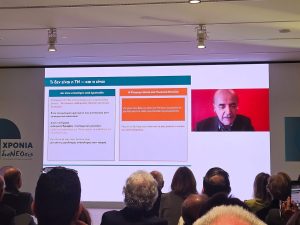
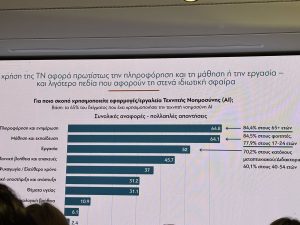
As Evangeli Bista noted on her social media, AI remains a field full of questions:

  • What exactly is Artificial Intelligence?
  • What concerns are emerging around it?

Technology without thought can reinforce the greatest inequalities,” she emphasized, adding that the conversation on ethical and scientifically informed access to technology remains open. The event offered the chance to see “the next day… through the eyes of those who pioneered it,” such as Joseph Sifakis (Turing Award 2007) and Christos Papadimitriou.
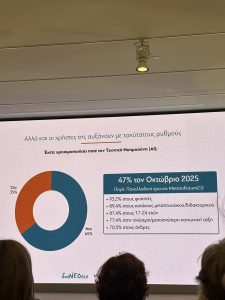
Kapa3’s participation focused on observing, absorbing knowledge, and supporting dialogue around the challenges and opportunities of AI, with particular attention to the social dimension and the inequalities it may create.

By attending this event, Kapa3 continues to demonstrate its commitment to technological developments, the importance of informed and responsible discussion, and understanding the social and ethical implications of Artificial Intelligence.

Kapa3 Participation in the 3rd “Mapping the Unknown in Oncology” Conference

Kapa3 actively participated in the conference “Mapping the Unknown in Oncology – From Hospitals to Homes, mapping the future of oncology care”, organized for its third year by the Medical Society for Research and Education under the auspices of HeSMO (Hellenic Society of Medical Oncologists) and the Hellenic Cancer Society, held on February 27–28, 2026 at the Golden Age Hotel in Athens.

During the events on Saturday, February 28, Ms. Evangelí Bista, Head of Operations and Development at the Kapa3 Cancer Patient Guidance Center, took part in the panel titled “e-Health Tools and Educational Platforms: New Paths for Doctors and Patients.” The panel was moderated by Ms. Z. Saridaki and included panelists G. Koukourakis, S. Peroukidis, F. Tyligadas, and Ch. Christodoulou.

In her presentation, titled “Digital Patient Education: The Patient as an Active Partner,” Ms. Bista highlighted the importance of digital transformation in healthcare, which shifts care from episodic to continuous support, moving healthcare from hospitals into patients’ daily lives and empowering patients to become active participants in managing their health.

In this context, Kapa3 announced that for 2026 it will be the only civil society organization fully integrating AI, cybersecurity, and high-performance computing into its processes and services, implementing:

  • An AI-powered digital assistant (chatbot) for immediate patient guidance and support

  • A voice-command system for website accessibility and text-to-speech conversion

  • Service redesign, simplifying processes and reducing bureaucracy

  • An AI-based recommendation system with usage data analysis to personalize services

Special emphasis was placed on patient navigation, as oncology patients need guidance: where to go, what they are entitled to, when to be concerned, and when to wait. Kapa3 addresses this gap, providing not just information but meaningful, personalized guidance within the healthcare system.

The goal is not to add another service but to unite existing services. The next evolution of this model is Myrto, the digital assistant that serves as a reference point, translating knowledge into daily action.

Because the future of oncology is not only personalized treatment but also personalized understanding.

Kapa3’s participation underscores the organization’s commitment to innovation, collaboration, and ethics, demonstrating how technology can significantly enhance the experience and care of oncology patients.


Kapa3 in Dialogue on Artificial Intelligence and Ethical Regulation

On 18 December 2025, Kapa3 participated in the event “Artificial Intelligence: Towards Regulation or Overregulation?”, on the occasion of the online monograph release “The European Regulation on Artificial Intelligence (EU/2024/1689, Artificial Intelligence Act, AI Act): A First Constitutional-Ethical Perspective” by Fereniki Panagopoulou, an initiative of Syntagma Watch. Representing Kapa3 were co-founder of Kapa3, Evangelia Bista, and legal advisor of Kapa3, Zoi Thanopoulou, presenting the organization’s position and concerns regarding artificial intelligence.

During the discussion, Ms. Bista emphasized that the implementation of new technologies cannot ignore the functioning of the public sector: “What hardware will the new accounting system run on? Which government mechanisms will support it, and within what political-administrative culture? Can hi-tech solutions operate effectively in outdated systems with anachronistic practices?” She also highlighted the philosophical and ethical dimensions of AI: “How are intelligence and consciousness connected, and who decides what we can use and how?

In addition, Kapa3’s core concerns regarding AI integration in healthcare were discussed: the need for transparency and accountability in all uses of digital tools, the protection of patients and the public from algorithmic discrimination, training healthcare professionals for safe and responsible use of technological solutions, and the importance of developing infrastructures and processes that ensure system interoperability and reliability. These concerns are reinforced by Kapa3’s experience in digital patient guidance and the development of support tools with ethical and legal awareness.

Author Fereniki Panagopoulou presented the main points of her monograph, focusing on the practical application of the AI Act: clearly defining responsibilities and limitations in algorithm use, ensuring transparency in AI-driven decisions, and protecting vulnerable groups. She also stressed the importance of aligning technology with ethical principles so that innovation serves citizens rather than efficiency alone. The monograph is available here.

The event highlighted the complex nature of AI-related issues, combining technical, legal, and ethical approaches. Kapa3 reiterated its commitment to contributing to public dialogue on artificial intelligence, protecting citizens’ rights, and promoting the safe and responsible use of digital tools in healthcare, for the benefit of patients and healthcare professionals.

Text/adaptation: Ifiyenia Anastasiou for Kapa3