Κapa3 at IEEE CBMS 2026 | AI for Equitable Oncology Information

Kapa3 at IEEE CBMS 2026: Artificial Intelligence in Support of Equitable Patient Information in Oncology Care

New scientific publication in the Proceedings of the 39th IEEE International Symposium on Computer-Based Medical Systems

The voice and lived experience of patients must remain at the centre of the emerging era of Artificial Intelligence in healthcare.

Kapa3 – Cancer Guidance Centre contributes to a new scientific publication presented in the Proceedings of the 2026 IEEE 39th International Symposium on Computer-Based Medical Systems (CBMS), focusing on how Artificial Intelligence and Retrieval-Augmented Generation can support more equitable, reliable and patient-centred access to information in oncology.

The paper, entitled:

“Informed, Empowered, and Heard: AI and Retrieval-Augmented Generation as Tools for Equitable Patient Information in Oncology”

is authored by Lars Münter, Evangeli Bista, Maria Lavdaniti and Christos Frantzidis, with Evangeli Bista representing Kapa3 as Co-founder.

From access to information to meaningful patient empowerment

A cancer diagnosis creates an immediate need for information that is reliable, understandable and relevant to the individual patient.

At the same time, patients and their families are often expected to understand complex medical terminology, treatment options, prognosis discussions and administrative procedures at a moment of intense psychological and emotional pressure.

The paper highlights that acute stress associated with a serious diagnosis can affect working memory, attention and the ability to process new information. This means that patient information cannot be designed for an ideal, fully attentive reader; it must respond to the real cognitive and emotional conditions experienced by people facing cancer.

The key question is therefore not simply:

“How much information do we provide?”

but rather:

“Are we providing the right information, at the right time, in a form that people can understand and act upon?”

AI and Retrieval-Augmented Generation: towards trustworthy and evidence-grounded information

The publication places particular emphasis on Retrieval-Augmented Generation (RAG).

RAG architectures combine the generative capabilities of large language models with the retrieval of information from curated and verified knowledge sources. In a healthcare setting, this can include clinical guidelines, validated patient information resources, regulatory documents and peer-reviewed literature.

This approach offers an important advantage over purely generative AI systems: responses can be grounded in identifiable sources, supporting greater transparency and enabling patients and healthcare professionals to verify where information comes from.

In oncology, this is especially important.

A patient does not simply need a quick answer. They need information that is:

accurate, current, understandable, accessible and appropriate to their individual situation.

Artificial Intelligence as a tool for equity

One of the central themes of the paper is inequality in access to high-quality oncology information.

Geography, language, socioeconomic circumstances, health literacy, digital literacy and access to specialised healthcare services can significantly influence a person’s ability to understand their diagnosis, treatment options and rights.

The publication pays particular attention to the Greek context, where patients living in large urban centres may experience a very different information environment from those living in rural, remote or island communities.

When equity is treated as a core design principle, AI-RAG systems can potentially support:

  • multilingual access to health information,
  • different levels of language and information complexity,
  • voice-based interfaces,
  • shorter and more manageable units of information,
  • low-bandwidth or offline-capable solutions,
  • and opportunities for patients to return to information when they are ready to process it.

Technology alone, however, does not create equity.

The way technology is designed determines whether it reduces existing inequalities or reproduces them.

Designed with patients, for patient needs

The paper calls for an important shift in the way digital health systems are developed.

Many traditional health information systems are designed primarily around institutional or clinical workflows, with patient-facing communication added later.

For patient-centred AI, this logic must be reversed.

Systems should be designed with patients and around patient needs, with patients and informal carers actively involved in shaping the knowledge base, the questions the system is expected to answer and the ways information is presented.

This also means moving beyond systems that simply respond to individual questions.

A meaningful AI-supported information environment could help patients prepare for clinical consultations, organise their questions, understand the next steps in their care and become more aware of their rights.

The paper highlights applications such as consultation preparation guides, question prompts before appointments and post-consultation summaries as examples of how technology can support patients before, during and after important healthcare interactions.

AI should strengthen, not replace, human relationships

Perhaps the most important message of the publication is that the transformative potential of AI in oncology is not primarily technical. It is relational.

Artificial Intelligence should not create distance between patients and healthcare professionals.

It should help strengthen their communication.

A better-informed patient can arrive at a clinical consultation more prepared, identify questions and concerns more clearly, participate more actively in shared decision-making and communicate more effectively with the healthcare team.

The same applies to informal carers, who often carry a significant part of the informational and emotional burden of cancer care.

For this reason, the paper argues that AI-RAG systems should be designed to strengthen the relationship between patients, carers and healthcare professionals, rather than to replace any part of this human network of care.

For healthcare professionals, trustworthy information systems may also reduce the time required for basic information provision, allowing more of the clinical encounter to focus on nuanced discussions, decision-making and the human aspects of care that technology cannot replicate.

From information to trust

This scientific contribution adds to an increasingly important discussion about the future of healthcare:

How can Artificial Intelligence be developed and used in ways that genuinely respond to human needs?

The answer does not lie only in more powerful AI models or larger volumes of data.

It also lies in evidence, transparency, accessibility, co-design, equity and respect for patient rights.

As the paper concludes, people affected by cancer in Greece and across Europe deserve access to information that is accurate, personalised, accessible and respectful of their rights, regardless of where they live, the language they speak or the socioeconomic resources available to them.

For Kapa3, participating in this scientific discussion also reflects a broader commitment: ensuring that real patient needs, lived experience and equitable access are represented in the design and evaluation of the next generation of digital health and AI-supported tools.

Publication details

Title: Informed, Empowered, and Heard: AI and Retrieval-Augmented Generation as Tools for Equitable Patient Information in Oncology

Authors: Lars Münter, Evangeli Bista, Maria Lavdaniti, Christos Frantzidis

Published in: 2026 IEEE 39th International Symposium on Computer-Based Medical Systems (CBMS)

DOI: 10.1109/CBMS69103.2026.00302

find more 499901b523

Evangeli Bista Joins the PATH Expert Group as an Independent Expert: Bringing the Patient Perspective into the New Era of AI in Cancer Care

A new contribution to the European dialogue on safe, responsible and human-centred Artificial Intelligence in healthcare

Evangeli Bista, Co-founder and Head of Operations and Development of Kapa3 – Cancer Guidance Centre, has been invited to join the Expert Group of the European research and innovation project PATH – Patient AI Treatment Hub as an independent expert.

Her participation is undertaken in a personal and independent capacity, with her professional affiliation to Kapa3 – Cancer Guidance Centre, creating an opportunity to bring into the European dialogue experience gained through direct engagement with people affected by cancer, survivors, caregivers and healthcare professionals. The PATH Terms explicitly define Expert Group members as acting independently rather than as partners, employees, agents or subcontractors of the Consortium.

What is PATH – Patient AI Treatment Hub?

PATH – Patient AI Treatment Hub is a European research and innovation project focused on supporting the safe and effective integration of Artificial Intelligence into cancer care through the development of a secure, interoperable and privacy-preserving digital platform.

The project aims to explore how Artificial Intelligence tools can be safely integrated into cancer-care pathways, supporting healthcare professionals and contributing to more personalised approaches while safeguarding privacy and health data.

At the heart of this effort lies a critical question:

How can technological innovation create meaningful value for patients while preserving trust, human oversight, safety and equity?

Participation in the PATH Expert Group

As a member of the PATH Expert Group, Evangeli Bista will contribute independent expertise, opinions, input, comments and feedback in relation to selected project use cases and activities.

The experience developed through Kapa3’s work can contribute to discussions around issues such as:

  • patient-centred cancer care,
  • patient navigation across health and social-care systems,
  • equitable access to information and services,
  • health and digital literacy,
  • health and social rights,
  • responsible use and protection of health data,
  • transparency and human oversight in Artificial Intelligence systems,
  • meaningful involvement of patients and civil society in technology design,
  • and translating technological innovation into real value for people.

Why the Patient Voice Must Be Part of Innovation

Artificial Intelligence is creating new possibilities for healthcare and cancer care. At the same time, its growing use raises important questions concerning trust, transparency, safety, equitable access and human oversight.

For Kapa3, the development of a digital solution cannot begin solely with the question of what is technologically possible.

It must also ask:

What does the patient actually need?

Can people understand the information they receive?

Do they know where that information comes from?

Can they trust the system?

Is it clear when Artificial Intelligence is being used and when human professional judgement is required?

Could digital inequalities lead to new inequalities in healthcare?

And ultimately, does innovation genuinely improve the experience and pathway of a person facing cancer?

These are questions that we believe should remain at the centre of the European discussion on Artificial Intelligence in healthcare.

Kapa3’s experience in digital health

Evangeli Bista’s participation in the PATH Expert Group comes at a time when Kapa3 is systematically expanding its work in digital health, patient navigation and the responsible use of emerging technologies to support people affected by cancer.

This broader work also includes MYRTO – Digital Navigator for Health and Social Rights, an independent Kapa3 initiative developed to help transform complex and often fragmented information on rights, benefits and administrative procedures into more accessible, structured and evidence-based guidance for patients and caregivers.

MYRTO is not part of PATH, and the two initiatives are independent from one another.

However, the experience of developing patient-facing digital services has reinforced several principles that Kapa3 considers essential:

reliable information, transparent sources, understandable communication, data protection, human oversight and a clear pathway to professional support when technology alone is not enough.

This distinction is also important from an intellectual-property perspective, since the PATH Terms preserve intellectual property that exists independently of the Expert’s Services and is not incorporated into PATH Contributions.

From information to trust

Digital transformation in healthcare is not simply about more data, more algorithms or more applications.

It is about creating greater understanding, better access and stronger trust.

For a person facing cancer, information has value when it can be translated into a meaningful next step.

Technology has value when it reduces — rather than increases — complexity.

And Artificial Intelligence has value when it strengthens, rather than replaces, human care, professional judgement and the patient’s ability to participate meaningfully in decisions affecting their life and health.

A new opportunity to contribute to the European dialogue

For Kapa3, the invitation to Evangeli Bista to participate as an independent expert in the PATH Expert Group represents an important opportunity to bring into the European dialogue experience, needs and concerns emerging from the real-world context of cancer care and patient support.

The objective remains clear:

Artificial Intelligence in healthcare should advance with safety, transparency, responsibility, equitable access and meaningful involvement of the people it is designed to serve.

Because innovation creates real value when it is designed with people and for people.


PATH – Patient AI Treatment Hub | At a glance

Field: Artificial Intelligence and data in cancer care
Project: PATH – Patient AI Treatment Hub
Focus: Safe and effective integration of AI into cancer care through secure, interoperable and privacy-preserving approaches.
Expert Group: Independent external experts providing expertise, opinions, input, comments and feedback to the Project.
Independent Expert: Evangeli Bista
Professional role: Co-founder & Head of Operations and Development
Affiliation: Kapa3 – Cancer Guidance Centre


New Disability Benefits Registry: What’s Changing and How It Will Make Life Easier for Citizens and People with Disabilities.

As part of the digital transformation of social care, the joint ministerial decision on the establishment, maintenance, and operation of the “Disability Benefits Registry.”

This new digital tool on the National Disability Portal promises to put an end to the bureaucracy and the fragmentation of information that both people with disabilities and their families face on a daily basis.

A government-wide initiative.
The scope and significance of this initiative are underscored by the fact that the decision was signed by the overwhelming majority of government members—ranging from the Ministries of Finance, Health, and Labor, all the way to the Ministries of Education, Infrastructure & Transportation, Environment, and Digital Governance. This broad consensus highlights that benefits for people with disabilities are not limited to financial allowances alone, but extend to tax exemptions, transportation assistance, educational
facilities, social services, and special provisions across the entire public sector.

What is the Disability Benefits Registry?

The Registry is a specialized subsystem of the National Disability Portal. Its purpose is to collect, record, and transparently document all accommodations, allowances, benefits, and services to which people with disabilities or their related individuals are entitled.

What does the documentation of each benefit include?

For each available benefit or accommodation, the Registry will document the following in a standardized and clear manner:
• Title & Description: the distinctive title and brief description of the benefit.
• Legal Framework & Competent Authorities: the applicable provisions and the competent agencies
responsible for awarding or granting the benefit.
• Eligibility Requirements: the disability-related and other requirements for receiving the benefit.
• Financial Details & Frequency: the frequency and monetary value (exact amount or range), provided
that it is quantified in monetary terms.
• Application Process: detailed instructions for submitting the application and a direct link to the National Registry of Administrative Procedures “MITOS.”

Who is the Operating Agency, and what are the agencies’ obligations?

The Organization for Welfare Benefits and Social Solidarity (OPEKA) is designated as the operating agency for the Registry. It is responsible for ensuring continuous operation, maintaining the system, verifying the accuracy of entries, and issuing access credentials.
With regard to data entry personnel and data updates, each competent Ministry, Agency, and Municipality shall designate authorized “Data Entry Personnel”; such designations must be made within 10 days of publication.

They are required to complete the initial registration of benefits within one (1) month of the
decision’s publication, to immediately update the system in the event of changes or new benefits, and to annually verify the accuracy of the data.

Public Access and Information.

One of the most significant benefits of the new regulatory framework is that all information in the registry is public and accessible to everyone via the Internet. This provides immediate, accurate, and comprehensive information to those interested, without requiring them to travel or contact multiple public agencies—a process that often causes considerable inconvenience to thousands of people.

The creation of the Disability Benefits Registry is a positive step toward ensuring equal access to information and reducing bureaucratic burdens.

“Myrto” under Scientific Evaluation: Transparency, Evidence and Human Oversight in Social Navigation for Oncology Patients

“Myrto” under Scientific Evaluation: Transparency, Evidence and Human Oversight in Social Navigation for Oncology Patients

The first closed scientific testing workshop of the Digital Health and Social Rights Navigator has been completed

Athens, 6 July 2026

The first closed scientific testing and evaluation workshop of “Myrto”, the Digital Health and Social Rights Navigator developed by the Cancer Patient Guidance Centre – Kapa3, was successfully completed.

The workshop was organised by the Cancer Patient Guidance Centre – Kapa3, with the support of René Descartes – Cnam College and the participation of SimasiaAI. It functioned as a dynamic scientific co-design workshop, bringing together specialised professionals from the fields of healthcare, social care, information technology and personal data protection.

The process was closed and strictly experimental in nature and did not constitute a public presentation of a completed product. Its purpose was to evaluate the behaviour of the application through hypothetical and fully anonymised scenarios, to record correct responses and areas requiring improvement, and to use expert feedback for the next phase of development.

The project “Myrto – Health and Social Rights Navigator” is being developed as a knowledge-based digital social navigation system, guided by the principles of explainable, transparent and human-centred Artificial Intelligence.

Its aim is to transform complex legal, administrative and social information into clear, evidence-based and practically useful guidance for oncology patients, caregivers and citizens.

“Myrto” does not replace professional social, legal, medical or clinical judgement. It operates as a supportive information and navigation tool, with clearly defined functional boundaries, human oversight and the possibility of referral to the competent services and professionals of Kapa3.

The programme is implemented with the support of the TIMA Charitable Foundation.

From Information to Understandable Knowledge

During the workshop, the need that led to the creation of “Myrto” was presented, along with the real barriers faced by patients and caregivers when seeking information on social rights, benefits and administrative procedures.

Particular emphasis was placed on addressing digital and informational exclusion. “Myrto” is designed to transform fragmented and often difficult-to-understand information into simple, structured and comprehensible guidance.

A Thematically Specialised and Curated Knowledge Base

The project’s technical partner, SimasiaAI, presented the operation of the application and the architecture used for information retrieval and synthesis.

“Myrto” uses a hybrid search mechanism that combines text retrieval and semantic search techniques, with the aim of identifying the information most relevant to the user’s question. The application operates on a thematically specialised and curated knowledge base.

A central element of its design is the traceability of information, namely the ability to link an answer to the source on which it is based. The use of validated sources reduces the risk of unsupported responses and enables the identification, review and correction of issues through a process of continuous maintenance, regular updating and adaptation to evolving guidelines and regulatory requirements.

Explainability and Human-Understandable Answers

The evaluation did not focus only on whether “Myrto” retrieves the correct information, but also on whether it can present that information in a clear, understandable and conceptually coherent way.

This approach strengthens trust, responsible use of the tool and the meaningful empowerment of citizens through a response-generation system that supports a transparent, evidence-based and human-supervised knowledge ecosystem, in which every piece of information is understandable, verifiable and connected to its source.

Data Protection and Compliance by Design

Personal data protection and regulatory compliance are embedded from the design stage of the application, in accordance with the principles of data protection by default and by design.

During the workshop, only hypothetical or fully anonymised cases were used. Particular emphasis was placed on the principles of data minimisation, anonymisation and secure processing. These principles are directly linked to contemporary requirements for the responsible development of Artificial Intelligence systems, the protection of special categories of data and compliance with the European regulatory framework.

Live Testing of Hypothetical Scenarios

The professionals who participated in the workshop tested the application individually and in small groups, using only hypothetical and fully anonymised cases. The testing was based on an approach that evaluated the behaviour of the system, examining not only whether the final answer was correct, but also whether the overall operation of the application was safe, understandable and appropriate for the specific request.

Disability Certification through KEPA

In one of the key scenarios, “Myrto” was asked to guide a hypothetical patient who did not know how to start the disability certification procedure through KEPA. The system retrieved the main steps of the process, organised the information in an understandable format and provided relevant references to the sources.

Participants evaluated:

  • the accuracy of the information,
  • the completeness of the steps,
  • the clarity of the language,
  • and the practical usefulness of the answer.

Travel from the Region for Treatment

In a second scenario, the case of an oncology patient who needed to travel from the region to another location for treatment was examined. The application identified relevant categories of socioeconomic support and benefits and presented possible next steps to the user.

The test allowed participants to assess:

  • the correct identification of the request,
  • the connection between different rights and benefits,
  • the completeness of the sources,
  • and the possibility of referral to the appropriate services.

At the same time, cases were also examined in which:

  • the question was unclear or incomplete,
  • the user did not know which right or benefit to look for,
  • clarifying questions were required,
  • medical or personalised legal advice was requested,
  • or immediate human intervention was necessary.

A Continuous Cycle of Scientific Feedback

The meeting concluded with a discussion of the testing results, a review of the technical logs and the presentation of key usage statistics for the application.

The participants’ observations are not treated as isolated comments, but as structured scientific feedback for improvement. In this way, a closed cycle of learning and feedback is created, in which technology, scientific knowledge and the experience of professionals interact continuously.

The continuous involvement of experts and the integration of structured feedback are considered critical for strengthening transparency, reliability and trust in Artificial Intelligence systems used in sensitive fields.

The Interdisciplinary Project Team

The development, scientific documentation and regulatory compliance of “Myrto” are supported by an interdisciplinary team from the fields of health services administration, information technology, personal data protection, language technology and software development. The workshop was attended by:

Evangeli Bista, Co-founder of Kapa3 and Head of Strategic Partnerships; Aristea Archontidou, Industrial Informatics Engineer with postgraduate specialisation in Health Policy and Health Services Planning; Anastasia Vlachopoulou, lawyer and member of the Thessaloniki Bar Association, specialised in personal data protection; Dimitris Papadakis, Co-founder and Sales Manager at SimasiaAI and Project Manager of the “Myrto” project; and Giannis Barous, Co-founder and CTO of SimasiaAI, PhD candidate in Computer Science based in San Francisco, who has undertaken the technical component of the project: how the system identifies the right information, how it connects it with reliable sources and how it provides answers that are evidence-based, useful and safe.

About Kapa3

The Cancer Patient Guidance Centre – Kapa3 is a social support, information and navigation organisation for oncology patients, survivors, caregivers and their families. Its aim is to contribute to equal access to oncology care, social protection and the rights associated with the cancer experience.

Every day, Kapa3 supports people who face not only the disease itself, but also a range of practical, administrative, social and psychosocial challenges. Through personalised social guidance, the organisation helps patients and caregivers learn about their rights, understand available benefits and services, navigate administrative procedures and connect with appropriate support structures.

The main pillars of Kapa3’s work include information on social and insurance rights, support in accessing health and social care services, guidance on benefits and procedures, empowerment of patients and caregivers, and connection with professionals, organisations and communities.

As part of its digital strategy, Kapa3 develops digital empowerment and social navigation tools, such as “Myrto”, the Digital Health and Social Rights Navigator. “Myrto” is designed to transform complex legal, administrative and social information into clear and evidence-based guidance for oncology patients, caregivers and citizens, always with human oversight, transparency and respect for the limits of technology.

Kapa3’s philosophy is based on the principle that care is not limited to medical treatment. It includes access to information, social protection, psychosocial support, dignity, empowerment and the ability of every person to know and claim their rights.

Through collaborations with health and social care professionals, academic and research institutions, civil society organisations, public structures, volunteers and communities, Kapa3 seeks to build bridges between the patient, information, services and real access.
Kapa3 Cancer Patient Support Center and the USTEP Institute announce the launch of their strategic partnership

The Kapa3 Cancer Patient Support Center and the USTEP Institute announce the launch of their strategic partnership, aimed at providing meaningful support to cancer patients and promoting equal opportunities in scientific, social, and educational levels.

The partnership was formalized through the signing of a Memorandum of Understanding, which was signed in Athens on May 26, 2026, by Evangelia Bista, Co-founder and Head of Development and Operations at Kapa3, and Vasileios Stavrou, Co-founder and Scientific Director of the USTEP Institute.

As part of the collaboration, the two organizations will develop joint initiatives that include:

Organizing workshops and conferences focused on patient education, improving the quality of care, and strengthening the relationship of trust between patients and healthcare professionals.

The implementation of information and awareness campaigns on prevention, symptom management, and combating myths and social stigma surrounding cancer.

Collaboration on national and European programs aimed at developing innovative initiatives and actions with a social impact.

Conducting joint research and disseminating the results at the national and European levels.

This partnership reaffirms the two organizations’ commitment to actively contribute to the creation of a more supportive and inclusive environment for people living with cancer, by enhancing access to knowledge, information, and social empowerment.

The Memorandum of Cooperation is valid for one year, with the option to renew upon mutual written agreement by both parties.


Evangeli Bista on DION TV: Social Support and Kapa3’s Role in Guiding Oncology Patients

On March 19, 2026, Evangeli Bista, Co-founder of Kapa3, gave an interview to Christos Thanasainas, journalist and Scientific Director of Forlife Clinic, on Central Macedonia’s DION TV, during the daily program All About Health, which covers topics on health, nutrition, autoimmune diseases, and recent scientific developments.

The discussion highlighted the importance of social support for cancer patients and their families, both inside and outside the hospital, as well as the critical role of Kapa3 in guiding and providing holistic support to patients.

WHAT IS SOCIAL SUPPORT – TWO WORLDS:

Social support in cancer care is not a single, uniform concept. Inside the hospital, it mainly concerns assistance with the public healthcare system and bureaucratic procedures. Outside the hospital, real life begins: family, caregivers, and decisions the patient must make.

MAJOR SYSTEM CHALLENGES:

As Ms. Bista noted, hospitals face a significant shortage of social workers and related professionals. International literature suggests that there should be 10 social workers for every 2,500 residents—but this is not the case in Greece. In 92 municipalities, there is not a single social worker, while in areas where social workers exist, most are on fixed-term contracts or funded through programs (such as ESIF). The result is a maze of bureaucracy and uncertainty for the patient, who must understand medical and legal terms, make critical decisions, and manage financial consequences—often without support.

THE ROLE OF KAPA3 – SOLUTION, NOT JUST A SERVICE:

In this environment, Kapa3 provides holistic guidance and support, helping patients navigate procedural and practical issues—either independently, if they feel capable, or with active assistance from the organization at every step. Coverage is nationwide, although the complexity and fragmented structure of the system require ongoing study and time for effective support.

THE “HEAVY” MESSAGE – UNDERSTANDING VS. INFORMATION:

As Ms. Bista emphasized:

“The patient doesn’t need more information – they need understanding.”

The process is essentially behavioral: understanding reduces uncertainty, uncertainty reduces anxiety, anxiety affects behavior, and behavior determines health outcomes.

Kapa3 operates within this “maze,” offering holistic guidance and support. Intervention can be supportive, giving patients the ability to act on their own, or active, guiding them step by step. Kapa3 covers the entire country, addressing the growing needs of patients.

THE BIG CHALLENGE: “MYRTO”

“Myrto” represents Kapa3’s major initiative for 2026. After five years in oncology social support, Kapa3 addresses secondary digital exclusion with “Myrto”—a Digital Health Navigator designed to transform knowledge into practical understanding and provide real-time guidance for patients, avoiding the “chaotic wandering” through the healthcare system. The platform is currently in the study and design phase, aiming to meet the real needs of patients and their caregivers.

The interview highlighted the importance of social support, understanding over mere information, and the role of digital technology in modern oncology care. Kapa3 and Myrto strive to bring care from the hospital into patients’ daily lives through a holistic, personalized, and practical approach.

For more information and to watch the full interview, see the video on YouTube here.

(Note: Video in Greek with no English subtitles).

You can dowload our Press Release here

Text/adaptation: Ifiyenia Anastasiou for Kapa3

Kapa3’s Contribution to the 6th Nursing Symposium of Western Macedonia: Digital Health, Empathy, and Patient Navigation

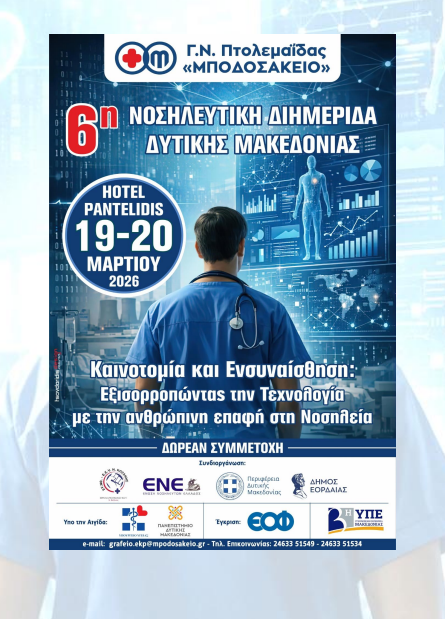
With active participation in a well-established scientific meeting on contemporary nursing issues, Kapa3 took part in the 6th Nursing Symposium of Western Macedonia on “Innovation and Empathy: Balancing Technology with Human Contact in Nursing”, held on March 19–20, 2026, in Ptolemaida.

The Symposium, now a key annual event for the nursing community, serves as a platform for dialogue, knowledge exchange, and highlighting the multifaceted role of nurses in modern healthcare.

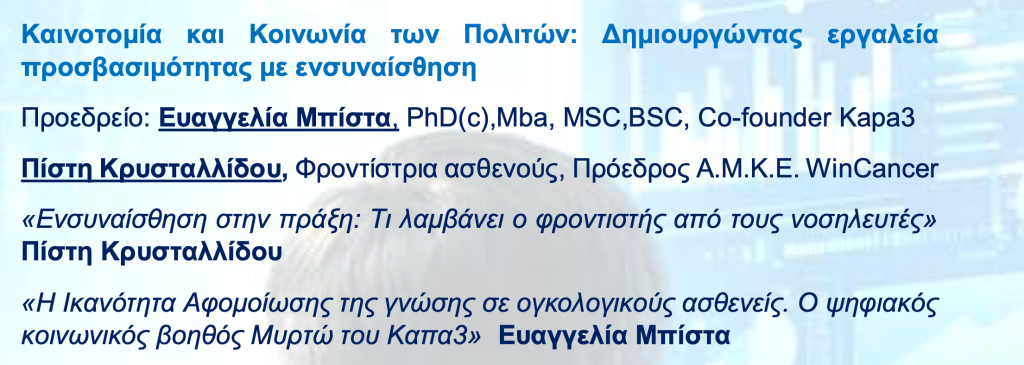
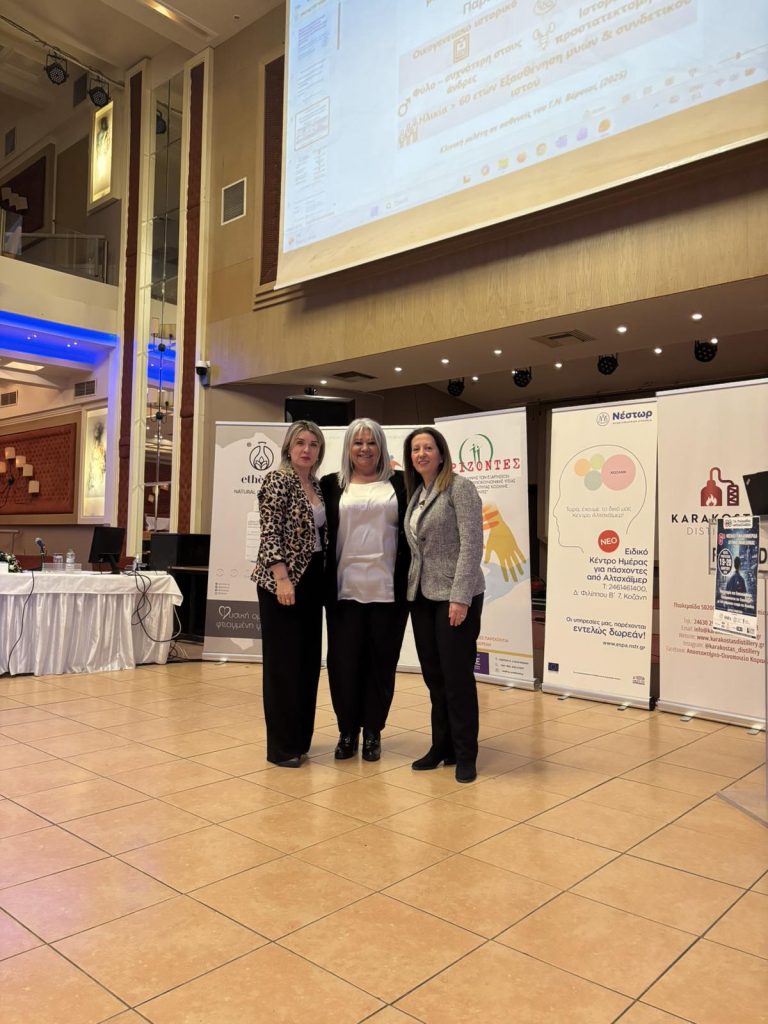
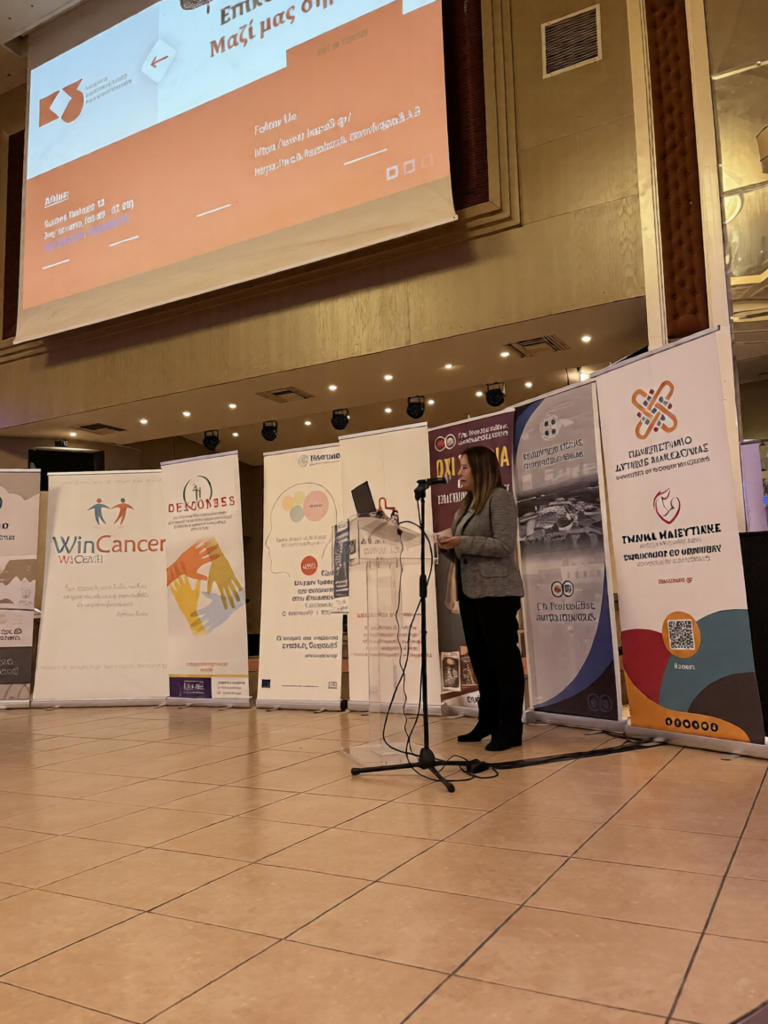
As part of the thematic session “Innovation and Citizen Engagement: Creating Accessible Tools with Empathy”, Ms. Evangeli Bista, co-founder of Kapa3, joined the panel along with Ms. Pisti Krystallidou, President of the NGO WinCancer, showcasing the role of civil society in shaping contemporary, accessible healthcare services.

On March 20, Ms. Evangeli Bista and Ms. Pisti Krystallidou actively participated in the Round Table on the same theme. Ms. Krystallidou presented “Empathy in Practice: What the Caregiver Gains from Health Professionals”, highlighting the daily challenges and support needs of people caring for patients. Ms. Bista emphasized Kapa3’s role and the use of digital tools in guiding patients effectively.

During her presentation, Ms. Bista outlined how the healthcare system is transforming: from episodic care to continuous support, from hospital-centered services to daily-life integration, and from the healthcare professional as the sole source of knowledge to the patient as an active participant. In this new environment, digital health and patient navigation go beyond mere tools, focusing on the citizen’s ability to use them meaningfully in everyday life.

Special attention was given to the needs of oncology patients, who require not only access to information but also guidance through a complex healthcare system—knowing where to turn, what they are entitled to, and how to manage critical decisions in daily life. In this context, the importance of patient navigation was highlighted, a model that Kapa3 has implemented since its foundation, acting as a bridge between available services and patients’ real needs.

Finally, the digital social assistant “Myrto was presented, serving as a single reference point for patients, facilitating access to information and services, and translating knowledge into practical, everyday support.

Kapa3’s participation in the Symposium highlighted the importance of combining technological innovation with empathy, confirming that the future of oncology care is not only about personalized treatment but also about personalized understanding of each patient’s needs.

Download our Press Release here 

Text/Adaptation: Ifiyenia Anastasiou for Kapa3

Kapa3 Participation in the 3rd “Mapping the Unknown in Oncology” Conference

Kapa3 actively participated in the conference “Mapping the Unknown in Oncology – From Hospitals to Homes, mapping the future of oncology care”, organized for its third year by the Medical Society for Research and Education under the auspices of HeSMO (Hellenic Society of Medical Oncologists) and the Hellenic Cancer Society, held on February 27–28, 2026 at the Golden Age Hotel in Athens.

During the events on Saturday, February 28, Ms. Evangelí Bista, Head of Operations and Development at the Kapa3 Cancer Patient Guidance Center, took part in the panel titled “e-Health Tools and Educational Platforms: New Paths for Doctors and Patients.” The panel was moderated by Ms. Z. Saridaki and included panelists G. Koukourakis, S. Peroukidis, F. Tyligadas, and Ch. Christodoulou.

In her presentation, titled “Digital Patient Education: The Patient as an Active Partner,” Ms. Bista highlighted the importance of digital transformation in healthcare, which shifts care from episodic to continuous support, moving healthcare from hospitals into patients’ daily lives and empowering patients to become active participants in managing their health.

In this context, Kapa3 announced that for 2026 it will be the only civil society organization fully integrating AI, cybersecurity, and high-performance computing into its processes and services, implementing:

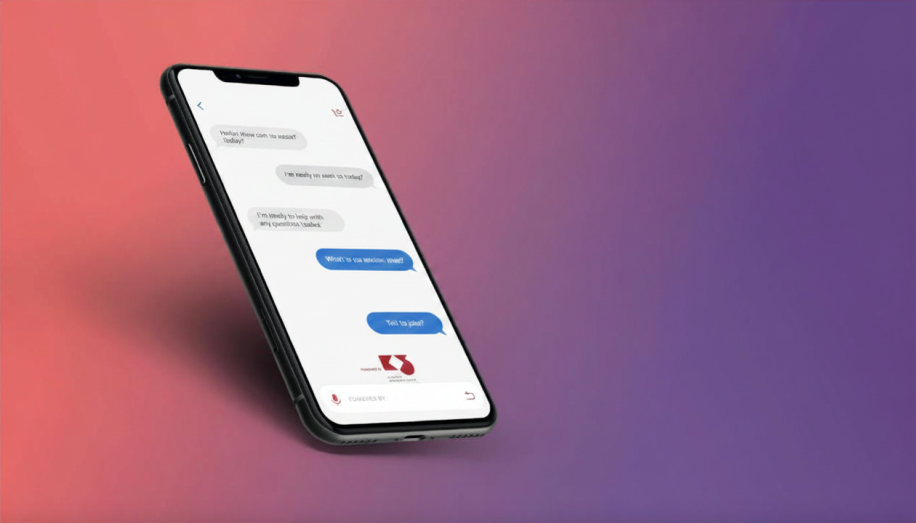
  • An AI-powered digital assistant (chatbot) for immediate patient guidance and support

  • A voice-command system for website accessibility and text-to-speech conversion

  • Service redesign, simplifying processes and reducing bureaucracy

  • An AI-based recommendation system with usage data analysis to personalize services

Special emphasis was placed on patient navigation, as oncology patients need guidance: where to go, what they are entitled to, when to be concerned, and when to wait. Kapa3 addresses this gap, providing not just information but meaningful, personalized guidance within the healthcare system.

The goal is not to add another service but to unite existing services. The next evolution of this model is Myrto, the digital assistant that serves as a reference point, translating knowledge into daily action.

Because the future of oncology is not only personalized treatment but also personalized understanding.

Kapa3’s participation underscores the organization’s commitment to innovation, collaboration, and ethics, demonstrating how technology can significantly enhance the experience and care of oncology patients.


Kapa3 at Athens Digital Health Week 2026 – The Role of Patient Digital Navigators in Healthcare Digital Transformation

As part of Athens Digital Health Week 2026, Kapa3, as a new member of the Hellenic Digital Health Cluster (HDHC), participated in the closed members and partners meeting as well as the panel discussion titled “Synergies to Bridge the Needs of Healthcare Services in Digital Transformation,” presenting the role of patient digital navigators and exploring how digital technologies can strengthen a patient-centered healthcare system.

The discussion focused on a key question: how can available digital solutions effectively address the real needs of the healthcare and social care system?

Special emphasis was placed on the importance of interoperability, evidence-based decision-making, transparency, and comparability, as well as connecting research and governance, promoting equality, and considering the impact of artificial intelligence in the modern healthcare ecosystem.

Kapa3 was represented by Evangeli Bista, who highlighted the critical role of patient organizations in successfully integrating digital technologies into the care journey.

As she noted:

“Digital health is not only about developing technological solutions, but about their meaningful integration into the patient’s care journey. Civil society organizations (patients, caregivers, friends, professionals) can play a crucial role as adoption partners, contributing to design, implementation, and evaluation. Through collaboration within the Cluster, an ecosystem is strengthened where innovation translates into real accessibility and continuity of care with maximum social impact. For the Cancer Patients Guidance Center – Kapa3, developing its role as patient digital navigators can only happen through such synergies.”

The panel also included representatives from Affidea Greece, Gnomon Informatics SA, and REA Maternity & Gynecology Clinic, who contributed their expertise to a productive dialogue on aligning technology, clinical practice, and data governance.

During the closed meeting, the need to strengthen joint research initiatives, interoperability, and systematic collaboration among ecosystem members was emphasized, ensuring that innovation translates into measurable value for both patients and the healthcare system.

For Kapa3, developing its role in the digital health ecosystem as patient digital navigators is a strategic priority. Through such collaborations, patient organizations are empowered to actively contribute to a more transparent, equitable, and truly patient-centered healthcare system, where technology serves as a tool for empowerment rather than an end in itself.

Download our Press Release in pdf or word

The “Myrto” Health Navigator : A New Era of Digital Support for Oncology Patients

The “Myrto” Health Navigator brings digital and AI-powered care closer to oncology patients, supporting personalization and equitable access to services.

On the occasion of the recent initiatives implemented by Kapa3 in the context of World Cancer Day, our organization once again highlighted the importance of access, empowerment, and meaningful support for oncology patients. Through awareness actions and public engagement, we reaffirmed our commitment to strengthening patients’ voices and improving their everyday reality.

Throughout its journey, Kapa3 has consistently demonstrated its dedication to supporting oncology patients by bridging gaps in information, accessibility, and social care. Building on this experience, we are now taking the next step forward.

After five years of continuous presence in empowering oncology patients through digital guidance, Kapa3 is expanding its footprint in the field of social accessibility by creating an innovative digital assistant: “Myrto.”
“Myrto” addresses the phenomenon of second-level digital exclusion, transforming digital information into a human, accessible, and meaningful experience. It represents the first Social Artificial Intelligence application in the field of social welfare for oncology patients in Greece.

It goes beyond providing information: it converses, guides, and evolves according to users’ real needs, with an emphasis on both accessibility and psychosocial support.

Our aim is to develop a fully functional chatbot integrated into the Kapa3 website, to train social workers and healthcare professionals in its use, and to substantially reduce the digital divide for vulnerable groups.

“Myrto” will offer holistic and personalized guidance to oncology patients as a true Patient Empowerment e-Navigator, through two main pillars:

  • Patient Advocate: Support with legal and administrative procedures (benefits, patient rights), facilitation of access to social welfare services, and guidance within the local healthcare system.

  • Health Navigator: Provision of essential information for health self-management.

At the same time, the platform will enhance communication, highlight available community resources, and incorporate an innovative health literacy assessment tool, enabling full personalization of the services provided.

The project will be developed, tested, and validated by oncology patients as well as by social workers, legal and financial experts, and consultants in health communication and psychology, both in person and online across Greece.

Your participation could substantially contribute to co-creating a personalized Navigator for every oncology patient, as a multidisciplinary perspective is a key factor in the project’s success.

Upon completion, we expect significant social, health, and scientific impact: improved patient quality of life, strengthened self-management, reduced resource requirements, and the creation of a network of experts and informed patients and professionals.

The Founding Sponsor of the “Myrto”Health Navigator is the TIMA Foundation.

We invite organizations, professionals, and stakeholders to become partners in this new chapter of the “Myrto” Health Navigator  by Kapa3 and contribute to building a more accessible, inclusive, and patient-centered healthcare environment.

Evangeli Bista, 

Co-founder Kapa3 – Head of Strategic Partnerships
PhD(c), MBA, MSc, BSc

Text/Adaptation: Ifiyenia Anastasiou for Kapa3