
Memorandum of Understanding between the University of West Attica—specifically the Department of Occupational Therapy—and the NGO KAPA3.

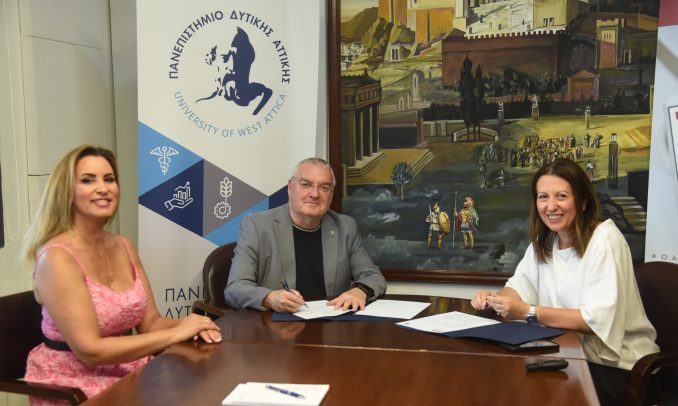
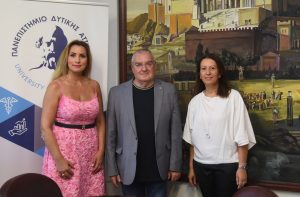
On Tuesday, June 9, a meeting was held to sign a Memorandum of Understanding between the University of West Attica—specifically the Department of Occupational Therapy—and the NGO KAPA3.

The meeting was attended by the Rector of the University of West Attica, Panagiotis Kaldis Penelope Vlotinou, Assistant Professor in the Department of Occupational Therapy Evangelia Bista, co-founder of the organization, as well as representatives from both organizations, including the interdisciplinary team of KAPA3: Despoina Chrysostomou, Psychologist Katerina Georgiopoulou, Social Worker Yiannis Kontogiorgis, Psychologist, and Eleftheria-Irini Polyzoti, an intern from the Department of Social and Educational Policy, as well as students from the Occupational Therapy Department.

During the meeting, a constructive discussion took place regarding the prospects for cooperation between the two organizations, with the aim of developing joint actions and initiatives that will contribute to strengthening education, research, social contribution, and the connection between the academic community and society.

In this context,  it was decided in April to jointly organize a major scientific conference, which will focus on an interdisciplinary and holistic approach to health, on combating social inequalities in healthcare, as well as on the management of chronic disease. The aim of this initiative is to raise community awareness, facilitate the exchange of expertise among professionals and scientific bodies, and disseminate scientific knowledge and information to the general public.

Special mention was made of the innovative work of KAPA3, the digital Health Navigator “Myrto,” a modern artificial intelligence tool currently under development and designed to support cancer patients, their families, and their caregivers. “Myrto” will function as a digital assistant (Chatbot) and Health and Rights Navigator, providing immediate, reliable, and personalized information on health, social welfare, rights, benefits, and available support services. The project aims to empower patients, improve their access to information, and reduce inequalities in health and social care through the use of digital technologies and artificial intelligence applications. The development of “Myrtos” represents a pioneering application of social artificial intelligence in the field of oncology care in Greece and is part of KAPA3’s strategy to promote innovation, accessibility, and the active participation of patients in managing their own health.

The meeting concluded in a particularly positive atmosphere of mutual appreciation and recognition. In this context, the Department of Occupational Therapy at the University of West Attica made a symbolic gesture toward the representative of KAPA3, Evangelia Bista, presenting her with a commemorative gift as a token of appreciation for her many years of valuable social contribution in the field of support for cancer patients. At the same time, as a gesture of hospitality and appreciation, the team was offered a specially produced wine, which is an original creation of the University of West Attica.


There is an urgent need for psychological support for cancer patients. The KAPA3 team explains and advocates for this

There is an urgent need for psychological support for cancer patients. The KAPA3 team explains and advocates for this

Every day, healthcare professionals are called upon to communicate with, assess, and, above all, support people who are going through cancer.

Does cancer affect only physical health, or does it also have a profound impact on a person’s psychological, social, and emotional life? The needs that arise during the course of the illness are many and are often accompanied by the question: “What does the disease really bring to a person’s life?” A cancer diagnosis brings about significant changes in daily life, relationships, social roles, and the way a person perceives themselves and their future.

A cancer diagnosis is an extremely stressful event, often accompanied by feelings of fear, uncertainty, anxiety, and grief. At the same time, patients are called upon to cope with the effects of treatments such as chemotherapy, radiation therapy, and surgery. Changes in physical appearance, fatigue, pain, and limitations in daily functioning can significantly affect their self-esteem and quality of life (Pitman et al., 2018).

Uncertainty regarding the course of the disease and the likelihood of relapse are significant sources of psychological distress. The extent of this phenomenon is reflected in the meta-analysis by Mitchell et al. (2011), which included 94 studies and more than 14,000 cancer patients. According to the results, 16.3% of patients met the diagnostic criteria for major depressive disorder, 10.3% for anxiety disorder, and 19.2% for adjustment disorder.

These data highlight that a significant proportion of cancer patients experience severe psychological distress, a fact that underscores the need for specialized psychological support.

Furthermore, cancer often affects an individual’s family and social relationships. The patient may be forced to limit or abandon professional and social roles, while the family is called upon to adapt to new demands and responsibilities, experiencing significant psychological strain of their own (Northouse et al., 2010).

Cancer patients have an increased need for psychological support, as the disease significantly affects their psychological, social, and emotional functioning. Fear of the disease’s progression, uncertainty about the future, the side effects of treatments, and the possibility of recurrence are major sources of psychological distress. At the same time, the experience of cancer is often accompanied by feelings of loss of control, fear, and emotional distress. The contemporary psycho-oncology literature recognizes that the early identification of psychosocial needs and the provision of appropriate interventions are an integral part of holistic oncology care (Caruso & Breitbart, 2020; Mehnert-Theuerkauf et al., 2023).

Within this context, psychological support is a key component of holistic care for cancer patients. Holistic care refers to a comprehensive approach that takes into account not only the patient’s physical needs but also the psychological, social, and spiritual dimensions of their health. Counseling, psychotherapy, and support groups provide a safe space for expressing emotions and building psychological resilience (National Comprehensive Cancer Network [NCCN], 2024).

At the same time, they help improve adherence to treatment, strengthen cooperation with healthcare professionals, and maintain quality of life. As Holland and Weiss (2008) argue, psychosocial care is an integral part of high-quality oncology care, from diagnosis through the survival phase.

In conclusion, the experience of cancer is a complex and multidimensional process that affects every aspect of a person’s life. Managing the disease is not limited solely to physical treatment but requires the recognition and addressing of the psychological and social needs that arise at every stage. Providing timely and systematic psychological support can empower the patient, improve their ability to adapt to the demands of treatment, and contribute significantly to maintaining their dignity, hope, and quality of life. Psychological care should be regarded as a fundamental right of every cancer patient and as an integral part of modern oncology practice.

Coordination of Psychological and Social Services within the Framework of Psychosocial Care

The care of cancer patients is not limited to treating the disease and its physical effects. The needs that arise during treatment are often multifaceted and concern both the individual’s psychological well-being and practical, social, or financial issues that affect their daily life.

For this reason, effective support requires close collaboration among different healthcare professionals within a shared framework of psychosocial care. Within this framework, the Social Services and Psychological Services operate in a complementary manner, with the shared goal of enhancing the individual’s quality of life and overall adjustment to the experience of illness.

A client’s contact with the service can begin either through the Social Services Department or the Psychological Services Department. During the initial contact, an assessment of the client’s needs is conducted, and information is provided about all available support services.

Regardless of the initial request, the beneficiary is informed about the option of receiving psychological support, as the experience of cancer is often accompanied by heightened psycho-emotional needs that are not always apparent from the first contact. With their consent, an internal referral can be made to the Psychological Services Department for further evaluation and support.

The Psychological Services Department is responsible for the initial assessment, obtaining informed consent, and creating an individual support file. A structured series of sessions is then provided, tailored to the beneficiary’s needs. During this process, issues may arise related to social benefits, employment challenges, financial burdens, disability certification procedures, or other practical needs that significantly impact the daily functioning of the individual and their family. In such cases, and always with the beneficiary’s consent, cooperation with Social Services is initiated, and Social Services assumes responsibility for managing the relevant social and administrative matters.

The collaboration between the two services enables the timely identification of new needs and ensures continuity of care. Social Services focuses on the practical, social, and administrative aspects of support, while Psychological Services focuses on psychological resilience, emotional processing of the experience of the disease, and adaptation to the changes it brings about. The collaboration between the two services allows for a more comprehensive response to the needs of the cancer patient. In this way, a unified framework of psychosocial care is established that provides substantial support to the patient and their support network at all stages of their journey with the disease.

At the same time, regular communication and coordination between the two services allow for the timely identification of new needs and ensure continuity of care. The Social Services Department focuses on the practical, social, and administrative aspects of support, while the Psychological Services Department focuses on psychological resilience, emotional processing of the experience of the disease, and adaptation to the changes it brings about. The collaboration between the two services enables a more comprehensive response to the needs of cancer patients. In this way, a unified framework of psychosocial care is established that provides substantial support to the patient and their support network at all stages of their journey with the disease.


Kapa3 – Cancer Patient Guidance Center

Together, with knowledge, care, and a human touch.

Contact us:

https://www.kapa3.gr/epikoinonia/ by typing “Psychological Support” in the Message box

OR CALL

2105221424 – info@kapa3.gr

Athens: 13 Kostis Palamas Street, 3rd floor, (9:00 AM – 5:00 PM) 6982003282

New Joint Ministerial Decision on the 2026 Aerotherapy Allowance: A Detailed Guide for KAPA3 Beneficiaries

At the Cancer Patient Guidance Center—KAPA3, we remain committed to providing accurate and timely information to cancer patients and their families regarding the rights and social benefits to which they are entitled. With the aim of making your daily life easier and ensuring you have full access to beneficial legislative provisions, we present a comprehensive guide to the granting of the air therapy allowance, in accordance with the recent Joint Ministerial Decision (No. 89399 EX 2026) published in the Government Gazette, Issue B, No. 3295, dated June 11, 2026.

The air therapy allowance applies to the summer season of 2026.

The amount is set at 250.00 euros and will be paid as a lump sum to the beneficiaries’ bank accounts on July 10, 2026.

The amount is unseizable and fully exempt from any tax or withholding.

  1. Who Are the Beneficiaries

The benefit is granted to disabled retirees of the State and the e-EFKA. Specifically, beneficiaries are those who fall into the following categories:

a) Pensioners referred to in subparagraphs (a) and (b) of paragraph 1 of Article 6 of Legislative Decree 4605/1966.

b) Pensioners under subparagraph (c) of the aforementioned paragraph 1 of Article 6 of Legislative Decree 4605/1966, who, according to 

the opinion of the competent Health Committee for the years 2020 through 2026, have been deemed to be in need of this allowance and belong to the following categories of retirees:

  1. Disabled officers under Law No. 2588/1921 and Law No. 875/1979 on military retirement.
  2. Disabled officers under Law No. 362/1943.

iii. Disabled enlisted personnel under Article 1 of Legislative Decree 1044/1971, as amended by Article 1 of 

Law 1043/1980.

Disabled members of the former Municipal Police who were subject to Legislative Decree 330/1947.

Disabled members of the Security Forces under Law 1579/1950 and those disabled members of the Coast Guard,

the Fire Department, and the Agricultural Police who are treated as equivalent to them.

Disabled members of the National Resistance under Provisional Act 1855/1951, Legislative Decree 412/1970, and Law 1543/1985.

vii. Persons with disabilities under Law 1370/1944 (who sustained their disabilities during peacetime while in service and as a result thereof, and 

receive a disability pension).

viii. Persons with disabilities from the anti-dictatorship struggle under Law 1543/1985.

Disabled civilians under Law 812/1943.

Disabled civilians under Law 1863/1989.

c) Civilian retirees who sustained disabilities as a result of their service (Decision of the Ministry of Labor and Social Security No. 

754.6/117/3912/March 24, 1969) and

d) OSE retirees who left the service and are receiving a pension due to tuberculosis.

3. Who Is Exempt from Payment

According to the Government Gazette, the following categories are not eligible for the air therapy allowance:

Recipients of other benefits: Those who have received or are set to receive a corresponding air therapy allowance from any other source (such as public entities, private entities, public benefit organizations, etc.).

Spa Therapy Beneficiaries: Those who have been deemed eligible for spa therapy for the year 2026 by the Directorate for Reserve Combatants, Veterans, War Victims, and War Disabled (DEPATHA).

New Pensioners: Citizens whose pension is payable after September 30, 2026, or whose order for registration in the Pensioner Registers is issued after October 31, 2026.

  1. What to Do in Case of Non-Payment

If you are eligible but the benefit does not appear in your account by the scheduled date of July 10, 2026, the law entitles you to file a retroactive claim.

You may submit a request by December 31, 2026, at the latest, to the following agencies (depending on your category):

To Section E of the Income Policy Directorate of the General Accounting Office (p. 2) .

To the General Directorate of Public Sector Pensions of e-EFKA (p. 2).

You can contact the Kapa3 team 

13 Kostis Palamas Street, 3rd floor (Hours: 9:00 a.m. – 5:00 p.m.).

Contact Numbers: 210 5221424 & 6906265170.

Email: info@kapa3.gr

Disability Card: Everything KAPA3 beneficiaries need to know about its use and their rights

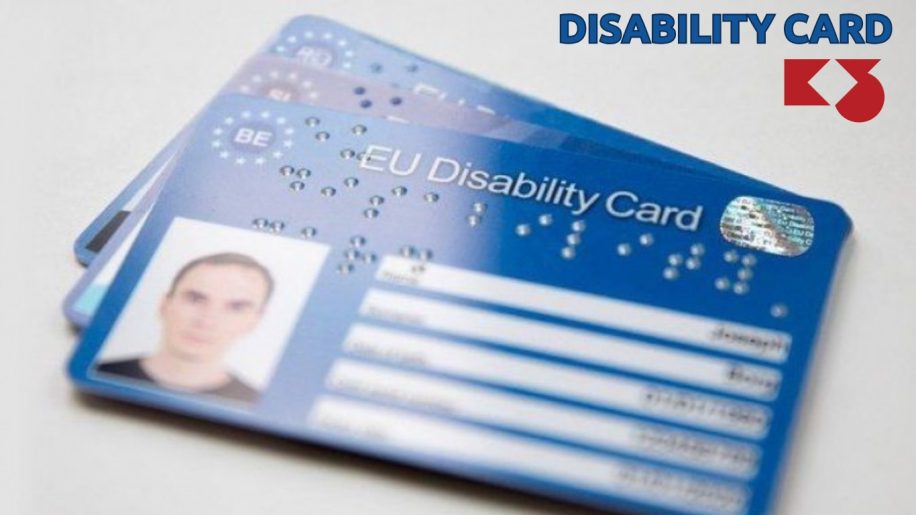
The Cancer Patient Guidance Center (KAPA3) informs beneficiaries and their caregivers about Clarification Circular No. 12757 issued by the Ministry of Social Cohesion and Family. This circular clarifies the framework for the operation, recognition, and mandatory acceptance of the Disability Card by all relevant agencies.

The Disability Card is the official government document that verifies the holder’s identity and status as a person with a disability. The primary purpose of issuing the card is to protect sensitive personal data, as it does not contain any information regarding the nature of the condition or disability.

Below is a detailed summary of all provisions under the law:

  1. Obligations of Entities and Rights to Service

Mandatory Acceptance: The Card must be accepted by all public and private sector entities, as well as by individuals and legal entities 

Priority Service: All entities are required to give priority service to Cardholders in procedures requiring in-person presence and to provide accessibility accommodations.

  1. The Three Forms of the Card (Equal Evidential Value)

Customer service staff are required to accept the Disability Card in whichever of the following forms the citizen chooses.

Printed form: A document with a digital signature from the online portal karta.epan.gov.gr.

Digital form: Via the Gov.gr Wallet app on a mobile device.

Plastic card: A printed form with a standardized design.

  1. Disability Levels and Right to an Attendant

The Card indicates the total disability percentage across three levels, in order to grant the corresponding rights:

Level I: Disability of 50%–66%.

Level II: Disability of 67%–79%.

Level III: Disability of 80% or higher.

“S” Marking (Right to a Companion): If the Card bears the “S” marking, all benefits, rights, and accommodations provided to the cardholder automatically extend to their companion during the period of accompaniment.

  1. What is the status of existing disability certificates?

Please note that disability certificates issued by the competent health committees (KEPAs, ASYE, etc.) remain valid as usual. Citizens who present these certificates instead of the Disability Card will be served as usual in accordance with the provisions applicable to each benefit.

The KAPA3 team stands firmly by patients and caregivers to provide guidance and ensure their rights are protected. For any information or support regarding the use of the Disability Card, please contact us.


June: Cancer Survivors Month

Survival is a victory — but care must continue

June is dedicated to people living with and beyond cancer. It is a month of recognition, hope and respect for every person who has faced a cancer diagnosis, completed treatment, continues treatment, or lives with cancer as a long-term condition.

Cancer survival is a major victory. However, for many people, it is not the end of the story. Life after cancer often brings a new reality: follow-up appointments, fear of recurrence, fatigue, emotional distress, changes in body image, work-related challenges, financial pressure, family adjustments and the need to rebuild everyday life with confidence and dignity.

Cancer Survivors Month reminds us that survivorship is not only about living longer. It is also about living better.

A cancer survivor is not only a person who has completed treatment and is disease-free. The term also includes people receiving maintenance treatment, people living with cancer as a chronic condition, and those who continue to experience the physical, emotional, social or economic consequences of the disease and its treatment.

In recent years, advances in early diagnosis, targeted therapies, immunotherapy, surgery, radiotherapy and supportive care have increased the number of people living many years after a cancer diagnosis. This is a major achievement for medicine, research and public health. At the same time, it creates a new responsibility: to ensure that survivorship care is organised, person-centred and accessible to all.

For many survivors, the end of active treatment is a moment of relief and gratitude. Yet it may also bring uncertainty. Some people feel that everyone around them expects them to “go back to normal”, while they are still trying to understand what has changed in their body, their emotions, their relationships and their daily life.

The fear of recurrence, anxiety before follow-up tests, persistent fatigue, pain, cognitive difficulties, changes in sexuality, emotional vulnerability and social isolation are real experiences for many people after cancer. These needs should not be underestimated. Survivors need space to speak, reliable information, access to professional support when needed, and connection with communities and organisations that understand their journey.

Long-term follow-up is also essential. Survivorship care should not focus only on recurrence. It should also include prevention, early recognition of late effects, management of treatment-related complications, support for mental health, healthy lifestyle guidance and personalised monitoring according to each person’s cancer type, treatment history, age and individual risk factors.

The message is not fear. The message is awareness, prevention and continuity of care.

Life after cancer is also about rights. It is about returning to work, accessing social benefits, understanding available services, managing financial toxicity, supporting caregivers, protecting dignity and ensuring equal access to care. Survivorship must be seen as a social, psychological and practical issue — not only a medical one.

At Kapa3, we see every day that cancer does not always end with the last treatment. It continues in the questions people ask about their rights, their next steps, their follow-up, their access to benefits, psychological support, work, family life and social reintegration.

This is why people living with and beyond cancer need holistic support. They need information, guidance, psychosocial care, access to rights and services, empowerment and continuity of care. No one should feel alone after treatment. No one should be left to navigate bureaucracy, uncertainty or lack of information without support.

Cancer Survivors Month invites us to change the way we talk about survival. We should not ask only: “Did the person survive cancer?” We should also ask:

Are they living with quality of life?
Do they have access to the care they need?
Do they know their rights?
Do they receive psychological and social support?
Can they return to work and daily life with dignity?
Is there a follow-up plan?
Is there someone to guide them when they do not know where to turn?

Cancer survival is a victory. But the real challenge is to turn this victory into a life with quality, safety, rights, support and hope.

At Kapa3, we continue to stand beside every person living with and beyond cancer. Through information, guidance, empowerment and human-centred support, we believe that care does not stop at treatment.

It continues in life.

Alpha Bank and Its Employees Support Kapa3 through the Match for Good Initiative

The Cancer Guidance Center – Kapa3 warmly thanks Alpha Bank and its employees for their meaningful support through the Match for Good initiative, through which Alpha Bank doubled the contribution of its employees.

Through this initiative, six non-profit organisations from across Greece received financial support during a special event held at Alpha Bank’s headquarters, in the presence of representatives of the organisations. The event was hosted by the Chairman of Alpha Bank’s Board of Directors, Mr. Dimitris Tsitsiragos, and the Chief Human Resources Officer, Ms. Fragiski Melissa.

Mr. Dimitris Tsitsiragos highlighted that the Match for Good initiative puts into practice Alpha Bank’s commitment to consistently support organisations that create a positive social impact. He underlined that when the individual contribution of employees is combined with the Bank’s support, it becomes a collective force with tangible results.

Ms. Fragiski Melissa noted that Match for Good reflects the Bank’s new culture in practice, giving employees an active role in selecting, participating in and supporting initiatives with social value.

Kapa3 was represented by Ms. Evangeli Bista, co-founder of the Organisation, and Ms. Despoina Chrysostomidou, collaborating psychologist. During the event, they had the opportunity to present Kapa3’s work and discuss the social impact that can be created when corporate responsibility meets the active participation of employees.

For all of us at Kapa3, this support is particularly meaningful. It strengthens our daily effort to stand beside people with lived experience of cancer, as well as their families and caregivers, offering guidance, information, support in accessing rights and services, and practical empowerment tools.

Kapa3 acts as a navigation and support organisation for cancer patients, bridging the gap between need and information, between rights and real access. For many people, especially those living outside major urban centres, the challenge is not only the disease itself. It is uncertainty, bureaucracy, lack of information about available rights, financial burden, transportation difficulties, psychosocial pressure and the need for a reliable companion.

Through initiatives like this, social contribution gains multiplying power and becomes real support for those who need it. The support of Alpha Bank and its employees strengthens Kapa3’s mission: ensuring that no person is left alone when facing cancer, searching for information, navigating procedures or claiming a right they are entitled to.

Health is not only a medical act. It is access, information, dignity, social care and meaningful presence. Every contribution to Kapa3 becomes more guidance, more information, more empowerment and more care for people and families going through a difficult and demanding journey.

We warmly thank Alpha Bank and its employees for their trust, choice and support of Kapa3’s work.

Because when giving becomes collective, it can meaningfully change people’s everyday lives.


20260310 Match For Good Programme Part2 Alpha Bank Via Solid Havas / Thalia Galanopoulou

Match for Good – Alpha Bank (1)

Kapa3 and Doctorhomie: Joining Forces to Support Cancer Patients

Kapa3 is pleased to announce the signing of a memorandum of cooperation with the digital home-care platform Doctorhomie. The Kapa3–Doctorhomie collaboration aims to strengthen support for cancer patients and their families across Greece.

Since its establishment, the Cancer Guidance Center – Kapa3 has been actively working to provide meaningful guidance to people living with cancer and their caregivers, with a strong focus on access to benefits and services, information about patients’ rights, and psychosocial support. Through Mobile Units, digital tools and educational initiatives, the organization promotes patient-centred care, creates channels of communication with beneficiaries and strengthens their participation in decisions concerning their health. Kapa3’s philosophy is grounded in building partnerships, leveraging technology and fostering collaborations with organizations that share the same vision.

Doctorhomie, on the other hand, is redefining home-based care in Greece by offering an integrated digital platform that connects patients with physicians, nurses, psychologists, physiotherapists and caregivers. Through tools that enhance monitoring and management of care at home, Doctorhomie contributes to strengthening Primary Health Care, promoting prevention, supporting families and improving both the safety and quality of care.

The new collaboration between Kapa3 and Doctorhomie opens opportunities for joint initiatives at multiple levels, including:

  • the organization of workshops, conferences and webinars aimed at informing patients, promoting quality of care and strengthening trust between patients and their treating physicians, particularly within the context of home-based care and Primary Health Care,

  • awareness and information campaigns focusing on prevention, the fight against myths and stigma, and a better understanding of patients’ symptoms and needs,

  • participation and collaboration in national and European programmes that promote innovation in oncology care and strengthen digital tools for patients and caregivers,

  • joint research initiatives on topics of shared interest, with the aim of supporting scientific evidence, disseminating knowledge and contributing to health policy development at both national and European level.

This partnership is founded on the shared belief that patient care begins with information and support, is strengthened through education and collaboration, and evolves through the combined use of technology and patient-centred practices.

Kapa3 and Doctorhomie are committed to making the most of this collaboration in order to strengthen patients’ participation in decisions regarding their health, reduce inequalities and provide timely and effective support to those who need it.

With a shared vision of quality and accessible care, Kapa3 and Doctorhomie are opening a new chapter of cooperation in support of cancer patients in Greece.

Download our Press Release in pdf or word

The MELODIC Consortium met in Athens to promote the mental health of young adults with cancer

We were delighted to welcome the European partners of the MELODIC Consortium in Athens, during the two-day consortium meeting held on 19–20 January 2026, at the facilities of the School of Public Health, University of West Attica (UNIWA).

Representatives from all participating countries – Finland, Estonia, the Netherlands, Portugal, and Ireland – attended in person, while there was also significant active online participation. The excellent organization and warm hospitality created a collaborative and open communication environment, boosting optimism around the successful progress of the project.

On the first day, discussions focused on the progress of WP2 and WP3, including publication planning, needs assessment, and the development of the educational curriculum for healthcare professionals, aiming to support the mental well-being of young adults with cancer experience and their families.

In this context, the importance of approaches linking physical activity, natural environments, and mental health was highlighted, recognizing nature as a space for recovery and meaningful experiences for young people who have undergone demanding treatments.

During the short breaks, participants had the opportunity to meet and exchange views on the challenges and best practices in the field of mental health for young adults with cancer.

Later in the afternoon, participants enjoyed a lovely dinner at Iamvos Restaurant, located in the historic neoclassical building “Kostis Palamas” of the National and Kapodistrian University of Athens, in a welcoming atmosphere that encouraged networking and human interaction.

On the second day, the work continued with the further development and evaluation of the MELODIC intervention (WP4), with particular emphasis on the blue and green spaces as a key component of its design, followed by discussions on the communication, dissemination, and sustainability strategy (WP5), as well as project management and quality assurance (WP1).

Partners actively participated, exchanging knowledge and experiences, and planning the next steps of the collaboration, while later braving the chilly weather for the optional visit to the Stavros Niarchos Foundation Cultural Center, where they admired the National Library, the National Opera, and the blue and green spaces of the foundation, combining nature with inspiration.

Kapa3’s participation in the MELODIC Consortium ensures that the voices of young adults with cancer experience and their families are considered at every stage of the project.

We look forward to continuing our close collaboration with our European partners, preparing the next phase of the project and disseminating its results, aiming to enhance the mental health and overall well-being of young adults with cancer across Europe.

More information about the project can be found here.

Download our Press Release in pdf or word

Text/adaptation: Ifiyenia Anastasiou for Kapa3

Kapa3 Supports Digital Innovation for Oncology Patients at Morning Health Talks

On Thursday, 4 December 2025, the second Morning Health Talk titled “Health Data for Innovation in Greece: Building a Stronger Digital Health Ecosystem” took place at the National Documentation Centre (EKT) in Athens. The event was held in a hybrid format (in-person and online participation), bringing together health professionals, researchers, policymakers and technology partners from Greece and abroad.

During the event, international and Greek experiences were presented on the management and use of health data, digital transformation, and best practices for leveraging data to strengthen the country’s digital health ecosystem.

Among the speakers were:

  • Dr Athanasios Batagiannis, General Director, 3-psi

  • Georgios Dimitriou, Cluster Manager, Hellenic Digital Health Cluster

  • Dr Ioannis Koumpouros, Director of DigInHealth, University of West Attica

  • Elpida Fotiadou, Head of eHealth, IDIKA

With the contribution of the distinguished speakers, key issues were discussed, including infrastructure interoperability, the need for reliable data, bureaucratic barriers, gaps in digital literacy, the development of focused platforms and processes, faster care pathways and needs assessment, the reduction of information fragmentation, and the development of human-centred digital solutions with practical value and social acceptance.

KAPA3 presented its strategic approach, focusing on standardised procedures, data quality improvement, interdisciplinarity, and the use of digital tools to support people living with cancer, as well as on guidance, interaction, empowerment and patient participation in data utilisation processes. At every step, KAPA3 addresses key challenges such as data fragmentation, stakeholder collaboration and human-centred digital solutions—issues that are also summarised in the Good Practices Guide developed within the eHealth4Cancer project.

In summary, the main points highlighted were:

  • A human-centred approach and the application of good practices to ensure the usability and social acceptance of digital solutions.

  • Strengthening collaboration between healthcare professionals, researchers and citizens to develop reliable and functional digital infrastructures.

  • The need for systematic scientific research to address challenges such as skills gaps, limited access and data fragmentation.

The event provided an important opportunity for networking and knowledge exchange, promoting the alignment of digital health infrastructures with citizens’ needs and reinforcing KAPA3’s role as an active contributor to the digital transformation of healthcare in Greece.

Read the full Morning Health Talks 2025 press release here and view photos from the event.

Text/adaptation: Ifiyenia Anastasiou for Kapa3

The Impact of the Kapa3 Internship Programme: 30 Young Professionals in Our First 5 Years of Operation

The Impact of the Kapa3 Internship Programme: 30 Young Professionals in Our First 5 Years of Operation

In the five years since our establishment, thirty young people have had the opportunity to learn and grow through the Kapa3 Internship Programme.

International scientific literature highlights that internships are far more than a first work experience. They serve as a fundamental mechanism of experiential learning, enabling students to connect theoretical knowledge with real-world professional contexts.

Through their involvement in a civil society organisation like Kapa3, interns developed reflective and critical thinking skills—core elements of modern professional education. By engaging with real needs and challenges, students strengthened their professional identity and gained a deeper understanding of their role as future practitioners in health and social services. In many cases, the internship at Kapa3 played a significant role in supporting their transition from university to the labour market, enhancing their confidence, social skills, and clarity of professional direction.

Furthermore, the structured field experiences offered opportunities to build professional networks, a key factor in long-term career development.

At Kapa3, the value of internships is evident across all aspects of our work. We strive to create an environment where students can deepen their academic knowledge, apply their skills to real cases, and map out the next steps of their careers with realism and self-awareness.

The result is a community of young professionals who are both socially conscious and scientifically equipped to contribute meaningfully to health and social care. We are proud to be at the forefront of education and warmly thank our partner universities for their trust and collaboration.