Artificial Intelligence (AI) is transforming the fight against cancer.The European Cancer Organisation’s “Harnessing AI for Cancer Care in Europe” report

Artificial Intelligence (AI) is transforming the fight against cancer, enabling machines to learn, reason, and assist humans in detecting, diagnosing and treating the disease more accurately and efficiently. It works by analysing vast amounts of data, learning patterns, and making predictions or recommendations to support human decision-making.

Cancer care is rapidly transforming with the use of AI, which serves as a powerful tool in prevention, detection, treatment and research of the disease. The European Cancer Organisation’s “Harnessing AI for Cancer Care in Europe” report states that AI has the potential to transform every stage of the cancer pathway. Simultaneously, the report emphasises the need for AI to be used responsibly, by protecting patients, upholding ethical standards, and aligning with European values, to ensure its benefits are delivered fairly and effectively across healthcare systems.

The Promise of AI in Cancer Care

The report highlights several ways AI can improve cancer outcomes across the care pathway. In primary prevention, AI can analyse genetic, environmental, and lifestyle data to identify high-risk patients and guide preventive strategies before symptoms appear. For early detection, AI can dramatically speed up screening, reducing test interpretation from days to hours, improving accuracy, and lowering missed diagnoses. In diagnostics, deep-learning models trained on large datasets can detect even the smallest lesions, prioritise urgent cases, and support more precise diagnoses. AI also enables personalised treatment by integrating tumour genomics, imaging data, and real-world outcomes to help clinicians select the most effective therapies for individual patients. Finally, in drug development, AI can identify promising compounds and targets, shortening traditional development cycles and discovering new uses for existing medicines.

Challenges That Cannot Be Ignored

However, the report also highlights significant risks associated with AI in cancer care. Key concerns include regulatory gaps as AI tools advance faster than current rules, making it challenging to ensure they remain safe, accurate, and accountable. Many promising AI systems require further validation in real-world clinical settings, as untested tools could lead to misdiagnoses or unsafe decisions. Bias and inequity are also risks, since AI trained on unrepresentative data may produce less accurate recommendations for specific patient groups. Implementation barriers, such as limited infrastructure, funding, and trained staff, can hinder the integration of AI into everyday healthcare. Finally, trust issues may arise, as both patients and clinicians need to understand and have confidence in AI systems for them to be effectively adopted.

Policy Recommendations: A Roadmap for Safe and Effective Use

To tackle these challenges, the report puts forward four key recommendations. First, it calls for national standards and validation frameworks, including speciality-specific rules and post-market monitoring of AI tools. Second, it emphasises the importance of training and literacy, proposing pan-European AI education to ensure that at least 50% of oncology professionals are confident in using AI by 2030. Third, the report urges robust regulatory guidance and oversight, including EU-wide support for data protection under GDPR, implementation of the AI Act, and strong patient engagement to ensure clinical accountability. Finally, it highlights the need for investment in data infrastructure, leveraging the European Health Data Space to harmonise systems, modernise cancer registries, and build representative datasets that support safe and effective AI deployment.

Why This Matters for Kapa3

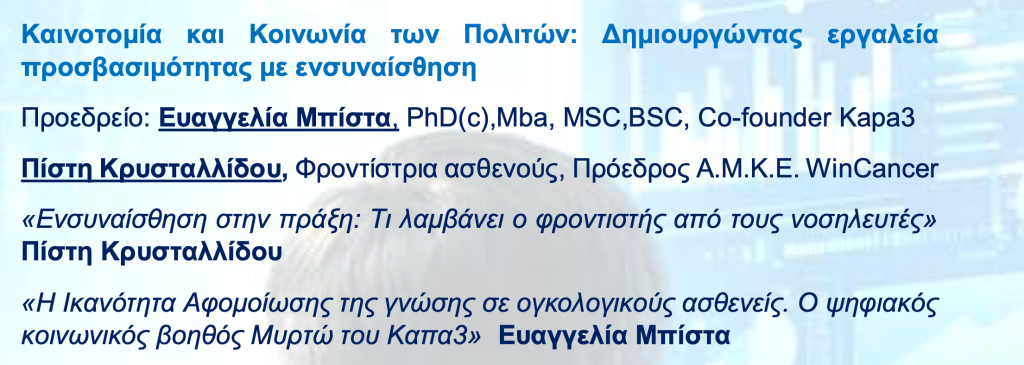
Building on these advancements, K3 is preparing to launch its digital assistant, “Myrto”, in 2026. Designed to harness the power of AI, “Myrto” will support patients and healthcare professionals across the cancer care pathway. By integrating cutting-edge AI capabilities with user-friendly guidance, “Myrto” exemplifies K3’s commitment to improving outcomes, streamlining workflows, and empowering both patients and clinicians in Europe’s rapidly evolving healthcare landscape.

To see the full article, please click here.

https://www.europeancancer.org/resources/publications/harnessing-ai-for-cancer-care-in-europe.html

The Impact of the Kapa3 Internship Programme: 30 Young Professionals in Our First 5 Years of Operation

The Impact of the Kapa3 Internship Programme: 30 Young Professionals in Our First 5 Years of Operation

In the five years since our establishment, thirty young people have had the opportunity to learn and grow through the Kapa3 Internship Programme.

International scientific literature highlights that internships are far more than a first work experience. They serve as a fundamental mechanism of experiential learning, enabling students to connect theoretical knowledge with real-world professional contexts.

Through their involvement in a civil society organisation like Kapa3, interns developed reflective and critical thinking skills—core elements of modern professional education. By engaging with real needs and challenges, students strengthened their professional identity and gained a deeper understanding of their role as future practitioners in health and social services. In many cases, the internship at Kapa3 played a significant role in supporting their transition from university to the labour market, enhancing their confidence, social skills, and clarity of professional direction.

Furthermore, the structured field experiences offered opportunities to build professional networks, a key factor in long-term career development.

At Kapa3, the value of internships is evident across all aspects of our work. We strive to create an environment where students can deepen their academic knowledge, apply their skills to real cases, and map out the next steps of their careers with realism and self-awareness.

The result is a community of young professionals who are both socially conscious and scientifically equipped to contribute meaningfully to health and social care. We are proud to be at the forefront of education and warmly thank our partner universities for their trust and collaboration.


Scientific Seminar: Psychosocial Support after Cancer Treatment and Post-Traumatic Growth

The Psychology Laboratory of INEB/CEST (Institute of Applied Biosciences / CERTH), with the support of the Municipality of Thessaloniki, is organizing on Saturday, 1 November 2025 (10:00–15:00), at the “Manolis Anagnostakis” Hall of the Thessaloniki City Hall, the scientific seminar “Psychosocial Support after Cancer Treatment and Post-Traumatic Growth.”

The event, initiated by the Psychology Laboratory as part of the IC-GROWTH research project, focuses on the psychological and social dimensions of life after cancer treatment, highlighting good practices for care, empowerment, and post-traumatic growth.

The program includes expert presentations and an open discussion with the audience, featuring researchers, healthcare professionals, and representatives from patient associations.

Participation is free, but pre-registration is required through the following form:
Registration Form

This seminar offers a valuable opportunity for learning and sharing experiences on psychosocial support and care after cancer treatment.

Kapa3 supports initiatives that strengthen mental health and quality of life for individuals who have experienced cancer.

Date: Saturday, 1 November 2025
Time: 10:00–15:00
Location: “Manolis Anagnostakis” Hall, Thessaloniki City Hall

KAPA3 at the ESMO Congress: Inspiration and Confirmation That We Are Moving Towards the Future

From October 17 to 20, we attended the ESMO World Congress in Berlin. The event stood out for the active participation of the Greek medical community, which led presentations on clinical data, Real-World Evidence, and up-to-date education in collaboration with the global oncology community. At the same time, Greek teams received awards in various areas (medical, nursing, institutional), inspiring us all with hope for the ongoing developments in oncology care.

Our main goal as KAPA3 was to focus on research addressing the real needs of the population within the framework of the global community. Collaborating with healthcare professionals from around the world allowed us to gather valuable knowledge and experiences. The intensive sessions and discussions broadened our understanding and prompted reflection on the next steps.

Key challenges identified for the patient advocacy community were:

  1. Mandatory multidisciplinary assessment before starting treatment
    No patient should begin treatment without undergoing a multidisciplinary assessment, including an oncology nurse, social scientist, and psychologist. This should be considered the minimum standard for all cancer patients.
  2. Certification and quality of multidisciplinary teams
    It is our duty to ensure that these teams meet quality standards. Their certification is undoubtedly complex. However, for us at KAPA3, multidisciplinary care is a fundamental criterion for service provision and must be certified. Quality care can significantly improve patient outcomes, as shown by clinical studies and research presented at this year’s congress, with potential improvements in overall survival of up to 10% (Sweden).

We are deeply proud that our work is guided by these standards precisely. In an era of remarkable progress in medicine and new therapies, we continue to strengthen the institution of research and multidisciplinary care, ensuring accessibility and patient-centered approaches aimed at quality of life.

This is the third time we have presented our efforts at an ESMO congress, in collaboration with the International University and the Nursing Department, highlighting our presence at every level. Meanwhile, trainings for other healthcare professionals take place annually within our organization in collaboration with Greek universities.

For Greek patients and their environment, we have not yet reached a point where the quality of care is considered a key objective for the entire oncology community. Our aim is to align with efforts across Europe so that, in the future, multidisciplinary assessments from the first day of diagnosis become standard practice within therapeutic protocols.

At KAPA3, we understand that quality care, inherently multidisciplinary, requires collective effort and collaboration between organizations and professionals to determine the best possible standards.

Continuing the Journey: Holistic Body and Mind Care with Kapa3 and the University of the Peloponnese

After the first round of meetings held in April (see the related article here), focusing on Nutritional Guidance and Experiential Psychological Support, Kapa3 and the University of the Peloponnese continue their collaboration with a new series of experiential workshops dedicated to the holistic care of body and mind.

The meetings are open to people living with cancer, caregivers, and healthcare professionals — to anyone seeking a space for genuine communication, understanding, and empowerment.

In this new cycle, mental health and nutrition are approached as two sides of the same care.

In the mental health sessions, participants learn to recognize and manage challenging emotions such as anxiety or fear, strengthen their resilience, and cultivate a deeper connection with themselves and others.

At the same time, the nutrition sessions explore how balanced and mindful eating can support the body, enhance energy and mood, and become an act of self-care and self-respect. Food is not only a necessity but also a way to show love — to the body, the soul, and to life itself.

The meetings are held online and are based on dialogue, experiential learning, and the sharing of personal experiences. Everyone participates at their own pace, in a warm environment of acceptance and trust.

To express your interest: Registration Form for the Support Group for People with Cancer

Text/adaptation: Ifiyenia for Kapa3

New Guide by the Greek Ombudsman on Serving Vulnerable Groups in Public Services

The Greek Ombudsman has released a new, comprehensive Guide addressing the service of vulnerable social groups by public authorities. This important tool for awareness and training aims to improve the quality of service, strengthen equality, and promote respect for the rights of all citizens.

The Guide includes:

  • The main legal framework and legislative provisions concerning different categories of citizens.
  • The difficulties and barriers faced by groups such as Roma communities, persons with disabilities, victims of domestic violence, people living with addictions, or citizens with a migrant background.
  • Practical behavioral guidelines for civil servants to ensure that services are accessible, non-discriminatory, and respectful of each group’s specific needs.
  • Tools and points of reference (such as helplines, support structures, and competent services) for the immediate guidance of citizens in need.

In this way, the Guide serves as a bridge between citizens and Public Administration, promoting transparency, equal treatment, and social cohesion.

Its significance lies not only in providing up-to-date information and an overview of the relevant legislation, but also in offering clear, practical directions for the daily work of public employees. This ensures that every citizen – regardless of origin, gender, age, or social status – enjoys equal access to quality services.

The Guide is available on the website of the Greek Ombudsman and is recommended for use by all public bodies, welfare organizations, hospitals, municipalities, and citizens’ associations.

KAPA3 supports and highlights such initiatives, which contribute to both citizens’ empowerment and the better preparation of the staff who serve them. Disseminating this Guide is another step toward a society free of exclusion.

Read more on the Guide here 


Digital transformation: Health systems’ investment priorities

Health systems around the world are facing a host of challenges, including rising costs, clinical-workforce shortages, aging populations requiring more care (for example, to treat chronic conditions), and increasing competition from nontraditional players.1 At the same time, consumers are expecting new capabilities (such as digital scheduling and telemedicine) and better experiences from health systems across their end-to-end care journeys.2 In response, health systems are increasing their focus on digital and AI transformation to meet consumer demands, address workforce challenges, reduce costs, and enhance the overall quality of care.3 However, despite acknowledging the importance of these efforts to future sustainability, many health system executives say their organizations are still not investing enough.

AI, traditional machine learning, and deep learning are projected to result in net savings of up to $360 billion in healthcare spending.

AI, traditional machine learning, and deep learning are projected to result in net savings of $200 billion to $360 billion in healthcare spending.4 But are health systems investing to capture these opportunities? We recently surveyed 200 global health system executives about their digital investment priorities and progress.5 Seventy-five percent of respondents reported their organizations place a high priority on digital and analytics transformation but lack sufficient resources or planning in this area.

Increasing prioritization

In line with other industries, the majority (nearly 90 percent) of health system executives surveyed, in both technical roles (such as chief information officer or chief technology officer) and nontechnical roles (for example, CEO or CFO), reported that a digital and AI transformation is a high or top priority for their organization. At the same time, 75 percent of respondents reported their organizations are not yet able to deliver on that priority because they have not sufficiently planned or allocated the necessary resources.


Health system digital investment priority areas and anticipated impact

For health system executives, current investment priorities do not always align with areas they believe could have the most impact. There is alignment in some areas, including virtual health and digital front doors, where about 70 percent of respondents expect the highest impact.1 In other areas, such as AI, 88 percent of respondents reported a high potential impact,2 yet about 20 percent of respondents do not plan to invest in the next two years. The absence of investment in a robust, modern data and analytics platform could delay value creation in areas that depend on these capabilities—such as efforts to close gaps in care, improve timely access for referrals, and optimize operating room throughput.

Major headwinds and slow progress

Given the current macroeconomic climate and increasing cost pressures on health systems, most respondents identified budget constraints as a key obstacle to investing at scale across all digital and AI categories of interest (51 percent of respondents ranked this obstacle among the top three). For example, a health system that is building a digital front door may lack the resources to simultaneously invest in the latest generative AI (gen AI) capabilities.

Respondents called out challenges with legacy systems as the second-greatest concern (after budget constraints). Core tech modernization is key to delivering on the digital promise,1 but health systems have typically relied on a smaller set of monolithic systems that have become a challenge to untangle.

Additional highly ranked challenges include data quality (33 percent), tech talent and recruiting (30 percent), and readiness to adopt and scale new technology (34 percent).

Satisfaction with digital investment

Most executives of health systems that have invested in digital priorities (72 percent) reported satisfaction across all investment areas. Among the comparatively fewer respondents who reported investing in robotics and advanced analytics, satisfaction was even higher, at 82 percent and 81 percent, respectively. Given that investments result in a high level of satisfaction and that 75 percent of executives reported they are not yet able to deliver on their digital transformation ambitions (as noted above), health systems may be facing a failure to scale their digital programs.

What health systems can do and how they can learn from other industries

The goal of digital and AI transformation is to fundamentally rewire how an organization operates, building capabilities to drive tangible business value (such as patient acquisition and experience, clinical outcomes, operational efficiency, and workforce experience and retention) through continuous innovation. Delivering digital value for health systems requires investment and new ways of working.

Building partnerships. Scale is crucial to value creation. But the definition of at-scale systems has changed in the past few years; today, it takes more than $13 billion to be a top 20 system by revenue, and many have reached their current position through inorganic growth.6 Partnerships (joint ventures and alliances) may offer a promising avenue to access new capabilities, increase speed to market, and achieve capital, scale, and operational efficiencies.7

Moving beyond off-the-shelf solutions. History shows that deploying technology—such as electronic health records (EHRs)—on top of broken processes and clinical workflows does not lead to value. Realizing value from healthcare technology will require a reimagination (and standardization) of clinical workflows and care models across organizations. For example, optimizing workflows to enable more appropriate delegation, with technical enablement, could yield a potential 15 to 30 percent net time savings over a 12-hour shift. This could help close the nursing workforce gap by up to 300,000 inpatient nurses.8

Using the cloud for modernization. Health systems are increasingly building cloud-based data environments with defined data products to increase data availability and quality. Health systems can also use cloud-hosted, end-user-focused platforms (such as patient or clinician apps) that integrate multiple other applications and experiences to simplify stakeholders’ interactions with the system.

Operating differently. Operating differently entails fundamental changes in structure (flatter, empowered, cross-functional teams), talent (new skill sets and fully dedicated teams), ways of working (outcome orientation, agile funding, and managing products, not projects), and technology (modular architecture, cloud-based data systems, and reduced reliance on the monolithic EHR). With these changes, some health systems have begun to see real value within six months. Building a digital culture helps the transformation succeed over time.9

Cautiously embracing gen AI. Gen AI has the potential to affect everything from continuity of care and clinical operations to contracting and corporate functions. Health system executives and patients have concerns about the risks of AI, particularly in relation to patient care and privacy. Managing these risks entails placing business-minded legal and risk-management teams alongside AI and data science teams.10 Organizations could also implement a well-informed risk-prioritization strategy.

Digital and AI investments provide health systems with opportunities to address the many challenges they face. Successful health systems will invest in areas with the greatest potential impact while removing barriers—for example, by upgrading legacy infrastructure. Health systems that make successful investments in digital and analytics capabilities could see substantial benefits and position themselves to benefit from the $200 billion to $360 billion opportunity.11

ABOUT THE AUTHOR(S)
Jack Eastburn is a partner in McKinsey’s Southern California office; Jen Fowkes is a partner in the Washington, DC, office; and Karl Kellner is a senior partner in the New York office. Brad Swanson is a consultant in the Denver office.

The authors wish to thank David Bueno, Camilo Gutierrez, Dae-Hee Lee, Audrey Manicor, Lois Schonberger, and Tim Zoph for their contributions to this article.

Πηγή: mckinsey.com
find more :https://eefam.gr/digital-transformation-health-systems-investment-priorities/

How to Find the Right Oncologist for You

After a cancer diagnosis, it’s one of the most important decisions you’ll make.

After a career as a golf professional in southeastern New Mexico, Doug Lyle, 76, decided he had somewhere better to be than on the course: spending time with his new grandchild. Then this summer, just as he was settling into retirement, he learned he had prostate cancer.

“When you’re first diagnosed, you immediately go to the internet, and you can be overwhelmed in short order,” he said. “The more you read about it, the more complicated it gets.”

One of the first and most important choices he had to make was who his oncologist would be. Many of the two million patients diagnosed with cancer in the United States each year get the news from a primary care doctor. Those patients might accept a referral to an oncologist without question. But research suggests that it’s worth considering the choice closely: It can shape the care you receive, your satisfaction with the treatment and your chances of survival.

Not everyone has a choice of oncologists. There are fewer providers in rural areas, and patients must travel farther to reach them. Insurers may only cover certain clinicians and hospitals. And patients from certain populations have less access to oncologists for a range of reasons, which may affect the care they receive. For example, research suggests that Black and Hispanic women with breast cancer are more likely than white women to experience delays in starting radiotherapy. And Black men with prostate cancer are less likely than white men to receive treatment that’s intended to cure their condition, even when they’re at similar stages of disease.

No matter your circumstances, you should feel empowered to have a say in who treats your cancer.

Ideally, experts said, you’d be able to easily compare doctors’ levels of experience and the outcomes of patients they’ve treated with your same diagnosis. But such apples-to-apples comparisons are not always easy to make. But “right now, there are no publicly available data to help a patient with cancer say, ‘Oh, this is where I want to go,’” said Dr. Nancy Keating, a physician and professor of health care policy and medicine at Harvard Medical School. (And even if there were, apples-to-apples comparisons are not always easy to make, since patient populations vary from one doctor to the next).

Still, there are some accreditations to look for. The National Cancer Institute has given a special designation to 72 cancer centers, which must show they treat patients in accordance with the latest evidence and also conduct research into new therapies. The American College of Surgeons Commission on Cancer has accredited over 1,500 programs that meet certain standards. And the American Society of Clinical Oncology has several certification programs, including a list of 300 practices recognized for their quality and safety.

There are resources to help you search for oncologists, too, including a U.S. News & World Report directory that lets you sort by location, patient reviews and accepted forms of insurance. The consumer research firm Castle Connolly also has a database of doctors who are nominated by their peers and then evaluated for their qualifications, interpersonal skills and more.

Look for an oncologist who frequently treats patients with diagnoses similar to yours. Research has long shown that when doctors perform certain procedures more often, their patients have better outcomes. One study found that patients of surgeons who removed more than 25 lung cancers a year spent less time in the hospital, had a lower risk of infection and were more likely to survive three years without recurrence of disease.

Dr. Timothy Pawlik, the chair of the surgery department at Ohio State University Wexner Medical Center, said he only treats a handful of cancers. “You want someone with depth, not breadth,” Dr. Pawlik said. That way, he explained, “the patient may have a rare cancer, but it’s not rare to that doctor.”

Additionally, everyone else on the care team including the anesthesiologists and nurses, will also be familiar with your particular cancer and treatment.

Your primary care provider may be able to find someone specializing in your diagnosis. Some physicians’ websites will identify sub-specialties, and you can also ask for guidance from patient advocacy groups focused on your type of cancer. When you reach out to a doctor, don’t be shy about asking how many patients with similar cancers they treat per year.

Mr. Lyle hesitated to get a second opinion for fear of offending the first doctor he’d seen. But he ultimately chose to do so, a step many experts recommend. “Medicine is an art, and there are sometimes differences of opinion,” said Karen Knudsen, the chief executive of the American Cancer Society. Weighing those differences can help you make a more informed choice.

If a second physician agrees with your original treatment plan, it can give you more confidence in the approach. Research suggests a second opinion can also lead to clinically meaningful changes in treatment. One 2023 study of 120 cancer patients found that a for a third of patients, a second opinion led to treatment changes that yielded better outcomes. Many had received evidence-based care from their first doctor but decided after a second opinion to scale back treatments that might have been unnecessary and had harmful side effects.

Mr. Lyle said that during his first conversation with a physician, he didn’t know enough to ask the right questions about his diagnosis and newer treatment options. “The fine points, you’re not aware of yet. So you almost need a rehearsal,” he said. (For help with what to ask during an appointment, the National Comprehensive Cancer Network has detailed information about care for many cancers.)

When it is clinically appropriate, some cancer centers now offer second opinions through telehealth. You can call to see if it’s possible to submit your medical records and get a remote consultation.

Find more:

Ending financial discrimination for cancer survivors: embedding the Right to be Forgotten in legislation across Europe

A new study published today in The Lancet Oncology highlights that many of the current 20 million cancer survivors across Europe are being discriminated against in accessing financial services, including loans, mortgages, health and travel insurance.

The work indicated that on average, up to 25% of those living beyond their cancer may be having more difficulty accessing appropriate financial services.

A European-wide effort is currently attempting to fight this discrimination, by supporting the introduction of legislation that will permit successfully treated cancer patients to not declare a previously diagnosed cancer, so that their diagnosis is essentially “forgotten”.
In January 2016, France became the first country in the world to introduce the “Right To Be Forgotten”, specifying that long-term cancer survivors do not have to share medical information with a financial institution about their cancer diagnosis after a delay of five years without recurrence. Seven other European countries have since taken similar legal measures to counter financial discrimination against cancer survivors. Other European Member States have chosen to implement self-regulatory codes of conduct (Denmark, Finland, Greece, Ireland, Luxembourg), but these are not legally binding.

With over eight years of experience, evidence from France indicates no significant negative impact on insurance companies operating in the French jurisdiction.

Those who are living beyond their disease should not be penalised for a previous cancer diagnosis. Cancer patients across Europe who have been successfully treated should, by law, be able to avoid disclosing a previous diagnosis of cancer, so that they can access the financial services that they need.

Professor Lawler added: “This is not about compassion; this is about evidence and acting on that evidence. When a cancer professional says that you are cured and international benchmarking agrees, then why do the financial institutions say that you are not? Don’t make cancer patients pay twice. Ensure the Right To Be Forgotten is enshrined in law throughout Europe.”

Read the full study here: https://lnkd.in/e_PZHn_j

It’s never been more important to focus on cancer prevention

With an ageing population, cancer cases predicted to increase from 17 million to 30 million by 2040 and rising levels of overweight and obesity, it’s never been more important to focus on cancer prevention. Over 40% of cancers could be prevented if we all lived healthy lifestyles, including maintaining a healthy weight, being physically active and eating a healthy diet.

But what does this mean in practice? Every day we’re bombarded with information about what’s healthy and what isn’t. It can be confusing and seem contradictory: what’s missing is the context – how do all the disparate pieces fit together to make a coherent picture?

That’s where our Global Cancer Update Programme, formerly known as the Continuous Update Project, comes in. This huge undertaking pulls the puzzle pieces together to show how what we eat, what we weigh and how active we are all affect our risk of cancer. The Expert Paneloverseeing the process then use that information to develop Recommendations for Cancer Prevention.

A while back I wrote about how this work was moving into a new and exciting phase of development. This new phase has now started and the programme has changed in a number of ways. It’s more:

  • targeted – looking at specific research questions such as early life exposures and their impact on cancer risk later in life.
  • collaborative – to increase the reach and scope of the work a number of collaborations with leading international research groups will take place that focus on specific areas such as dietary patterns and the life course.
  • efficient – we are shifting from reviewing all risk factors for every cancer to systematically scanning the evidence to identify which topics are likely to be the most fruitful areas of detailed study. Integrating more automation into the review process will be central to this.
  • inclusive – in addition to looking at cancer prevention, the work will expand to encompass cancer survivors. With improved diagnosis and treatment the good news is that there is a growing population of people living with and beyond cancer. The Global Cancer Update Programme will help us to understand how diet, nutrition and physical activity can improve long-term health and prolong survival after a cancer diagnosis.

There are four major themes to the work:

1. Cancer incidence

Looking at how a wide range of factors relating to diet, nutrition and physical activity as well as patterns of diet and lifestyle can affect cancer risk – either through decreasing risk or increasing it.

2. Cancer survivors

Focusing on the impact of diet, nutrition and physical activity on long-term health (cancer and non-cancer related morbidity, mortality and quality of life) after a cancer diagnosis. As part of this, we will look to determine for the first time the impact of diet, nutrition and physical activity on childhood cancer survivors.

3. Cancer mechanisms

Understanding the biological processes that underpin the links between diet, nutrition and physical activity and cancer.

4. Obesity

Ensuring previous work in relation to overweight and obesity remains up to date, given its critical role in increasing the risk of many cancer types. In addition, we will explore whether more specific guidance can be made for preventing obesity in adulthood and early life.

This comprehensive programme of work will allow us to look more deeply at how diet, nutrition and physical activity affect cancer risk and survival. In the next few years, the Global Cancer Update Programme will enable a more sophisticated understanding, with a more personalised approach to cancer prevention and survival than ever before.

Find out more about our Global Cancer Update Programme