Newsletter Kapa3| June 2026,From survivorship to quality of life — from information to support — from technology to human-centred care.

May was a month of important developments, scientific outreach and service enhancement for Kapa3. From the new European scientific publication of the MELODIC project and educational participation in international networks, to the development of “Myrto”, the creation of a new Psychological Support Team and support through social and corporate initiatives, Kapa3 continues to bring together knowledge, technology, human care and social action.

Our mission remains focused on equal access for cancer patients and their caregivers to information, rights, services and meaningful support.

1. June: Cancer Survivors Month

June is dedicated to people living with and beyond cancer. Survivorship is not only the end of treatment; it is continuity, adaptation, reintegration, psychosocial support, quality of life and the right to care beyond therapy.

EN: https://www.kapa3.gr/en/june-cancer-survivors-month-title-sep-sitename/

2. Kapa3 Introduces Its New Psychological Support Team

On the occasion of Mental Health Awareness Month and Cancer Survivors Month, Kapa3 introduces its new Psychological Support Team: a safe space for listening, support and empowerment for patients, survivors, caregivers and families.

CONTACT US  https://www.kapa3.gr/en/kapa3-introduces-its-new-psychological-support-team/

3. New MELODIC Scientific Publication on the Mental Health of Young Adults with Cancer

Mental health is an integral part of cancer care, particularly for young adults facing the complex challenges of a cancer diagnosis. Kapa3 contributes to the new scientific publication of the European MELODIC project, highlighting the educational needs of healthcare professionals.

READ THE ARTICLE

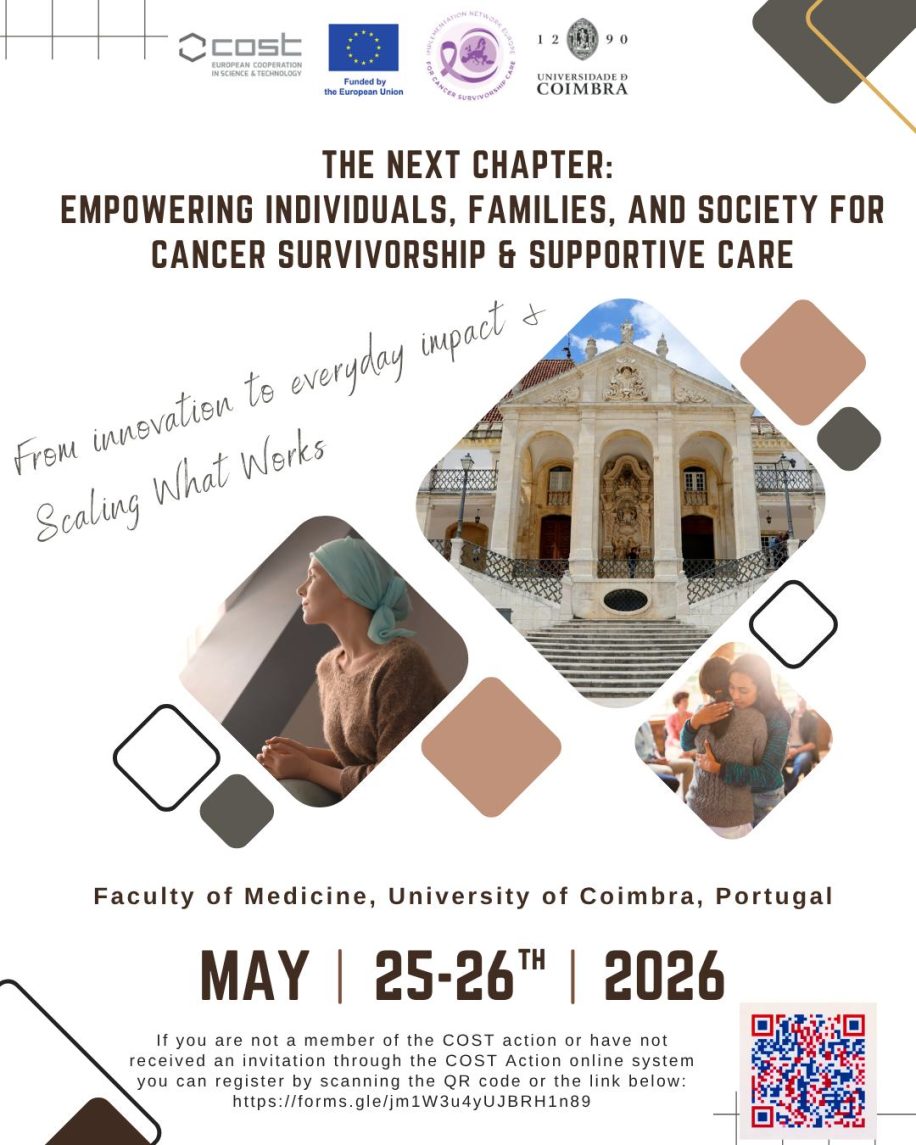
4. Digital Health and Cancer Survivorship: Kapa3 at the INE-CSC 2026 Conference in Coimbra

Kapa3 participated in the INE-CSC 2026 Conference in Coimbra, contributing to the European dialogue on cancer survivorship, supportive care, digital health and participatory solutions that respond to the real needs of patients and caregivers.

READ THE ARTICL Ehttps://www.kapa3.gr/en/participation-in-ca21152-implementation-network-europe-for-cancer-survivorship-care/

5. Co-creating Myrto: A Digital Health and Rights Navigator for Oncology Patients

Myrto is designed as a digital health and rights navigator — a Patient Empowerment e-Navigator — that goes beyond information provision to guide, support and evolve according to users’ real needs.

READ THE ARTICLE https://www.kapa3.gr/en/myrto-health-navigator-oncology-patients-greece/

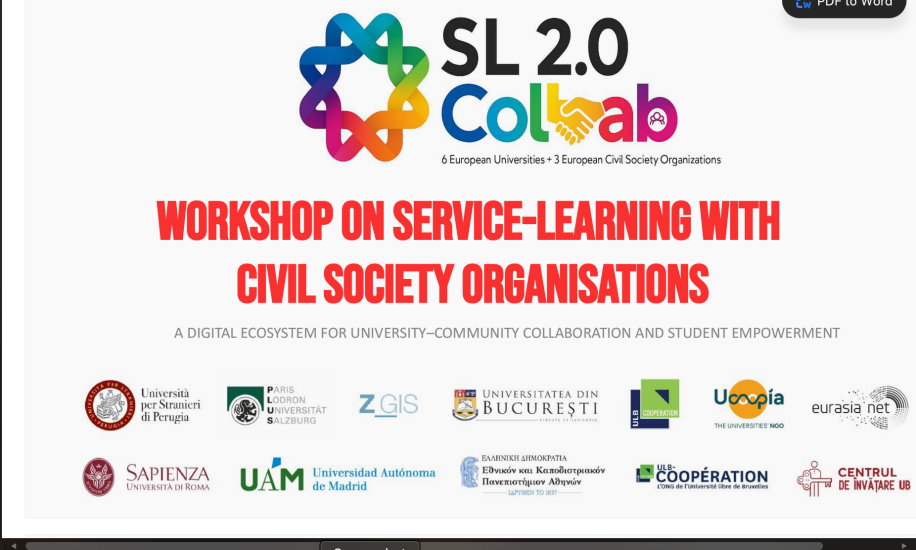
6. Learning by Doing: Participation in the European Service Learning 2.0: CoLab Programme

Kapa3 participated in the European programme Service Learning 2.0: CoLab, an initiative connecting academic knowledge with meaningful social action and highlighting collaboration between universities, civil society organisations and community actors.

FIND OUT MOREhttps://www.kapa3.gr/en/learning-by-doing-participation-in-the-european-service-learning-2-0-colab-programme/

7. Alpha Bank and Its Employees Support Kapa3 through the Match for Good Initiative

Through the Match for Good initiative, Alpha Bank and its employees supported Kapa3, strengthening our mission to stand alongside people affected by cancer, their families and caregivers.

FIND OUT MORE https://www.kapa3.gr/en/i-alpha-bank-kai-oi-ergazomenoi-tis-stirizoyn-to-kapa3-kai-tin-isotimi-prosvasi-stin-ypostirixi-ton-ogkologikon-asthenon/

8. 6 Awards for Kapa3 at the 4th Vouliagmeni Summer Crossing: Is There Such a Thing as a “Lonely Race”?

Kapa3 took part in the 4th Vouliagmeni Summer Crossing, sharing a strong message of participation, resilience, empowerment and solidarity. Even when a race seems individual, it does not have to be lonely.

READ MOREhttps://www.kapa3.gr/en/kapa3-6-vraveia-diaplous-vouliagmenis/

Newsletter closing note

If this newsletter reached you through forwarding or another source, subscribe today to receive reliable updates, news and useful information directly in your inbox.

Support our work and help us continue to provide information, guidance and support to patients and their families.

SUBSCRIBE TO NEWSLETTER

SUPPORT US

Participation in CA21152 – Implementation Network Europe for Cancer Survivorship Care

Digital Health and Cancer Survivorship: Kapa3 at the INE-CSC 2026 Conference in Coimbra

The Cancer Guidance Center – Kapa3 participated in the INE-CSC 2026 Conference, part of CA21152 – Implementation Network Europe for Cancer Survivorship Care (INE-CSC), held on 25–26 May 2026 at the Faculty of Medicine (Polo III), University of Coimbra, in Coimbra, Portugal.

The conference was held under the theme “The Next Chapter – Empowering Individuals, Families, and Society for Cancer Survivorship & Supportive Care”, highlighting the need for new approaches to cancer survivorship, supportive care and the translation of innovation into real-world impact for people living with and beyond cancer, their families and society.

Kapa3’s presence in Coimbra represents another important step in its European engagement and in its ongoing effort to connect everyday experience in supporting cancer patients in Greece with European knowledge, research, digital innovation and health policy.

A key highlight was the participation in a round table discussion on facilitators and barriers to the implementation of digital health tools in oncology. The discussion was co-organised by Aristea Kyriaki Ladas and Christos Frantzidis and brought together voices from different European countries and organisations, including representatives from Kapa3, Acreditar Portugal, Liga Portuguesa Contra o Cancro, ORCO / Madrid Regional Ministry of Health, as well as participants from Poland, Latvia and the United Kingdom.

Among the participants in the round table were Yannis Kontogiorgis and Despoina Pistiolis from Kapa3, Greece, contributing to the European dialogue on digital health, oncology navigation and the participatory development of solutions that respond to the real needs of patients and caregivers.

One of the key messages of the discussion was that digital innovation in oncology is not only a technological challenge. It is also a matter of policy, implementation, equity, trust and accessibility.

For digital tools to make a meaningful difference in cancer care and survivorship, they cannot remain isolated applications or pilot projects. They need to become part of real care pathways, be supported by appropriate policy environments, connect with interdisciplinary practice and be evaluated in terms of effectiveness, implementation readiness, accessibility, equity, sustainability and value.

The discussion also highlighted that digital tools must be designed around the real needs of patients and survivors, not only around technical possibilities. Accessibility across countries, languages, healthcare systems and levels of digital and health literacy must be built in from the beginning.

The role of patient organisations and cancer support communities was also identified as essential. These organisations can act as a bridge between technological innovation and the everyday reality of people affected by cancer. They understand the questions, barriers, fears and needs that are often not fully captured by formal care systems.

For Kapa3, this participation is directly linked to the development of Myrto, its digital health and rights navigator, designed as a tool for empowerment, guidance and support for cancer patients and their caregivers.

Myrto is not approached as a simple information tool. It is being designed as a participatory intervention built around the real needs of people with lived experience of cancer. It is connected to access to rights, social benefits, services, practical guidance and human escalation whenever needed.

The Coimbra experience strengthened the view that digital health must be human-centred, accessible, trustworthy and integrated into a broader ecosystem of care. Technology can meaningfully support cancer care only when it is designed with participation, trust, clear purpose and an equity-oriented approach.

Cancer survivorship is not only about completing treatment. It is about quality of life, mental health, social reintegration, work, family, everyday life, access to services and the feeling that no person is left alone after diagnosis or treatment.

Through its participation in European networks such as INE-CSC, Kapa3 continues to contribute to the dialogue on more equitable, participatory and person-centred cancer care. Care that uses technology without losing sight of the human being at its centre.

The future of cancer support will not depend only on better digital tools, but on better collaboration between patients, caregivers, healthcare professionals, researchers, technology partners, patient organisations and policymakers.

For Kapa3, this is at the heart of its mission: transforming knowledge into action, technology into support, and the voice of patients into services that respond to their real needs.

More information: INE-CSC – Implementation Network Europe for Cancer Survivorship Care.More information:
https://inecancersurvivorship.com

Learning by Doing: Participation in the European Service Learning 2.0: CoLab Programme

Learning by Doing: Participation in the European Service Learning 2.0: CoLab Programme

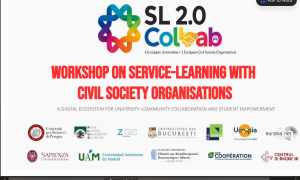
Within the framework of the European programme Service Learning 2.0: CoLab – Erasmus+ Strategic Partnerships KA2, KE: 22707, coordinated by the University of Bucharest, an online workshop and focus group was organised with civil society organisations, focusing on the educational approach of Service-Learning.

Service-Learning is a contemporary experiential learning method that combines academic knowledge with active student engagement in society. Through activities that respond to real social or environmental needs, students develop meaningful skills, strengthen their social awareness and connect theoretical learning with practical action.

The workshop brought together universities and civil society organisations from across Europe, including Université Aix-Marseille, University of Bucharest, University of Salzburg, University of Padova, Sapienza University of Rome, and Eurasianet.eu. The discussion focused on cooperation between universities and NGOs, the exchange of experiences, and the adaptation of practices that can strengthen the social impact of education.

Participation in such initiatives highlights the importance of collaboration between academia, civil society and non-profit organisations.

For Kapa3, the philosophy of Service-Learning is closely aligned with its mission: transforming knowledge into action, empowering people affected by cancer, and building bridges between education, social care and active citizenship.

Through these educational collaborations, the connection between universities and society is strengthened, while new opportunities are created for participatory learning, social innovation and meaningful support for vulnerable groups.

Find more

Flyer – Workshop_ Service Learning (2) Service-learning-key-facts (1)

Service-learning-key-facts (1)

May 27 th 2026 Workshop SL with CSOs

New MELODIC Scientific Publication on the Mental Health of Young Adults with Cancer

Kapa3 participates in the new scientific publication of the European MELODIC project, entitled:

“Educational Needs Regarding Mental Health of Professionals Working with Young Adults with Cancer: A European Survey.”

The publication addresses a highly important issue in contemporary cancer care: the educational needs of healthcare professionals working with young adults with cancer, particularly in relation to recognising and supporting mental health concerns.

Young adults experiencing cancer often face complex psychosocial challenges. Diagnosis, treatment, changes in daily life, impact on studies, work, relationships, body image and future planning can deeply affect their mental health and quality of life.

The European study, involving 271 healthcare professionals from 21 countries, highlighted an important gap between professionals’ willingness to support patients and the systematic use of validated assessment tools. While approximately half of the participating professionals reported feeling confident in identifying mental health issues, only a small percentage reported using validated screening tools.

This finding is particularly important. It shows that awareness and professional experience are valuable, but they are not enough on their own. Targeted education, appropriate tools, interdisciplinary collaboration and clear support pathways are needed so that the needs of young adults with cancer can be recognised early and addressed in a comprehensive way.

The message of the publication is clear: the education of healthcare professionals can make a meaningful difference in the early recognition, support and care of young adults with cancer.

At Kapa3, this approach is a core principle of our work. Before every intervention and every support action, there is education, information and empowerment of the people who stand beside patients.

Kapa3 professionals and collaborators are trained, informed and actively involved in European projects such as MELODIC, ensuring that the support provided is evidence-informed, human-centred and meaningful.

Kapa3’s active participation in such scientific initiatives strengthens its role as an organisation that connects research with practice, European knowledge with real patient needs, and education with everyday care.

We are proud of our participation in the MELODIC project and of our contribution to a European effort that highlights the importance of mental health, early recognition and targeted education in cancer care.

More information: https://lnkd.in/e9Pw4epy

World Braille Day – 4 January

4 January is celebrated internationally as World Braille Day, honoring the life and legacy of Louis Braille, the French inventor of the tactile writing system for people with visual impairment. The day highlights the importance of access to education, information, and social participation for blind and partially sighted individuals. World Braille Day was officially recognized by the UN General Assembly in 2018 and has been observed since 2019.

The date was chosen to coincide with the birth of Louis Braille (4 January 1809). Despite losing his sight at a young age, Braille developed a system of raised dots representing letters, numbers, and symbols, revolutionizing education and communication for blind people worldwide.

Why this day matters

World Braille Day is not just a commemorative event—it reminds us of the importance of equal access to knowledge, education, and basic rights for people with visual impairment. According to the UN, Braille is essential for the full realization of human rights for blind individuals, enabling independence, access to information, and social participation.

Globally, approximately 39 million people are blind and 253 million have moderate to severe visual impairment. In the EU, over 2.5 million citizens live with significant vision problems, while in Greece, more than 35,000 people face severe visual impairments. Access to educational materials in Braille is crucial for their integration and independence.

World Braille Day serves as a global call for awareness, encouraging societies, organizations, and policymakers to promote equality, education, and information accessibility for all.

Rights and accessibility in Greece

In Greece, the rights of people with disabilities, including those with visual impairment, are supported by:

Despite these frameworks, practical implementation—especially in digital spaces—remains a work in progress.

Digital and modern accessibility

Technology has created new opportunities beyond printed materials:

  • Digital Braille services and accessible formats are increasingly available
  • Legal requirements for web and app accessibility in Greece and the EU ensure that digital content is usable for people with disabilities

World Braille Day reminds us that access to knowledge and communication is a fundamental human right. At Kapa3, we support initiatives that promote equality, accessibility, and inclusion, aiming for a world where everyone can fully participate and thrive.

Text/adaptation: Ifiyenia Anastasiou for Kapa3