June: Cancer Survivors Month

Survival is a victory — but care must continue

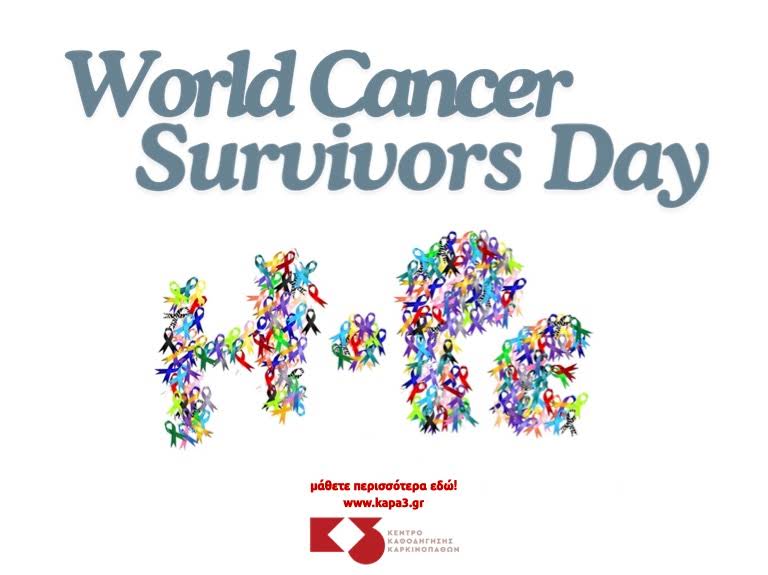
June is dedicated to people living with and beyond cancer. It is a month of recognition, hope and respect for every person who has faced a cancer diagnosis, completed treatment, continues treatment, or lives with cancer as a long-term condition.

Cancer survival is a major victory. However, for many people, it is not the end of the story. Life after cancer often brings a new reality: follow-up appointments, fear of recurrence, fatigue, emotional distress, changes in body image, work-related challenges, financial pressure, family adjustments and the need to rebuild everyday life with confidence and dignity.

Cancer Survivors Month reminds us that survivorship is not only about living longer. It is also about living better.

A cancer survivor is not only a person who has completed treatment and is disease-free. The term also includes people receiving maintenance treatment, people living with cancer as a chronic condition, and those who continue to experience the physical, emotional, social or economic consequences of the disease and its treatment.

In recent years, advances in early diagnosis, targeted therapies, immunotherapy, surgery, radiotherapy and supportive care have increased the number of people living many years after a cancer diagnosis. This is a major achievement for medicine, research and public health. At the same time, it creates a new responsibility: to ensure that survivorship care is organised, person-centred and accessible to all.

For many survivors, the end of active treatment is a moment of relief and gratitude. Yet it may also bring uncertainty. Some people feel that everyone around them expects them to “go back to normal”, while they are still trying to understand what has changed in their body, their emotions, their relationships and their daily life.

The fear of recurrence, anxiety before follow-up tests, persistent fatigue, pain, cognitive difficulties, changes in sexuality, emotional vulnerability and social isolation are real experiences for many people after cancer. These needs should not be underestimated. Survivors need space to speak, reliable information, access to professional support when needed, and connection with communities and organisations that understand their journey.

Long-term follow-up is also essential. Survivorship care should not focus only on recurrence. It should also include prevention, early recognition of late effects, management of treatment-related complications, support for mental health, healthy lifestyle guidance and personalised monitoring according to each person’s cancer type, treatment history, age and individual risk factors.

The message is not fear. The message is awareness, prevention and continuity of care.

Life after cancer is also about rights. It is about returning to work, accessing social benefits, understanding available services, managing financial toxicity, supporting caregivers, protecting dignity and ensuring equal access to care. Survivorship must be seen as a social, psychological and practical issue — not only a medical one.

At Kapa3, we see every day that cancer does not always end with the last treatment. It continues in the questions people ask about their rights, their next steps, their follow-up, their access to benefits, psychological support, work, family life and social reintegration.

This is why people living with and beyond cancer need holistic support. They need information, guidance, psychosocial care, access to rights and services, empowerment and continuity of care. No one should feel alone after treatment. No one should be left to navigate bureaucracy, uncertainty or lack of information without support.

Cancer Survivors Month invites us to change the way we talk about survival. We should not ask only: “Did the person survive cancer?” We should also ask:

Are they living with quality of life?
Do they have access to the care they need?
Do they know their rights?
Do they receive psychological and social support?
Can they return to work and daily life with dignity?
Is there a follow-up plan?
Is there someone to guide them when they do not know where to turn?

Cancer survival is a victory. But the real challenge is to turn this victory into a life with quality, safety, rights, support and hope.

At Kapa3, we continue to stand beside every person living with and beyond cancer. Through information, guidance, empowerment and human-centred support, we believe that care does not stop at treatment.

It continues in life.

April 18: European Patients’ Rights Day

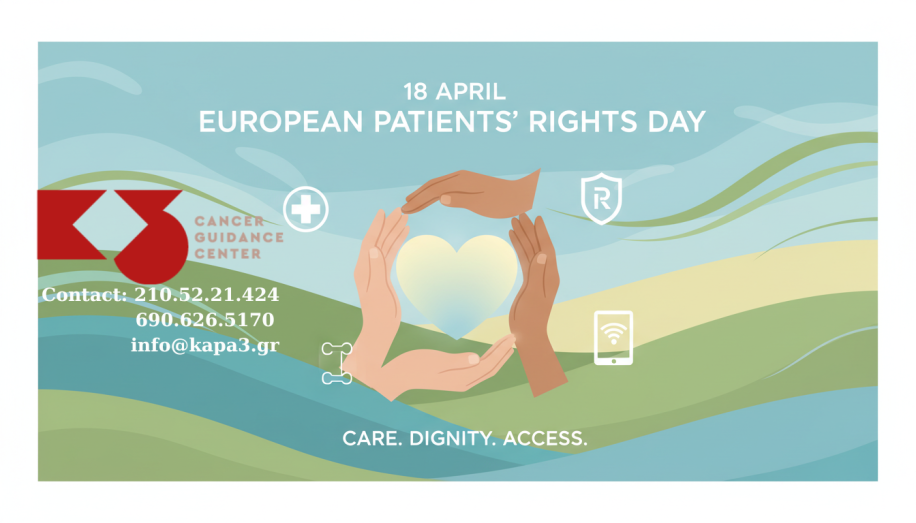
European Patients’ Rights Day is celebrated every year on April 18 and serves as an important occasion to raise awareness about the fundamental rights of all patients in Europe. The day was established by the Active Citizenship Network, aiming to promote equal access to quality healthcare services and safeguard patients’ dignity.

At the European level, patients’ rights do not stem from a single binding legal framework, but from a combination of principles, European directives, and national legislation. A milestone was the European Charter of Patients’ Rights (2002), which established 14 core rights and has become a reference point for many countries.

Key rights include:

  • The right to access healthcare services
  • The right to prevention
  • The right to timely and accurate diagnosis
  • The right to information and informed consent
  • The right to choose treatment
  • The right to privacy and confidentiality
  • The right to safe and high-quality care
  • The right to respect for the patient’s dignity

Despite legislative progress, the full implementation of these rights remains a challenge. According to international reports, in certain vulnerable groups, unmet healthcare needs can reach particularly high levels due to cost, long waiting times, or geographic barriers. Data from the European Commission also highlight delays in diagnoses and treatments, as well as limited patient awareness of available options.

In Greece, patients’ rights are legally protected through, among others, Law 2071/1992 and subsequent regulations. Furthermore, Patient Rights Protection Offices (Γ.Π.Δ.Λ.Υ.Υ.) implement specific regulations for managing complaints, grievances, and positive feedback, as outlined in a Ministry of Health circular (2024). In recent years, significant steps have been taken to strengthen patients’ position in the healthcare system, including:

  • Strengthening the role of Patient Rights Protection Offices in public hospitals
  • Updating the Charter of Rights, with emphasis on modern needs such as digital health and rare diseases
  • Enhancing cooperation between the State, local authorities, academic community, and patient associations
  • Advancing digital transformation, including electronic prescriptions and applications such as MyHealth app

Despite this progress, major challenges remain, such as ensuring equal access to innovative treatments, reducing inequalities, protecting personal data, and guaranteeing high-quality care for all patients.

If a patient feels that their rights have been violated, they can turn to:

  • The hospital administration or the relevant patient rights office
  • The Greek Ombudsman
  • Patient associations or support organizations
  • Relevant health supervisory authorities

In this context, patient organizations and broader civil society organizations, such as Kapa3, play a crucial role—not only in supporting and guiding patients but also in highlighting issues, promoting policy changes, and shaping a fairer and more accessible healthcare system.

Awareness of one’s rights is the first and most essential step toward protecting them. An informed patient can actively participate in decisions concerning their health, advocate for better care, and contribute to improving the healthcare system itself.

This day reminds us that healthcare is not a privilege but a fundamental human right—and that a fair and patient-centered healthcare system is built every day, with respect, information, and active participation from all.

Sources:

  1. European Charter of Patients’ Rights (2002): https://www.activecitizenship.net/charter-of-rights.html
  2. European Commission data: https://health.ec.europa.eu/publications/patients-rights_en
  3. Ministry of Health – Regulations for managing complaints and grievances through Patient Rights Protection Offices (Γ.Π.Δ.Λ.Υ.Υ.) -greek text

Text/adaptation: Ifiyenia Anastasiou for Kapa3