
Mapping the efficiency of cancer care in Greece: findings from the All.Can Greece report

Cancer care efficiency in Greece remains one of the most complex and pressing challenges for the Greek health system — not only in terms of its clinical burden, but also in how care is organized around the patient.

With approximately 63,000 new cancer cases diagnosed annually and more than 32,000 cancer-related deaths each year, Greece faces a steadily increasing oncological burden. Projections suggest that cancer incidence will rise by around 23% by 2040, further intensifying pressure on health services.

Against this backdrop, All.Can Greece has published a landmark report titled “Mapping the Efficiency of Cancer Care in Greece”, based on the pilot implementation of the All.Can Action Guide for Efficient Cancer Care.

Rather than simply describing the current situation, the report aims to measure it — identifying where efficiency is lost across the cancer care pathway and where targeted reforms could make the greatest impact.

Cancer care efficiency in Greece: delays in care delivery

One of the most critical findings of the report relates to delays in the patient journey.

Despite the existence of modern infrastructure and highly specialized oncology centres, significant delays persist between initial suspicion, diagnosis, and the start of treatment.

These delays are not the result of a single bottleneck, but of systemic fragmentation:

  • fragmented referral pathways,
  • limited coordination between levels of care,
  • and the absence of standardized clinical protocols.

A key structural weakness is the lack of systematic monitoring of waiting times and time-to-treatment indicators. As a result, inefficiencies remain partially invisible to the system itself, limiting the ability to implement targeted improvements.

Fragmentation across the care continuum

The report highlights a broader issue of fragmentation in cancer care delivery.

The patient journey from primary care to specialist oncology services is often not clearly structured or consistently coordinated. Referral pathways depend heavily on individual practice rather than standardized national protocols.

A major gap is the absence of structured patient navigation services. In practice, this means that patients and families are often left to navigate a complex system on their own, increasing delays and adding unnecessary psychological burden.

At the same time, multidisciplinary tumor boards represent a positive development, supporting collaborative clinical decision-making across specialties. However, systematic monitoring of their performance remains limited.

The development of Comprehensive Cancer Centers is identified as a promising step forward, although further regulatory strengthening and clearer governance structures are still needed to maximize their impact.

Patient-centered care: progress with remaining gaps

Greece has made notable progress in collecting Patient-Reported Outcome Measures (PROMs) and Patient-Reported Experience Measures (PREMs), reflecting a growing commitment to integrating patient perspectives into care delivery.

However, patients’ access to their own clinical data remains limited, restricting their ability to actively participate in decision-making processes.

In addition, patient education and shared decision-making are not yet systematically embedded across the health system.

Another important gap concerns survivorship care. As cancer survival rates improve, the lack of structured long-term follow-up pathways leaves many patients without continuous support after active treatment ends.

Key policy directions

The report outlines several strategic priorities for improving cancer care efficiency in Greece:

  • Development of a comprehensive national cancer strategy with clear targets and governance mechanisms
  • Strengthening coordination across all levels of care
  • Implementation of standardized clinical pathways with defined time-to-treatment and quality indicators
  • Investment in oncology workforce capacity, particularly in shortage specialties
  • Establishment of structured patient navigation programmes
  • Acceleration of Comprehensive Cancer Center development
  • Systematic use of health data for monitoring performance and accountability
  • Greater patient engagement through PROMs, PREMs, and shared decision-making

Conclusion: a system with strong foundations but limited integration

Greece has many of the essential building blocks for a high-performing cancer care system — including infrastructure, clinical expertise, and emerging digital health capabilities.

However, the key challenge lies not in the existence of these components, but in their integration.

The All.Can Greece report highlights a system that is still operating in silos: strong individual elements that do not yet function as a fully connected care pathway.

In oncology, this lack of integration is not merely an organizational issue. It directly affects timeliness, patient experience, and ultimately outcomes.

The opportunity now lies in moving from fragmented capacity to coordinated care — where patients no longer have to bridge the gaps between system components themselves.

Source: Mapping-the-Efficiency-of-Cancer-Care-in-Greece-FINAL

Text/adaptation: Ifiyenia Anastasiou for Kapa3

Kapa3 Participation in the 3rd “Mapping the Unknown in Oncology” Conference

Kapa3 actively participated in the conference “Mapping the Unknown in Oncology – From Hospitals to Homes, mapping the future of oncology care”, organized for its third year by the Medical Society for Research and Education under the auspices of HeSMO (Hellenic Society of Medical Oncologists) and the Hellenic Cancer Society, held on February 27–28, 2026 at the Golden Age Hotel in Athens.

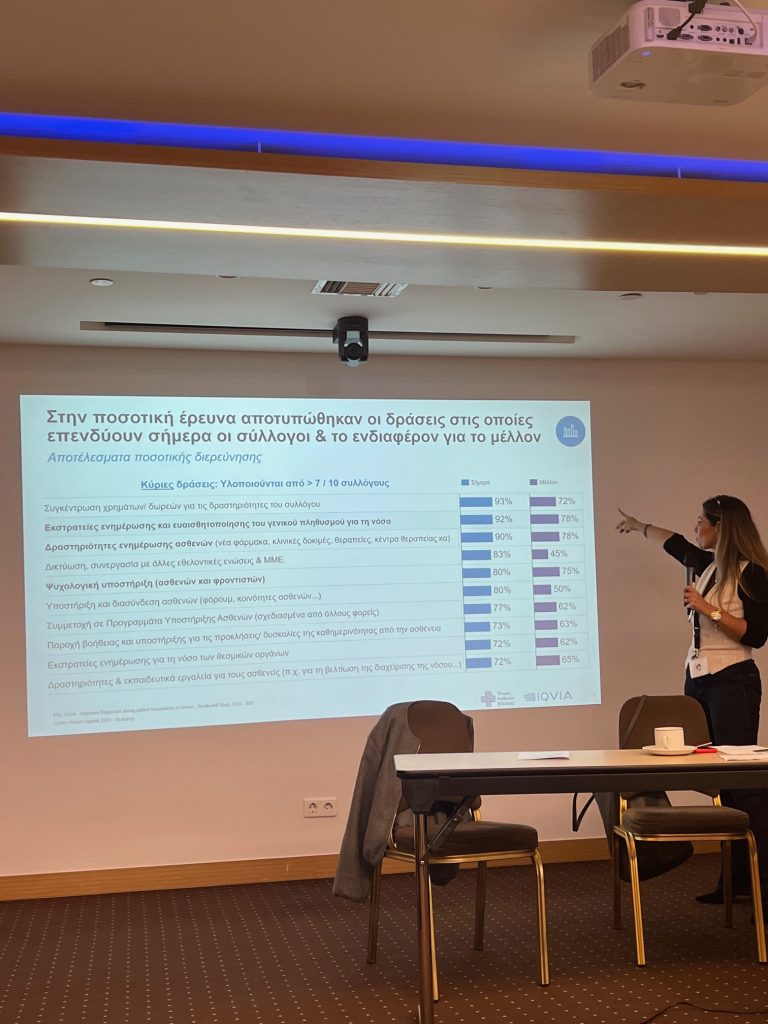
During the events on Saturday, February 28, Ms. Evangelí Bista, Head of Operations and Development at the Kapa3 Cancer Patient Guidance Center, took part in the panel titled “e-Health Tools and Educational Platforms: New Paths for Doctors and Patients.” The panel was moderated by Ms. Z. Saridaki and included panelists G. Koukourakis, S. Peroukidis, F. Tyligadas, and Ch. Christodoulou.

In her presentation, titled “Digital Patient Education: The Patient as an Active Partner,” Ms. Bista highlighted the importance of digital transformation in healthcare, which shifts care from episodic to continuous support, moving healthcare from hospitals into patients’ daily lives and empowering patients to become active participants in managing their health.

In this context, Kapa3 announced that for 2026 it will be the only civil society organization fully integrating AI, cybersecurity, and high-performance computing into its processes and services, implementing:

  • An AI-powered digital assistant (chatbot) for immediate patient guidance and support

  • A voice-command system for website accessibility and text-to-speech conversion

  • Service redesign, simplifying processes and reducing bureaucracy

  • An AI-based recommendation system with usage data analysis to personalize services

Special emphasis was placed on patient navigation, as oncology patients need guidance: where to go, what they are entitled to, when to be concerned, and when to wait. Kapa3 addresses this gap, providing not just information but meaningful, personalized guidance within the healthcare system.

The goal is not to add another service but to unite existing services. The next evolution of this model is Myrto, the digital assistant that serves as a reference point, translating knowledge into daily action.

Because the future of oncology is not only personalized treatment but also personalized understanding.

Kapa3’s participation underscores the organization’s commitment to innovation, collaboration, and ethics, demonstrating how technology can significantly enhance the experience and care of oncology patients.


Continuing the Journey: Online Group Sessions for Mental Health and Nutrition – Third Cycle with Kapa3 and the LB.H.Sc

Following the warm response to the second cycle of meetings (see the related article here ), focusing on Nutritional Guidance and Experiential Psychological Support, Kapa3 and the Laboratory of Basic Health Sciences (LB.H.Sc), Department of Nursing University of Peloponnese are delighted to continue their collaboration with a third series of online group sessions for mental health and nutrition, dedicated to the holistic care of body and mind, designed for people living with cancer and their caregivers.

In this third cycle, mental health and nutrition are approached as two complementary sides of the same care.

The mental health sessions help participants recognize and manage challenging emotions such as anxiety, fear, sadness, or guilt, strengthen resilience, and cultivate a deeper connection with themselves and others.

The nutrition sessions explore how mindful and balanced eating can support the body, improve energy and mood, and become a meaningful act of self-care. Food is not only a necessity but also a way to nurture the body, mind, and spirit.

Program of Online Sessions for Mental Health and Nutrition & Themes

  • Saturday, February 28, 2026, 17:30–19:00
    Myths and truths about “anti-cancer” diets. How to evaluate nutritional information and avoid risky practices.

  • Saturday, March 14, 2026, 17:30–19:00
    Stress and uncertainty: practical ways to manage them during treatments and exams.

  • Saturday, March 21, 2026, 17:30–19:00
    Giving space to emotions without being overwhelmed: recognizing and expressing fear, anger, sadness, and guilt.

  • Saturday, March 28, 2026, 17:30–19:00
    Nutritional support during treatment & the role of cachexia.

  • Saturday, April 25, 2026, 17:30–19:00
    Boundaries without guilt: protecting energy and mental resilience.

  • Saturday, May 9, 2026, 17:30–19:00
    Safe cooking practices & kitchen hygiene.

  • Saturday, May 23, 2026, 17:30–19:00
    Family and illness: changes in relationships and ways to support each other.

  • Saturday, June 6, 2026, 17:30–19:00
    The Tree of Life: who I am beyond the illness.

  • Saturday, June 13, 2026, 17:30–19:00
    What gives meaning to life now: discovering small but meaningful elements that sustain us.

Format & Participation

The meetings are held online, based on dialogue, experiential learning, and the sharing of personal experiences. Everyone participates at their own pace, in a warm environment of acceptance and trust. Consistent attendance helps build safety and confidence within the group.

To express your interest or join the first session of the third cycle (Saturday, February 28, 17:30–19:00): [Registration Link]

Text/adaptation: Ifiyenia Anastasiou for Kapa3

Webinar: “Cancer, Patient Navigation & Health Management: From Prevention to Coordinated Care” in collaboration with the Kapa3 Cancer Guidance Center

On the occasion of World Cancer Day, we invite you to join the webinar on cancer and patient navigation, organized in collaboration with René Descartes College and the Kapa3 Cancer Guidance Center. This webinar aims to open a meaningful dialogue around cancer, not only as a medical diagnosis but as a complex life journey.

Today, cancer requires holistic health management, proper guidance within the care system, coordination among professionals and services, and a patient-centered approach that considers the individual, their family, and social environment.

The webinar aims to highlight the importance of Patient Navigation and Health Management in cancer care, to illuminate the role of technology and innovation in oncology, and to raise awareness around prevention, quality of life, and continuous patient support.

Target Audience:
  • Patients and individuals at diagnosis, undergoing treatment, or in follow-up

  • Caregivers and family members

  • Health professionals, Health Management staff and students

  • Policy and quality of care professionals

  • Anyone interested in prevention, screening, organization of oncology services, and patient-centered healthcare approaches

Participants Will Gain:
  • Understanding of cancer as a holistic life issue

  • Knowledge of modern patient navigation and care coordination models

  • Insights into the role of technology in oncology

  • Practical information for better management within the healthcare system

  • Inspiration for more humane, coordinated, and high-quality care

Speakers:
  • Maria Gazouli, PhD – Professor of Biology-Genetics-Nanomedicine, Laboratory Geneticist

  • Dr. Christos A. Frantzidis – Assistant Professor, Computer Science / Machine Learning, School of Computer Science, University of Lincoln, UK

  • Dr. Maria Lavdaniti, MSc, PhD – Professor of Clinical Nursing, Director of the University Laboratory of Adult Cancer Patient Care, International Hellenic University (IHU)

  • Evangelia Mpista, PhD, MBA, MSc, BSc – Co-Founder, Kapa3

  • Dr. Vasiliki Kapaki – Postdoctoral Researcher in Health Economics, Professor of Health Economics, René Descartes College

Participation Details:
  • Duration: 2.5 hours (18:30 – 21:00)

  • Date: 06/02/2026

  • Attendance: Online

  • Participation is free

  • Certificate of attendance will be issued by René Descartes College and Kapa3

  • Registration form and participation declaration: Here

Text/adaptation: Ifiyenia Anastasiou for Kapa3

Giving Voice to People with Primary Biliary Cholangitis (PBC) in Greece

Promitheas launches MyPBCVoice, an innovative initiative aimed at empowering and supporting people with Primary Biliary Cholangitis (PBC) in Greece. PBC is a rare, chronic autoimmune liver disease with symptoms such as fatigue, itching, abdominal discomfort, and psychological challenges.

MyPBCVoice focuses on patient education, information, and mutual support to improve quality of life. Activities include:

  • Questionnaires to assess patient needs (fill here)
  • A PBC-focused microsite
  • Interactive Facebook community for communication and support (join here)
  • Short videos and vidcasts with patients and experts
  • Online webinars
  • Digital archive of complaints and reports to map access barriers

We encourage everyone to share and promote this initiative to reach more patients and health professionals.

Kapa3 is proud to support initiatives like MyPBCVoice, which empower patients and foster connection and knowledge within the community.

Text/adaptation: Ifiyenia Anastasiou for Kapa3

Scientific Seminar: Psychosocial Support after Cancer Treatment and Post-Traumatic Growth

The Psychology Laboratory of INEB/CEST (Institute of Applied Biosciences / CERTH), with the support of the Municipality of Thessaloniki, is organizing on Saturday, 1 November 2025 (10:00–15:00), at the “Manolis Anagnostakis” Hall of the Thessaloniki City Hall, the scientific seminar “Psychosocial Support after Cancer Treatment and Post-Traumatic Growth.”

The event, initiated by the Psychology Laboratory as part of the IC-GROWTH research project, focuses on the psychological and social dimensions of life after cancer treatment, highlighting good practices for care, empowerment, and post-traumatic growth.

The program includes expert presentations and an open discussion with the audience, featuring researchers, healthcare professionals, and representatives from patient associations.

Participation is free, but pre-registration is required through the following form:
Registration Form

This seminar offers a valuable opportunity for learning and sharing experiences on psychosocial support and care after cancer treatment.

Kapa3 supports initiatives that strengthen mental health and quality of life for individuals who have experienced cancer.

Date: Saturday, 1 November 2025
Time: 10:00–15:00
Location: “Manolis Anagnostakis” Hall, Thessaloniki City Hall

Kapa3 at the Patients Summit 2025: A strong voice for cancer patients and their families

The Patients Summit 2025—the annual nationwide meeting organized by the Hellenic Patients Association—was successfully completed with great success. The event has become the leading forum for dialogue and collaboration among patient organizations across Greece. This year’s conference brought together representatives of patient associations, healthcare professionals, and policymakers to strengthen the voice of patients and shape a more humane, participatory, and effective healthcare system.

Participants exchanged experiences, presented best practices, and discussed key issues such as sustainability of patient associations, access to innovative treatments, the use of digital health tools, and patient empowerment in decision-making.

Through thematic panels and interactive workshops, the event highlighted the need for cooperation, transparency, and the use of data to drive targeted solutions with real social impact.

Kapa3 actively participated in the Summit, representing cancer patients and their families. A highlight of its presence was its contribution to the Strategic Workshop: “How do we measure our value?”, where Kapa3 presented its approach and operational philosophy on data collection and utilization as a tool for developing innovative initiatives.

For Kapa3, data collection is a key process in understanding the real needs of its beneficiaries. As emphasized during the session, data analysis—conducted in collaboration with the organization’s biostatistician, Mr. Konstantinos Tzanas—helps Kapa3 design targeted and evidence-based strategies. Continuous evaluation by patients themselves enables the adaptation of services and the development of innovative solutions that have a tangible, positive impact on their lives.

Kapa3’s presence at the Patients Summit 2025 underscored the importance of collaboration, scientific evidence, and collective action. The organization remains committed to amplifying the voice of cancer patients through knowledge, innovation, and transparency—values that can truly transform the patient experience and contribute to a fairer, more humane healthcare system for all.