Kapa3 joins PERIFORMANCE: From Information to Trust in Cancer Care

Kapa3 – Cancer Guidance Centre is pleased to announce that its proposal, “From Information to Trust: MYRTO Patient & Citizen Lab for Equal Access in Cancer Care,” has been selected for funding under the PERIFORMANCE Open Call for Bottom-Up Stakeholder Engagement Initiatives in Cancer Research & Care.

The initiative places patients, caregivers, healthcare and social care professionals, civil society organisations and local communities at the heart of the process, creating a participatory framework for the ethical, trustworthy and inclusive use of AI-enabled cancer navigation.

Putting patients and citizens at the centre

The project is closely linked to MYRTO, Kapa3’s AI-enabled digital social assistant designed to support people affected by cancer in navigating health, social care, administrative procedures and rights-related information.

PERIFORMANCE funding will not support the core technical development of MYRTO. Instead, the project will focus on building the participatory, educational and ethical layer around the tool, ensuring that its future development is shaped by the real needs, experiences and expectations of the people who will use it.

This approach reflects a key principle for Kapa3: technology should not replace human care. When designed responsibly, however, it can become a powerful tool for improving access, empowerment and equality.

From local communities to a national dialogue

The engagement pathway will include regional listening activities, a thematic focus on vulnerable and underrepresented groups, and a central MYRTO Patient & Citizen Lab in Athens.

Particular attention will be given to caregivers, older patients, migrants, people with disabilities, people with low health or digital literacy, socially vulnerable groups and people living far from specialised oncology services.

The Athens Lab will be integrated into Kapa3’s national conference “Equality in Access”, creating a space for synthesising regional experiences, identifying trust criteria and collecting patient and caregiver perspectives on AI-supported navigation.

What does trust in AI-supported cancer navigation mean?

At the heart of the project lies a fundamental question:

What does a person need in order to trust a digital tool during one of the most sensitive periods of their life?

Through co-creation and stakeholder engagement, the initiative will explore issues such as:

  • reliability and clarity of information,
  • data protection and privacy,
  • accessibility and digital inclusion,
  • responsible use of Artificial Intelligence,
  • prevention of bias and exclusion,
  • human oversight,
  • and clear referral pathways to appropriate professionals when human support is needed.

Bringing together science, civil society and lived experience

Kapa3 will coordinate the initiative and lead its design, implementation, facilitation, patient and community outreach, dissemination and reporting.

The project will be supported by a multidisciplinary academic and scientific collaboration network involving the International Hellenic University – Department of Nursing, University of West Attica – Department of Occupational Therapy, Democritus University of Thrace – Department of Social Work, and University of the Peloponnese – Department of Nursing. simasiaAI will provide technical support for MYRTO-related digital materials and the AI navigation environment.

The project is expected to produce practical resources including a Patient Guidance Toolkit, a Trust & Human Escalation Checklist, a Training and Dissemination Package, and an Engagement & Trust Report.

From information to trust

For Kapa3, participation in PERIFORMANCE marks another step towards ensuring that the patient voice is present not only when new services and technologies are evaluated, but from the very beginning of their design.

With MYRTO, the question is no longer simply:

“How can we provide more information?”

It is increasingly:

“How can we turn information into understanding, trust, safety and real access?”

Because responsible digital health innovation begins with people.

A Calm Summer Begins with Proper Preparation Proactive Care Planning, Mental Decompression and Digital Support

Proactive Care Planning, Mental Decompression and Digital Support

Summer is a valuable opportunity for rest, renewal and quality time with the people we love. For people living with or after a cancer diagnosis, as well as for their caregivers, the possibility of enjoying a few days away from everyday life can contribute meaningfully to physical and mental well-being.

When a person’s health condition allows it, and with the agreement of the treating physician, even a short break can have a beneficial effect, enhancing quality of life and supporting the sense of returning to everyday life (Lim et al., 2022).

The quality of life of people living with or after a cancer diagnosis does not depend solely on medical treatment. Mental well-being, social support, optimism and resilience are equally important factors that facilitate adaptation to the disease and contribute to patients’ overall well-being (Ruiz-Rodríguez et al., 2022). At the same time, current guidelines underline the importance of integrated and personalised care, as well as continuous support for people living with or after cancer at every stage of their journey (Hart et al., 2024).

However, the peace of mind associated with holidays does not begin on the day of departure. It begins much earlier, through proper preparation. Practical pending issues, administrative procedures or concerns about unexpected events during the holidays can increase stress and reduce the feeling of safety. By contrast, proactive care planning allows patients to organise what is needed in advance, so that they can devote their time to rest rather than obligations.

Timely renewal of medical certificates, ensuring an adequate supply of medication for the entire period of absence, communicating with the treating physician when necessary, and keeping essential medical documents in an easily accessible format are simple but important steps of preparation. In this way, continuity of care is safeguarded, while the uncertainty that often accompanies travel is reduced.

Reliable information and timely support are key pillars of modern oncology care. When people know where they can turn and have easy access to trustworthy information, they feel safer, their autonomy is strengthened and the management of daily life becomes easier (Ruiz-Rodríguez et al., 2022; Hart et al., 2024).

In today’s world, digital tools can complement support services by facilitating access to reliable information wherever the patient may be. In this direction, Kapa3 is moving forward with the development of Myrto, the digital social navigator, designed to provide direct access to information on social rights, available services and useful guidance. In this way, it facilitates access to the organisation’s services and reliable information, contributing to better preparation before and during holidays.

For all of us at Kapa3, technology does not replace human care; it complements it. It is another means of facilitating access to trustworthy information and available services, while the Social Service and Psychological Support Service of Kapa3 remain the core pillar of holistic support for people living with cancer and their families.

Let us remember that care does not stop when holidays begin. It continues through small but meaningful acts of preparation, proper information and timely planning. Because, many times, the greatest luxury of a holiday is not the destination itself, but the feeling that we can enjoy our moments with calmness, safety and trust.

The Social Service and Psychological Support Service of Kapa3 wish everyone a safe, peaceful and refreshing summer, with health, strength and beautiful moments.

Before Leaving for Your Holidays…

✔️ Make sure you have an adequate supply of your medication for the entire period of your absence.

✔️ Check whether there are any medical certificates, prescriptions or other administrative pending issues that need to be settled in time.

✔️ Discuss with your treating physician any special instructions related to travel or movement.

✔️ Keep with you the necessary medical documents and important contact details.

✔️ Find out about available support services and make use of the Kapa3 App, so that you have easy access to useful information wherever you are.


References

Hart, N. H., Nekhlyudov, L., Smith, T. J., Yee, J., Fitch, M. I., Crawford, G. B., et al. (2024). Survivorship Care for People Affected by Advanced or Metastatic Cancer: MASCC-ASCO Standards and Practice Recommendations. JCO Oncology Practice, 20(9), 1160–1172. https://doi.org/10.1200/OP.23.00716

Lim, J. H. C., Keenan, C., & Flaherty, G. T. (2022). All My Life to Live: Travel Health Benefits and Risks for Cancer Survivors. Journal of Travel Medicine, 29(5), taac069. https://doi.org/10.1093/jtm/taac069

National Comprehensive Cancer Network. (2024). NCCN Clinical Practice Guidelines in Oncology (NCCN Guidelines®): Survivorship. Version 2.2024. Plymouth Meeting, PA: National Comprehensive Cancer Network.

Ruiz-Rodríguez, I., Hombrados-Mendieta, I., Melguizo-Garín, A., & Martos-Méndez, M. J. (2022). The Importance of Social Support, Optimism and Resilience on the Quality of Life of Cancer Patients. Frontiers in Psychology, 13, 833176. https://doi.org/10.3389/fpsyg.2022.833176

World Health Organization. (2022). World Mental Health Report: Transforming Mental Health for All. Geneva: World Health Organization.


Official Access Links

Hart et al., 2024 — MASCC-ASCO Standards:
https://ascopubs.org/doi/10.1200/OP.23.00716

Lim et al., 2022:
https://doi.org/10.1093/jtm/taac069

NCCN Clinical Practice Guidelines in Oncology: Survivorship:
https://www.nccn.org/professionals/physician_gls/pdf/survivorship.pdf

Ruiz-Rodríguez et al., 2022:
https://doi.org/10.3389/fpsyg.2022.833176

WHO World Mental Health Report:
https://www.who.int/publications/i/item/9789240049338


Marilia Barka
Psychology Student
Kapa3 Volunteer

www.linkedin.com/in/maria-garyfalia-marilia-barka-03825a409

New Disability Benefits Registry: What’s Changing and How It Will Make Life Easier for Citizens and People with Disabilities.

As part of the digital transformation of social care, the joint ministerial decision on the establishment, maintenance, and operation of the “Disability Benefits Registry.”

This new digital tool on the National Disability Portal promises to put an end to the bureaucracy and the fragmentation of information that both people with disabilities and their families face on a daily basis.

A government-wide initiative.
The scope and significance of this initiative are underscored by the fact that the decision was signed by the overwhelming majority of government members—ranging from the Ministries of Finance, Health, and Labor, all the way to the Ministries of Education, Infrastructure & Transportation, Environment, and Digital Governance. This broad consensus highlights that benefits for people with disabilities are not limited to financial allowances alone, but extend to tax exemptions, transportation assistance, educational
facilities, social services, and special provisions across the entire public sector.

What is the Disability Benefits Registry?

The Registry is a specialized subsystem of the National Disability Portal. Its purpose is to collect, record, and transparently document all accommodations, allowances, benefits, and services to which people with disabilities or their related individuals are entitled.

What does the documentation of each benefit include?

For each available benefit or accommodation, the Registry will document the following in a standardized and clear manner:
• Title & Description: the distinctive title and brief description of the benefit.
• Legal Framework & Competent Authorities: the applicable provisions and the competent agencies
responsible for awarding or granting the benefit.
• Eligibility Requirements: the disability-related and other requirements for receiving the benefit.
• Financial Details & Frequency: the frequency and monetary value (exact amount or range), provided
that it is quantified in monetary terms.
• Application Process: detailed instructions for submitting the application and a direct link to the National Registry of Administrative Procedures “MITOS.”

Who is the Operating Agency, and what are the agencies’ obligations?

The Organization for Welfare Benefits and Social Solidarity (OPEKA) is designated as the operating agency for the Registry. It is responsible for ensuring continuous operation, maintaining the system, verifying the accuracy of entries, and issuing access credentials.
With regard to data entry personnel and data updates, each competent Ministry, Agency, and Municipality shall designate authorized “Data Entry Personnel”; such designations must be made within 10 days of publication.

They are required to complete the initial registration of benefits within one (1) month of the
decision’s publication, to immediately update the system in the event of changes or new benefits, and to annually verify the accuracy of the data.

Public Access and Information.

One of the most significant benefits of the new regulatory framework is that all information in the registry is public and accessible to everyone via the Internet. This provides immediate, accurate, and comprehensive information to those interested, without requiring them to travel or contact multiple public agencies—a process that often causes considerable inconvenience to thousands of people.

The creation of the Disability Benefits Registry is a positive step toward ensuring equal access to information and reducing bureaucratic burdens.

The Active Role of Patient Organizations in Shaping Public Policy: How Our Health Advocacy Ef orts Are Put into Action

At the Cancer Patient Guidance Center, we believe that the voices of patients, their families, and the organizations that represent them must be heard loud and clear where decisions are made.

Improving the quality of life for cancer patients, ensuring access to new treatments, and meeting the needs of caregivers are not just requests but rights that are asserted through organized advocacy. To make this a reality, the right tools are needed.

The new “Guide to Mapping Public Consultation Tools”

As part of the “ENERGO – Toward an Open State” project, HIGGS has created a practical guide that maps the available mechanisms for participation at the local, national, and European levels.

This guide serves as a roadmap for Civil Society Organizations (CSOs), providing a detailed overview of:
• How institutional consultation tools function
• The opportunities for organizations to actively participate in policy-making
• The requirements for accessing these mechanisms
• The challenges and limitations, so that our interventions are well-informed and effective

Why might this be of interest to the beneficiaries of our Center?

Participation in shaping public policy is not an abstract concept. In cancer care, it translates into very specific changes:
1. Equal access to care: advocating for better infrastructure, shorter wait times, and free access to innovative medications.
2. Support for caregivers: establishing leave policies, benefits, and support systems for the people who stand by their side
3. Rights in the workplace: protecting cancer patients from discrimination in the workplace during and after treatment.

Summary & Structure of the Public Consultation Tools Guide

The “Public Consultation Tools Guide” was developed as part of the project “ENERGO – Toward an Open State” (implemented by HIGGS and co-funded by the European Union, the Bodossaki Foundation, and the NGO Support Centre). It is a practical reference tool designed to empower civil society organizations (CSOs) by strengthening their capacity for meaningful, evidence-based participation in public policy-making and strategic advocacy.

The guide is organized into the following sections:

1. Introduction & Institutional Landscape: This section presents the framework for the guide’s development, which was based on research and experiential tools involving dozens of civil society organizations. It analyzes the challenges of the institutional landscape, noting that the main obstacle for organizations is not the absence of tools, but rather the fragmentation, lack of visibility, and complexity of existing mechanisms,

2. National Tools for Public Consultation & Participation: maps and presents in detail the tools available in Greece, such as OpenGov, the KEDE & LocalWatch consultation platform, Vouliwatch, the YPEN Participation Platform, the National Register of Procedures (“Mitos”), Open Council & Crowd Participation, as well as Diafania & POTHEN.

3. European Public Consultation & Participation Tools: presents mechanisms for engagement at the European Union level, such as Have Your Say, the European Citizens’ Initiative (ECI), Consul Democracy, Loomio & Decidim, and others.

4. Tool Selection Guide & Conclusions: Provides consistent evaluation criteria (purpose, implementing body, prerequisites, limitations) so that each organization can select the most appropriate tool based on the objective of its engagement.

About the “ENERGO” Project & the PLATO Program

The “ENERGO: Toward an Open State – Participation, Advocacy, and Empowerment of Civil
Society Organizations” project is being implemented as part of the PLATO program, with HIGGS serving as the implementing partner. The PLATO program (“Protecting democracy, human rights, and the rule of law through an open civic space”) aims to strengthen the fundamental rights and values of the EU in both Greece and Cyprus. It is co-funded by the European Union through the Citizens, Equality, Rights and Values (CERV) program, the Bodossaki Foundation, and the NGO Support Center. The Bodossaki
Foundation serves as the coordinator in partnership with the NGO Support Center.

View and download the guiderZT9sW-Οδηγός Εργαλείων Δημόσιας Διαβούλευσης.


Learning by Doing: Participation in the European Service Learning 2.0: CoLab Programme

Learning by Doing: Participation in the European Service Learning 2.0: CoLab Programme

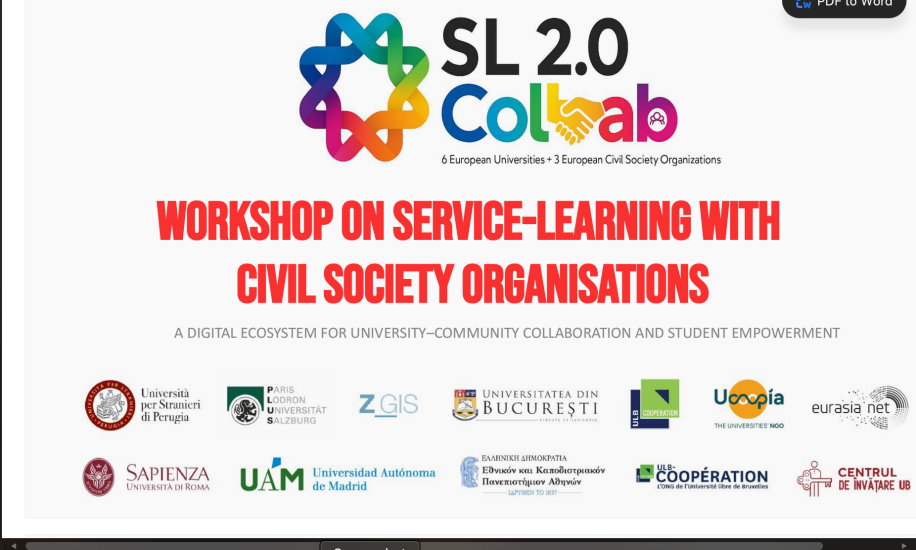
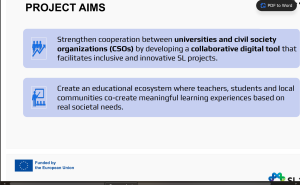
Within the framework of the European programme Service Learning 2.0: CoLab – Erasmus+ Strategic Partnerships KA2, KE: 22707, coordinated by the University of Bucharest, an online workshop and focus group was organised with civil society organisations, focusing on the educational approach of Service-Learning.

Service-Learning is a contemporary experiential learning method that combines academic knowledge with active student engagement in society. Through activities that respond to real social or environmental needs, students develop meaningful skills, strengthen their social awareness and connect theoretical learning with practical action.

The workshop brought together universities and civil society organisations from across Europe, including Université Aix-Marseille, University of Bucharest, University of Salzburg, University of Padova, Sapienza University of Rome, and Eurasianet.eu. The discussion focused on cooperation between universities and NGOs, the exchange of experiences, and the adaptation of practices that can strengthen the social impact of education.

Participation in such initiatives highlights the importance of collaboration between academia, civil society and non-profit organisations.

For Kapa3, the philosophy of Service-Learning is closely aligned with its mission: transforming knowledge into action, empowering people affected by cancer, and building bridges between education, social care and active citizenship.

Through these educational collaborations, the connection between universities and society is strengthened, while new opportunities are created for participatory learning, social innovation and meaningful support for vulnerable groups.

Find more

Flyer – Workshop_ Service Learning (2) Service-learning-key-facts (1)

Service-learning-key-facts (1)

May 27 th 2026 Workshop SL with CSOs

Kapa3 at the “Facing the Challenge of Artificial Intelligence” Event

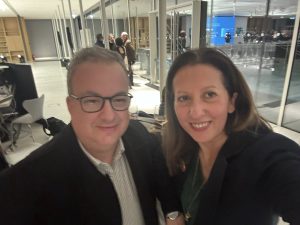
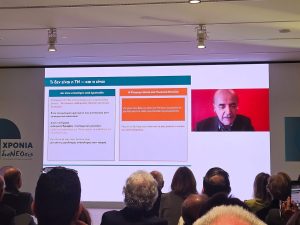
On March 11, 2026, Kapa3 co-founder Evangeli Bista and the organization’s collaborator, Christos Frantzidis, senior lecturer at the School of Computer Science, University of Lincoln, attended with keen interest the event “Facing the Challenge of Artificial Intelligence”, organized by diaNEOsis at the Stavros Niarchos Foundation Cultural Center Lighthouse, marking 10 years of the organization’s work.

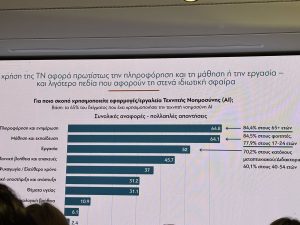
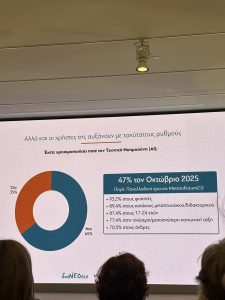
The event highlighted, through presentations and discussions, key topics regarding Artificial Intelligence (AI), including: what AI is and the concerns it raises, social impacts and inequalities it may create, ethical and responsible use, effects on work and productivity, and the challenges in legislation and technology regulation.

As Evangeli Bista noted on her social media, AI remains a field full of questions:

  • What exactly is Artificial Intelligence?
  • What concerns are emerging around it?

Technology without thought can reinforce the greatest inequalities,” she emphasized, adding that the conversation on ethical and scientifically informed access to technology remains open. The event offered the chance to see “the next day… through the eyes of those who pioneered it,” such as Joseph Sifakis (Turing Award 2007) and Christos Papadimitriou.

Kapa3’s participation focused on observing, absorbing knowledge, and supporting dialogue around the challenges and opportunities of AI, with particular attention to the social dimension and the inequalities it may create.

By attending this event, Kapa3 continues to demonstrate its commitment to technological developments, the importance of informed and responsible discussion, and understanding the social and ethical implications of Artificial Intelligence.

Continuing the Journey: Online Group Sessions for Mental Health and Nutrition – Third Cycle with Kapa3 and the LB.H.Sc

Following the warm response to the second cycle of meetings (see the related article here ), focusing on Nutritional Guidance and Experiential Psychological Support, Kapa3 and the Laboratory of Basic Health Sciences (LB.H.Sc), Department of Nursing University of Peloponnese are delighted to continue their collaboration with a third series of online group sessions for mental health and nutrition, dedicated to the holistic care of body and mind, designed for people living with cancer and their caregivers.

In this third cycle, mental health and nutrition are approached as two complementary sides of the same care.

The mental health sessions help participants recognize and manage challenging emotions such as anxiety, fear, sadness, or guilt, strengthen resilience, and cultivate a deeper connection with themselves and others.

The nutrition sessions explore how mindful and balanced eating can support the body, improve energy and mood, and become a meaningful act of self-care. Food is not only a necessity but also a way to nurture the body, mind, and spirit.

Program of Online Sessions for Mental Health and Nutrition & Themes

  • Saturday, February 28, 2026, 17:30–19:00
    Myths and truths about “anti-cancer” diets. How to evaluate nutritional information and avoid risky practices.

  • Saturday, March 14, 2026, 17:30–19:00
    Stress and uncertainty: practical ways to manage them during treatments and exams.

  • Saturday, March 21, 2026, 17:30–19:00
    Giving space to emotions without being overwhelmed: recognizing and expressing fear, anger, sadness, and guilt.

  • Saturday, March 28, 2026, 17:30–19:00
    Nutritional support during treatment & the role of cachexia.

  • Saturday, April 25, 2026, 17:30–19:00
    Boundaries without guilt: protecting energy and mental resilience.

  • Saturday, May 9, 2026, 17:30–19:00
    Safe cooking practices & kitchen hygiene.

  • Saturday, May 23, 2026, 17:30–19:00
    Family and illness: changes in relationships and ways to support each other.

  • Saturday, June 6, 2026, 17:30–19:00
    The Tree of Life: who I am beyond the illness.

  • Saturday, June 13, 2026, 17:30–19:00
    What gives meaning to life now: discovering small but meaningful elements that sustain us.

Format & Participation

The meetings are held online, based on dialogue, experiential learning, and the sharing of personal experiences. Everyone participates at their own pace, in a warm environment of acceptance and trust. Consistent attendance helps build safety and confidence within the group.

To express your interest or join the first session of the third cycle (Saturday, February 28, 17:30–19:00): [Registration Link]

Text/adaptation: Ifiyenia Anastasiou for Kapa3

Artificial Intelligence (AI) is transforming the fight against cancer.The European Cancer Organisation’s “Harnessing AI for Cancer Care in Europe” report

Artificial Intelligence (AI) is transforming the fight against cancer, enabling machines to learn, reason, and assist humans in detecting, diagnosing and treating the disease more accurately and efficiently. It works by analysing vast amounts of data, learning patterns, and making predictions or recommendations to support human decision-making.

Cancer care is rapidly transforming with the use of AI, which serves as a powerful tool in prevention, detection, treatment and research of the disease. The European Cancer Organisation’s “Harnessing AI for Cancer Care in Europe” report states that AI has the potential to transform every stage of the cancer pathway. Simultaneously, the report emphasises the need for AI to be used responsibly, by protecting patients, upholding ethical standards, and aligning with European values, to ensure its benefits are delivered fairly and effectively across healthcare systems.

The Promise of AI in Cancer Care

The report highlights several ways AI can improve cancer outcomes across the care pathway. In primary prevention, AI can analyse genetic, environmental, and lifestyle data to identify high-risk patients and guide preventive strategies before symptoms appear. For early detection, AI can dramatically speed up screening, reducing test interpretation from days to hours, improving accuracy, and lowering missed diagnoses. In diagnostics, deep-learning models trained on large datasets can detect even the smallest lesions, prioritise urgent cases, and support more precise diagnoses. AI also enables personalised treatment by integrating tumour genomics, imaging data, and real-world outcomes to help clinicians select the most effective therapies for individual patients. Finally, in drug development, AI can identify promising compounds and targets, shortening traditional development cycles and discovering new uses for existing medicines.

Challenges That Cannot Be Ignored

However, the report also highlights significant risks associated with AI in cancer care. Key concerns include regulatory gaps as AI tools advance faster than current rules, making it challenging to ensure they remain safe, accurate, and accountable. Many promising AI systems require further validation in real-world clinical settings, as untested tools could lead to misdiagnoses or unsafe decisions. Bias and inequity are also risks, since AI trained on unrepresentative data may produce less accurate recommendations for specific patient groups. Implementation barriers, such as limited infrastructure, funding, and trained staff, can hinder the integration of AI into everyday healthcare. Finally, trust issues may arise, as both patients and clinicians need to understand and have confidence in AI systems for them to be effectively adopted.

Policy Recommendations: A Roadmap for Safe and Effective Use

To tackle these challenges, the report puts forward four key recommendations. First, it calls for national standards and validation frameworks, including speciality-specific rules and post-market monitoring of AI tools. Second, it emphasises the importance of training and literacy, proposing pan-European AI education to ensure that at least 50% of oncology professionals are confident in using AI by 2030. Third, the report urges robust regulatory guidance and oversight, including EU-wide support for data protection under GDPR, implementation of the AI Act, and strong patient engagement to ensure clinical accountability. Finally, it highlights the need for investment in data infrastructure, leveraging the European Health Data Space to harmonise systems, modernise cancer registries, and build representative datasets that support safe and effective AI deployment.

Why This Matters for Kapa3

Building on these advancements, K3 is preparing to launch its digital assistant, “Myrto”, in 2026. Designed to harness the power of AI, “Myrto” will support patients and healthcare professionals across the cancer care pathway. By integrating cutting-edge AI capabilities with user-friendly guidance, “Myrto” exemplifies K3’s commitment to improving outcomes, streamlining workflows, and empowering both patients and clinicians in Europe’s rapidly evolving healthcare landscape.

To see the full article, please click here.

https://www.europeancancer.org/resources/publications/harnessing-ai-for-cancer-care-in-europe.html

The Impact of the Kapa3 Internship Programme: 30 Young Professionals in Our First 5 Years of Operation

The Impact of the Kapa3 Internship Programme: 30 Young Professionals in Our First 5 Years of Operation

In the five years since our establishment, thirty young people have had the opportunity to learn and grow through the Kapa3 Internship Programme.

International scientific literature highlights that internships are far more than a first work experience. They serve as a fundamental mechanism of experiential learning, enabling students to connect theoretical knowledge with real-world professional contexts.

Through their involvement in a civil society organisation like Kapa3, interns developed reflective and critical thinking skills—core elements of modern professional education. By engaging with real needs and challenges, students strengthened their professional identity and gained a deeper understanding of their role as future practitioners in health and social services. In many cases, the internship at Kapa3 played a significant role in supporting their transition from university to the labour market, enhancing their confidence, social skills, and clarity of professional direction.

Furthermore, the structured field experiences offered opportunities to build professional networks, a key factor in long-term career development.

At Kapa3, the value of internships is evident across all aspects of our work. We strive to create an environment where students can deepen their academic knowledge, apply their skills to real cases, and map out the next steps of their careers with realism and self-awareness.

The result is a community of young professionals who are both socially conscious and scientifically equipped to contribute meaningfully to health and social care. We are proud to be at the forefront of education and warmly thank our partner universities for their trust and collaboration.


Kapa3 at the Patients Summit 2025: A strong voice for cancer patients and their families

The Patients Summit 2025—the annual nationwide meeting organized by the Hellenic Patients Association—was successfully completed with great success. The event has become the leading forum for dialogue and collaboration among patient organizations across Greece. This year’s conference brought together representatives of patient associations, healthcare professionals, and policymakers to strengthen the voice of patients and shape a more humane, participatory, and effective healthcare system.

Participants exchanged experiences, presented best practices, and discussed key issues such as sustainability of patient associations, access to innovative treatments, the use of digital health tools, and patient empowerment in decision-making.

Through thematic panels and interactive workshops, the event highlighted the need for cooperation, transparency, and the use of data to drive targeted solutions with real social impact.

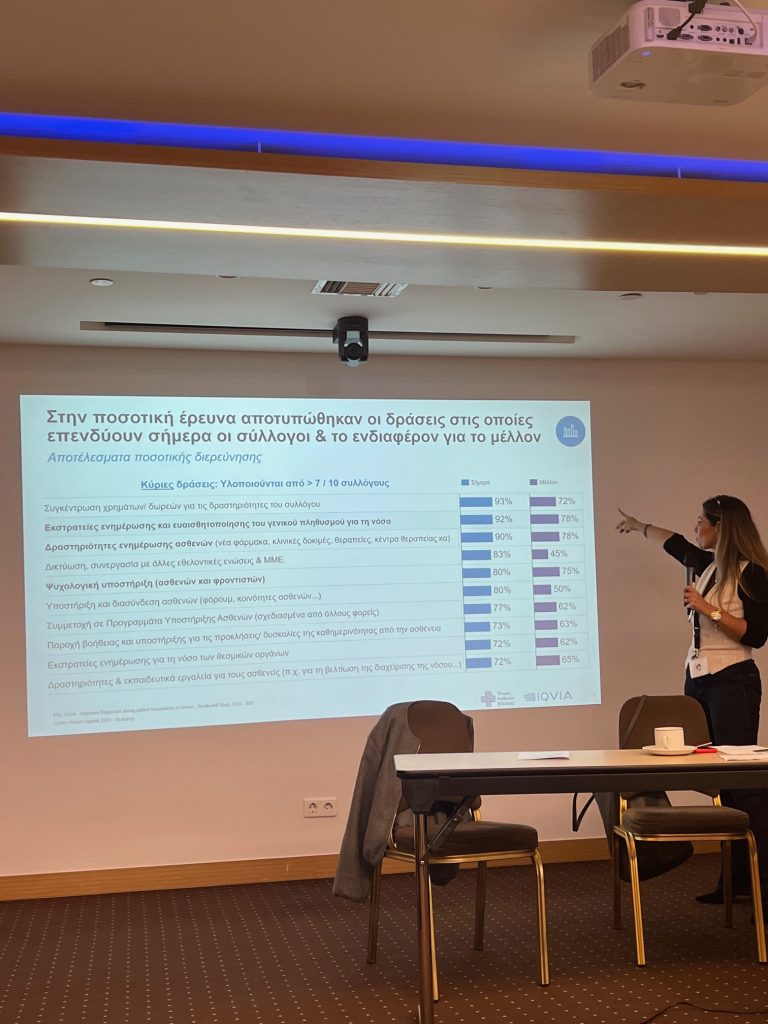
Kapa3 actively participated in the Summit, representing cancer patients and their families. A highlight of its presence was its contribution to the Strategic Workshop: “How do we measure our value?”, where Kapa3 presented its approach and operational philosophy on data collection and utilization as a tool for developing innovative initiatives.

For Kapa3, data collection is a key process in understanding the real needs of its beneficiaries. As emphasized during the session, data analysis—conducted in collaboration with the organization’s biostatistician, Mr. Konstantinos Tzanas—helps Kapa3 design targeted and evidence-based strategies. Continuous evaluation by patients themselves enables the adaptation of services and the development of innovative solutions that have a tangible, positive impact on their lives.

Kapa3’s presence at the Patients Summit 2025 underscored the importance of collaboration, scientific evidence, and collective action. The organization remains committed to amplifying the voice of cancer patients through knowledge, innovation, and transparency—values that can truly transform the patient experience and contribute to a fairer, more humane healthcare system for all.