Enjoying Life – The New Year’s Message: Small Moments, Big Meaning

As the new year unfolds before us, let’s take a few moments to pause and notice what brings us joy and peace. At Kapa3, we believe that the ability to truly enjoy — to fully experience the small, positive moments of everyday life — can guide us toward a more balanced and meaningful life. Enjoying life is not just a phrase; it is a way of living.

It’s the moment we catch ourselves smiling over a warm drink, the gentle touch of a pet, or an unexpected phone call that brings joy. It’s paying attention to a loved one who needs a little care, a “I love you” or “I’m sorry” given or received. It’s the moment we lift our gaze as we walk and notice the trees, the color of the sky, the changing world around us.

It could also be the taste of a favorite meal, the warmth of a coffee, a book whose pages we’ve lost ourselves in, a new outfit, or a film that moves us at the cinema or at home. Every small experience carries power — reminding us to be present, to appreciate, and to care for ourselves and those around us.

Just like the message behind Kapa3’s good-luck charm of the year, the Crown, the concept of enjoying life reminds us to make room for small acts of care and moments of calm that fill us with strength.

Research shows that conscious attention to small moments of joy and a positive mindset can have a real impact on both physical and mental health. Even brief moments of relaxation, laughter, or calm improve our body’s ability to cope with stress and recover from challenges. This practice benefits not only patients but also caregivers, who need strength and balance to care for others with love and mindfulness.

For patients and caregivers, this approach can make a real difference. Our psychology is deeply affected by small joys: a smile, a warm word, or a moment of care for others or ourselves. Mindful attention to these moments enhances our ability to face challenges and experience peace.

This year, let’s choose to give space to these moments. Let’s take small breaks to feel the present, to breathe, and to focus on what truly matters. Every consciously lived moment, every smile, every act of care strengthens our lives in ways words can barely capture.

At the start of this year, we wish for everyone — patients, caregivers, and friends of Kapa3 — to find the chance to pause for small, positive moments, to enjoy them, and let this conscious joy guide a 2026 full of peace, care, and mindfulness.

Let enjoying life be the voice guiding our year.

Text by: Ifiyenia Anastasiou for Kapa3

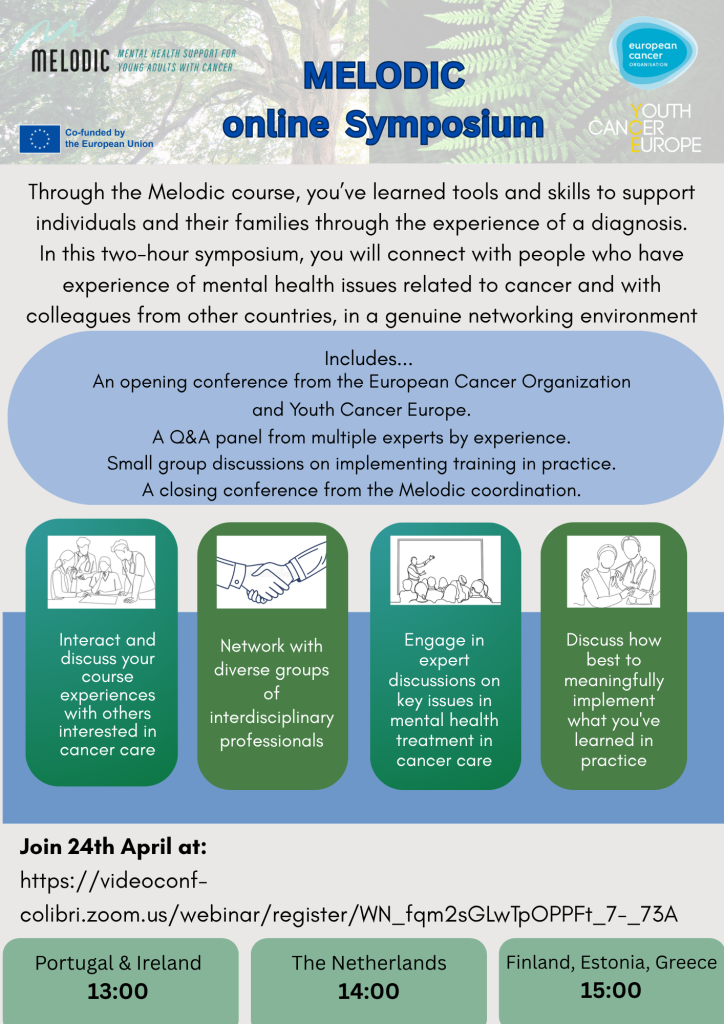
MELODIC: Advancing Mental Health Support for Young Adults with Cancer

The MELODIC project, a European programme focused on the mental health of young adults with lived experience of cancer, launched in September 2024 with the aim of strengthening the mental wellbeing of people aged 18–35, as well as their families. Through collaboration among six European countries, MELODIC combines research, educational activities, and the development of future interventions, promoting a more supportive and personalised approach to care.

MELODIC has already delivered significant outcomes, including outputs related to project management, needs assessment, interview-based research, and the training of healthcare professionals, while preparing upcoming intervention actions and communication and policy strategies.

KEY DELIVERABLES – WHAT HAS BEEN COMPLETED SO FAR

WP1 – Project Management & Quality Assurance

Deliverable 1.1 – Project Implementation Manual:
A management and quality monitoring guide defining implementation requirements, organisational structures, and partner roles.

Deliverable 1.2 – Quality Report:
A quality assurance report outlining procedures to ensure clarity, consistency, and timely delivery of project outputs.

WP2 – Needs Assessment

Deliverable 2.1 – Data Management Plan:
Assessment of the mental health and educational needs of young adults and healthcare professionals, in full compliance with data protection requirements.

Deliverable 2.3 – Interview Study Report:
A comprehensive interview-based study involving young adults, family members, and healthcare professionals across six countries, conducted with ethical approval and presenting key findings.

WP3 – Co-design Guide & Training

Deliverable 3.1 – MELODIC Curriculum:
A training programme for healthcare professionals at EQF level 7, focusing on the identification and support of the psychosocial and mental health needs of young adults with cancer. The curriculum includes learning objectives, training materials, assessment methods, and certification.

WHAT’S NEXT – UPCOMING DELIVERABLES AND ACTIONS

WP4 – Intervention Study

Deliverable D4.1 – Ethical Review:
Ethical approval for the intervention study aiming to improve the mental health and wellbeing of young adults with cancer and their families. The intervention will combine physical activity in natural environments with psychoeducation and informational support.

WP5 – Communication & Policy

Deliverable 5.1 – Communication Strategy:
A communication strategy outlining channels, target audiences, and publication plans for the internal and external dissemination of project results.

Deliverable 5.2 – Policy Outreach Strategy:
A policy engagement strategy at European and national level, including policy and stakeholder mapping and three intervention pillars (European, National, and Project-specific). The aim is to integrate MELODIC training into curricula and to enhance the project’s visibility at European level.

OUR PARTICIPATION IN MELODIC

As part of our active involvement, we have contributed to the production of key deliverables, particularly in data collection through interviews and in the development of the training curriculum for healthcare professionals. Our engagement ensures that the voices of young adults with lived experience of cancer and their families are taken into account at every stage of the project.

For more information and full access to MELODIC deliverables, please visit the project’s official website here.

Text/adaptation: Ifiyenia Anastasiou for Kapa3

2025 – Moving Forward with Vision

The Kapa3 Annual Review 2025 reflects a year of determination and vision, as Kapa3 strengthened its impact through initiatives and collaborations focused on holistic cancer care.During the first half of the year alone, we managed more than 400 individual requests, with support for the process of Disability Certification standing out as a key service—confirming that personalized, hands-on support remains at the core of our mission.

A milestone moment in 2025 was Kapa3’s participation, alongside 13 European partners, in the EU4Health programme MELODIC, which focuses on improving mental health support for young adult cancer patients (18–39 years old). Through research mapping the training needs of healthcare professionals, the project highlights the urgent need for better detection and management of psychological distress among young patients—many of whom still lack access to adequate psychosocial care.

MELODIC promotes innovative wellbeing interventions, such as physical activity in green and blue spaces combined with psychosocial support, emphasizing the healing power of nature and community in mental health recovery. As an active partner, Kapa3 works to ensure that these actions reach patients directly, fostering community engagement and equitable access to quality care.

At the same time, our participation in the second cycle of the SmartHEALTH programme, supported by CERTH, strengthened the digital integration of healthcare services and empowered patients through smart technologies, improving efficiency, accessibility, and transparency.

Our collaboration with FairLife within the BREATH programme for lung cancer patients highlighted the importance of holistic and interdisciplinary care. In parallel, our presence at conferences and scientific events—such as COST Action INECSC CA21125 and the 7th conference “Caregivers and Depression”—consistently brought attention to the needs of caregivers and the empowerment of patients.

At both national and international levels, Kapa3 presented its work at the Lazord International Conference, the Pan-Macedonian Scientific Nursing Conference, and the ESMO World Congress in Berlin. We also participated in major events such as the Patients Summit, Morning Health Talks by EIT Health, and the 18th Panhellenic Conference on Nutrition & Dietetics.

A particularly important moment was our action in the Municipality of Megara, where a new Cancer Patient Guidance and Counselling Station was established, offering direct and personalized support to patients and their families.

Prevention and awareness remain fundamental pillars of our work. Breast self-examination initiatives, participation in the Action4Obesity network, presence at the Thessaloniki Disability Festival, and the launch of new nutrition-related sections on our website all contribute to improving the quality of life of patients and caregivers—combining scientific guidance with lived experience.

Awards 2025

In 2025, Kapa3 received significant recognition for the digital platform Cancer Care Connect, winning a Gold Award at the Diversity, Equity & Inclusion Awards, as well as the Gold Award for “NGO of the Year – Health and Social Care at the Hellenic Responsible Business Awards 2025.
In addition, our collaboration with the University of Peloponnese received a Silver Award at the Healthcare Business Awards 2025 for the programme “Community co-design and implementation of holistic educational practices for nutrition and mental health.”

Every initiative, every partnership, and every participation brings us closer to our vision: holistic, human-centred care where the voices of patients and caregivers truly matter.

To explore our full journey from the foundation of Kapa3 through the end of 2025, you can view our comprehensive activity report here.

The Kapa3 Annual Review 2025 reaffirms our commitment to holistic, human-centred care, where the voices of patients and caregivers truly matter.

As we step into the new year, we move forward with enthusiasm, commitment, and optimism—to continue supporting patients and caregivers, investing in innovation and education, and strengthening care and participation across all our actions.

We wish everyone a year filled with health, strength, and inspiration.

The Kapa3 Team

World Braille Day – 4 January

4 January is celebrated internationally as World Braille Day, honoring the life and legacy of Louis Braille, the French inventor of the tactile writing system for people with visual impairment. The day highlights the importance of access to education, information, and social participation for blind and partially sighted individuals. World Braille Day was officially recognized by the UN General Assembly in 2018 and has been observed since 2019.

The date was chosen to coincide with the birth of Louis Braille (4 January 1809). Despite losing his sight at a young age, Braille developed a system of raised dots representing letters, numbers, and symbols, revolutionizing education and communication for blind people worldwide.

Why this day matters

World Braille Day is not just a commemorative event—it reminds us of the importance of equal access to knowledge, education, and basic rights for people with visual impairment. According to the UN, Braille is essential for the full realization of human rights for blind individuals, enabling independence, access to information, and social participation.

Globally, approximately 39 million people are blind and 253 million have moderate to severe visual impairment. In the EU, over 2.5 million citizens live with significant vision problems, while in Greece, more than 35,000 people face severe visual impairments. Access to educational materials in Braille is crucial for their integration and independence.

World Braille Day serves as a global call for awareness, encouraging societies, organizations, and policymakers to promote equality, education, and information accessibility for all.

Rights and accessibility in Greece

In Greece, the rights of people with disabilities, including those with visual impairment, are supported by:

Despite these frameworks, practical implementation—especially in digital spaces—remains a work in progress.

Digital and modern accessibility

Technology has created new opportunities beyond printed materials:

  • Digital Braille services and accessible formats are increasingly available
  • Legal requirements for web and app accessibility in Greece and the EU ensure that digital content is usable for people with disabilities

World Braille Day reminds us that access to knowledge and communication is a fundamental human right. At Kapa3, we support initiatives that promote equality, accessibility, and inclusion, aiming for a world where everyone can fully participate and thrive.

Text/adaptation: Ifiyenia Anastasiou for Kapa3

International Migrants Day – 18 December

Health without borders: equal access to care as a human right

International Migrants Day is observed every year on 18 December, marking the date in 1990 when the United Nations General Assembly adopted the International Convention on the Protection of the Rights of All Migrant Workers and Members of Their Families. The day is not only about population movement, but about fundamental rights, dignity, and—above all—equitable access to health care for all, regardless of origin or legal status.

Global Statistics

Globally, more than 281 million people currently live outside their country of birth, representing approximately 3.6% of the world’s population (International Organization for Migration – World Migration Report).

Migrants and refugees consistently face health inequalities driven by barriers such as language, limited health literacy, insecure housing and employment, and fear of exclusion from health systems. According to the World Health Organization, social determinants of health play a decisive role in access to prevention, early diagnosis and treatment, resulting in poorer health outcomes for migrant populations.

These inequalities are further compounded among particularly vulnerable groups, including children and young people, women, and individuals without stable legal status. In cases of serious or chronic illness—such as cancer—delayed diagnosis, interruptions in treatment and lack of psychosocial support can have a profound impact on disease outcomes and quality of life.

Situation in Greece

Within the Greek context, the country continues to serve as both a host and transit point for migrants and refugees. According to data from Eurostat and the Hellenic Statistical Authority, a significant proportion of the population residing in Greece consists of third-country nationals, while access to comprehensive health services remains uneven, particularly for young people and individuals with increased care needs. Despite existing legal provisions, practical barriers persist in prevention, continuity of care and psychosocial support.

In oncology, these challenges become even more pronounced. Cancer does not discriminate, yet access to care is often shaped by social and economic factors. The need for culturally sensitive, accessible and continuous health services is critical to ensure that no person is left unsupported when facing a cancer diagnosis.

In this context, Kapa3 has long worked to highlight social inequalities in health and to promote holistic cancer care for all people, regardless of background. In 2024, a targeted support initiative for refugees and migrants living with cancer was implemented through the programme Cancer May Control your Body for a While, But Not Your Soul, with the support of the King Baudouin Foundation.

The action focused on the regions of Macedonia and Thrace, addressing refugees and migrants in the area, with particular emphasis on the 15–24 age group, aiming to provide immediate primary care assistance and continuous support throughout the course of their treatment.

International Migrants Day is a reminder that health is a human right, not a privilege. Ensuring equitable access to care—especially for those most at risk—is a shared responsibility of institutions, health professionals and society as a whole.

A fair and healthy society is one that leaves no one behind.

Sources:

Text/Adaptation: Ifiyenia Anastasiou for Kapa3

International Universal Health Coverage Day – December 12

International Universal Health Coverage (UHC) Day is observed every year on December 12 to remind us that access to quality, affordable healthcare is a fundamental human right and a cornerstone of just and sustainable societies. The United Nations established this day to strengthen global commitment so that all people, everywhere, can access the health services they need without financial hardship. (WHO)

Statistics

Universal health coverage is not just a goal. It is a central element of the United Nations  Sustainable Development Goals for 2030. Despite progress in recent decades, the reality remains challenging. Approximately 4.6 billion people worldwide still lack access to essential health services. At the same time, 2.1 billion face financial hardship in accessing care. Finally 1.6 billion pushed into poverty due to health expenditures.

These statistics demonstrate that universal coverage remains far from fully achieved, with significant inequalities between countries and within societies: poorer populations, rural residents, people with lower education, and other vulnerable groups face much greater barriers to healthcare. (WHO – World Bank Report)

Situation in Greece

In Greece, although universal coverage exists in principle through the National Health System, access to care is not always equitable or complete. Only a small percentage of citizens report high satisfaction with service availability, while around 12.1% of people have unmet healthcare needs, a rate significantly higher than the OECD average. (OECD)

Out-of-pocket healthcare expenses particularly affect lower-income households. Nearly nearly 10% of households facing catastrophic health spending, forcing families to sacrifice essentials such as food or housing. (WHO – Health Care Greece)

These inequalities are not just numbers—they have real consequences for quality of life. For cancer patients, universal coverage means timely diagnosis, access to treatments, continuous monitoring, psychosocial support, and palliative care. Lack of comprehensive, accessible care can worsen disease outcomes and increase psychological and financial burden for patients and their families.

At Kapa3, we strive to ensure that no cancer patient or their loved ones feel alone. Through educational initiatives, experiential programs, psychosocial support, and guidance materials, we advocate for healthcare access that respects human dignity, life, and real needs.

Universal Health Coverage Day is not just a date—it is a call to action for broader access, reduced inequalities, and genuine support for all. Together, we can make meaningful change.

Text/adaptation: Ifiyenia Anastasiou for Kapa3

KAPA3 at the 18th Panhellenic Congress of Nutrition & Dietetics

The 18th Panhellenic Congress of Nutrition & Dietetics took place at the Athens Concert Hall from 4–6 December 2025, bringing together scientists and professionals to discuss the latest developments in nutrition under the central theme “Bridging Research and Practice.”

The Congress covered topics ranging from alternative proteins to eating disorders, through lectures, workshops, and roundtable discussions.

During the session “Co-Creating Health: Participatory Research with Cancer Patients on Nutrition and Mental Resilience”, held on Friday, 5 December in Hall MC3, participants included Andrea Paola Rojas Gil, Associate Professor of Biology – Biochemistry and Director of the Laboratory of Basic Health Sciences at the University of Peloponnese, a close KAPA3 collaborator in the field of nutrition, with the topic “Nutrition as a Tool to Support Treatment and Wellbeing: Comparison of Co-Design Programs for Oncology Patients in Greece and Colombia”; Evagelia Bista on behalf of KAPA3 with “Nutrition as a Social Determinant of Health: Inequalities, Education, Environment and Policies”; and Ioanna Sideri with “Mental Health and Strategies for Empowerment and Resilience”.

Nutrition as a Social Determinant of Health

Evagelia Bista emphasized that nutrition is not merely a personal choice but one of the most critical social determinants of health, directly affecting the prevention, progression, and quality of life of oncology patients. Nearly half of people worldwide lack access to healthy food, and socio-economic inequalities determine who can follow a nutritious diet. Greece is no exception: the economic crisis, the high cost of healthy foods, and the turn towards cheap, highly processed options have worsened the situation.

Key points highlighted in the presentation included:

  • Income, education level, and food availability determine dietary quality, with low-income households experiencing higher rates of obesity and chronic diseases.

  • A shift from the Mediterranean diet towards Western-style options due to economic and social factors.

  • A double burden for vulnerable populations: undernutrition and obesity coexist, particularly affecting those facing food insecurity.

  • Impacts on oncology patients: adequate nutrition is crucial for treatment tolerance, recovery, and quality of life, yet many patients face financial and treatment-related barriers.

Ms. Bista presented KAPA3’s actions with a focus on nutritional support and the participatory approach applied in online Experiential Sessions, conducted in collaboration with the University of Peloponnese. These sessions continue a series dedicated to holistic care for body and mind, emphasizing both nutrition and mental health for oncology patients and their caregivers.

KAPA3 underlines that nutrition cannot be seen as an individual behavior alone but as the result of social, economic, and environmental factors. Reducing inequalities and ensuring access to healthy food for all is essential for better health outcomes, especially in oncology care.

Text/Adaptation: Ifiyenia Anastasiou for Kapa3

Kapa3 Supports Digital Innovation for Oncology Patients at Morning Health Talks

On Thursday, 4 December 2025, the second Morning Health Talk titled “Health Data for Innovation in Greece: Building a Stronger Digital Health Ecosystem” took place at the National Documentation Centre (EKT) in Athens. The event was held in a hybrid format (in-person and online participation), bringing together health professionals, researchers, policymakers and technology partners from Greece and abroad.

During the event, international and Greek experiences were presented on the management and use of health data, digital transformation, and best practices for leveraging data to strengthen the country’s digital health ecosystem.

Among the speakers were:

  • Dr Athanasios Batagiannis, General Director, 3-psi

  • Georgios Dimitriou, Cluster Manager, Hellenic Digital Health Cluster

  • Dr Ioannis Koumpouros, Director of DigInHealth, University of West Attica

  • Elpida Fotiadou, Head of eHealth, IDIKA

With the contribution of the distinguished speakers, key issues were discussed, including infrastructure interoperability, the need for reliable data, bureaucratic barriers, gaps in digital literacy, the development of focused platforms and processes, faster care pathways and needs assessment, the reduction of information fragmentation, and the development of human-centred digital solutions with practical value and social acceptance.

KAPA3 presented its strategic approach, focusing on standardised procedures, data quality improvement, interdisciplinarity, and the use of digital tools to support people living with cancer, as well as on guidance, interaction, empowerment and patient participation in data utilisation processes. At every step, KAPA3 addresses key challenges such as data fragmentation, stakeholder collaboration and human-centred digital solutions—issues that are also summarised in the Good Practices Guide developed within the eHealth4Cancer project.

In summary, the main points highlighted were:

  • A human-centred approach and the application of good practices to ensure the usability and social acceptance of digital solutions.

  • Strengthening collaboration between healthcare professionals, researchers and citizens to develop reliable and functional digital infrastructures.

  • The need for systematic scientific research to address challenges such as skills gaps, limited access and data fragmentation.

The event provided an important opportunity for networking and knowledge exchange, promoting the alignment of digital health infrastructures with citizens’ needs and reinforcing KAPA3’s role as an active contributor to the digital transformation of healthcare in Greece.

Read the full Morning Health Talks 2025 press release here and view photos from the event.

Text/adaptation: Ifiyenia Anastasiou for Kapa3

International Volunteer Day – 5 December

Celebrating the people who give their time to make the world better

International Volunteer Day (IVD) is celebrated every year on 5 December, following a United Nations resolution that recognises the contribution of volunteers to peace, social cohesion, and sustainable development.
It is a day dedicated to acknowledging the millions of people who offer care, support, skills, and solidarity — quietly and consistently.

What volunteering means today

Volunteering goes far beyond goodwill.
It strengthens communities, bridges inequalities, supports public health systems and safety nets, and empowers people to take action where it’s needed most.

Across the world, volunteers contribute to:

  • health and patient support

  • social care and community services

  • disaster response and humanitarian aid

  • education and youth programmes

  • environmental protection and sustainability

  • advocacy for vulnerable groups

The scale of volunteering

Global landscape

According to UN Volunteers (UNV):

  • Around 862.4 million people aged 15+ volunteer every month worldwide.

  • This represents nearly 15% of the global working-age population.

  • The total global volume of volunteer work is equivalent to the labour of 109 million full-time workers.

  • Organised (formal) volunteering accounts for about 6.5%, while informal volunteering reaches 14.3% globally.

Volunteering in Greece

ILO (ILOSTAT, 2022) reports that in Greece:

  • 543,010 people engage in direct (informal) volunteering.

  • 669,712 people contribute through voluntary organisations.

These figures reflect a strong and active culture of solidarity, participation, and civic engagement across the country.

Volunteering and cancer care

In the field of cancer, volunteering plays a vital and deeply human role.
Volunteers offer:

  • practical assistance to patients and caregivers

  • support in navigating health services and rights

  • companionship during demanding procedures or appointments

  • participation in awareness and prevention activities

  • emotional support and empowerment

Their presence brings stability, trust, and hope during some of the most challenging moments in a patient’s journey.

Volunteering at Kapa3

International Volunteer Day highlights the dedication of Kapa3 volunteers and the fact that our volunteers are an essential part of our mission.
Through their contribution, they:

  • support patients and caregivers in their day-to-day needs

  • assist in awareness, prevention, and advocacy actions

  • strengthen our European programmes, research activities, and community outreach

  • bring compassion, knowledge, and willingness to every corner of our work

Thanks to them, our vision — no one should face cancer alone — becomes reality.

Become a volunteer at Kapa3

If you wish to support cancer patients and their families, contribute to your community, and become part of our mission, you can join our volunteer network.

Click here to join our volunteer team: here

On International Volunteer Day, the Kapa3 team honours those who not only give their time, care, and heart but also support patients and caregivers in countless ways.
To every volunteer: thank you for your kindness, your consistency, and your strength.
Thank you for helping us build a world of dignity and hope.

Text/Adaptation: Ifiyenia Anastasiou for Kapa3

Sources

United Nations Volunteers (UNV), State of the World’s Volunteerism Report (2022)

International Labour Organization (ILO) – ILOSTAT, Volunteer Work Statistics (Greece, 2022)

Trvst – Volunteering Facts & Global Volunteer Work Analysis

World AIDS Day — December 1

World AIDS Day is a powerful reminder that the fight against HIV/AIDS is far from over. Despite remarkable progress in recent decades, millions of people worldwide are still living with the virus. At the same time, inequalities in access to prevention, diagnosis and treatment continue to cost lives.

Established in 1988 as the first international health-related awareness day, World AIDS Day has since served as a global call for informed action, early diagnosis, destigmatization and equitable care.

What We Know Today About HIV/AIDS

According to recent UNAIDS data, more than 39 million people are living with HIV globally — and thanks to modern treatments, they can live full and healthy lives.

The science is encouraging. Antiretroviral therapy (ART/ARVs) allows people on treatment to reach undetectable viral loads, which means they cannot transmit the virus (“Undetectable = Untransmittable”).

Yet despite this progress, new infections still occur — mainly in communities facing social exclusion, economic hardship, or limited access to healthcare services. At the same time, lack of information and persistent stigma remain major barriers that delay testing and treatment.

HIV & Cancer: An Important Connection

The link between HIV and several forms of cancer isn’t widely known, yet it is significant:

  • People living with HIV have a higher risk of cervical cancer due to the more persistent presence of HPV.
  • Increased risk is also observed for non-Hodgkin lymphoma, Kaposi sarcoma and several cancers associated with chronic viral infections.
  • Early diagnosis, continuous treatment and regular screening significantly reduce these risks.

At Kapa3, we have published articles on the importance of screening and patient empowerment, which you can find here: Article1, Article2, Article3, Article4, Article5.

The Situation in Greece

Greece has made important progress in recent years, thanks to the operation of Checkpoints, the support of NGOs and prevention structures, the spread of PrEP, and improved access to treatment.

In 2024, Greece recorded a small decrease (4%) in new HIV diagnoses compared to 2023, according to the Hellenic National Public Health Organization (EODY). However, underdiagnosis remains a real concern. Many people avoid timely testing due to stigma and fear of discrimination.

Prevention: What Each of Us Can Do

  • Testing: a simple test can save lives.
  • Condom use & comprehensive sexual education.
  • PrEP & PEP: modern and effective prevention tools.
  • Eliminating stigma: information and open dialogue remain our strongest forms of protection.
  • Supporting facilities that provide access to prevention, diagnosis and treatment.
A Human Rights Issue

At Kapa3, we believe World AIDS Day concerns all of us. Access to healthcare is a fundamental right. No one should be afraid to get tested, speak openly or seek support.

According to International Human Rights Law, discrimination based on HIV status, sexual orientation, gender identity or expression, health status (including substance use), or sex work constitutes a violation of human rights.

World AIDS Day reminds us that knowledge, prevention and solidarity save lives — and that a world without new HIV infections is possible.

Sources

  • UNAIDS
  • HIV.gov
  • AIDS Healthcare Foundation
  • EODY (Hellenic National Public Health Organization)

Text/Adaptation: Ifiyenia Anastasiou for Kapa3