Co-creation in health research: from participation to meaningful influence

Co-creation in health research: from participation to meaningful influence

A new scientific study proposes a framework for understanding who participates in research, when they participate, how they contribute — and how much influence they actually have

Co-creation is becoming increasingly important across public health, research, social innovation and the design of healthcare services. Patients, caregivers, citizens, healthcare professionals, researchers and communities are more frequently being invited to contribute to the development of interventions, services and solutions.

Yet an important question remains:

What does “participation” actually mean?

The presence of a patient or community representative in a meeting does not necessarily mean that they can influence the design, decisions or outcomes of a research project. Similarly, being asked to complete a survey is fundamentally different from helping to design an intervention, interpret findings or determine how results are shared.

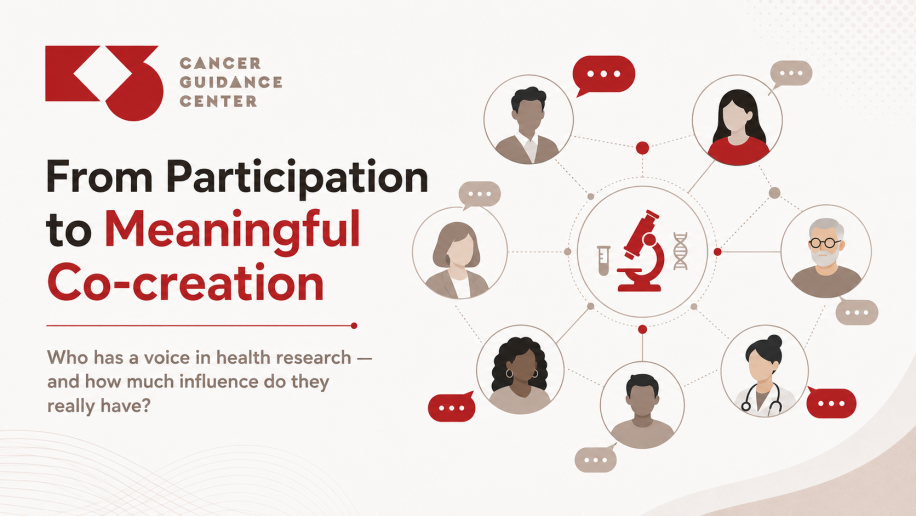
A new open-access study, published on 19 August 2026 in the Journal of Public Health, addresses this challenge. Katrina Messiha, Mai J. M. Chinapaw, Johannes C. F. Ket, Renée I. Wink and Teatske M. Altenburg developed the Co-creation Roles Framework, an operational framework designed to systematically describe and classify the roles of different stakeholders in co-creation research.

Moving beyond “who was involved?”

One of the study’s most valuable contributions is its shift away from simply recording whether stakeholders participated towards examining the nature, depth and quality of that participation.

The framework captures eight key dimensions:

  • the research stage at which participation occurs,
  • the target group or stakeholder involved,
  • the aim of involvement,
  • how stakeholder knowledge is used,
  • the level of engagement and influence,
  • the form of co-creation,
  • the platform through which engagement takes place,
  • and the duration of engagement.

The relevant question therefore becomes much more precise than “Were patients or citizens involved?”

Instead, researchers can ask:

When were they involved? What were they asked to contribute? How was their knowledge used? And how much influence did they actually have over decisions?

What did the study find?

To demonstrate the practical application of the framework, the researchers conducted a systematic review following PRISMA guidance.

They analysed 39 scientific articles representing 19 youth-focused public health projects based on co-creation, Youth Participatory Action Research or Community-Based Participatory Research approaches.

The analysis revealed substantial variation in the ways stakeholders were engaged.

One particularly striking finding was that, under the strict definition used in the framework, none of the 19 projects reached the highest level of engagement — “empowerment”, where stakeholders hold genuine decision-making authority.

During the implementation stage, consultation and involvement were the most frequent levels of engagement, while consultation was also the most common approach during evaluation.

This finding matters.

It demonstrates that describing a project as “co-created” does not automatically mean that the people for whom an intervention is being developed have meaningful power to shape it.

Participation should not end when the research ends

Another important finding concerned dissemination and reporting.

Only 4 of the 19 projects included a reporting stage extending beyond conventional academic publication.

In some cases, young stakeholders were involved in presenting findings, communicating results within their communities, or developing dissemination materials and practical tools. Overall, however, stakeholder involvement in the final stages of the research process remained limited.

This is highly relevant to health research.

People who contribute their lived experience, time and knowledge to a study should not be considered merely a source of data. They can also play an important role in interpreting findings, shaping key messages and helping return knowledge to the communities from which it originated.

From patient participant to patient co-creator

This discussion has particular relevance for cancer research and cancer care.

Patients and caregivers hold a form of knowledge that clinical evidence alone cannot provide: the lived experience of illness and care.

They understand what treatment means in everyday life; where administrative, social or practical barriers interfere with care; whether a digital health service is genuinely understandable and accessible; which questions remain unanswered; and which outcomes actually matter to the people living with cancer.

Using this knowledge is not simply a matter of representation.

It is a matter of research quality.

For a patient-support organisation such as Kapa3, co-creation therefore means more than inviting patients into an existing process. It requires creating the conditions in which lived experience can become knowledge, knowledge can shape design, and design can ultimately lead to more relevant, accessible and person-centred services.

A framework for planning future research

The authors emphasise that the Co-creation Roles Framework may be valuable not only for describing completed research, but also for planning and evaluating future projects.

Research teams may use it prospectively to clarify stakeholder roles from the beginning, while funders, ethics committees and scientific journals could potentially use such structured approaches to assess how clearly and meaningfully stakeholder participation has been planned and reported.

At the same time, the framework should not yet be regarded as a definitive standard.

The authors explicitly call for external validation across diverse co-creation settings. They also recognise an important limitation: non-academic stakeholders were not directly involved in developing the framework itself, which may limit its sensitivity to some experiential and contextual understandings of stakeholder roles.

Recognising these limitations is itself an important part of advancing more rigorous participatory research.

The next challenge: not simply more participation, but more meaningful participation

Co-creation should not become another box to tick in a research proposal.

The more important challenge is to be able to demonstrate:

who had a voice, when that voice was heard, how it influenced decisions and what ultimately changed because of that contribution.

As healthcare moves towards more participatory, person-centred and digitally supported models of care, the shift from research about patients to research with patients, and ultimately towards research shaped together with patients, may become one of the defining requirements for research that is both scientifically robust and genuinely relevant to people’s lives.

Scientific source

Messiha K, Chinapaw MJM, Ket JCF, Wink RI, Altenburg TM. Development and application of a framework for classifying stakeholder roles in co-creation research: a Health CASCADE study. Journal of Public Health. Published 19 August 2026. DOI: 10.1007/s10389-026-02881-2.

Messiha_et_al-2026-Journal_of_Public_Health

Modern Oncology: When Survival Is Not Enough

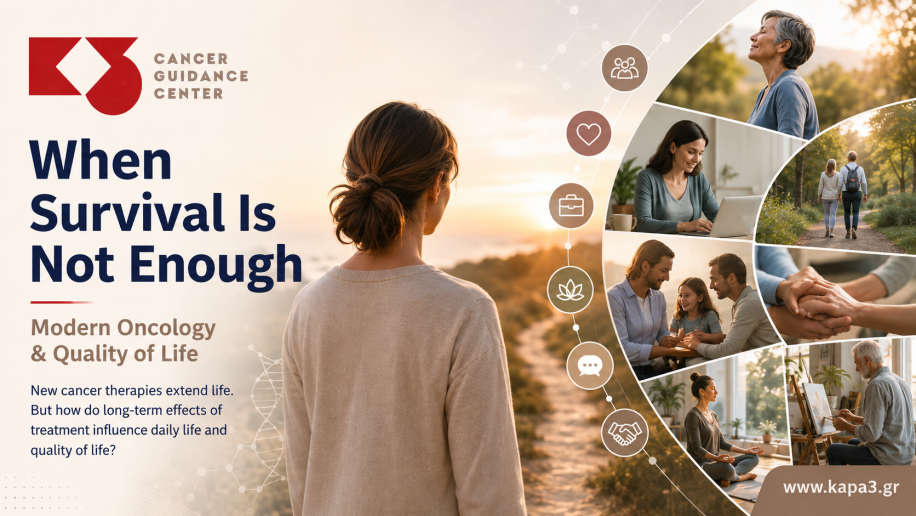
New therapies, “hidden” effects and the need to assess not only how long patients live, but how they live

Modern Oncology: When Survival Is Not Enough

New therapies, “hidden” effects and the need to assess not only how long patients live, but how they live

Modern oncology is changing at an unprecedented pace. Immunotherapies, antibody–drug conjugates (ADCs), bispecific antibodies and new targeted therapies are creating treatment opportunities that would have been unimaginable only a few years ago.

Cancer treatment is becoming increasingly personalised and tailored to the biological and molecular characteristics of each tumour, while overall survival is being extended for many people living with cancer.

Yet alongside this remarkable scientific progress, a critical question is emerging:

What does it really mean to live longer after — or with — cancer?

A recent Nature Medicine editorial, entitled “Oncology must confront hidden side effects”, highlights precisely this challenge. While cancer drug development is advancing at remarkable speed, the approaches used to record, assess and manage long-term treatment-related toxicities — and their impact on patients’ quality of life — have not evolved at the same pace.

When a “mild” side effect becomes a major burden

Therapeutic success can create a new reality: people are living longer, but some must also manage treatment-related adverse effects for months, years or even for the rest of their lives.

An adverse event classified clinically as low-grade is not necessarily insignificant to the person experiencing it.

A persistent rash, diarrhoea, stomatitis or other symptoms may substantially affect daily functioning, psychological wellbeing and social life when they continue over long periods.

Similarly, some immune-related adverse events associated with immune checkpoint inhibitors can become chronic, persist for years or even be irreversible.

This highlights an important limitation of the Common Terminology Criteria for Adverse Events (CTCAE), which are widely used to classify and grade treatment-related adverse events.

The duration of adverse events is not adequately reflected, while functional and psychological consequences may also remain outside traditional toxicity assessment.

As a result, what may be considered “manageable” according to conventional clinical criteria can feel very different to the patient living with it every day.

Quality of life cannot be an afterthought

A second important issue is the timing of quality-of-life evidence.

In some cases, quality-of-life findings are reported considerably later than the primary results of a clinical trial, and sometimes after a new drug has already been approved.

This means that patients making treatment decisions during the early years of a new therapy may not yet have a complete picture of how it could affect their daily functioning, emotional wellbeing and overall quality of life.

At the same time, the questionnaires and tools used to assess quality of life need to evolve continuously.

And this cannot happen without the direct involvement of patients themselves.

The experiences and priorities of people receiving treatment should form part of how treatment impact is assessed, rather than being treated as information that is added later.

The example of daraxonrasib

The Nature Medicine editorial highlights the pan-RAS inhibitor daraxonrasib as a telling example. The therapy has shown important survival benefits for patients with aggressive RAS-driven advanced pancreatic cancer, a setting in which treatment options have historically been limited.

At the same time, most patients experienced acneiform rash, with diarrhoea and stomatitis also reported as lower-grade treatment-related adverse events.

Full quality-of-life data — including information on daily functioning and emotional wellbeing — were not yet available because follow-up remained relatively short.

This example illustrates a much wider issue.

If we know that a therapy can significantly extend life, but we do not yet fully understand what that life will be like, an essential part of the information is missing from the conversation between patients and their healthcare teams.

This also has direct implications for informed consent.

Whenever evidence is available, patients need information not only about response rates and survival but also about the potential short- and long-term consequences of treatment for their everyday lives.

The same treatment is not experienced in the same way by everyone

The toxicity profile of a treatment is not identical for every patient.

It may vary according to the drug’s mechanism of action, a person’s physical condition, co-existing long-term conditions, genetic background and other individual characteristics.

Particular attention is needed for populations that have historically been excluded from, or underrepresented in, clinical trials, as their experiences of treatment-related toxicity may differ.

The editorial points, for example, to sex-related differences in adverse events associated with immunotherapy and racial disparities in adverse events observed with CAR-T cell therapy.

This makes real-world data particularly important.

Clinical trials remain fundamental to establishing the safety and efficacy of new treatments. However, broader use in everyday clinical practice may reveal treatment effects that were not fully captured in the populations included in initial studies.

One example is the bispecific antibody amivantamab in lung cancer, where the full extent and severity of some skin toxicities became clearer after a broader patient population was exposed to the treatment.

Moving beyond clinical silos

This changing landscape also demands a different approach to the organisation of cancer care.

The adverse effects of modern cancer therapies do not always fit within a single organ system or medical specialty.

Traditional clinical and disciplinary silos can limit the transfer of knowledge needed to identify, monitor and manage emerging toxicities effectively.

The response therefore needs to be interdisciplinary.

Collaborative networks, updated guidance, systematic reporting, dedicated registries and effective knowledge exchange are increasingly important so that new or rare adverse effects can be recognised early and managed appropriately.

Above all, the patient voice must be heard

Perhaps the most important change concerns how we define treatment success itself.

Survival remains a fundamental goal of oncology.

But it cannot be the only one.

We also need to understand whether people can work, move, sleep, eat, participate in family and social life, maintain as much independence as possible and manage the effects of treatment on their everyday lives.

In other words, we need to know not only how much time a treatment adds to life, but also what that time means to the person living it.

Patients should therefore not enter the process only at the end, as recipients of treatment.

Their perspectives need to be incorporated from the design of clinical trials and assessment tools through to post-approval monitoring and the real-world use of new cancer therapies.

From survival to living after — and with — cancer

Progress in oncology is undeniable, and it brings genuine hope.

The next challenge is to ensure that longer survival is accompanied by quality of life, functioning, meaningful information, participation and dignity.

Modern cancer care therefore needs to move beyond asking only:

“How much longer can this patient live?”

and give equal importance to another question:

“How will this person live during that additional time?”

For Kapa3, this discussion goes to the heart of truly person-centred cancer care: care that sees not only the disease and the treatment, but the person, their everyday life, their needs, their choices and the life that continues during and after cancer.

Source and references

Main source:
Nature Medicine. “Oncology must confront hidden side effects.” Volume 32, July 2026. Published online 8 July 2026. DOI: 10.1038/s41591-026-04554-9.

  1. Barron CC et al. Journal for ImmunoTherapy of Cancer. 2023;11.
  2. Gyawali B et al. Lancet Oncology. 2025;26–e89.
  3. O’Reilly EM et al. New England Journal of Medicine. 2026. DOI: 10.1056/NEJMoa2605555.
  4. Unger JM et al. Journal of Clinical Oncology. 2022;40:1474–1486.
  5. Rayapureddy AK et al. Journal of Clinical Oncology. 2026;44.
  6. Hines MR et al. Transplantation and Cellular Therapy. 2023;29:438.e1–438.e16.

find more s41591-026-04554-9

Κapa3 at IEEE CBMS 2026 | AI for Equitable Oncology Information

Kapa3 at IEEE CBMS 2026: Artificial Intelligence in Support of Equitable Patient Information in Oncology Care

New scientific publication in the Proceedings of the 39th IEEE International Symposium on Computer-Based Medical Systems

The voice and lived experience of patients must remain at the centre of the emerging era of Artificial Intelligence in healthcare.

Kapa3 – Cancer Guidance Centre contributes to a new scientific publication presented in the Proceedings of the 2026 IEEE 39th International Symposium on Computer-Based Medical Systems (CBMS), focusing on how Artificial Intelligence and Retrieval-Augmented Generation can support more equitable, reliable and patient-centred access to information in oncology.

The paper, entitled:

“Informed, Empowered, and Heard: AI and Retrieval-Augmented Generation as Tools for Equitable Patient Information in Oncology”

is authored by Lars Münter, Evangeli Bista, Maria Lavdaniti and Christos Frantzidis, with Evangeli Bista representing Kapa3 as Co-founder.

From access to information to meaningful patient empowerment

A cancer diagnosis creates an immediate need for information that is reliable, understandable and relevant to the individual patient.

At the same time, patients and their families are often expected to understand complex medical terminology, treatment options, prognosis discussions and administrative procedures at a moment of intense psychological and emotional pressure.

The paper highlights that acute stress associated with a serious diagnosis can affect working memory, attention and the ability to process new information. This means that patient information cannot be designed for an ideal, fully attentive reader; it must respond to the real cognitive and emotional conditions experienced by people facing cancer.

The key question is therefore not simply:

“How much information do we provide?”

but rather:

“Are we providing the right information, at the right time, in a form that people can understand and act upon?”

AI and Retrieval-Augmented Generation: towards trustworthy and evidence-grounded information

The publication places particular emphasis on Retrieval-Augmented Generation (RAG).

RAG architectures combine the generative capabilities of large language models with the retrieval of information from curated and verified knowledge sources. In a healthcare setting, this can include clinical guidelines, validated patient information resources, regulatory documents and peer-reviewed literature.

This approach offers an important advantage over purely generative AI systems: responses can be grounded in identifiable sources, supporting greater transparency and enabling patients and healthcare professionals to verify where information comes from.

In oncology, this is especially important.

A patient does not simply need a quick answer. They need information that is:

accurate, current, understandable, accessible and appropriate to their individual situation.

Artificial Intelligence as a tool for equity

One of the central themes of the paper is inequality in access to high-quality oncology information.

Geography, language, socioeconomic circumstances, health literacy, digital literacy and access to specialised healthcare services can significantly influence a person’s ability to understand their diagnosis, treatment options and rights.

The publication pays particular attention to the Greek context, where patients living in large urban centres may experience a very different information environment from those living in rural, remote or island communities.

When equity is treated as a core design principle, AI-RAG systems can potentially support:

  • multilingual access to health information,
  • different levels of language and information complexity,
  • voice-based interfaces,
  • shorter and more manageable units of information,
  • low-bandwidth or offline-capable solutions,
  • and opportunities for patients to return to information when they are ready to process it.

Technology alone, however, does not create equity.

The way technology is designed determines whether it reduces existing inequalities or reproduces them.

Designed with patients, for patient needs

The paper calls for an important shift in the way digital health systems are developed.

Many traditional health information systems are designed primarily around institutional or clinical workflows, with patient-facing communication added later.

For patient-centred AI, this logic must be reversed.

Systems should be designed with patients and around patient needs, with patients and informal carers actively involved in shaping the knowledge base, the questions the system is expected to answer and the ways information is presented.

This also means moving beyond systems that simply respond to individual questions.

A meaningful AI-supported information environment could help patients prepare for clinical consultations, organise their questions, understand the next steps in their care and become more aware of their rights.

The paper highlights applications such as consultation preparation guides, question prompts before appointments and post-consultation summaries as examples of how technology can support patients before, during and after important healthcare interactions.

AI should strengthen, not replace, human relationships

Perhaps the most important message of the publication is that the transformative potential of AI in oncology is not primarily technical. It is relational.

Artificial Intelligence should not create distance between patients and healthcare professionals.

It should help strengthen their communication.

A better-informed patient can arrive at a clinical consultation more prepared, identify questions and concerns more clearly, participate more actively in shared decision-making and communicate more effectively with the healthcare team.

The same applies to informal carers, who often carry a significant part of the informational and emotional burden of cancer care.

For this reason, the paper argues that AI-RAG systems should be designed to strengthen the relationship between patients, carers and healthcare professionals, rather than to replace any part of this human network of care.

For healthcare professionals, trustworthy information systems may also reduce the time required for basic information provision, allowing more of the clinical encounter to focus on nuanced discussions, decision-making and the human aspects of care that technology cannot replicate.

From information to trust

This scientific contribution adds to an increasingly important discussion about the future of healthcare:

How can Artificial Intelligence be developed and used in ways that genuinely respond to human needs?

The answer does not lie only in more powerful AI models or larger volumes of data.

It also lies in evidence, transparency, accessibility, co-design, equity and respect for patient rights.

As the paper concludes, people affected by cancer in Greece and across Europe deserve access to information that is accurate, personalised, accessible and respectful of their rights, regardless of where they live, the language they speak or the socioeconomic resources available to them.

For Kapa3, participating in this scientific discussion also reflects a broader commitment: ensuring that real patient needs, lived experience and equitable access are represented in the design and evaluation of the next generation of digital health and AI-supported tools.

Publication details

Title: Informed, Empowered, and Heard: AI and Retrieval-Augmented Generation as Tools for Equitable Patient Information in Oncology

Authors: Lars Münter, Evangeli Bista, Maria Lavdaniti, Christos Frantzidis

Published in: 2026 IEEE 39th International Symposium on Computer-Based Medical Systems (CBMS)

DOI: 10.1109/CBMS69103.2026.00302

find more 499901b523

The Right to Be Forgotten: A New Era of Dignity for Cancer Survivors

Life after cancer should not be accompanied by lifelong financial exclusion

For many decades, completing cancer treatment did not always mean the end of obstacles for those who had been diagnosed with the disease. Years after their treatment, many survivors continued to face higher insurance premiums, denied insurance applications, and difficulties accessing financial services.A history of cancer could act as a permanent “stigma,” even many years after treatment had ended.

Thus, medical progress and a return to daily life were not always accompanied by corresponding social and economic rehabilitation.

With Law No. 5317/2026, published on July 10, 2026, Greece is moving forward with the legislative enshrinement of the so-called “Right to Be Forgotten” for cancer survivors, in the context of insurance contracts linked to consumer credit agreements. This specific provision is found in Article 16, paragraph 4, of the law.

What the new provision stipulates

The law prohibits the use of personal data related to a consumer’s cancer diagnosis when such data is to be used for an insurance contract linked to a credit agreement and five years have passed since the completion of treatment.

Simply put, once the five-year period has elapsed, a prior history of a cancer diagnosis cannot be used in this specific context as a factor in assessing the insurance contract accompanying the credit agreement. This represents a significant shift: individuals are no longer assessed indefinitely through the lens of a past
illness, but are given the opportunity to move forward with their lives without their previous diagnosis serving as a permanent obstacle.

The four key points of the new entitlement

The Right to be Forgotten does not mean that the diagnosis is deleted from the medical record. It means that, after the prescribed five-year period, data related to the cancer diagnosis may not be used for that specific insurance purpose.

Fourth, special oversight is provided for.

The Personal Data Protection Authority is responsible for enforcing paragraph 4 of Article 16 and possesses the supervisory and auditing powers provided for by the General Data Protection Regulation.

What the New Regulation Does Not Cover

Accurate information is particularly important so that citizens are aware of both their rights and the actual
limits of the protection provided.

The new legislative provision:

  • does not apply to all forms of private insurance,
  • does not automatically guarantee the approval of a loan or an insurance application,
  • does not cover credit agreements secured by a mortgage on real property,
  • does not cover credit intended for the purchase or retention of rights in real estate,

does not cover professional or business loans, as the law applies to consumers acting outside the
scope of their professional or business activities.

Furthermore, consumer credit agreements already in effect as of November 20, 2026, will, as a general rule, continue to be governed by the previous legal framework until their expiration.
Therefore, the new regulation represents a very important step, but it does not yet provide comprehensive coverage of all the financial and insurance needs of survivors.

From Voluntary Commitment to Legal Enshrinement

The Right to Be Forgotten did not first appear in Greece in 2026. As of March 26, 2024, the Code of Ethics of the Hellenic Association of Insurance Companies has been in effect, to which life insurance companies had adhered.

The Code applied to life insurance policies linked to mortgage, business, or consumer loans, with a maximum total insured amount of 300,000 euros. It provided for a ten-year period following the completion of treatment for those diagnosed as adults and a five-year period for those diagnosed before
turning 18.

The new legislation is particularly significant because protection is no longer based exclusively on the insurance industry’s voluntary commitment. For contracts falling within its scope, the failure to use the oncological diagnosis after the five-year period becomes a legal obligation.

At the same time, there is a need to clarify the relationship between the new law and the existing Code, particularly with regard to mortgage and business loans that are not subject to the new legislative provision.

Additional Safeguards for Consumers

Article 16 includes other important safeguards. When insurance is required for the granting of credit, the creditor must accept equivalent insurance coverage from an insurance company of the consumer’s choice. Choosing a different company must not result in less favorable credit terms.

At the same time, the consumer is given a period of at least three business days to compare insurance quotes, unless the consumer requests in writing that the contract be concluded earlier.

The European Dimension

The Greek regulation transposes Directive (EU) 2023/2225 on consumer credit agreements. The European
Directive requires Member States to establish a time limit beyond which data related to oncological
diagnoses may not be used for insurance policies linked to credit agreements. The European text stipulated that this period must not exceed fifteen years; Greece opted for the significantly shorter period of five years.

This choice has particular social significance. It recognizes that advances in oncology, increased survival rates, and people’s return to family, social, and professional life must be accompanied by corresponding
developments in the law.

When Does It Take Ef ect?

Although Law No. 5317/2026 has already been published, the provisions of Part A, which include the
Right to Be Forgotten, will take effect on November 20, 2026.
Until then, substantial preparation is required on the part of banks, insurance companies, and the relevant
authorities. Clear procedures, understandable information for citizens, appropriate staff training, and an
easily accessible mechanism for submitting reports or complaints are needed.

A Significant Achievement—Not the End of the Journey

The Right to Be Forgotten represents a significant institutional victory for dignity and equality. Cancer
should not be a lifelong social and economic stigma. A person’s medical history should not negate their
right to plan for the future, participate equally in society, and make a fresh start.
At the same time, the new regulation must be viewed as a starting point, not the culmination of our
efforts. The next step must be to extend meaningful protection to more insurance and financial products,
including housing needs, as well as to address the discrimination that continues to occur in the workplace
and other aspects of social life.
Scientific progress has transformed cancer from a terminal diagnosis into an experience of life and
survival for millions of people. Society and the law must follow suit.

Because the Right to Be Forgotten is not a privilege. It is every person’s right not to remain forever
trapped by a past diagnosis—and to move forward into the future without discrimination, without
stigma, and with dignity.

Find more : http://elib.aade.gr/elib/view?

Kapa3 partners with PRAXI Network (FORTH) to boost international networking and access to European funding opportunities

The Cancer Guidance Center – Kapa3 announces its partnership with the PRAXI Network of the Foundation for Research and Technology – Hellas (FORTH), within the framework of the European Digital Innovation Hub smartHEALTH: European Digital Innovation Hub for Smart Health – Precision Medicine and Innovative e-Health Services.

This collaboration is part of the broader Digital Europe Programme 2021–2027 and aims to strengthen Kapa3’s participation in research, innovation, and health policy initiatives, focusing on improving services and enhancing the quality of life of oncology patients.

Within this partnership, Kapa3 will receive substantial support in identifying and leveraging funding opportunities through systematic information and expert guidance on available programmes at European, national, and regional level, including Horizon Europe, EU4Health, Erasmus+, and EIT Health. At the same time, its capacity to actively participate in competitive proposals and collaborative projects will be reinforced, expanding its potential to develop innovative initiatives in the health sector.

Particular emphasis is also placed on the development of strategic partnerships with universities, research centres, and healthcare organisations across Europe. Through targeted support in partner identification and the exploration of synergies, Kapa3 strengthens its position within the European research and innovation ecosystem, creating opportunities for participation in international consortia.

In parallel, the collaboration contributes to enhancing the organisation’s international presence and networking capacity through participation in thematic conferences, brokerage events, and matchmaking initiatives in the fields of public health, digital health, social innovation, and patient-centred care.

This Kapa3 PRAXI Network partnership is expected to act as a catalyst for strengthening Kapa3’s outward-looking orientation and sustainable development, reinforcing its role as an active and dynamic stakeholder in the field of health and patient support at both national and European level.

The support services are provided within the smartHEALTH framework and are co-funded by European and national resources.

The Founding Sponsor of the “Myrto”Health Navigator is the TIMA Foundation.

Press release source: PRESS-RELEASE-PRAXI-Network-–-FORTH

Text/adaptation: Ifiyenia Anastasiou for Kapa3

World Health Day 2026: Together for Health, Guided by Science

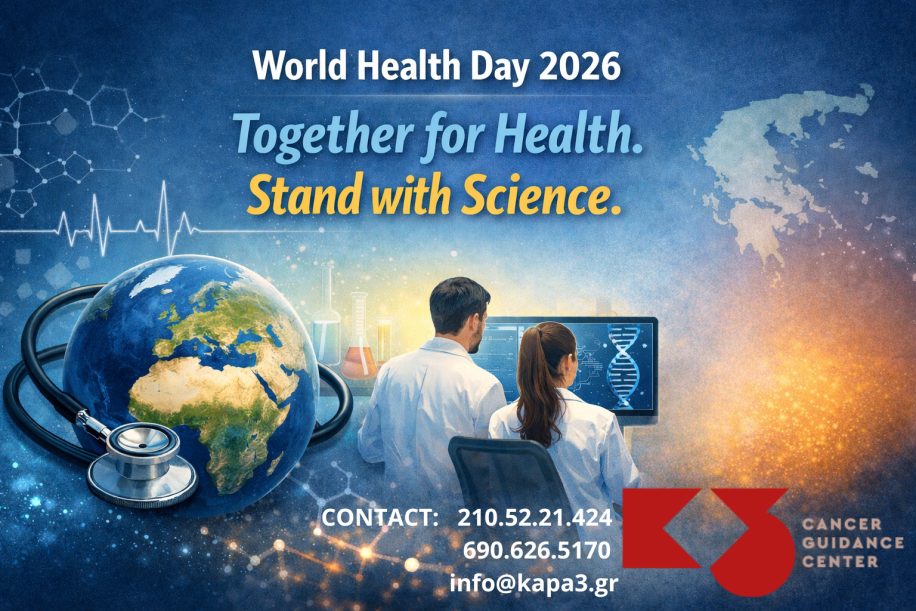
Every year, on April 7th, the World Health Organization (WHO) reminds us through World Health Day that health is a fundamental human right. World Health Day 2026 highlights, through its central message “Together for health. Stand with science”, the importance of scientific knowledge, research, and collaboration as key pillars for a fairer and more effective health system.

In an era where information is more accessible than ever—but not always reliable—science remains the solid foundation on which modern healthcare is built. This is not merely theoretical knowledge but a dynamic system grounded in data, clinical studies, and continuous evaluation. Thanks to science, recent years have seen significant advances in the prevention, diagnosis, and treatment of serious illnesses such as cancer, improving both survival rates and patients’ quality of life.

However, this progress is not equally accessible to everyone. In Greece, health inequalities remain pronounced and multifactorial. A significant proportion of citizens report not receiving the necessary medical care due to cost, geographical limitations, or long waiting times, while nearly 1 in 10 households faces severe financial burden from healthcare expenses. Residents of remote areas often need to travel to major urban centers to access specialized services.

At the same time, innovative treatments already available in other European countries may take considerable time to reach Greek patients, limiting timely access to the benefits of scientific progress. This unequal access clearly demonstrates that science, however vital, is not enough on its own—it requires the right mechanisms to ensure its benefits reach everyone.

In this context, technology can serve as a bridge. Artificial intelligence (AI), when based on scientifically validated data, can play a key role in providing accurate and reliable information, reducing misinformation, and improving access to support. Kapa3’s digital assistant, Myrto, is one such example, bringing scientific knowledge closer to patients and supporting their daily needs, always in complement to healthcare professionals.

Stand with science” therefore means not only trusting science but actively applying it in everyday life. It means seeking reliable information, using modern tools grounded in data, and advocating for equal access to innovations that can improve patients’ lives.

At Kapa3, this commitment is reflected through continuous updates on advances in oncology, new therapeutic approaches, innovative care practices, as well as through collaborations, participation in initiatives, and European programs such as MELODIC. (You can explore related articles here, here, and here.)

World Health Day 2026 offers a valuable opportunity to reflect not only on the achievements of science but also on the challenges that remain. By investing in knowledge, strengthening collaboration, and reducing inequalities, we can shape a health system that is more accessible, fair, and humane for all.

Health should not depend on where one lives, what one knows, or what one can afford. Science exists—the key is to make it reach everyone.
In this context, to “stand with science” ultimately means standing with every person in need of care.

Text/adaptation: Ifiyenia Anastasiou for Kapa3


Sources: