Co-creation in health research: from participation to meaningful influence

Co-creation in health research: from participation to meaningful influence

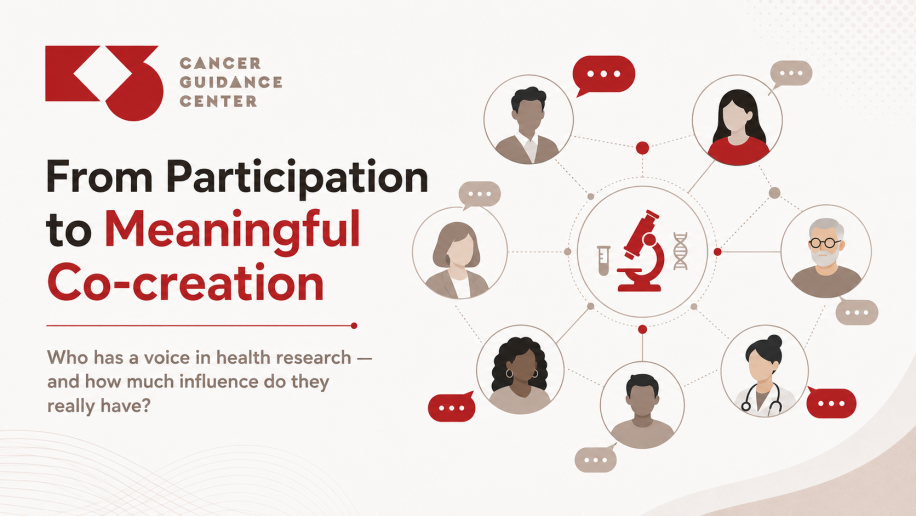
A new scientific study proposes a framework for understanding who participates in research, when they participate, how they contribute — and how much influence they actually have

Co-creation is becoming increasingly important across public health, research, social innovation and the design of healthcare services. Patients, caregivers, citizens, healthcare professionals, researchers and communities are more frequently being invited to contribute to the development of interventions, services and solutions.

Yet an important question remains:

What does “participation” actually mean?

The presence of a patient or community representative in a meeting does not necessarily mean that they can influence the design, decisions or outcomes of a research project. Similarly, being asked to complete a survey is fundamentally different from helping to design an intervention, interpret findings or determine how results are shared.

A new open-access study, published on 19 August 2026 in the Journal of Public Health, addresses this challenge. Katrina Messiha, Mai J. M. Chinapaw, Johannes C. F. Ket, Renée I. Wink and Teatske M. Altenburg developed the Co-creation Roles Framework, an operational framework designed to systematically describe and classify the roles of different stakeholders in co-creation research.

Moving beyond “who was involved?”

One of the study’s most valuable contributions is its shift away from simply recording whether stakeholders participated towards examining the nature, depth and quality of that participation.

The framework captures eight key dimensions:

  • the research stage at which participation occurs,
  • the target group or stakeholder involved,
  • the aim of involvement,
  • how stakeholder knowledge is used,
  • the level of engagement and influence,
  • the form of co-creation,
  • the platform through which engagement takes place,
  • and the duration of engagement.

The relevant question therefore becomes much more precise than “Were patients or citizens involved?”

Instead, researchers can ask:

When were they involved? What were they asked to contribute? How was their knowledge used? And how much influence did they actually have over decisions?

What did the study find?

To demonstrate the practical application of the framework, the researchers conducted a systematic review following PRISMA guidance.

They analysed 39 scientific articles representing 19 youth-focused public health projects based on co-creation, Youth Participatory Action Research or Community-Based Participatory Research approaches.

The analysis revealed substantial variation in the ways stakeholders were engaged.

One particularly striking finding was that, under the strict definition used in the framework, none of the 19 projects reached the highest level of engagement — “empowerment”, where stakeholders hold genuine decision-making authority.

During the implementation stage, consultation and involvement were the most frequent levels of engagement, while consultation was also the most common approach during evaluation.

This finding matters.

It demonstrates that describing a project as “co-created” does not automatically mean that the people for whom an intervention is being developed have meaningful power to shape it.

Participation should not end when the research ends

Another important finding concerned dissemination and reporting.

Only 4 of the 19 projects included a reporting stage extending beyond conventional academic publication.

In some cases, young stakeholders were involved in presenting findings, communicating results within their communities, or developing dissemination materials and practical tools. Overall, however, stakeholder involvement in the final stages of the research process remained limited.

This is highly relevant to health research.

People who contribute their lived experience, time and knowledge to a study should not be considered merely a source of data. They can also play an important role in interpreting findings, shaping key messages and helping return knowledge to the communities from which it originated.

From patient participant to patient co-creator

This discussion has particular relevance for cancer research and cancer care.

Patients and caregivers hold a form of knowledge that clinical evidence alone cannot provide: the lived experience of illness and care.

They understand what treatment means in everyday life; where administrative, social or practical barriers interfere with care; whether a digital health service is genuinely understandable and accessible; which questions remain unanswered; and which outcomes actually matter to the people living with cancer.

Using this knowledge is not simply a matter of representation.

It is a matter of research quality.

For a patient-support organisation such as Kapa3, co-creation therefore means more than inviting patients into an existing process. It requires creating the conditions in which lived experience can become knowledge, knowledge can shape design, and design can ultimately lead to more relevant, accessible and person-centred services.

A framework for planning future research

The authors emphasise that the Co-creation Roles Framework may be valuable not only for describing completed research, but also for planning and evaluating future projects.

Research teams may use it prospectively to clarify stakeholder roles from the beginning, while funders, ethics committees and scientific journals could potentially use such structured approaches to assess how clearly and meaningfully stakeholder participation has been planned and reported.

At the same time, the framework should not yet be regarded as a definitive standard.

The authors explicitly call for external validation across diverse co-creation settings. They also recognise an important limitation: non-academic stakeholders were not directly involved in developing the framework itself, which may limit its sensitivity to some experiential and contextual understandings of stakeholder roles.

Recognising these limitations is itself an important part of advancing more rigorous participatory research.

The next challenge: not simply more participation, but more meaningful participation

Co-creation should not become another box to tick in a research proposal.

The more important challenge is to be able to demonstrate:

who had a voice, when that voice was heard, how it influenced decisions and what ultimately changed because of that contribution.

As healthcare moves towards more participatory, person-centred and digitally supported models of care, the shift from research about patients to research with patients, and ultimately towards research shaped together with patients, may become one of the defining requirements for research that is both scientifically robust and genuinely relevant to people’s lives.

Scientific source

Messiha K, Chinapaw MJM, Ket JCF, Wink RI, Altenburg TM. Development and application of a framework for classifying stakeholder roles in co-creation research: a Health CASCADE study. Journal of Public Health. Published 19 August 2026. DOI: 10.1007/s10389-026-02881-2.
Messiha_et_al-2026-Journal_of_Public_Health

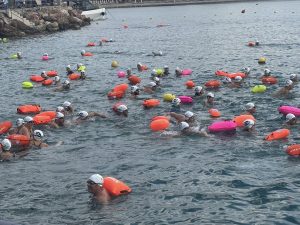
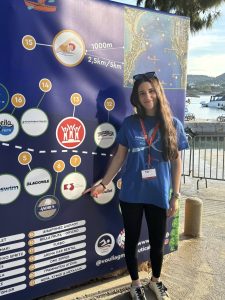
6 Awards for Kapa3 at the 4th Vouliagmeni Summer Crossing: Is There Such a Thing as a “Lonely Race”?

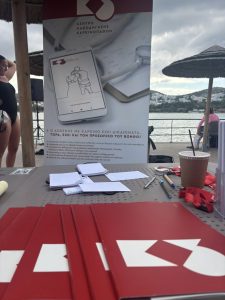
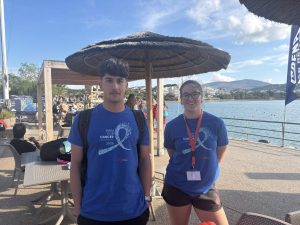
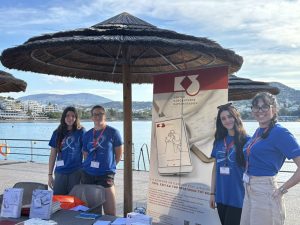
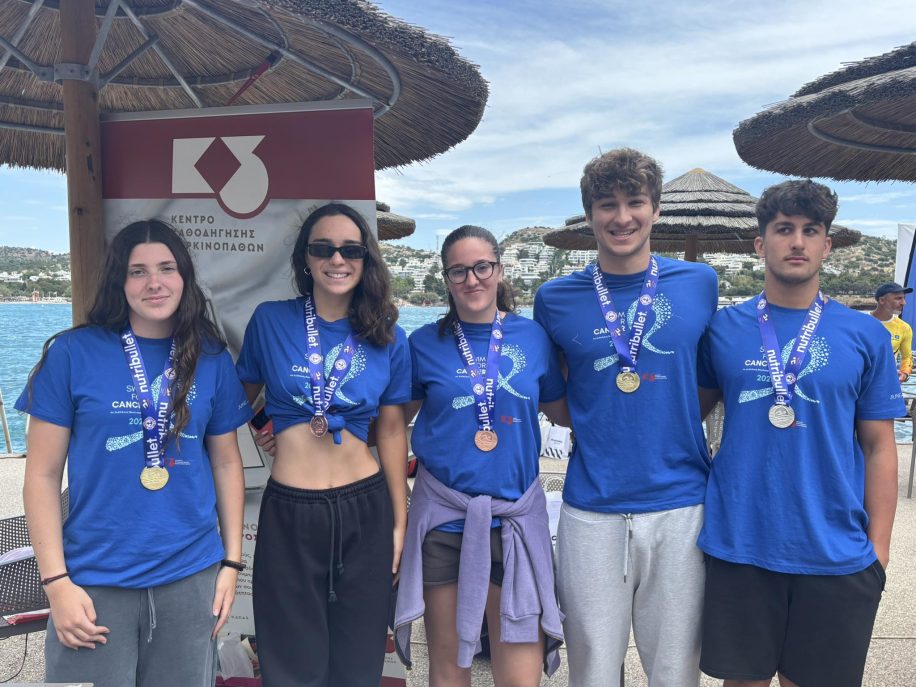
The Cancer Guidance Center – Kapa3 participated with great joy and emotion in the 4th Vouliagmeni Summer Swimming Crossing, an important sports and community event organised by the Vouliagmeni Nautical Club.

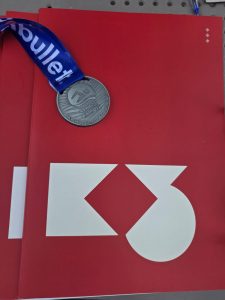
This year’s participation was particularly meaningful for all of us. The Kapa3 team received 6 awards, sharing a powerful message of participation, endurance, empowerment and togetherness.

But beyond the awards, what we hold most deeply is the message:

Is there really such a thing as a “lonely race”?

For us at Kapa3, the answer lies in our choice. And our choice is togetherness.

Despoina brought the idea — and much more.
Eirini stayed until the very end.

Leoni, Kalliopi, Giorgos, Christoforos, Athina, Christiana and Aria stood together as a true Winning Team.

They competed in every category, participated in every activity, informed, supported and left their own mark of empowerment, endurance and hope.

Leoni, Kalliopi, Giorgos, Christoforos, Athina, Christiana and Aria stood together as a true Winning Team.

They competed in every category, participated in every activity, informed, supported and left their own mark of empowerment, endurance and hope.

For Kapa3, the 6 awards are not only an athletic distinction. They are a symbol. They represent the power of effort, the importance of persistence and the value of community in every difficult journey.

ust as in the sea, the cancer journey requires rhythm, breath, emotional strength and people by our side. Even when a struggle feels personal, it does not have to be — and should never be — lonely.

Kapa3’s participation in the Vouliagmeni Crossing was an act of presence and awareness. It was a way to remind everyone that support for cancer patients, caregivers and families is not limited to information or access to rights and services. It is also about creating a community that stands beside people, encourages them and reminds them that they are not alone.

The sea carries a powerful symbolism. It represents the journey, uncertainty, effort, endurance, but also freedom. Every participant in the Crossing carries their own story, their own effort and their own path. For us at Kapa3, this image is deeply connected to the experience of people affected by cancer.

At Kapa3, we know that the experience of cancer is not limited to treatment. It is connected to everyday life, emotional resilience, access to information, rights, social benefits, transportation, work, family, uncertainty and the need for human presence.

This is why every community action we participate in has a dual purpose: to inform and to unite. To make visible the need for equal access to care, while also reminding everyone that support is not an abstract concept. It is presence. It is care. It is listening. It is guidance. It is the hand that helps someone keep going.

The 4th Vouliagmeni Summer Crossing was another moment of outreach, participation and empowerment for Kapa3. A moment that showed that strength is not found only at the finish line, but also in the decision to start, to try and to keep going.

We are grateful for the support, the care, the participation and the result.

We warmly thank the Vouliagmeni Nautical Club for organising the event, as well as everyone who participated, supported and stood beside us in this initiative.

We continue to choose togetherness at Kapa3.

Because even when a race is individual, it should never be lonely.

Learning by Doing: Participation in the European Service Learning 2.0: CoLab Programme

Learning by Doing: Participation in the European Service Learning 2.0: CoLab Programme

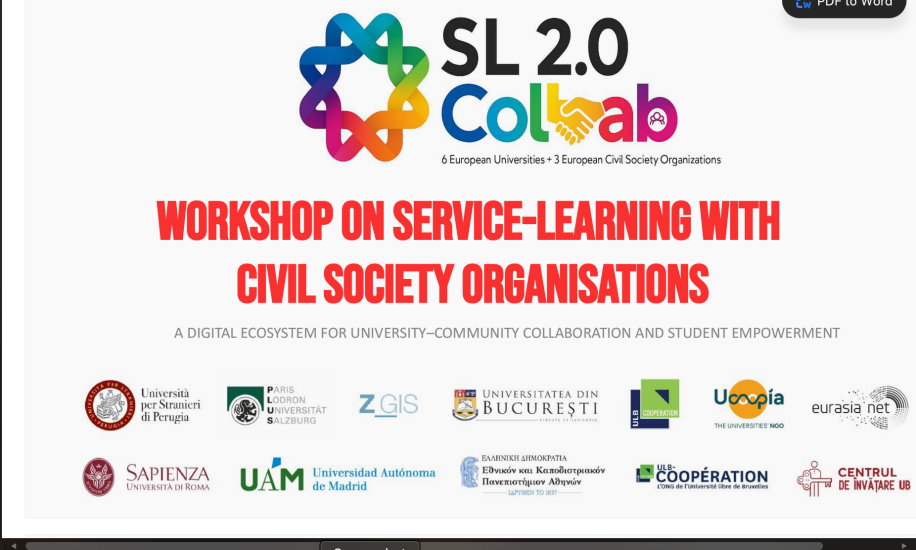
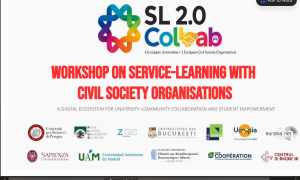
Within the framework of the European programme Service Learning 2.0: CoLab – Erasmus+ Strategic Partnerships KA2, KE: 22707, coordinated by the University of Bucharest, an online workshop and focus group was organised with civil society organisations, focusing on the educational approach of Service-Learning.

Service-Learning is a contemporary experiential learning method that combines academic knowledge with active student engagement in society. Through activities that respond to real social or environmental needs, students develop meaningful skills, strengthen their social awareness and connect theoretical learning with practical action.

The workshop brought together universities and civil society organisations from across Europe, including Université Aix-Marseille, University of Bucharest, University of Salzburg, University of Padova, Sapienza University of Rome, and Eurasianet.eu. The discussion focused on cooperation between universities and NGOs, the exchange of experiences, and the adaptation of practices that can strengthen the social impact of education.

Participation in such initiatives highlights the importance of collaboration between academia, civil society and non-profit organisations.

For Kapa3, the philosophy of Service-Learning is closely aligned with its mission: transforming knowledge into action, empowering people affected by cancer, and building bridges between education, social care and active citizenship.

Through these educational collaborations, the connection between universities and society is strengthened, while new opportunities are created for participatory learning, social innovation and meaningful support for vulnerable groups.

Find more

Flyer – Workshop_ Service Learning (2) Service-learning-key-facts (1)

Service-learning-key-facts (1)

May 27 th 2026 Workshop SL with CSOs

New MELODIC Scientific Publication on the Mental Health of Young Adults with Cancer

Kapa3 participates in the new scientific publication of the European MELODIC project, entitled:

“Educational Needs Regarding Mental Health of Professionals Working with Young Adults with Cancer: A European Survey.”

The publication addresses a highly important issue in contemporary cancer care: the educational needs of healthcare professionals working with young adults with cancer, particularly in relation to recognising and supporting mental health concerns.

Young adults experiencing cancer often face complex psychosocial challenges. Diagnosis, treatment, changes in daily life, impact on studies, work, relationships, body image and future planning can deeply affect their mental health and quality of life.

The European study, involving 271 healthcare professionals from 21 countries, highlighted an important gap between professionals’ willingness to support patients and the systematic use of validated assessment tools. While approximately half of the participating professionals reported feeling confident in identifying mental health issues, only a small percentage reported using validated screening tools.

This finding is particularly important. It shows that awareness and professional experience are valuable, but they are not enough on their own. Targeted education, appropriate tools, interdisciplinary collaboration and clear support pathways are needed so that the needs of young adults with cancer can be recognised early and addressed in a comprehensive way.

The message of the publication is clear: the education of healthcare professionals can make a meaningful difference in the early recognition, support and care of young adults with cancer.

At Kapa3, this approach is a core principle of our work. Before every intervention and every support action, there is education, information and empowerment of the people who stand beside patients.

Kapa3 professionals and collaborators are trained, informed and actively involved in European projects such as MELODIC, ensuring that the support provided is evidence-informed, human-centred and meaningful.

Kapa3’s active participation in such scientific initiatives strengthens its role as an organisation that connects research with practice, European knowledge with real patient needs, and education with everyday care.

We are proud of our participation in the MELODIC project and of our contribution to a European effort that highlights the importance of mental health, early recognition and targeted education in cancer care.

More information: https://lnkd.in/e9Pw4epy

Research studies giving voice to lived experience

At Kapa3, we actively encourage participation in health research studies, as we work every day alongside people affected by cancer, whether as patients or caregivers. Through this work, it becomes increasingly clear how important it is to truly listen to lived experience.

For this reason, the research initiatives we support or contribute to are not just questionnaires. They are a way to better understand the needs, experiences and priorities of the community we serve.

Through participation in these studies, individuals who are at the centre of the cancer experience are given the opportunity to share their reality. Every response, every story, every contribution adds another piece to a broader picture: a more meaningful and human-centred approach to care and support.

The contribution of each participant is highly valuable. The data collected helps us identify needs that are often not visible, better understand challenges, and design actions that reflect the real everyday lives of people.

Through participation in health research studies, lived experience can be transformed into knowledge that makes a real difference. Each study we support is part of a broader effort to understand the experiences of patients and caregivers.

Below you will find the current research studies open for participation, organised by target audience.

Each health research study includes a short description of its purpose and how participation contributes to the overall research effort.

For healthcare professionals

Patient safety culture in hospitals

A pilot study focused on the translation and adaptation of the international SOPS® Hospital Survey 2.0 developed by the AHRQ, adapted for the Greek hospital setting.

The aim of the study is to evaluate the clarity, comprehension and suitability of the tool through the participation of healthcare professionals working in hospital environments.

The study also includes a test–retest phase to assess the stability of responses over time.

Participation: https://forms.gle/Jev7mQ95vt1swtXF7

For research networks and collaborations

sleepCare – sleep quality assessment

The sleepCare research initiative, in collaboration with Christos Frantzidis (University of Lincoln) and his research team, explores sleep quality through real-life experiences and self-reported data from participants.

The aim is to better understand the factors that influence sleep in everyday life through anonymous data collection and short questionnaires.

English questionnaire: https://lnkd.in/e7wYjspX
Greek questionnaire: https://lnkd.in/ejbjGQPC
Platform: https://lnkd.in/e7YHUXdi

For breast cancer survivors

Survivorship experience and quality of life

A thesis-based research study examining fear of cancer recurrence, quality of life, and the role of social support among breast cancer survivors in Greece.

The aim is to better understand post-treatment experiences and the factors that influence psychosocial well-being.

Participation: https://docs.google.com/forms/d/e/1FAIpQLSeUgku0yi7LBGg42v_FeKtzVsj5F5uw8hYr-y-hcVKL-fhoeQ/viewform

For patients with respiratory conditions and caregivers

Lung transplantation experiences in Greece

A nationwide study collecting experiences, needs and perspectives of patients with respiratory conditions and their caregivers regarding lung transplantation.

The aim is to capture lived experience across all stages of the disease in order to improve care pathways and healthcare services.

The study is open to patients with respiratory conditions (transplanted or not) as well as their caregivers.

Participation: https://forms.gle/66h4CQJK3pdr1gKK7
Information: https://www.cysticfibrosis.gr/draseis/lung-transplant-working-group/

Text/Adaptation: Ifiyenia Anastasiou for Kapa3