The Value of Pause: Why We Need to “Disconnect” Even During Treatment

Summer is often associated with the idea of holidays. Images of the sea, travel, and carefree moments fill our daily lives, creating the impression that rest requires a suitcase, a destination, and distance from obligations.

However, for cancer patients who are undergoing treatment, recovering from surgery, or waiting for test results, holidays are often not possible. Medical appointments, treatments, side effects, physical fatigue, and uncertainty about one’s health can make travelling difficult or even impossible.

And yet, the need for rest does not diminish. On the contrary, it often becomes even more important.

Perhaps, then, it is worth redefining what a “holiday” means. Not as travelling somewhere else, but as the ability to pause, even briefly, the relentless cycle of stress, worry, and constant vigilance that often accompanies serious illness. It can be a reminder that life is not only about the disease.

Rest is not a luxury — it is a need

Recent scientific literature shows that people need periods of recovery in order to maintain psychological and physical balance. Recovery is not simply “resting”; it is a process through which the body reduces the physiological and psychological burden caused by chronic stress.

In psychology, the term psychological detachment is used to describe the mental ability to step away from sources of pressure. This means allowing oneself, even for a short while, not to think constantly about what feels overwhelming.

Research by Sonnentag, Binnewies, and Mojza (2010) showed that psychological detachment is associated with lower emotional exhaustion, better mood, and greater resilience in everyday life. Similarly, Fritz and colleagues (2010) found that people who are able to mentally disengage from stress experience higher levels of well-being, energy, and functioning.

Although these studies were mainly conducted among workers, the underlying mechanism applies to every person: when the brain remains in a constant state of alert, it struggles to recover its strength.

In this sense, these small pauses matter not because they make us “forget” the illness, but because they give the brain an opportunity to step out, even temporarily, of a continuous state of alarm.

When illness takes over every thought

The experience of cancer is not limited to treatment days. It often affects everyday life as a whole. Thoughts about tests, medical decisions, bodily changes, work, family, and the future may accompany a person from morning to night.

This constant mental vigilance is exhausting in itself.

International guidelines from the National Comprehensive Cancer Network (NCCN) recognise that psychological distress is a common part of the cancer experience and recommend integrating psychosocial support into overall patient care. Likewise, guidelines from the American Society of Clinical Oncology (ASCO) and the European Society for Medical Oncology (ESMO) emphasise that mental health care and quality of life are essential parts of cancer management.

Holidays are not always about travelling

It is easy to believe that rest requires a trip. Yet scientific research suggests that the greatest benefit of holidays does not necessarily come from the destination itself, but from a change of pace and temporary distance from stressors.

Nawijn and colleagues (2010) found that people tend to feel greater well-being shortly before and during holidays, but that this feeling often fades relatively soon after they return.

This finding reminds us of something important: psychological renewal does not depend only on a few days of holiday each year, but also on the small moments of relief that we can create in everyday life.

For someone undergoing treatment, these moments may be even more valuable.

What does it mean to “pause” as a cancer patient?

To pause does not mean ignoring reality or neglecting one’s health. It means allowing oneself to remember, even for a little while, that life is not only about illness.

This may include:

  • a few quiet minutes on the balcony or in the garden,
  • a short walk in nature, when possible,
  • listening to favourite music,
  • reading a book,
  • engaging in a creative activity,
  • spending time with people who make us feel safe,
  • a few minutes of relaxation or mindful breathing, when appropriate for one’s health condition.

These moments do not change the diagnosis. But they can change the experience of the day.

The importance of quality of life

In modern oncology, quality of life is now considered a key therapeutic goal. Treating the disease is not enough; it is equally important for the person to maintain as much functionality, autonomy, emotional balance, and sense of meaning as possible.

This importance is also reflected in the value framework for cancer treatments developed by the American Society of Clinical Oncology (ASCO). According to this framework, the value of a treatment is not determined solely by its effectiveness, but also by its toxicity, its impact on quality of life, and the personal priorities and preferences of the patient.

This highlights the importance of personalised, patient-centred care, in which the person’s everyday experience is an essential part of the therapeutic process.

Within this perspective, small moments of pause, the continuation of pleasant activities, and connection with what brings joy are not secondary aspects of life. They are meaningful elements that contribute to preserving quality of life. They are not luxuries, signs of weakness, or attempts to avoid reality. They are forms of self-care.

The same applies to family caregivers, who often experience high levels of emotional and physical burden. Taking some time for their own rest is not selfishness; it is a necessary condition for continuing to support their loved one in a meaningful way.

The value of a small pause

The experience of cancer often extends beyond the limits of the disease itself, affecting a person’s self-image, social roles, and daily life. Intense psychological distress and uncertainty can gradually allow the illness to occupy more and more space in life.

In this context, psycho-oncological education appears particularly important. Its aim is to help patients and family caregivers understand the emotional reactions that naturally accompany diagnosis and treatment, develop more effective coping strategies, and actively participate in treatment decisions.

In this way, the sense of control and self-efficacy is strengthened, while also preserving the sense that a person remains something more than their illness.

When health does not allow for travel, it is easy to feel deprived of something important. Yet perhaps the essence of a holiday lies not in the distance we travel, but in the distance we allow ourselves to take from stress.

To “pause” does not mean to stop being a patient. It means allowing oneself, even for a little while, to be something more than the illness.

Perhaps, in the end, the most meaningful holidays are not those that take us far from home, but those that allow us to rest the body, calm the mind, and turn toward ourselves with greater care.

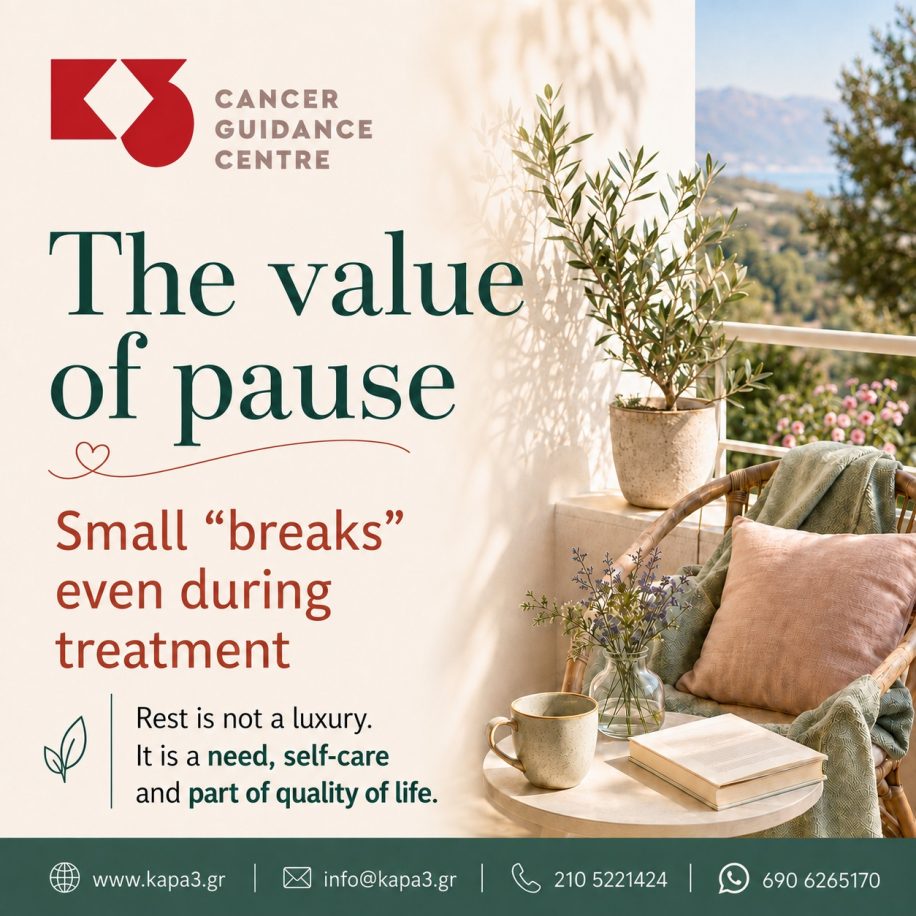
A peaceful sunlit balcony with a chair, a book, a cup, flowers, and an olive tree, illustrating the importance of small moments of rest and self-care during cancer treatment.

By Marilia Barka
Psychology Student
Kapa3 Volunteer
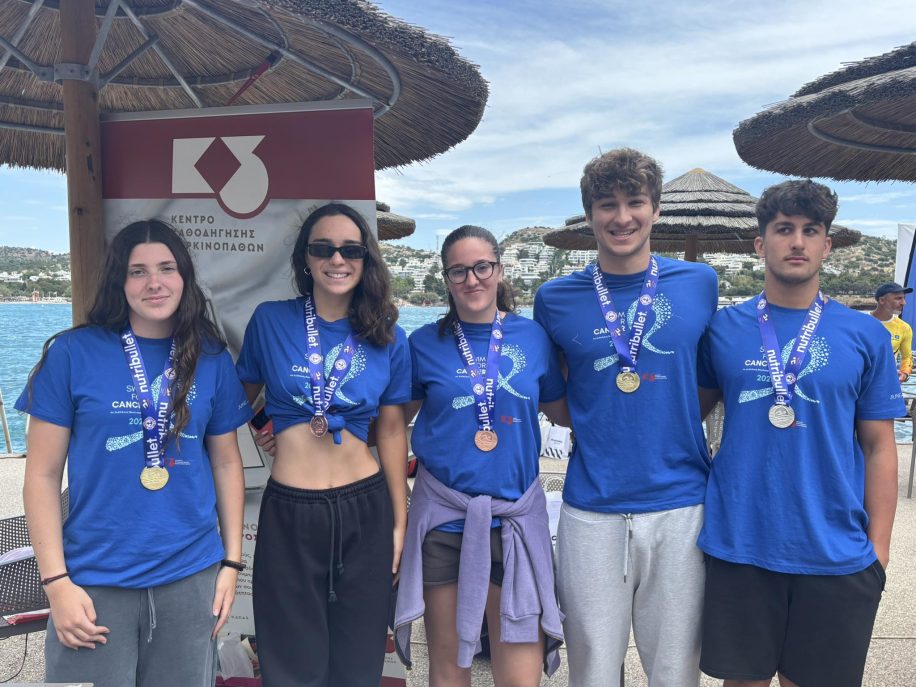
6 Awards for Kapa3 at the 4th Vouliagmeni Summer Crossing: Is There Such a Thing as a “Lonely Race”?

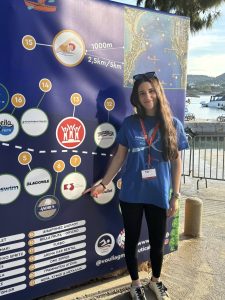
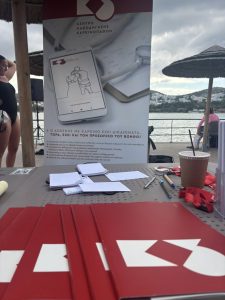
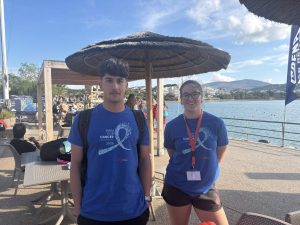
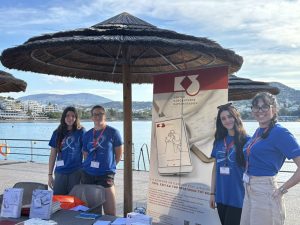
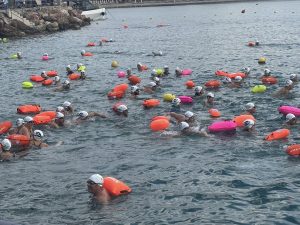
The Cancer Guidance Center – Kapa3 participated with great joy and emotion in the 4th Vouliagmeni Summer Swimming Crossing, an important sports and community event organised by the Vouliagmeni Nautical Club.

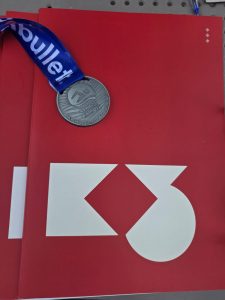
This year’s participation was particularly meaningful for all of us. The Kapa3 team received 6 awards, sharing a powerful message of participation, endurance, empowerment and togetherness.

But beyond the awards, what we hold most deeply is the message:

Is there really such a thing as a “lonely race”?

For us at Kapa3, the answer lies in our choice. And our choice is togetherness.

Despoina brought the idea — and much more.
Eirini stayed until the very end.

Leoni, Kalliopi, Giorgos, Christoforos, Athina, Christiana and Aria stood together as a true Winning Team.

They competed in every category, participated in every activity, informed, supported and left their own mark of empowerment, endurance and hope.

Leoni, Kalliopi, Giorgos, Christoforos, Athina, Christiana and Aria stood together as a true Winning Team.

They competed in every category, participated in every activity, informed, supported and left their own mark of empowerment, endurance and hope.

For Kapa3, the 6 awards are not only an athletic distinction. They are a symbol. They represent the power of effort, the importance of persistence and the value of community in every difficult journey.

ust as in the sea, the cancer journey requires rhythm, breath, emotional strength and people by our side. Even when a struggle feels personal, it does not have to be — and should never be — lonely.

Kapa3’s participation in the Vouliagmeni Crossing was an act of presence and awareness. It was a way to remind everyone that support for cancer patients, caregivers and families is not limited to information or access to rights and services. It is also about creating a community that stands beside people, encourages them and reminds them that they are not alone.

The sea carries a powerful symbolism. It represents the journey, uncertainty, effort, endurance, but also freedom. Every participant in the Crossing carries their own story, their own effort and their own path. For us at Kapa3, this image is deeply connected to the experience of people affected by cancer.

At Kapa3, we know that the experience of cancer is not limited to treatment. It is connected to everyday life, emotional resilience, access to information, rights, social benefits, transportation, work, family, uncertainty and the need for human presence.

This is why every community action we participate in has a dual purpose: to inform and to unite. To make visible the need for equal access to care, while also reminding everyone that support is not an abstract concept. It is presence. It is care. It is listening. It is guidance. It is the hand that helps someone keep going.

The 4th Vouliagmeni Summer Crossing was another moment of outreach, participation and empowerment for Kapa3. A moment that showed that strength is not found only at the finish line, but also in the decision to start, to try and to keep going.

We are grateful for the support, the care, the participation and the result.

We warmly thank the Vouliagmeni Nautical Club for organising the event, as well as everyone who participated, supported and stood beside us in this initiative.

We continue to choose togetherness at Kapa3.

Because even when a race is individual, it should never be lonely.

The Visit of Love: a shared act of care and hope

In December 2025, Kapa3 took part once again the Visit of Love, an initiative by WinCancer that aims to bring warmth, presence, and emotional support to those who will spend the holiday season in oncology hospitals.

Once again, the response was deeply moving.

Cards and messages arrived from all over — through the post, by courier, in parcels both large and small, and sometimes delivered by hand. Each one carried a simple but powerful message: you are not alone.

Among them were cards written by preschool children, some with their very first letters, others expressed through drawings and colours. Messages full of innocence, light, and hope — “get well so we can eat Christmas cookies together.”

There were also messages from adults who had faced cancer in the past and now shared their words of encouragement together with their children, closing a circle of empathy and solidarity.

This action is addressed to everyone who will spend the holidays in oncology hospitals — patients, companions, and healthcare professionals alike — acknowledging the emotional weight of these days and the importance of human connection.

The process was intense, emotional, and, at times, chaotic.

Glitter and golden dust filled desks, clothes, and hair. While those traces will eventually disappear, the love, smiles, and hope that passed through our hands will remain.

For Kapa3, supporting initiatives like the Visit of Love is an essential part of our mission: to strengthen collaboration, promote solidarity, and contribute to actions that place human connection at the centre of care.

We warmly thank WinCancer for the trust and collaboration, as well as everyone who participated and offered a piece of their heart. Together, we can continue creating moments that matter.

Until next year, we hold on to the love, the hope, and the reminder that small gestures can make a big difference.

Text: Ifiyenia Anastasiou for Kapa3

International Volunteer Day – 5 December

Celebrating the people who give their time to make the world better

International Volunteer Day (IVD) is celebrated every year on 5 December, following a United Nations resolution that recognises the contribution of volunteers to peace, social cohesion, and sustainable development.
It is a day dedicated to acknowledging the millions of people who offer care, support, skills, and solidarity — quietly and consistently.

What volunteering means today

Volunteering goes far beyond goodwill.
It strengthens communities, bridges inequalities, supports public health systems and safety nets, and empowers people to take action where it’s needed most.

Across the world, volunteers contribute to:

  • health and patient support

  • social care and community services

  • disaster response and humanitarian aid

  • education and youth programmes

  • environmental protection and sustainability

  • advocacy for vulnerable groups

The scale of volunteering

Global landscape

According to UN Volunteers (UNV):

  • Around 862.4 million people aged 15+ volunteer every month worldwide.

  • This represents nearly 15% of the global working-age population.

  • The total global volume of volunteer work is equivalent to the labour of 109 million full-time workers.

  • Organised (formal) volunteering accounts for about 6.5%, while informal volunteering reaches 14.3% globally.

Volunteering in Greece

ILO (ILOSTAT, 2022) reports that in Greece:

  • 543,010 people engage in direct (informal) volunteering.

  • 669,712 people contribute through voluntary organisations.

These figures reflect a strong and active culture of solidarity, participation, and civic engagement across the country.

Volunteering and cancer care

In the field of cancer, volunteering plays a vital and deeply human role.
Volunteers offer:

  • practical assistance to patients and caregivers

  • support in navigating health services and rights

  • companionship during demanding procedures or appointments

  • participation in awareness and prevention activities

  • emotional support and empowerment

Their presence brings stability, trust, and hope during some of the most challenging moments in a patient’s journey.

Volunteering at Kapa3

International Volunteer Day highlights the dedication of Kapa3 volunteers and the fact that our volunteers are an essential part of our mission.
Through their contribution, they:

  • support patients and caregivers in their day-to-day needs

  • assist in awareness, prevention, and advocacy actions

  • strengthen our European programmes, research activities, and community outreach

  • bring compassion, knowledge, and willingness to every corner of our work

Thanks to them, our vision — no one should face cancer alone — becomes reality.

Become a volunteer at Kapa3

If you wish to support cancer patients and their families, contribute to your community, and become part of our mission, you can join our volunteer network.

Click here to join our volunteer team: here

On International Volunteer Day, the Kapa3 team honours those who not only give their time, care, and heart but also support patients and caregivers in countless ways.
To every volunteer: thank you for your kindness, your consistency, and your strength.
Thank you for helping us build a world of dignity and hope.

Text/Adaptation: Ifiyenia Anastasiou for Kapa3

Sources

United Nations Volunteers (UNV), State of the World’s Volunteerism Report (2022)

International Labour Organization (ILO) – ILOSTAT, Volunteer Work Statistics (Greece, 2022)

Trvst – Volunteering Facts & Global Volunteer Work Analysis