Cancer: From Prevention to Life Coordination – Successful Knowledge Seminar in Megara with Kapa3

With great success and participation from citizens of all ages, the Knowledge Seminar in Megara – From Prevention to Life Coordination took place on Sunday, February 8, in the Council Chamber of the Megara City Hall, in celebration of World Cancer Day.

The event was organized by the Municipality of Megara in collaboration with the Kapa3 Cancer Guidance Center, which since 2020 provides guidance and support to oncology patients and their families, ensuring access to vital information and services.

The seminar opened with a speech by the Mayor of Megara, Panagiotis Margetis, who shared his family’s personal experience with cancer, emphasizing the importance of accurate information and support throughout the patient journey. Stamatis Georgakis, Deputy Mayor for Public Health and Social Protection, coordinated the seminar and highlighted the value of Kapa3 and its Guidance Station in informing, supporting, and advocating for patients’ rights.

Distinguished experts participated in the seminar, presenting key aspects of holistic cancer care:

  • Georgios Nintos, MD MSc, Oncologist: Prevention and early diagnosis, causes, and preventive measures.

  • Katerina Papakonstantinou, MD MSc PhD, Obstetrician-Gynecologist: Gynecologic cancer, importance of HPV vaccination and Pap test.

  • Andrea Paola Rochas, Assistant Professor of Biology, University of Peloponnese Nursing Department: Nutrition and cancer prevention, emphasizing the Mediterranean diet, exercise, and avoidance of processed foods.

  • Maria Lavdaniti, Professor and Head of Nursing Department, International University: Role of oncology nurses in holistic care.

  • Pinelopi Vlotinou, Assistant Professor of Occupational Therapy, University of West Attica: Daily living support and quality-of-life improvement through occupational therapy.

  • Ioanna Sideri, Psychologist MSc, PhD(c), University of Peloponnese: Psychological support for patients and caregivers, resilience, and crisis management.

  • Grigoria Zacharogianni, MD MSc PhD, Radiation Oncologist: Modern treatment options and importance of moderate exercise during therapy.

The presentation of Kapa3 was delivered by Evangelia Bista, Co-founder and Head of Strategic Partnerships, highlighting the importance of digital literacy and a holistic approach to patient care. Kapa3 has expanded its oncology support network by inaugurating the Cancer Guidance Station in Megara, with the significant support of Megara Resins. In its first year, the station has assisted over 100 beneficiaries, offering guidance on social rights, patient file management, and psychological support, free of charge.

For 2026, Kapa3 is strengthening its digital services with Myrto, Greece’s first AI-powered Health Digital Assistant, providing personalized guidance and voice control. Planned initiatives also include: Wellness in Motion, with 12 outdoor walks for mental wellbeing of young adult cancer patients, the Cancer Wellness Open House Day, and a conference on equitable access to care.

The Knowledge Seminar in Megara – From Prevention to Life Coordination highlighted the importance of prevention, holistic care, interdisciplinary collaboration, digital literacy, psychological support, and continuous patient rights education.

Kapa3 warmly thanks the Municipality of Megara for hosting and supporting the event, as well as all speakers, for their invaluable expertise and commitment to sharing knowledge and scientific know-how.

Explore the photo gallery here:

The Press Release document here

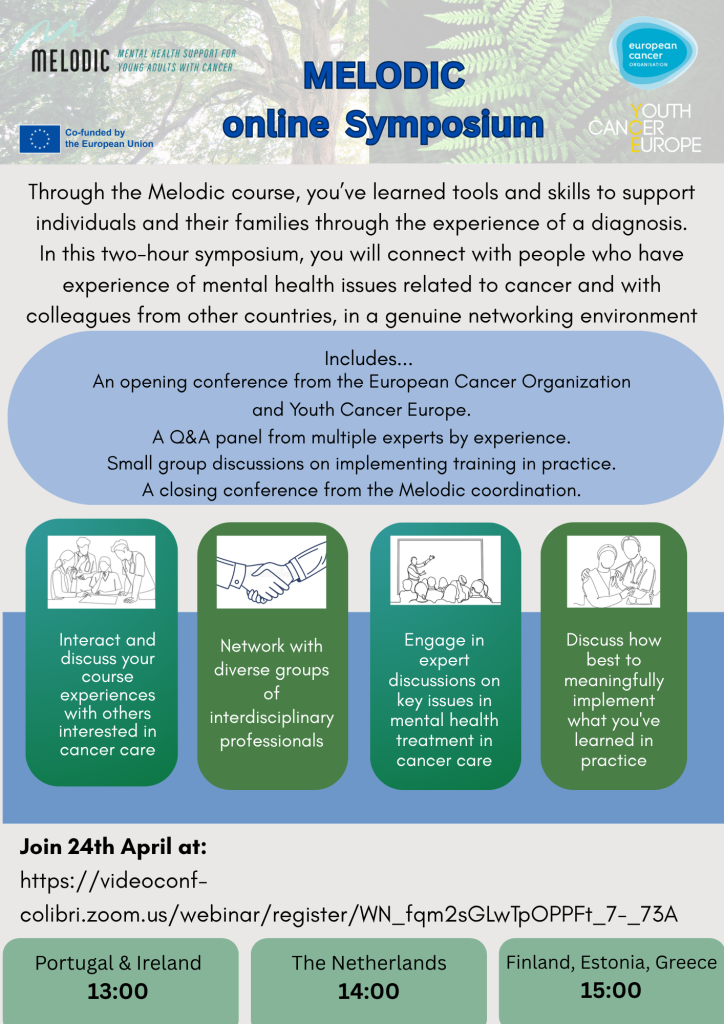
The MELODIC Consortium met in Athens to promote the mental health of young adults with cancer

We were delighted to welcome the European partners of the MELODIC Consortium in Athens, during the two-day consortium meeting held on 19–20 January 2026, at the facilities of the School of Public Health, University of West Attica (UNIWA).

Representatives from all participating countries – Finland, Estonia, the Netherlands, Portugal, and Ireland – attended in person, while there was also significant active online participation. The excellent organization and warm hospitality created a collaborative and open communication environment, boosting optimism around the successful progress of the project.

On the first day, discussions focused on the progress of WP2 and WP3, including publication planning, needs assessment, and the development of the educational curriculum for healthcare professionals, aiming to support the mental well-being of young adults with cancer experience and their families.

In this context, the importance of approaches linking physical activity, natural environments, and mental health was highlighted, recognizing nature as a space for recovery and meaningful experiences for young people who have undergone demanding treatments.

During the short breaks, participants had the opportunity to meet and exchange views on the challenges and best practices in the field of mental health for young adults with cancer.

Later in the afternoon, participants enjoyed a lovely dinner at Iamvos Restaurant, located in the historic neoclassical building “Kostis Palamas” of the National and Kapodistrian University of Athens, in a welcoming atmosphere that encouraged networking and human interaction.

On the second day, the work continued with the further development and evaluation of the MELODIC intervention (WP4), with particular emphasis on the blue and green spaces as a key component of its design, followed by discussions on the communication, dissemination, and sustainability strategy (WP5), as well as project management and quality assurance (WP1).

Partners actively participated, exchanging knowledge and experiences, and planning the next steps of the collaboration, while later braving the chilly weather for the optional visit to the Stavros Niarchos Foundation Cultural Center, where they admired the National Library, the National Opera, and the blue and green spaces of the foundation, combining nature with inspiration.

Kapa3’s participation in the MELODIC Consortium ensures that the voices of young adults with cancer experience and their families are considered at every stage of the project.

We look forward to continuing our close collaboration with our European partners, preparing the next phase of the project and disseminating its results, aiming to enhance the mental health and overall well-being of young adults with cancer across Europe.

More information about the project can be found here.

Text/adaptation: Ifiyenia Anastasiou for Kapa3

The Visit of Love: a shared act of care and hope

In December 2025, Kapa3 took part once again the Visit of Love, an initiative by WinCancer that aims to bring warmth, presence, and emotional support to those who will spend the holiday season in oncology hospitals.

Once again, the response was deeply moving.

Cards and messages arrived from all over — through the post, by courier, in parcels both large and small, and sometimes delivered by hand. Each one carried a simple but powerful message: you are not alone.

Among them were cards written by preschool children, some with their very first letters, others expressed through drawings and colours. Messages full of innocence, light, and hope — “get well so we can eat Christmas cookies together.”

There were also messages from adults who had faced cancer in the past and now shared their words of encouragement together with their children, closing a circle of empathy and solidarity.

This action is addressed to everyone who will spend the holidays in oncology hospitals — patients, companions, and healthcare professionals alike — acknowledging the emotional weight of these days and the importance of human connection.

The process was intense, emotional, and, at times, chaotic.

Glitter and golden dust filled desks, clothes, and hair. While those traces will eventually disappear, the love, smiles, and hope that passed through our hands will remain.

For Kapa3, supporting initiatives like the Visit of Love is an essential part of our mission: to strengthen collaboration, promote solidarity, and contribute to actions that place human connection at the centre of care.

We warmly thank WinCancer for the trust and collaboration, as well as everyone who participated and offered a piece of their heart. Together, we can continue creating moments that matter.

Until next year, we hold on to the love, the hope, and the reminder that small gestures can make a big difference.

Text: Ifiyenia Anastasiou for Kapa3

GD2: A Critical Biomarker and Therapeutic Target – What the Latest Evidence Shows

New scientific data highlight GD2 — a glycolipid biomarker expressed in specific cancer cells — as one of the most promising therapeutic targets in modern oncology. A recent review published in an international scientific journal brings together the latest findings on the use of GD2 in immunotherapies, CAR-T cell treatments, monoclonal antibodies, and other innovative approaches.

What is GD2 and why does it matter?

GD2 is a molecule known as disialoganglioside-2, found in high concentrations on the surface of certain cancer cells. This makes it particularly valuable as a target for personalized immunotherapies, as treatments can “recognize” and destroy GD2-positive cells while sparing healthy tissues.

Cancers with high GD2 expression include:
• Neuroblastoma
• Osteosarcoma
• Melanoma
• Breast cancer (triple-negative in some cases)
• Certain lung cancers
• Rare pediatric tumors

In neuroblastoma — one of the most common pediatric cancers — GD2-directed antibody therapy has already improved survival in high-risk patients.

The new scientific review maps the current progress in GD2-targeted therapies, highlighting the technologies showing the strongest clinical potential. GD2-directed monoclonal antibodies, already effective in children with neuroblastoma, are evolving into more precise and safer versions, aiming to expand their use in adult tumors as well. The review also presents updated data from clinical trials of GD2-directed CAR-T cells: despite challenges such as toxicity, tumor escape, and limited persistence, newer CAR-T generations demonstrate improved safety, deeper penetration into solid tumors, and especially promising outcomes in pediatric patients.

The review further examines combination immunotherapies that pair GD2 targeting with radiotherapy, chemotherapy, or immune checkpoint inhibitors, offering enhanced effectiveness against resistant tumors. Finally, emerging platforms are described — including bispecific antibodies, “smart” nanoparticle-based strategies, and drug-delivery technologies that target only GD2-positive cells — expanding the therapeutic landscape and opening new avenues for future applications.

What does this mean for patients?

GD2-targeted therapy is no longer theoretical — it is already a reality in certain pediatric cancers and is rapidly expanding into other tumor types.

Key benefits for patients include:
• greater precision with reduced toxicity
• the potential for highly individualized treatment based on tumor profile
• new hope for tumors that remain difficult to treat with existing methods
• improved survival prospects, especially for children

For pediatric and young adult patients — a group with historically limited and often highly burdensome treatment options — GD2-directed therapies represent a significant step forward.

Despite the important progress made, several challenges remain. These include side effects such as neuropathic pain, tumor resistance or escape from targeting, the high cost and limited availability of advanced treatments, and the need for large, multi-center clinical trials to produce more robust and generalizable data. Still, research activity is intensifying, with dozens of clinical studies currently ongoing worldwide.

Within this evolving landscape, Kapa3 remains committed to providing accurate, accessible, and compassionate information to patients and families, particularly those facing severe, rare, or pediatric cancers. Advances in GD2-targeted therapies are opening new pathways for children and young people with limited options today , showcasing the power and potential of immunotherapy. At the same time, they highlight the urgent need for equitable access to innovative treatments for patients in Greece.

Kapa3 will continue to follow scientific developments closely and keep the community informed in a clear, reliable, and human-centered way.

Sources: Here

Text/Adaptation: Ifiyenia Anastasiou for Kapa3

World AIDS Day — December 1

World AIDS Day is a powerful reminder that the fight against HIV/AIDS is far from over. Despite remarkable progress in recent decades, millions of people worldwide are still living with the virus. At the same time, inequalities in access to prevention, diagnosis and treatment continue to cost lives.

Established in 1988 as the first international health-related awareness day, World AIDS Day has since served as a global call for informed action, early diagnosis, destigmatization and equitable care.

What We Know Today About HIV/AIDS

According to recent UNAIDS data, more than 39 million people are living with HIV globally — and thanks to modern treatments, they can live full and healthy lives.

The science is encouraging. Antiretroviral therapy (ART/ARVs) allows people on treatment to reach undetectable viral loads, which means they cannot transmit the virus (“Undetectable = Untransmittable”).

Yet despite this progress, new infections still occur — mainly in communities facing social exclusion, economic hardship, or limited access to healthcare services. At the same time, lack of information and persistent stigma remain major barriers that delay testing and treatment.

HIV & Cancer: An Important Connection

The link between HIV and several forms of cancer isn’t widely known, yet it is significant:

  • People living with HIV have a higher risk of cervical cancer due to the more persistent presence of HPV.
  • Increased risk is also observed for non-Hodgkin lymphoma, Kaposi sarcoma and several cancers associated with chronic viral infections.
  • Early diagnosis, continuous treatment and regular screening significantly reduce these risks.

At Kapa3, we have published articles on the importance of screening and patient empowerment, which you can find here: Article1, Article2, Article3, Article4, Article5.

The Situation in Greece

Greece has made important progress in recent years, thanks to the operation of Checkpoints, the support of NGOs and prevention structures, the spread of PrEP, and improved access to treatment.

In 2024, Greece recorded a small decrease (4%) in new HIV diagnoses compared to 2023, according to the Hellenic National Public Health Organization (EODY). However, underdiagnosis remains a real concern. Many people avoid timely testing due to stigma and fear of discrimination.

Prevention: What Each of Us Can Do

  • Testing: a simple test can save lives.
  • Condom use & comprehensive sexual education.
  • PrEP & PEP: modern and effective prevention tools.
  • Eliminating stigma: information and open dialogue remain our strongest forms of protection.
  • Supporting facilities that provide access to prevention, diagnosis and treatment.
A Human Rights Issue

At Kapa3, we believe World AIDS Day concerns all of us. Access to healthcare is a fundamental right. No one should be afraid to get tested, speak openly or seek support.

According to International Human Rights Law, discrimination based on HIV status, sexual orientation, gender identity or expression, health status (including substance use), or sex work constitutes a violation of human rights.

World AIDS Day reminds us that knowledge, prevention and solidarity save lives — and that a world without new HIV infections is possible.

Sources

  • UNAIDS
  • HIV.gov
  • AIDS Healthcare Foundation
  • EODY (Hellenic National Public Health Organization)

Text/Adaptation: Ifiyenia Anastasiou for Kapa3

The Impact of the Kapa3 Internship Programme: 30 Young Professionals in Our First 5 Years of Operation

The Impact of the Kapa3 Internship Programme: 30 Young Professionals in Our First 5 Years of Operation

In the five years since our establishment, thirty young people have had the opportunity to learn and grow through the Kapa3 Internship Programme.

International scientific literature highlights that internships are far more than a first work experience. They serve as a fundamental mechanism of experiential learning, enabling students to connect theoretical knowledge with real-world professional contexts.

Through their involvement in a civil society organisation like Kapa3, interns developed reflective and critical thinking skills—core elements of modern professional education. By engaging with real needs and challenges, students strengthened their professional identity and gained a deeper understanding of their role as future practitioners in health and social services. In many cases, the internship at Kapa3 played a significant role in supporting their transition from university to the labour market, enhancing their confidence, social skills, and clarity of professional direction.

Furthermore, the structured field experiences offered opportunities to build professional networks, a key factor in long-term career development.

At Kapa3, the value of internships is evident across all aspects of our work. We strive to create an environment where students can deepen their academic knowledge, apply their skills to real cases, and map out the next steps of their careers with realism and self-awareness.

The result is a community of young professionals who are both socially conscious and scientifically equipped to contribute meaningfully to health and social care. We are proud to be at the forefront of education and warmly thank our partner universities for their trust and collaboration.


When Art Meets Science: How CREATE Platform May Strengthen Emotional Regulation in Cancer Care

At Kapa3, we recognize that cancer affects far more than the body, challenging the emotions, sense of self, relationships, and quality of life of those suffering. Despite the high prevalence of co-occuring mental health issues such as anxiety and depression, access to mental health services remains limited. This gap between patient needs and healthcare provisions is precisely what motivated us to help develop CREATE, an innovative digital platform designed to support emotional resilience through a powerful combination of art, technology, and emotional engagement (Ladas et al., 2025).

The CREATE (Creative and Resilience through Arts, Technology, and Emotions) platform uses computerised cognitive training (CCT) designed to enhance emotional regulation by integrating working memory training, engagement with famous artwork, and creative emotional expression. Unlike other platforms, it only targets one cognitive function: working memory. Evidence suggests that focusing on a single cognitive function is more effective than targeting multiple ones. Working memory in particular has been found to influence emotional regulation, a skillset with established benefits for anxiety and depression.

CREATE therefore introduces a unified framework that addresses cognitive function, emotional expression, and biological influences such as sleep quality and dopamine activity. Such digital health solutions are increasingly recognized as promising alternatives to standard psychotherapy, offering greater accessibility and affordability while still capable of reducing symptoms of depression and anxiety.

Findings from the pilot study on CREATE were very promising; the participants found the platform easy to use and enjoyable, and showed increased emotional and creative engagement. Although this early research focused on feasibility and validity rather than therapeutic effectiveness, initial findings indicate improvements in emotional regulation. Importantly, the study demonstrated positive relationships between working memory, emotional regulation, and expression of emotion, while also suggesting that sleep and dopamine may mediate these effects.

These insights highlight the importance of lifestyle and biological data in developing personalized digital mental health tools. It is well established in neuroscience that working memory plays a central role in emotional regulation. A stronger working memory allows individuals to better cope with distressing thoughts, shift their attention, and respond more calmly to challenges. For people living with cancer, supporting these cognitive and emotional capacities makes daily life more manageable. Improved thinking skills can facilitate treatment adherence, informed decision-making, and a more effective management of the emotional turbulence that often accompanies illness.

The study relied on a convenience sample made up mostly of cancer-related healthcare professionals, and only one cancer survivor participated. To address this limitation, the next phase of research will focus entirely on cancer patients and survivors. Their unique challenges, including cancer-related fatigue and treatment-related cognitive changes, will be central to refining the platform and ensuring that CREATE is tailored to the needs of those it aims to benefit the most. This creates not only a more impactful intervention but also empowers patients to have a voice in shaping the future of supportive cancer care.

As we look ahead, CREATE offers a hopeful vision for digital mental-health support. It is scalable, affordable, and adaptable, making it especially valuable for people who lack access to mental health care. Intervening early and supporting emotional well-being throughout treatment and survivorship may reduce the long-term strain on healthcare services associated with mental health conditions.  As cancer treatment continues to evolve, we must make sure that psychological care develops along with it. And CREATE does just that.

Read the full study

References

Ladas, A. I., Katsoridou, C., Gravalas, T., Klados, M. A., Stravoravdi, A. S., Tsompanidou, N., Fragkedaki, A., Bista, E., Chorafa, T., Petrovic, K., Vlotinou, P., Tsiakiri, A., Papazisis, G., & Frantzidis, C. A. (2025). Creativity and REsilience Through Arts, Technology and Emotions: A Pilot Study on the Feasibility and Validity of the CREATE Platform. Brain Sciences15(11), 1171.

Article by Despina Chrysostomidou, Psychologist, for Kapa3 Research Insights