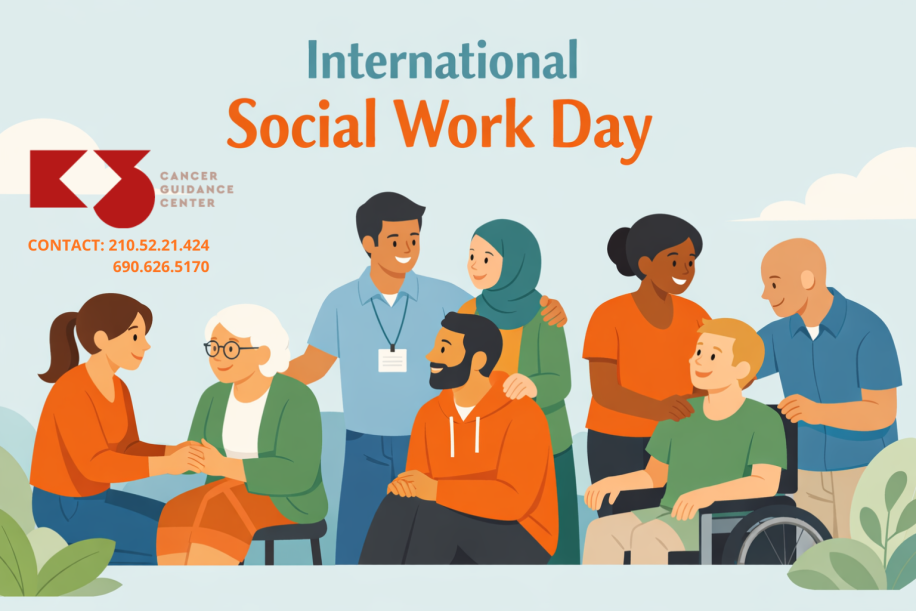
International Social Work Day, observed annually on March 27, is an important occasion to highlight the multifaceted work of social workers and their contribution to promoting social justice, equality, and human dignity.
Social workers are on the front lines supporting vulnerable groups, playing a crucial role in areas such as healthcare, mental health, social welfare, and the care of individuals with chronic conditions, including cancer. In oncology in particular, their contribution is invaluable, as they provide practical, emotional, and social support to patients and their families, significantly improving their quality of life.
Global Context
Globally, the importance of social work is widely recognized, with social services forming a fundamental pillar of health and welfare systems. In the European Union, social service professionals exceed 10 million, representing about 5% of the total workforce, underlining the critical role of the sector in maintaining social cohesion.
In Northern and Western European countries, social workers are systematically integrated into multidisciplinary care teams and are an essential part of primary healthcare and social support services. International guidelines emphasize that adequate staffing of social services is a key requirement for the effective functioning of health systems and meaningful citizen support.
Despite these standards, gaps and inequalities persist:
- There is a global need to increase social care personnel, especially in regions with high social needs.
- Inequalities in access remain a challenge even in advanced countries, highlighting the importance of planning and coordination.
Social Services in Greece
Greece’s social care framework is based on the National Social Care System (Law 2646/1998). Services are structured across three levels:
- Primary: Prevention, support, and local services, mainly provided by municipalities (Community Centers, social offices).
- Secondary: Care and rehabilitation facilities for more complex needs.
- Tertiary: Specialized services for severe or rare cases, typically in hospitals or research centers.
However, despite the legal framework, services in Greece are fragmented and understaffed:
- Social workers number around 7,000, with fewer than half employed in public social services.
- Many work on fixed-term contracts or subsidized programs, creating instability in service provision.
- In local government, the ratio can reach one social worker per 40,000 citizens, highlighting severe understaffing.
As Evangeli Bista noted in a recent interview, 92 municipalities in Greece have no social work staff at all. Strengthening social services is therefore not only about meeting patient needs but also about empowering communities and fostering environments of solidarity and support.
At the same time, local initiatives demonstrate the potential for reinforcing social services. For example, Kapa3’s recent collaboration with the Municipality of Meteora to establish a Counseling Office for Cancer Patients and their Families represents a significant step toward strengthening social care locally.
Staffing the office with a social worker and a psychologist, along with providing free guidance, psychosocial support, and connection to other services, illustrates in practice the critical role social workers play in supporting patients and improving their quality of life.
On the occasion of International Social Work Day, it is important to recognize the invaluable work of social workers, address existing gaps, and showcase positive examples, such as the Municipality of Meteora, supporting the collective effort for a system that leaves no one behind.
Text/adaptation: Ifiyenia Anastasiou for Kapa3