Kapa3 and Karkinaki join forces to support children, adolescents, and families living with cancer

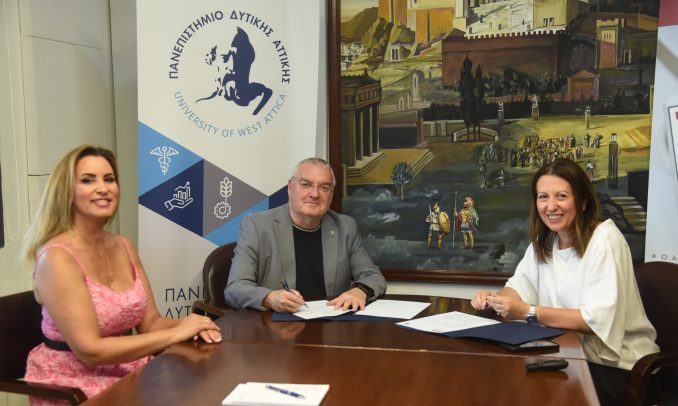
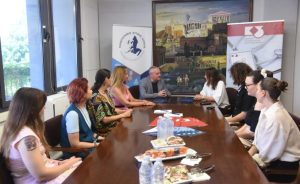
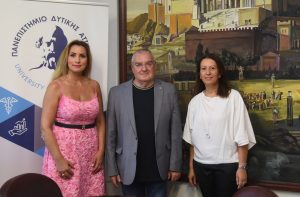
The Cancer Guidance Center – Kapa3 announces its new collaboration with the non-profit organization “Karkinaki”, aiming to strengthen information, psychosocial support, and awareness around childhood and adolescent cancer, as well as to support families experiencing the disease.

Karkinaki is a specialized organization working in the field of childhood and adolescent cancer, focusing on reliable information, empowering parents and caregivers, and fostering a supportive environment around children and teenagers affected by cancer. Through community-based actions and awareness initiatives, it seeks to reduce the sense of isolation that often accompanies diagnosis, while also enhancing understanding, social awareness, and access to available support resources for families.

Within the framework of this collaboration, the two organizations will develop joint initiatives focused on information and awareness-raising, with an emphasis on actions addressing both families and healthcare and support professionals. The partnership will also include the co-organization of informational events, the exchange of good practices, and the exploration of participation in national and European programs that promote a holistic approach to patient care, with an emphasis on continuity of support across all stages of the disease experience.

The Cancer Guidance Center – Kapa3 is dedicated to informing, guiding, and empowering people affected by cancer, providing practical support and access to reliable information and services. At the same time, it develops initiatives that strengthen patients’ active participation in managing their health and promotes a more accessible and human-centered model of care.

In this context, Kapa3 is also involved in European collaborations focusing on the psychosocial dimension of cancer across different stages of life, such as the MELODIC project, which addresses the mental health of young adults with lived experience of cancer. This work further enhances the organization’s ability to recognize needs that emerge throughout the cancer journey, from childhood to adulthood.

This collaboration with Karkinaki reflects the shared vision of both organizations to strengthen a support network that goes beyond medical treatment, extending into families’ daily lives, information access, and psychosocial empowerment, with the aim of providing a more stable and meaningful presence for those who need it most.

Our Press Release here: KARKINAKI PRESS RELEASE

Text: Ifiyenia Anastasiou for Kapa3

Evangeli Bista on DION TV: Social Support and Kapa3’s Role in Guiding Oncology Patients

On March 19, 2026, Evangeli Bista, Co-founder of Kapa3, gave an interview to Christos Thanasainas, journalist and Scientific Director of Forlife Clinic, on Central Macedonia’s DION TV, during the daily program All About Health, which covers topics on health, nutrition, autoimmune diseases, and recent scientific developments.

The discussion highlighted the importance of social support for cancer patients and their families, both inside and outside the hospital, as well as the critical role of Kapa3 in guiding and providing holistic support to patients.

WHAT IS SOCIAL SUPPORT – TWO WORLDS:

Social support in cancer care is not a single, uniform concept. Inside the hospital, it mainly concerns assistance with the public healthcare system and bureaucratic procedures. Outside the hospital, real life begins: family, caregivers, and decisions the patient must make.

MAJOR SYSTEM CHALLENGES:

As Ms. Bista noted, hospitals face a significant shortage of social workers and related professionals. International literature suggests that there should be 10 social workers for every 2,500 residents—but this is not the case in Greece. In 92 municipalities, there is not a single social worker, while in areas where social workers exist, most are on fixed-term contracts or funded through programs (such as ESIF). The result is a maze of bureaucracy and uncertainty for the patient, who must understand medical and legal terms, make critical decisions, and manage financial consequences—often without support.

THE ROLE OF KAPA3 – SOLUTION, NOT JUST A SERVICE:

In this environment, Kapa3 provides holistic guidance and support, helping patients navigate procedural and practical issues—either independently, if they feel capable, or with active assistance from the organization at every step. Coverage is nationwide, although the complexity and fragmented structure of the system require ongoing study and time for effective support.

THE “HEAVY” MESSAGE – UNDERSTANDING VS. INFORMATION:

As Ms. Bista emphasized:

“The patient doesn’t need more information – they need understanding.”

The process is essentially behavioral: understanding reduces uncertainty, uncertainty reduces anxiety, anxiety affects behavior, and behavior determines health outcomes.

Kapa3 operates within this “maze,” offering holistic guidance and support. Intervention can be supportive, giving patients the ability to act on their own, or active, guiding them step by step. Kapa3 covers the entire country, addressing the growing needs of patients.

THE BIG CHALLENGE: “MYRTO”

“Myrto” represents Kapa3’s major initiative for 2026. After five years in oncology social support, Kapa3 addresses secondary digital exclusion with “Myrto”—a Digital Health Navigator designed to transform knowledge into practical understanding and provide real-time guidance for patients, avoiding the “chaotic wandering” through the healthcare system. The platform is currently in the study and design phase, aiming to meet the real needs of patients and their caregivers.

The interview highlighted the importance of social support, understanding over mere information, and the role of digital technology in modern oncology care. Kapa3 and Myrto strive to bring care from the hospital into patients’ daily lives through a holistic, personalized, and practical approach.

For more information and to watch the full interview, see the video on YouTube here.

(Note: Video in Greek with no English subtitles).

You can dowload our Press Release here

Text/adaptation: Ifiyenia Anastasiou for Kapa3

March – Multiple Myeloma Awareness Month

March – Multiple Myeloma Awareness Month

March is internationally recognized as Multiple Myeloma Awareness Month, a type of blood cancer that affects plasma cells – immune system cells responsible for producing antibodies and defending the body against infections.

This period provides an important opportunity to raise public awareness, highlight the challenges faced by patients, and enhance understanding of the disease, early diagnosis, and the importance of access to modern treatments.

What is Multiple Myeloma

Multiple myeloma develops in the bone marrow, when plasma cells grow uncontrollably and produce abnormal proteins. The presence of these cells can affect the production of healthy blood cells, cause bone damage, and impair the function of vital organs such as the kidneys. Although relatively rare, it is the second most common blood cancer worldwide.

The disease’s symptoms may be initially nonspecific and develop gradually. Fatigue, bone pain – especially in the spine or ribs – frequent infections, anemia, or kidney problems are some of the signs that may prompt further investigation. Early awareness and timely medical evaluation are therefore crucial for diagnosis and disease management.

Multiple Myeloma by the Numbers

Globally, the disease affects a significant number of people. According to international epidemiological data:

  • 188,000 new cases were reported worldwide in 2022

  • Approximately 121,000 people died from the disease the same year

  • It is estimated that more than 540,000 people are currently living with multiple myeloma worldwide

The disease occurs more often in older adults. Most diagnoses occur in people over 60–65 years old, and around 80% of cases are reported in individuals over 65. Experts predict that the disease’s incidence may rise in the coming decades, largely due to the aging population in many countries.

The Situation in Greece

In Greece, the exact epidemiological picture of multiple myeloma is not fully clear, as there is no comprehensive national cancer registry recording all cases systematically.

However, according to available international estimates for 2022:

  • About 763 new multiple myeloma cases were reported in the country

  • Approximately 579 deaths were attributed to the disease

  • It is estimated that around 2,154 people in Greece are living with the disease over a five-year period

These figures highlight the importance of improving health data collection and continuously supporting patients living with the disease.

Advances in Treatments

In recent years, scientific progress has significantly changed the course of the disease.

Modern therapies include:

  • Immunotherapies

  • Monoclonal antibodies

  • Proteasome inhibitors

  • Immunomodulatory drugs

  • CAR‑T cell therapies (for advanced stages of the disease)

New therapeutic combinations and ongoing clinical studies are providing more treatment options, reinforcing hope for even more effective therapies in the future.

The Importance of Awareness and Support

Despite these advancements, public awareness and support for people living with the disease remain crucial. Early diagnosis, access to specialized medical care, and equitable access to modern therapies are key factors in improving disease outcomes and patients’ quality of life.

Multiple Myeloma Awareness Month serves as a reminder that knowledge, research, and collective effort can make a difference. Through education, support for scientific research, and assistance to patients and their families, we can help create an environment where no one faces cancer alone.

Sources:

https://gco.iarc.fr
(Global Cancer Observatory – International Agency for Research on Cancer)

https://pubmed.ncbi.nlm.nih.gov/39658225/
(Global burden and projections of multiple myeloma)

https://www.oecd.org/health/cancer-profiles/greece.html
(EU Country Cancer Profile – Greece)

https://ehoonline.biomedcentral.com/articles/10.1186/s40164-025-00684-x
(Global epidemiology of multiple myeloma)

https://pmc.ncbi.nlm.nih.gov/articles/PMC3627436/
(Multiple myeloma epidemiology study)

Text/adaptation: Ifiyenia Anastasiou for Kapa3

Launch of Free MELODIC Training Programme – Greece

We are pleased to announce the launch of the free eight-week online training programme implemented in Greece within the framework of the European project MELODIC, in which Kapa3 participates as one of 13 partner organisations from 6 European countries.

The programme is addressed to doctors, nurses, other health professionals, and social care professionals working in oncology.

MELODIC is an international collaboration aimed at strengthening mental health support for young adults with cancer and their families, promoting high-quality, holistic oncology care.

Through the programme, participants will have the opportunity to develop skills in:

  • Assessing mental health needs using validated and evidence-based tools

  • Supporting families and caregivers

  • Delivering high-quality psychosocial care

  • Interprofessional collaboration

  • Sustaining personal and professional wellbeing

The programme is divided into an asynchronous part (on the Moodle platform), which participants can complete at their own pace, and four contact lessons, constituting the synchronous part via Zoom. Upon completion, participants will receive 5 ECTS credits and a certificate of completion.

Sessions will take place from March to April 2026.

The contribution of health professionals is crucial for the accurate assessment of mental health needs of young adults with cancer and their families, as well as for delivering high-quality, person-centred care. The MELODIC programme strengthens their skills, promoting collaboration, responsibility, and sustainable professional practice in oncology.

For further information, please contact:
Ifiyenia Anastasiou
email: ifi.k3team@gmail.com | phone: 690.62.65.170

January 24 – International Day of Education

January 24 has been designated by the United Nations as the International Day of Education, recognizing education as a fundamental human right and a key pillar of social cohesion, equality, and sustainable development. Access to knowledge is not only a means of professional growth but also a decisive factor in psychological resilience, personal identity, and hope for the future.

EDUCATION AND ILLNESS: WHEN LEARNING BECOMES SUPPORT

For children living with cancer or other serious illnesses, education takes on a special significance. International initiatives, such as hospital schools, have highlighted the role of learning in maintaining continuity of life during treatment. According to the World Health Organization, education for hospitalized children is not just about curriculum but also serves as a source of joy, normalcy, and psychological empowerment. Participation in lessons, interaction with teachers, and pursuing personal interests help children retain goals and envision their future, even under the strain of serious illness.

YOUNG ADULTS WITH CANCER: STUDIES, INTERRUPTIONS, AND RETURNS

Education is also a critical issue for young adults living with cancer, an age group often engaged in higher education, vocational training, or early career stages. International research shows that a cancer diagnosis during this period can lead to study interruptions, delayed completion, shifts in educational direction, and increased psychological burden. Studies from Europe and the United States report higher levels of anxiety, social isolation, and uncertainty about the future, while also highlighting that flexible educational structures and supportive policies significantly increase the likelihood of returning to and completing studies.

Yet there are also those who, through their experience with illness, redefine their priorities: pursuing new fields of knowledge, changing direction, or discovering previously untapped skills.

DATA IN GREECE

In Greece, there are no official data tracking continuation or interruption of studies for young adults living with cancer — such as how many students drop out, how many return after treatment, or the overall impact on their educational trajectory. However, it is estimated that the incidence of cancer in young adults is approximately 7.4 new cases per 100,000 inhabitants per year, highlighting the unique psychosocial and developmental challenges this group faces. The lack of systematic data on educational outcomes underscores the need for further research and for policies that support young people in continuing or completing their studies when and how they wish.

Education at any age can serve as a tool for hope and life reorientation. Many individuals who have experienced cancer choose to return to learning, acquire new skills, change career paths, or invest in postponed dreams. Knowledge does not erase the challenges of illness, but it can provide meaning, perspective, and a sense of control during uncertain times.

At KAPA3, we recognize the importance of education as an integral part of psychosocial support. Through our participation in European projects, such as MELODIC, which focuses on the mental health of young adults with cancer, we highlight the need for holistic approaches that consider life, studies, and personal plans beyond the diagnosis.

The International Day of Education serves as a reminder that knowledge does not stop in the face of illness. With support, understanding, and appropriate structures, education can remain alive — acting as a bridge to the future and a reminder that life continues.

Sources:

Text/Adaptation: Ifiyenia Anastasiou for Kapa3

Triple Award for the Kapa3 Team at the Healthcare Business Awards 2023

With the participation of leading representatives from the broader healthcare sector, the Healthcare Business Awards 2023 ceremony was successfully held on Monday, October 2023. The institution, which rewards best practices in entrepreneurship, innovation, and social contribution in the healthcare sector, was organized for the 8th consecutive year by Boussias Events and Health Daily.

At this year’s Healthcare Business Awards 2023, during yet another distinguished ceremony by Boussias Events celebrating Excellence in Innovation, Healthcare, Digital Technologies, and Investments, the Kapa3 team was honored for its efforts to establish social support for oncology patients as a core pillar of their holistic care. We firmly believe that such support must be appropriate, sufficient, and provided in a timely manner by the right people.

The fifteen-member judging committee, composed of distinguished scientists and CEOs of healthcare-related companies and organizations, awarded Kapa3 for its overall contribution during its 3.5 years of operation, its persistent and demanding efforts toward equal and universal access for the population, and the creation of frontline collaborative groups. The Evaluation Committee was chaired by Mr. Nektarios Tavernarakis, Vice President of the European Research Council (ERC), Chairman of the Board of the Foundation for Research and Technology – Hellas (FORTH), Professor at the Medical School of the University of Crete, and Board Member of the European Institute of Innovation and Technology. The committee also included executives from the pharmaceutical sector, company consultants, patient associations, leading physicians and academics, as well as representatives of institutional bodies, among others.

With a total of three awards—GOLD, SILVER, and BRONZEwhich we owe to all those who believed in and embraced our vision, to the unwavering support of our supporters and sponsors, our valued partners, and our beneficiaries, who with abundant kindness give us the strength to continue. The award categories are as follows:

K3 GOLD AWARD

GOLD Award for the Kapa3 Mobile Information and Management Units
in the category “Social Welfare, Structures”

K3 BRONZE AWARD

BRONZE Award for the Contribution to Health by the Cancer Guidance Center – Kapa3
in the category “Contribution to Health by NGOs”

K3 SILVER AWARD

SILVER Award for the Mobile Information and Management Unit for Oncology Patients at the University General Hospital of Alexandroupolis
in the category “Quality of Services & Patient Care”


A few words about the Mobile Units

The first Mobile Information and Management Unit began operating at Theageneio Anticancer Hospital of Thessaloniki, one of the largest oncology hospitals in Northern Greece, in collaboration with the Research Laboratory “Care of Adult Cancer Patients” of the Department of Nursing at the International Hellenic University. There, K3 staff and volunteers process patient requests guided by the ideal of “personalized care” for oncology patients, as well as by fostering “trust between patients and healthcare professionals.”

Its successful course, along with research and regional mapping, led to the creation of the second Mobile Information and Management Unit. The mapping data and the field experience of Kapa3’s staff guided us to the region of Thrace—an area characterized by geographical particularities, population heterogeneity, and distance from centers of authority.

The second unit operates in a specially designed space within the University General Hospital of Alexandroupolis. Its aim is to provide comprehensive information to patients and their families, ensuring equal access to healthcare structures, the assertion of their rights, and their social reintegration.

Long-term goals of the Mobile Units

  • Improvement of patients’ quality of life

  • Empowerment and active participation of cancer patients in self-care and active prevention

  • Reduction of required human resources and healthcare costs for the long-term management of cancer patients and survivors

  • Creation of a group of informed and empowered patients capable of addressing cancer-related issues, as well as a sensitized local community

Kapa3 was founded in March 2020, with priority given to citizens’ accessibility to beneficial provisions of existing legislation, as well as to the utilization of existing structures and services operating for this purpose throughout Greece.

In collaboration with related private-interest associations, public services, NGOs, and other solidarity bodies, Kapa3 succeeded in creating a website that functions as a continuously updated and renewed guide to Rights and Benefits for people living with cancer, while mobile information and management teams operate in parallel, ensuring equal access for patients and caregivers.

However, nothing would have been achieved without faith in the work of Kapa3 and in the vision of providing holistic care to oncology patients—a vision first embraced by the members of the Kapa3 team, who stand on the front line, acting with a human-centered approach focused on patients and their families.

The strength of this team, together with our valued partners, enables actions and initiatives with maximum social impact and outstanding new collaborations with entities such as academic institutions, major hospitals across the country, scientific societies, and, of course, civil society organizations.

On behalf of the entire Kapa3 team,

we thank you from the bottom of our hearts.

Press Release

Translation: Ifiyenia Anastasiou for Kapa3