Kapa3 in Brussels: Building European Partnerships for More Human-Centred Cancer Care

Participation in the Cluster 1 Health & Mission Cancer Brokerage Event highlighted the importance of digital innovation, meaningful patient engagement and cross-border collaboration in European health research.

28 September 2026 | Brussels, Belgium

Kapa3 – Cancer Guidance Centre participated in the European “Building Strong Networks in Cluster 1 Health & Mission Cancer” Brokerage Event, held in Brussels on 28 September 2026, focusing on the development of partnerships for the upcoming Horizon Europe 2027 calls, particularly Cluster 1 – Health and the EU Cancer Mission.

Kapa3 was represented by Aristea Archontidou, an associate of the organisation specialising in healthcare information technology, health policy and patient advocacy, as part of the participation of the Hellenic Digital Health Cluster (HDHC).

The event brought together researchers, universities, healthcare organisations, technology companies, innovation stakeholders, patient representatives and policymakers, providing opportunities to establish European research connections and explore future collaborations.

For Kapa3, participation reflects an ongoing commitment to connecting the real needs of people affected by cancer with European developments in research, digital health and more accessible models of care.

From European Research to Meaningful Partnerships

The event provided a valuable platform for exchanging knowledge, presenting research ideas and identifying potential partners for future European projects.

The programme included presentations on Horizon Europe 2027 priorities, thematic pitching sessions and targeted bilateral networking meetings.

Three main areas were addressed:

  • Healthcare Innovation: New approaches to research, prevention, diagnosis and healthcare delivery.
  • Clinical Trials: Research collaboration, clinical studies and the development of innovative therapeutic approaches.
  • Digital Health & Artificial Intelligence: Digital technologies, data-driven solutions and applications of AI in healthcare.

The discussions highlighted the increasing importance of interdisciplinary collaboration and the participation of organisations that understand patients’ needs in real-world settings.

Research, digital innovation and social innovation should not be treated as separate processes. Their impact depends on their ability to address unmet needs, operate effectively in real-life environments and demonstrate meaningful value.

Digital Health and AI: Technology Must Serve People

One of the most important observations emerging from the event was that digital health and Artificial Intelligence are no longer isolated technical topics.

They are increasingly integrated into multiple areas of healthcare research, from scientific data analysis and clinical research support to prevention, information access and the management of complex care needs.

However, technological progress does not automatically translate into social progress.

A digital solution cannot be considered truly successful if the people it is intended to serve cannot understand, trust or use it.

At Kapa3, addressing digital exclusion, strengthening health and digital literacy, improving accessibility and ensuring the responsible use of AI are fundamental priorities.

This approach is reflected in the development of MYRTO – Kapa3’s AI-Supported Digital Social Navigator, designed to facilitate access to evidence-informed, understandable information about social rights, benefits and available support services.

MYRTO is being developed in technological collaboration with SimasiaAI, with the valuable support of the TIMA Charitable Foundation.

The initiative demonstrates how technological innovation can be connected with social navigation and the practical needs of people living with cancer.

Meaningful Patient Engagement as a Foundation for Innovation

Another central message emerging from the discussions and networking activities was the growing importance of meaningful patient involvement in research and digital health development.

Patient organisations can contribute far more than final-stage evaluation or symbolic representation.

They can help identify unmet needs, co-develop research questions, improve the accessibility of digital tools and evaluate solutions in real-world settings.

Patient involvement in real-world pilots, co-creation processes and user-experience evaluation can contribute to more relevant, acceptable and sustainable healthcare innovations.

This approach is closely aligned with Kapa3’s mission.

Experience gained through everyday patient navigation, the identification of administrative and social barriers and the systematic documentation of support needs can provide valuable insights for the development and evaluation of new interventions.

European Networking and Opportunities for Collaboration

Kapa3’s participation in Brussels, through the Hellenic Digital Health Cluster ecosystem, provided opportunities to engage with professionals and organisations active in research, digital health and social innovation.

The event facilitated valuable exchanges with several stakeholders, including George Dimitriou, Cluster Manager of HDHC, alongside George Nikolaidis and Martha Zachariadou from Ergobyte Informatics S.A.

Additional discussions and connections involved Sotiria Tsalamani from KMOP – Social Action and Innovation Centre, Nikolaos Papadopoulos from heeelp!, Angie Fasoula from MIMA Technologies and Ilias Nikolinakos from ELPEN Pharmaceutical Co. Inc.

These initial contacts offer opportunities to explore shared interests and potential future collaborations in digital accessibility, human-centred technology, patient engagement and applied health research.

Special appreciation goes to the PRAXI Network for supporting Greek participation, as well as to the National Contact Points and co-organisers whose efforts created a valuable environment for European networking and collaboration.

Kapa3 as a Partner in Human-Centred Research and Innovation

Kapa3’s presence at this European event strengthens its strategic direction towards partnerships that combine scientific knowledge with lived experience and community-based insights.

Through social and patient navigation, cooperation with healthcare professionals, participation in European research projects and the development of digital tools, the organisation seeks to contribute to the design, implementation and evaluation of interventions that respond to the actual needs of patients and caregivers.

In future European collaborations, Kapa3 can bring expertise in patient and social navigation, patient engagement, health literacy, service co-creation and the evaluation of end-user experiences.

This approach contributes to the organisation’s broader ambition to develop an evidence-informed, human-centred and evaluable model of navigation in oncology care.

From European Connections to Meaningful Social Impact

The Brussels experience reinforced the importance of engaging early in European research networks and building partnerships that connect science, technology and people’s everyday realities.

As consortia and proposals begin to take shape for Horizon Europe 2027, the involvement of civil society organisations and patient representatives remains essential for more inclusive research and innovation.

For Kapa3, European collaboration creates value when it leads to better information, equitable access, stronger support systems and tangible improvements in the lives of people affected by cancer.

Because innovation in healthcare should not be measured solely by what technology can achieve, but also by how many people it can meaningfully include.

Care does not end with treatment. It embraces the whole of life.


Further Information

Cluster Health & Mission Cancer Brokerage Event
https://www.b2match.com/e/cluster-health-mission-cancer-brokerage

Hellenic Digital Health Cluster
https://hdhc.gr/

Kapa3 – Cancer Guidance Centre
https://www.kapa3.gr/

Explore MYRTO – Digital Social Navigator
https://kapa3-cag-rag-hybrid-deploy.onrender.com/

Kapa3 at EUPATI Greece: From Knowledge to Meaningful Patient Involvement in Research

Empowering patient representatives through education, recognising the value of lived experience, and promoting co-creation in health research and policy.

21–23 September 2026 | EUPATI Greece Patient Academy

Kapa3 – Cancer Guidance Centre, represented by its associates Aristea Archontidou and Despina Chrysostomidou, participated in the three-day educational programme of the EUPATI Greece Patient Academy, organised by the Greek Patients’ Association from 21 to 23 September 2026.

This participation reflects Kapa3’s ongoing commitment to strengthening scientific knowledge, health literacy, and the skills of its associates and volunteers, with the aim of providing more meaningful support and representation for people living with cancer.

At a time when clinical research, the development of new treatments, and health technologies are continuously evolving, patient involvement is becoming increasingly important.

However, one critical question remains:

Are patients genuinely involved in shaping the decisions that affect them, or are they still too often limited to the role of passive recipients?

The EUPATI training highlighted the importance of moving beyond simply providing information towards active, informed, and meaningful patient involvement in research, the evaluation of therapeutic interventions, and the design of healthcare services.

EUPATI: Scientific Knowledge and the Empowerment of Patient Representatives

The European Patients’ Academy on Therapeutic Innovation (EUPATI) is a European initiative that promotes the education and empowerment of patients and their representatives, enabling them to participate more effectively and confidently in medicines research and development and discussions concerning innovation in healthcare.

The Greek educational programme included presentations, interactive workshops, and opportunities to exchange knowledge and experiences among healthcare professionals, researchers, and patient representatives.

Over the three days, participants explored several key topics, including:

  • Critical reading and understanding of clinical studies.
  • Interpretation of statistical data and research findings.
  • The regulatory framework governing clinical trials and medical devices.
  • Ethical considerations in research.
  • The organisation and design of clinical trials.
  • Patient representation in scientific advisory bodies and decision-making processes.

The practical approach was particularly valuable, as participants were encouraged to analyse scientific data, raise questions, and identify the challenges patients may face when trying to understand a clinical study or evaluate available treatment options.

The programme reinforced an essential principle: scientific knowledge should not remain the exclusive domain of specialists. It should be accessible and understandable to those who are expected to participate in decisions affecting their health and lives.

From Scientific Information to Critical Understanding

One of the main areas addressed during the programme was the critical appraisal of clinical studies and the interpretation of their findings.

Understanding a scientific publication requires more than reading its conclusions.

It involves examining the study design, the population included, the therapeutic interventions investigated, the comparison groups, and the outcomes assessed.

Concepts such as Overall Survival (OS), Progression-Free Survival (PFS), adverse events, quality of life, and statistical significance are particularly important when evaluating the actual benefits of a treatment.

A statistically significant difference does not necessarily translate into an equally meaningful clinical benefit for every patient.

Similarly, measures of treatment effectiveness need to be considered alongside safety data, their impact on everyday life, and individual patient preferences.

Developing these skills strengthens the ability of patient representatives to participate meaningfully in scientific discussions, critically evaluate information, and raise well-informed questions.

Patient Involvement Must Begin Before Research Starts

One of the most important issues highlighted during the educational discussions was the need for meaningful patient involvement from the earliest stages of clinical study design.

Patient and Public Involvement (PPI) is not the same as participating in a clinical trial as a research subject.

Rather, it recognises patients’ lived experiences as a valuable source of knowledge that can contribute to identifying research priorities and shaping the research process itself.

People with lived experience of a condition can provide important insights into which treatment outcomes matter most in everyday life, which research procedures may be excessively burdensome, and what barriers could limit participation in a study.

Moving from research conducted “for patients” to research developed “with patients” represents a fundamental shift in the philosophy of contemporary health research.

Patient Experience Data: When Lived Experience Becomes Part of Scientific Knowledge

Particular importance is attached to Patient Experience Data (PED).

These data capture the experiences, needs, preferences, and priorities of people living with a health condition.

In oncology care, the patient experience extends beyond the clinical response to treatment. It also includes the impact of cancer on employment, family relationships, financial security, daily functioning, and quality of life.

Using such data can contribute to a more comprehensive understanding of treatment needs and the benefit–risk balance.

Informed Consent: From Signing a Document to Genuine Understanding

Informed consent is a fundamental requirement for the ethical conduct of clinical research.

However, signing a document is not enough.

Participants need to understand the purpose of the study, its procedures, potential benefits and risks, available alternatives, and their right to withdraw in accordance with the applicable regulatory framework, without adverse consequences for their standard care.

The use of clear and understandable language, sufficient time to consider the information provided, and the opportunity to ask questions are essential conditions for genuinely informed decision-making.

Health literacy is not solely about what patients know. It is also about the ability of healthcare systems to provide information in ways that are understandable, accessible, and appropriate for informed decision-making.

From Formal Representation to Genuine Influence

The training discussions also highlighted the ongoing challenges surrounding meaningful patient representation.

Limited access to specialised knowledge, lack of time and resources, geographical and social inequalities, and the absence of systematic participation mechanisms can create significant barriers.

At the same time, transparency, independence, and the management of conflicts of interest are essential conditions for credible patient representation.

Strengthening patient involvement in hospitals, scientific advisory bodies, and established healthcare evaluation and decision-making processes is an important step towards a more transparent and inclusive system.

The real challenge is not simply to secure a seat for patients at the decision-making table, but to ensure that they can genuinely influence the decisions being made.

What EUPATI Participation Means for Kapa3

For Kapa3, investing in EUPATI education forms part of a broader effort to connect scientific evidence with the everyday experiences of people living with cancer.

Aristea Archontidou and Despina Chrysostomidou participated in the educational activities and workshops focusing on the critical appraisal of clinical studies and statistical analysis, exchanging knowledge and experiences with patient representatives and professionals from different fields.

The knowledge gained through this experience directly supports Kapa3’s core priorities:

  • Empowering patients and caregivers.
  • Strengthening health and digital literacy.
  • Improving access to reliable and understandable information.
  • Promoting patient involvement in research.
  • Encouraging interdisciplinary collaboration and the co-creation of services.
  • Training associates and volunteers to provide better navigation and support.

This approach is also reflected in the development of MYRTO – Kapa3’s Digital Social Navigator, which uses Artificial Intelligence to facilitate access to evidence-informed information on rights, benefits, and available support services.

Through research, European partnerships, education, and everyday social guidance, Kapa3 seeks to contribute to the development of a more structured and evaluable model of human-centred navigation in oncology care.

For Kapa3, participation in initiatives such as EUPATI represents an investment in the organisation’s collective knowledge and in continuously strengthening its scientific and social contribution.

From Participation to Co-Creation

Kapa3’s participation in the EUPATI Greece Patient Academy reinforces the importance of continuous education and meaningful collaboration between the scientific community and people with lived experience of illness.

Patient involvement should not be reduced to a formal process of representation.

It must be meaningful, evidence-informed, inclusive, and embedded from the earliest stages of research and healthcare service design.

Because patients are not merely recipients of scientific knowledge.

They can and should be active partners in creating it.

At Kapa3, we remain committed to investing in knowledge, education, collaboration, and co-creation.

Because better care is not only designed for people. It is designed with them.


Sources and Further Reading

EUPATI – European Patients’ Academy on Therapeutic Innovation
https://eupati.eu/

Greek Patients’ Association
https://greekpatient.gr/

University of Basel – Patient and Public Involvement: Why and How
https://dkf.unibas.ch/en/scientific-services/patient-and-public-involvement/patient-and-public-involvement-why-and-how/

European Medicines Agency – Patient Experience Data Reflection Paper
https://www.ema.europa.eu/en/scientific-guidelines/patient-experience-data-ped-reflection-paper

Bereczky, T. (2013). The Impatient Patient: A Discussion of Patient Involvement in Novel Forms of Knowledge Production – A Case Study of the European Community Advisory Board on HIV/AIDS.
Socio.hu.
https://socio.hu/uploads/files/english/bereczky.pdf

Kapa3 – Cancer Guidance Centre
https://www.kapa3.gr/

Adolescents and Young Adults with Cancer (AYAs): When a Diagnosis Comes During the Most Formative Years of Life

The unique psychosocial challenges, the invisible signs of distress, and Kapa3’s holistic response through the European MELODIC project.

A cancer diagnosis during adolescence or young adulthood often comes at a time when life is unfolding through some of its most creative and defining stages. Education, employment, romantic relationships, independence, starting a family, and planning for the future are all taking shape. A cancer diagnosis can abruptly interrupt this journey, creating a reality that is often difficult to comprehend, even for the young people experiencing it.

Adolescents and young adults with cancer, internationally referred to as AYAs (Adolescents and Young Adults), represent a distinct population within oncology. Their needs extend far beyond the treatment of the disease itself. They encompass identity, autonomy, relationships, sexuality, fertility, education, employment, financial security, and, above all, how they perceive their future and themselves.

When Life Is Put on Hold

For a young person, experiencing cancer can create the feeling that their personal life has come to a standstill while their peers continue moving forward. Friends pursue their studies, build careers, travel, develop relationships, and start families, while they may be coping with hospitalisations, treatments, fatigue, and restrictions on everyday activities.

This disruption can significantly affect their psychological well-being. Social isolation, changes in body image, concerns about sexuality and intimate relationships, and fears about potential effects on fertility are issues that may not always be easy to discuss with family members or even with the healthcare team.

At the same time, interruptions to education or employment can create financial uncertainty and undermine a young person’s sense of independence.

The impact of cancer, therefore, is not limited to the physical body. It extends to how young people perceive themselves, their identity, and their place within society.

Psychological Distress Is Not Always Visible: Recognising the Warning Signs

One of the most important challenges in caring for AYA patients is that psychological distress is not always immediately recognisable.

Distress may emerge at different stages of treatment, including after treatment has ended, and can manifest in various ways.

It may be expressed through anger towards the healthcare team, mistrust of treatment or medical recommendations, repeated questioning or, conversely, complete avoidance of questions.

It may also appear as delayed or missed appointments, difficulty adhering to treatment, excessive reliance on information found online, or reluctance to seek support from family members and social networks.

At other times, the signs are even more subtle: withdrawal from friends, reduced participation in activities, feelings of loneliness or hopelessness, or the belief that “no one can understand what I am going through.”

These behaviours should not automatically be interpreted as non-cooperation or lack of motivation. They may reflect emotional distress, uncertainty, fear, or unmet psychosocial needs that require further exploration.

This is why communication is a fundamental component of care.

An open-ended question, a safe and supportive environment, and, above all, a genuine willingness to listen without minimising a young person’s feelings can provide the starting point for identifying needs at an early stage.

Completing Treatment Does Not Always Mean the End of the Struggle

Another important message concerns the period following the completion of cancer treatment.

The end of oncology treatment is often accompanied by relief and optimism. At the same time, however, it can create a new sense of uncertainty or emptiness.

Frequent contact with the hospital and healthcare professionals gradually decreases, while young people are expected to return to everyday life and redefine their identity and future after cancer.

Fear of recurrence, changes in relationships, returning to work or education, and the need to reconsider personal goals may create new psychological challenges.

Psychological recovery, therefore, does not necessarily follow the same timeline as physical recovery.

Importantly, resilience and psychological distress are not mutually exclusive.

A young person may continue moving forward, pursuing their goals and rebuilding their life, while simultaneously experiencing fear, uncertainty, or emotional difficulties.

Recognising this complexity is essential to avoid unrealistic expectations that young people should immediately return to their previous lives or feel consistently positive once treatment has ended.

From Recognition to Meaningful Support and Effective Interventions

Addressing these needs requires an approach that sees the AYA patient as a whole person, not simply as someone undergoing cancer treatment.

Active listening, encouraging emotional expression, strengthening autonomy, and facilitating access to appropriate psychosocial support services are essential elements of comprehensive care.

Support may include psychological and social care, peer-support groups, counselling, and practical assistance related to employment, financial concerns, or social rights.

Individualisation is particularly important.

Not all young people require the same type of support, nor do they experience cancer in the same way.

Age, family circumstances, social environment, personal values, and life goals all contribute to shaping different needs and expectations.

Evidence-Informed Psychotherapeutic Approaches

Several psychotherapeutic approaches may help address the psychological and emotional challenges experienced by adolescents and young adults affected by cancer.

Cognitive Behavioural Therapy (CBT) can help young people identify and reframe unhelpful patterns of thinking, develop more adaptive coping strategies, and regain a sense of control during periods of significant uncertainty.

Acceptance and Commitment Therapy (ACT) emphasises psychological flexibility, the recognition and acceptance of difficult emotions, and engagement with personal values. This approach may be particularly relevant when illness has disrupted a young person’s priorities, identity, or future plans.

In parallel, meaning-centred approaches can support AYA patients in addressing existential concerns, changes in identity, and experiences of loss.

These interventions may help individuals integrate the experience of cancer into their evolving understanding of themselves and their lives, while rediscovering meaning, purpose, and personal direction.

The Importance of Peer Support

Peer support represents another valuable dimension of psychosocial care.

Connecting with people who have experienced similar challenges can reduce feelings of social isolation, strengthen the sense that “I am not alone,” and create opportunities for mutual understanding.

Peer relationships may also provide a supportive environment in which young people feel more comfortable discussing concerns that can be difficult to communicate with family members or healthcare professionals.

These forms of support should be adapted to individual circumstances and preferences.

Psychotherapeutic and psychosocial interventions need to be delivered flexibly, taking into account each person’s developmental stage, cultural and social context, values, and changing needs.

The therapeutic relationship, trust, respect for autonomy, and the active involvement of young people in decisions affecting their care are fundamental components of a genuinely person-centred approach.

MELODIC and the Need for More Human-Centred Cancer Care

This need lies at the heart of the European project MELODIC – Mental Health Support for Young Adults with Cancer, in which Kapa3 – Cancer Guidance Centre participates as a project partner.

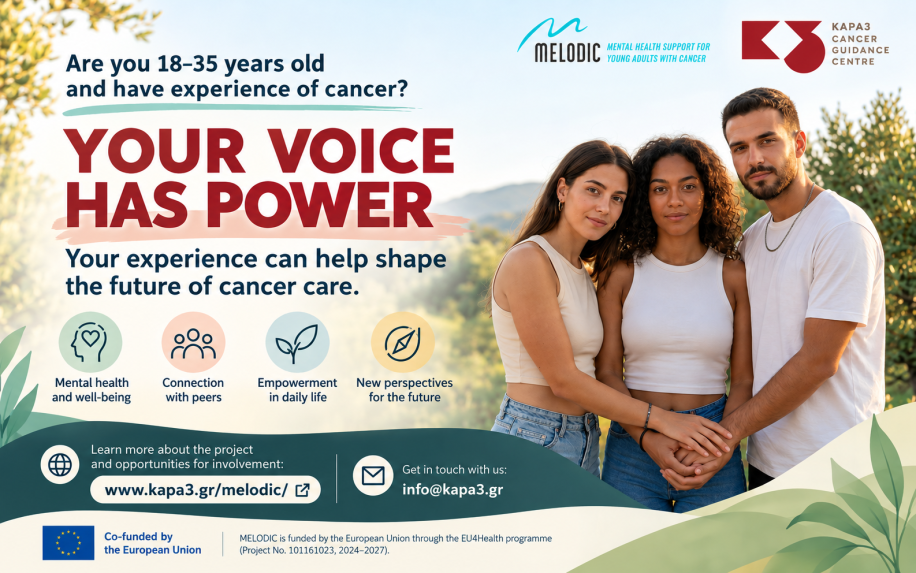
MELODIC focuses on the mental health and well-being of young adults affected by cancer, aiming to strengthen the knowledge, skills, and support available to them, their loved ones, and the professionals involved in their care.

The project specifically addresses the needs of young adults aged 18–35 and seeks to promote a more integrated, supportive, and human-centred approach to oncology care.

Within the framework of MELODIC, Kapa3 has actively contributed to the co-development of educational materials, the development of the educational framework, and the pilot educational intervention in Greece.

Through this participation, Kapa3 supports the recognition of psychosocial needs and the development of knowledge and competencies among healthcare professionals working with young people affected by cancer.

This approach is directly aligned with the philosophy of holistic cancer care: mental health is not a separate or secondary concern but an integral part of the overall experience of living with cancer.

MELODIC also highlights the importance of interdisciplinary collaboration and the early identification of psychosocial needs.

By strengthening awareness and professional competencies, healthcare professionals can become better equipped to recognise signs of distress and refer young people to appropriate support services in a timely and coordinated manner.

From Identifying Needs to Developing Supportive Interventions

The MELODIC project promotes an approach that moves beyond identifying psychological challenges towards developing practical, person-centred interventions that respond to the everyday realities of young adults living with cancer.

Its broader framework recognises the value of psychosocial support, social connection, physical activity, and engagement with nature as complementary dimensions of well-being.

For Kapa3, participation in MELODIC reflects a wider commitment to connecting scientific knowledge with practical support and the lived experiences of people affected by cancer.

By contributing to European collaboration, educational activities, and the development of supportive interventions, Kapa3 seeks to help strengthen a model of cancer care that is more responsive to the individual, social, and emotional needs of patients.

This commitment also reflects the organisation’s broader work in patient navigation, health literacy, access to rights, and psychosocial support.

Because meaningful cancer care must extend beyond medical treatment and recognise the person behind the diagnosis.

Why Listening to Young People Matters

Meaningful care begins with a simple but fundamental principle: listening.

Listening to the young person who is afraid, even when they cannot express that fear directly.

Listening to the person who feels angry, withdraws from others, or struggles to follow their treatment plan.

Listening to those who appear to be coping well but may be experiencing greater emotional difficulties than they reveal.

Listening without judgement, without minimising emotions, and without assuming that the needs of all young people affected by cancer are the same.

Behind every diagnosis is a person who continues to have relationships, plans, dreams, ambitions, and a need for independence.

Through its participation in MELODIC, alongside its broader activities supporting people living with cancer, Kapa3contributes to promoting a model of care that does not end with the treatment of the disease.

A model that recognises psychological and social needs, strengthens patient empowerment, and builds bridges towards appropriate support.

A model that understands that recovery is not only about physical health but also about rebuilding confidence, identity, relationships, and the ability to imagine a future.

Because cancer care is not only about helping people recover from illness. It is also about supporting them, with dignity and understanding, as they rebuild the lives they want to live.


Learn More About MELODIC

The European project MELODIC – Mental Health Support for Young Adults with Cancer aims to promote mental health and well-being among young adults affected by cancer through interdisciplinary collaboration, education, and person-centred supportive interventions.

Kapa3 participates in the project, contributing to its activities in Greece and to the broader European effort to strengthen psychosocial cancer care.

For more information about MELODIC, its objectives, activities, and Kapa3’s participation, visit the dedicated section of our website:

https://www.kapa3.gr/melodic/

If you are a young adult aged 18–35 with lived experience of cancer and would like to learn more about the project or possible opportunities for involvement, please contact the Kapa3 team.

Kapa3 – Cancer Guidance Centre

Website: https://www.kapa3.gr
Email: info@kapa3.gr
Telephone: +30 210 5221424


Source

Ciampa, D., Mathew, L., Fulginiti, K., & Fortune-Kottis, S. (2026, August 11). Addressing unique psychosocial challenges in adolescent and young adult (AYA) patients with cancer. Oncology Central.

https://www.oncology-central.com/addressing-unique-psychosocial-challenges-in-adolescent-and-young-adult-aya-patients-with-cancer/

Further information:
European MELODIC Project – Kapa3
https://www.kapa3.gr/melodic/


Article edited by:
Elena Panopoulou
Sociologist, Kapa3 Tripoli Team

Email: elenak3team@gmail.com
LinkedIn: https://www.linkedin.com/in/elena-panopoulou-5061aa426

Online Webinar Digital Transformation in the Public Sector and Civil Society.Convergence or divergence and proposals

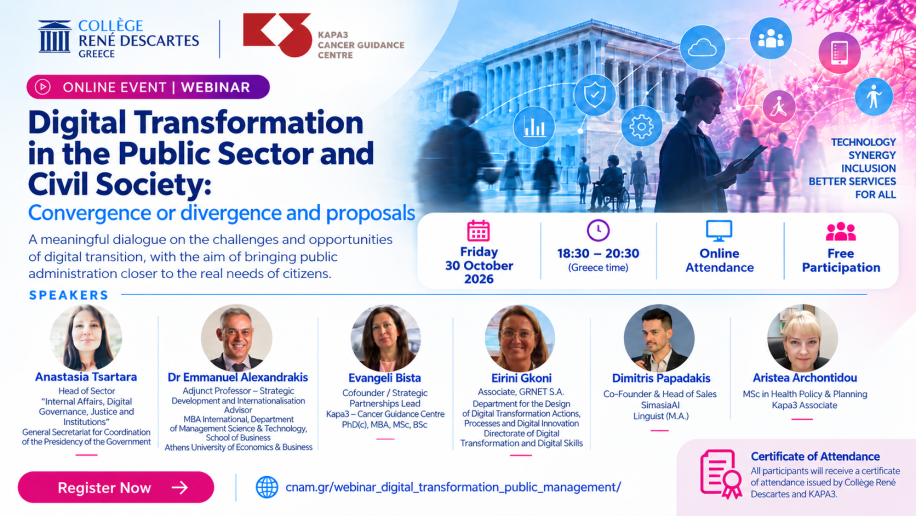
Kapa3 – Cancer Guidance Centre, in collaboration with Collège René Descartes, invites you to an online webinar entitled:

“Digital Transformation in the Public Sector and Civil Society: Convergence or divergence and proposals”

📅 Date: Friday, 30 October 2026
🕡 Time: 18:30 – 20:30
💻 Attendance: Online
🎫 Participation: Free of charge

Digital transformation is now a key factor shaping how public organisations operate, how services are delivered to citizens, and how social support and participation initiatives are developed. Although important progress has been made, the transition to a more digital environment does not unfold in the same way across all organisations and social groups.

This webinar aims to open a meaningful dialogue between theory and practice, examining digital transformation from both the perspective of the Public Sector and that of Civil Society. Special emphasis will be placed on:

  • the changes brought by digitalisation in the way organisations function,
  • the relationship between the state, organisations and citizens,
  • the opportunities created by digital technologies,
  • the challenges arising from unequal access to and use of digital tools,
  • and the need to develop sustainable, human-centred and inclusive digital solutions.

Main question of the discussion

Does digital transformation lead to greater convergence between the state, organisations and citizens, or does it create new forms of divergence and inequality?

Who should attend

The webinar is addressed to:

  • public sector professionals and employees,
  • representatives of civil society organisations,
  • professionals involved in the design or implementation of digital services,
  • management and human resources professionals,
  • social and humanitarian service professionals,
  • educators, researchers, academics and students,
  • and, more broadly, anyone interested in the relationship between technology, public administration and society.

Main topics

The webinar programme includes themes related to:

  • digital transformation as organisational change,
  • innovation in public administration,
  • practical experiences and good practices from the public sector,
  • inclusion, accessibility and social needs,
  • the relationship between the public sector and civil society,
  • artificial intelligence, data and new opportunities,
  • and proposals for a meaningful, sustainable and human-centred digital transition.

Speakers

The webinar features:

  • Anastasia Tsartara, Head of Sector “Internal Affairs, Digital Governance, Justice and Institutions”, General Secretariat for Coordination of the Presidency of the Government
  • Dr Emmanuel Alexandrakis, Adjunct Professor – Strategic Development and Internationalisation Advisor, Athens University of Economics & Business
  • Evangeli Bista, Cofounder / Strategic Partnerships Lead, Kapa3 – Cancer Guidance Centre
  • Eirini Gkoni, Associate, GRNET S.A.
  • Dimitris Papadakis, Co-Founder & Head of Sales, SimasiaAI
  • Aristea Archontidou, MSc in Health Policy & Planning, Kapa3 Associate.

Certificate of attendance

All participants will receive a certificate of attendance issued by Collège René Descartes and Kapa3.

Registration

Participation is free. You may register through the official form:
🔗 https://cnam.gr/webinar_digital_transformation_public_management/

Beyond Treatment: What Project 528 Reveals About Young Women Living with Advanced Breast Cancer

The hidden burden of diagnosis, the need for holistic care, and Kapa3’s commitment to patient navigation, psychosocial support and empowerment.

A cancer diagnosis at a young age affects far more than physical health. It can disrupt education, employment, family life, personal relationships, financial security and plans for the future. For young women living with advanced breast cancer, these challenges are often particularly complex, as they must navigate treatment and uncertainty while continuing to fulfil multiple personal, professional and family responsibilities.

The findings of Project 528, a global needs assessment led by the Young Survival Coalition (YSC), provide important evidence of these often-overlooked realities.

Presented at the 8th International Consensus Conference for Advanced Breast Cancer (ABC8) in Lisbon in November 2025, the survey gathered 3,881 responses from 67 countries. The findings presented at the conference focused on 385 young respondents under the age of 40 living with advanced breast cancer.

The results highlight significant gaps in access to information, psychological support, financial protection, practical assistance and meaningful participation in healthcare decisions.

Above all, they reinforce an essential message: cancer care must address the whole person, not only the disease.

The revealing findings of Project 528

The survey findings offer a compelling picture of the challenges experienced by young women with advanced breast cancer and demonstrate how deeply the disease affects everyday life.

Motherhood and family responsibilities

Almost half of the respondents (48%) had children under the age of 18.

For young mothers, living with advanced breast cancer means balancing demanding treatment schedules, physical symptoms and emotional uncertainty with the everyday responsibilities of raising children.

Childcare, family routines and concerns about their children’s future can become considerable sources of distress.

These findings highlight the importance of family-centred supportive care that recognises both the needs of patients and those of their loved ones.

Employment disruption and financial toxicity

The socioeconomic consequences of advanced breast cancer are substantial.

64% of respondents reported disruption to their employment following diagnosis, while 40% accumulated medical debt.

According to the detailed Project 528 report, the proportion of respondents who considered themselves financially secure fell from 51% before diagnosis to just 7% during treatment.

These findings illustrate the phenomenon of financial toxicity: the economic burden associated with cancer, including loss of income, treatment-related expenditure, travel costs, caregiving responsibilities and reduced employment opportunities.

Financial insecurity can further intensify emotional distress and create additional barriers to accessing appropriate care.

For younger patients, whose careers and financial independence may still be developing, the consequences can extend well beyond the treatment period.

Psychological distress and quality of life

80% of respondents reported psychological distress or mental health difficulties.

Concerns relating to body image, fertility, sexual health, emotional well-being and loss of independence were widespread, yet were often insufficiently addressed within routine cancer care.

For many young women, advanced breast cancer also raises difficult questions about identity, relationships, intimacy, motherhood and the future.

These challenges demonstrate why psychosocial support should not be viewed as an optional addition to cancer treatment.

It is an essential component of comprehensive, person-centred oncology care.

Delays in seeking care and diagnosis

The survey also revealed important gaps in awareness and early detection.

40% of respondents reported delaying their initial medical consultation. Contributing factors included fear, limited awareness of symptoms and experiences of having their concerns dismissed or underestimated by healthcare professionals.

Only 14% reported being diagnosed through screening or routine medical care, while 85% sought diagnosis after identifying symptoms themselves.

These findings point to the need for greater awareness of breast cancer in younger populations, timely clinical assessment of concerning symptoms and improved communication between patients and healthcare professionals.

They also remind us that young age should not automatically lead to the dismissal of potentially significant symptoms.

Gaps in information and access to precision medicine

The findings also identified differences in access to diagnostic testing and understanding of treatment options.

Although 90% reported undergoing genetic testing for inherited mutations, only 59% had received genomic or companion diagnostic testing to investigate characteristics of the tumour.

Such testing, when clinically indicated, can provide valuable information to support personalised treatment decisions.

Moreover, only 46% of respondents reported being offered more than one treatment option, while targeted therapies were among the least understood treatment approaches.

These results highlight the importance of accessible medical information, effective patient–professional communication and shared decision-making.

Online patient communities also emerged as valuable sources of information, peer support and empowerment. However, the detailed Project 528 report found that 43% had not been referred to peer-support or patient advocacy groups by their healthcare teams.

As Jennifer Merschdorf, Chief Executive Officer of the Young Survival Coalition, emphasised, healthcare systems too often place the burden of self-advocacy on patients who are already coping with fatigue, fear and financial strain.

The Kapa3 connection: From identifying needs to meaningful action

The findings of Project 528 are more than statistics. They reveal the personal, social and economic dimensions of cancer that healthcare systems must increasingly recognise and address.

Although the survey reflects experiences reported across different countries and healthcare contexts, many of the challenges it identifies are also relevant to the needs that cancer patients and families may encounter in Greece.

At Kapa3 – Cancer Guidance Center, we believe that the experience of cancer extends far beyond hospital appointments, medical consultations and treatment decisions.

Cancer affects the ability to work, care for loved ones, maintain financial stability, access essential services and participate fully in everyday life.

Our mission is to help bridge the gap between medical care and the practical, social and emotional needs that accompany a cancer diagnosis.

Patient navigation and guidance within healthcare and social support systems

As Professor Fatima Cardoso, President of the ABC Global Alliance, has highlighted, equitable access to appropriate diagnostics, personalised treatment and comprehensive supportive care is essential.

At Kapa3, we provide free patient navigation and social guidance services, helping people affected by cancer and their families better understand their rights and access available forms of support.

Our work includes guidance on administrative procedures, disability assessment and certification, social benefits, insurance-related matters, workplace rights and available community resources.

Through individualised support and cooperation with relevant services, we aim to reduce the bureaucratic and informational barriers that patients frequently encounter.

No person affected by cancer should have to navigate a complex health and welfare system alone.

Psychosocial support and quality of life

With psychological distress affecting such a high proportion of young patients in the Project 528 survey, emotional and psychosocial care must be recognised as a central part of the cancer journey.

Kapa3 provides psychological support services adapted to the needs of patients and caregivers, alongside social guidance and referrals to appropriate specialised services when necessary.

We recognise the importance of offering a supportive environment where people can discuss emotional uncertainty, changes in family and personal relationships, body image concerns, fear of recurrence or progression, and the challenges of adapting to life with cancer.

Our approach promotes dignity, emotional resilience and a more comprehensive understanding of quality of life.

Practical assistance and support for families

For a young mother living with advanced breast cancer, routine tasks can become overwhelming.

Childcare arrangements, travel for treatment, household responsibilities, employment obligations and financial pressures may all create additional burdens.

Kapa3 supports patients and caregivers by identifying their practical needs, providing information and connecting them with appropriate social services, community resources and support structures.

Through collaboration with local authorities, healthcare professionals and community organisations, we seek to strengthen continuity of support and help families navigate everyday challenges.

Empowerment, health literacy and patient advocacy

One of the strongest messages emerging from Project 528 is that reliable information is a fundamental resource for patient empowerment.

At Kapa3, we work to strengthen health literacy, informed participation and patient advocacy.

We encourage patients to ask questions, understand the information provided by their healthcare teams, become aware of relevant diagnostic and treatment options, and participate actively in decisions affecting their lives.

Our role is not to replace medical advice, but to help people access trustworthy information and feel better prepared to communicate with healthcare professionals.

At the same time, we advocate for more inclusive health and social policies that recognise the particular challenges experienced by adolescents and young adults affected by cancer (AYAs).

These include employment protection, financial security, psychosocial needs, family responsibilities, fertility-related concerns and continuity of care.

Moving forward together: Advocating for a better quality of life

Project 528 offers an important roadmap for researchers, healthcare professionals, patient organisations and policymakers.

It demonstrates the urgent need for healthcare systems that are not only medically effective, but also accessible, coordinated, compassionate and responsive to the realities of people’s lives.

The findings should be interpreted in the context of the survey’s limitations, including its reliance on self-reported experiences and uneven geographical representation. Nevertheless, they provide valuable patient-reported evidence that can inform further research and improvements in supportive care.

Behind every diagnosis is a woman who wants to continue living, loving, working, raising her children, building relationships and making plans for the future.

As Christina Thammasen, who shared her experience of living with metastatic breast cancer, reminds us:

“You have to keep fighting, you have to keep moving forward, you have to keep living your life.”

At Kapa3, we remain committed to ensuring that no woman, no young adult and no family affected by cancer has to face these challenges without information, guidance or support.

We advocate for a model of holistic, person-centred cancer care that extends beyond treatment and recognises every dimension of human life.

Because cancer care is not only about treatment. It is about protecting dignity, supporting everyday life and ensuring that no one is left behind.


Need support?

If you are a young person affected by cancer, a patient or a caregiver seeking guidance, psychological support or information about your rights, the Kapa3 team is here to help.

Kapa3 – Cancer Guidance Center

Telephone: +30 210 5221424
Email: info@kapa3.gr
Website: www.kapa3.gr

Sources and further reading

  1. Young Survival Coalition. Project 528 – First Look ABC Data: Global Needs Assessment of Young Adults Affected by Advanced Breast Cancer (2025).
    https://project528.youngsurvival.org/wp-content/uploads/2025/11/MBC-Report-Project528_11.2025.pdf
  2. ABC Global Alliance / ecancer. First global survey highlights challenges faced by young women with advanced breast cancer. 6 November 2025.
    https://ecancer.org/en/news/27226-first-global-survey-highlights-challenges-faced-by-young-women-with-advanced-breast-cancer
  3. Oncology Central. ABC8: Global survey highlights challenges that young breast cancer patients face. 6 November 2025.
    https://www.oncology-central.com/abc8-global-survey-highlights-challenges-that-young-breast-cancer-patients-face/
  4. Project 528 – Official website and research findings.
    https://project528.youngsurvival.org/results/

Article edited by:
Elena Panopoulou, Sociologist, Kapa3 Tripoli Team
Email: elenak3team@gmail.com
LinkedIn: Elena Panopoulou

MYRTO: From Real-World Needs to European Scientific Engagement

MYRTO, the digital Social Rights Navigator developed by Kapa3, is taking an important step from real-world experience to the European scientific community, with two studies accepted for presentation at EONS and ESMO events in 2026.

The first study, “MYRTO as an AI-Supported Navigation Model for Equitable Access to Cancer Care: Real-World Needs from 1,083 Beneficiaries”, will be presented as a poster at EONS19 at ESMO 2026 in Madrid, 24–26 October 2026.

The study draws on the real-world needs of 1,083 Kapa3 beneficiaries, identifying eight key navigation areas: rights and benefits, disability certification and administrative procedures, access to health and social services, transportation and geographical barriers, employment and social protection, health and digital literacy, caregiver support, and referral to human professionals when needed.

The findings highlight that equitable access to cancer care is not only about clinical information. It also depends on people’s ability to find, understand and use reliable information during an exceptionally demanding period of their lives.

From real-world needs to technology evaluation

The second study, “Source-Based Artificial Intelligence (AI) Navigation for Fragmented Nonclinical Cancer-Support Information: Pilot Evaluation of a Human-Supervised System”, has been accepted as an e-Poster at the ESMO AI & Digital Oncology Congress 2026, taking place on 16–18 November 2026.

This study focuses on the operation and evaluation of MYRTO as a source-grounded, human-supervised AI system.

The pilot evaluation drew on 448 authoritative documents and 29,148 indexed excerpts and assessed 100 predefined questions. For all 84 answerable questions, source-supported and actionable responses were generated without modifications following Kapa3 expert review. The system also applied clarification, abstention or redirection mechanisms when evidence was insufficient or when questions involved medical advice or fell outside its intended scope.

Two studies, one shared philosophy

The two studies reflect complementary dimensions of MYRTO: the real-world needs that led to its development and the way technology is being designed to respond to those needs through evidence, clear boundaries and human supervision.

For Kapa3, Artificial Intelligence is not intended to replace human support. Its role is to contribute to more accessible, understandable and trustworthy navigation, while keeping people at the centre.

MYRTO’s presence at two major European scientific events represents another step in bringing Kapa3’s field experience into the European dialogue on equitable access, digital health and the responsible use of Artificial Intelligence.

The MYRTO project is funded by the TIMA Charitable Foundation.

Find more about MYRTO https://kapa3-cag-rag-hybrid-deploy.onrender.com

Kapa3 at EPIONI’s 9th “Caring for Caregivers” Event

Putting caregivers at the centre: From psychological burden to integrated support

At the 9th “Caring for Caregivers” event in Thessaloniki, Kapa3 highlighted the need to recognise caregivers as care recipients in their own right.

Thessaloniki, 11 September 2026

In Thessaloniki, Kapa3 contributed with the presentation “Caregiver Burden in Cancer: The Psychological Dimension of Care and the Need for Integrated Psychosocial Support,” delivered by Evangeli Bista and Marilia Barka.

We highlighted the psychological and psychosocial burden of caregiving and the need to recognise caregivers as care recipients in their own right, with access to reliable information, guidance and integrated support.

We also introduced MYRTO, Kapa3’s digital assistant, as an accessible first point of information that complements human support and personalised navigation.

Caring for the caregiver is an essential part of caring for the patient.
Read more: dt -en

From access to continuity of care: when navigation becomes part of the solution

Why health systems need pathways, not just pilots

A test is not treatment. A referral does not necessarily mean that a person will reach the care they need. And a successful pilot does not, by itself, mean that a health system works for everyone.

This is the central message of a recent article by Gaurav Ghewade for the World Economic Forum, “Why healthcare systems need pathways, not just pilots.” The key question is no longer simply whether people can enter a health system, but whether the system can support them throughout the journey that follows.

In 2023, around 4.6 billion people worldwide were still not fully covered by essential health services. At the same time, chronic conditions, including cancer, require much more than a single intervention. They demand continuity, repeated contact with services, follow-up and coordinated support.

The critical question therefore becomes:

What happens after the first step?

Does a person know where to go next? Do they understand the procedures they need to follow? Are they aware of the rights and benefits available to them? Can they identify the appropriate services? Is there a clear pathway, or are they left to navigate a complex system on their own?

For people affected by cancer, the journey extends far beyond diagnosis and treatment. It can also involve administrative procedures, social and employment rights, financial and insurance benefits, access to social services, psychosocial support, caregiver needs and the return to everyday life.

This is why navigation is becoming an essential part of person-centred support.

From information to action: MYRTO

This is also the space in which MYRTO – Kapa3’s Digital Social Rights Navigator is being developed.

MYRTO does not replace doctors or healthcare professionals and does not provide treatment decisions. Its purpose is to help people affected by cancer and their caregivers access reliable and understandable information, better understand their social rights and available benefits, identify relevant services and move towards the next practical step in their journey. Kapa3 has positioned MYRTO within a broader approach to digital navigation, social accessibility and patient empowerment.

Because access is only the beginning.

What truly matters is ensuring that no one gets lost between the steps of their journey.

The development of MYRTO is supported by the TIMA Charitable Foundation, Founding Sponsor of MYRTO.

Source

Gaurav Ghewade, Why healthcare systems need pathways, not just pilots, World Economic Forum, 21 August 2026.

Evangeli Bista Joins the PATH Expert Group as an Independent Expert: Bringing the Patient Perspective into the New Era of AI in Cancer Care

A new contribution to the European dialogue on safe, responsible and human-centred Artificial Intelligence in healthcare

Evangeli Bista, Co-founder and Head of Operations and Development of Kapa3 – Cancer Guidance Centre, has been invited to join the Expert Group of the European research and innovation project PATH – Patient AI Treatment Hub as an independent expert.

Her participation is undertaken in a personal and independent capacity, with her professional affiliation to Kapa3 – Cancer Guidance Centre, creating an opportunity to bring into the European dialogue experience gained through direct engagement with people affected by cancer, survivors, caregivers and healthcare professionals. The PATH Terms explicitly define Expert Group members as acting independently rather than as partners, employees, agents or subcontractors of the Consortium.

What is PATH – Patient AI Treatment Hub?

PATH – Patient AI Treatment Hub is a European research and innovation project focused on supporting the safe and effective integration of Artificial Intelligence into cancer care through the development of a secure, interoperable and privacy-preserving digital platform.

The project aims to explore how Artificial Intelligence tools can be safely integrated into cancer-care pathways, supporting healthcare professionals and contributing to more personalised approaches while safeguarding privacy and health data.

At the heart of this effort lies a critical question:

How can technological innovation create meaningful value for patients while preserving trust, human oversight, safety and equity?

Participation in the PATH Expert Group

As a member of the PATH Expert Group, Evangeli Bista will contribute independent expertise, opinions, input, comments and feedback in relation to selected project use cases and activities.

The experience developed through Kapa3’s work can contribute to discussions around issues such as:

  • patient-centred cancer care,
  • patient navigation across health and social-care systems,
  • equitable access to information and services,
  • health and digital literacy,
  • health and social rights,
  • responsible use and protection of health data,
  • transparency and human oversight in Artificial Intelligence systems,
  • meaningful involvement of patients and civil society in technology design,
  • and translating technological innovation into real value for people.

Why the Patient Voice Must Be Part of Innovation

Artificial Intelligence is creating new possibilities for healthcare and cancer care. At the same time, its growing use raises important questions concerning trust, transparency, safety, equitable access and human oversight.

For Kapa3, the development of a digital solution cannot begin solely with the question of what is technologically possible.

It must also ask:

What does the patient actually need?

Can people understand the information they receive?

Do they know where that information comes from?

Can they trust the system?

Is it clear when Artificial Intelligence is being used and when human professional judgement is required?

Could digital inequalities lead to new inequalities in healthcare?

And ultimately, does innovation genuinely improve the experience and pathway of a person facing cancer?

These are questions that we believe should remain at the centre of the European discussion on Artificial Intelligence in healthcare.

Kapa3’s experience in digital health

Evangeli Bista’s participation in the PATH Expert Group comes at a time when Kapa3 is systematically expanding its work in digital health, patient navigation and the responsible use of emerging technologies to support people affected by cancer.

This broader work also includes MYRTO – Digital Navigator for Health and Social Rights, an independent Kapa3 initiative developed to help transform complex and often fragmented information on rights, benefits and administrative procedures into more accessible, structured and evidence-based guidance for patients and caregivers.

MYRTO is not part of PATH, and the two initiatives are independent from one another.

However, the experience of developing patient-facing digital services has reinforced several principles that Kapa3 considers essential:

reliable information, transparent sources, understandable communication, data protection, human oversight and a clear pathway to professional support when technology alone is not enough.

This distinction is also important from an intellectual-property perspective, since the PATH Terms preserve intellectual property that exists independently of the Expert’s Services and is not incorporated into PATH Contributions.

From information to trust

Digital transformation in healthcare is not simply about more data, more algorithms or more applications.

It is about creating greater understanding, better access and stronger trust.

For a person facing cancer, information has value when it can be translated into a meaningful next step.

Technology has value when it reduces — rather than increases — complexity.

And Artificial Intelligence has value when it strengthens, rather than replaces, human care, professional judgement and the patient’s ability to participate meaningfully in decisions affecting their life and health.

A new opportunity to contribute to the European dialogue

For Kapa3, the invitation to Evangeli Bista to participate as an independent expert in the PATH Expert Group represents an important opportunity to bring into the European dialogue experience, needs and concerns emerging from the real-world context of cancer care and patient support.

The objective remains clear:

Artificial Intelligence in healthcare should advance with safety, transparency, responsibility, equitable access and meaningful involvement of the people it is designed to serve.

Because innovation creates real value when it is designed with people and for people.


PATH – Patient AI Treatment Hub | At a glance

Field: Artificial Intelligence and data in cancer care
Project: PATH – Patient AI Treatment Hub
Focus: Safe and effective integration of AI into cancer care through secure, interoperable and privacy-preserving approaches.
Expert Group: Independent external experts providing expertise, opinions, input, comments and feedback to the Project.
Independent Expert: Evangeli Bista
Professional role: Co-founder & Head of Operations and Development
Affiliation: Kapa3 – Cancer Guidance Centre


A Calm Summer Begins with Proper Preparation Proactive Care Planning, Mental Decompression and Digital Support

Proactive Care Planning, Mental Decompression and Digital Support

Summer is a valuable opportunity for rest, renewal and quality time with the people we love. For people living with or after a cancer diagnosis, as well as for their caregivers, the possibility of enjoying a few days away from everyday life can contribute meaningfully to physical and mental well-being.

When a person’s health condition allows it, and with the agreement of the treating physician, even a short break can have a beneficial effect, enhancing quality of life and supporting the sense of returning to everyday life (Lim et al., 2022).

The quality of life of people living with or after a cancer diagnosis does not depend solely on medical treatment. Mental well-being, social support, optimism and resilience are equally important factors that facilitate adaptation to the disease and contribute to patients’ overall well-being (Ruiz-Rodríguez et al., 2022). At the same time, current guidelines underline the importance of integrated and personalised care, as well as continuous support for people living with or after cancer at every stage of their journey (Hart et al., 2024).

However, the peace of mind associated with holidays does not begin on the day of departure. It begins much earlier, through proper preparation. Practical pending issues, administrative procedures or concerns about unexpected events during the holidays can increase stress and reduce the feeling of safety. By contrast, proactive care planning allows patients to organise what is needed in advance, so that they can devote their time to rest rather than obligations.

Timely renewal of medical certificates, ensuring an adequate supply of medication for the entire period of absence, communicating with the treating physician when necessary, and keeping essential medical documents in an easily accessible format are simple but important steps of preparation. In this way, continuity of care is safeguarded, while the uncertainty that often accompanies travel is reduced.

Reliable information and timely support are key pillars of modern oncology care. When people know where they can turn and have easy access to trustworthy information, they feel safer, their autonomy is strengthened and the management of daily life becomes easier (Ruiz-Rodríguez et al., 2022; Hart et al., 2024).

In today’s world, digital tools can complement support services by facilitating access to reliable information wherever the patient may be. In this direction, Kapa3 is moving forward with the development of Myrto, the digital social navigator, designed to provide direct access to information on social rights, available services and useful guidance. In this way, it facilitates access to the organisation’s services and reliable information, contributing to better preparation before and during holidays.

For all of us at Kapa3, technology does not replace human care; it complements it. It is another means of facilitating access to trustworthy information and available services, while the Social Service and Psychological Support Service of Kapa3 remain the core pillar of holistic support for people living with cancer and their families.

Let us remember that care does not stop when holidays begin. It continues through small but meaningful acts of preparation, proper information and timely planning. Because, many times, the greatest luxury of a holiday is not the destination itself, but the feeling that we can enjoy our moments with calmness, safety and trust.

The Social Service and Psychological Support Service of Kapa3 wish everyone a safe, peaceful and refreshing summer, with health, strength and beautiful moments.

Before Leaving for Your Holidays…

✔️ Make sure you have an adequate supply of your medication for the entire period of your absence.

✔️ Check whether there are any medical certificates, prescriptions or other administrative pending issues that need to be settled in time.

✔️ Discuss with your treating physician any special instructions related to travel or movement.

✔️ Keep with you the necessary medical documents and important contact details.

✔️ Find out about available support services and make use of the Kapa3 App, so that you have easy access to useful information wherever you are.


References

Hart, N. H., Nekhlyudov, L., Smith, T. J., Yee, J., Fitch, M. I., Crawford, G. B., et al. (2024). Survivorship Care for People Affected by Advanced or Metastatic Cancer: MASCC-ASCO Standards and Practice Recommendations. JCO Oncology Practice, 20(9), 1160–1172. https://doi.org/10.1200/OP.23.00716

Lim, J. H. C., Keenan, C., & Flaherty, G. T. (2022). All My Life to Live: Travel Health Benefits and Risks for Cancer Survivors. Journal of Travel Medicine, 29(5), taac069. https://doi.org/10.1093/jtm/taac069

National Comprehensive Cancer Network. (2024). NCCN Clinical Practice Guidelines in Oncology (NCCN Guidelines®): Survivorship. Version 2.2024. Plymouth Meeting, PA: National Comprehensive Cancer Network.

Ruiz-Rodríguez, I., Hombrados-Mendieta, I., Melguizo-Garín, A., & Martos-Méndez, M. J. (2022). The Importance of Social Support, Optimism and Resilience on the Quality of Life of Cancer Patients. Frontiers in Psychology, 13, 833176. https://doi.org/10.3389/fpsyg.2022.833176

World Health Organization. (2022). World Mental Health Report: Transforming Mental Health for All. Geneva: World Health Organization.


Official Access Links

Hart et al., 2024 — MASCC-ASCO Standards:
https://ascopubs.org/doi/10.1200/OP.23.00716

Lim et al., 2022:
https://doi.org/10.1093/jtm/taac069

NCCN Clinical Practice Guidelines in Oncology: Survivorship:
https://www.nccn.org/professionals/physician_gls/pdf/survivorship.pdf

Ruiz-Rodríguez et al., 2022:
https://doi.org/10.3389/fpsyg.2022.833176

WHO World Mental Health Report:
https://www.who.int/publications/i/item/9789240049338


Marilia Barka
Psychology Student
Kapa3 Volunteer

www.linkedin.com/in/maria-garyfalia-marilia-barka-03825a409