Kapa3 at the 13th Panhellenic Oncology Nursing Symposium: From Knowledge to Practice, with People at the Centre of Care

Three scientific contributions highlighting healthcare professionals’ educational needs, the financial burden of cancer, and the importance of patient navigation in comprehensive oncology care.

30 October – 1 November 2026 | Montana Hotel, Karpenisi, Greece

Kapa3 – Cancer Guidance Centre will participate in the 13th Panhellenic Oncology Nursing Symposium, organised by the Oncology Nursing Sector of the Hellenic Nurses Association (ESNE), taking place from 30 October to 1 November 2026 in Karpenisi, Greece.

Under the central theme “Driving Change, Creating Hope,” this year’s Symposium will provide an important opportunity for scientific exchange, interdisciplinary collaboration and discussion on the future of oncology nursing and comprehensive cancer care.

Kapa3’s participation will include three confirmed scientific contributions, bringing together healthcare professional education, the socioeconomic consequences of cancer and the role of structured patient navigation in improving access to care.

Although these topics address different dimensions of oncology, they share a common objective: to explore how scientific knowledge can be translated into meaningful, accessible and measurable improvements in the care provided to people affected by cancer.

1. Educational Needs of Healthcare Professionals: From Knowledge Acquisition to Meaningful Change

Saturday, 31 October 2026 | 17:30–19:00

Open Scientific Discussion

“Educational Needs of Healthcare Professionals: A Critical Issue for Contemporary Oncology Care”

Moderator: Evangeli Bista, PhD(c), MBA, MSc, BSc, Co-founder of Kapa3 – Cancer Guidance Centre.

Modern oncology care is evolving rapidly. New therapeutic approaches, personalised care, increasing psychosocial needs, digital transformation and the integration of Artificial Intelligence are fundamentally changing the knowledge and competencies required of healthcare professionals.

However, participation in educational activities does not automatically translate into improvements in professional practice.

This scientific discussion will address a central challenge in continuing professional education: how to move beyond the delivery of scientific information towards the effective assimilation, application and evaluation of knowledge.

The discussion will follow a structured pathway:

Identifying Needs → Education → Knowledge Acquisition → Assimilation → Application → Evaluation → Improved Care

Particular attention will be given to absorptive capacity, knowledge translation, organisational learning, interdisciplinary collaboration and the development of professional and digital competencies.

An important dimension of the discussion concerns the organisational environment in which healthcare professionals are expected to apply their knowledge.

Leadership, trust, organisational culture, staffing, mentoring, access to information and opportunities for continuous learning can either facilitate or hinder the translation of scientific knowledge into everyday clinical practice.

The discussion will bring together the following participants:

  • Ourania Govina
  • Theocharis Konstantinidis
  • Giorgos Kapetanakis
  • Theodora Kappou
  • Maria Lavdaniti
  • Aikaterini Manousou
  • Aikaterini Papadimitriou
  • Dimitrios Papageorgiou

Drawing on different academic, clinical, professional, managerial and patient-centred perspectives, the discussion aims to identify shared priorities for continuing education in contemporary oncology care.

The central question is:

How can we move from delivering knowledge to ensuring its meaningful assimilation and practical application, while developing healthcare professionals and organisations capable of continuous learning and measurable improvement?

2. Accessibility in Cancer Care: The Intersection of Health, Society and Economy

Scientific Roundtable

“Access to Healthcare Services for Patients with Malignant Neoplastic Disease: A Health–Society–Economy Perspective”

Session Chairs: Ioanna Tsatsou and Maria Lavdaniti.

As part of this roundtable, Evangeli Bista will deliver a presentation entitled:

“The Financial Burden of Cancer on Patients and Their Families”

A cancer diagnosis is not solely a medical event. It frequently brings substantial social and financial consequences that affect both patients and their families.

Loss or reduction of income, frequent travel for treatment, additional healthcare-related expenses, caregiving responsibilities and difficulties maintaining employment can significantly affect quality of life and access to appropriate care.

The concept of financial toxicity describes the economic hardship and distress associated with cancer and its treatment.

Financial toxicity may contribute to psychological distress, financial insecurity, reduced social participation and inequalities in access to healthcare and supportive resources.

Drawing on Kapa3’s experience in social guidance, patient navigation and support for people affected by cancer, the presentation will explore financial burden as an essential dimension of person-centred oncology care.

The roundtable will also include:

  • Georgios Manomenidis: “Social Determinants of Access to Oncology Care”
  • Maria Lavdaniti: “The Role of Nurses and the Interdisciplinary Team in Reducing Barriers to Access”

Together, these contributions will examine accessibility from complementary perspectives, highlighting the complex relationship between health services, socioeconomic conditions and interdisciplinary collaboration.

Equitable access to care depends not only on the availability of healthcare services, but also on people’s actual ability to access and use them.

3. The Role of Patient Navigation in Oncology Care: A Systematic Review

Oral Scientific Presentation

“The Role of Patient Navigation in Oncology Care: A Systematic Review”

Authors:

Maria-Garyfallia Barka
Psychology student, Panteion University of Social and Political Sciences; Volunteer, Kapa3 – Cancer Guidance Centre.

Evangeli Bista
Social Scientist, PhD(c), MBA, MSc, BSc; Co-founder, Kapa3 – Cancer Guidance Centre.

This scientific contribution falls within the field of psychosocial oncology care and examines the role of structured patient navigation in improving continuity, coordination and accessibility throughout the cancer journey.

Cancer diagnosis and treatment are associated with multiple needs extending beyond clinical management.

Patients and their families often require assistance in understanding medical and administrative information, navigating healthcare services, accessing social rights and benefits, managing practical difficulties and obtaining psychosocial support.

The systematic review examines international scientific literature published between 2015 and 2026, drawing on searches conducted in PubMed and Embase.

The review focuses on patient navigation, psychosocial support, counselling and care coordination, exploring their contribution to comprehensive oncology care.

In addition, practice-based data collected through Kapa3’s activities are considered in order to connect international evidence with the needs of patients and caregivers in the Greek healthcare and social support context.

The findings highlight the importance of organised, interdisciplinary navigation models involving healthcare professionals, social workers, psychologists and other relevant professionals.

Patient navigation is not simply the provision of information.

It is a structured process of identifying needs, supporting decision-making, facilitating access to appropriate services and helping patients navigate the multiple challenges arising throughout their cancer journey.

The presentation reinforces the importance of developing coordinated and person-centred support pathways that address medical, psychological, social and practical needs.

From Scientific Research to Kapa3’s Everyday Practice

Kapa3’s three scientific contributions reflect the organisation’s commitment to connecting research, professional education and social support with the lived experiences of people affected by cancer.

The education of healthcare professionals, the recognition of cancer-related financial hardship and the implementation of structured patient navigation are not isolated priorities.

They represent interconnected dimensions of a broader approach to oncology care.

Effective professional education can strengthen the ability to identify patient needs. Recognition of socioeconomic barriers can improve the relevance of supportive services. Structured navigation can help connect patients with appropriate professionals, resources and care pathways.

Together, these elements contribute to a model of healthcare that is more coordinated, equitable and responsive to people’s real needs.

This approach is also reflected in the development of MYRTO – Kapa3’s AI-Supported Digital Social Navigator, an innovative initiative designed to improve access to evidence-informed information about social rights, benefits, administrative procedures and available support services.

MYRTO is developed in collaboration with SimasiaAI, with the valuable support of the TIMA Charitable Foundation.

The initiative demonstrates Kapa3’s commitment to combining digital innovation with human-centred guidance, health literacy, social inclusion and responsible use of Artificial Intelligence.

Driving Change, Creating Hope

For Kapa3, participating in the 13th Panhellenic Oncology Nursing Symposium represents another opportunity to strengthen scientific dialogue, share knowledge and develop collaborations between healthcare professionals, academic institutions and civil society organisations.

Patients’ lived experiences provide valuable insights into the challenges that healthcare systems must address.

When these experiences are systematically documented, examined through scientific research and incorporated into professional education and service development, they can become a powerful source of meaningful change.

Scientific progress creates real value when it translates into better everyday experiences, fewer barriers and more effective support for people living with cancer.

At Kapa3, we remain committed to advancing a model of oncology care that recognises the full complexity of patients’ needs and supports people throughout every stage of their cancer journey.

Because care does not end with treatment. It embraces the whole of life.


Symposium Information

13th Panhellenic Oncology Nursing Symposium
“Driving Change, Creating Hope”

Dates: 30 October – 1 November 2026
Venue: Montana Hotel, Karpenisi, Greece

Organiser: Hellenic Nurses Association (ESNE) – Oncology Nursing Sector

Official event website:
https://oncologynursingcongress.esne.gr/

Kapa3 – Cancer Guidance Centre
https://www.kapa3.gr

Explore MYRTO – Digital Social Navigator
https://kapa3-cag-rag-hybrid-deploy.onrender.com/

From access to continuity of care: when navigation becomes part of the solution

Why health systems need pathways, not just pilots

A test is not treatment. A referral does not necessarily mean that a person will reach the care they need. And a successful pilot does not, by itself, mean that a health system works for everyone.

This is the central message of a recent article by Gaurav Ghewade for the World Economic Forum, “Why healthcare systems need pathways, not just pilots.” The key question is no longer simply whether people can enter a health system, but whether the system can support them throughout the journey that follows.

In 2023, around 4.6 billion people worldwide were still not fully covered by essential health services. At the same time, chronic conditions, including cancer, require much more than a single intervention. They demand continuity, repeated contact with services, follow-up and coordinated support.

The critical question therefore becomes:

What happens after the first step?

Does a person know where to go next? Do they understand the procedures they need to follow? Are they aware of the rights and benefits available to them? Can they identify the appropriate services? Is there a clear pathway, or are they left to navigate a complex system on their own?

For people affected by cancer, the journey extends far beyond diagnosis and treatment. It can also involve administrative procedures, social and employment rights, financial and insurance benefits, access to social services, psychosocial support, caregiver needs and the return to everyday life.

This is why navigation is becoming an essential part of person-centred support.

From information to action: MYRTO

This is also the space in which MYRTO – Kapa3’s Digital Social Rights Navigator is being developed.

MYRTO does not replace doctors or healthcare professionals and does not provide treatment decisions. Its purpose is to help people affected by cancer and their caregivers access reliable and understandable information, better understand their social rights and available benefits, identify relevant services and move towards the next practical step in their journey. Kapa3 has positioned MYRTO within a broader approach to digital navigation, social accessibility and patient empowerment.

Because access is only the beginning.

What truly matters is ensuring that no one gets lost between the steps of their journey.

The development of MYRTO is supported by the TIMA Charitable Foundation, Founding Sponsor of MYRTO.

Source

Gaurav Ghewade, Why healthcare systems need pathways, not just pilots, World Economic Forum, 21 August 2026.

Head and Neck Cancer: The Importance of Early Diagnosis and Prevention.

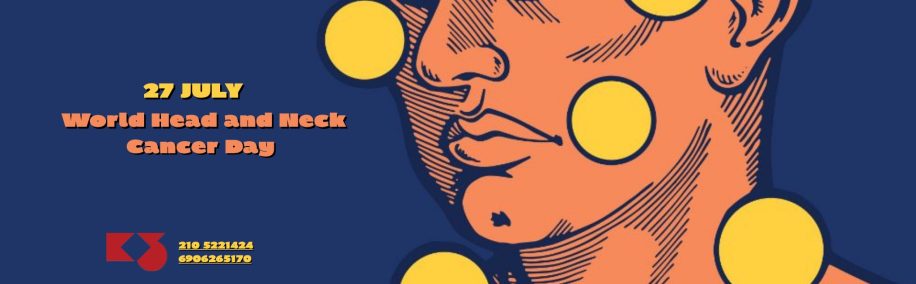
July 27 has been designated as World Head and Neck Cancer Day (WHNCD). The initiative was launched on July 27, 2014, during the 5th World Congress of the International Federation of Head and Neck Oncology Societies (IFHNOS) in New York, with the goal of raising awareness, education, and the
promotion of prevention. The declaration is supported by dozens of scientific communities worldwide, governments, and, most notably, the UICC (Union for International Cancer Control).

What is Head and Neck Cancer?
This type of cancer includes tumors located in the oral cavity, the lips, the pharynx, the larynx, the
salivary glands, the thyroid gland, the skin of the region, and the cervix.

In terms of prevalence, it is the fifth most common cancer worldwide. Seventy-five percent of cases are located in the mouth and pharynx, while the most common histological type is squamous cell carcinoma (HNSCC). For example, more specifically in Greece in 2012, 1,350 new cases were recorded, a figure that accounted for 3.3% of all new cancer diagnoses in the country.

Based on these percentages, 30% of cases occur in the tongue, 20% on the lip, 15% on the floor of the
mouth and in the larynx, and 10% in the pharynx.

Risk Factors

Understanding the factors that increase the risk is the first step towards prevention. Everyday habits, such as smoking and alcohol consumption, place a significant strain on the body. In particular, 70 per cent of those affected are long-term smokers, with current smokers facing a 300 per cent higher risk. When
smoking is combined with alcohol, the two have a negative synergistic effect, multiplying the likelihood of developing the disease. At the same time, in recent years there has been an increase in HPV-positive cancers, mainly of the pharynx, which often occur in younger people with no history of smoking or
alcohol consumption. Finally, it is worth noting that up to 25 per cent of cases are observed in patients who have never smoked and have no other known risk factors.

Suspicious lesions and symptoms

Delay in diagnosis is the most unfavourable prognostic factor. Conversely, 85–90 per cent of cases can be
cured if diagnosed at an early stage.

Suspected precancerous lesions

Particular care is required when identifying suspected precancerous lesions in the oral cavity. These
include leukoplakia, a white patch of unknown aetiology that does not flake off, in which, in 20–25 per
cent of cases, cancer or severe dysplasia is present. Even more dangerous is erythroplakia, where the rate
of co-occurrence with cancer or severe dysplasia reaches 90 per cent. At the same time, suspicious lesions
include punctate leukoplakia, as well as any chronic ulcer – that is, a sore that is not caused by any
obvious injury and remains unhealed for more than two weeks.

Symptoms requiring medical assessment

There are also certain suspicious symptoms that necessitate immediate assessment by a doctor. These include any unexplained swelling, lump or puffiness in the mouth or throat area, as well as persistent pain when chewing, swallowing or speaking, or pain that radiates to the ear. Furthermore, symptoms such as hoarseness, a change in the tone of the voice, and unexplained bleeding inside the mouth are signs that
should not be ignored.

Prevention and Screening
Screening is particularly important for people over the age of 45, smokers, people who drink alcohol, or
those with a history of HPV infection. Screening involves four simple steps:
1. Neck: Palpation of the lymph nodes and the thyroid gland.
2. Lips: External examination.
3. Mouth: Examination of the tongue, floor of the mouth, cheeks, gums and soft palate.
4. Pharynx: Examination of the tonsils, soft palate and base of the tongue.

The importance of early intervention

Despite advances in surgery, radiotherapy and chemotherapy, the 5-year survival rate remains at around 60 per cent. Furthermore, treatments for advanced-stage disease can affect patients’ quality of life, causing functional (difficulty speaking, chewing, swallowing and breathing), aesthetic or psychological problems.

World Love Day – 14 December

Love as a foundation of wellbeing, resilience, and human connection

World Love Day, celebrated every year on 14 December, invites us to pause and reflect on the power of love in our everyday lives. Love — in all its forms — strengthens human connection, nurtures compassion, and builds more resilient communities. For people facing illness, caregiving responsibilities or personal hardship, love is not just an emotion; it is presence, support, and protection.

Love and human wellbeing

International evidence highlights that loving relationships and strong social bonds contribute to better mental health, lower stress levels, and greater resilience. Social support — whether from family, friends, or the wider community — is essential during moments of crisis and plays a key role in enhancing overall wellbeing.

Inequalities in access to care, support, and connection

Although love is universal in meaning, it is not universally experienced. Social and economic barriers, loneliness, and lack of supportive networks can limit a person’s access to care and emotional safety. World Love Day is a reminder that social cohesion requires continuous effort — especially for individuals and families living in vulnerable conditions.

The meaning of love in cancer care

For people living with cancer — and for those who care for them — love carries a profound significance. Emotional support has been shown to:

  • reduce anxiety and depression,

  • strengthen adherence to treatment,

  • improve communication with healthcare professionals,

  • and create a much-needed sense of stability and safety.

Love means no one should face illness alone.

The Greek context

In Greece, many patients and caregivers rely heavily on informal networks of support. While this often becomes a powerful source of strength, it can also create pressure when caregivers lack institutional support or face social and economic challenges. Strengthening a culture of care and solidarity is essential so that no family carries the burden by itself.

The role of Kapa3

At Kapa3, love is at the heart of our work. Through awareness activities, psychosocial support, networking opportunities, and advocacy for patients’ rights, we strive to create environments where love translates into care, safety, and dignity. We support families, empower caregivers, and amplify the voices of those who are often unheard.

Become a member or volunteer at Kapa3

Support our work and become part of a community that ensures no patient or caregiver is left alone. By joining Kapa3 as a member or volunteer, you help us build support networks, provide reliable information and psychosocial support, and promote dignity and compassion in practice.

Learn more about volunteering here: https://www.kapa3.gr/prosklisi-ethelonton-gia-to-kentro-kathodigisis-karkinopathon-kapa3/

After all, nothing is stronger than the heart of a volunteer. (Jimmy Doolittle)

If you would like to contribute, you can contact us by phone or email, using the subject line “Volunteering”.

Become a member of Kapa3:
https://www.kapa3.gr/gine-melos/

Contact us here:
https://www.kapa3.gr/epikoinonia/

Learn more about Kapa3 at:
www.kapa3.gr

A call to action

World Love Day invites us to express love openly, through actions and with consistency. It calls on us to support those who need care, to cultivate empathy, and to build a society where compassion and humanity are not exceptions, but core values.

Let’s not forget that love is a choice. It takes time. It requires patience and effort. It means showing up. It is kindness. It is not selfish, and it is not conditional.

Let us remember today — and every day — that love is an action. And that this action has the power to change lives.

After all,

“And now these three remain: faith, hope and love. But the greatest of these is love.”
1 Corinthians 13:13

Text/adaptation: Ifiyenia Anastasiou for Kapa3