Kapa3 and Doctorhomie: Joining Forces to Support Cancer Patients

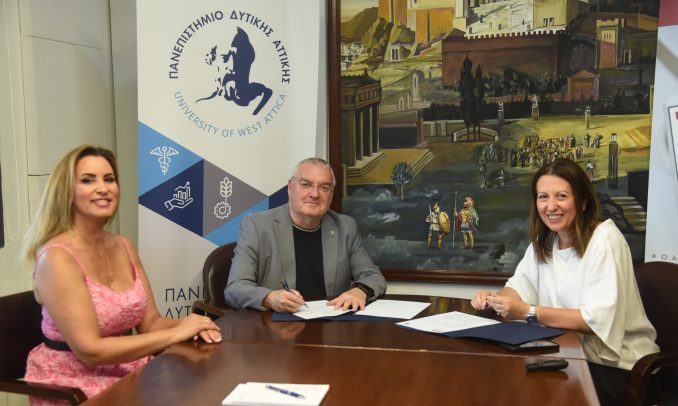
Kapa3 is pleased to announce the signing of a memorandum of cooperation with the digital home-care platform Doctorhomie. The Kapa3–Doctorhomie collaboration aims to strengthen support for cancer patients and their families across Greece.

Since its establishment, the Cancer Guidance Center – Kapa3 has been actively working to provide meaningful guidance to people living with cancer and their caregivers, with a strong focus on access to benefits and services, information about patients’ rights, and psychosocial support. Through Mobile Units, digital tools and educational initiatives, the organization promotes patient-centred care, creates channels of communication with beneficiaries and strengthens their participation in decisions concerning their health. Kapa3’s philosophy is grounded in building partnerships, leveraging technology and fostering collaborations with organizations that share the same vision.

Doctorhomie, on the other hand, is redefining home-based care in Greece by offering an integrated digital platform that connects patients with physicians, nurses, psychologists, physiotherapists and caregivers. Through tools that enhance monitoring and management of care at home, Doctorhomie contributes to strengthening Primary Health Care, promoting prevention, supporting families and improving both the safety and quality of care.

The new collaboration between Kapa3 and Doctorhomie opens opportunities for joint initiatives at multiple levels, including:

  • the organization of workshops, conferences and webinars aimed at informing patients, promoting quality of care and strengthening trust between patients and their treating physicians, particularly within the context of home-based care and Primary Health Care,

  • awareness and information campaigns focusing on prevention, the fight against myths and stigma, and a better understanding of patients’ symptoms and needs,

  • participation and collaboration in national and European programmes that promote innovation in oncology care and strengthen digital tools for patients and caregivers,

  • joint research initiatives on topics of shared interest, with the aim of supporting scientific evidence, disseminating knowledge and contributing to health policy development at both national and European level.

This partnership is founded on the shared belief that patient care begins with information and support, is strengthened through education and collaboration, and evolves through the combined use of technology and patient-centred practices.

Kapa3 and Doctorhomie are committed to making the most of this collaboration in order to strengthen patients’ participation in decisions regarding their health, reduce inequalities and provide timely and effective support to those who need it.

With a shared vision of quality and accessible care, Kapa3 and Doctorhomie are opening a new chapter of cooperation in support of cancer patients in Greece.

Download our Press Release in pdf or word

January – Cervical Cancer Awareness Month

January is internationally dedicated to raising awareness about cervical cancer. Known as Cervical Cancer Awareness Month, it aims to highlight the importance of prevention, early detection, and vaccination against the human papillomavirus (HPV), which is responsible for nearly all cases of the disease.

Cervical cancer remains a major public health issue worldwide. According to the World Health Organization, approximately 660,000 new cases are diagnosed globally each year, and more than 350,000 women lose their lives to the disease. It is among the most common cancers affecting women, particularly in regions where access to preventive screening and vaccination is limited. At the same time, it is one of the few cancers that can largely be prevented through organized prevention and early detection programmes.

In Greece, available data indicate that around 700 new cases of cervical cancer are diagnosed annually, while more than 280 deaths are attributed to the disease each year. The estimated incidence is approximately 8 cases per 100,000 women. Although this places Greece close to the European average, it also highlights the need for further improvement in prevention and early diagnosis.

Cervical cancer is closely linked to chronic infection with human papillomavirus (HPV), a very common virus transmitted mainly through sexual contact.

HPV vaccination, combined with regular gynaecological screening through Pap tests and HPV tests, can significantly reduce the development of precancerous lesions and cervical cancer. In this context, the World Health Organization has set the goal of eliminating cervical cancer as a public health problem by 2030, through high vaccination coverage, universal screening, and timely treatment.

January serves as an important reminder that information and prevention save lives. Open discussion around women’s health, free from fear and stigma, empowers women to take care of themselves and to claim prevention as a fundamental right.

Special emphasis should be placed on the systematic education of younger generations, as prevention begins long before any symptoms appear. Access to reliable information, preventive screening services, and vaccination programmes is a key factor in reducing health inequalities and protecting future generations.

At KAPA3, we believe that information and prevention are core pillars of care and empowerment. Through the dissemination of reliable information and the support of initiatives that promote public health, we stand alongside every woman who needs knowledge, prevention, and timely care.

Because cervical cancer can be prevented, we encourage everyone to take action. Give a meaningful gift to the women you care about: daughters, sisters, mothers, friends, partners, spouses. Talk openly about women’s health, share information, support initiatives, challenge taboos, and promote early diagnostic screening.

Information and open dialogue are the strongest tools we have.

Sources:

World Health Organization (WHO)
Cervical cancer – Fact sheet

WHO – Global strategy to accelerate the elimination of cervical cancer

International Agency for Research on Cancer (IARC / WHO)
Cervical Cancer Awareness Month

ICO / IARC HPV Information Centre – Greece Factsheet

Ministry of Health – National Immunization Programme

Hellenic National Public Health Organization (EODY)
HPV and cervical cancer

Text/adaptation: Ifiyenia Anastasiou for Kapa3

KAPA3 at the 18th Panhellenic Congress of Nutrition & Dietetics

The 18th Panhellenic Congress of Nutrition & Dietetics took place at the Athens Concert Hall from 4–6 December 2025, bringing together scientists and professionals to discuss the latest developments in nutrition under the central theme “Bridging Research and Practice.”

The Congress covered topics ranging from alternative proteins to eating disorders, through lectures, workshops, and roundtable discussions.

During the session “Co-Creating Health: Participatory Research with Cancer Patients on Nutrition and Mental Resilience”, held on Friday, 5 December in Hall MC3, participants included Andrea Paola Rojas Gil, Associate Professor of Biology – Biochemistry and Director of the Laboratory of Basic Health Sciences at the University of Peloponnese, a close KAPA3 collaborator in the field of nutrition, with the topic “Nutrition as a Tool to Support Treatment and Wellbeing: Comparison of Co-Design Programs for Oncology Patients in Greece and Colombia”; Evagelia Bista on behalf of KAPA3 with “Nutrition as a Social Determinant of Health: Inequalities, Education, Environment and Policies”; and Ioanna Sideri with “Mental Health and Strategies for Empowerment and Resilience”.

Nutrition as a Social Determinant of Health

Evagelia Bista emphasized that nutrition is not merely a personal choice but one of the most critical social determinants of health, directly affecting the prevention, progression, and quality of life of oncology patients. Nearly half of people worldwide lack access to healthy food, and socio-economic inequalities determine who can follow a nutritious diet. Greece is no exception: the economic crisis, the high cost of healthy foods, and the turn towards cheap, highly processed options have worsened the situation.

Key points highlighted in the presentation included:

  • Income, education level, and food availability determine dietary quality, with low-income households experiencing higher rates of obesity and chronic diseases.

  • A shift from the Mediterranean diet towards Western-style options due to economic and social factors.

  • A double burden for vulnerable populations: undernutrition and obesity coexist, particularly affecting those facing food insecurity.

  • Impacts on oncology patients: adequate nutrition is crucial for treatment tolerance, recovery, and quality of life, yet many patients face financial and treatment-related barriers.

Ms. Bista presented KAPA3’s actions with a focus on nutritional support and the participatory approach applied in online Experiential Sessions, conducted in collaboration with the University of Peloponnese. These sessions continue a series dedicated to holistic care for body and mind, emphasizing both nutrition and mental health for oncology patients and their caregivers.

KAPA3 underlines that nutrition cannot be seen as an individual behavior alone but as the result of social, economic, and environmental factors. Reducing inequalities and ensuring access to healthy food for all is essential for better health outcomes, especially in oncology care.

Text/Adaptation: Ifiyenia Anastasiou for Kapa3

Artificial Intelligence (AI) and Remote Patient Monitoring (RPM) are transforming oncology, giving patients a greater role in managing their treatment.

Recent studies have shown that using digital tools to collect medical data outside the traditional clinical setting reduces delayed symptom reporting, limits severe side effects, decreases hospitalizations and emergency visits, while improving survival and quality of life for patients.

In practice, this means digital applications allow patients to promptly inform their doctors of any issues, reducing risks and enhancing their daily experience during treatment.

Based on these findings, in 2022, ESMO published guidelines for integrating patient-reported outcome measures (PROMs) into clinical practice, recommending electronic platforms over paper questionnaires (Ann Oncol. 2022).

Dr. Charles Ferté, Chief Medical & Patient Officer of the Resilience solution, developed in collaboration with the Institut Gustave Roussy in France, highlights that AI can address limitations in using patient reports in oncology. According to him, about 50% of patients’ side effects go unreported, either due to forgotten symptoms or staff workload. Mild but persistent side effects are often overlooked, affecting treatment effectiveness.

The Resilience solution includes an online platform for doctors and nurses to monitor symptoms and receive alerts, and a mobile app for patients to submit real-time data. Data are processed through AI algorithms and transformed into actionable insights for the oncology team, facilitating timely intervention and care optimization. This enables doctors to monitor patients in real time and prevent complications before they become serious.

Additionally, the solution incorporates Natural Language Processing (NLP) to extract data from medical notes and lab results, and a predictive algorithm estimates the risk of severe side effects and unplanned hospitalizations.

Patient engagement is crucial: compliance with weekly questionnaires reaches up to 85%, with many describing the app as a “lifeline” during treatment. Although initially thought to appeal only to younger patients, research shows acceptance spans all ages (JMIR Mhealth Uhealth. 2018; J Geriatr Oncol. 2024).

The solution can also screen large patient populations, identifying those who would benefit from a hybrid care model—digital tools combined with in-person support, such as behavioral and cognitive therapy. Continuous data collection allows RPM to expand to social and behavioral indicators, including isolation, employment, access to care, addictions, physical activity, or food insecurity.

Finally, digital data open new avenues in research: the Resilience database includes over 20,000 patients across 140 hospitals in France, Belgium, Germany, and Spain, enabling real-world data use for more targeted clinical research. In the future, digital phenotyping will allow monitoring of physical and cognitive indicators via mobile sensors like pedometers and gyroscopes, offering a more comprehensive view of the patient experience.

It is clear that cancer care can now rely not only on patient and professional engagement but also on data analysis that uncovers hidden aspects of patients’ daily lives and symptoms.

Kapa3 remains at the forefront of oncology developments, continuously updating on new technologies and practices, actively supporting patients and caregivers, and creating tools and resources that ease daily life. Focused on patient empowerment, Kapa3 bridges scientific knowledge with practical solutions, ensuring everyone feels guided and safe throughout their treatment journey.

Text/Adaptation: Ifiyenia Anastasiou for Kapa3

Sources:

Kapa3 Supports Digital Innovation for Oncology Patients at Morning Health Talks

On Thursday, 4 December 2025, the second Morning Health Talk titled “Health Data for Innovation in Greece: Building a Stronger Digital Health Ecosystem” took place at the National Documentation Centre (EKT) in Athens. The event was held in a hybrid format (in-person and online participation), bringing together health professionals, researchers, policymakers and technology partners from Greece and abroad.

During the event, international and Greek experiences were presented on the management and use of health data, digital transformation, and best practices for leveraging data to strengthen the country’s digital health ecosystem.

Among the speakers were:

  • Dr Athanasios Batagiannis, General Director, 3-psi

  • Georgios Dimitriou, Cluster Manager, Hellenic Digital Health Cluster

  • Dr Ioannis Koumpouros, Director of DigInHealth, University of West Attica

  • Elpida Fotiadou, Head of eHealth, IDIKA

With the contribution of the distinguished speakers, key issues were discussed, including infrastructure interoperability, the need for reliable data, bureaucratic barriers, gaps in digital literacy, the development of focused platforms and processes, faster care pathways and needs assessment, the reduction of information fragmentation, and the development of human-centred digital solutions with practical value and social acceptance.

KAPA3 presented its strategic approach, focusing on standardised procedures, data quality improvement, interdisciplinarity, and the use of digital tools to support people living with cancer, as well as on guidance, interaction, empowerment and patient participation in data utilisation processes. At every step, KAPA3 addresses key challenges such as data fragmentation, stakeholder collaboration and human-centred digital solutions—issues that are also summarised in the Good Practices Guide developed within the eHealth4Cancer project.

In summary, the main points highlighted were:

  • A human-centred approach and the application of good practices to ensure the usability and social acceptance of digital solutions.

  • Strengthening collaboration between healthcare professionals, researchers and citizens to develop reliable and functional digital infrastructures.

  • The need for systematic scientific research to address challenges such as skills gaps, limited access and data fragmentation.

The event provided an important opportunity for networking and knowledge exchange, promoting the alignment of digital health infrastructures with citizens’ needs and reinforcing KAPA3’s role as an active contributor to the digital transformation of healthcare in Greece.

Read the full Morning Health Talks 2025 press release here and view photos from the event.

Text/adaptation: Ifiyenia Anastasiou for Kapa3