Kapa3 Report for the First Half of 2026

As the first half of 2026 draws to a close, the Cancer Patient Guidance Center (Kapa3) continues to systematically expand its reach, thereby strengthening the system of care and information for both cancer patients and their caregivers.

During the first half of the year, the organization implemented a series of high-level initiatives and forged partnerships at both the national and European levels, thereby solidifying its position.

The organization’s activities got off to a strong start in January with the welcome of its European partners in the MELODIC Consortium project at a productive two-day workshop (January 19–20), hosted by the School of Public Health at the University of West Attica.

In early February, on the occasion of World Cancer Day, Kapa3 played an active role as a partner of René Descartes College in the webinar “Cancer, Patient Navigation & Health Management: From Prevention to Life Coordination.”

At the same time, significant initiatives were carried out in the local community, such as the “Knowledge Workshop in Megara—From Prevention to Life Coordination,” held on February 8 in collaboration with the Municipality of Megara.

In the area of scientific programs, the Cancer Patient Guidance Center, in collaboration with the Laboratory of Basic Health Sciences (EBEY) of the Department of Nursing at the University of the Peloponnese (PA.PEL), launched a series of online meetings running from February through June, focusing on mental health and nutrition.

The month concluded with the organization’s participation in the international conference “Mapping the Unknown in Oncology – From Hospitals to Homes, Mapping the Future of Oncology Care,” held on February 27 and 28.

March marked a strengthening of Kapa3’s “digital presence” with its official membership in the Hellenic Digital Health Cluster (HDHC), a strategic move aimed at linking healthcare with technological advancements. As an extension of this collaboration, the organization participated in a closed-door members’ meeting as part of Athens Digital Health Week 2026.

On March 11, representatives of the organization attended the diaNEOsis event “Facing the Challenge of Artificial Intelligence” at the Lighthouse of the Stavros Niarchos Foundation Cultural Center, while in the middle of the month, Kapa 3 played a prominent role in the scientific conference “Cancer in 2026: Challenges and Disruptions.” Furthermore, on March 19–20, the organization was represented at the 6th Western Macedonia Nursing Conference on the theme “Innovation and Empathy: Balancing Technology with Human Contact in Nursing.”

In parallel, the organization’s co-founder, Ms. Evangelia Bista, gave an interview on the show “All About Health” on Dion TV—which covered a variety of topics related to health, nutrition, autoimmune diseases, and more—the implementation of the free, 8-week Melodic pilot educational program began.

Kapa3’s scientific credibility was reaffirmed by the publication of the research paper “Person-First or Disease-First? Language Choices in Cancer Communication” in the journal *Nursing Reports*, as well as by Kapa3’s participation in the European project associated with Melodic, titled: “Educational Needs Regarding Mental Health of Professionals Working with Young Adults with Cancer: A European Survey,” which was also published; the organization also participated in the MELODIC Online Symposium 2026 on April 24, contributing to the dissemination of results in Greece.

May was marked by a strong outward focus and new collaborations, as the organization joined the European program Service Learning 2: 0:CoLab, was selected as one of six nonprofit organizations to receive financial support from the Alpha Bank-Match For Good initiative, and began its collaboration with the USTEP INSTITUTE.

At the same time, an awareness campaign was held in Soufli to highlight Kapa3’s activities; Ms. Bista gave an interview to iatronet.gr, and representatives of the organization participated in an international conference at the Medical School of the University of Coimbra in Portugal

Within the organization, the new Psychological Support team was established with great enthusiasm, while on the social media front, the Kapa3 team won six medals at the 4th Vouliagmeni Summer Swim.

As the semester came to a close, June began with the signing of an official cooperation agreement with the Department of Occupational Therapy at the University of West Attica, while partnerships were solidified with the non-profit organization “Karkinaki” and the PRAXI Network of the Foundation for Research and Technology – Hellas (FORTH) to strengthen international networking and access to modern funding tools.

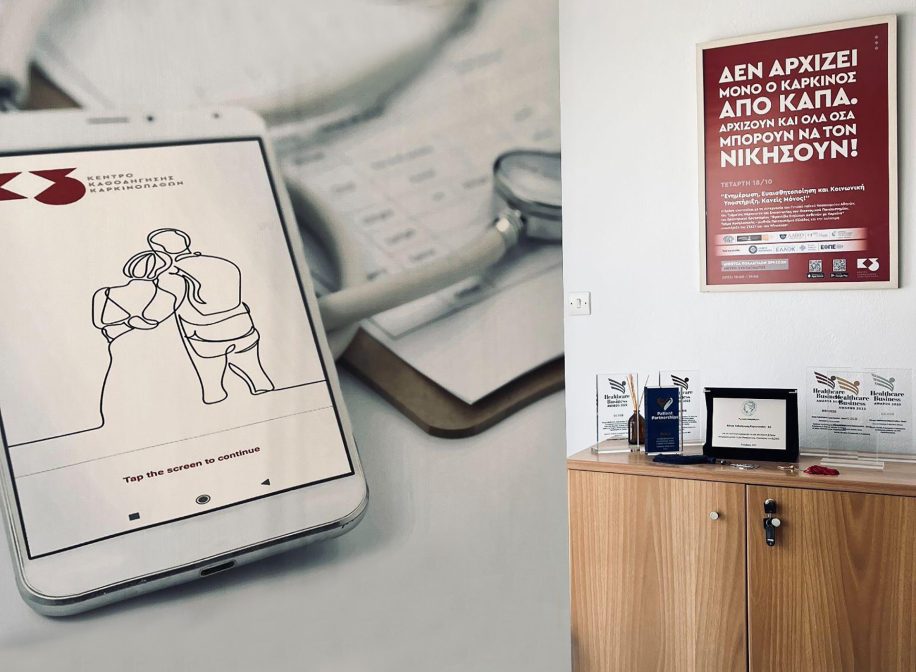
Having completed five years of uninterrupted service in supporting cancer patients through digital guidance, Kapa 3 is entering a new era with the development of the innovative “Myrto” project. This is a pioneering Social Artificial Intelligence (Social AI) initiative in the field of care for cancer patients in Greece. “Myrto” will function as an advanced digital health and rights navigator (Patient Empowerment e-Navigator) for patients, caregivers, and healthcare professionals—a project for which the strategic partnership with SimasiaAi for its co-development was crucial. Finally, the first closed workshop of the MYRTO Al Health Innovation Lab was held for the “Myrto” application, with the support of René Descartes College.

The results of this first half-year clearly demonstrate that Kapa 3 serves as a link connecting innovation, scientific research, and the digital age in the field of oncology care. By combining academic knowledge, European partnerships, and technological development, Kappa 3 transforms every challenge into sustainable, people-centered solutions. Partnerships with leading organizations, investors, and partners who share the same values of social responsibility are also essential to realizing this vision, ensuring that every patient has immediate, reliable, and equitable access to healthcare and their rights.

The KAPA3 team stands steadfastly by patients and caregivers to provide guidance and safeguard their rights. For any information or support, please feel free to contact us.

You can contact the KAPA3 team

13 Kostis Palamas Street, 3rd floor (Hours: 9:00 a.m. – 5:00 p.m.).

Phone Numbers: 210 5221424 & 6906265170.

Email: info@kapa3.gr
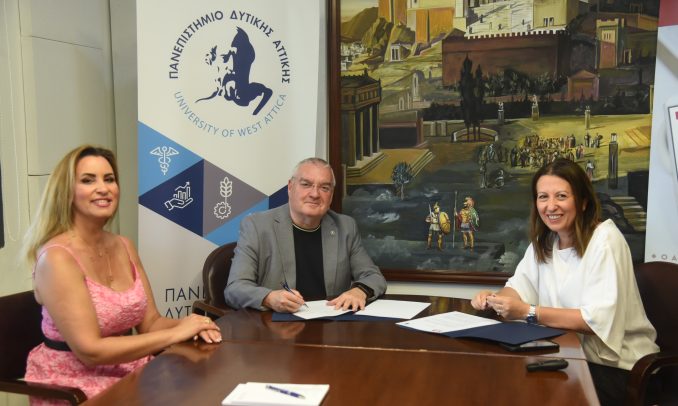


Memorandum of Understanding between the University of West Attica—specifically the Department of Occupational Therapy—and the NGO KAPA3.

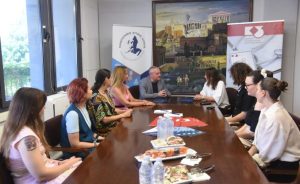
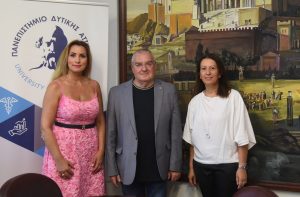
On Tuesday, June 9, a meeting was held to sign a Memorandum of Understanding between the University of West Attica—specifically the Department of Occupational Therapy—and the NGO KAPA3.

The meeting was attended by the Rector of the University of West Attica, Panagiotis Kaldis Penelope Vlotinou, Assistant Professor in the Department of Occupational Therapy Evangelia Bista, co-founder of the organization, as well as representatives from both organizations, including the interdisciplinary team of KAPA3: Despoina Chrysostomou, Psychologist Katerina Georgiopoulou, Social Worker Yiannis Kontogiorgis, Psychologist, and Eleftheria-Irini Polyzoti, an intern from the Department of Social and Educational Policy, as well as students from the Occupational Therapy Department.

During the meeting, a constructive discussion took place regarding the prospects for cooperation between the two organizations, with the aim of developing joint actions and initiatives that will contribute to strengthening education, research, social contribution, and the connection between the academic community and society.

In this context,  it was decided in April to jointly organize a major scientific conference, which will focus on an interdisciplinary and holistic approach to health, on combating social inequalities in healthcare, as well as on the management of chronic disease. The aim of this initiative is to raise community awareness, facilitate the exchange of expertise among professionals and scientific bodies, and disseminate scientific knowledge and information to the general public.

Special mention was made of the innovative work of KAPA3, the digital Health Navigator “Myrto,” a modern artificial intelligence tool currently under development and designed to support cancer patients, their families, and their caregivers. “Myrto” will function as a digital assistant (Chatbot) and Health and Rights Navigator, providing immediate, reliable, and personalized information on health, social welfare, rights, benefits, and available support services. The project aims to empower patients, improve their access to information, and reduce inequalities in health and social care through the use of digital technologies and artificial intelligence applications. The development of “Myrtos” represents a pioneering application of social artificial intelligence in the field of oncology care in Greece and is part of KAPA3’s strategy to promote innovation, accessibility, and the active participation of patients in managing their own health.

The meeting concluded in a particularly positive atmosphere of mutual appreciation and recognition. In this context, the Department of Occupational Therapy at the University of West Attica made a symbolic gesture toward the representative of KAPA3, Evangelia Bista, presenting her with a commemorative gift as a token of appreciation for her many years of valuable social contribution in the field of support for cancer patients. At the same time, as a gesture of hospitality and appreciation, the team was offered a specially produced wine, which is an original creation of the University of West Attica.


Disability Card: Everything KAPA3 beneficiaries need to know about its use and their rights

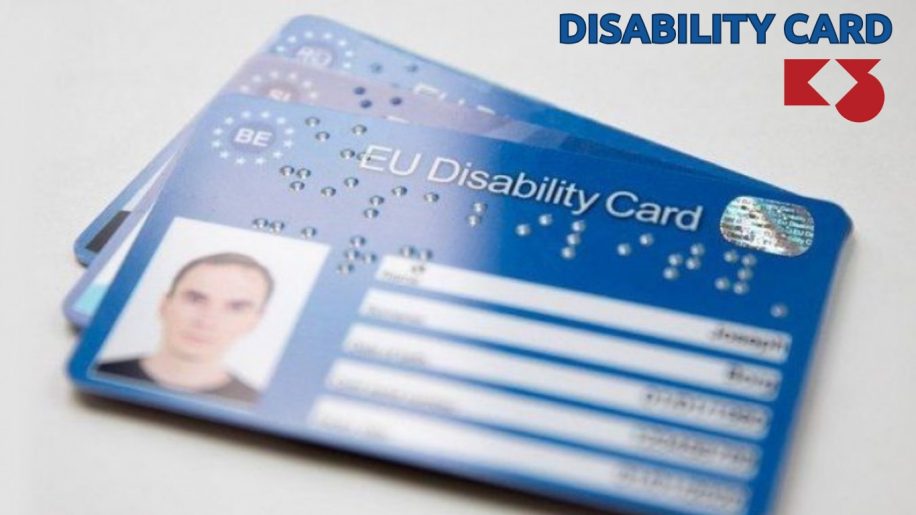
The Cancer Patient Guidance Center (KAPA3) informs beneficiaries and their caregivers about Clarification Circular No. 12757 issued by the Ministry of Social Cohesion and Family. This circular clarifies the framework for the operation, recognition, and mandatory acceptance of the Disability Card by all relevant agencies.

The Disability Card is the official government document that verifies the holder’s identity and status as a person with a disability. The primary purpose of issuing the card is to protect sensitive personal data, as it does not contain any information regarding the nature of the condition or disability.

Below is a detailed summary of all provisions under the law:

  1. Obligations of Entities and Rights to Service

Mandatory Acceptance: The Card must be accepted by all public and private sector entities, as well as by individuals and legal entities 

Priority Service: All entities are required to give priority service to Cardholders in procedures requiring in-person presence and to provide accessibility accommodations.

  1. The Three Forms of the Card (Equal Evidential Value)

Customer service staff are required to accept the Disability Card in whichever of the following forms the citizen chooses.

Printed form: A document with a digital signature from the online portal karta.epan.gov.gr.

Digital form: Via the Gov.gr Wallet app on a mobile device.

Plastic card: A printed form with a standardized design.

  1. Disability Levels and Right to an Attendant

The Card indicates the total disability percentage across three levels, in order to grant the corresponding rights:

Level I: Disability of 50%–66%.

Level II: Disability of 67%–79%.

Level III: Disability of 80% or higher.

“S” Marking (Right to a Companion): If the Card bears the “S” marking, all benefits, rights, and accommodations provided to the cardholder automatically extend to their companion during the period of accompaniment.

  1. What is the status of existing disability certificates?

Please note that disability certificates issued by the competent health committees (KEPAs, ASYE, etc.) remain valid as usual. Citizens who present these certificates instead of the Disability Card will be served as usual in accordance with the provisions applicable to each benefit.

The KAPA3 team stands firmly by patients and caregivers to provide guidance and ensure their rights are protected. For any information or support regarding the use of the Disability Card, please contact us.


Patients’ Rights in Public Administration: Less Bureaucracy and More Transparency

With Law 5293/2026 (Government Gazette A’57), a new framework is introduced for the operation of Public Administration in Greece, directly linked to patients’ rights in public administration, aiming to create a more citizen-friendly, efficient and transparent system.

These changes affect everyday interactions with public services, improving the way citizens are served, informed and supported.

The main provisions of the law can be grouped into three key pillars:

1. Simplification of procedures and reduction of bureaucracy

A central element of the reform is the simplification of administrative processes.

Article 3 – Replacement of supporting documents

According to Article 3, citizens may, in several cases, replace official supporting documents with a solemn declaration, when these documents cannot be directly retrieved by public services.

In practice, this means:

  • fewer documents need to be submitted
  • public authorities are responsible for retrieving the required information
  • procedures can start immediately without delays

At the same time, verification mechanisms are in place, including checks and sanctions in cases of false declarations.

Article 5 – Faster processing of requests

Article 5 strengthens the obligation of public services to process requests within specific deadlines, reducing delays in administrative procedures.

2. Transparency and digital access to information

The second pillar focuses on improving transparency and access to information.

Article 5 – Case tracking

Citizens are given the ability to digitally monitor the progress of their requests.

They can access information such as:

  • the current stage of the process
  • the estimated completion time
  • the responsible department
  • contact details for further communication

Article 6 – Mandatory publication of circulars

All administrative circulars:

  • must be published online
  • are valid only after publication

This ensures that citizens have access to up-to-date and valid information.

Article 7 – Online publication of public service hours

Public authorities are required to publish and regularly update:

  • their operating hours
  • public service hours

This helps reduce unnecessary visits and waiting times.

3. A new way of operating public administration

The law also introduces a new approach to administrative procedures, aiming to increase efficiency.

Article 4 – Certified professionals

Public administration may collaborate with certified professionals who:

  • are registered in official registries
  • meet specific qualification and certification criteria
  • can prepare reports, certificates or draft decisions used in administrative processes

These professionals are subject to:

  • random checks
  • penalties and fines in case of errors
  • removal from the registry if necessary

At the same time, accountability mechanisms (particularly under Article 3) ensure the reliability of the system.

What this means for patients

While these measures apply to all citizens, they are particularly important in relation to patients’ rights in public administration.

Reducing bureaucracy, enabling digital access to information and speeding up procedures can significantly ease the burden for patients, especially in processes related to:

  • healthcare services
  • benefits and allowances
  • administrative approvals

Towards a more accessible public administration

Law 5293/2026 represents an important step towards a more efficient, transparent and accessible public administration.

For patients and their families, every improvement that reduces complexity and uncertainty is not just an administrative change, but a meaningful support in their daily lives.

You can find the Government Gazette A’57 here (Greek Text): ΦΕΚ Α 57 Ν 5293_2026

Text/adaptation: Ifiyenia Anastasiou for Kapa3