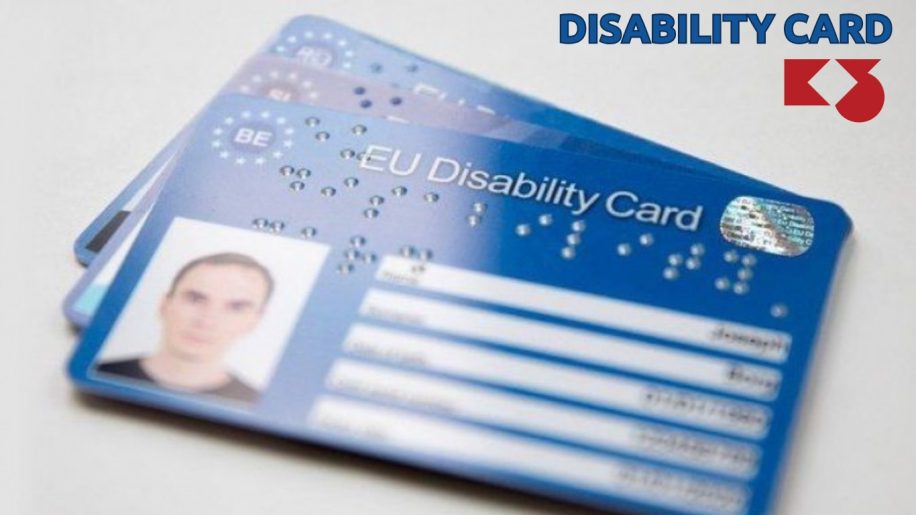

The new explanatory circular regarding transportation for people with disabilities (PWDs) for 2026 has raised several questions among beneficiaries and their families who are trying to understand what the current rules are. The most common question is: “I have the plastic Disability Card. Do I also need to get a PWD Transportation Pass?”
The answer is that the Disability Card has not completely replaced the Transportation Pass. Both of these documents remain valid simultaneously, and the need for one or the
other depends on the mode of transportation used by each eligible person. To make this clearer, here’s what applies in each case.
Athens and Thessaloniki: The Disability Card can be used for urban travel
For travel on OASA transit in Athens and OSETH transit in Thessaloniki, the plastic Disability Card can be used by eligible beneficiaries.
Cardholders can travel by validating their card at the designated machines, without needing to obtain a
separate Travel Pass specifically for these transit services.
The following are required:
- the Disability Card must be valid,
- must bear the designated disability level II or III designation,
- or the beneficiary must receive disability financial assistance from OPEKA,
- and income criteria must be met where required.
URBAN KTEL BUSES IN THE PROVINCE: THE TRAVEL PASS REMAINS NECESSARY
This is the point that has caused the most confusion. Possession of a Disability Card does not mean that
the Travel Pass is no longer required for all trips.
For urban KTEL buses operated by the Regional Units, as well as by the municipalities of Kos and
Rhodes, a Mobility Card for People with Disabilities is required, even if the beneficiary holds a Disability Card.
Therefore, those who use urban KTEL buses in their area should apply:
– at the Citizen Service Centers (KEP),
– or at the relevant offices of the Regional Unit.
FOR 2026, THE PROCESS BEGINS ON JULY 1, 2026, AND ENDS ON NOVEMBER 30, 2026.
Intercity Buses (KTEL): 50% Discount on Fares
For travel on intercity buses (KTEL)—that is, for trips from one city to another—a 50% discount is available.
The discount can be obtained with:
– A valid Disability Card,
– or a Transportation Pass for People with Disabilities.
Thus, for intercity routes, the beneficiary has more options.
Are there income criteria for free transportation?
One point that often causes confusion concerns income. There are no income criteria for issuing the Disability Card.
The income limits apply to eligibility for free transportation.
For 2026, the limits are as follows:
– individual taxable income up to 23,000 euros,
– declared family income up to 29,000 euros.
The family income limit increases by 5,600 euros for each additional person with a disability of 67% or higher who lives with and is financially dependent on the taxpayer.
It is important to note that: OPEKA disability benefits are not included in the above income limits. A relevant certificate from OPEKA may be required to exclude them.
Who is exempt from the income criteria?
People who are totally blind are exempt from the income criteria.
What applies to the companion?
In many cases, a companion is also entitled to travel.
If the Disability Card is marked with an “S” (Companion):
in Athens and Thessaloniki, the companion travels with the cardholder upon a single validation of the card. For KTEL buses, however, the prescribed procedure and the corresponding Companion Travel Pass are required where necessary.
So, what do beneficiaries need to keep?
The Disability Card is a significant benefit, but it does not mean that the Travel Pass is being
eliminated.
In simple terms:
Disability Card:
✔ Athens and Thessaloniki
✔ Intercity KTEL buses for a 50% discount
Travel Pass:
✔ Provincial KTEL buses
✔ Situations where a companion’s entitlement is required
✔ Those who do not have a Disability Card
At Kapa3, we believe that accurate information can save time, trips, and unnecessary hassle,
especially for people who already face increased challenges due to a disability or a serious illness.
View the circular here: TRANSPORTATION 2026
DISABILITY CIRCULAR
For more information, please don’t hesitate to contact the Kapa3 team:
📍Athens: 13 Kosti Palama, 3rd floor, (9:00 AM – 5:00 PM)
📍13 Kosti Palama, 11141 Athens
☎️210 5221424
📱6906265170
www.kapa3.gr, info@kapa3.gr