
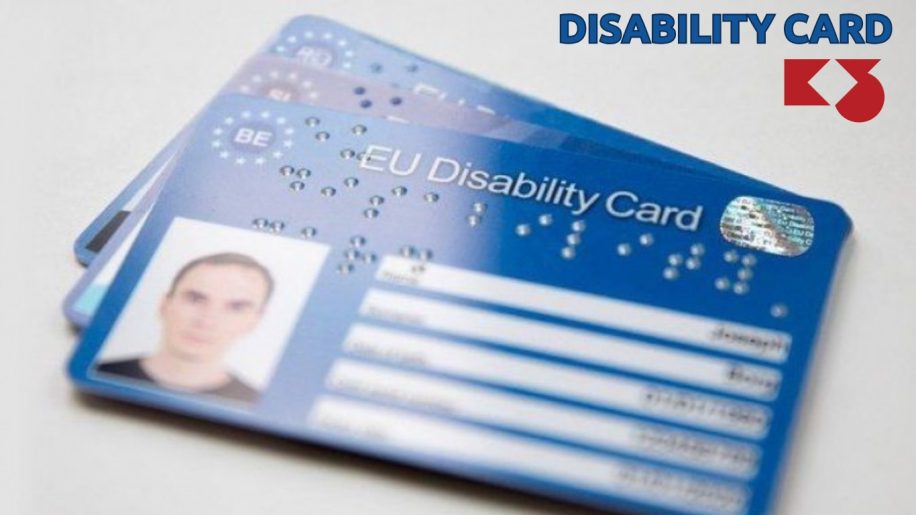
DISABILITY CARD OR TRANSPORTATION PASS FOR PEOPLE WITH DISABILITIES 2026. WHAT BENEFICIARIES NEED TO KNOW.

The new explanatory circular regarding transportation for people with disabilities (PWDs) for 2026 has raised several questions among beneficiaries and their families who are trying to understand what the current rules are. The most common question is: “I have the plastic Disability Card. Do I also need to get a PWD Transportation Pass?”

The answer is that the Disability Card has not completely replaced the Transportation Pass. Both of these documents remain valid simultaneously, and the need for one or the
other depends on the mode of transportation used by each eligible person. To make this clearer, here’s what applies in each case.

Athens and Thessaloniki: The Disability Card can be used for urban travel

For travel on OASA transit in Athens and OSETH transit in Thessaloniki, the plastic Disability Card can be used by eligible beneficiaries.

Cardholders can travel by validating their card at the designated machines, without needing to obtain a
separate Travel Pass specifically for these transit services.

The following are required:

  • the Disability Card must be valid,
  • must bear the designated disability level II or III designation,
  • or the beneficiary must receive disability financial assistance from OPEKA,
  • and income criteria must be met where required.

URBAN KTEL BUSES IN THE PROVINCE: THE TRAVEL PASS REMAINS NECESSARY

This is the point that has caused the most confusion. Possession of a Disability Card does not mean that
the Travel Pass is no longer required for all trips.

For urban KTEL buses operated by the Regional Units, as well as by the municipalities of Kos and
Rhodes, a Mobility Card for People with Disabilities is required, even if the beneficiary holds a Disability Card.

Therefore, those who use urban KTEL buses in their area should apply:
– at the Citizen Service Centers (KEP),
– or at the relevant offices of the Regional Unit.

FOR 2026, THE PROCESS BEGINS ON JULY 1, 2026, AND ENDS ON NOVEMBER 30, 2026.
Intercity Buses (KTEL): 50% Discount on Fares

For travel on intercity buses (KTEL)—that is, for trips from one city to another—a 50% discount is available.
The discount can be obtained with:
– A valid Disability Card,
– or a Transportation Pass for People with Disabilities.

Thus, for intercity routes, the beneficiary has more options.

Are there income criteria for free transportation?

One point that often causes confusion concerns income. There are no income criteria for issuing the Disability Card.

The income limits apply to eligibility for free transportation.

For 2026, the limits are as follows:
– individual taxable income up to 23,000 euros,
– declared family income up to 29,000 euros.

The family income limit increases by 5,600 euros for each additional person with a disability of 67% or higher who lives with and is financially dependent on the taxpayer.

It is important to note that: OPEKA disability benefits are not included in the above income limits. A relevant certificate from OPEKA may be required to exclude them.

Who is exempt from the income criteria?

People who are totally blind are exempt from the income criteria.

What applies to the companion?

In many cases, a companion is also entitled to travel.
If the Disability Card is marked with an “S” (Companion):

in Athens and Thessaloniki, the companion travels with the cardholder upon a single validation of the card. For KTEL buses, however, the prescribed procedure and the corresponding Companion Travel Pass are required where necessary.

So, what do beneficiaries need to keep?

The Disability Card is a significant benefit, but it does not mean that the Travel Pass is being
eliminated.
In simple terms:
Disability Card:
✔ Athens and Thessaloniki
✔ Intercity KTEL buses for a 50% discount
Travel Pass:
✔ Provincial KTEL buses
✔ Situations where a companion’s entitlement is required
✔ Those who do not have a Disability Card

At Kapa3, we believe that accurate information can save time, trips, and unnecessary hassle,
especially for people who already face increased challenges due to a disability or a serious illness.

View the circular here: TRANSPORTATION 2026
DISABILITY CIRCULAR

For more information, please don’t hesitate to contact the Kapa3 team:

📍Athens: 13 Kosti Palama, 3rd floor, (9:00 AM – 5:00 PM)
📍13 Kosti Palama, 11141 Athens
☎️210 5221424
📱6906265170
www.kapa3.gr, info@kapa3.gr

New Disability Benefits Registry: What’s Changing and How It Will Make Life Easier for Citizens and People with Disabilities.

As part of the digital transformation of social care, the joint ministerial decision on the establishment, maintenance, and operation of the “Disability Benefits Registry.”

This new digital tool on the National Disability Portal promises to put an end to the bureaucracy and the fragmentation of information that both people with disabilities and their families face on a daily basis.

A government-wide initiative.
The scope and significance of this initiative are underscored by the fact that the decision was signed by the overwhelming majority of government members—ranging from the Ministries of Finance, Health, and Labor, all the way to the Ministries of Education, Infrastructure & Transportation, Environment, and Digital Governance. This broad consensus highlights that benefits for people with disabilities are not limited to financial allowances alone, but extend to tax exemptions, transportation assistance, educational
facilities, social services, and special provisions across the entire public sector.

What is the Disability Benefits Registry?

The Registry is a specialized subsystem of the National Disability Portal. Its purpose is to collect, record, and transparently document all accommodations, allowances, benefits, and services to which people with disabilities or their related individuals are entitled.

What does the documentation of each benefit include?

For each available benefit or accommodation, the Registry will document the following in a standardized and clear manner:
• Title & Description: the distinctive title and brief description of the benefit.
• Legal Framework & Competent Authorities: the applicable provisions and the competent agencies
responsible for awarding or granting the benefit.
• Eligibility Requirements: the disability-related and other requirements for receiving the benefit.
• Financial Details & Frequency: the frequency and monetary value (exact amount or range), provided
that it is quantified in monetary terms.
• Application Process: detailed instructions for submitting the application and a direct link to the National Registry of Administrative Procedures “MITOS.”

Who is the Operating Agency, and what are the agencies’ obligations?

The Organization for Welfare Benefits and Social Solidarity (OPEKA) is designated as the operating agency for the Registry. It is responsible for ensuring continuous operation, maintaining the system, verifying the accuracy of entries, and issuing access credentials.
With regard to data entry personnel and data updates, each competent Ministry, Agency, and Municipality shall designate authorized “Data Entry Personnel”; such designations must be made within 10 days of publication.

They are required to complete the initial registration of benefits within one (1) month of the
decision’s publication, to immediately update the system in the event of changes or new benefits, and to annually verify the accuracy of the data.

Public Access and Information.

One of the most significant benefits of the new regulatory framework is that all information in the registry is public and accessible to everyone via the Internet. This provides immediate, accurate, and comprehensive information to those interested, without requiring them to travel or contact multiple public agencies—a process that often causes considerable inconvenience to thousands of people.

The creation of the Disability Benefits Registry is a positive step toward ensuring equal access to information and reducing bureaucratic burdens.

Disability Card: Everything KAPA3 beneficiaries need to know about its use and their rights

The Cancer Patient Guidance Center (KAPA3) informs beneficiaries and their caregivers about Clarification Circular No. 12757 issued by the Ministry of Social Cohesion and Family. This circular clarifies the framework for the operation, recognition, and mandatory acceptance of the Disability Card by all relevant agencies.

The Disability Card is the official government document that verifies the holder’s identity and status as a person with a disability. The primary purpose of issuing the card is to protect sensitive personal data, as it does not contain any information regarding the nature of the condition or disability.

Below is a detailed summary of all provisions under the law:

  1. Obligations of Entities and Rights to Service

Mandatory Acceptance: The Card must be accepted by all public and private sector entities, as well as by individuals and legal entities 

Priority Service: All entities are required to give priority service to Cardholders in procedures requiring in-person presence and to provide accessibility accommodations.

  1. The Three Forms of the Card (Equal Evidential Value)

Customer service staff are required to accept the Disability Card in whichever of the following forms the citizen chooses.

Printed form: A document with a digital signature from the online portal karta.epan.gov.gr.

Digital form: Via the Gov.gr Wallet app on a mobile device.

Plastic card: A printed form with a standardized design.

  1. Disability Levels and Right to an Attendant

The Card indicates the total disability percentage across three levels, in order to grant the corresponding rights:

Level I: Disability of 50%–66%.

Level II: Disability of 67%–79%.

Level III: Disability of 80% or higher.

“S” Marking (Right to a Companion): If the Card bears the “S” marking, all benefits, rights, and accommodations provided to the cardholder automatically extend to their companion during the period of accompaniment.

  1. What is the status of existing disability certificates?

Please note that disability certificates issued by the competent health committees (KEPAs, ASYE, etc.) remain valid as usual. Citizens who present these certificates instead of the Disability Card will be served as usual in accordance with the provisions applicable to each benefit.

The KAPA3 team stands firmly by patients and caregivers to provide guidance and ensure their rights are protected. For any information or support regarding the use of the Disability Card, please contact us.


International Day of Persons with Disabilities — 3 December

A day of awareness, commitment, and action

The International Disability Day, also known as the International Day of Persons with Disabilities (3 December), established by the United Nations in 1992, serves as an annual reminder of the need for full inclusion, equality, and respect for the rights of persons with disabilities across all aspects of social life. Moreover, today, more than ever, promoting accessibility and inclusion is not optional — it is an obligation.

According to the World Health Organization (2024), approximately 1.3 billion people — 16% of the global population — live with some form of disability. Disability is part of human diversity, and the lived experience of it highlights the systemic inequalities that continue to exist in many countries, including Greece. As a result, the need for stronger inclusion policies becomes increasingly evident.

These global figures highlight why International Disability Day remains a vital call to action worldwide.

Challenges and inequalities in Greece

In Greece, persons with disabilities still face significant barriers in their daily lives: inadequate accessibility in public spaces and services, difficulties in mobility, limited access to employment, and persistent social stigma that deeply affects their quality of life. National data confirm that these inequalities have direct consequences on health, education, and participation in social and economic life.

At the same time, improving accessibility is not only about removing barriers — it is about shaping a society that recognizes the real needs of its people. Therefore, from training professionals and changing attitudes, to ensuring universal access to healthcare and psychosocial support, inclusion requires sustained commitment. Only then can we guarantee that every citizen has equal opportunities, dignity, and participation.

Kapa3’s perspective: A world where every voice is heard

At the Cancer Patient Guidance Centre – Kapa3, we support individuals facing serious health challenges every day. We understand how essential the following are:

  • clear and accessible information
  •  timely support
  •  respect
  •  care without exclusions

Learn more about the rights of Persons with Disabilities in the following publications on our website here.

Find information about issuing a disability card here, and about free or reduced public transportation fares here.

The International Day of Persons with Disabilities reminds us that every action and every policy must be built on the principle of inclusion.
No one should be left behind.

Building more inclusive societies: From vision to practice

Creating a truly accessible environment requires:

  • Accessible cities and public services
  •  Training for professionals in health, social care, and customer service
  •  Accessible digital technologies
  •  Employment policies that enable active participation
  •  Awareness-raising and dialogue to combat stigma

Inclusion is not an act of “good will” — it is a prerequisite for social progress.

At the same time, the transition to a genuinely inclusive society is not instantaneous. It requires coordinated efforts from the State, civil society, and persons with disabilities themselves. Continuous evaluation, transparency, and meaningful participation are the foundations of lasting change.

Access is a right.
Every person deserves respect and equal opportunities.

Text/Adaptation: Ifiyenia Anastasiou for Kapa3

Sources


Free and Reduced Transportation for People with Disabilities and Large Families – What Changes in 2025

The Greek state is implementing significant changes regarding transportation for people with disabilities and large families in 2025. The new regulations simplify procedures, expand rights, and make public transport more accessible for all eligible individuals.

People with Disabilities (PwD)
Who is eligible:
Eligible individuals include people with disabilities with a disability rate of 67% or higher, or those receiving disability benefits from OPEKA. Totally blind individuals and holders of a digital Disability Card marked with levels II or III are exempt from income limits.

What changes:

  • Residency criteria are removed.
  • The right to free or reduced transportation now extends to one accompanying person, if needed.
  • Using the Disability Card for OASA, OSETH, KTEL, and Thessaloniki Metro is now simple with electronic or personalized card validation, without additional documents.

Practical use:

  • Free travel on OASA, OSETH, urban KTEL, and the municipalities of Kos and Rhodes.
  • 50% discount on intercity KTEL routes.
  • Thessaloniki Metro requires topping up the ThessCard with zero fare.
  • Accompanying persons can travel without separate validation when accompanying the eligible individual.

Large Families
Who is eligible:
Eligible individuals are large families and their members, according to existing legislation protecting large families.

What changes:

  • Travel with OASA, OSETH, and KTEL becomes more flexible.
  • Free or discounted tickets are supported depending on the policy of each transport service.

Practical use:

  • Simple procedure for issuing travel passes through Citizens’ Service Centers (KEP) and relevant regional authorities.
  • Tickets are valid for urban and intercity transport services.

These new regulations simplify the daily lives of people with disabilities and large families, reduce bureaucracy, and make access to all public transport easier.

See the Official Government Gazette (FEK) here

Read more about citizens’ rights here

Read more about the Disability Card here 

Text/Adaptation: Ifiyenia Anastasiou for Kapa3


Disability Card in Greece: What You Need to Know

The Disability Card was established under Law 4961/2022 (FEK A’ 146, Article 106) and is regulated by Ministerial Decision 16996/2023 (FEK B’ 932/23-02-2023).
It serves as a unified proof of identity and disability, which must be accepted by all public and private entities.

Read the text of Ministerial Decision 16996/2023 (Article 20) here.

In short, the Disability Card offers:

  • Proof of disability without the need to show medical certificates or documents from KEPA.

  • Priority service at public offices, utilities, banks, and hospitals.

  • Free or reduced access to museums, archaeological sites, and cultural events for the cardholder and their companion.

  • Use of special facilities (e.g., seats or parking spaces for people with disabilities).

  • Mutual recognition of the Card in EU countries where an agreement exists.

Card format

The Card is digital, but it can also:

  • Be saved as a PDF,

  • Be printed,

  • Be added to the Gov.gr Wallet,

  • And will soon be available in a plastic card format.

How to obtain it

The process is simple:

  1. Visit the National Disability Portal here: karta.epan.gov.gr

  2. Log in with your Taxisnet credentials.

  3. If a valid disability certificate exists, the Card is issued immediately.

  4. The same process applies for minors or companions using their respective Taxisnet credentials.

Applications for the plastic disability card began on November 18, 2025. The process is carried out as described above (through the National Disability Portal), and the plastic card is sent by registered mail within a two-week period.

For any inquiries, you can call: Helpdesk 210-3007606 or send an email to: helpdesk@epan.gov.gr

KAPA3 continues to stand by cancer patients and their families, offering reliable guidance and practical support so that every patient feels safe and fully informed about their rights and benefits.

For oncology patients who want detailed information on all the exemptions and benefits they are entitled to, KAPA3 has compiled a complete guide in the “Exemptions and Benefits” section of its website here.

Text/adaptation: Ifiyenia Anastasiou for KAPA3