
Ηλικία, φύλο και ανοσοποιητικό σύστημα τα στοιχεία που αυξάνουν τον κίνδυνο θανάτου από covid19

Cancer Immunotherapy: A Revolution That Continues to Transform Cancer Care

Over the past fifteen years, cancer immunotherapy has transformed the landscape of oncology, offering new hope and treatment possibilities to patients around the world. What began as a promising scientific concept has evolved into one of the most important pillars of modern cancer treatment.

According to the Cancer Immunotherapy Insights & Impact Report 2026 published by the Cancer Research Institute, a total of 156 immunotherapy approvals were granted by the U.S. Food and Drug Administration (FDA) between 2011 and 2025, reflecting the remarkable growth and impact of this field. Many of these therapies are based on immune checkpoint inhibitors, which help the immune system recognize and attack cancer cells more effectively.

Unlike traditional treatments such as chemotherapy and radiation therapy, immunotherapy works by empowering the body’s own immune system to fight cancer. By enhancing natural immune responses, these therapies can help the body identify and destroy cancer cells that might otherwise evade detection. For many patients, immunotherapy has led to longer survival, improved disease control, and a better quality of life.

The year 2025 marked another milestone in the advancement of cancer immunotherapy, with thirteen new FDA approvals. Notably, patients with anal cancer gained access to their first approved immunotherapy option, highlighting the expanding reach of these innovative treatments. New methods of administration, including subcutaneous therapies, are also making treatment more convenient and accessible for patients.

Research in cancer immunotherapy continues to progress at an extraordinary pace. Scientists are developing new strategies to overcome the mechanisms that allow cancer to hide from the immune system, while exploring novel therapeutic targets, combination treatments, and personalized approaches to care. These advances aim to increase the number of patients who can benefit from immunotherapy and improve outcomes across a wider range of cancers.

While challenges remain and not all patients respond equally to treatment, immunotherapy represents one of the most significant breakthroughs in the history of cancer care. Ongoing scientific innovation continues to bring hope that more effective, personalized, and accessible treatments will become available in the years ahead.

At KAPA3, we recognize the importance of raising awareness about advances in cancer treatment and supporting informed decision-making. Knowledge empowers patients, families, caregivers, and healthcare professionals, helping them navigate the cancer journey with greater confidence and hope.

Source: https://www.cancerresearch.org/cancer-immunotherapy-report-2026


There is an urgent need for psychological support for cancer patients. The KAPA3 team explains and advocates for this

There is an urgent need for psychological support for cancer patients. The KAPA3 team explains and advocates for this

Every day, healthcare professionals are called upon to communicate with, assess, and, above all, support people who are going through cancer.

Does cancer affect only physical health, or does it also have a profound impact on a person’s psychological, social, and emotional life? The needs that arise during the course of the illness are many and are often accompanied by the question: “What does the disease really bring to a person’s life?” A cancer diagnosis brings about significant changes in daily life, relationships, social roles, and the way a person perceives themselves and their future.

A cancer diagnosis is an extremely stressful event, often accompanied by feelings of fear, uncertainty, anxiety, and grief. At the same time, patients are called upon to cope with the effects of treatments such as chemotherapy, radiation therapy, and surgery. Changes in physical appearance, fatigue, pain, and limitations in daily functioning can significantly affect their self-esteem and quality of life (Pitman et al., 2018).

Uncertainty regarding the course of the disease and the likelihood of relapse are significant sources of psychological distress. The extent of this phenomenon is reflected in the meta-analysis by Mitchell et al. (2011), which included 94 studies and more than 14,000 cancer patients. According to the results, 16.3% of patients met the diagnostic criteria for major depressive disorder, 10.3% for anxiety disorder, and 19.2% for adjustment disorder.

These data highlight that a significant proportion of cancer patients experience severe psychological distress, a fact that underscores the need for specialized psychological support.

Furthermore, cancer often affects an individual’s family and social relationships. The patient may be forced to limit or abandon professional and social roles, while the family is called upon to adapt to new demands and responsibilities, experiencing significant psychological strain of their own (Northouse et al., 2010).

Cancer patients have an increased need for psychological support, as the disease significantly affects their psychological, social, and emotional functioning. Fear of the disease’s progression, uncertainty about the future, the side effects of treatments, and the possibility of recurrence are major sources of psychological distress. At the same time, the experience of cancer is often accompanied by feelings of loss of control, fear, and emotional distress. The contemporary psycho-oncology literature recognizes that the early identification of psychosocial needs and the provision of appropriate interventions are an integral part of holistic oncology care (Caruso & Breitbart, 2020; Mehnert-Theuerkauf et al., 2023).

Within this context, psychological support is a key component of holistic care for cancer patients. Holistic care refers to a comprehensive approach that takes into account not only the patient’s physical needs but also the psychological, social, and spiritual dimensions of their health. Counseling, psychotherapy, and support groups provide a safe space for expressing emotions and building psychological resilience (National Comprehensive Cancer Network [NCCN], 2024).

At the same time, they help improve adherence to treatment, strengthen cooperation with healthcare professionals, and maintain quality of life. As Holland and Weiss (2008) argue, psychosocial care is an integral part of high-quality oncology care, from diagnosis through the survival phase.

In conclusion, the experience of cancer is a complex and multidimensional process that affects every aspect of a person’s life. Managing the disease is not limited solely to physical treatment but requires the recognition and addressing of the psychological and social needs that arise at every stage. Providing timely and systematic psychological support can empower the patient, improve their ability to adapt to the demands of treatment, and contribute significantly to maintaining their dignity, hope, and quality of life. Psychological care should be regarded as a fundamental right of every cancer patient and as an integral part of modern oncology practice.

Coordination of Psychological and Social Services within the Framework of Psychosocial Care

The care of cancer patients is not limited to treating the disease and its physical effects. The needs that arise during treatment are often multifaceted and concern both the individual’s psychological well-being and practical, social, or financial issues that affect their daily life.

For this reason, effective support requires close collaboration among different healthcare professionals within a shared framework of psychosocial care. Within this framework, the Social Services and Psychological Services operate in a complementary manner, with the shared goal of enhancing the individual’s quality of life and overall adjustment to the experience of illness.

A client’s contact with the service can begin either through the Social Services Department or the Psychological Services Department. During the initial contact, an assessment of the client’s needs is conducted, and information is provided about all available support services.

Regardless of the initial request, the beneficiary is informed about the option of receiving psychological support, as the experience of cancer is often accompanied by heightened psycho-emotional needs that are not always apparent from the first contact. With their consent, an internal referral can be made to the Psychological Services Department for further evaluation and support.

The Psychological Services Department is responsible for the initial assessment, obtaining informed consent, and creating an individual support file. A structured series of sessions is then provided, tailored to the beneficiary’s needs. During this process, issues may arise related to social benefits, employment challenges, financial burdens, disability certification procedures, or other practical needs that significantly impact the daily functioning of the individual and their family. In such cases, and always with the beneficiary’s consent, cooperation with Social Services is initiated, and Social Services assumes responsibility for managing the relevant social and administrative matters.

The collaboration between the two services enables the timely identification of new needs and ensures continuity of care. Social Services focuses on the practical, social, and administrative aspects of support, while Psychological Services focuses on psychological resilience, emotional processing of the experience of the disease, and adaptation to the changes it brings about. The collaboration between the two services allows for a more comprehensive response to the needs of the cancer patient. In this way, a unified framework of psychosocial care is established that provides substantial support to the patient and their support network at all stages of their journey with the disease.

At the same time, regular communication and coordination between the two services allow for the timely identification of new needs and ensure continuity of care. The Social Services Department focuses on the practical, social, and administrative aspects of support, while the Psychological Services Department focuses on psychological resilience, emotional processing of the experience of the disease, and adaptation to the changes it brings about. The collaboration between the two services enables a more comprehensive response to the needs of cancer patients. In this way, a unified framework of psychosocial care is established that provides substantial support to the patient and their support network at all stages of their journey with the disease.


Kapa3 – Cancer Patient Guidance Center

Together, with knowledge, care, and a human touch.

Contact us:

https://www.kapa3.gr/epikoinonia/ by typing “Psychological Support” in the Message box

OR CALL

2105221424 – info@kapa3.gr

Athens: 13 Kostis Palamas Street, 3rd floor, (9:00 AM – 5:00 PM) 6982003282

Evangeli Bista on DION TV: Social Support and Kapa3’s Role in Guiding Oncology Patients

On March 19, 2026, Evangeli Bista, Co-founder of Kapa3, gave an interview to Christos Thanasainas, journalist and Scientific Director of Forlife Clinic, on Central Macedonia’s DION TV, during the daily program All About Health, which covers topics on health, nutrition, autoimmune diseases, and recent scientific developments.

The discussion highlighted the importance of social support for cancer patients and their families, both inside and outside the hospital, as well as the critical role of Kapa3 in guiding and providing holistic support to patients.

WHAT IS SOCIAL SUPPORT – TWO WORLDS:

Social support in cancer care is not a single, uniform concept. Inside the hospital, it mainly concerns assistance with the public healthcare system and bureaucratic procedures. Outside the hospital, real life begins: family, caregivers, and decisions the patient must make.

MAJOR SYSTEM CHALLENGES:

As Ms. Bista noted, hospitals face a significant shortage of social workers and related professionals. International literature suggests that there should be 10 social workers for every 2,500 residents—but this is not the case in Greece. In 92 municipalities, there is not a single social worker, while in areas where social workers exist, most are on fixed-term contracts or funded through programs (such as ESIF). The result is a maze of bureaucracy and uncertainty for the patient, who must understand medical and legal terms, make critical decisions, and manage financial consequences—often without support.

THE ROLE OF KAPA3 – SOLUTION, NOT JUST A SERVICE:

In this environment, Kapa3 provides holistic guidance and support, helping patients navigate procedural and practical issues—either independently, if they feel capable, or with active assistance from the organization at every step. Coverage is nationwide, although the complexity and fragmented structure of the system require ongoing study and time for effective support.

THE “HEAVY” MESSAGE – UNDERSTANDING VS. INFORMATION:

As Ms. Bista emphasized:

“The patient doesn’t need more information – they need understanding.”

The process is essentially behavioral: understanding reduces uncertainty, uncertainty reduces anxiety, anxiety affects behavior, and behavior determines health outcomes.

Kapa3 operates within this “maze,” offering holistic guidance and support. Intervention can be supportive, giving patients the ability to act on their own, or active, guiding them step by step. Kapa3 covers the entire country, addressing the growing needs of patients.

THE BIG CHALLENGE: “MYRTO”

“Myrto” represents Kapa3’s major initiative for 2026. After five years in oncology social support, Kapa3 addresses secondary digital exclusion with “Myrto”—a Digital Health Navigator designed to transform knowledge into practical understanding and provide real-time guidance for patients, avoiding the “chaotic wandering” through the healthcare system. The platform is currently in the study and design phase, aiming to meet the real needs of patients and their caregivers.

The interview highlighted the importance of social support, understanding over mere information, and the role of digital technology in modern oncology care. Kapa3 and Myrto strive to bring care from the hospital into patients’ daily lives through a holistic, personalized, and practical approach.

For more information and to watch the full interview, see the video on YouTube here.

(Note: Video in Greek with no English subtitles).

You can dowload our Press Release here

Text/adaptation: Ifiyenia Anastasiou for Kapa3

Launch of Free MELODIC Training Programme – Greece

We are pleased to announce the launch of the free eight-week online training programme implemented in Greece within the framework of the European project MELODIC, in which Kapa3 participates as one of 13 partner organisations from 6 European countries.

The programme is addressed to doctors, nurses, other health professionals, and social care professionals working in oncology.

MELODIC is an international collaboration aimed at strengthening mental health support for young adults with cancer and their families, promoting high-quality, holistic oncology care.

Through the programme, participants will have the opportunity to develop skills in:

  • Assessing mental health needs using validated and evidence-based tools

  • Supporting families and caregivers

  • Delivering high-quality psychosocial care

  • Interprofessional collaboration

  • Sustaining personal and professional wellbeing

The programme is divided into an asynchronous part (on the Moodle platform), which participants can complete at their own pace, and four contact lessons, constituting the synchronous part via Zoom. Upon completion, participants will receive 5 ECTS credits and a certificate of completion.

Sessions will take place from March to April 2026.

The contribution of health professionals is crucial for the accurate assessment of mental health needs of young adults with cancer and their families, as well as for delivering high-quality, person-centred care. The MELODIC programme strengthens their skills, promoting collaboration, responsibility, and sustainable professional practice in oncology.

For further information, please contact:
Ifiyenia Anastasiou
email: ifi.k3team@gmail.com | phone: 690.62.65.170

Webinar: “Cancer, Patient Navigation & Health Management: From Prevention to Coordinated Care” in collaboration with the Kapa3 Cancer Guidance Center

On the occasion of World Cancer Day, we invite you to join the webinar on cancer and patient navigation, organized in collaboration with René Descartes College and the Kapa3 Cancer Guidance Center. This webinar aims to open a meaningful dialogue around cancer, not only as a medical diagnosis but as a complex life journey.

Today, cancer requires holistic health management, proper guidance within the care system, coordination among professionals and services, and a patient-centered approach that considers the individual, their family, and social environment.

The webinar aims to highlight the importance of Patient Navigation and Health Management in cancer care, to illuminate the role of technology and innovation in oncology, and to raise awareness around prevention, quality of life, and continuous patient support.

Target Audience:
  • Patients and individuals at diagnosis, undergoing treatment, or in follow-up

  • Caregivers and family members

  • Health professionals, Health Management staff and students

  • Policy and quality of care professionals

  • Anyone interested in prevention, screening, organization of oncology services, and patient-centered healthcare approaches

Participants Will Gain:
  • Understanding of cancer as a holistic life issue

  • Knowledge of modern patient navigation and care coordination models

  • Insights into the role of technology in oncology

  • Practical information for better management within the healthcare system

  • Inspiration for more humane, coordinated, and high-quality care

Speakers:
  • Maria Gazouli, PhD – Professor of Biology-Genetics-Nanomedicine, Laboratory Geneticist

  • Dr. Christos A. Frantzidis – Assistant Professor, Computer Science / Machine Learning, School of Computer Science, University of Lincoln, UK

  • Dr. Maria Lavdaniti, MSc, PhD – Professor of Clinical Nursing, Director of the University Laboratory of Adult Cancer Patient Care, International Hellenic University (IHU)

  • Evangelia Mpista, PhD, MBA, MSc, BSc – Co-Founder, Kapa3

  • Dr. Vasiliki Kapaki – Postdoctoral Researcher in Health Economics, Professor of Health Economics, René Descartes College

Participation Details:
  • Duration: 2.5 hours (18:30 – 21:00)

  • Date: 06/02/2026

  • Attendance: Online

  • Participation is free

  • Certificate of attendance will be issued by René Descartes College and Kapa3

  • Registration form and participation declaration: Here

Text/adaptation: Ifiyenia Anastasiou for Kapa3

The Impact of the Kapa3 Internship Programme: 30 Young Professionals in Our First 5 Years of Operation

The Impact of the Kapa3 Internship Programme: 30 Young Professionals in Our First 5 Years of Operation

In the five years since our establishment, thirty young people have had the opportunity to learn and grow through the Kapa3 Internship Programme.

International scientific literature highlights that internships are far more than a first work experience. They serve as a fundamental mechanism of experiential learning, enabling students to connect theoretical knowledge with real-world professional contexts.

Through their involvement in a civil society organisation like Kapa3, interns developed reflective and critical thinking skills—core elements of modern professional education. By engaging with real needs and challenges, students strengthened their professional identity and gained a deeper understanding of their role as future practitioners in health and social services. In many cases, the internship at Kapa3 played a significant role in supporting their transition from university to the labour market, enhancing their confidence, social skills, and clarity of professional direction.

Furthermore, the structured field experiences offered opportunities to build professional networks, a key factor in long-term career development.

At Kapa3, the value of internships is evident across all aspects of our work. We strive to create an environment where students can deepen their academic knowledge, apply their skills to real cases, and map out the next steps of their careers with realism and self-awareness.

The result is a community of young professionals who are both socially conscious and scientifically equipped to contribute meaningfully to health and social care. We are proud to be at the forefront of education and warmly thank our partner universities for their trust and collaboration.


This Year’s Good-Luck Charm (2026): A Symbol of Self-Care

The Good Luck Charm of the Year (2026) for Kapa3: The Crown

A Symbol of Self-Care

This year’s good luck charm is dedicated to self-care — a small, daily reminder of the deep importance of tending to ourselves with gentleness, respect, and consistency.
In a time when everyday life becomes increasingly demanding, this charm reminds us that self-care is not a luxury, but a necessity.

It symbolizes all those small acts that keep us standing: the pause, the breath, the moment of rest; the warm embrace we offer ourselves. The choice to listen to our bodies, to acknowledge our limits, and to prioritize our health, joy, and inner balance.

And it is precisely this “pause” that led us to our good-luck charm for 2026: the Crown — a symbol that carries far more than what meets the eye.

In music, the crown (fermata) is the pause held by the performer —
the moment of emphasis before the melody continues.
So it is with every struggle: it requires breaths, pauses, small breaks — not to stop, but to continue.

A crown is also a circle. And a circle means you are not alone; around you are people, care, support — a circle that holds you.

If there were a title of honor for those who fight cancer, it would be a crown. Not as a symbol of power, but as a recognition of dignity.

Cancer can sometimes feel like a thorny wreath — heavy, painful, relentless.
And yet, depending on how we choose to face it, it can transform into a wreath of victory: the victory of persistence, endurance, return — and above all, the victory of effort.

Because behind every crown lies a story: of a parent, a friend, a child, a partner, someone who is fighting or supporting someone who fights.

That is why the crown is not just a piece of jewelry — it is a message of strength:

It is not what happens to us that defines us —
but how we choose to face it.

It reminds us that when we care for ourselves, we can truly care for others. That strength, well-being, and kindness begin within us.

May this year’s charm be a small talisman accompanying us each day, inspiring us to make space for what nourishes us, to embrace our vulnerability, and to celebrate our worth.

For a year filled with more care, more peace, and more love — beginning with ourselves.

Let’s fill our days with small acts that make a difference.
Let’s uplift one another.
Let’s turn self-care into a habit.

And for all of us at Kapa3, the invitation is simple: To weave self-care into our everyday lives.

Join the #kapa3gouri Self-Care Challenge

Inspired by this year’s charm — dedicated to self-care — we invite you to join the #kapa3gouri Self-Care Challenge, a collective action that brings us together through moments of care, calm, and mindfulness.

How the challenge works:
  1. Take one small self-care action during your day.
    It can be something simple: a walk, a breathing break, a warm cup of tea, a few minutes away from screens, journaling your thoughts, a hug you needed.

  2. Capture a photo or write a few words that reflect that moment.

  3. Share it on Instagram or Facebook using the hashtag #kapa3gouri.

  4. Tag two friends to keep the chain of self-care going.

Our goal is not the “perfect” image — but the daily reminder that we deserve time, space, and care. Each post becomes a small mosaic of tenderness toward ourselves.
A collective message that wellbeing begins within.

For 2026, choose the Crown — as a symbol of hope, strength, and dignity.
Wear it. Offer it. Share its power.

Thank you for being part of this journey.


The Kapa3 Team


Healthcare Business Awards 2025

KAPA3, in collaboration with the Laboratory of Basic Health Sciences of the Department of Nursing at the University of the Peloponnese, have been honored at the Healthcare Business Awards 2025.

On Tuesday, November 18, at the Ethniki Asfalistiki Conference Center, the Healthcare Business Awards 2025 ceremony took place. For the 10th consecutive year, BOUSSIAS events organized the Awards in Greece, aiming to highlight initiatives and best practices in the healthcare sector.

More than 450 senior executives, representatives of institutions and universities, professionals, and media attended the ceremony, applauding the innovation and quality of the awarded initiatives. A total of 61 companies, organizations, and individuals were recognized across a broad spectrum of business activities.

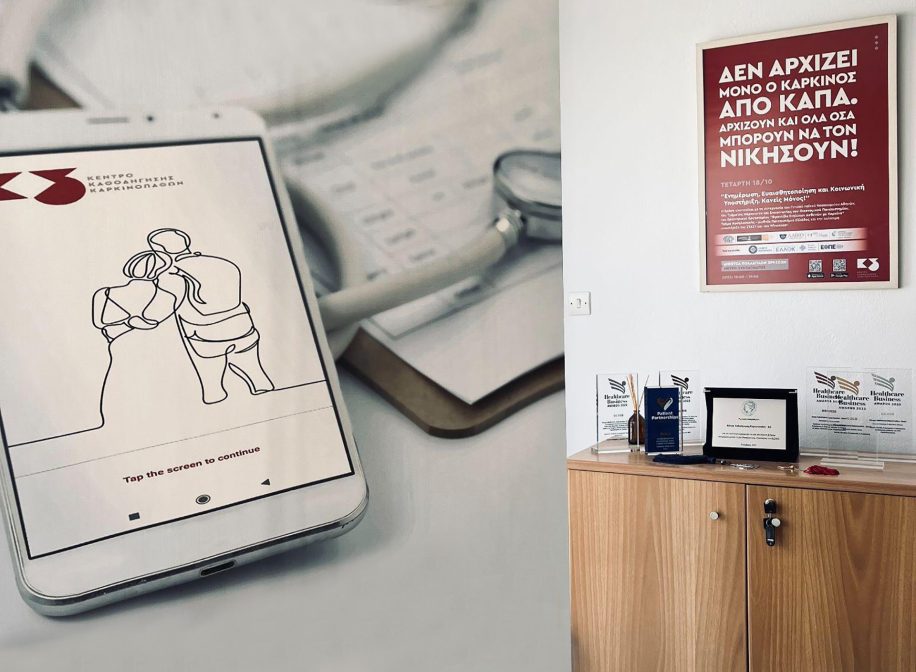
Among the awardees, the Cancer Patient Guidance Center – KAPA3, together with the Laboratory of Basic Health Sciences of the Department of Nursing at the University of the Peloponnese, were honored with the Silver Award for the project: “Community Co-Design and Implementation of Holistic Educational Practices for Nutrition and Mental Health in Oncology”. The award was received on behalf of both teams by Ms. Evangelia Mpista, Co-Founder of KAPA3.

The Experiential Meetings program offers holistic support to oncology patients and caregivers through community co-design, emphasizing nutrition and mental health.

Its goal is to improve quality of life, empower participants, and promote integrated oncology care in Greece. For all of us, nutritional care is a human right, linked to justice and equity in access, and represents both an institutional culture and an interdisciplinary approach. Providing initiatives such as this project enhances the quality of clinical care, serving as a fundamental pillar in addressing disease complications such as malnutrition.

This program aimed to identify and develop an interconnected set of practices that allow a community to learn how to prevent and manage its own cancer-related challenges, targeting regional communities with limited access to oncology advisory services, including nutrition and mental health.

Interested individuals can participate in upcoming sessions.

This recognition strengthens our commitment to continue our work with dedication, support oncology patients and their families daily, and foster collaborations at this level to maximize the social impact of our initiatives.

On behalf of the entire team of the Cancer Patient Guidance Center – KAPA3 and the Laboratory of Basic Health Sciences, Department of Nursing, University of Peloponnese, we sincerely thank you.