There is an urgent need for psychological support for cancer patients. The KAPA3 team explains and advocates for this

There is an urgent need for psychological support for cancer patients. The KAPA3 team explains and advocates for this

Every day, healthcare professionals are called upon to communicate with, assess, and, above all, support people who are going through cancer.

Does cancer affect only physical health, or does it also have a profound impact on a person’s psychological, social, and emotional life? The needs that arise during the course of the illness are many and are often accompanied by the question: “What does the disease really bring to a person’s life?” A cancer diagnosis brings about significant changes in daily life, relationships, social roles, and the way a person perceives themselves and their future.

A cancer diagnosis is an extremely stressful event, often accompanied by feelings of fear, uncertainty, anxiety, and grief. At the same time, patients are called upon to cope with the effects of treatments such as chemotherapy, radiation therapy, and surgery. Changes in physical appearance, fatigue, pain, and limitations in daily functioning can significantly affect their self-esteem and quality of life (Pitman et al., 2018).

Uncertainty regarding the course of the disease and the likelihood of relapse are significant sources of psychological distress. The extent of this phenomenon is reflected in the meta-analysis by Mitchell et al. (2011), which included 94 studies and more than 14,000 cancer patients. According to the results, 16.3% of patients met the diagnostic criteria for major depressive disorder, 10.3% for anxiety disorder, and 19.2% for adjustment disorder.

These data highlight that a significant proportion of cancer patients experience severe psychological distress, a fact that underscores the need for specialized psychological support.

Furthermore, cancer often affects an individual’s family and social relationships. The patient may be forced to limit or abandon professional and social roles, while the family is called upon to adapt to new demands and responsibilities, experiencing significant psychological strain of their own (Northouse et al., 2010).

Cancer patients have an increased need for psychological support, as the disease significantly affects their psychological, social, and emotional functioning. Fear of the disease’s progression, uncertainty about the future, the side effects of treatments, and the possibility of recurrence are major sources of psychological distress. At the same time, the experience of cancer is often accompanied by feelings of loss of control, fear, and emotional distress. The contemporary psycho-oncology literature recognizes that the early identification of psychosocial needs and the provision of appropriate interventions are an integral part of holistic oncology care (Caruso & Breitbart, 2020; Mehnert-Theuerkauf et al., 2023).

Within this context, psychological support is a key component of holistic care for cancer patients. Holistic care refers to a comprehensive approach that takes into account not only the patient’s physical needs but also the psychological, social, and spiritual dimensions of their health. Counseling, psychotherapy, and support groups provide a safe space for expressing emotions and building psychological resilience (National Comprehensive Cancer Network [NCCN], 2024).

At the same time, they help improve adherence to treatment, strengthen cooperation with healthcare professionals, and maintain quality of life. As Holland and Weiss (2008) argue, psychosocial care is an integral part of high-quality oncology care, from diagnosis through the survival phase.

In conclusion, the experience of cancer is a complex and multidimensional process that affects every aspect of a person’s life. Managing the disease is not limited solely to physical treatment but requires the recognition and addressing of the psychological and social needs that arise at every stage. Providing timely and systematic psychological support can empower the patient, improve their ability to adapt to the demands of treatment, and contribute significantly to maintaining their dignity, hope, and quality of life. Psychological care should be regarded as a fundamental right of every cancer patient and as an integral part of modern oncology practice.

Coordination of Psychological and Social Services within the Framework of Psychosocial Care

The care of cancer patients is not limited to treating the disease and its physical effects. The needs that arise during treatment are often multifaceted and concern both the individual’s psychological well-being and practical, social, or financial issues that affect their daily life.

For this reason, effective support requires close collaboration among different healthcare professionals within a shared framework of psychosocial care. Within this framework, the Social Services and Psychological Services operate in a complementary manner, with the shared goal of enhancing the individual’s quality of life and overall adjustment to the experience of illness.

A client’s contact with the service can begin either through the Social Services Department or the Psychological Services Department. During the initial contact, an assessment of the client’s needs is conducted, and information is provided about all available support services.

Regardless of the initial request, the beneficiary is informed about the option of receiving psychological support, as the experience of cancer is often accompanied by heightened psycho-emotional needs that are not always apparent from the first contact. With their consent, an internal referral can be made to the Psychological Services Department for further evaluation and support.

The Psychological Services Department is responsible for the initial assessment, obtaining informed consent, and creating an individual support file. A structured series of sessions is then provided, tailored to the beneficiary’s needs. During this process, issues may arise related to social benefits, employment challenges, financial burdens, disability certification procedures, or other practical needs that significantly impact the daily functioning of the individual and their family. In such cases, and always with the beneficiary’s consent, cooperation with Social Services is initiated, and Social Services assumes responsibility for managing the relevant social and administrative matters.

The collaboration between the two services enables the timely identification of new needs and ensures continuity of care. Social Services focuses on the practical, social, and administrative aspects of support, while Psychological Services focuses on psychological resilience, emotional processing of the experience of the disease, and adaptation to the changes it brings about. The collaboration between the two services allows for a more comprehensive response to the needs of the cancer patient. In this way, a unified framework of psychosocial care is established that provides substantial support to the patient and their support network at all stages of their journey with the disease.

At the same time, regular communication and coordination between the two services allow for the timely identification of new needs and ensure continuity of care. The Social Services Department focuses on the practical, social, and administrative aspects of support, while the Psychological Services Department focuses on psychological resilience, emotional processing of the experience of the disease, and adaptation to the changes it brings about. The collaboration between the two services enables a more comprehensive response to the needs of cancer patients. In this way, a unified framework of psychosocial care is established that provides substantial support to the patient and their support network at all stages of their journey with the disease.


Kapa3 – Cancer Patient Guidance Center

Together, with knowledge, care, and a human touch.

Contact us:

https://www.kapa3.gr/epikoinonia/ by typing “Psychological Support” in the Message box

OR CALL

2105221424 – info@kapa3.gr

Athens: 13 Kostis Palamas Street, 3rd floor, (9:00 AM – 5:00 PM) 6982003282
Alpha Bank and Its Employees Support Kapa3 through the Match for Good Initiative

The Cancer Guidance Center – Kapa3 warmly thanks Alpha Bank and its employees for their meaningful support through the Match for Good initiative, through which Alpha Bank doubled the contribution of its employees.

Through this initiative, six non-profit organisations from across Greece received financial support during a special event held at Alpha Bank’s headquarters, in the presence of representatives of the organisations. The event was hosted by the Chairman of Alpha Bank’s Board of Directors, Mr. Dimitris Tsitsiragos, and the Chief Human Resources Officer, Ms. Fragiski Melissa.

Mr. Dimitris Tsitsiragos highlighted that the Match for Good initiative puts into practice Alpha Bank’s commitment to consistently support organisations that create a positive social impact. He underlined that when the individual contribution of employees is combined with the Bank’s support, it becomes a collective force with tangible results.

Ms. Fragiski Melissa noted that Match for Good reflects the Bank’s new culture in practice, giving employees an active role in selecting, participating in and supporting initiatives with social value.

Kapa3 was represented by Ms. Evangeli Bista, co-founder of the Organisation, and Ms. Despoina Chrysostomidou, collaborating psychologist. During the event, they had the opportunity to present Kapa3’s work and discuss the social impact that can be created when corporate responsibility meets the active participation of employees.

For all of us at Kapa3, this support is particularly meaningful. It strengthens our daily effort to stand beside people with lived experience of cancer, as well as their families and caregivers, offering guidance, information, support in accessing rights and services, and practical empowerment tools.

Kapa3 acts as a navigation and support organisation for cancer patients, bridging the gap between need and information, between rights and real access. For many people, especially those living outside major urban centres, the challenge is not only the disease itself. It is uncertainty, bureaucracy, lack of information about available rights, financial burden, transportation difficulties, psychosocial pressure and the need for a reliable companion.

Through initiatives like this, social contribution gains multiplying power and becomes real support for those who need it. The support of Alpha Bank and its employees strengthens Kapa3’s mission: ensuring that no person is left alone when facing cancer, searching for information, navigating procedures or claiming a right they are entitled to.

Health is not only a medical act. It is access, information, dignity, social care and meaningful presence. Every contribution to Kapa3 becomes more guidance, more information, more empowerment and more care for people and families going through a difficult and demanding journey.

We warmly thank Alpha Bank and its employees for their trust, choice and support of Kapa3’s work.

Because when giving becomes collective, it can meaningfully change people’s everyday lives.


20260310 Match For Good Programme Part2 Alpha Bank Via Solid Havas / Thalia Galanopoulou

Match for Good – Alpha Bank (1)

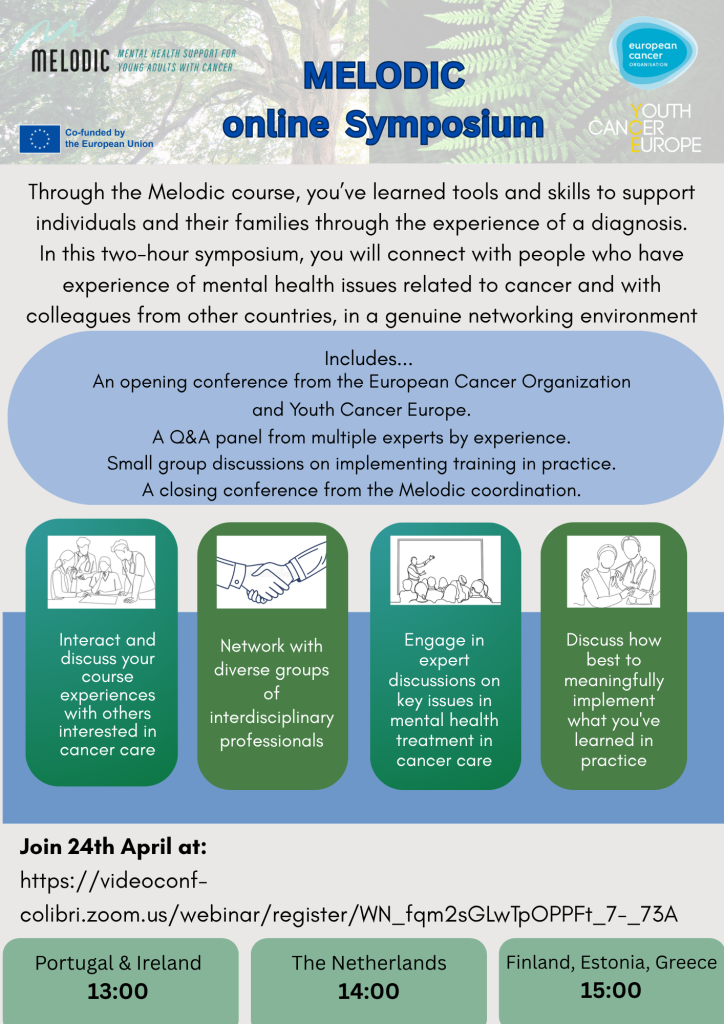
MELODIC Online Symposium: completion of the pilot training phase and strengthening psychosocial cancer care

The European project MELODIC (Mental Health Support for Young Adults with Cancer), in which the Cancer Guidance Center – Kapa3 participates, is being implemented through distinct development phases. The pilot training programme for healthcare professionals is one of its core components, and within this framework, the MELODIC Online Symposium 2026, taking place on 24 April 2026, marks the completion of this educational phase.

The MELODIC project framework

MELODIC is a European project co-funded by the European Union, aiming to strengthen the mental health of young adults living with cancer, as well as to support their families. Through the collaboration of universities, research institutions and healthcare organizations across Europe, the project develops training and support tools for healthcare professionals.

More information about the project and its progress is available on the official Kapa3 website, in the dedicated project section.

The pilot training programme

The pilot training programme focused on enhancing the knowledge and skills of healthcare professionals in providing psychosocial support to young adults with cancer and their families.

As part of the programme, online sessions and contact lessons were delivered, aiming to strengthen interdisciplinary collaboration and support the practical application of tools in everyday clinical practice.

MELODIC Online Symposium 2026

The MELODIC Online Symposium 2026, a two-hour event, brings together participants from all partner countries and includes:

  • opening presentations from the European Cancer Organisation and Youth Cancer Europe
  • an “experts by experience” panel, where individuals share their lived experience
  • a networking panel with healthcare professionals from participating countries
  • discussion on how training can be applied in clinical practice
  • a closing session by the project coordination team

From training to clinical practice

A key objective of the MELODIC training programme is to strengthen the psychosocial dimension of cancer care, with particular focus on young adults.

The exchange of experiences among healthcare professionals contributes to more holistic approaches to care and supports the integration of psychosocial support into daily clinical practice.

The role of Kapa3

Kapa3 actively participates in the European MELODIC consortium, contributing to the implementation of the training activities and the dissemination of results in Greece. Through this involvement, the connection between scientific knowledge and the support of cancer patients is further strengthened, promoting the development of practical approaches to psychosocial care.

The MELODIC Online Symposium 2026 marks the transition from the pilot training phase to the next stage of utilizing its outcomes, reinforcing the link between education and real-world application in cancer care.

The Press Release here: PRESS-RELEASE-MELODIC SYMPOSIUM

Text/adaptation: Ifiyenia Anastasiou for Kapa3

New Collaboration between Cancer Guidance Center – Kapa3 and the Hellenic Federation of Persons with Multiple Sclerosis (HFoPwMS)

Cancer Guidance Center – Kapa3 announces its new collaboration with the Hellenic Federation of Persons with Multiple Sclerosis (HFoPwMS), strengthening synergies between organizations active in the field of health and patient support.

This collaboration aims to develop joint initiatives that will contribute to raising awareness, promoting public information, and providing meaningful support to people living with chronic conditions, with particular focus on cancer patients and persons living with Multiple Sclerosis. Through the exchange of knowledge, experience and good practices, the two organizations seek to strengthen actions that promote equal access to information, healthcare services and social inclusion for patients.

Cancer Guidance Center – Kapa3 is dedicated to supporting people living with cancer and their caregivers by providing reliable information, practical guidance and access to benefits and services. At the same time, the organization develops initiatives that enhance patients’ awareness of their rights and promote their psychosocial empowerment. Through initiatives such as Mobile Units, digital tools and educational programmes, Kapa3 promotes a patient-centred approach to cancer care, encouraging patients to actively participate in decisions concerning their health and quality of life, while fostering collaborations with organizations working in the fields of health and social support.

The Hellenic Federation of Persons with Multiple Sclerosis (HFoPwMS) is a secondary non-profit organization founded in 2008 with the aim of uniting and supporting primary associations of persons with Multiple Sclerosis across Greece, while also raising awareness about the disease among the wider public. The Federation currently brings together nine primary patient associations from across the country. HFoPwMS implements awareness and advocacy initiatives related to Multiple Sclerosis and works to ensure the equal participation of people with MS in the educational, professional, athletic and cultural life of the country. It is a member of the National Confederation of Disabled People (ESAmeA) and the European Multiple Sclerosis Platform (EMSP).

Within the framework of this collaboration, the two organizations plan to develop joint initiatives such as the organization of conferences, workshops and awareness events, the implementation of information and public awareness campaigns, participation in national and European programmes, as well as the development of joint research initiatives on issues related to patients’ quality of life. The partnership will also contribute to strengthening interdisciplinary cooperation and knowledge exchange among organizations active in the health sector.

This new collaboration reflects the shared vision of the two organizations to strengthen the voice of patients and promote a society that respects, supports and empowers people living with chronic conditions.

Launch of Free MELODIC Training Programme – Greece

We are pleased to announce the launch of the free eight-week online training programme implemented in Greece within the framework of the European project MELODIC, in which Kapa3 participates as one of 13 partner organisations from 6 European countries.

The programme is addressed to doctors, nurses, other health professionals, and social care professionals working in oncology.

MELODIC is an international collaboration aimed at strengthening mental health support for young adults with cancer and their families, promoting high-quality, holistic oncology care.

Through the programme, participants will have the opportunity to develop skills in:

  • Assessing mental health needs using validated and evidence-based tools

  • Supporting families and caregivers

  • Delivering high-quality psychosocial care

  • Interprofessional collaboration

  • Sustaining personal and professional wellbeing

The programme is divided into an asynchronous part (on the Moodle platform), which participants can complete at their own pace, and four contact lessons, constituting the synchronous part via Zoom. Upon completion, participants will receive 5 ECTS credits and a certificate of completion.

Sessions will take place from March to April 2026.

The contribution of health professionals is crucial for the accurate assessment of mental health needs of young adults with cancer and their families, as well as for delivering high-quality, person-centred care. The MELODIC programme strengthens their skills, promoting collaboration, responsibility, and sustainable professional practice in oncology.

For further information, please contact:
Ifiyenia Anastasiou
email: ifi.k3team@gmail.com | phone: 690.62.65.170

January 21 – International Hug Day

January 21 has been internationally recognized as International Hug Day, a day dedicated to the power of human touch, emotional connection, and care. Established in 1986, this day serves as a reminder that simple, human gestures can have a meaningful impact on our mental and emotional wellbeing.

Hugs are not merely spontaneous expressions of affection. Various scientific studies have shown that physical contact, such as hugging, is linked to reduced stress levels and increased oxytocin, the so-called “bonding hormone,” which is associated with feelings of safety, trust, and emotional closeness. Physical touch has also been correlated with improvements in psychological wellbeing and emotional regulation, particularly during periods of heightened stress or emotional strain.

For people living with cancer or other serious illnesses, as well as their caregivers, emotional support and human connection are essential elements of care. A hug can act as a silent affirmation that someone is not alone, without the need for words or explanations. While it does not replace medical or psychological support, it can offer relief, comfort, and a sense of companionship.

The need for human connection has also been expressed through social initiatives such as the “Free Hugs” movement, which emerged in the 2000s to symbolically highlight the importance of physical touch in public spaces. Although not a scientific intervention, such actions reflected the collective human desire for closeness, understanding, and emotional contact.

At the same time, it is important to acknowledge that physical touch is not experienced in the same way by everyone. For some individuals, hugs or any form of physical contact may be difficult or unwanted due to personal boundaries, past experiences, or psychological state. International Hug Day is not about imposing closeness, but about reminding us of the importance of respect, consent, and empathy. Care can be expressed in many ways: through presence, conversation, or acts of understanding – and when a hug is welcomed, it can serve as a powerful symbol of support.

In an era where loneliness, isolation, and mental strain are growing challenges, the value of human connection is more relevant than ever. Hugs, as symbols of closeness and care, remind us that even small, simple gestures can carry significant meaning.

At KAPA3, we believe in the power of meaningful support and empathy at every stage of illness and caregiving. We stand alongside individuals who need understanding, respect, and genuine care, promoting emotional empowerment and solidarity.

International Hug Day is an opportunity to remember that, with respect, empathy, and meaningful connection, we can make a real difference.

Sources:

Text/Adaptation: Ifiyenia Anastasiou for Kapa3