
Webinar: “Cancer, Patient Navigation & Health Management: From Prevention to Coordinated Care” in collaboration with the Kapa3 Cancer Guidance Center

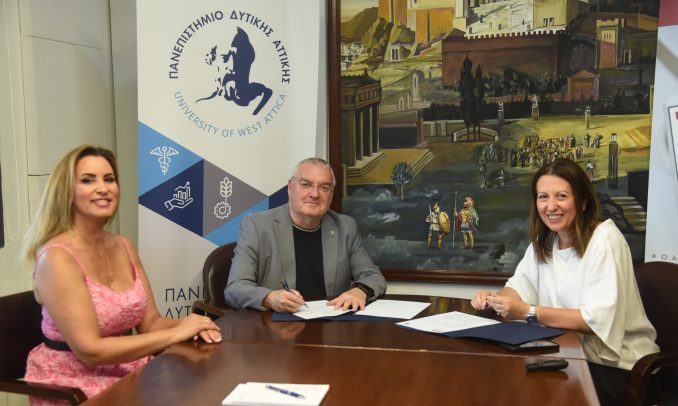
On the occasion of World Cancer Day, we invite you to join the webinar on cancer and patient navigation, organized in collaboration with René Descartes College and the Kapa3 Cancer Guidance Center. This webinar aims to open a meaningful dialogue around cancer, not only as a medical diagnosis but as a complex life journey.

Today, cancer requires holistic health management, proper guidance within the care system, coordination among professionals and services, and a patient-centered approach that considers the individual, their family, and social environment.

The webinar aims to highlight the importance of Patient Navigation and Health Management in cancer care, to illuminate the role of technology and innovation in oncology, and to raise awareness around prevention, quality of life, and continuous patient support.

Target Audience:
  • Patients and individuals at diagnosis, undergoing treatment, or in follow-up

  • Caregivers and family members

  • Health professionals, Health Management staff and students

  • Policy and quality of care professionals

  • Anyone interested in prevention, screening, organization of oncology services, and patient-centered healthcare approaches

Participants Will Gain:
  • Understanding of cancer as a holistic life issue

  • Knowledge of modern patient navigation and care coordination models

  • Insights into the role of technology in oncology

  • Practical information for better management within the healthcare system

  • Inspiration for more humane, coordinated, and high-quality care

Speakers:
  • Maria Gazouli, PhD – Professor of Biology-Genetics-Nanomedicine, Laboratory Geneticist

  • Dr. Christos A. Frantzidis – Assistant Professor, Computer Science / Machine Learning, School of Computer Science, University of Lincoln, UK

  • Dr. Maria Lavdaniti, MSc, PhD – Professor of Clinical Nursing, Director of the University Laboratory of Adult Cancer Patient Care, International Hellenic University (IHU)

  • Evangelia Mpista, PhD, MBA, MSc, BSc – Co-Founder, Kapa3

  • Dr. Vasiliki Kapaki – Postdoctoral Researcher in Health Economics, Professor of Health Economics, René Descartes College

Participation Details:
  • Duration: 2.5 hours (18:30 – 21:00)

  • Date: 06/02/2026

  • Attendance: Online

  • Participation is free

  • Certificate of attendance will be issued by René Descartes College and Kapa3

  • Registration form and participation declaration: Here

Text/adaptation: Ifiyenia Anastasiou for Kapa3

January – Cervical Cancer Awareness Month

January is internationally dedicated to raising awareness about cervical cancer. Known as Cervical Cancer Awareness Month, it aims to highlight the importance of prevention, early detection, and vaccination against the human papillomavirus (HPV), which is responsible for nearly all cases of the disease.

Cervical cancer remains a major public health issue worldwide. According to the World Health Organization, approximately 660,000 new cases are diagnosed globally each year, and more than 350,000 women lose their lives to the disease. It is among the most common cancers affecting women, particularly in regions where access to preventive screening and vaccination is limited. At the same time, it is one of the few cancers that can largely be prevented through organized prevention and early detection programmes.

In Greece, available data indicate that around 700 new cases of cervical cancer are diagnosed annually, while more than 280 deaths are attributed to the disease each year. The estimated incidence is approximately 8 cases per 100,000 women. Although this places Greece close to the European average, it also highlights the need for further improvement in prevention and early diagnosis.

Cervical cancer is closely linked to chronic infection with human papillomavirus (HPV), a very common virus transmitted mainly through sexual contact.

HPV vaccination, combined with regular gynaecological screening through Pap tests and HPV tests, can significantly reduce the development of precancerous lesions and cervical cancer. In this context, the World Health Organization has set the goal of eliminating cervical cancer as a public health problem by 2030, through high vaccination coverage, universal screening, and timely treatment.

January serves as an important reminder that information and prevention save lives. Open discussion around women’s health, free from fear and stigma, empowers women to take care of themselves and to claim prevention as a fundamental right.

Special emphasis should be placed on the systematic education of younger generations, as prevention begins long before any symptoms appear. Access to reliable information, preventive screening services, and vaccination programmes is a key factor in reducing health inequalities and protecting future generations.

At KAPA3, we believe that information and prevention are core pillars of care and empowerment. Through the dissemination of reliable information and the support of initiatives that promote public health, we stand alongside every woman who needs knowledge, prevention, and timely care.

Because cervical cancer can be prevented, we encourage everyone to take action. Give a meaningful gift to the women you care about: daughters, sisters, mothers, friends, partners, spouses. Talk openly about women’s health, share information, support initiatives, challenge taboos, and promote early diagnostic screening.

Information and open dialogue are the strongest tools we have.

Sources:

World Health Organization (WHO)
Cervical cancer – Fact sheet

WHO – Global strategy to accelerate the elimination of cervical cancer

International Agency for Research on Cancer (IARC / WHO)
Cervical Cancer Awareness Month

ICO / IARC HPV Information Centre – Greece Factsheet

Ministry of Health – National Immunization Programme

Hellenic National Public Health Organization (EODY)
HPV and cervical cancer

Text/adaptation: Ifiyenia Anastasiou for Kapa3

The Impact of the Kapa3 Internship Programme: 30 Young Professionals in Our First 5 Years of Operation

The Impact of the Kapa3 Internship Programme: 30 Young Professionals in Our First 5 Years of Operation

In the five years since our establishment, thirty young people have had the opportunity to learn and grow through the Kapa3 Internship Programme.

International scientific literature highlights that internships are far more than a first work experience. They serve as a fundamental mechanism of experiential learning, enabling students to connect theoretical knowledge with real-world professional contexts.

Through their involvement in a civil society organisation like Kapa3, interns developed reflective and critical thinking skills—core elements of modern professional education. By engaging with real needs and challenges, students strengthened their professional identity and gained a deeper understanding of their role as future practitioners in health and social services. In many cases, the internship at Kapa3 played a significant role in supporting their transition from university to the labour market, enhancing their confidence, social skills, and clarity of professional direction.

Furthermore, the structured field experiences offered opportunities to build professional networks, a key factor in long-term career development.

At Kapa3, the value of internships is evident across all aspects of our work. We strive to create an environment where students can deepen their academic knowledge, apply their skills to real cases, and map out the next steps of their careers with realism and self-awareness.

The result is a community of young professionals who are both socially conscious and scientifically equipped to contribute meaningfully to health and social care. We are proud to be at the forefront of education and warmly thank our partner universities for their trust and collaboration.


Free and Reduced Transportation for People with Disabilities and Large Families – What Changes in 2025

The Greek state is implementing significant changes regarding transportation for people with disabilities and large families in 2025. The new regulations simplify procedures, expand rights, and make public transport more accessible for all eligible individuals.

People with Disabilities (PwD)
Who is eligible:
Eligible individuals include people with disabilities with a disability rate of 67% or higher, or those receiving disability benefits from OPEKA. Totally blind individuals and holders of a digital Disability Card marked with levels II or III are exempt from income limits.

What changes:

  • Residency criteria are removed.
  • The right to free or reduced transportation now extends to one accompanying person, if needed.
  • Using the Disability Card for OASA, OSETH, KTEL, and Thessaloniki Metro is now simple with electronic or personalized card validation, without additional documents.

Practical use:

  • Free travel on OASA, OSETH, urban KTEL, and the municipalities of Kos and Rhodes.
  • 50% discount on intercity KTEL routes.
  • Thessaloniki Metro requires topping up the ThessCard with zero fare.
  • Accompanying persons can travel without separate validation when accompanying the eligible individual.

Large Families
Who is eligible:
Eligible individuals are large families and their members, according to existing legislation protecting large families.

What changes:

  • Travel with OASA, OSETH, and KTEL becomes more flexible.
  • Free or discounted tickets are supported depending on the policy of each transport service.

Practical use:

  • Simple procedure for issuing travel passes through Citizens’ Service Centers (KEP) and relevant regional authorities.
  • Tickets are valid for urban and intercity transport services.

These new regulations simplify the daily lives of people with disabilities and large families, reduce bureaucracy, and make access to all public transport easier.

See the Official Government Gazette (FEK) here

Read more about citizens’ rights here

Read more about the Disability Card here 

Text/Adaptation: Ifiyenia Anastasiou for Kapa3


Giving Voice to People with Primary Biliary Cholangitis (PBC) in Greece

Promitheas launches MyPBCVoice, an innovative initiative aimed at empowering and supporting people with Primary Biliary Cholangitis (PBC) in Greece. PBC is a rare, chronic autoimmune liver disease with symptoms such as fatigue, itching, abdominal discomfort, and psychological challenges.

MyPBCVoice focuses on patient education, information, and mutual support to improve quality of life. Activities include:

  • Questionnaires to assess patient needs (fill here)
  • A PBC-focused microsite
  • Interactive Facebook community for communication and support (join here)
  • Short videos and vidcasts with patients and experts
  • Online webinars
  • Digital archive of complaints and reports to map access barriers

We encourage everyone to share and promote this initiative to reach more patients and health professionals.

Kapa3 is proud to support initiatives like MyPBCVoice, which empower patients and foster connection and knowledge within the community.

Text/adaptation: Ifiyenia Anastasiou for Kapa3

Scientific Seminar: Psychosocial Support after Cancer Treatment and Post-Traumatic Growth

The Psychology Laboratory of INEB/CEST (Institute of Applied Biosciences / CERTH), with the support of the Municipality of Thessaloniki, is organizing on Saturday, 1 November 2025 (10:00–15:00), at the “Manolis Anagnostakis” Hall of the Thessaloniki City Hall, the scientific seminar “Psychosocial Support after Cancer Treatment and Post-Traumatic Growth.”

The event, initiated by the Psychology Laboratory as part of the IC-GROWTH research project, focuses on the psychological and social dimensions of life after cancer treatment, highlighting good practices for care, empowerment, and post-traumatic growth.

The program includes expert presentations and an open discussion with the audience, featuring researchers, healthcare professionals, and representatives from patient associations.

Participation is free, but pre-registration is required through the following form:
Registration Form

This seminar offers a valuable opportunity for learning and sharing experiences on psychosocial support and care after cancer treatment.

Kapa3 supports initiatives that strengthen mental health and quality of life for individuals who have experienced cancer.

Date: Saturday, 1 November 2025
Time: 10:00–15:00
Location: “Manolis Anagnostakis” Hall, Thessaloniki City Hall

Depression and Cancer Mortality: A Critical Link Across Major Cancer Types

Depression is a common but often underrecognized condition among cancer patients, affecting up to 20–30% of individuals diagnosed with the disease. Beyond its impact on quality of life, mounting evidence suggests that depression can significantly influence cancer outcomes, including survival. A recent meta-analysis of 65 cohort studies spanning colorectal, breast, lung, prostate, and mixed cancers provides compelling evidence that depression diagnosed after a cancer diagnosis is associated with a substantially increased risk of mortality.

The analysis revealed that patients with depression faced an 83% higher risk of dying from colorectal cancer, a 59% higher risk in lung cancer, a 74% higher risk in prostate cancer, and a 23% higher risk in breast cancer compared to non-depressed patients. Across mixed cancer types, depression increased the risk of cancer mortality by 38%. These findings underscore that the psychological burden of cancer is not merely an emotional challenge but a critical factor affecting survival outcomes.

Mechanisms Linking Depression and Cancer Outcomes

Depression may influence cancer progression through multiple biological and behavioral pathways. Biologically, depression is associated with chronic systemic inflammation, dysregulation of the hypothalamic-pituitary-adrenal (HPA) axis, immune suppression, autonomic dysfunction, oxidative stress, and impaired DNA repair. Elevated pro-inflammatory cytokines, including interleukin-6 (IL-6) and tumor necrosis factor-alpha (TNF-α), can contribute to tumor growth and metastasis. In older patients, depression may exacerbate age-related immune dysfunction, creating an environment more permissive to cancer progression.

Behaviorally, depression affects health-related actions and treatment adherence. Depressed patients are more likely to delay seeking medical care, adhere poorly to chemotherapy, radiotherapy, and hormonal therapies, and engage in unhealthy habits such as smoking, poor nutrition, and physical inactivity. Social isolation and reduced support systems further increase vulnerability, compounding the negative impact on survival.

Clinical Implications and Interventions

The strong association between depression and cancer mortality highlights the urgent need to integrate mental health care into routine oncology practice. Psychological interventions, such as cognitive-behavioral therapy (CBT), supportive-expressive therapy, and mindfulness-based approaches, have shown promise in reducing distress and improving adherence to cancer treatment. Pharmacological management, including selective serotonin reuptake inhibitors (SSRIs), may also support mental health and potentially influence cancer outcomes, though more research is needed to understand their role fully. Early identification and treatment of depressive symptoms should be considered a priority for oncologists, mental health professionals, and healthcare policymakers alike.

Limitations and Future Directions

While this meta-analysis provides robust evidence, several limitations should be noted. The observational nature of the studies prevents establishing causality, and differences in study design, depression assessment methods, and patient populations contribute to heterogeneity. Future research should explore longitudinal and randomized studies to clarify causal pathways and identify the most effective interventions to reduce depression-related mortality. Investigating the interactions between depression, inflammation, and cancer biology may also reveal targets for novel supportive therapies.

Depression is not just a psychological burden for cancer patients—it is a significant predictor of mortality across multiple cancer types. These findings call for systematic depression screening and tailored interventions as integral components of oncology care.

Organizations like Kapa3 play a vital role in supporting the mental health of cancer patients, offering resources and guidance that can improve both quality of life and treatment outcomes. Integrating psychological support into cancer care ensures that mental well-being is recognized as an essential part of the healing process.
In line with this mission, Kapa3 participates in MELODIC, a new European initiative dedicated to supporting the mental health of young adults (18–30 years old) living with or beyond cancer.

Read the original article here

Read more on MELODIC project here

Explore more about mental health through a selection of articles on our website: article1 article2,article3, article4, article5, article6 

Text/adaptation: Ifiyenia Anastasiou for Kapa3


KAPA3 at the ESMO Congress: Inspiration and Confirmation That We Are Moving Towards the Future

From October 17 to 20, we attended the ESMO World Congress in Berlin. The event stood out for the active participation of the Greek medical community, which led presentations on clinical data, Real-World Evidence, and up-to-date education in collaboration with the global oncology community. At the same time, Greek teams received awards in various areas (medical, nursing, institutional), inspiring us all with hope for the ongoing developments in oncology care.

Our main goal as KAPA3 was to focus on research addressing the real needs of the population within the framework of the global community. Collaborating with healthcare professionals from around the world allowed us to gather valuable knowledge and experiences. The intensive sessions and discussions broadened our understanding and prompted reflection on the next steps.

Key challenges identified for the patient advocacy community were:

  1. Mandatory multidisciplinary assessment before starting treatment
    No patient should begin treatment without undergoing a multidisciplinary assessment, including an oncology nurse, social scientist, and psychologist. This should be considered the minimum standard for all cancer patients.
  2. Certification and quality of multidisciplinary teams
    It is our duty to ensure that these teams meet quality standards. Their certification is undoubtedly complex. However, for us at KAPA3, multidisciplinary care is a fundamental criterion for service provision and must be certified. Quality care can significantly improve patient outcomes, as shown by clinical studies and research presented at this year’s congress, with potential improvements in overall survival of up to 10% (Sweden).

We are deeply proud that our work is guided by these standards precisely. In an era of remarkable progress in medicine and new therapies, we continue to strengthen the institution of research and multidisciplinary care, ensuring accessibility and patient-centered approaches aimed at quality of life.

This is the third time we have presented our efforts at an ESMO congress, in collaboration with the International University and the Nursing Department, highlighting our presence at every level. Meanwhile, trainings for other healthcare professionals take place annually within our organization in collaboration with Greek universities.

For Greek patients and their environment, we have not yet reached a point where the quality of care is considered a key objective for the entire oncology community. Our aim is to align with efforts across Europe so that, in the future, multidisciplinary assessments from the first day of diagnosis become standard practice within therapeutic protocols.

At KAPA3, we understand that quality care, inherently multidisciplinary, requires collective effort and collaboration between organizations and professionals to determine the best possible standards.

Continuing the Journey: Holistic Body and Mind Care with Kapa3 and the University of the Peloponnese

After the first round of meetings held in April (see the related article here), focusing on Nutritional Guidance and Experiential Psychological Support, Kapa3 and the University of the Peloponnese continue their collaboration with a new series of experiential workshops dedicated to the holistic care of body and mind.

The meetings are open to people living with cancer, caregivers, and healthcare professionals — to anyone seeking a space for genuine communication, understanding, and empowerment.

In this new cycle, mental health and nutrition are approached as two sides of the same care.

In the mental health sessions, participants learn to recognize and manage challenging emotions such as anxiety or fear, strengthen their resilience, and cultivate a deeper connection with themselves and others.

At the same time, the nutrition sessions explore how balanced and mindful eating can support the body, enhance energy and mood, and become an act of self-care and self-respect. Food is not only a necessity but also a way to show love — to the body, the soul, and to life itself.

The meetings are held online and are based on dialogue, experiential learning, and the sharing of personal experiences. Everyone participates at their own pace, in a warm environment of acceptance and trust.

To express your interest: Registration Form for the Support Group for People with Cancer

Text/adaptation: Ifiyenia for Kapa3

World Osteoporosis Day

Every year on October 20th, the world observes World Osteoporosis Day, a day dedicated to raising awareness about osteoporosis, a condition that weakens bones and increases the risk of fractures. First established by the International Osteoporosis Foundation (IOF) in 1996, the day serves to educate the public on the importance of bone health, early diagnosis, and prevention strategies, highlighting that osteoporosis is not just an age-related issue but a concern affecting millions globally, including younger adults.

Osteoporosis is particularly significant for cancer patients, as both the disease and certain cancer treatments can compromise bone health. Therapies such as hormone deprivation for breast or prostate cancer, long-term steroid use, or chemotherapy may accelerate bone loss, increasing the likelihood of fractures, chronic pain, and reduced mobility. For patients already facing the physical and emotional challenges of cancer, maintaining bone strength becomes essential not only for quality of life but also for their overall recovery and long-term well-being.

In Greece, osteoporosis is a prevalent concern. According to the International Osteoporosis Foundation, approximately 22.3% of women and 6.9% of men aged 50 years or more were estimated to have osteoporosis in 2019. This condition leads to significant health burdens, with 684,000 new fragility fractures reported in 2019 alone. The economic impact is also notable, with the direct cost of incident fractures amounting to €694.7 million in 2019.

For cancer patients, the risk is even higher. Studies indicate that following adjuvant chemotherapy, cancer patients are more likely to develop osteopenia and osteoporosis, affecting up to two-thirds of males and more than half of females. This underscores the importance of proactive bone health management in oncology care.

At Kapa3, we are committed to supporting cancer patients in maintaining optimal bone health. While we do not provide direct medical interventions, we emphasize education, guidance, and psychological support for those navigating health challenges. By promoting awareness of conditions like osteoporosis, especially in the context of cancer care, we aim to empower patients, caregivers, and healthcare providers with knowledge and practical strategies to maintain bone health and prevent complications.

World Osteoporosis Day is a reminder that prevention, timely diagnosis, and lifestyle measures—including nutrition, regular weight-bearing exercise, and appropriate supplementation—play a crucial role in reducing the burden of osteoporosis. Health systems, patient organizations, and communities can work together to ensure that vulnerable populations, including cancer patients, have access to accurate information, screening services, and supportive care.

As we honor this day, Kapa3 encourages everyone to consider bone health as part of comprehensive patient care. By increasing awareness and fostering informed choices, we can help individuals live stronger, safer, and healthier lives, even in the face of serious illness. Osteoporosis may silently weaken bones, but knowledge, prevention, and support can strengthen patients’ resilience and quality of life.

For more information, please refer to the International Osteoporosis Foundation’s report on osteoporosis in Greece: IOF Greece Report.