Mapping the efficiency of cancer care in Greece: findings from the All.Can Greece report

Cancer care efficiency in Greece remains one of the most complex and pressing challenges for the Greek health system — not only in terms of its clinical burden, but also in how care is organized around the patient.

With approximately 63,000 new cancer cases diagnosed annually and more than 32,000 cancer-related deaths each year, Greece faces a steadily increasing oncological burden. Projections suggest that cancer incidence will rise by around 23% by 2040, further intensifying pressure on health services.

Against this backdrop, All.Can Greece has published a landmark report titled “Mapping the Efficiency of Cancer Care in Greece”, based on the pilot implementation of the All.Can Action Guide for Efficient Cancer Care.

Rather than simply describing the current situation, the report aims to measure it — identifying where efficiency is lost across the cancer care pathway and where targeted reforms could make the greatest impact.

Cancer care efficiency in Greece: delays in care delivery

One of the most critical findings of the report relates to delays in the patient journey.

Despite the existence of modern infrastructure and highly specialized oncology centres, significant delays persist between initial suspicion, diagnosis, and the start of treatment.

These delays are not the result of a single bottleneck, but of systemic fragmentation:

  • fragmented referral pathways,
  • limited coordination between levels of care,
  • and the absence of standardized clinical protocols.

A key structural weakness is the lack of systematic monitoring of waiting times and time-to-treatment indicators. As a result, inefficiencies remain partially invisible to the system itself, limiting the ability to implement targeted improvements.

Fragmentation across the care continuum

The report highlights a broader issue of fragmentation in cancer care delivery.

The patient journey from primary care to specialist oncology services is often not clearly structured or consistently coordinated. Referral pathways depend heavily on individual practice rather than standardized national protocols.

A major gap is the absence of structured patient navigation services. In practice, this means that patients and families are often left to navigate a complex system on their own, increasing delays and adding unnecessary psychological burden.

At the same time, multidisciplinary tumor boards represent a positive development, supporting collaborative clinical decision-making across specialties. However, systematic monitoring of their performance remains limited.

The development of Comprehensive Cancer Centers is identified as a promising step forward, although further regulatory strengthening and clearer governance structures are still needed to maximize their impact.

Patient-centered care: progress with remaining gaps

Greece has made notable progress in collecting Patient-Reported Outcome Measures (PROMs) and Patient-Reported Experience Measures (PREMs), reflecting a growing commitment to integrating patient perspectives into care delivery.

However, patients’ access to their own clinical data remains limited, restricting their ability to actively participate in decision-making processes.

In addition, patient education and shared decision-making are not yet systematically embedded across the health system.

Another important gap concerns survivorship care. As cancer survival rates improve, the lack of structured long-term follow-up pathways leaves many patients without continuous support after active treatment ends.

Key policy directions

The report outlines several strategic priorities for improving cancer care efficiency in Greece:

  • Development of a comprehensive national cancer strategy with clear targets and governance mechanisms
  • Strengthening coordination across all levels of care
  • Implementation of standardized clinical pathways with defined time-to-treatment and quality indicators
  • Investment in oncology workforce capacity, particularly in shortage specialties
  • Establishment of structured patient navigation programmes
  • Acceleration of Comprehensive Cancer Center development
  • Systematic use of health data for monitoring performance and accountability
  • Greater patient engagement through PROMs, PREMs, and shared decision-making

Conclusion: a system with strong foundations but limited integration

Greece has many of the essential building blocks for a high-performing cancer care system — including infrastructure, clinical expertise, and emerging digital health capabilities.

However, the key challenge lies not in the existence of these components, but in their integration.

The All.Can Greece report highlights a system that is still operating in silos: strong individual elements that do not yet function as a fully connected care pathway.

In oncology, this lack of integration is not merely an organizational issue. It directly affects timeliness, patient experience, and ultimately outcomes.

The opportunity now lies in moving from fragmented capacity to coordinated care — where patients no longer have to bridge the gaps between system components themselves.

Source: Mapping-the-Efficiency-of-Cancer-Care-in-Greece-FINAL

Text/adaptation: Ifiyenia Anastasiou for Kapa3

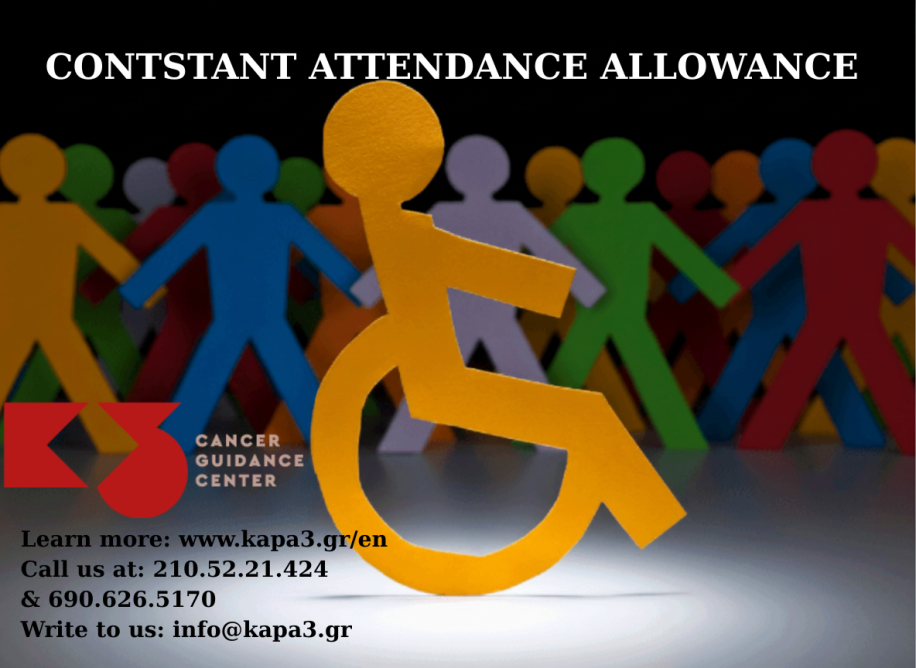
Update on Constant Attendance Allowance – March 2026

Based on the latest available data for March 2026, the Constant Attendance Allowance, provided through e-EFKA, has been increased and now reaches up to €845–846 per month, depending on the category and insurance status. This allowance applies to pensioners with severe disabilities or serious mobility impairments who require continuous assistance and supervision from another person, following disability certification by the KEPAs.

The year 2026 features increases and retroactive payments in EFKA allowances, including disability benefits, aiming to strengthen support for vulnerable pensioners and reduce financial difficulties in daily life. This adjustment reflects the ongoing commitment to support pensioners with increased care needs.

Eligible Pensioners

  • Pensioners with a disability rate above 67%, for whom continuous care by another person is certified.

  • Blind elderly pensioners.

  • Survivors’ pensioners, provided the deceased had their first insurance before 1/1/1993.

Amounts and Supplements

  • For those insured before 1/1/1993, the supplement reaches 50% of the pension, up to €671.40.

  • For those insured from 1/1/1993 onwards, the amount is €173.34.

  • Employees may also receive an extra-institutional allowance, with a total maximum of €846.

  • At a social assistance level, the amount can reach up to €380 per month.

For public sector pensioners, the corresponding supplement is calculated at 2.5% to 4.5% of the basic lieutenant salary, depending on the degree of incapacity, and in cases of 80% or higher incapacity, the amount increases by 50%. The allowance is tax-free and protected from garnishment.

Important Note: The official decision on the adjustment is expected to be published in the Government Gazette in the coming days. Once available, the article will be updated with full details and the official Gazette reference.

This increase on the Constant Attendance Allowance, forms part of the broader adjustment of social welfare allowances for 2026, confirming the commitment to support pensioners with higher self-care needs and ensure a dignified standard of living.

Text/adaptation: Ifiyenia Anastasiou for Kapa3

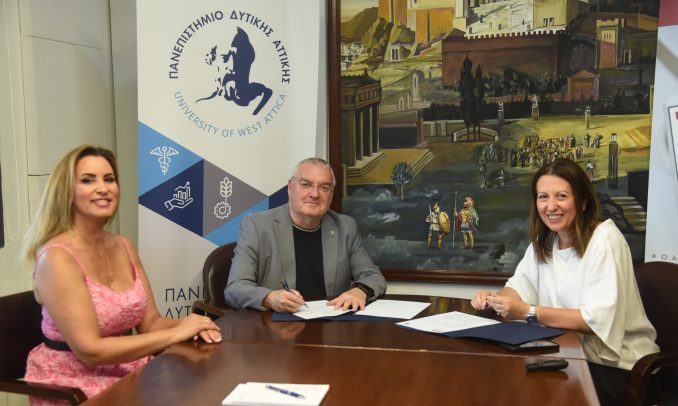
New Collaboration between Cancer Guidance Center – Kapa3 and the Hellenic Federation of Persons with Multiple Sclerosis (HFoPwMS)

Cancer Guidance Center – Kapa3 announces its new collaboration with the Hellenic Federation of Persons with Multiple Sclerosis (HFoPwMS), strengthening synergies between organizations active in the field of health and patient support.

This collaboration aims to develop joint initiatives that will contribute to raising awareness, promoting public information, and providing meaningful support to people living with chronic conditions, with particular focus on cancer patients and persons living with Multiple Sclerosis. Through the exchange of knowledge, experience and good practices, the two organizations seek to strengthen actions that promote equal access to information, healthcare services and social inclusion for patients.

Cancer Guidance Center – Kapa3 is dedicated to supporting people living with cancer and their caregivers by providing reliable information, practical guidance and access to benefits and services. At the same time, the organization develops initiatives that enhance patients’ awareness of their rights and promote their psychosocial empowerment. Through initiatives such as Mobile Units, digital tools and educational programmes, Kapa3 promotes a patient-centred approach to cancer care, encouraging patients to actively participate in decisions concerning their health and quality of life, while fostering collaborations with organizations working in the fields of health and social support.

The Hellenic Federation of Persons with Multiple Sclerosis (HFoPwMS) is a secondary non-profit organization founded in 2008 with the aim of uniting and supporting primary associations of persons with Multiple Sclerosis across Greece, while also raising awareness about the disease among the wider public. The Federation currently brings together nine primary patient associations from across the country. HFoPwMS implements awareness and advocacy initiatives related to Multiple Sclerosis and works to ensure the equal participation of people with MS in the educational, professional, athletic and cultural life of the country. It is a member of the National Confederation of Disabled People (ESAmeA) and the European Multiple Sclerosis Platform (EMSP).

Within the framework of this collaboration, the two organizations plan to develop joint initiatives such as the organization of conferences, workshops and awareness events, the implementation of information and public awareness campaigns, participation in national and European programmes, as well as the development of joint research initiatives on issues related to patients’ quality of life. The partnership will also contribute to strengthening interdisciplinary cooperation and knowledge exchange among organizations active in the health sector.

This new collaboration reflects the shared vision of the two organizations to strengthen the voice of patients and promote a society that respects, supports and empowers people living with chronic conditions.

Webinar: “Cancer, Patient Navigation & Health Management: From Prevention to Coordinated Care” in collaboration with the Kapa3 Cancer Guidance Center

On the occasion of World Cancer Day, we invite you to join the webinar on cancer and patient navigation, organized in collaboration with René Descartes College and the Kapa3 Cancer Guidance Center. This webinar aims to open a meaningful dialogue around cancer, not only as a medical diagnosis but as a complex life journey.

Today, cancer requires holistic health management, proper guidance within the care system, coordination among professionals and services, and a patient-centered approach that considers the individual, their family, and social environment.

The webinar aims to highlight the importance of Patient Navigation and Health Management in cancer care, to illuminate the role of technology and innovation in oncology, and to raise awareness around prevention, quality of life, and continuous patient support.

Target Audience:
  • Patients and individuals at diagnosis, undergoing treatment, or in follow-up

  • Caregivers and family members

  • Health professionals, Health Management staff and students

  • Policy and quality of care professionals

  • Anyone interested in prevention, screening, organization of oncology services, and patient-centered healthcare approaches

Participants Will Gain:
  • Understanding of cancer as a holistic life issue

  • Knowledge of modern patient navigation and care coordination models

  • Insights into the role of technology in oncology

  • Practical information for better management within the healthcare system

  • Inspiration for more humane, coordinated, and high-quality care

Speakers:
  • Maria Gazouli, PhD – Professor of Biology-Genetics-Nanomedicine, Laboratory Geneticist

  • Dr. Christos A. Frantzidis – Assistant Professor, Computer Science / Machine Learning, School of Computer Science, University of Lincoln, UK

  • Dr. Maria Lavdaniti, MSc, PhD – Professor of Clinical Nursing, Director of the University Laboratory of Adult Cancer Patient Care, International Hellenic University (IHU)

  • Evangelia Mpista, PhD, MBA, MSc, BSc – Co-Founder, Kapa3

  • Dr. Vasiliki Kapaki – Postdoctoral Researcher in Health Economics, Professor of Health Economics, René Descartes College

Participation Details:
  • Duration: 2.5 hours (18:30 – 21:00)

  • Date: 06/02/2026

  • Attendance: Online

  • Participation is free

  • Certificate of attendance will be issued by René Descartes College and Kapa3

  • Registration form and participation declaration: Here

Text/adaptation: Ifiyenia Anastasiou for Kapa3

January – Cervical Cancer Awareness Month

January is internationally dedicated to raising awareness about cervical cancer. Known as Cervical Cancer Awareness Month, it aims to highlight the importance of prevention, early detection, and vaccination against the human papillomavirus (HPV), which is responsible for nearly all cases of the disease.

Cervical cancer remains a major public health issue worldwide. According to the World Health Organization, approximately 660,000 new cases are diagnosed globally each year, and more than 350,000 women lose their lives to the disease. It is among the most common cancers affecting women, particularly in regions where access to preventive screening and vaccination is limited. At the same time, it is one of the few cancers that can largely be prevented through organized prevention and early detection programmes.

In Greece, available data indicate that around 700 new cases of cervical cancer are diagnosed annually, while more than 280 deaths are attributed to the disease each year. The estimated incidence is approximately 8 cases per 100,000 women. Although this places Greece close to the European average, it also highlights the need for further improvement in prevention and early diagnosis.

Cervical cancer is closely linked to chronic infection with human papillomavirus (HPV), a very common virus transmitted mainly through sexual contact.

HPV vaccination, combined with regular gynaecological screening through Pap tests and HPV tests, can significantly reduce the development of precancerous lesions and cervical cancer. In this context, the World Health Organization has set the goal of eliminating cervical cancer as a public health problem by 2030, through high vaccination coverage, universal screening, and timely treatment.

January serves as an important reminder that information and prevention save lives. Open discussion around women’s health, free from fear and stigma, empowers women to take care of themselves and to claim prevention as a fundamental right.

Special emphasis should be placed on the systematic education of younger generations, as prevention begins long before any symptoms appear. Access to reliable information, preventive screening services, and vaccination programmes is a key factor in reducing health inequalities and protecting future generations.

At KAPA3, we believe that information and prevention are core pillars of care and empowerment. Through the dissemination of reliable information and the support of initiatives that promote public health, we stand alongside every woman who needs knowledge, prevention, and timely care.

Because cervical cancer can be prevented, we encourage everyone to take action. Give a meaningful gift to the women you care about: daughters, sisters, mothers, friends, partners, spouses. Talk openly about women’s health, share information, support initiatives, challenge taboos, and promote early diagnostic screening.

Information and open dialogue are the strongest tools we have.

Sources:

World Health Organization (WHO)
Cervical cancer – Fact sheet

WHO – Global strategy to accelerate the elimination of cervical cancer

International Agency for Research on Cancer (IARC / WHO)
Cervical Cancer Awareness Month

ICO / IARC HPV Information Centre – Greece Factsheet

Ministry of Health – National Immunization Programme

Hellenic National Public Health Organization (EODY)
HPV and cervical cancer

Text/adaptation: Ifiyenia Anastasiou for Kapa3

The Impact of the Kapa3 Internship Programme: 30 Young Professionals in Our First 5 Years of Operation

The Impact of the Kapa3 Internship Programme: 30 Young Professionals in Our First 5 Years of Operation

In the five years since our establishment, thirty young people have had the opportunity to learn and grow through the Kapa3 Internship Programme.

International scientific literature highlights that internships are far more than a first work experience. They serve as a fundamental mechanism of experiential learning, enabling students to connect theoretical knowledge with real-world professional contexts.

Through their involvement in a civil society organisation like Kapa3, interns developed reflective and critical thinking skills—core elements of modern professional education. By engaging with real needs and challenges, students strengthened their professional identity and gained a deeper understanding of their role as future practitioners in health and social services. In many cases, the internship at Kapa3 played a significant role in supporting their transition from university to the labour market, enhancing their confidence, social skills, and clarity of professional direction.

Furthermore, the structured field experiences offered opportunities to build professional networks, a key factor in long-term career development.

At Kapa3, the value of internships is evident across all aspects of our work. We strive to create an environment where students can deepen their academic knowledge, apply their skills to real cases, and map out the next steps of their careers with realism and self-awareness.

The result is a community of young professionals who are both socially conscious and scientifically equipped to contribute meaningfully to health and social care. We are proud to be at the forefront of education and warmly thank our partner universities for their trust and collaboration.


Free and Reduced Transportation for People with Disabilities and Large Families – What Changes in 2025

The Greek state is implementing significant changes regarding transportation for people with disabilities and large families in 2025. The new regulations simplify procedures, expand rights, and make public transport more accessible for all eligible individuals.

People with Disabilities (PwD)
Who is eligible:
Eligible individuals include people with disabilities with a disability rate of 67% or higher, or those receiving disability benefits from OPEKA. Totally blind individuals and holders of a digital Disability Card marked with levels II or III are exempt from income limits.

What changes:

  • Residency criteria are removed.
  • The right to free or reduced transportation now extends to one accompanying person, if needed.
  • Using the Disability Card for OASA, OSETH, KTEL, and Thessaloniki Metro is now simple with electronic or personalized card validation, without additional documents.

Practical use:

  • Free travel on OASA, OSETH, urban KTEL, and the municipalities of Kos and Rhodes.
  • 50% discount on intercity KTEL routes.
  • Thessaloniki Metro requires topping up the ThessCard with zero fare.
  • Accompanying persons can travel without separate validation when accompanying the eligible individual.

Large Families
Who is eligible:
Eligible individuals are large families and their members, according to existing legislation protecting large families.

What changes:

  • Travel with OASA, OSETH, and KTEL becomes more flexible.
  • Free or discounted tickets are supported depending on the policy of each transport service.

Practical use:

  • Simple procedure for issuing travel passes through Citizens’ Service Centers (KEP) and relevant regional authorities.
  • Tickets are valid for urban and intercity transport services.

These new regulations simplify the daily lives of people with disabilities and large families, reduce bureaucracy, and make access to all public transport easier.

See the Official Government Gazette (FEK) here

Read more about citizens’ rights here

Read more about the Disability Card here 

Text/Adaptation: Ifiyenia Anastasiou for Kapa3


Giving Voice to People with Primary Biliary Cholangitis (PBC) in Greece

Promitheas launches MyPBCVoice, an innovative initiative aimed at empowering and supporting people with Primary Biliary Cholangitis (PBC) in Greece. PBC is a rare, chronic autoimmune liver disease with symptoms such as fatigue, itching, abdominal discomfort, and psychological challenges.

MyPBCVoice focuses on patient education, information, and mutual support to improve quality of life. Activities include:

  • Questionnaires to assess patient needs (fill here)
  • A PBC-focused microsite
  • Interactive Facebook community for communication and support (join here)
  • Short videos and vidcasts with patients and experts
  • Online webinars
  • Digital archive of complaints and reports to map access barriers

We encourage everyone to share and promote this initiative to reach more patients and health professionals.

Kapa3 is proud to support initiatives like MyPBCVoice, which empower patients and foster connection and knowledge within the community.

Text/adaptation: Ifiyenia Anastasiou for Kapa3

Scientific Seminar: Psychosocial Support after Cancer Treatment and Post-Traumatic Growth

The Psychology Laboratory of INEB/CEST (Institute of Applied Biosciences / CERTH), with the support of the Municipality of Thessaloniki, is organizing on Saturday, 1 November 2025 (10:00–15:00), at the “Manolis Anagnostakis” Hall of the Thessaloniki City Hall, the scientific seminar “Psychosocial Support after Cancer Treatment and Post-Traumatic Growth.”

The event, initiated by the Psychology Laboratory as part of the IC-GROWTH research project, focuses on the psychological and social dimensions of life after cancer treatment, highlighting good practices for care, empowerment, and post-traumatic growth.

The program includes expert presentations and an open discussion with the audience, featuring researchers, healthcare professionals, and representatives from patient associations.

Participation is free, but pre-registration is required through the following form:
Registration Form

This seminar offers a valuable opportunity for learning and sharing experiences on psychosocial support and care after cancer treatment.

Kapa3 supports initiatives that strengthen mental health and quality of life for individuals who have experienced cancer.

Date: Saturday, 1 November 2025
Time: 10:00–15:00
Location: “Manolis Anagnostakis” Hall, Thessaloniki City Hall

Depression and Cancer Mortality: A Critical Link Across Major Cancer Types

Depression is a common but often underrecognized condition among cancer patients, affecting up to 20–30% of individuals diagnosed with the disease. Beyond its impact on quality of life, mounting evidence suggests that depression can significantly influence cancer outcomes, including survival. A recent meta-analysis of 65 cohort studies spanning colorectal, breast, lung, prostate, and mixed cancers provides compelling evidence that depression diagnosed after a cancer diagnosis is associated with a substantially increased risk of mortality.

The analysis revealed that patients with depression faced an 83% higher risk of dying from colorectal cancer, a 59% higher risk in lung cancer, a 74% higher risk in prostate cancer, and a 23% higher risk in breast cancer compared to non-depressed patients. Across mixed cancer types, depression increased the risk of cancer mortality by 38%. These findings underscore that the psychological burden of cancer is not merely an emotional challenge but a critical factor affecting survival outcomes.

Mechanisms Linking Depression and Cancer Outcomes

Depression may influence cancer progression through multiple biological and behavioral pathways. Biologically, depression is associated with chronic systemic inflammation, dysregulation of the hypothalamic-pituitary-adrenal (HPA) axis, immune suppression, autonomic dysfunction, oxidative stress, and impaired DNA repair. Elevated pro-inflammatory cytokines, including interleukin-6 (IL-6) and tumor necrosis factor-alpha (TNF-α), can contribute to tumor growth and metastasis. In older patients, depression may exacerbate age-related immune dysfunction, creating an environment more permissive to cancer progression.

Behaviorally, depression affects health-related actions and treatment adherence. Depressed patients are more likely to delay seeking medical care, adhere poorly to chemotherapy, radiotherapy, and hormonal therapies, and engage in unhealthy habits such as smoking, poor nutrition, and physical inactivity. Social isolation and reduced support systems further increase vulnerability, compounding the negative impact on survival.

Clinical Implications and Interventions

The strong association between depression and cancer mortality highlights the urgent need to integrate mental health care into routine oncology practice. Psychological interventions, such as cognitive-behavioral therapy (CBT), supportive-expressive therapy, and mindfulness-based approaches, have shown promise in reducing distress and improving adherence to cancer treatment. Pharmacological management, including selective serotonin reuptake inhibitors (SSRIs), may also support mental health and potentially influence cancer outcomes, though more research is needed to understand their role fully. Early identification and treatment of depressive symptoms should be considered a priority for oncologists, mental health professionals, and healthcare policymakers alike.

Limitations and Future Directions

While this meta-analysis provides robust evidence, several limitations should be noted. The observational nature of the studies prevents establishing causality, and differences in study design, depression assessment methods, and patient populations contribute to heterogeneity. Future research should explore longitudinal and randomized studies to clarify causal pathways and identify the most effective interventions to reduce depression-related mortality. Investigating the interactions between depression, inflammation, and cancer biology may also reveal targets for novel supportive therapies.

Depression is not just a psychological burden for cancer patients—it is a significant predictor of mortality across multiple cancer types. These findings call for systematic depression screening and tailored interventions as integral components of oncology care.

Organizations like Kapa3 play a vital role in supporting the mental health of cancer patients, offering resources and guidance that can improve both quality of life and treatment outcomes. Integrating psychological support into cancer care ensures that mental well-being is recognized as an essential part of the healing process.
In line with this mission, Kapa3 participates in MELODIC, a new European initiative dedicated to supporting the mental health of young adults (18–30 years old) living with or beyond cancer.

Read the original article here

Read more on MELODIC project here

Explore more about mental health through a selection of articles on our website: article1 article2,article3, article4, article5, article6 

Text/adaptation: Ifiyenia Anastasiou for Kapa3