DISABILITY CARD OR TRANSPORTATION PASS FOR PEOPLE WITH DISABILITIES 2026. WHAT BENEFICIARIES NEED TO KNOW.

The new explanatory circular regarding transportation for people with disabilities (PWDs) for 2026 has raised several questions among beneficiaries and their families who are trying to understand what the current rules are. The most common question is: “I have the plastic Disability Card. Do I also need to get a PWD Transportation Pass?” The answer is that the Disability Card has not completely replaced the Transportation Pass. Both of these documents remain valid simultaneously, and the need for one or the other depends on the mode of transportation used by each eligible person. To make this clearer, here’s what applies in each case.

Athens and Thessaloniki: The Disability Card can be used for urban travel

For travel on OASA transit in Athens and OSETH transit in Thessaloniki, the plastic Disability Card can be used by eligible beneficiaries.

Cardholders can travel by validating their card at the designated machines, without needing to obtain a separate Travel Pass specifically for these transit services.

The following are required:

  • the Disability Card must be valid,
  • must bear the designated disability level II or III designation,
  • or the beneficiary must receive disability financial assistance from OPEKA,
  • and income criteria must be met where required.

URBAN KTEL BUSES IN THE PROVINCE: THE TRAVEL PASS REMAINS NECESSARY

This is the point that has caused the most confusion. Possession of a Disability Card does not mean that the Travel Pass is no longer required for all trips.

For urban KTEL buses operated by the Regional Units, as well as by the municipalities of Kos and Rhodes, a Mobility Card for People with Disabilities is required, even if the beneficiary holds a Disability Card.

Therefore, those who use urban KTEL buses in their area should apply:

  • at the Citizen Service Centers (KEP),
  • or at the relevant offices of the Regional Unit.

FOR 2026, THE PROCESS BEGINS ON JULY 1, 2026, AND ENDS ON NOVEMBER 30, 2026.

Intercity Buses (KTEL): 50% Discount on Fares

For travel on intercity buses (KTEL)—that is, for trips from one city to another—a 50% discount is available.

The discount can be obtained with:

  • A valid Disability Card,
  • or a Transportation Pass for People with Disabilities.

Thus, for intercity routes, the beneficiary has more options.


Are there income criteria for free transportation?

One point that often causes confusion concerns income. There are no income criteria for issuing the Disability Card.

The income limits apply to eligibility for free transportation.

For 2026, the limits are as follows:

  • individual taxable income up to 23,000 euros,
  • declared family income up to 29,000 euros.

The family income limit increases by 5,600 euros for each additional person with a disability of 67% or higher who lives with and is financially dependent on the taxpayer.

It is important to note that: OPEKA disability benefits are not included in the above income limits. A relevant certificate from OPEKA may be required to exclude them.


Who is exempt from the income criteria?

People who are totally blind are exempt from the income criteria.

What applies to the companion?

In many cases, a companion is also entitled to travel.

If the Disability Card is marked with an “S” (Companion):

  • in Athens and Thessaloniki, the companion travels with the cardholder upon a single validation of the card. For KTEL buses, however, the prescribed procedure and the corresponding Companion Travel Pass are required where necessary.

So, what do beneficiaries need to keep?

The Disability Card is a significant benefit, but it does not mean that the Travel Pass is being eliminated.

In simple terms:

Disability Card:

✔ Athens and Thessaloniki

✔ Intercity KTEL buses for a 50% discount

Travel Pass:

✔ Provincial KTEL buses

✔ Situations where a companion’s entitlement is required

✔ Those who do not have a Disability Card


At Kapa3, we believe that accurate information can save time, trips, and unnecessary hassle, especially for people who already face increased challenges due to a disability or a serious illness.


View the circular here: TRANSPORTATION 2026

DISABILITY CIRCULAR

For more information, please don’t hesitate to contact the Kapa3 team:

📍Athens: 13 Kosti Palama, 3rd floor, (9:00 AM – 5:00 PM)

📍13 Kosti Palama, 11141 Athens

☎️210 5221424

📱6906265170

www.kapa3.gr

info@kapa3.gr
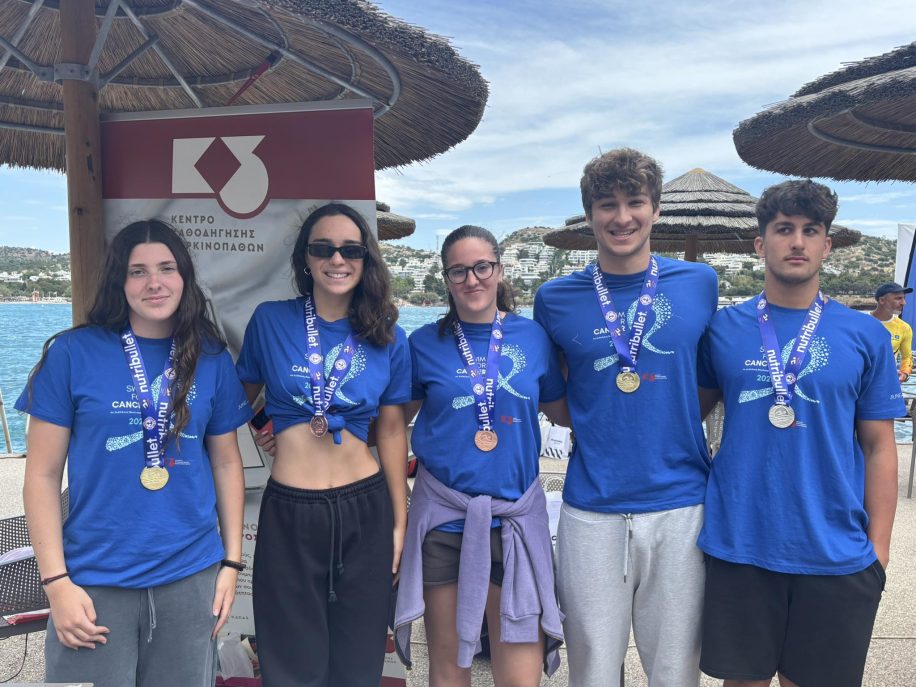
6 Awards for Kapa3 at the 4th Vouliagmeni Summer Crossing: Is There Such a Thing as a “Lonely Race”?

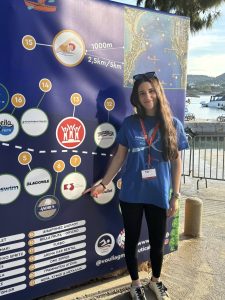
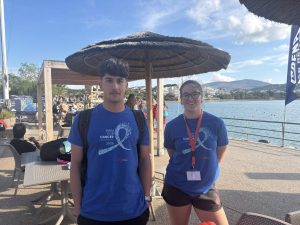
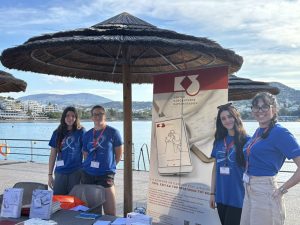
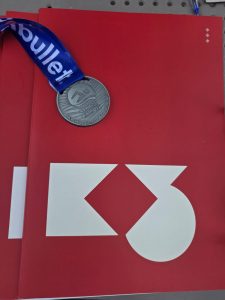
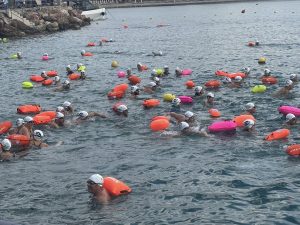
The Cancer Guidance Center – Kapa3 participated with great joy and emotion in the 4th Vouliagmeni Summer Swimming Crossing, an important sports and community event organised by the Vouliagmeni Nautical Club.

This year’s participation was particularly meaningful for all of us. The Kapa3 team received 6 awards, sharing a powerful message of participation, endurance, empowerment and togetherness.

But beyond the awards, what we hold most deeply is the message:

Is there really such a thing as a “lonely race”?

For us at Kapa3, the answer lies in our choice. And our choice is togetherness.

Despoina brought the idea — and much more.
Eirini stayed until the very end.

Leoni, Kalliopi, Giorgos, Christoforos, Athina, Christiana and Aria stood together as a true Winning Team.

They competed in every category, participated in every activity, informed, supported and left their own mark of empowerment, endurance and hope.

Leoni, Kalliopi, Giorgos, Christoforos, Athina, Christiana and Aria stood together as a true Winning Team.

They competed in every category, participated in every activity, informed, supported and left their own mark of empowerment, endurance and hope.

For Kapa3, the 6 awards are not only an athletic distinction. They are a symbol. They represent the power of effort, the importance of persistence and the value of community in every difficult journey.

ust as in the sea, the cancer journey requires rhythm, breath, emotional strength and people by our side. Even when a struggle feels personal, it does not have to be — and should never be — lonely.

Kapa3’s participation in the Vouliagmeni Crossing was an act of presence and awareness. It was a way to remind everyone that support for cancer patients, caregivers and families is not limited to information or access to rights and services. It is also about creating a community that stands beside people, encourages them and reminds them that they are not alone.

The sea carries a powerful symbolism. It represents the journey, uncertainty, effort, endurance, but also freedom. Every participant in the Crossing carries their own story, their own effort and their own path. For us at Kapa3, this image is deeply connected to the experience of people affected by cancer.

At Kapa3, we know that the experience of cancer is not limited to treatment. It is connected to everyday life, emotional resilience, access to information, rights, social benefits, transportation, work, family, uncertainty and the need for human presence.

This is why every community action we participate in has a dual purpose: to inform and to unite. To make visible the need for equal access to care, while also reminding everyone that support is not an abstract concept. It is presence. It is care. It is listening. It is guidance. It is the hand that helps someone keep going.

The 4th Vouliagmeni Summer Crossing was another moment of outreach, participation and empowerment for Kapa3. A moment that showed that strength is not found only at the finish line, but also in the decision to start, to try and to keep going.

We are grateful for the support, the care, the participation and the result.

We warmly thank the Vouliagmeni Nautical Club for organising the event, as well as everyone who participated, supported and stood beside us in this initiative.

We continue to choose togetherness at Kapa3.

Because even when a race is individual, it should never be lonely.

MELODIC: Advancing Mental Health Support for Young Adults with Cancer

The MELODIC project, a European programme focused on the mental health of young adults with lived experience of cancer, launched in September 2024 with the aim of strengthening the mental wellbeing of people aged 18–35, as well as their families. Through collaboration among six European countries, MELODIC combines research, educational activities, and the development of future interventions, promoting a more supportive and personalised approach to care.

MELODIC has already delivered significant outcomes, including outputs related to project management, needs assessment, interview-based research, and the training of healthcare professionals, while preparing upcoming intervention actions and communication and policy strategies.

KEY DELIVERABLES – WHAT HAS BEEN COMPLETED SO FAR

WP1 – Project Management & Quality Assurance

Deliverable 1.1 – Project Implementation Manual:
A management and quality monitoring guide defining implementation requirements, organisational structures, and partner roles.

Deliverable 1.2 – Quality Report:
A quality assurance report outlining procedures to ensure clarity, consistency, and timely delivery of project outputs.

WP2 – Needs Assessment

Deliverable 2.1 – Data Management Plan:
Assessment of the mental health and educational needs of young adults and healthcare professionals, in full compliance with data protection requirements.

Deliverable 2.3 – Interview Study Report:
A comprehensive interview-based study involving young adults, family members, and healthcare professionals across six countries, conducted with ethical approval and presenting key findings.

WP3 – Co-design Guide & Training

Deliverable 3.1 – MELODIC Curriculum:
A training programme for healthcare professionals at EQF level 7, focusing on the identification and support of the psychosocial and mental health needs of young adults with cancer. The curriculum includes learning objectives, training materials, assessment methods, and certification.

WHAT’S NEXT – UPCOMING DELIVERABLES AND ACTIONS

WP4 – Intervention Study

Deliverable D4.1 – Ethical Review:
Ethical approval for the intervention study aiming to improve the mental health and wellbeing of young adults with cancer and their families. The intervention will combine physical activity in natural environments with psychoeducation and informational support.

WP5 – Communication & Policy

Deliverable 5.1 – Communication Strategy:
A communication strategy outlining channels, target audiences, and publication plans for the internal and external dissemination of project results.

Deliverable 5.2 – Policy Outreach Strategy:
A policy engagement strategy at European and national level, including policy and stakeholder mapping and three intervention pillars (European, National, and Project-specific). The aim is to integrate MELODIC training into curricula and to enhance the project’s visibility at European level.

OUR PARTICIPATION IN MELODIC

As part of our active involvement, we have contributed to the production of key deliverables, particularly in data collection through interviews and in the development of the training curriculum for healthcare professionals. Our engagement ensures that the voices of young adults with lived experience of cancer and their families are taken into account at every stage of the project.

For more information and full access to MELODIC deliverables, please visit the project’s official website here.

Text/adaptation: Ifiyenia Anastasiou for Kapa3