A Calm Summer Begins with Proper Preparation Proactive Care Planning, Mental Decompression and Digital Support

Proactive Care Planning, Mental Decompression and Digital Support

Summer is a valuable opportunity for rest, renewal and quality time with the people we love. For people living with or after a cancer diagnosis, as well as for their caregivers, the possibility of enjoying a few days away from everyday life can contribute meaningfully to physical and mental well-being.

When a person’s health condition allows it, and with the agreement of the treating physician, even a short break can have a beneficial effect, enhancing quality of life and supporting the sense of returning to everyday life (Lim et al., 2022).

The quality of life of people living with or after a cancer diagnosis does not depend solely on medical treatment. Mental well-being, social support, optimism and resilience are equally important factors that facilitate adaptation to the disease and contribute to patients’ overall well-being (Ruiz-Rodríguez et al., 2022). At the same time, current guidelines underline the importance of integrated and personalised care, as well as continuous support for people living with or after cancer at every stage of their journey (Hart et al., 2024).

However, the peace of mind associated with holidays does not begin on the day of departure. It begins much earlier, through proper preparation. Practical pending issues, administrative procedures or concerns about unexpected events during the holidays can increase stress and reduce the feeling of safety. By contrast, proactive care planning allows patients to organise what is needed in advance, so that they can devote their time to rest rather than obligations.

Timely renewal of medical certificates, ensuring an adequate supply of medication for the entire period of absence, communicating with the treating physician when necessary, and keeping essential medical documents in an easily accessible format are simple but important steps of preparation. In this way, continuity of care is safeguarded, while the uncertainty that often accompanies travel is reduced.

Reliable information and timely support are key pillars of modern oncology care. When people know where they can turn and have easy access to trustworthy information, they feel safer, their autonomy is strengthened and the management of daily life becomes easier (Ruiz-Rodríguez et al., 2022; Hart et al., 2024).

In today’s world, digital tools can complement support services by facilitating access to reliable information wherever the patient may be. In this direction, Kapa3 is moving forward with the development of Myrto, the digital social navigator, designed to provide direct access to information on social rights, available services and useful guidance. In this way, it facilitates access to the organisation’s services and reliable information, contributing to better preparation before and during holidays.

For all of us at Kapa3, technology does not replace human care; it complements it. It is another means of facilitating access to trustworthy information and available services, while the Social Service and Psychological Support Service of Kapa3 remain the core pillar of holistic support for people living with cancer and their families.

Let us remember that care does not stop when holidays begin. It continues through small but meaningful acts of preparation, proper information and timely planning. Because, many times, the greatest luxury of a holiday is not the destination itself, but the feeling that we can enjoy our moments with calmness, safety and trust.

The Social Service and Psychological Support Service of Kapa3 wish everyone a safe, peaceful and refreshing summer, with health, strength and beautiful moments.

Before Leaving for Your Holidays…

✔️ Make sure you have an adequate supply of your medication for the entire period of your absence.

✔️ Check whether there are any medical certificates, prescriptions or other administrative pending issues that need to be settled in time.

✔️ Discuss with your treating physician any special instructions related to travel or movement.

✔️ Keep with you the necessary medical documents and important contact details.

✔️ Find out about available support services and make use of the Kapa3 App, so that you have easy access to useful information wherever you are.


References

Hart, N. H., Nekhlyudov, L., Smith, T. J., Yee, J., Fitch, M. I., Crawford, G. B., et al. (2024). Survivorship Care for People Affected by Advanced or Metastatic Cancer: MASCC-ASCO Standards and Practice Recommendations. JCO Oncology Practice, 20(9), 1160–1172. https://doi.org/10.1200/OP.23.00716

Lim, J. H. C., Keenan, C., & Flaherty, G. T. (2022). All My Life to Live: Travel Health Benefits and Risks for Cancer Survivors. Journal of Travel Medicine, 29(5), taac069. https://doi.org/10.1093/jtm/taac069

National Comprehensive Cancer Network. (2024). NCCN Clinical Practice Guidelines in Oncology (NCCN Guidelines®): Survivorship. Version 2.2024. Plymouth Meeting, PA: National Comprehensive Cancer Network.

Ruiz-Rodríguez, I., Hombrados-Mendieta, I., Melguizo-Garín, A., & Martos-Méndez, M. J. (2022). The Importance of Social Support, Optimism and Resilience on the Quality of Life of Cancer Patients. Frontiers in Psychology, 13, 833176. https://doi.org/10.3389/fpsyg.2022.833176

World Health Organization. (2022). World Mental Health Report: Transforming Mental Health for All. Geneva: World Health Organization.


Official Access Links

Hart et al., 2024 — MASCC-ASCO Standards:
https://ascopubs.org/doi/10.1200/OP.23.00716

Lim et al., 2022:
https://doi.org/10.1093/jtm/taac069

NCCN Clinical Practice Guidelines in Oncology: Survivorship:
https://www.nccn.org/professionals/physician_gls/pdf/survivorship.pdf

Ruiz-Rodríguez et al., 2022:
https://doi.org/10.3389/fpsyg.2022.833176

WHO World Mental Health Report:
https://www.who.int/publications/i/item/9789240049338


Marilia Barka
Psychology Student
Kapa3 Volunteer

www.linkedin.com/in/maria-garyfalia-marilia-barka-03825a409

World Self-Care Day (July 24): The Importance of Self-Care on the Journey with Cancer.

  • July 24 has been designated as World Self-Care Day. This symbolic date (7/24) was chosen to remind us all of something very basic: that taking care of ourselves is a process that deserves to continue 24 hours a day, 7 days a week.

    At the Cancer Patient Support Center, this day takes on a deeper and more meaningful significance. Self-care is not merely a luxury or a passing trend, but a valuable tool for physical, mental, and emotional empowerment—both for patients undergoing treatment and for their caregivers.

    What does “self-care” mean?

    According to the World Health Organization (WHO), self-care is defined as the ability of individuals, families, and communities to promote health, prevent disease, maintain well-being, and manage illness with or even without the support of a health professional.

    This is an active commitment to ourselves, which includes:

    1. Healthy daily habits: proper nutrition, adequate sleep, and moderate physical activity (always in consultation with your treating physician)

    2. Prevention and responsibility: consistent medication adherence, regular preventive checkups, and following medical instructions.

    3. Mental and emotional balance: recognizing personal boundaries, managing stress, accepting our emotions, and seeking help wherever and whenever we need it.

    4. Health and health literacy: responsibly staying informed about our health status from reliable sources.

    Self-Care in the Cancer Experience

    For someone who has experienced cancer, self-care takes on a very personal character. It does not mean that “one must do everything on one’s own.” On the contrary, it is essential to:

    • Listen to their body, without feeling guilty about the need for rest

    • Take care of their emotional well-being. Allow themselves to feel every emotion—fear, fatigue, but also hope. Psychological support is considered one of the most important acts of self-care.

    • Build a support network. It is absolutely essential to allow loved ones or specialized professionals to support them.

    Caring for Caregivers

    World Self-Care Day is equally dedicated to those who care for patients—family members, partners, and friends. People who stand by patients often tend to neglect their own needs, thereby driving themselves to physical and mental exhaustion. This day serves as a reminder that caring for caregivers is not selfish but an urgent necessity.

    For caregivers to practice self-care in practice, they must first set boundaries, as they do not need to bear the entire burden alone. At the same time, it is important for them to acknowledge their emotions without judgment, accepting that fatigue, anger, and frustration are normal reactions. It is equally essential to set aside personal time. Fifteen to thirty minutes a day for a walk or to read a book can be beneficial. Finally, seeking psychological support is not a sign of weakness but an act of self-care.

    The Cancer Patient Guidance Center is here for you

    At K3, we believe that no one should have to walk this path alone. Self-care is strengthened when there is guidance, reliable information, and human support.

    On this special day, let’s all take a step back from the fast pace of life and make our health and well-being a priority.

    24 hours a day, 7 days a week: let’s take care of ourselves!

Participation in CA21152 – Implementation Network Europe for Cancer Survivorship Care

Digital Health and Cancer Survivorship: Kapa3 at the INE-CSC 2026 Conference in Coimbra

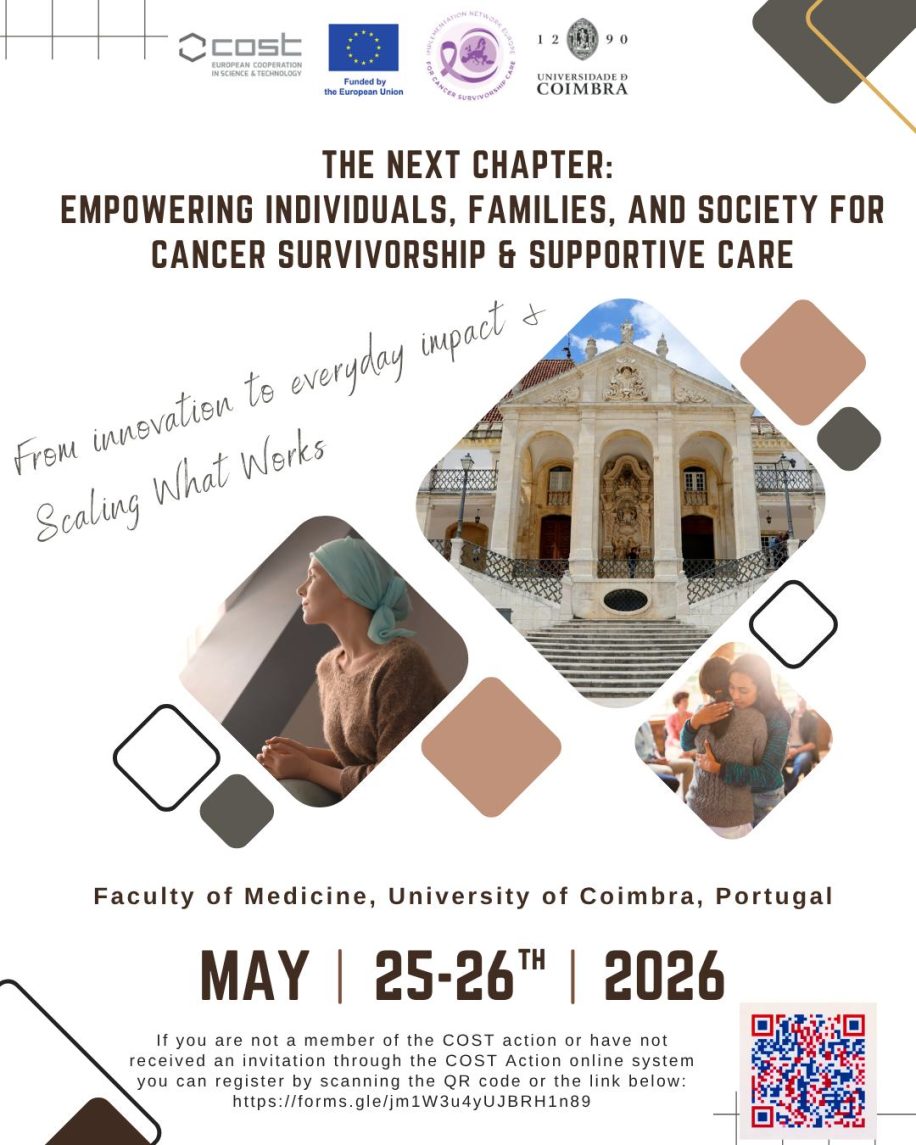
The Cancer Guidance Center – Kapa3 participated in the INE-CSC 2026 Conference, part of CA21152 – Implementation Network Europe for Cancer Survivorship Care (INE-CSC), held on 25–26 May 2026 at the Faculty of Medicine (Polo III), University of Coimbra, in Coimbra, Portugal.

The conference was held under the theme “The Next Chapter – Empowering Individuals, Families, and Society for Cancer Survivorship & Supportive Care”, highlighting the need for new approaches to cancer survivorship, supportive care and the translation of innovation into real-world impact for people living with and beyond cancer, their families and society.

Kapa3’s presence in Coimbra represents another important step in its European engagement and in its ongoing effort to connect everyday experience in supporting cancer patients in Greece with European knowledge, research, digital innovation and health policy.

A key highlight was the participation in a round table discussion on facilitators and barriers to the implementation of digital health tools in oncology. The discussion was co-organised by Aristea Kyriaki Ladas and Christos Frantzidis and brought together voices from different European countries and organisations, including representatives from Kapa3, Acreditar Portugal, Liga Portuguesa Contra o Cancro, ORCO / Madrid Regional Ministry of Health, as well as participants from Poland, Latvia and the United Kingdom.

Among the participants in the round table were Yannis Kontogiorgis and Despoina Pistiolis from Kapa3, Greece, contributing to the European dialogue on digital health, oncology navigation and the participatory development of solutions that respond to the real needs of patients and caregivers.

One of the key messages of the discussion was that digital innovation in oncology is not only a technological challenge. It is also a matter of policy, implementation, equity, trust and accessibility.

For digital tools to make a meaningful difference in cancer care and survivorship, they cannot remain isolated applications or pilot projects. They need to become part of real care pathways, be supported by appropriate policy environments, connect with interdisciplinary practice and be evaluated in terms of effectiveness, implementation readiness, accessibility, equity, sustainability and value.

The discussion also highlighted that digital tools must be designed around the real needs of patients and survivors, not only around technical possibilities. Accessibility across countries, languages, healthcare systems and levels of digital and health literacy must be built in from the beginning.

The role of patient organisations and cancer support communities was also identified as essential. These organisations can act as a bridge between technological innovation and the everyday reality of people affected by cancer. They understand the questions, barriers, fears and needs that are often not fully captured by formal care systems.

For Kapa3, this participation is directly linked to the development of Myrto, its digital health and rights navigator, designed as a tool for empowerment, guidance and support for cancer patients and their caregivers.

Myrto is not approached as a simple information tool. It is being designed as a participatory intervention built around the real needs of people with lived experience of cancer. It is connected to access to rights, social benefits, services, practical guidance and human escalation whenever needed.

The Coimbra experience strengthened the view that digital health must be human-centred, accessible, trustworthy and integrated into a broader ecosystem of care. Technology can meaningfully support cancer care only when it is designed with participation, trust, clear purpose and an equity-oriented approach.

Cancer survivorship is not only about completing treatment. It is about quality of life, mental health, social reintegration, work, family, everyday life, access to services and the feeling that no person is left alone after diagnosis or treatment.

Through its participation in European networks such as INE-CSC, Kapa3 continues to contribute to the dialogue on more equitable, participatory and person-centred cancer care. Care that uses technology without losing sight of the human being at its centre.

The future of cancer support will not depend only on better digital tools, but on better collaboration between patients, caregivers, healthcare professionals, researchers, technology partners, patient organisations and policymakers.

For Kapa3, this is at the heart of its mission: transforming knowledge into action, technology into support, and the voice of patients into services that respond to their real needs.

More information: INE-CSC – Implementation Network Europe for Cancer Survivorship Care.More information:
https://inecancersurvivorship.com

Kapa3 partners with PRAXI Network (FORTH) to boost international networking and access to European funding opportunities

The Cancer Guidance Center – Kapa3 announces its partnership with the PRAXI Network of the Foundation for Research and Technology – Hellas (FORTH), within the framework of the European Digital Innovation Hub smartHEALTH: European Digital Innovation Hub for Smart Health – Precision Medicine and Innovative e-Health Services.

This collaboration is part of the broader Digital Europe Programme 2021–2027 and aims to strengthen Kapa3’s participation in research, innovation, and health policy initiatives, focusing on improving services and enhancing the quality of life of oncology patients.

Within this partnership, Kapa3 will receive substantial support in identifying and leveraging funding opportunities through systematic information and expert guidance on available programmes at European, national, and regional level, including Horizon Europe, EU4Health, Erasmus+, and EIT Health. At the same time, its capacity to actively participate in competitive proposals and collaborative projects will be reinforced, expanding its potential to develop innovative initiatives in the health sector.

Particular emphasis is also placed on the development of strategic partnerships with universities, research centres, and healthcare organisations across Europe. Through targeted support in partner identification and the exploration of synergies, Kapa3 strengthens its position within the European research and innovation ecosystem, creating opportunities for participation in international consortia.

In parallel, the collaboration contributes to enhancing the organisation’s international presence and networking capacity through participation in thematic conferences, brokerage events, and matchmaking initiatives in the fields of public health, digital health, social innovation, and patient-centred care.

This Kapa3 PRAXI Network partnership is expected to act as a catalyst for strengthening Kapa3’s outward-looking orientation and sustainable development, reinforcing its role as an active and dynamic stakeholder in the field of health and patient support at both national and European level.

The support services are provided within the smartHEALTH framework and are co-funded by European and national resources.

The Founding Sponsor of the “Myrto”Health Navigator is the TIMA Foundation.

Press release source: PRESS-RELEASE-PRAXI-Network-–-FORTH

Text/adaptation: Ifiyenia Anastasiou for Kapa3

Kapa3 announces collaboration with SimasiaAI for the development of the Health Navigator “Myrto” (Myrto AI Assistant)

The Kapa3 – Cancer Guidance Center announces its collaboration with SimasiaAI, for the co-development of the Health Navigator Myrto” (Myrto AI Assistant), an artificial intelligence (AI chatbot) designed to enhance digital cancer support for patients with cancer and their families through immediate, reliable, and personalized information.

This initiative is part of Kapa3’s strategic focus on leveraging innovative digital tools to improve access to information, strengthen guidance, and reduce the digital gap often faced by vulnerable groups in the healthcare sector.

The Health Navigator “Myrto” is not just an information tool, but a new form of social artificial intelligence in cancer care support in Greece. It is designed to transform digital information into a more human, accessible, and meaningful experience, allowing users to interact, receive guidance, and access support tailored to their needs.

Through its dual role as a “Patient Empowerment e-Navigator”, the system will function both as a Patient Advocate—providing guidance on patient rights, benefits, and access to healthcare and social services—and as a Health Navigator, offering reliable information to support better understanding and self-management of health-related issues.

At the same time, the Health Navigator “Myrto” aims to enhance health literacy, support the psychosocial dimension of the disease, and highlight available community resources, contributing to the reduction of inequalities in access to information.

Kapa3, with its long-standing experience in guiding and supporting cancer patients, continues to invest in initiatives that promote equal access to information and digital empowerment, utilizing technology with a strong social and human-centered approach.

The collaboration between Kapa3 and SimasiaAI leads to the development and integration of the Health Navigator “Myrto” into Kapa3’s platform, highlighting the importance of cooperation between social organizations and technology providers in creating innovative digital support tools for cancer patients. Through this initiative, the goal is to meaningfully empower patients, support healthcare professionals, and advance more human-centered digital services.

The development of the Health Navigator “Myrto” marks an important step toward a new model of digital care, where artificial intelligence complements human support, enhancing the quality of life of patients and their families.

The Founding Sponsor of the “Myrto”Health Navigator is the TIMA Foundation.

Our Press Release text here: PRESS RELEASE SIMASIA AI

Text: Ifiyenia Anastasiou for Kapa3

New National Patient Registry for Hospital-at-Home Care (NOSPI)

Patient care at home in Greece is becoming more organized and secure with the establishment of the National Registry of Patients Receiving Hospital-at-Home Care (NOSPI), as published in Government Gazette 1995/07.04.2026. The NOSPI program is already in pilot implementation at selected hospitals nationwide, with the goal of full development and operation by the end of 2026, including a digital platform and patient registry.

The new registry aims to systematically record patients receiving NOSPI services, ensuring that care is tailored to individual therapeutic needs. Patient groups eligible for inclusion include, among others, those with tracheostomies, on non-invasive mechanical ventilation, receiving long-term oxygen therapy, on parenteral or gastrostomy feeding, as well as those requiring intensive physiotherapy or mobility rehabilitation. Currently, enrollment primarily focuses on children with severe health conditions and chronically ill patients needing pulmonary care, in collaboration with pilot Reference Centers.

While the NOSPI program is already operating in a pilot phase, universal access for all patients in the country has not yet been achieved. Its development is gradual, with full operation—including digital infrastructure and registry-based documentation—planned by the end of 2026. Strengthening Hospital-at-Home care enables better monitoring and improvement of home care services for patients with long-term needs.

Through the registry, authorities can collect accurate and essential health data, enhancing the quality of services and supporting the design of targeted health policies. Implementation respects personal data protection in line with the General Data Protection Regulation (GDPR), ensuring transparency and public trust.

For families and caregivers, patient enrollment in the NOSPI National Registry means access to more coordinated care, with support delivered directly to their homes. Furthermore, documentation helps evaluate and improve home nursing services, enhancing patient safety and quality of life.

This initiative, combined with the development of the digital platform and registry, aims not only to upgrade home care services but also to reduce hospital congestion and ensure high-quality services for all patients in the future.

Sources (text in Greek) : Government Gazette NOSPI, ODIPY

Text/adaptation: Ifiyenia Anastasiou for Kapa3

Expansion of High-Cost Medicines Available Through EOPYY Private Pharmacies – What Changes for Patients

The Hellenic National Organization for the Provision of Health Services (EOPYY) is expanding the list of new high-cost medicines available through private EOPYY pharmacies, facilitating patient access to high-cost treatments. The recent decision was published in the Government Gazette.

This development represents another step toward simplifying patient access to high-cost therapies, reducing the need for physical visits to EOPYY pharmacies.

The new regulation includes the addition of further medicines, broadening the scope of the measure. Among these are treatments for multiple sclerosis, such as the active substance ocrelizumab, as well as anticancer agents like imatinib and capecitabine, widely used in oncology. This expansion is expected to significantly benefit more patients, who until now had to be served through specific distribution points, often facing longer waiting times. Patients will gain convenience and improved continuity of care, as access to treatments becomes faster and more reliable.

The option to collect medicines from private EOPYY pharmacies is expected to substantially improve patients’ daily lives, reducing hassle and enhancing accessibility, especially for those with chronic or serious conditions. This change is also part of the broader digital transformation of health services, aiming for a more flexible and patient-centered system. Healthcare providers will be able to monitor medicine distribution more efficiently, ensuring timely support and guidance for patients throughout their treatment.

According to the Government Gazette:

The start date of the medicine distribution process, with supply by EOPYY and final delivery at the private pharmacy specified in ministerial decision EΑLE/GΠ/oικ.51724/19-11-2025, as listed in the table below, is set as the date when EOPYY’s upgraded electronic platform (fyk.eopyy.gov.gr) becomes fully operational for the submission of patient requests under the new procedure defined in the above ministerial decision.

You can read the Government Gazette here (greek text)

Read our previous articles on the HCM procedure here and here

Text/Adaptation: Ifiyenia Anastasiou for Kapa3

Kapa3 joins the Hellenic Digital Health Cluster (HDHC)

The Cancer Patient Guidance Center – Kapa3 is pleased to announce its participation in the Hellenic Digital Health Cluster (HDHC), strengthening its connection with the Greek digital health ecosystem.

The Kapa3 HDHC collaboration marks the organization’s active integration into a dynamic innovation network. Through this partnership, Kapa3 gains access to a network of 47 innovative organizations, as well as the Foundation for Research and Technology – Hellas (FORTH), aiming to enhance the quality of support services for cancer patients.

The HDHC brings together and connects leading organizations, businesses, and research institutions in the field of digital health in Greece, providing a framework for networking, collaborations, and innovative projects, as well as access to funding and investment opportunities. Its mission is to empower the Greek digital health ecosystem, with the goal of positioning Greece among the leading countries in the sector internationally within the next decade.

Through its participation in HDHC, Kapa3 further strengthens its mission to support cancer patients by adopting modern, technology-driven approaches and innovative practices. As a member, the organization gains the opportunity to take part in events, working groups, and collaborative initiatives, while fostering the exchange of knowledge and expertise with other stakeholders in the ecosystem.

At the same time, this participation creates opportunities for Kapa3 to actively contribute to the development of a sustainable and forward-looking digital health ecosystem in Greece, promoting collaboration, innovation, and shared perspectives towards institutional strengthening of the sector. It also provides access to emerging technologies and best practices that can improve patient experience and enhance the effectiveness of care services.

Through this collaboration, Kapa3 reinforces its role as an organization that connects cancer patient support with the ongoing developments in digital health in Greece and internationally, building bridges between care, technology, and innovation for the community it serves.

You can download our Press Release here 

Text: Ifiyenia Anastasiou for Kapa3

Kapa3 in the First Half of March: Actions, Collaborations, and Updates for Oncology Patients

During the first half of March, Kapa3 continued to highlight important topics concerning the oncology patient support, rights, and daily lives  through initiatives, collaborations, and informational activities.

Efforts focused both on strengthening access to information and services, and on promoting practical and digital tools that make patients’ daily lives easier.

In an environment where patients’ needs remain complex and constantly evolving, reliable information, enhanced collaboration among stakeholders, and the promotion of holistic care are especially important.

Below is a summary of the main developments from the month.

Collaborations

Key partnerships were strengthened with the Sarcoma Fighters Patients Association, the Hellenic Federation of Persons with Multiple Sclerosis (HFoPwMS), and Doctor Homie, aiming to enhance information, support, and quality care for patients.

Actions & Presentations

Kapa3 participated in the scientific meeting “Cancer in 2026: Challenges and Breakthroughs,” emphasizing the pivotal role of supportive care for oncology patients, while also presenting recent developments addressing their evolving needs. Kapa3 also attented the event Facing the Challenge of Artificial Intelligenceas we remain focused on supporting dialogue around the opportunities and challenges of A.I.

Patient Rights

Supporting oncology patients remains a central goal of our initiatives. Focus was given to updates on the 2026 constant attendance allowance and improved digital access for patients to their test results.

Digital Health & Research

A new European Commission report highlights the critical role of digital health technologies in transforming healthcare systems, outlining both opportunities and challenges for the future of care.

Awareness

March is Colorectal Cancer Awareness Month, reminding everyone of the importance of prevention and early detection.

Oncology patient support remains our top priority, and we continue to monitor developments — more news will follow.

Kapa3’s Contribution to the 6th Nursing Symposium of Western Macedonia: Digital Health, Empathy, and Patient Navigation

With active participation in a well-established scientific meeting on contemporary nursing issues, Kapa3 took part in the 6th Nursing Symposium of Western Macedonia on “Innovation and Empathy: Balancing Technology with Human Contact in Nursing”, held on March 19–20, 2026, in Ptolemaida.

The Symposium, now a key annual event for the nursing community, serves as a platform for dialogue, knowledge exchange, and highlighting the multifaceted role of nurses in modern healthcare.

As part of the thematic session “Innovation and Citizen Engagement: Creating Accessible Tools with Empathy”, Ms. Evangeli Bista, co-founder of Kapa3, joined the panel along with Ms. Pisti Krystallidou, President of the NGO WinCancer, showcasing the role of civil society in shaping contemporary, accessible healthcare services.

On March 20, Ms. Evangeli Bista and Ms. Pisti Krystallidou actively participated in the Round Table on the same theme. Ms. Krystallidou presented “Empathy in Practice: What the Caregiver Gains from Health Professionals”, highlighting the daily challenges and support needs of people caring for patients. Ms. Bista emphasized Kapa3’s role and the use of digital tools in guiding patients effectively.

During her presentation, Ms. Bista outlined how the healthcare system is transforming: from episodic care to continuous support, from hospital-centered services to daily-life integration, and from the healthcare professional as the sole source of knowledge to the patient as an active participant. In this new environment, digital health and patient navigation go beyond mere tools, focusing on the citizen’s ability to use them meaningfully in everyday life.

Special attention was given to the needs of oncology patients, who require not only access to information but also guidance through a complex healthcare system—knowing where to turn, what they are entitled to, and how to manage critical decisions in daily life. In this context, the importance of patient navigation was highlighted, a model that Kapa3 has implemented since its foundation, acting as a bridge between available services and patients’ real needs.

Finally, the digital social assistant “Myrto was presented, serving as a single reference point for patients, facilitating access to information and services, and translating knowledge into practical, everyday support.

Kapa3’s participation in the Symposium highlighted the importance of combining technological innovation with empathy, confirming that the future of oncology care is not only about personalized treatment but also about personalized understanding of each patient’s needs.

Download our Press Release here 

Text/Adaptation: Ifiyenia Anastasiou for Kapa3