Kapa3 announces collaboration with SimasiaAI for the development of the Health Navigator “Myrto” (Myrto AI Assistant)

The Kapa3 – Cancer Guidance Center announces its collaboration with SimasiaAI, for the co-development of the Health Navigator Myrto” (Myrto AI Assistant), an artificial intelligence (AI chatbot) designed to enhance digital cancer support for patients with cancer and their families through immediate, reliable, and personalized information.

This initiative is part of Kapa3’s strategic focus on leveraging innovative digital tools to improve access to information, strengthen guidance, and reduce the digital gap often faced by vulnerable groups in the healthcare sector.

The Health Navigator “Myrto” is not just an information tool, but a new form of social artificial intelligence in cancer care support in Greece. It is designed to transform digital information into a more human, accessible, and meaningful experience, allowing users to interact, receive guidance, and access support tailored to their needs.

Through its dual role as a “Patient Empowerment e-Navigator”, the system will function both as a Patient Advocate—providing guidance on patient rights, benefits, and access to healthcare and social services—and as a Health Navigator, offering reliable information to support better understanding and self-management of health-related issues.

At the same time, the Health Navigator “Myrto” aims to enhance health literacy, support the psychosocial dimension of the disease, and highlight available community resources, contributing to the reduction of inequalities in access to information.

Kapa3, with its long-standing experience in guiding and supporting cancer patients, continues to invest in initiatives that promote equal access to information and digital empowerment, utilizing technology with a strong social and human-centered approach.

The collaboration between Kapa3 and SimasiaAI leads to the development and integration of the Health Navigator “Myrto” into Kapa3’s platform, highlighting the importance of cooperation between social organizations and technology providers in creating innovative digital support tools for cancer patients. Through this initiative, the goal is to meaningfully empower patients, support healthcare professionals, and advance more human-centered digital services.

The development of the Health Navigator “Myrto” marks an important step toward a new model of digital care, where artificial intelligence complements human support, enhancing the quality of life of patients and their families.

The Founding Sponsor of the “Myrto”Health Navigator is the TIMA Foundation.

Our Press Release text here: PRESS RELEASE SIMASIA AI

Text: Ifiyenia Anastasiou for Kapa3

Kapa3 at the “Facing the Challenge of Artificial Intelligence” Event

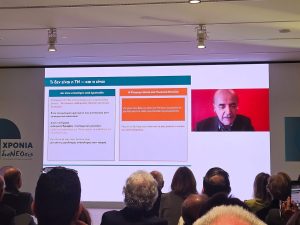
On March 11, 2026, Kapa3 co-founder Evangeli Bista and the organization’s collaborator, Christos Frantzidis, senior lecturer at the School of Computer Science, University of Lincoln, attended with keen interest the event “Facing the Challenge of Artificial Intelligence”, organized by diaNEOsis at the Stavros Niarchos Foundation Cultural Center Lighthouse, marking 10 years of the organization’s work.

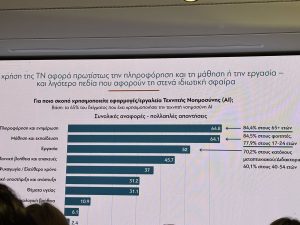
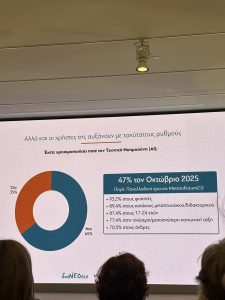
The event highlighted, through presentations and discussions, key topics regarding Artificial Intelligence (AI), including: what AI is and the concerns it raises, social impacts and inequalities it may create, ethical and responsible use, effects on work and productivity, and the challenges in legislation and technology regulation.

As Evangeli Bista noted on her social media, AI remains a field full of questions:

  • What exactly is Artificial Intelligence?
  • What concerns are emerging around it?

Technology without thought can reinforce the greatest inequalities,” she emphasized, adding that the conversation on ethical and scientifically informed access to technology remains open. The event offered the chance to see “the next day… through the eyes of those who pioneered it,” such as Joseph Sifakis (Turing Award 2007) and Christos Papadimitriou.

Kapa3’s participation focused on observing, absorbing knowledge, and supporting dialogue around the challenges and opportunities of AI, with particular attention to the social dimension and the inequalities it may create.

By attending this event, Kapa3 continues to demonstrate its commitment to technological developments, the importance of informed and responsible discussion, and understanding the social and ethical implications of Artificial Intelligence.

Digital Health Technologies in Europe: New European Commission Report Highlights Opportunities and Challenges

Digital health technologies in Europe are a key pillar in transforming care systems, as highlighted in the new European Commission report (published in 2026), titled “Observatory for Digital Health Technologies in Europe”. The report, prepared for the Directorate-General CONNECT (DG CNECT) by Capgemini Invent and IDC, provides a comprehensive overview of the EU27 digital health market, analyzing both the technology ecosystem and its economic impact.

The report is structured in three main sections. The first focuses on the creation of the Digital Health Technologies Observatory, a strategic tool for monitoring adoption, innovation, and investment in the sector. The second part presents the economic analysis of five selected technologies, while the third contains conclusions and policy recommendations.

The analysis draws on extensive data, including pan-European surveys of healthcare providers and technology companies, expert interviews, mapping of hundreds of providers, and analysis of tens of thousands of investment records. The findings depict a rapidly growing yet fragmented digital health market in Europe.

Artificial intelligence plays a central role in this transformation, with 94% of healthcare providers already adopting or planning to integrate it. Technologies such as Clinical Decision Support Systems (CDSS), automated medical imaging analysis, and digital mental health platforms are highlighted as particularly important for improving care quality and enhancing health system efficiency.

The economic benefits are substantial. CDSS are estimated to enable savings of up to €252 billion over a decade, while automated medical imaging analysis could save up to €192 billion. Similarly, digital mental health platforms support early intervention and reduce the burden on healthcare services, providing significant social and economic benefits.

The report also identifies critical challenges, such as market fragmentation, interoperability issues, and dependence on non-EU providers in strategic areas. Additionally, issues related to digital skills, regulatory frameworks, and equitable access continue to affect the widespread adoption of these technologies.

To address these challenges, the report recommends measures such as strengthening interoperability, supporting small and medium-sized enterprises, promoting innovation in cutting-edge fields (such as AI and genomics), and integrating principles of sustainability, accessibility, and equity.

The positioning of digital health technologies in Europe as a key pillar for the future of care systems is closely linked with initiatives developed at the national level. In this context, Kapa3 invests in digital tools that enhance information, accessibility, and empowerment of oncology patients, such as the “Myrto” Health Navigator. You can read more about it here.

As Europe seeks to build a more resilient and inclusive health system, leveraging digital technologies emerges as a decisive factor in improving patient quality of life and the effectiveness of healthcare services.

Sources:

Text/Adaptation: Ifiyenia Anastasiou for Kapa3

Artificial Intelligence in Medicine: Why Horizontal Skills Are More Critical Than Ever

Artificial intelligence is rapidly transforming clinical decision-making, healthcare professional education, and overall care delivery. Yet a recent international review highlights a crucial point: as AI tools become more integral, horizontal skills (soft skills) such as empathy, communication, critical thinking, and ethical judgment are more important than ever.

These competencies enable healthcare professionals to interpret algorithmic outputs, maintain patient trust, ensure safe care, and integrate technology responsibly into clinical practice. Understanding and fostering these skills is essential for building a healthcare workforce that remains human-centered in an AI-driven era.

The review is authored solely by Effie Simou, Associate Professor of Communication and Media in Public Health at the University of West Attica, and examines the role of horizontal skills in the modern, technology-enhanced healthcare environment. By synthesizing international literature, it analyzes how professional responsibility, teamwork, cultural sensitivity, and ethical judgment impact care quality and safety in an era where artificial intelligence plays an ever more active role.

A “Skills Ecosystem” Rather Than a List of Competencies

The review does not treat these skills as isolated capabilities but as an interdependent ecosystem. Communication strengthens trust, empathy improves patient adherence, critical thinking acts as a counterbalance to uncritical acceptance of algorithmic recommendations, while professionalism and ethical vigilance ensure accountability.

The key argument is clear: technological progress does not make horizontal skills less important—it makes them essential. In an environment where algorithms support diagnosis, predict risks, or suggest treatment strategies, healthcare professionals are called upon to interpret, evaluate, and ultimately take responsibility for the decisions made.

Human Judgment Is Not Replaced. It Is Strengthened—and Tested.

Artificial Intelligence in Medicine and the Risks of Uncritical Trust in Technology

Particular emphasis is placed on the risks arising from excessive trust in AI systems. The so-called “automation bias” can lead to reduced critical vigilance, while the complexity of algorithms may hinder understanding of how their recommendations are generated.

Large language models and AI tools can also produce inaccurate or incomplete information persuasively. In a clinical setting, such misleading certainty can have serious consequences.

In this context, artificial intelligence in medicine cannot function autonomously; it requires active and critical human oversight. Critical thinking, transparency, and clear responsibility allocation become absolutely necessary. The final decision regarding patient care cannot be delegated to an algorithm. Responsibility remains human—a fundamental principle for the ethics of medical practice.

The Patient Relationship Dimension

Technology can enhance accuracy, accelerate processes, and support the management of large data volumes. However, it cannot replace the therapeutic relationship. Trust, clear communication, active listening, and recognition of patients’ emotional needs are elements that cannot be coded.

Especially in fields like oncology, where decisions are complex and the emotional burden high, the quality of communication can significantly influence treatment adherence, understanding of options, and overall care experience.

The review emphasizes that human presence is not supplementary to technology—it is the axis around which it must be organized.

Toward a Balanced Human–Algorithm Coexistence

The study’s conclusion is clear: health professional education must integrate both technological literacy and systematic development of horizontal skills. Knowing how an AI tool works is not enough; one must be able to critically evaluate it, explain its limitations, and integrate it responsibly into clinical practice.

In an era where algorithms are becoming increasingly “intelligent,” empathy, responsibility, and critical thinking are not secondary skills—they are the core of a medical practice that seeks to remain human, reliable, and safe.

Ultimately, the question is not whether artificial intelligence will be integrated into medicine—it already has been. The real challenge is under what terms it will coexist with the human factor. As technology advances at geometric speed, education must equally invest in skills that cannot be automated: the ability to listen, to question, and to take responsibility.

The challenge for artificial intelligence in medicine is not only technological but deeply pedagogical and ethical. Perhaps the greatest stake is not to create “smarter” systems but more conscious professionals. As algorithms evolve, so does the need for medicine to remain fundamentally human.

Source
The Growing Importance of Soft Skills in Medical Education in the AI Era, MDPI, 2024.
Available at: https://www.mdpi.com/2813-141X/4/4/50

Text/adaptation: Ifiyenia Anastasiou for Kapa3