
Kapa3 at the “Facing the Challenge of Artificial Intelligence” Event

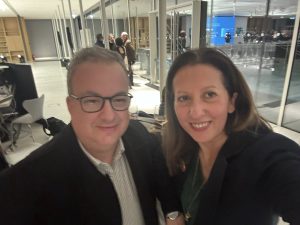
On March 11, 2026, Kapa3 co-founder Evangeli Bista and the organization’s collaborator, Christos Frantzidis, senior lecturer at the School of Computer Science, University of Lincoln, attended with keen interest the event “Facing the Challenge of Artificial Intelligence”, organized by diaNEOsis at the Stavros Niarchos Foundation Cultural Center Lighthouse, marking 10 years of the organization’s work.
The event highlighted, through presentations and discussions, key topics regarding Artificial Intelligence (AI), including: what AI is and the concerns it raises, social impacts and inequalities it may create, ethical and responsible use, effects on work and productivity, and the challenges in legislation and technology regulation.
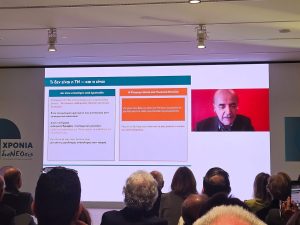
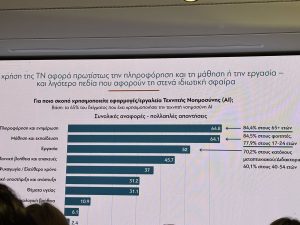
As Evangeli Bista noted on her social media, AI remains a field full of questions:

  • What exactly is Artificial Intelligence?
  • What concerns are emerging around it?

Technology without thought can reinforce the greatest inequalities,” she emphasized, adding that the conversation on ethical and scientifically informed access to technology remains open. The event offered the chance to see “the next day… through the eyes of those who pioneered it,” such as Joseph Sifakis (Turing Award 2007) and Christos Papadimitriou.
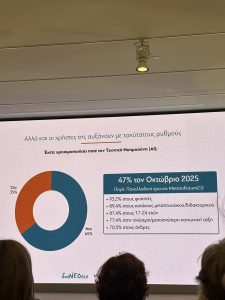
Kapa3’s participation focused on observing, absorbing knowledge, and supporting dialogue around the challenges and opportunities of AI, with particular attention to the social dimension and the inequalities it may create.

By attending this event, Kapa3 continues to demonstrate its commitment to technological developments, the importance of informed and responsible discussion, and understanding the social and ethical implications of Artificial Intelligence.

Kapa3 at the Scientific Meeting “Cancer in 2026: Challenges and Disruptions” – Focusing on Supportive Care and Its Limits

At the scientific meeting “Cancer in 2026: Challenges and Disruptions”, held on March 13–14, 2026 at the Divani Caravel, Kapa3 actively contributed to discussions on supportive care for oncology patients, a critical area for improving quality of life and holistic patient support.

The meeting was organized by the Hellenic Oncology Patient Support Institute, under the chairmanship of Christos Panopoulos, and was held under the auspices of the Hellenic Cancer Society and the Hellenic Society of Medical Oncologists. It has become a recognized annual event for the oncology community, highlighting each year the latest challenges and rapid developments in the field.

Progress in oncology is continuous and impressive, with scientific advances steadily enhancing the possibilities for personalized treatment, while simultaneously improving patients’ quality of life and turning some forms of cancer into manageable chronic conditions.

During the two-day meeting, key developments were presented in critical areas such as precision medicine, immunotherapy, and novel therapeutic strategies, with particular emphasis on the role of artificial intelligence and molecular analysis in modern clinical practice.

Kapa3 participated in the roundtable on supportive care for oncology patients, held on Friday, March 13, represented by Ms. Evangeli Bista. She noted that attending the conference gave her the opportunity to engage with people leading initiatives in patient support and advocacy. The roundtable addressed critical topics such as the role of healthcare professionals, pain management in Greece, and the adequacy of existing care structures.

In the discussion on psychosocial support, Ms. Bista, representing Kapa3 and drawing from her daily experience with oncology patients, emphasized that addressing the challenges arising from the patient journey is particularly demanding, as the high volume of cases and the fragmentation of the healthcare and social support system create exponentially more issues to manage.

When asked whether voluntary work alone is sufficient to meet the growing needs of patients, her response was clear:

…voluntary action is a valuable and essential pillar of social support. The improvement of patients’ quality of life relies heavily on voluntary efforts that take place across the country under challenging conditions. However, it is not sufficient on its own to meet the complex and increasing needs of patients.

As highlighted during the discussion, voluntary contributions are crucial for filling gaps in the system and strengthening social protection. At the same time, a more comprehensive and institutionally supported approach is necessary. This includes:

• adequate and stable funding
• continuous training and empowerment of all stakeholders
• clear and functional legal frameworks
• a shift in mindset among healthcare professionals, patients, and administrators
• and the development of integrated policies in the field of supportive care

Kapa3’s intervention underscored the importance of psychosocial support as an integral part of oncology supportive care, promoting a more holistic, humane, and sustainable approach to patient management. As Ms. Bista noted, participating in the two-day meeting serves as a reminder that the fight to support patients requires all of us on the same side.

Kapa3 at the 6th Interdisciplinary Conference “Brain & Mind”

Kapa3 actively participated in the 6th Interdisciplinary Conference “Brain & Mind”, held from December 18 to 20, 2025, at the Book Tower of the Stavros Niarchos Foundation Cultural Center in Athens. The conference brought together scientists, healthcare professionals, and civil society organizations to highlight current challenges and solutions in neuroscience, psychology, and digital health.

During the Round Table “Digital Health and Artificial Intelligence: Current Challenges”, Kapa3 presented its approach to the human-centered dimension of digital healthcare. Litsa Bista emphasized the importance of digital literacy for patients and healthcare professionals, noting that:

Digital technology is evolving as a core pillar of modern, safe, and human-centered care, particularly in oncology. When patients and healthcare professionals have the appropriate digital skills, stress is reduced, access to reliable information is enhanced, treatment outcomes improve, and patient autonomy is strengthened. Reducing inequalities for vulnerable individuals remains a top priority for all of us.

Particular focus was placed on patients’ daily experiences, a key aspect of the therapeutic process. Support for mental resilience, self-management through digital applications, and strengthening self-confidence and self-efficacy were central messages of the intervention, highlighting the value of collaboration with healthcare professionals to achieve reliable, high-quality outcomes.

The discussion also highlighted the main challenges of digital health in Greece, including fragmented applications, difficulties in implementing hi-tech solutions in outdated systems, algorithmic complexity, and the need for transparency. Kapa3’s approach focuses on system interoperability, collection of high-quality patient data, and creation of services that truly meet patients’ needs, ensuring that technology serves people, not the other way around.

Kapa3’s participation in the conference reflects its ongoing commitment to contributing to the public discourse on the ethical, functional, and human-centered use of Artificial Intelligence and digital tools, always keeping the patient and quality care at the center.

Text/Adaptation: Ifiyenia Anastasiou for Kapa3