
Evangeli Bista Joins the PATH Expert Group as an Independent Expert: Bringing the Patient Perspective into the New Era of AI in Cancer Care

A new contribution to the European dialogue on safe, responsible and human-centred Artificial Intelligence in healthcare

Evangeli Bista, Co-founder and Head of Operations and Development of Kapa3 – Cancer Guidance Centre, has been invited to join the Expert Group of the European research and innovation project PATH – Patient AI Treatment Hub as an independent expert.

Her participation is undertaken in a personal and independent capacity, with her professional affiliation to Kapa3 – Cancer Guidance Centre, creating an opportunity to bring into the European dialogue experience gained through direct engagement with people affected by cancer, survivors, caregivers and healthcare professionals. The PATH Terms explicitly define Expert Group members as acting independently rather than as partners, employees, agents or subcontractors of the Consortium.

What is PATH – Patient AI Treatment Hub?

PATH – Patient AI Treatment Hub is a European research and innovation project focused on supporting the safe and effective integration of Artificial Intelligence into cancer care through the development of a secure, interoperable and privacy-preserving digital platform.

The project aims to explore how Artificial Intelligence tools can be safely integrated into cancer-care pathways, supporting healthcare professionals and contributing to more personalised approaches while safeguarding privacy and health data.

At the heart of this effort lies a critical question:

How can technological innovation create meaningful value for patients while preserving trust, human oversight, safety and equity?

Participation in the PATH Expert Group

As a member of the PATH Expert Group, Evangeli Bista will contribute independent expertise, opinions, input, comments and feedback in relation to selected project use cases and activities.

The experience developed through Kapa3’s work can contribute to discussions around issues such as:

  • patient-centred cancer care,
  • patient navigation across health and social-care systems,
  • equitable access to information and services,
  • health and digital literacy,
  • health and social rights,
  • responsible use and protection of health data,
  • transparency and human oversight in Artificial Intelligence systems,
  • meaningful involvement of patients and civil society in technology design,
  • and translating technological innovation into real value for people.

Why the Patient Voice Must Be Part of Innovation

Artificial Intelligence is creating new possibilities for healthcare and cancer care. At the same time, its growing use raises important questions concerning trust, transparency, safety, equitable access and human oversight.

For Kapa3, the development of a digital solution cannot begin solely with the question of what is technologically possible.

It must also ask:

What does the patient actually need?

Can people understand the information they receive?

Do they know where that information comes from?

Can they trust the system?

Is it clear when Artificial Intelligence is being used and when human professional judgement is required?

Could digital inequalities lead to new inequalities in healthcare?

And ultimately, does innovation genuinely improve the experience and pathway of a person facing cancer?

These are questions that we believe should remain at the centre of the European discussion on Artificial Intelligence in healthcare.

Kapa3’s experience in digital health

Evangeli Bista’s participation in the PATH Expert Group comes at a time when Kapa3 is systematically expanding its work in digital health, patient navigation and the responsible use of emerging technologies to support people affected by cancer.

This broader work also includes MYRTO – Digital Navigator for Health and Social Rights, an independent Kapa3 initiative developed to help transform complex and often fragmented information on rights, benefits and administrative procedures into more accessible, structured and evidence-based guidance for patients and caregivers.

MYRTO is not part of PATH, and the two initiatives are independent from one another.

However, the experience of developing patient-facing digital services has reinforced several principles that Kapa3 considers essential:

reliable information, transparent sources, understandable communication, data protection, human oversight and a clear pathway to professional support when technology alone is not enough.

This distinction is also important from an intellectual-property perspective, since the PATH Terms preserve intellectual property that exists independently of the Expert’s Services and is not incorporated into PATH Contributions.

From information to trust

Digital transformation in healthcare is not simply about more data, more algorithms or more applications.

It is about creating greater understanding, better access and stronger trust.

For a person facing cancer, information has value when it can be translated into a meaningful next step.

Technology has value when it reduces — rather than increases — complexity.

And Artificial Intelligence has value when it strengthens, rather than replaces, human care, professional judgement and the patient’s ability to participate meaningfully in decisions affecting their life and health.

A new opportunity to contribute to the European dialogue

For Kapa3, the invitation to Evangeli Bista to participate as an independent expert in the PATH Expert Group represents an important opportunity to bring into the European dialogue experience, needs and concerns emerging from the real-world context of cancer care and patient support.

The objective remains clear:

Artificial Intelligence in healthcare should advance with safety, transparency, responsibility, equitable access and meaningful involvement of the people it is designed to serve.

Because innovation creates real value when it is designed with people and for people.


PATH – Patient AI Treatment Hub | At a glance

Field: Artificial Intelligence and data in cancer care
Project: PATH – Patient AI Treatment Hub
Focus: Safe and effective integration of AI into cancer care through secure, interoperable and privacy-preserving approaches.
Expert Group: Independent external experts providing expertise, opinions, input, comments and feedback to the Project.
Independent Expert: Evangeli Bista
Professional role: Co-founder & Head of Operations and Development
Affiliation: Kapa3 – Cancer Guidance Centre
 

June: Cancer Survivors Month

Survival is a victory — but care must continue

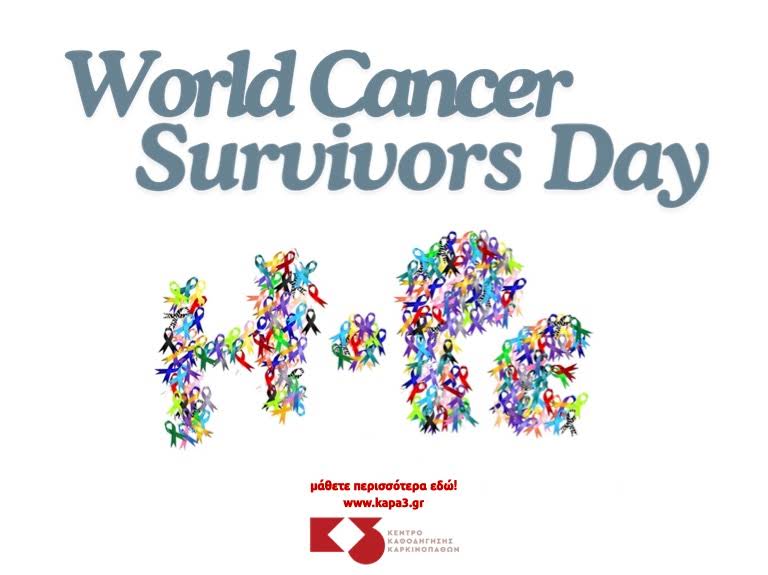
June is dedicated to people living with and beyond cancer. It is a month of recognition, hope and respect for every person who has faced a cancer diagnosis, completed treatment, continues treatment, or lives with cancer as a long-term condition.

Cancer survival is a major victory. However, for many people, it is not the end of the story. Life after cancer often brings a new reality: follow-up appointments, fear of recurrence, fatigue, emotional distress, changes in body image, work-related challenges, financial pressure, family adjustments and the need to rebuild everyday life with confidence and dignity.

Cancer Survivors Month reminds us that survivorship is not only about living longer. It is also about living better.

A cancer survivor is not only a person who has completed treatment and is disease-free. The term also includes people receiving maintenance treatment, people living with cancer as a chronic condition, and those who continue to experience the physical, emotional, social or economic consequences of the disease and its treatment.

In recent years, advances in early diagnosis, targeted therapies, immunotherapy, surgery, radiotherapy and supportive care have increased the number of people living many years after a cancer diagnosis. This is a major achievement for medicine, research and public health. At the same time, it creates a new responsibility: to ensure that survivorship care is organised, person-centred and accessible to all.

For many survivors, the end of active treatment is a moment of relief and gratitude. Yet it may also bring uncertainty. Some people feel that everyone around them expects them to “go back to normal”, while they are still trying to understand what has changed in their body, their emotions, their relationships and their daily life.

The fear of recurrence, anxiety before follow-up tests, persistent fatigue, pain, cognitive difficulties, changes in sexuality, emotional vulnerability and social isolation are real experiences for many people after cancer. These needs should not be underestimated. Survivors need space to speak, reliable information, access to professional support when needed, and connection with communities and organisations that understand their journey.

Long-term follow-up is also essential. Survivorship care should not focus only on recurrence. It should also include prevention, early recognition of late effects, management of treatment-related complications, support for mental health, healthy lifestyle guidance and personalised monitoring according to each person’s cancer type, treatment history, age and individual risk factors.

The message is not fear. The message is awareness, prevention and continuity of care.

Life after cancer is also about rights. It is about returning to work, accessing social benefits, understanding available services, managing financial toxicity, supporting caregivers, protecting dignity and ensuring equal access to care. Survivorship must be seen as a social, psychological and practical issue — not only a medical one.

At Kapa3, we see every day that cancer does not always end with the last treatment. It continues in the questions people ask about their rights, their next steps, their follow-up, their access to benefits, psychological support, work, family life and social reintegration.

This is why people living with and beyond cancer need holistic support. They need information, guidance, psychosocial care, access to rights and services, empowerment and continuity of care. No one should feel alone after treatment. No one should be left to navigate bureaucracy, uncertainty or lack of information without support.

Cancer Survivors Month invites us to change the way we talk about survival. We should not ask only: “Did the person survive cancer?” We should also ask:

Are they living with quality of life?
Do they have access to the care they need?
Do they know their rights?
Do they receive psychological and social support?
Can they return to work and daily life with dignity?
Is there a follow-up plan?
Is there someone to guide them when they do not know where to turn?

Cancer survival is a victory. But the real challenge is to turn this victory into a life with quality, safety, rights, support and hope.

At Kapa3, we continue to stand beside every person living with and beyond cancer. Through information, guidance, empowerment and human-centred support, we believe that care does not stop at treatment.

It continues in life.

Kapa3 joins the Hellenic Digital Health Cluster (HDHC)

The Cancer Patient Guidance Center – Kapa3 is pleased to announce its participation in the Hellenic Digital Health Cluster (HDHC), strengthening its connection with the Greek digital health ecosystem.

The Kapa3 HDHC collaboration marks the organization’s active integration into a dynamic innovation network. Through this partnership, Kapa3 gains access to a network of 47 innovative organizations, as well as the Foundation for Research and Technology – Hellas (FORTH), aiming to enhance the quality of support services for cancer patients.

The HDHC brings together and connects leading organizations, businesses, and research institutions in the field of digital health in Greece, providing a framework for networking, collaborations, and innovative projects, as well as access to funding and investment opportunities. Its mission is to empower the Greek digital health ecosystem, with the goal of positioning Greece among the leading countries in the sector internationally within the next decade.

Through its participation in HDHC, Kapa3 further strengthens its mission to support cancer patients by adopting modern, technology-driven approaches and innovative practices. As a member, the organization gains the opportunity to take part in events, working groups, and collaborative initiatives, while fostering the exchange of knowledge and expertise with other stakeholders in the ecosystem.

At the same time, this participation creates opportunities for Kapa3 to actively contribute to the development of a sustainable and forward-looking digital health ecosystem in Greece, promoting collaboration, innovation, and shared perspectives towards institutional strengthening of the sector. It also provides access to emerging technologies and best practices that can improve patient experience and enhance the effectiveness of care services.

Through this collaboration, Kapa3 reinforces its role as an organization that connects cancer patient support with the ongoing developments in digital health in Greece and internationally, building bridges between care, technology, and innovation for the community it serves.

You can download our Press Release here 

Text: Ifiyenia Anastasiou for Kapa3

Artificial Intelligence in Medicine: Why Horizontal Skills Are More Critical Than Ever

Artificial intelligence is rapidly transforming clinical decision-making, healthcare professional education, and overall care delivery. Yet a recent international review highlights a crucial point: as AI tools become more integral, horizontal skills (soft skills) such as empathy, communication, critical thinking, and ethical judgment are more important than ever.

These competencies enable healthcare professionals to interpret algorithmic outputs, maintain patient trust, ensure safe care, and integrate technology responsibly into clinical practice. Understanding and fostering these skills is essential for building a healthcare workforce that remains human-centered in an AI-driven era.

The review is authored solely by Effie Simou, Associate Professor of Communication and Media in Public Health at the University of West Attica, and examines the role of horizontal skills in the modern, technology-enhanced healthcare environment. By synthesizing international literature, it analyzes how professional responsibility, teamwork, cultural sensitivity, and ethical judgment impact care quality and safety in an era where artificial intelligence plays an ever more active role.

A “Skills Ecosystem” Rather Than a List of Competencies

The review does not treat these skills as isolated capabilities but as an interdependent ecosystem. Communication strengthens trust, empathy improves patient adherence, critical thinking acts as a counterbalance to uncritical acceptance of algorithmic recommendations, while professionalism and ethical vigilance ensure accountability.

The key argument is clear: technological progress does not make horizontal skills less important—it makes them essential. In an environment where algorithms support diagnosis, predict risks, or suggest treatment strategies, healthcare professionals are called upon to interpret, evaluate, and ultimately take responsibility for the decisions made.

Human Judgment Is Not Replaced. It Is Strengthened—and Tested.

Artificial Intelligence in Medicine and the Risks of Uncritical Trust in Technology

Particular emphasis is placed on the risks arising from excessive trust in AI systems. The so-called “automation bias” can lead to reduced critical vigilance, while the complexity of algorithms may hinder understanding of how their recommendations are generated.

Large language models and AI tools can also produce inaccurate or incomplete information persuasively. In a clinical setting, such misleading certainty can have serious consequences.

In this context, artificial intelligence in medicine cannot function autonomously; it requires active and critical human oversight. Critical thinking, transparency, and clear responsibility allocation become absolutely necessary. The final decision regarding patient care cannot be delegated to an algorithm. Responsibility remains human—a fundamental principle for the ethics of medical practice.

The Patient Relationship Dimension

Technology can enhance accuracy, accelerate processes, and support the management of large data volumes. However, it cannot replace the therapeutic relationship. Trust, clear communication, active listening, and recognition of patients’ emotional needs are elements that cannot be coded.

Especially in fields like oncology, where decisions are complex and the emotional burden high, the quality of communication can significantly influence treatment adherence, understanding of options, and overall care experience.

The review emphasizes that human presence is not supplementary to technology—it is the axis around which it must be organized.

Toward a Balanced Human–Algorithm Coexistence

The study’s conclusion is clear: health professional education must integrate both technological literacy and systematic development of horizontal skills. Knowing how an AI tool works is not enough; one must be able to critically evaluate it, explain its limitations, and integrate it responsibly into clinical practice.

In an era where algorithms are becoming increasingly “intelligent,” empathy, responsibility, and critical thinking are not secondary skills—they are the core of a medical practice that seeks to remain human, reliable, and safe.

Ultimately, the question is not whether artificial intelligence will be integrated into medicine—it already has been. The real challenge is under what terms it will coexist with the human factor. As technology advances at geometric speed, education must equally invest in skills that cannot be automated: the ability to listen, to question, and to take responsibility.

The challenge for artificial intelligence in medicine is not only technological but deeply pedagogical and ethical. Perhaps the greatest stake is not to create “smarter” systems but more conscious professionals. As algorithms evolve, so does the need for medicine to remain fundamentally human.

Source
The Growing Importance of Soft Skills in Medical Education in the AI Era, MDPI, 2024.
Available at: https://www.mdpi.com/2813-141X/4/4/50

Text/adaptation: Ifiyenia Anastasiou for Kapa3

Kapa3 Supports Digital Innovation for Oncology Patients at Morning Health Talks

On Thursday, 4 December 2025, the second Morning Health Talk titled “Health Data for Innovation in Greece: Building a Stronger Digital Health Ecosystem” took place at the National Documentation Centre (EKT) in Athens. The event was held in a hybrid format (in-person and online participation), bringing together health professionals, researchers, policymakers and technology partners from Greece and abroad.

During the event, international and Greek experiences were presented on the management and use of health data, digital transformation, and best practices for leveraging data to strengthen the country’s digital health ecosystem.

Among the speakers were:

  • Dr Athanasios Batagiannis, General Director, 3-psi

  • Georgios Dimitriou, Cluster Manager, Hellenic Digital Health Cluster

  • Dr Ioannis Koumpouros, Director of DigInHealth, University of West Attica

  • Elpida Fotiadou, Head of eHealth, IDIKA

With the contribution of the distinguished speakers, key issues were discussed, including infrastructure interoperability, the need for reliable data, bureaucratic barriers, gaps in digital literacy, the development of focused platforms and processes, faster care pathways and needs assessment, the reduction of information fragmentation, and the development of human-centred digital solutions with practical value and social acceptance.

KAPA3 presented its strategic approach, focusing on standardised procedures, data quality improvement, interdisciplinarity, and the use of digital tools to support people living with cancer, as well as on guidance, interaction, empowerment and patient participation in data utilisation processes. At every step, KAPA3 addresses key challenges such as data fragmentation, stakeholder collaboration and human-centred digital solutions—issues that are also summarised in the Good Practices Guide developed within the eHealth4Cancer project.

In summary, the main points highlighted were:

  • A human-centred approach and the application of good practices to ensure the usability and social acceptance of digital solutions.

  • Strengthening collaboration between healthcare professionals, researchers and citizens to develop reliable and functional digital infrastructures.

  • The need for systematic scientific research to address challenges such as skills gaps, limited access and data fragmentation.

The event provided an important opportunity for networking and knowledge exchange, promoting the alignment of digital health infrastructures with citizens’ needs and reinforcing KAPA3’s role as an active contributor to the digital transformation of healthcare in Greece.

Read the full Morning Health Talks 2025 press release here and view photos from the event.

Text/adaptation: Ifiyenia Anastasiou for Kapa3