Κapa3 at IEEE CBMS 2026 | AI for Equitable Oncology Information

Kapa3 at IEEE CBMS 2026: Artificial Intelligence in Support of Equitable Patient Information in Oncology Care

New scientific publication in the Proceedings of the 39th IEEE International Symposium on Computer-Based Medical Systems

The voice and lived experience of patients must remain at the centre of the emerging era of Artificial Intelligence in healthcare.

Kapa3 – Cancer Guidance Centre contributes to a new scientific publication presented in the Proceedings of the 2026 IEEE 39th International Symposium on Computer-Based Medical Systems (CBMS), focusing on how Artificial Intelligence and Retrieval-Augmented Generation can support more equitable, reliable and patient-centred access to information in oncology.

The paper, entitled:

“Informed, Empowered, and Heard: AI and Retrieval-Augmented Generation as Tools for Equitable Patient Information in Oncology”

is authored by Lars Münter, Evangeli Bista, Maria Lavdaniti and Christos Frantzidis, with Evangeli Bista representing Kapa3 as Co-founder.

From access to information to meaningful patient empowerment

A cancer diagnosis creates an immediate need for information that is reliable, understandable and relevant to the individual patient.

At the same time, patients and their families are often expected to understand complex medical terminology, treatment options, prognosis discussions and administrative procedures at a moment of intense psychological and emotional pressure.

The paper highlights that acute stress associated with a serious diagnosis can affect working memory, attention and the ability to process new information. This means that patient information cannot be designed for an ideal, fully attentive reader; it must respond to the real cognitive and emotional conditions experienced by people facing cancer.

The key question is therefore not simply:

“How much information do we provide?”

but rather:

“Are we providing the right information, at the right time, in a form that people can understand and act upon?”

AI and Retrieval-Augmented Generation: towards trustworthy and evidence-grounded information

The publication places particular emphasis on Retrieval-Augmented Generation (RAG).

RAG architectures combine the generative capabilities of large language models with the retrieval of information from curated and verified knowledge sources. In a healthcare setting, this can include clinical guidelines, validated patient information resources, regulatory documents and peer-reviewed literature.

This approach offers an important advantage over purely generative AI systems: responses can be grounded in identifiable sources, supporting greater transparency and enabling patients and healthcare professionals to verify where information comes from.

In oncology, this is especially important.

A patient does not simply need a quick answer. They need information that is:

accurate, current, understandable, accessible and appropriate to their individual situation.

Artificial Intelligence as a tool for equity

One of the central themes of the paper is inequality in access to high-quality oncology information.

Geography, language, socioeconomic circumstances, health literacy, digital literacy and access to specialised healthcare services can significantly influence a person’s ability to understand their diagnosis, treatment options and rights.

The publication pays particular attention to the Greek context, where patients living in large urban centres may experience a very different information environment from those living in rural, remote or island communities.

When equity is treated as a core design principle, AI-RAG systems can potentially support:

  • multilingual access to health information,
  • different levels of language and information complexity,
  • voice-based interfaces,
  • shorter and more manageable units of information,
  • low-bandwidth or offline-capable solutions,
  • and opportunities for patients to return to information when they are ready to process it.

Technology alone, however, does not create equity.

The way technology is designed determines whether it reduces existing inequalities or reproduces them.

Designed with patients, for patient needs

The paper calls for an important shift in the way digital health systems are developed.

Many traditional health information systems are designed primarily around institutional or clinical workflows, with patient-facing communication added later.

For patient-centred AI, this logic must be reversed.

Systems should be designed with patients and around patient needs, with patients and informal carers actively involved in shaping the knowledge base, the questions the system is expected to answer and the ways information is presented.

This also means moving beyond systems that simply respond to individual questions.

A meaningful AI-supported information environment could help patients prepare for clinical consultations, organise their questions, understand the next steps in their care and become more aware of their rights.

The paper highlights applications such as consultation preparation guides, question prompts before appointments and post-consultation summaries as examples of how technology can support patients before, during and after important healthcare interactions.

AI should strengthen, not replace, human relationships

Perhaps the most important message of the publication is that the transformative potential of AI in oncology is not primarily technical. It is relational.

Artificial Intelligence should not create distance between patients and healthcare professionals.

It should help strengthen their communication.

A better-informed patient can arrive at a clinical consultation more prepared, identify questions and concerns more clearly, participate more actively in shared decision-making and communicate more effectively with the healthcare team.

The same applies to informal carers, who often carry a significant part of the informational and emotional burden of cancer care.

For this reason, the paper argues that AI-RAG systems should be designed to strengthen the relationship between patients, carers and healthcare professionals, rather than to replace any part of this human network of care.

For healthcare professionals, trustworthy information systems may also reduce the time required for basic information provision, allowing more of the clinical encounter to focus on nuanced discussions, decision-making and the human aspects of care that technology cannot replicate.

From information to trust

This scientific contribution adds to an increasingly important discussion about the future of healthcare:

How can Artificial Intelligence be developed and used in ways that genuinely respond to human needs?

The answer does not lie only in more powerful AI models or larger volumes of data.

It also lies in evidence, transparency, accessibility, co-design, equity and respect for patient rights.

As the paper concludes, people affected by cancer in Greece and across Europe deserve access to information that is accurate, personalised, accessible and respectful of their rights, regardless of where they live, the language they speak or the socioeconomic resources available to them.

For Kapa3, participating in this scientific discussion also reflects a broader commitment: ensuring that real patient needs, lived experience and equitable access are represented in the design and evaluation of the next generation of digital health and AI-supported tools.

Publication details

Title: Informed, Empowered, and Heard: AI and Retrieval-Augmented Generation as Tools for Equitable Patient Information in Oncology

Authors: Lars Münter, Evangeli Bista, Maria Lavdaniti, Christos Frantzidis

Published in: 2026 IEEE 39th International Symposium on Computer-Based Medical Systems (CBMS)

DOI: 10.1109/CBMS69103.2026.00302

find more 499901b523
Newsletter Kapa3| June 2026,From survivorship to quality of life — from information to support — from technology to human-centred care.

May was a month of important developments, scientific outreach and service enhancement for Kapa3. From the new European scientific publication of the MELODIC project and educational participation in international networks, to the development of “Myrto”, the creation of a new Psychological Support Team and support through social and corporate initiatives, Kapa3 continues to bring together knowledge, technology, human care and social action.

Our mission remains focused on equal access for cancer patients and their caregivers to information, rights, services and meaningful support.

1. June: Cancer Survivors Month

June is dedicated to people living with and beyond cancer. Survivorship is not only the end of treatment; it is continuity, adaptation, reintegration, psychosocial support, quality of life and the right to care beyond therapy.

EN: https://www.kapa3.gr/en/june-cancer-survivors-month-title-sep-sitename/

2. Kapa3 Introduces Its New Psychological Support Team

On the occasion of Mental Health Awareness Month and Cancer Survivors Month, Kapa3 introduces its new Psychological Support Team: a safe space for listening, support and empowerment for patients, survivors, caregivers and families.

CONTACT US  https://www.kapa3.gr/en/kapa3-introduces-its-new-psychological-support-team/

3. New MELODIC Scientific Publication on the Mental Health of Young Adults with Cancer

Mental health is an integral part of cancer care, particularly for young adults facing the complex challenges of a cancer diagnosis. Kapa3 contributes to the new scientific publication of the European MELODIC project, highlighting the educational needs of healthcare professionals.

READ THE ARTICLE

4. Digital Health and Cancer Survivorship: Kapa3 at the INE-CSC 2026 Conference in Coimbra

Kapa3 participated in the INE-CSC 2026 Conference in Coimbra, contributing to the European dialogue on cancer survivorship, supportive care, digital health and participatory solutions that respond to the real needs of patients and caregivers.

READ THE ARTICL Ehttps://www.kapa3.gr/en/participation-in-ca21152-implementation-network-europe-for-cancer-survivorship-care/

5. Co-creating Myrto: A Digital Health and Rights Navigator for Oncology Patients

Myrto is designed as a digital health and rights navigator — a Patient Empowerment e-Navigator — that goes beyond information provision to guide, support and evolve according to users’ real needs.

READ THE ARTICLE https://www.kapa3.gr/en/myrto-health-navigator-oncology-patients-greece/

6. Learning by Doing: Participation in the European Service Learning 2.0: CoLab Programme

Kapa3 participated in the European programme Service Learning 2.0: CoLab, an initiative connecting academic knowledge with meaningful social action and highlighting collaboration between universities, civil society organisations and community actors.

FIND OUT MOREhttps://www.kapa3.gr/en/learning-by-doing-participation-in-the-european-service-learning-2-0-colab-programme/

7. Alpha Bank and Its Employees Support Kapa3 through the Match for Good Initiative

Through the Match for Good initiative, Alpha Bank and its employees supported Kapa3, strengthening our mission to stand alongside people affected by cancer, their families and caregivers.

FIND OUT MORE https://www.kapa3.gr/en/i-alpha-bank-kai-oi-ergazomenoi-tis-stirizoyn-to-kapa3-kai-tin-isotimi-prosvasi-stin-ypostirixi-ton-ogkologikon-asthenon/

8. 6 Awards for Kapa3 at the 4th Vouliagmeni Summer Crossing: Is There Such a Thing as a “Lonely Race”?

Kapa3 took part in the 4th Vouliagmeni Summer Crossing, sharing a strong message of participation, resilience, empowerment and solidarity. Even when a race seems individual, it does not have to be lonely.

READ MOREhttps://www.kapa3.gr/en/kapa3-6-vraveia-diaplous-vouliagmenis/

Newsletter closing note

If this newsletter reached you through forwarding or another source, subscribe today to receive reliable updates, news and useful information directly in your inbox.

Support our work and help us continue to provide information, guidance and support to patients and their families.

SUBSCRIBE TO NEWSLETTER

SUPPORT US

Kapa3 in the second half of April: Information, collaborations and strengthening patient care

Kapa3 in April

Throughout April, Kapa3 continued to develop actions and initiatives aimed at improving access to care for oncology patients and their families, with a strong focus on information, prevention, and the development of innovative collaborations.

This period’s activities focused on raising awareness about key cancer types, improving patients’ daily lives through policy and systemic developments, and expanding partnerships that enhance the quality of care and services provided.

In an ever-evolving healthcare environment, the connection between reliable information, human support, and technology remains a key pillar for a more accessible and effective care system.

Below are the main initiatives and developments that marked the second half of the month.

Awareness

April is an awareness month for head and neck cancer as well as testicular cancer, highlighting the importance of prevention and early diagnosis. Although these types of cancer are often underrepresented in public discourse, awareness plays a crucial role in reducing late diagnoses and improving patients’ quality of life.

Patients’ rights

Important developments took place in the field of patients’ rights, including the establishment of the National Registry for Hospital-at-Home Care (NOSPI), aiming to better organise and ensure the safety of home-based care.

At the same time, the new framework for Public Administration introduces changes that directly affect citizens’ daily lives, enhancing transparency, reducing bureaucracy, and improving access to public services.

Collaborations

During April, Kapa3 further strengthened its network of collaborations through significant partnerships.

The collaboration with the PRAXI Network/FORTH, within the European smartHEALTH hub, enhances participation in innovation and health policy initiatives, opening new opportunities at European level.

In addition, the partnership with Karkinaki focuses on supporting children, adolescents, and families living with cancer, promoting a holistic approach to care.

Furthermore, the collaboration with SimasiaAI for the development of “Myrto”, an AI-powered digital assistant, highlights the importance of technology in empowering patients and improving access to reliable information and services.

Research & knowledge

A new international report on person-centred cancer care highlights the need for a holistic model that places the patient at the centre. This approach recognises not only clinical needs but also psychosocial dimensions, reinforcing the importance of patient involvement in decision-making.

Patients & society

On the occasion of European Patients’ Rights Day (18 April), Kapa3 highlighted the importance of equal access to quality care. Despite progress, challenges such as inequalities and delays remain, making the continued strengthening of support structures essential.

Supporting our work

Kapa3’s collection of handmade scarves continues to serve as a creative way of supporting the organisation’s mission, combining aesthetics with meaningful contribution to people living with cancer.

We continue to monitor developments and work towards improving patients’ daily lives — more news coming soon.

Text/adaptation: Ifigenia Anastasiou for Kapa3

Kapa3 in the First Half of March: Actions, Collaborations, and Updates for Oncology Patients

During the first half of March, Kapa3 continued to highlight important topics concerning the oncology patient support, rights, and daily lives  through initiatives, collaborations, and informational activities.

Efforts focused both on strengthening access to information and services, and on promoting practical and digital tools that make patients’ daily lives easier.

In an environment where patients’ needs remain complex and constantly evolving, reliable information, enhanced collaboration among stakeholders, and the promotion of holistic care are especially important.

Below is a summary of the main developments from the month.

Collaborations

Key partnerships were strengthened with the Sarcoma Fighters Patients Association, the Hellenic Federation of Persons with Multiple Sclerosis (HFoPwMS), and Doctor Homie, aiming to enhance information, support, and quality care for patients.

Actions & Presentations

Kapa3 participated in the scientific meeting “Cancer in 2026: Challenges and Breakthroughs,” emphasizing the pivotal role of supportive care for oncology patients, while also presenting recent developments addressing their evolving needs. Kapa3 also attented the event Facing the Challenge of Artificial Intelligenceas we remain focused on supporting dialogue around the opportunities and challenges of A.I.

Patient Rights

Supporting oncology patients remains a central goal of our initiatives. Focus was given to updates on the 2026 constant attendance allowance and improved digital access for patients to their test results.

Digital Health & Research

A new European Commission report highlights the critical role of digital health technologies in transforming healthcare systems, outlining both opportunities and challenges for the future of care.

Awareness

March is Colorectal Cancer Awareness Month, reminding everyone of the importance of prevention and early detection.

Oncology patient support remains our top priority, and we continue to monitor developments — more news will follow.

Kapa3 Collaboration with the Municipality of Meteora to Establish a Cancer Patient Support Office

Kapa3 launches collaboration with the Municipality of Meteora to establish a support office for cancer patients and their families, strengthening local social services and providing practical assistance to patients and families affected by cancer.

The initiative for this establishment was taken by the Municipality of Meteora and approved by the Municipal Council, aiming to improve access to services and information for patients. The office will operate within the Kalampaka Community Center and will be staffed by a social worker and a psychologist, in collaboration with the “Help at Home” program.

The Cancer Guidance Center – Kapa3 will provide scientific guidance and prepare the tools and methodologies for the office’s operation, including collecting social histories, recording requests, and guiding patients and their families.

This office, as a support office for cancer patients, will offer free services such as:

  • Guidance on rights and benefits (KEPA, social tariffs, work schedule adjustments, allowances).

  • Patient file management to reduce bureaucratic burden.

  • Social and psychosocial support for patients and families.

  • Collaboration with local social and health services.

In addition, the support office will act as an information hub for the local community, providing interested individuals with information on prevention, awareness programs, and solidarity initiatives. In this way, it enhances not only the direct support for patients but also the wider community’s awareness and engagement with the needs of their fellow citizens.

In a statement, Mayor Lefteris Avramopoulos emphasizes:

“The establishment of the Patient Service Office for Neoplastic Diseases is a policy choice focused on people. The Municipality of Meteora takes responsibility to stand truly beside our fellow citizens, ensuring support, dignity, and effective access to their rights.”

The goal of the collaboration is to ensure timely and equitable access for cancer patients and their caregivers to reliable information and supportive services, reducing the stress and psychosocial burden often accompanying the disease.

Kapa3, with experience in patient guidance across Greece and an already functioning similar structure in the Municipality of Megara, continues to expand its network of collaborations with local authorities, strengthening the connection between social services and patients.

The collaboration with the Municipality of Meteora represents another step toward creating a stable framework for supporting cancer patients at a regional level, focusing on people and their real needs.

Download our press release in pdf or word

Press Release for the Awareness Event titled “Information, Awareness, and Social Support. No One Alone!”

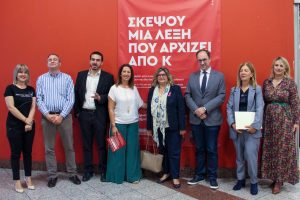
On Wednesday, October 18, from 10:00 to 19:00, Activities and Workshops were held at the Multi-Purpose Hall of Syntagma Metro Station, aiming to provide information and social support to oncology patients, caregivers, and their families.

The Cancer Center Kapa3, the Department of Marketing and Communication of the Athens University of Economics and Business, the General Laiko Hospital of Athens, STASY, WinCancer, and the Research Laboratory “Care of Adult Patients with Cancer” of the Nursing Department of the International Hellenic University, under the auspices of the Municipality of Athens, ELLOK, the Greek Patients’ Union, and HESMO, joined forces under the campaign “Think of a word that starts with K,”(*) with the goal of raising awareness about best practices in cancer prevention and patient management across healthcare units throughout the country.

The daily and strong presence of all the above organizations on the front line of addressing the disease, in hospitals across Greece, was transferred to the very heart of Athens, in an event with a clear and singular purpose: the advocacy of privileged social rights for oncology patients, as well as raising awareness around best practices for prevention and patient care.

During the opening of the event, WinCancer Manager Ms. Krystallidou referred to the ongoing struggle of organizations and non-profit entities for the prevention and fight against cancer. She emphasized that collaborations such as the one organized by Kapa3 are exactly the kind of synergies WinCancer seeks to support—an effort both demanding and relieving—guided by Kapa3’s core message: “No One Alone.”

Subsequently, Ms. Michalopoulou, Vice President of ELLOK, which placed the event under its auspices, spoke about the central goal of ELLOK and all cancer-focused organizations: prevention. Early detection, she stressed, is what empowers patients and positively influences the course of the disease, while she also highlighted the importance and value of digital health literacy in today’s world.

On behalf of the Department of Marketing and Communication of the Athens University of Economics and Business, Professor and Head of the Department Mr. Intounas welcomed the event, expressing his sincere thanks and congratulations to all students who voluntarily supported the action, as well as to Kapa3 for taking the initiative. He also referred to a new short educational program developed by the department in collaboration with Kapa3, titled “Marketing and Civil Society.”

The inspiration behind the letter “K,” as shared by Mr. Gravaris, Head of Public Relations and Communication of the Greek Patients’ Union, was the word “wine.” In his address, he compared wine—associated with health and quality of life—to initiatives such as the present one, which aim to restore health, safeguard well-being, and support the continuation of life for cancer patients. The Greek Patients’ Union embraced the initiative from its inception and placed it under its auspices.

The presence of Mr. Michail Nikolaou, Vice President of the Board of HESMO, was also significant, as was his statement during the greeting that cancer is not invincible. He emphasized, however, that prevention must be addressed far more seriously if we are to suppress the disease. “Prevention is not only about quitting smoking; it is also about loving and taking care of oneself,” Mr. Nikolaou concluded, noting that Kapa3 will be a key ally in this effort.

Ms. Bouki, Director of Corporate Communication & Passenger Experience of STASY, representing its President Mr. Damaskos, spoke about the importance of organizing events like this one, which bring people “closer,” strengthen support for patients, and empower their journey toward regaining health. STASY emphasized its ongoing commitment to standing by people and supporting their needs, making “CLOSE” its chosen word for the day.

Finally, Ms. Theoni Zougkou, Head of the Nursing Services Directorate of General Laiko Hospital, praised Kapa3’s efforts in the fight against cancer and spoke about the hospital’s collaboration with the organization. She thanked the nurses and the psychologist who were present to inform the public about cancer prevention and management, and highlighted their significant work in providing healthcare services to oncology patients at General Laiko Hospital.

Closing the greetings, Ms. Evangelia Bista, Head of Development and Operations of Kapa3, deeply moved by the presence and support of so many key health organizations, warmly thanked all attendees for supporting Kapa3’s mission. She also expressed heartfelt thanks to all volunteers who embraced the idea and helped make the event a reality. “Kapa3 was created to cover the crucial area of social support and guidance for oncology patients along the difficult path of illness,” Ms. Bista emphasized, committing to even more actions so that no one feels—or is—alone in the fight against cancer and in favor of life.

Throughout the day, many attendees received information on registering for digital prescriptions and scheduling preventive health appointments. At the same time, visitors were informed about the adoption of Kapa3’s digital applications—innovative and unique tools in Greece. This initiative was supported by volunteers from the Department of Marketing and Communication of the Athens University of Economics and Business, who enthusiastically provided guidance and assistance.

Participants who attended the two workshops were also given the opportunity to schedule a free digital mammogram or breast ultrasound through the Biomedicine Group, an event supporter, under the message #TakeControl #TakeCareOfYourself. Every woman should have her first mammogram at the age of 40 and then annually thereafter. For women with confirmed BRCA1 or BRCA2 gene mutations, annual digital mammography is recommended from the age of 30.

At the same time, staff from General Laiko Hospital provided guidance on self-care for oncology patients and distributed informative leaflets on the subject.

The all-day activities also included the distribution of informational material on breast cancer prevention by the Research Laboratory “Care of Adult Patients with Cancer” of the International Hellenic University, as well as additional educational materials from reputable scientific organizations, available on Kapa3’s website under the ODYGIA K3 section.

Workshops titled “Giving Meaning to Cancer – A Psychological Perspective” by psychologist-psychotherapist Vasileia Mari of General Laiko Hospital, and “Breast Cancer Prevention” by nurse (MSc) Eirini Throuvala from the Gynecological Cancer Unit of Elena Venizelou Maternity Hospital, offered valuable information and guidance to patients, caregivers, and family members through interactive and accessible discussions.

All activities were supported in Greek Sign Language by “HANDS UP,” emphasizing the importance of accessibility for all patients and caregivers to information that concerns them and supports effective care.

“Good Morning,” “Kindness,” “Close,” “Duty,” “New,” “Guide,” “Condemn,” “Reassure,” and “Summer” prevailed over “Cancer” and “Malignancy” in an event full of meaning, positive emotions, and hope.

No one is alone in the fight for life—and Kapa3, together with all the organizations and groups that supported this event, powerfully demonstrated the true meaning of that message.

|(*) Note: In Greek, the campaign and event creatively play on words starting with the letter “Κ” (Kappa), which is also the first letter of “καρκίνος” (cancer). Many of the positive words highlighted during the event—such as “Καλημέρα” (Good Morning), “Καλοσύνη” (Kindness), “Κοντά” (Close), “Καθήκον” (Duty), “Καινούργιος” (New), “Καθοδηγώ” (Guide), “Καταδικάζω” (Condemn), “Καθησυχάζω” (Reassure), and “Καλοκαίρι” (Summer)—intentionally start with the same letter to symbolically “overcome” cancer.

Text/Translation: Ifiyenia Anastasiou for Kapa3