International Day of Persons with Disabilities — 3 December

A day of awareness, commitment, and action

The International Disability Day, also known as the International Day of Persons with Disabilities (3 December), established by the United Nations in 1992, serves as an annual reminder of the need for full inclusion, equality, and respect for the rights of persons with disabilities across all aspects of social life. Moreover, today, more than ever, promoting accessibility and inclusion is not optional — it is an obligation.

According to the World Health Organization (2024), approximately 1.3 billion people — 16% of the global population — live with some form of disability. Disability is part of human diversity, and the lived experience of it highlights the systemic inequalities that continue to exist in many countries, including Greece. As a result, the need for stronger inclusion policies becomes increasingly evident.

These global figures highlight why International Disability Day remains a vital call to action worldwide.

Challenges and inequalities in Greece

In Greece, persons with disabilities still face significant barriers in their daily lives: inadequate accessibility in public spaces and services, difficulties in mobility, limited access to employment, and persistent social stigma that deeply affects their quality of life. National data confirm that these inequalities have direct consequences on health, education, and participation in social and economic life.

At the same time, improving accessibility is not only about removing barriers — it is about shaping a society that recognizes the real needs of its people. Therefore, from training professionals and changing attitudes, to ensuring universal access to healthcare and psychosocial support, inclusion requires sustained commitment. Only then can we guarantee that every citizen has equal opportunities, dignity, and participation.

Kapa3’s perspective: A world where every voice is heard

At the Cancer Patient Guidance Centre – Kapa3, we support individuals facing serious health challenges every day. We understand how essential the following are:

  • clear and accessible information
  •  timely support
  •  respect
  •  care without exclusions

Learn more about the rights of Persons with Disabilities in the following publications on our website here.

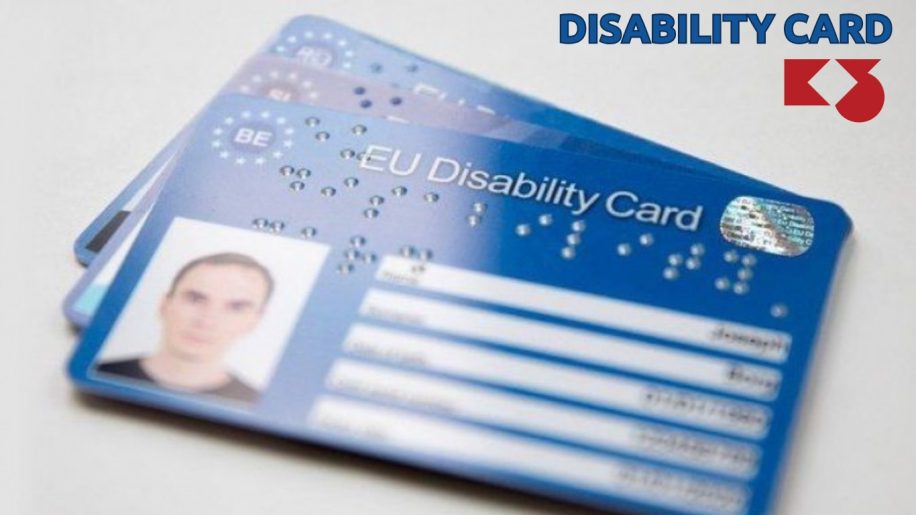
Find information about issuing a disability card here, and about free or reduced public transportation fares here.

The International Day of Persons with Disabilities reminds us that every action and every policy must be built on the principle of inclusion.
No one should be left behind.

Building more inclusive societies: From vision to practice

Creating a truly accessible environment requires:

  • Accessible cities and public services
  •  Training for professionals in health, social care, and customer service
  •  Accessible digital technologies
  •  Employment policies that enable active participation
  •  Awareness-raising and dialogue to combat stigma

Inclusion is not an act of “good will” — it is a prerequisite for social progress.

At the same time, the transition to a genuinely inclusive society is not instantaneous. It requires coordinated efforts from the State, civil society, and persons with disabilities themselves. Continuous evaluation, transparency, and meaningful participation are the foundations of lasting change.

Access is a right.
Every person deserves respect and equal opportunities.

Text/Adaptation: Ifiyenia Anastasiou for Kapa3

Sources


This Year’s Good-Luck Charm (2026): A Symbol of Self-Care

The Good Luck Charm of the Year (2026) for Kapa3: The Crown

A Symbol of Self-Care

This year’s good luck charm is dedicated to self-care — a small, daily reminder of the deep importance of tending to ourselves with gentleness, respect, and consistency.
In a time when everyday life becomes increasingly demanding, this charm reminds us that self-care is not a luxury, but a necessity.

It symbolizes all those small acts that keep us standing: the pause, the breath, the moment of rest; the warm embrace we offer ourselves. The choice to listen to our bodies, to acknowledge our limits, and to prioritize our health, joy, and inner balance.

And it is precisely this “pause” that led us to our good-luck charm for 2026: the Crown — a symbol that carries far more than what meets the eye.

In music, the crown (fermata) is the pause held by the performer —
the moment of emphasis before the melody continues.
So it is with every struggle: it requires breaths, pauses, small breaks — not to stop, but to continue.

A crown is also a circle. And a circle means you are not alone; around you are people, care, support — a circle that holds you.

If there were a title of honor for those who fight cancer, it would be a crown. Not as a symbol of power, but as a recognition of dignity.

Cancer can sometimes feel like a thorny wreath — heavy, painful, relentless.
And yet, depending on how we choose to face it, it can transform into a wreath of victory: the victory of persistence, endurance, return — and above all, the victory of effort.

Because behind every crown lies a story: of a parent, a friend, a child, a partner, someone who is fighting or supporting someone who fights.

That is why the crown is not just a piece of jewelry — it is a message of strength:

It is not what happens to us that defines us —
but how we choose to face it.

It reminds us that when we care for ourselves, we can truly care for others. That strength, well-being, and kindness begin within us.

May this year’s charm be a small talisman accompanying us each day, inspiring us to make space for what nourishes us, to embrace our vulnerability, and to celebrate our worth.

For a year filled with more care, more peace, and more love — beginning with ourselves.

Let’s fill our days with small acts that make a difference.
Let’s uplift one another.
Let’s turn self-care into a habit.

And for all of us at Kapa3, the invitation is simple: To weave self-care into our everyday lives.

Join the #kapa3gouri Self-Care Challenge

Inspired by this year’s charm — dedicated to self-care — we invite you to join the #kapa3gouri Self-Care Challenge, a collective action that brings us together through moments of care, calm, and mindfulness.

How the challenge works:
  1. Take one small self-care action during your day.
    It can be something simple: a walk, a breathing break, a warm cup of tea, a few minutes away from screens, journaling your thoughts, a hug you needed.

  2. Capture a photo or write a few words that reflect that moment.

  3. Share it on Instagram or Facebook using the hashtag #kapa3gouri.

  4. Tag two friends to keep the chain of self-care going.

Our goal is not the “perfect” image — but the daily reminder that we deserve time, space, and care. Each post becomes a small mosaic of tenderness toward ourselves.
A collective message that wellbeing begins within.

For 2026, choose the Crown — as a symbol of hope, strength, and dignity.
Wear it. Offer it. Share its power.

Thank you for being part of this journey.


The Kapa3 Team


When Art Meets Science: How CREATE Platform May Strengthen Emotional Regulation in Cancer Care

At Kapa3, we recognize that cancer affects far more than the body, challenging the emotions, sense of self, relationships, and quality of life of those suffering. Despite the high prevalence of co-occuring mental health issues such as anxiety and depression, access to mental health services remains limited. This gap between patient needs and healthcare provisions is precisely what motivated us to help develop CREATE, an innovative digital platform designed to support emotional resilience through a powerful combination of art, technology, and emotional engagement (Ladas et al., 2025).

The CREATE (Creative and Resilience through Arts, Technology, and Emotions) platform uses computerised cognitive training (CCT) designed to enhance emotional regulation by integrating working memory training, engagement with famous artwork, and creative emotional expression. Unlike other platforms, it only targets one cognitive function: working memory. Evidence suggests that focusing on a single cognitive function is more effective than targeting multiple ones. Working memory in particular has been found to influence emotional regulation, a skillset with established benefits for anxiety and depression.

CREATE therefore introduces a unified framework that addresses cognitive function, emotional expression, and biological influences such as sleep quality and dopamine activity. Such digital health solutions are increasingly recognized as promising alternatives to standard psychotherapy, offering greater accessibility and affordability while still capable of reducing symptoms of depression and anxiety.

Findings from the pilot study on CREATE were very promising; the participants found the platform easy to use and enjoyable, and showed increased emotional and creative engagement. Although this early research focused on feasibility and validity rather than therapeutic effectiveness, initial findings indicate improvements in emotional regulation. Importantly, the study demonstrated positive relationships between working memory, emotional regulation, and expression of emotion, while also suggesting that sleep and dopamine may mediate these effects.

These insights highlight the importance of lifestyle and biological data in developing personalized digital mental health tools. It is well established in neuroscience that working memory plays a central role in emotional regulation. A stronger working memory allows individuals to better cope with distressing thoughts, shift their attention, and respond more calmly to challenges. For people living with cancer, supporting these cognitive and emotional capacities makes daily life more manageable. Improved thinking skills can facilitate treatment adherence, informed decision-making, and a more effective management of the emotional turbulence that often accompanies illness.

The study relied on a convenience sample made up mostly of cancer-related healthcare professionals, and only one cancer survivor participated. To address this limitation, the next phase of research will focus entirely on cancer patients and survivors. Their unique challenges, including cancer-related fatigue and treatment-related cognitive changes, will be central to refining the platform and ensuring that CREATE is tailored to the needs of those it aims to benefit the most. This creates not only a more impactful intervention but also empowers patients to have a voice in shaping the future of supportive cancer care.

As we look ahead, CREATE offers a hopeful vision for digital mental-health support. It is scalable, affordable, and adaptable, making it especially valuable for people who lack access to mental health care. Intervening early and supporting emotional well-being throughout treatment and survivorship may reduce the long-term strain on healthcare services associated with mental health conditions.  As cancer treatment continues to evolve, we must make sure that psychological care develops along with it. And CREATE does just that.

Read the full study

References

Ladas, A. I., Katsoridou, C., Gravalas, T., Klados, M. A., Stravoravdi, A. S., Tsompanidou, N., Fragkedaki, A., Bista, E., Chorafa, T., Petrovic, K., Vlotinou, P., Tsiakiri, A., Papazisis, G., & Frantzidis, C. A. (2025). Creativity and REsilience Through Arts, Technology and Emotions: A Pilot Study on the Feasibility and Validity of the CREATE Platform. Brain Sciences15(11), 1171.

Article by Despina Chrysostomidou, Psychologist, for Kapa3 Research Insights

4 November: International Stress Awareness Day

Stress is a natural response to life’s challenges and changes. It helps us respond, adapt, and stay motivated. But when it becomes prolonged, it can turn into an invisible, exhausting companion that affects every aspect of daily life — body, mind, relationships, and mood. International Stress Awareness Day (4 November) is a reminder to pause, take a deep breath, and acknowledge that mental health deserves the same care as physical health.

In Greece, the mental health burden remains significant. According to the OECD (2023, Country Health Profile), around 6% of the population experiences anxiety disorders, while 7% report symptoms of depression. At the same time, more recent studies in younger age groups show that stress affects a much larger proportion: in a 2020 survey of university students, high levels of moderate to severe stress and extreme anxiety were reported. Additionally, international daily stress measurements indicate that about 58% of Greeks felt stress the previous day, placing the country among the highest in Europe and globally. These figures highlight that anxiety touches a substantial part of the population and significantly impacts daily life, emphasizing the importance of awareness and support.

Stress can manifest in multiple ways: rapid heartbeat, difficulty concentrating, insomnia, irritability, or simply feeling like there’s “never enough time.” Too often we dismiss it as “part of life.” But caring for our mind and emotions is not a luxury — it is a responsibility to ourselves. Support from mental health professionals, physical activity, connection with nature, music, art, or even a simple conversation with someone we trust can become small breaths of balance.

People living with chronic illnesses, including cancer, often face heightened stress. Anxiety about treatment, uncertainty about the future, and the physical impact of disease can intensify tension and worry. Recognizing and validating this stress is essential, as support through networks, counseling, and accessible resources can make a meaningful difference.

At Kapa3, we believe no one should face stress or illness alone. Through our programs, initiatives, and community, we offer guidance, emotional support, and practical help, highlighting that mental well-being is a shared journey and empathy is key.

Today is more than a reminder of the risks of stress. It is an invitation to speak openly without fear or shame, to create space for understanding and acceptance. Let’s learn to listen to our bodies and minds, recognize the signs, and seek help when needed. Calmness is not a luxury — it is a right for everyone.

Read more in previous articles of Kapa3: Article1, Article2, Article3

Sources:

OECD (2023), Country Health Profile: Greece
Stress, Anxiety and Depression Prevalence among Greek University Students during the COVID-19 Pandemic (2023, PLOS ONE / PMC)
Gallup Global Emotions Report 2024 – Ελλάδα: Daily Stress Measurement (58%)

Text/adaptation: Ifiyenia Anastasiou for Kapa3