
Continuing the Journey: Online Group Sessions for Mental Health and Nutrition – Third Cycle with Kapa3 and the LB.H.Sc

Following the warm response to the second cycle of meetings (see the related article here ), focusing on Nutritional Guidance and Experiential Psychological Support, Kapa3 and the Laboratory of Basic Health Sciences (LB.H.Sc), Department of Nursing University of Peloponnese are delighted to continue their collaboration with a third series of online group sessions for mental health and nutrition, dedicated to the holistic care of body and mind, designed for people living with cancer and their caregivers.

In this third cycle, mental health and nutrition are approached as two complementary sides of the same care.

The mental health sessions help participants recognize and manage challenging emotions such as anxiety, fear, sadness, or guilt, strengthen resilience, and cultivate a deeper connection with themselves and others.

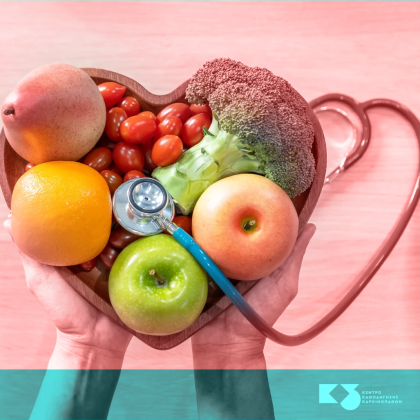
The nutrition sessions explore how mindful and balanced eating can support the body, improve energy and mood, and become a meaningful act of self-care. Food is not only a necessity but also a way to nurture the body, mind, and spirit.

Program of Online Sessions for Mental Health and Nutrition & Themes

  • Saturday, February 28, 2026, 17:30–19:00
    Myths and truths about “anti-cancer” diets. How to evaluate nutritional information and avoid risky practices.

  • Saturday, March 14, 2026, 17:30–19:00
    Stress and uncertainty: practical ways to manage them during treatments and exams.

  • Saturday, March 21, 2026, 17:30–19:00
    Giving space to emotions without being overwhelmed: recognizing and expressing fear, anger, sadness, and guilt.

  • Saturday, March 28, 2026, 17:30–19:00
    Nutritional support during treatment & the role of cachexia.

  • Saturday, April 25, 2026, 17:30–19:00
    Boundaries without guilt: protecting energy and mental resilience.

  • Saturday, May 9, 2026, 17:30–19:00
    Safe cooking practices & kitchen hygiene.

  • Saturday, May 23, 2026, 17:30–19:00
    Family and illness: changes in relationships and ways to support each other.

  • Saturday, June 6, 2026, 17:30–19:00
    The Tree of Life: who I am beyond the illness.

  • Saturday, June 13, 2026, 17:30–19:00
    What gives meaning to life now: discovering small but meaningful elements that sustain us.

Format & Participation

The meetings are held online, based on dialogue, experiential learning, and the sharing of personal experiences. Everyone participates at their own pace, in a warm environment of acceptance and trust. Consistent attendance helps build safety and confidence within the group.

To express your interest or join the first session of the third cycle (Saturday, February 28, 17:30–19:00): [Registration Link]

Text/adaptation: Ifiyenia Anastasiou for Kapa3

Continuing the Journey: Holistic Body and Mind Care with Kapa3 and the University of the Peloponnese

After the first round of meetings held in April (see the related article here), focusing on Nutritional Guidance and Experiential Psychological Support, Kapa3 and the University of the Peloponnese continue their collaboration with a new series of experiential workshops dedicated to the holistic care of body and mind.

The meetings are open to people living with cancer, caregivers, and healthcare professionals — to anyone seeking a space for genuine communication, understanding, and empowerment.

In this new cycle, mental health and nutrition are approached as two sides of the same care.

In the mental health sessions, participants learn to recognize and manage challenging emotions such as anxiety or fear, strengthen their resilience, and cultivate a deeper connection with themselves and others.

At the same time, the nutrition sessions explore how balanced and mindful eating can support the body, enhance energy and mood, and become an act of self-care and self-respect. Food is not only a necessity but also a way to show love — to the body, the soul, and to life itself.

The meetings are held online and are based on dialogue, experiential learning, and the sharing of personal experiences. Everyone participates at their own pace, in a warm environment of acceptance and trust.

To express your interest: Registration Form for the Support Group for People with Cancer

Text/adaptation: Ifiyenia for Kapa3

Understanding Breast Cancer Risk Factors: What You Can and Can’t Change

October is Breast Cancer Awareness Month — a time to raise awareness, share knowledge, and remind ourselves of the importance of early detection and prevention. One of the most common questions people ask is: “What can I do to lower my risk of breast cancer?”

The truth is that while doctors don’t know exactly what causes breast cancer, research has identified certain factors that increase the likelihood of developing the disease. Some of these are beyond our control, while others are linked to lifestyle choices and can be modified. By learning the difference, we empower ourselves to take the best possible care of our health.

Unchangeable Risk Factors

Some risk factors cannot be avoided. These include:

  • Sex: Being female or assigned female at birth is the biggest risk factor.
  • Age: Risk increases with age; two out of three invasive breast cancers occur in women 55 or older.
  • Family History and Genetics: A family history of breast cancer or inherited genetic mutations (such as BRCA1/2) increases risk.
  • Personal History: Women previously diagnosed with breast cancer are more likely to develop it again.
  • Past Radiation: Radiation to the chest or face before age 30 raises risk.
  • Certain Breast Conditions: Some non-cancerous breast changes are linked to higher risk.

Lifestyle-Related Risk Factors

Our daily habits and choices also play a significant role:

  • Weight: Being overweight, especially after menopause, increases risk.
  • Physical Activity: Lack of regular exercise is linked to higher risk.
  • Smoking and Alcohol: Both are associated with increased breast cancer risk.
  • Hormonal Factors: Use of hormone replacement therapy (HRT) or hormonal contraception may raise risk in some women.
  • Reproductive History: Age at first childbirth, number of pregnancies, and breastfeeding history all influence risk.
  • Menstrual History: Early onset of menstruation is associated with slightly higher risk.

Emerging Risk Factors

Research is ongoing, but some additional factors are being studied, such as:

  • Low vitamin D levels.
  • Night-shift work and exposure to bright light at night.
  • Exposure to chemicals (in food, plastics, cosmetics, sunscreens, pesticides, pollution).
  • Frequent consumption of grilled or smoked meats.
  • High levels of air pollution.

Myths and Misconceptions

It’s equally important to clear up what does not increase risk. Research shows no evidence that abortion, antiperspirants, bras, or dairy products cause breast cancer.

We may not be able to control every risk factor, but every small step toward a healthier lifestyle truly makes a difference. Exercise, balanced nutrition, limiting alcohol, and avoiding smoking are not just prevention measures — they’re acts of daily self-care.
At Kapa3, we believe that awareness and support save lives. No one is ever alone on this journey. We promise to continue to speak openly, share knowledge, and stand beside every woman. Because awareness is not about fear; it’s about strength, hope, and small steps toward a healthier tomorrow.

Read More here: https://www.breastcancer.org/risk/risk-factors

Text/Adaptation: Ifiyenia for Kapa3