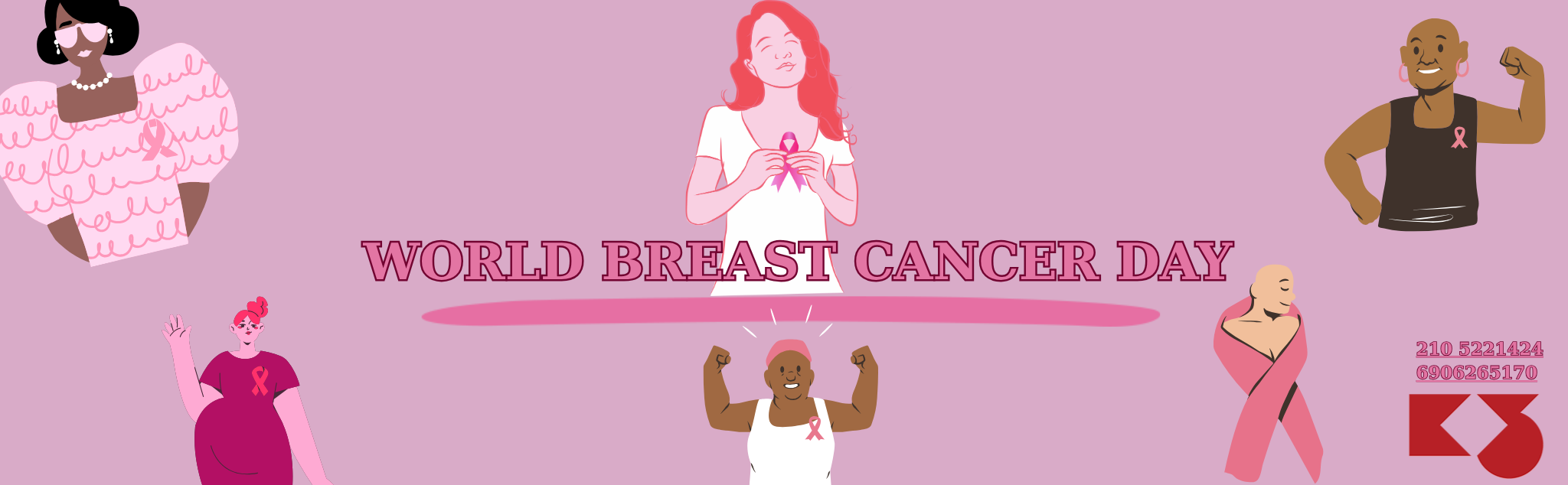

Every year on 4 February, World Cancer Day invites us to reflect on one of the greatest challenges of modern public health.
The goal is not only to confront cancer as a disease, but to face it with knowledge, empathy and shared responsibility. Because cancer touches millions of lives in countless ways, yet it does not define who we are. We are more than a diagnosis, more than a number.
World Cancer Day was established in 2000, following the World Summit Against Cancer for the New Millennium in Paris. It is a core element of the Paris Charter Against Cancer — a global commitment to advancing research, prevention, patient care, awareness and international mobilisation. Since then, the day has served as a reminder that addressing cancer requires long-term vision, cooperation and consistency.
This year’s message, “United by Unique”, highlights a fundamental truth: cancer is not only a medical event.
It is a deeply personal experience. Behind every diagnosis lies a unique human story — stories of fear and loss, but also of resilience, care, love and healing. Every story counts.
Cancer Today: Facts and Challenges
Cancer remains one of the most significant public health challenges in Europe and in Greece. Data from international and European organisations underline not only the scale of the disease, but also the persistent inequalities in prevention, early detection and access to care.
In Europe, approximately 2.7 million new cancer diagnoses are recorded each year, with around 1.3 million deaths, while the economic burden exceeds €93 billion annually. In Greece, cancer is the second leading cause of death, affecting thousands of families and carrying profound social and psychological consequences.
Progress, Prevention and Hope
At the same time, scientific progress offers well-founded reasons for optimism.
Prevention and early detection remain decisive factors. Screening programmes, vaccination, healthy lifestyle choices and access to reliable information can significantly reduce the risk of certain cancers and improve treatment outcomes. In this context, knowledge is not merely information — it is power and a fundamental right.
Advances in cancer management are equally important. Personalised medicine, targeted therapies, immunotherapy and improved management of treatment side effects contribute not only to increased survival rates, but also to a better quality of life for people living with and beyond cancer. Information and education are key tools for both prevention and empowerment.
Mental health plays a crucial role as well. Diagnosis and treatment are often accompanied by anxiety, fear, sadness and emotional exhaustion — affecting not only patients, but also their caregivers. Psychosocial support, counselling services and empowerment groups are essential components of holistic cancer care, helping to preserve dignity and quality of life.
Information, research and mental health care are core pillars of modern cancer management. Indicatively, you may explore the following Kapa3 articles:
Empowerment and Action
World Cancer Day is not just a day of awareness. It is a call to action:
-
to speak openly about prevention and our health,
-
to support people living with cancer and their caregivers,
-
to seek reliable information and evidence-based sources,
-
to advocate for equal access to care and psychological support,
-
to remember that no one should face cancer alone.
Because our strength lies in solidarity — and in respecting the uniqueness of every individual.
United by our uniqueness.
References:
World Health Organization (WHO) – Cancer
https://www.who.int/health-topics/cancer
International Agency for Research on Cancer (IARC)
https://www.iarc.who.int
Union for International Cancer Control (UICC) – World Cancer Day
https://www.worldcancerday.org
European Commission – Europe’s Beating Cancer Plan
https://health.ec.europa.eu/eu-policy/health-strategies/europes-beating-cancer-plan_en
European Cancer Information System (ECIS)
https://ecis.jrc.ec.europa.eu
Hellenic Statistical Authority (ELSTAT) – Health Data
https://www.statistics.gr/en/statistics/-/publication/SHE15/
Hellenic National Public Health Organization (EODY) – Cancer & Public Health
https://eody.gov.gr/
Greek Ministry of Health – Prevention & Screening
https://www.moh.gov.gr/articles/prevention-screening
Text/adaptation: Ifiyenia Anastasiou for Kapa3