
There is an urgent need for psychological support for cancer patients. The KAPA3 team explains and advocates for this

There is an urgent need for psychological support for cancer patients. The KAPA3 team explains and advocates for this

Every day, healthcare professionals are called upon to communicate with, assess, and, above all, support people who are going through cancer.

Does cancer affect only physical health, or does it also have a profound impact on a person’s psychological, social, and emotional life? The needs that arise during the course of the illness are many and are often accompanied by the question: “What does the disease really bring to a person’s life?” A cancer diagnosis brings about significant changes in daily life, relationships, social roles, and the way a person perceives themselves and their future.

A cancer diagnosis is an extremely stressful event, often accompanied by feelings of fear, uncertainty, anxiety, and grief. At the same time, patients are called upon to cope with the effects of treatments such as chemotherapy, radiation therapy, and surgery. Changes in physical appearance, fatigue, pain, and limitations in daily functioning can significantly affect their self-esteem and quality of life (Pitman et al., 2018).

Uncertainty regarding the course of the disease and the likelihood of relapse are significant sources of psychological distress. The extent of this phenomenon is reflected in the meta-analysis by Mitchell et al. (2011), which included 94 studies and more than 14,000 cancer patients. According to the results, 16.3% of patients met the diagnostic criteria for major depressive disorder, 10.3% for anxiety disorder, and 19.2% for adjustment disorder.

These data highlight that a significant proportion of cancer patients experience severe psychological distress, a fact that underscores the need for specialized psychological support.

Furthermore, cancer often affects an individual’s family and social relationships. The patient may be forced to limit or abandon professional and social roles, while the family is called upon to adapt to new demands and responsibilities, experiencing significant psychological strain of their own (Northouse et al., 2010).

Cancer patients have an increased need for psychological support, as the disease significantly affects their psychological, social, and emotional functioning. Fear of the disease’s progression, uncertainty about the future, the side effects of treatments, and the possibility of recurrence are major sources of psychological distress. At the same time, the experience of cancer is often accompanied by feelings of loss of control, fear, and emotional distress. The contemporary psycho-oncology literature recognizes that the early identification of psychosocial needs and the provision of appropriate interventions are an integral part of holistic oncology care (Caruso & Breitbart, 2020; Mehnert-Theuerkauf et al., 2023).

Within this context, psychological support is a key component of holistic care for cancer patients. Holistic care refers to a comprehensive approach that takes into account not only the patient’s physical needs but also the psychological, social, and spiritual dimensions of their health. Counseling, psychotherapy, and support groups provide a safe space for expressing emotions and building psychological resilience (National Comprehensive Cancer Network [NCCN], 2024).

At the same time, they help improve adherence to treatment, strengthen cooperation with healthcare professionals, and maintain quality of life. As Holland and Weiss (2008) argue, psychosocial care is an integral part of high-quality oncology care, from diagnosis through the survival phase.

In conclusion, the experience of cancer is a complex and multidimensional process that affects every aspect of a person’s life. Managing the disease is not limited solely to physical treatment but requires the recognition and addressing of the psychological and social needs that arise at every stage. Providing timely and systematic psychological support can empower the patient, improve their ability to adapt to the demands of treatment, and contribute significantly to maintaining their dignity, hope, and quality of life. Psychological care should be regarded as a fundamental right of every cancer patient and as an integral part of modern oncology practice.

Coordination of Psychological and Social Services within the Framework of Psychosocial Care

The care of cancer patients is not limited to treating the disease and its physical effects. The needs that arise during treatment are often multifaceted and concern both the individual’s psychological well-being and practical, social, or financial issues that affect their daily life.

For this reason, effective support requires close collaboration among different healthcare professionals within a shared framework of psychosocial care. Within this framework, the Social Services and Psychological Services operate in a complementary manner, with the shared goal of enhancing the individual’s quality of life and overall adjustment to the experience of illness.

A client’s contact with the service can begin either through the Social Services Department or the Psychological Services Department. During the initial contact, an assessment of the client’s needs is conducted, and information is provided about all available support services.

Regardless of the initial request, the beneficiary is informed about the option of receiving psychological support, as the experience of cancer is often accompanied by heightened psycho-emotional needs that are not always apparent from the first contact. With their consent, an internal referral can be made to the Psychological Services Department for further evaluation and support.

The Psychological Services Department is responsible for the initial assessment, obtaining informed consent, and creating an individual support file. A structured series of sessions is then provided, tailored to the beneficiary’s needs. During this process, issues may arise related to social benefits, employment challenges, financial burdens, disability certification procedures, or other practical needs that significantly impact the daily functioning of the individual and their family. In such cases, and always with the beneficiary’s consent, cooperation with Social Services is initiated, and Social Services assumes responsibility for managing the relevant social and administrative matters.

The collaboration between the two services enables the timely identification of new needs and ensures continuity of care. Social Services focuses on the practical, social, and administrative aspects of support, while Psychological Services focuses on psychological resilience, emotional processing of the experience of the disease, and adaptation to the changes it brings about. The collaboration between the two services allows for a more comprehensive response to the needs of the cancer patient. In this way, a unified framework of psychosocial care is established that provides substantial support to the patient and their support network at all stages of their journey with the disease.

At the same time, regular communication and coordination between the two services allow for the timely identification of new needs and ensure continuity of care. The Social Services Department focuses on the practical, social, and administrative aspects of support, while the Psychological Services Department focuses on psychological resilience, emotional processing of the experience of the disease, and adaptation to the changes it brings about. The collaboration between the two services enables a more comprehensive response to the needs of cancer patients. In this way, a unified framework of psychosocial care is established that provides substantial support to the patient and their support network at all stages of their journey with the disease.


Kapa3 – Cancer Patient Guidance Center

Together, with knowledge, care, and a human touch.

Contact us:

https://www.kapa3.gr/epikoinonia/ by typing “Psychological Support” in the Message box

OR CALL

2105221424 – info@kapa3.gr

Athens: 13 Kostis Palamas Street, 3rd floor, (9:00 AM – 5:00 PM) 6982003282

Kapa3 Introduces Its New Psychological Support Team

On the occasion of May, Mental Health Awareness Month, and June, a month dedicated to cancer survivors, Kapa3 introduces its new Psychological Support Team.

The experience of cancer does not affect only the body. It deeply touches a person’s emotional world, daily life, relationships, family, work and sense of safety. From the moment of diagnosis, throughout treatment, and also in life after treatment, patients and their loved ones are often called to cope with fear, uncertainty, change, loss, exhaustion and, at times, a profound sense of loneliness.

At Kapa3, we know that supporting people affected by cancer requires a holistic approach. Information about rights, benefits and procedures is essential. Guidance through the health and social care system is equally important. But people also need a safe space where they can speak, be heard, express what weighs on them and receive support with respect, discretion and professionalism.

Kapa3’s new Psychological Support Team has been created for this purpose: to provide counselling and psychosocial support to people experiencing cancer, as well as to caregivers and family members.

The aim of the service is to empower, support and improve the quality of life of beneficiaries. Through psychological support, individuals may better recognise what they are experiencing, manage anxiety and uncertainty, strengthen their emotional resilience and feel that they are not alone in their journey.

The service is addressed to adult cancer patients, survivors, caregivers and family members. Support may relate to different stages of the cancer experience, including a new diagnosis, active treatment, the post-treatment period, recurrence, long-term follow-up or the daily challenges faced by caregivers.

Support is provided through a cycle of up to eight individual sessions, scheduled in consultation with the beneficiary and according to the availability of the service. Sessions may take place either in person or online, depending on the needs of the beneficiary and the operational framework of the service.

Confidentiality, professional ethics and the protection of personal data are central to the service. Participation is based on informed consent, and the information shared by the beneficiary remains confidential. Any exchange of information between Kapa3’s Psychological and Social Services is limited strictly to what is necessary in order to provide appropriate support.

The new team is part of Kapa3’s broader philosophy of interdisciplinary, person-centred and responsible care. Psychological support is connected with social guidance, information on rights and benefits, referral needs and the overall empowerment of the beneficiary.

At the same time, the service operates within clear boundaries. It has a supportive and counselling character and does not replace psychiatric monitoring, emergency psychiatric intervention or long-term psychotherapy. When needed, beneficiaries may be guided towards appropriate services or specialised mental health professionals.

At Kapa3, we believe that no one should have to face cancer alone. Psychological support is not a luxury. It is part of care. It is a space for listening, acceptance and empowerment.

Asking for help is not a weakness.
It is an act of care.
It is an act of self-awareness.
It is an act of strength.

Kapa3 – Cancer Guidance Centre
Together, with knowledge, care and human presence.


June: Cancer Survivors Month

Survival is a victory — but care must continue

June is dedicated to people living with and beyond cancer. It is a month of recognition, hope and respect for every person who has faced a cancer diagnosis, completed treatment, continues treatment, or lives with cancer as a long-term condition.

Cancer survival is a major victory. However, for many people, it is not the end of the story. Life after cancer often brings a new reality: follow-up appointments, fear of recurrence, fatigue, emotional distress, changes in body image, work-related challenges, financial pressure, family adjustments and the need to rebuild everyday life with confidence and dignity.

Cancer Survivors Month reminds us that survivorship is not only about living longer. It is also about living better.

A cancer survivor is not only a person who has completed treatment and is disease-free. The term also includes people receiving maintenance treatment, people living with cancer as a chronic condition, and those who continue to experience the physical, emotional, social or economic consequences of the disease and its treatment.

In recent years, advances in early diagnosis, targeted therapies, immunotherapy, surgery, radiotherapy and supportive care have increased the number of people living many years after a cancer diagnosis. This is a major achievement for medicine, research and public health. At the same time, it creates a new responsibility: to ensure that survivorship care is organised, person-centred and accessible to all.

For many survivors, the end of active treatment is a moment of relief and gratitude. Yet it may also bring uncertainty. Some people feel that everyone around them expects them to “go back to normal”, while they are still trying to understand what has changed in their body, their emotions, their relationships and their daily life.

The fear of recurrence, anxiety before follow-up tests, persistent fatigue, pain, cognitive difficulties, changes in sexuality, emotional vulnerability and social isolation are real experiences for many people after cancer. These needs should not be underestimated. Survivors need space to speak, reliable information, access to professional support when needed, and connection with communities and organisations that understand their journey.

Long-term follow-up is also essential. Survivorship care should not focus only on recurrence. It should also include prevention, early recognition of late effects, management of treatment-related complications, support for mental health, healthy lifestyle guidance and personalised monitoring according to each person’s cancer type, treatment history, age and individual risk factors.

The message is not fear. The message is awareness, prevention and continuity of care.

Life after cancer is also about rights. It is about returning to work, accessing social benefits, understanding available services, managing financial toxicity, supporting caregivers, protecting dignity and ensuring equal access to care. Survivorship must be seen as a social, psychological and practical issue — not only a medical one.

At Kapa3, we see every day that cancer does not always end with the last treatment. It continues in the questions people ask about their rights, their next steps, their follow-up, their access to benefits, psychological support, work, family life and social reintegration.

This is why people living with and beyond cancer need holistic support. They need information, guidance, psychosocial care, access to rights and services, empowerment and continuity of care. No one should feel alone after treatment. No one should be left to navigate bureaucracy, uncertainty or lack of information without support.

Cancer Survivors Month invites us to change the way we talk about survival. We should not ask only: “Did the person survive cancer?” We should also ask:

Are they living with quality of life?
Do they have access to the care they need?
Do they know their rights?
Do they receive psychological and social support?
Can they return to work and daily life with dignity?
Is there a follow-up plan?
Is there someone to guide them when they do not know where to turn?

Cancer survival is a victory. But the real challenge is to turn this victory into a life with quality, safety, rights, support and hope.

At Kapa3, we continue to stand beside every person living with and beyond cancer. Through information, guidance, empowerment and human-centred support, we believe that care does not stop at treatment.

It continues in life.

Participation in CA21152 – Implementation Network Europe for Cancer Survivorship Care

Digital Health and Cancer Survivorship: Kapa3 at the INE-CSC 2026 Conference in Coimbra

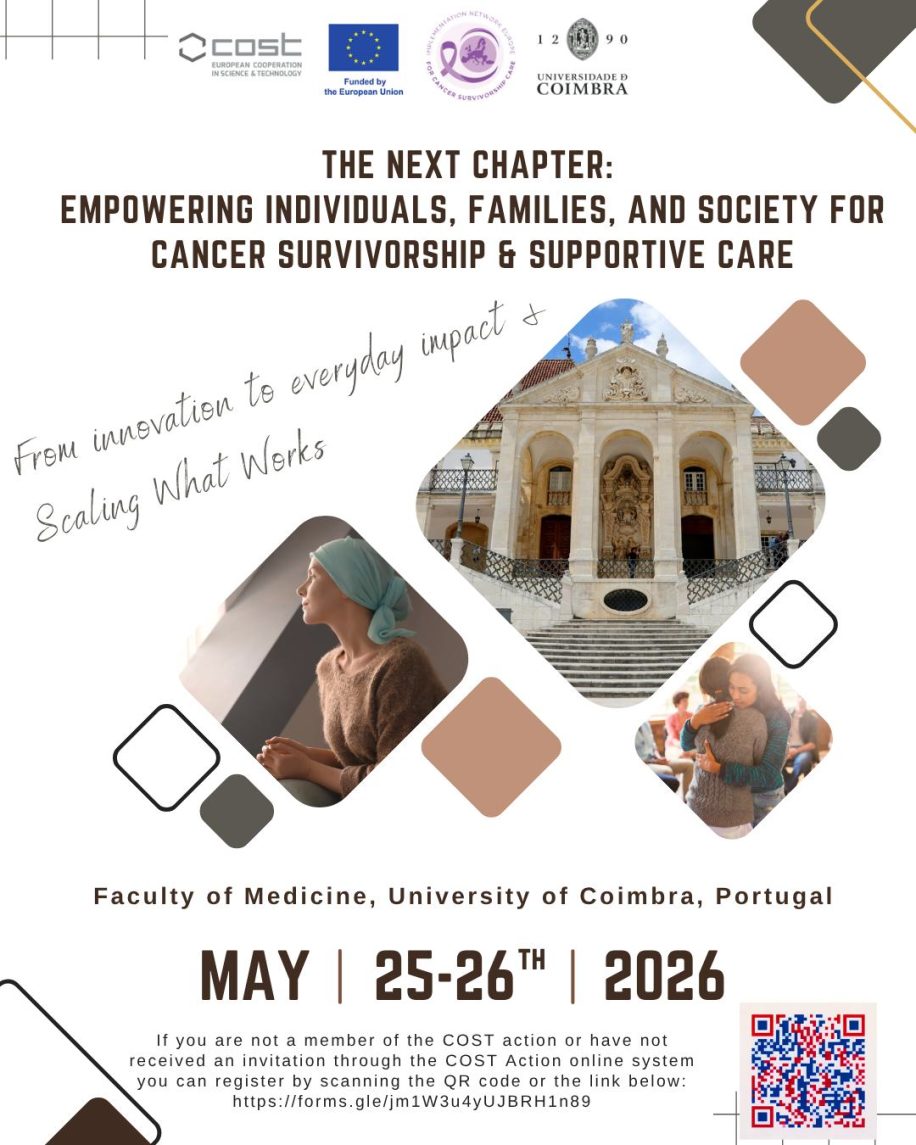
The Cancer Guidance Center – Kapa3 participated in the INE-CSC 2026 Conference, part of CA21152 – Implementation Network Europe for Cancer Survivorship Care (INE-CSC), held on 25–26 May 2026 at the Faculty of Medicine (Polo III), University of Coimbra, in Coimbra, Portugal.

The conference was held under the theme “The Next Chapter – Empowering Individuals, Families, and Society for Cancer Survivorship & Supportive Care”, highlighting the need for new approaches to cancer survivorship, supportive care and the translation of innovation into real-world impact for people living with and beyond cancer, their families and society.

Kapa3’s presence in Coimbra represents another important step in its European engagement and in its ongoing effort to connect everyday experience in supporting cancer patients in Greece with European knowledge, research, digital innovation and health policy.

A key highlight was the participation in a round table discussion on facilitators and barriers to the implementation of digital health tools in oncology. The discussion was co-organised by Aristea Kyriaki Ladas and Christos Frantzidis and brought together voices from different European countries and organisations, including representatives from Kapa3, Acreditar Portugal, Liga Portuguesa Contra o Cancro, ORCO / Madrid Regional Ministry of Health, as well as participants from Poland, Latvia and the United Kingdom.

Among the participants in the round table were Yannis Kontogiorgis and Despoina Pistiolis from Kapa3, Greece, contributing to the European dialogue on digital health, oncology navigation and the participatory development of solutions that respond to the real needs of patients and caregivers.

One of the key messages of the discussion was that digital innovation in oncology is not only a technological challenge. It is also a matter of policy, implementation, equity, trust and accessibility.

For digital tools to make a meaningful difference in cancer care and survivorship, they cannot remain isolated applications or pilot projects. They need to become part of real care pathways, be supported by appropriate policy environments, connect with interdisciplinary practice and be evaluated in terms of effectiveness, implementation readiness, accessibility, equity, sustainability and value.

The discussion also highlighted that digital tools must be designed around the real needs of patients and survivors, not only around technical possibilities. Accessibility across countries, languages, healthcare systems and levels of digital and health literacy must be built in from the beginning.

The role of patient organisations and cancer support communities was also identified as essential. These organisations can act as a bridge between technological innovation and the everyday reality of people affected by cancer. They understand the questions, barriers, fears and needs that are often not fully captured by formal care systems.

For Kapa3, this participation is directly linked to the development of Myrto, its digital health and rights navigator, designed as a tool for empowerment, guidance and support for cancer patients and their caregivers.

Myrto is not approached as a simple information tool. It is being designed as a participatory intervention built around the real needs of people with lived experience of cancer. It is connected to access to rights, social benefits, services, practical guidance and human escalation whenever needed.

The Coimbra experience strengthened the view that digital health must be human-centred, accessible, trustworthy and integrated into a broader ecosystem of care. Technology can meaningfully support cancer care only when it is designed with participation, trust, clear purpose and an equity-oriented approach.

Cancer survivorship is not only about completing treatment. It is about quality of life, mental health, social reintegration, work, family, everyday life, access to services and the feeling that no person is left alone after diagnosis or treatment.

Through its participation in European networks such as INE-CSC, Kapa3 continues to contribute to the dialogue on more equitable, participatory and person-centred cancer care. Care that uses technology without losing sight of the human being at its centre.

The future of cancer support will not depend only on better digital tools, but on better collaboration between patients, caregivers, healthcare professionals, researchers, technology partners, patient organisations and policymakers.

For Kapa3, this is at the heart of its mission: transforming knowledge into action, technology into support, and the voice of patients into services that respond to their real needs.

More information: INE-CSC – Implementation Network Europe for Cancer Survivorship Care.More information:
https://inecancersurvivorship.com

Alpha Bank and Its Employees Support Kapa3 through the Match for Good Initiative

The Cancer Guidance Center – Kapa3 warmly thanks Alpha Bank and its employees for their meaningful support through the Match for Good initiative, through which Alpha Bank doubled the contribution of its employees.

Through this initiative, six non-profit organisations from across Greece received financial support during a special event held at Alpha Bank’s headquarters, in the presence of representatives of the organisations. The event was hosted by the Chairman of Alpha Bank’s Board of Directors, Mr. Dimitris Tsitsiragos, and the Chief Human Resources Officer, Ms. Fragiski Melissa.

Mr. Dimitris Tsitsiragos highlighted that the Match for Good initiative puts into practice Alpha Bank’s commitment to consistently support organisations that create a positive social impact. He underlined that when the individual contribution of employees is combined with the Bank’s support, it becomes a collective force with tangible results.

Ms. Fragiski Melissa noted that Match for Good reflects the Bank’s new culture in practice, giving employees an active role in selecting, participating in and supporting initiatives with social value.

Kapa3 was represented by Ms. Evangeli Bista, co-founder of the Organisation, and Ms. Despoina Chrysostomidou, collaborating psychologist. During the event, they had the opportunity to present Kapa3’s work and discuss the social impact that can be created when corporate responsibility meets the active participation of employees.

For all of us at Kapa3, this support is particularly meaningful. It strengthens our daily effort to stand beside people with lived experience of cancer, as well as their families and caregivers, offering guidance, information, support in accessing rights and services, and practical empowerment tools.

Kapa3 acts as a navigation and support organisation for cancer patients, bridging the gap between need and information, between rights and real access. For many people, especially those living outside major urban centres, the challenge is not only the disease itself. It is uncertainty, bureaucracy, lack of information about available rights, financial burden, transportation difficulties, psychosocial pressure and the need for a reliable companion.

Through initiatives like this, social contribution gains multiplying power and becomes real support for those who need it. The support of Alpha Bank and its employees strengthens Kapa3’s mission: ensuring that no person is left alone when facing cancer, searching for information, navigating procedures or claiming a right they are entitled to.

Health is not only a medical act. It is access, information, dignity, social care and meaningful presence. Every contribution to Kapa3 becomes more guidance, more information, more empowerment and more care for people and families going through a difficult and demanding journey.

We warmly thank Alpha Bank and its employees for their trust, choice and support of Kapa3’s work.

Because when giving becomes collective, it can meaningfully change people’s everyday lives.


20260310 Match For Good Programme Part2 Alpha Bank Via Solid Havas / Thalia Galanopoulou

Match for Good – Alpha Bank (1)

The Impact of the Kapa3 Internship Programme: 30 Young Professionals in Our First 5 Years of Operation

The Impact of the Kapa3 Internship Programme: 30 Young Professionals in Our First 5 Years of Operation

In the five years since our establishment, thirty young people have had the opportunity to learn and grow through the Kapa3 Internship Programme.

International scientific literature highlights that internships are far more than a first work experience. They serve as a fundamental mechanism of experiential learning, enabling students to connect theoretical knowledge with real-world professional contexts.

Through their involvement in a civil society organisation like Kapa3, interns developed reflective and critical thinking skills—core elements of modern professional education. By engaging with real needs and challenges, students strengthened their professional identity and gained a deeper understanding of their role as future practitioners in health and social services. In many cases, the internship at Kapa3 played a significant role in supporting their transition from university to the labour market, enhancing their confidence, social skills, and clarity of professional direction.

Furthermore, the structured field experiences offered opportunities to build professional networks, a key factor in long-term career development.

At Kapa3, the value of internships is evident across all aspects of our work. We strive to create an environment where students can deepen their academic knowledge, apply their skills to real cases, and map out the next steps of their careers with realism and self-awareness.

The result is a community of young professionals who are both socially conscious and scientifically equipped to contribute meaningfully to health and social care. We are proud to be at the forefront of education and warmly thank our partner universities for their trust and collaboration.


Sleep and Cancer: Understanding Insomnia and Nighttime Disorders

Sleep disturbances are common in people living with cancer, affecting physical health, emotional well-being, and quality of life. Insomnia—difficulty falling asleep, staying asleep, or obtaining restorative sleep—is one of the most frequent issues. It can occur at any stage of cancer and may be triggered or worsened by the cancer itself, treatments such as chemotherapy, medications, anxiety related to diagnosis, or lifestyle factors like caffeine, alcohol, or limited daytime activity.

Often, insomnia begins after a sudden change in life or medication. Over time, certain behaviors may make it chronic, such as sleeping with lights or TV on, napping during the day, or consuming caffeine or alcohol in the evening. Patients with coexisting conditions, such as anxiety or depression, may be particularly vulnerable.

Clinical approaches to insomnia
Evidence supports a multi-faceted strategy. Cognitive Behavioral Therapy for Insomnia (CBT-I) has been shown to reduce sleep complaints in cancer patients and may decrease reliance on hypnotic medications. CBT-I addresses maladaptive sleep behaviors and beliefs and can be delivered in-person or through digital programs, such as the FDA-cleared application Somryst.

Pharmacological treatment may be indicated for severe or persistent insomnia, typically as short-term therapy. Commonly prescribed medications include benzodiazepine receptor agonists (e.g., zolpidem, eszopiclone), low-dose doxepin, and orexin receptor antagonists. However, evidence in cancer patients remains limited, and medication should be closely monitored to avoid long-term dependence.

Parasomnias: nocturnal behavioral events
Some patients experience unusual behaviors during sleep, including sleepwalking, night terrors, or acting out dreams (REM sleep behavior disorder). These events may be influenced by treatment, medications, metabolic changes, or other medical conditions, and can sometimes be confused with seizures or delirium. Accurate documentation of the timing, frequency, behaviors, and memory of events is crucial for diagnosis. In cases where safety is at risk, or the events are atypical, video polysomnography may be recommended.

It is a fact that sleep affects multiple physiological processes, and disruptions can influence both quality of life and potentially cancer outcomes. A comprehensive, individualized approach—considering behavioral strategies, careful use of medication, and evaluation for other sleep disorders—is essential. Ongoing research is expanding our understanding of sleep’s role in cancer progression and patient resilience.

At Kapa3, we recognize the importance of sleep in supporting the overall well-being of people living with cancer, and we encourage patients to seek guidance on managing sleep disturbances as part of comprehensive care.

Read the full article here

Text/Adaptation: Ifiyenia Anastasiou for Kapa3

Depression and Cancer Mortality: A Critical Link Across Major Cancer Types

Depression is a common but often underrecognized condition among cancer patients, affecting up to 20–30% of individuals diagnosed with the disease. Beyond its impact on quality of life, mounting evidence suggests that depression can significantly influence cancer outcomes, including survival. A recent meta-analysis of 65 cohort studies spanning colorectal, breast, lung, prostate, and mixed cancers provides compelling evidence that depression diagnosed after a cancer diagnosis is associated with a substantially increased risk of mortality.

The analysis revealed that patients with depression faced an 83% higher risk of dying from colorectal cancer, a 59% higher risk in lung cancer, a 74% higher risk in prostate cancer, and a 23% higher risk in breast cancer compared to non-depressed patients. Across mixed cancer types, depression increased the risk of cancer mortality by 38%. These findings underscore that the psychological burden of cancer is not merely an emotional challenge but a critical factor affecting survival outcomes.

Mechanisms Linking Depression and Cancer Outcomes

Depression may influence cancer progression through multiple biological and behavioral pathways. Biologically, depression is associated with chronic systemic inflammation, dysregulation of the hypothalamic-pituitary-adrenal (HPA) axis, immune suppression, autonomic dysfunction, oxidative stress, and impaired DNA repair. Elevated pro-inflammatory cytokines, including interleukin-6 (IL-6) and tumor necrosis factor-alpha (TNF-α), can contribute to tumor growth and metastasis. In older patients, depression may exacerbate age-related immune dysfunction, creating an environment more permissive to cancer progression.

Behaviorally, depression affects health-related actions and treatment adherence. Depressed patients are more likely to delay seeking medical care, adhere poorly to chemotherapy, radiotherapy, and hormonal therapies, and engage in unhealthy habits such as smoking, poor nutrition, and physical inactivity. Social isolation and reduced support systems further increase vulnerability, compounding the negative impact on survival.

Clinical Implications and Interventions

The strong association between depression and cancer mortality highlights the urgent need to integrate mental health care into routine oncology practice. Psychological interventions, such as cognitive-behavioral therapy (CBT), supportive-expressive therapy, and mindfulness-based approaches, have shown promise in reducing distress and improving adherence to cancer treatment. Pharmacological management, including selective serotonin reuptake inhibitors (SSRIs), may also support mental health and potentially influence cancer outcomes, though more research is needed to understand their role fully. Early identification and treatment of depressive symptoms should be considered a priority for oncologists, mental health professionals, and healthcare policymakers alike.

Limitations and Future Directions

While this meta-analysis provides robust evidence, several limitations should be noted. The observational nature of the studies prevents establishing causality, and differences in study design, depression assessment methods, and patient populations contribute to heterogeneity. Future research should explore longitudinal and randomized studies to clarify causal pathways and identify the most effective interventions to reduce depression-related mortality. Investigating the interactions between depression, inflammation, and cancer biology may also reveal targets for novel supportive therapies.

Depression is not just a psychological burden for cancer patients—it is a significant predictor of mortality across multiple cancer types. These findings call for systematic depression screening and tailored interventions as integral components of oncology care.

Organizations like Kapa3 play a vital role in supporting the mental health of cancer patients, offering resources and guidance that can improve both quality of life and treatment outcomes. Integrating psychological support into cancer care ensures that mental well-being is recognized as an essential part of the healing process.
In line with this mission, Kapa3 participates in MELODIC, a new European initiative dedicated to supporting the mental health of young adults (18–30 years old) living with or beyond cancer.

Read the original article here

Read more on MELODIC project here

Explore more about mental health through a selection of articles on our website: article1 article2,article3, article4, article5, article6 

Text/adaptation: Ifiyenia Anastasiou for Kapa3


The Power of Social Support in Cancer Care

Why connection is as vital as treatment

Mental health professionals consistently emphasise the value of a strong social support network. Social support is among the strongest predictors of emotional well-being and overall quality of life. It refers to the extent to which our social and emotional needs are met through the people and communities around us, such as family, friends, colleagues, and groups that share our values and experiences.

Group interventions, for example, have been shown to reduce psychological stress by providing individuals with chronic illnesses the opportunity to connect and share experiences (Jackson et al., 2019).  Studies have found that cancer patients who felt more supported by family, friends, or their community experienced less distress, coped more effectively, and had a greater sense of control during treatment. Tangible support, in particular, was more significant for older patients, who may face greater physical challenges due to age or disability (Ahmad et al., 2013).

Furthermore, social support fosters optimism and resilience, which are key factors that help patients adapt to illness. By strengthening hope and inner confidence, social connections help protect against anxiety and depression, acting as a buffer against the emotional impact of stress (Ruiz-Rodríguez et al., 2022).

But what comes first — support or coping? The systematic review by Bottaro and colleagues (2023) suggests the relationship is bidirectional: people who receive strong support cope better, and those who cope better are more likely to seek and maintain strong relationships. It’s a cycle of connection that reinforces recovery.

The source of support also plays a crucial role. Patients often view family, friends, and partners as the most important sources of support for coping with diagnosis and treatment. However, when the type of support offered doesn’t align with the patient’s needs, it can feel less meaningful or even unhelpful.

While loved ones form the core of emotional care, healthcare professionals are often the first and most consistent source of reassurance. According to the literature, patients who feel heard, respected, and well-informed by their medical team cope more effectively and experience less anxiety. Ruiz-Rodríguez and colleagues highlight that optimism and resilience grow when medical staff communicate openly and offer encouragement. Compassionate communication from healthcare providers strengthens patients’ ability to manage their illness, creating a positive feedback loop between support and wellbeing (Bottaro et al., 2023).

At Kapa3, we witness this truth daily. Through our community programs, research, and advocacy, we work to create environments where no one faces cancer alone. Social support is not only emotional, it’s practical, cultural, and profoundly human. Healing doesn’t happen only in hospitals; it happens in homes, workplaces, and communities.

 References

Ahmad, M., Khan, M. A., & Shirazi, M. (2013). Perception of Social Support by Cancer Patients. International Journal of Psychology and Behavioral Sciences, 3(5), 115–122. https://doi.org/10.5923/j.ijpbs.20130305.01

Bottaro, R., Craparo, G., & Faraci, P. (2023). What is the direction of the association between social support and coping in cancer patients? A systematic review. Journal of Health Psychology, 28(6), 135910532211311. https://doi.org/10.1177/13591053221131180

Jackson, M., Jones, D., Dyson, J., & Macleod, U. (2019). Facilitated group work for people with long-term conditions: A systematic review of benefits from studies of group-work interventions. British Journal of General Practice, 69(682), 363–372. https://doi.org/10.3399/bjgp19x702233

Ruiz-Rodríguez, I., Hombrados-Mendieta, I., Melguizo-Garín, A., & Martos-Méndez, M. J. (2022). The importance of social support, optimism and resilience on the quality of life of cancer patients. Frontiers in Psychology, 13. https://doi.org/10.3389/fpsyg.2022.833176


Article by: Despina Chrysostomidou, Psychologist for Kapa3 Research Insights


Continuing the Journey: Holistic Body and Mind Care with Kapa3 and the University of the Peloponnese

After the first round of meetings held in April (see the related article here), focusing on Nutritional Guidance and Experiential Psychological Support, Kapa3 and the University of the Peloponnese continue their collaboration with a new series of experiential workshops dedicated to the holistic care of body and mind.

The meetings are open to people living with cancer, caregivers, and healthcare professionals — to anyone seeking a space for genuine communication, understanding, and empowerment.

In this new cycle, mental health and nutrition are approached as two sides of the same care.

In the mental health sessions, participants learn to recognize and manage challenging emotions such as anxiety or fear, strengthen their resilience, and cultivate a deeper connection with themselves and others.

At the same time, the nutrition sessions explore how balanced and mindful eating can support the body, enhance energy and mood, and become an act of self-care and self-respect. Food is not only a necessity but also a way to show love — to the body, the soul, and to life itself.

The meetings are held online and are based on dialogue, experiential learning, and the sharing of personal experiences. Everyone participates at their own pace, in a warm environment of acceptance and trust.

To express your interest: Registration Form for the Support Group for People with Cancer

Text/adaptation: Ifiyenia for Kapa3