
The Power of Social Support in Cancer Care

Why connection is as vital as treatment

Mental health professionals consistently emphasise the value of a strong social support network. Social support is among the strongest predictors of emotional well-being and overall quality of life. It refers to the extent to which our social and emotional needs are met through the people and communities around us, such as family, friends, colleagues, and groups that share our values and experiences.

Group interventions, for example, have been shown to reduce psychological stress by providing individuals with chronic illnesses the opportunity to connect and share experiences (Jackson et al., 2019).  Studies have found that cancer patients who felt more supported by family, friends, or their community experienced less distress, coped more effectively, and had a greater sense of control during treatment. Tangible support, in particular, was more significant for older patients, who may face greater physical challenges due to age or disability (Ahmad et al., 2013).

Furthermore, social support fosters optimism and resilience, which are key factors that help patients adapt to illness. By strengthening hope and inner confidence, social connections help protect against anxiety and depression, acting as a buffer against the emotional impact of stress (Ruiz-Rodríguez et al., 2022).

But what comes first — support or coping? The systematic review by Bottaro and colleagues (2023) suggests the relationship is bidirectional: people who receive strong support cope better, and those who cope better are more likely to seek and maintain strong relationships. It’s a cycle of connection that reinforces recovery.

The source of support also plays a crucial role. Patients often view family, friends, and partners as the most important sources of support for coping with diagnosis and treatment. However, when the type of support offered doesn’t align with the patient’s needs, it can feel less meaningful or even unhelpful.

While loved ones form the core of emotional care, healthcare professionals are often the first and most consistent source of reassurance. According to the literature, patients who feel heard, respected, and well-informed by their medical team cope more effectively and experience less anxiety. Ruiz-Rodríguez and colleagues highlight that optimism and resilience grow when medical staff communicate openly and offer encouragement. Compassionate communication from healthcare providers strengthens patients’ ability to manage their illness, creating a positive feedback loop between support and wellbeing (Bottaro et al., 2023).

At Kapa3, we witness this truth daily. Through our community programs, research, and advocacy, we work to create environments where no one faces cancer alone. Social support is not only emotional, it’s practical, cultural, and profoundly human. Healing doesn’t happen only in hospitals; it happens in homes, workplaces, and communities.

 References

Ahmad, M., Khan, M. A., & Shirazi, M. (2013). Perception of Social Support by Cancer Patients. International Journal of Psychology and Behavioral Sciences3(5), 115–122. https://doi.org/10.5923/j.ijpbs.20130305.01

Bottaro, R., Craparo, G., & Faraci, P. (2023). What is the direction of the association between social support and coping in cancer patients? A systematic review. Journal of Health Psychology28(6), 135910532211311. https://doi.org/10.1177/13591053221131180

Jackson, M., Jones, D., Dyson, J., & Macleod, U. (2019). Facilitated group work for people with long-term conditions: A systematic review of benefits from studies of group-work interventions. British Journal of General Practice69(682), 363–372. https://doi.org/10.3399/bjgp19x702233

Ruiz-Rodríguez, I., Hombrados-Mendieta, I., Melguizo-Garín, A., & Martos-Méndez, M. J. (2022). The importance of social support, optimism and resilience on the quality of life of cancer patients. Frontiers in Psychology13. https://doi.org/10.3389/fpsyg.2022.833176


Article by: Despina Chrysostomidou, Psychologist for Kapa3 Research Insights


Continuing the Journey: Holistic Body and Mind Care with Kapa3 and the University of the Peloponnese

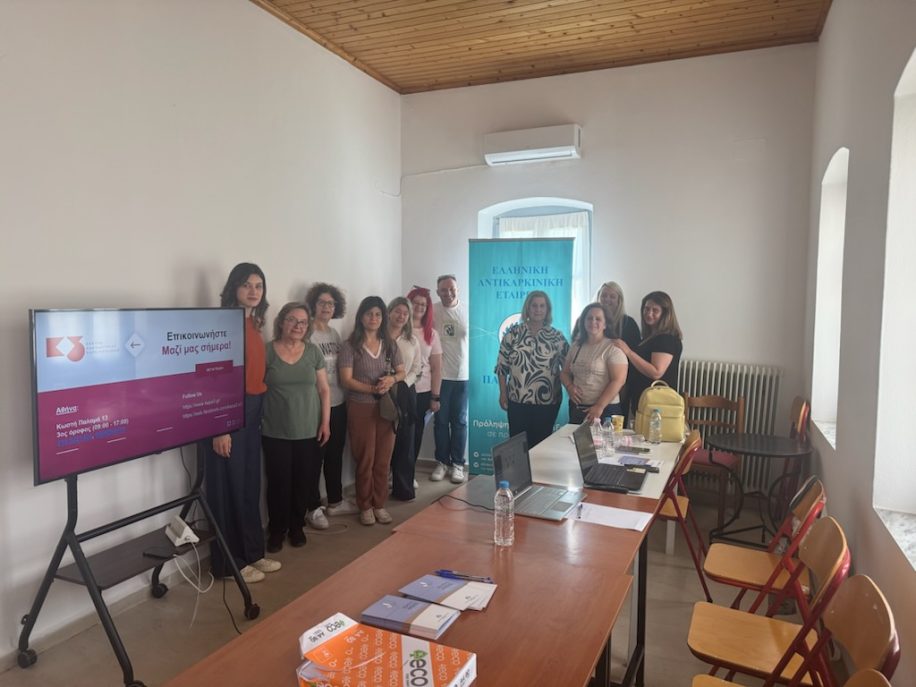
After the first round of meetings held in April (see the related article here), focusing on Nutritional Guidance and Experiential Psychological Support, Kapa3 and the University of the Peloponnese continue their collaboration with a new series of experiential workshops dedicated to the holistic care of body and mind.

The meetings are open to people living with cancer, caregivers, and healthcare professionals — to anyone seeking a space for genuine communication, understanding, and empowerment.

In this new cycle, mental health and nutrition are approached as two sides of the same care.

In the mental health sessions, participants learn to recognize and manage challenging emotions such as anxiety or fear, strengthen their resilience, and cultivate a deeper connection with themselves and others.

At the same time, the nutrition sessions explore how balanced and mindful eating can support the body, enhance energy and mood, and become an act of self-care and self-respect. Food is not only a necessity but also a way to show love — to the body, the soul, and to life itself.

The meetings are held online and are based on dialogue, experiential learning, and the sharing of personal experiences. Everyone participates at their own pace, in a warm environment of acceptance and trust.

To express your interest: Registration Form for the Support Group for People with Cancer

Text/adaptation: Ifiyenia for Kapa3

Understanding Breast Cancer Risk Factors: What You Can and Can’t Change

October is Breast Cancer Awareness Month — a time to raise awareness, share knowledge, and remind ourselves of the importance of early detection and prevention. One of the most common questions people ask is: “What can I do to lower my risk of breast cancer?”

The truth is that while doctors don’t know exactly what causes breast cancer, research has identified certain factors that increase the likelihood of developing the disease. Some of these are beyond our control, while others are linked to lifestyle choices and can be modified. By learning the difference, we empower ourselves to take the best possible care of our health.

Unchangeable Risk Factors

Some risk factors cannot be avoided. These include:

  • Sex: Being female or assigned female at birth is the biggest risk factor.
  • Age: Risk increases with age; two out of three invasive breast cancers occur in women 55 or older.
  • Family History and Genetics: A family history of breast cancer or inherited genetic mutations (such as BRCA1/2) increases risk.
  • Personal History: Women previously diagnosed with breast cancer are more likely to develop it again.
  • Past Radiation: Radiation to the chest or face before age 30 raises risk.
  • Certain Breast Conditions: Some non-cancerous breast changes are linked to higher risk.

Lifestyle-Related Risk Factors

Our daily habits and choices also play a significant role:

  • Weight: Being overweight, especially after menopause, increases risk.
  • Physical Activity: Lack of regular exercise is linked to higher risk.
  • Smoking and Alcohol: Both are associated with increased breast cancer risk.
  • Hormonal Factors: Use of hormone replacement therapy (HRT) or hormonal contraception may raise risk in some women.
  • Reproductive History: Age at first childbirth, number of pregnancies, and breastfeeding history all influence risk.
  • Menstrual History: Early onset of menstruation is associated with slightly higher risk.

Emerging Risk Factors

Research is ongoing, but some additional factors are being studied, such as:

  • Low vitamin D levels.
  • Night-shift work and exposure to bright light at night.
  • Exposure to chemicals (in food, plastics, cosmetics, sunscreens, pesticides, pollution).
  • Frequent consumption of grilled or smoked meats.
  • High levels of air pollution.

Myths and Misconceptions

It’s equally important to clear up what does not increase risk. Research shows no evidence that abortion, antiperspirants, bras, or dairy products cause breast cancer.

We may not be able to control every risk factor, but every small step toward a healthier lifestyle truly makes a difference. Exercise, balanced nutrition, limiting alcohol, and avoiding smoking are not just prevention measures — they’re acts of daily self-care.
At Kapa3, we believe that awareness and support save lives. No one is ever alone on this journey. We promise to continue to speak openly, share knowledge, and stand beside every woman. Because awareness is not about fear; it’s about strength, hope, and small steps toward a healthier tomorrow.

Read More here: https://www.breastcancer.org/risk/risk-factors

Text/Adaptation: Ifiyenia for Kapa3

October – Breast Cancer Awareness Month

October is internationally recognized as Breast Cancer Awareness Month, a time dedicated to education, prevention, and support for everyone affected by the disease. Breast cancer remains the most common cancer among women worldwide, yet early diagnosis and advances in treatment have significantly improved both quality and length of life.

The event began in 1985 as a week-long awareness campaign by the American Cancer Society, in partnership with Imperial Chemical Industries, a British company that made tamoxifen. The campaign eventually grew into a month-long event.

The core message of this month is simple but crucial: awareness saves lives. Regular mammograms, self-examinations, and timely medical advice when suspicious signs appear are the most powerful tools for prevention and early detection. International studies show that women who participate in screening programs are more likely to be diagnosed at an early stage, allowing for more effective and less invasive treatment.

However, October is not just about medical tests. It is a month that highlights the importance of psychosocial support and solidarity. Breast cancer affects not only the body but also the mind and spirit. Women – and men – facing this diagnosis need a supportive network of family, friends, healthcare professionals, and organizations to guide, encourage, and stand by them every step of the way.

The Kapa3 Cancer Guidance Center joins the international community in emphasizing the value of accurate information and equitable access to healthcare services. Through informative articles, prevention guides, and psychological support, our goal is to stand by every person in need, providing reliable knowledge and meaningful assistance.

Breast Cancer Awareness Month is more than a campaign: it is a reminder that life can be won when prevention, education, and solidarity become part of our daily practice. October calls on all of us to raise our voices, promote screening, and embrace those fighting their own battles—because no one should face cancer alone.

When Strength Emerges from Adversity


When Strength Emerges from Adversity
Understanding Post-Traumatic Growth in People Affected by Cancer

When we talk about the psychological state of a cancer patient, the words that usually come to mind are heavy ones: shock, pain, loss, depression. For many years, research focused mainly on the negative consequences of trauma, such as post-traumatic stress disorder (PTSD).

In recent decades, however, scientists and psychologists have started to recognize another, less familiar but equally important reality: out of pain, something positive can also emerge. Some people don’t just “bounce back” from adversity — they undergo profound change, discovering new meaning in life and strengthening their relationships. This process is called Post-Traumatic Growth (PTG).

What is Post-Traumatic Growth (PTG) in Cancer Survivors?

Post-Traumatic Growth (PTG) refers to the positive psychological changes that can emerge after facing traumatic experiences such as cancer. Instead of remaining “stuck” in the trauma, survivors may develop greater resilience, a renewed sense of purpose, and deeper connections with others.

Key Findings

  1. Psychological Factors
  • Emotional Regulation: The ability to manage emotions is linked to higher PTG.
  • Sense of Purpose: Discovering or renewing life’s meaning strengthens growth.
  • Self-Esteem: A healthy self-image supports positive change.
  1. Predictive Factors
  • Social Support: Strong relationships foster recovery and growth.
  • Spirituality: Personal beliefs can act as a protective factor.
  • Coping Strategies: Healthy ways of dealing with challenges (like positive reframing) promote PTG.
  1. Helpful Interventions
  • Psychological Support: Therapies that focus on PTG show promising results.
  • Support Groups: Sharing experiences with others can enhance recovery.
  • Educational Programs: Learning tools for resilience empowers survivors.

At the end of the day, every cancer journey is unique — but for many, pain can also give rise to an unexpected new strength. PTG does not erase sorrow or struggle; it simply shows that alongside trauma, something meaningful can take root and carry life forward. And it is exactly this understanding of PTG that gives us yet another reason to stand by people with cancer through their difficult path — with respect, patience, and genuine presence.

Read the full article here

The new OECD report (2025) highlights Greece’s challenges and priorities in cancer

The new OECD report (2025) highlights Greece’s challenges and priorities in cancer, comparing them with other European countries.

Key points:

  • Increased incidence: Greece records ~67,000 new cancer diagnoses and ~36,000 deaths annually (2022 data). By 2050, cases are expected to increase by 36%.
  • Risk factors: Smoking, obesity, poor diet, air pollution, low HPV vaccination coverage.
  • Early diagnosis: There are programs for breast, cervical, and colorectal cancer, but they are not yet sufficiently developed or sustainable beyond 2025.
  • Inequalities in care: Staff shortages, geographical inequalities, high out-of-pocket costs, difficulties in access for vulnerable groups.
  • Survivors & caregivers: There is no organized strategy for the quality of life of survivors, while caregivers are overburdened. The “right to be forgotten” does not yet apply in Greece.
  • Data & policy: Until recently, there was no national cancer registry. Greece does not yet have a comprehensive National Cancer Plan, unlike many other European countries.

Conclusion:
Greece is called upon to:

– strengthen prevention and population-based screening,

– reduce inequalities in access,

– support survivors and caregivers,

– and develop a holistic national cancer plan with clear targets and evaluation.

The report clearly shows that the country needs greater investment, better organization, and integration of actions into European planning.

See the report in detail here  22087cfa-en (1)

The main points are given in the file below by the Kapa3 team. OOSA 2025 REPORT

Palliative Care in Cancer: Ensuring Quality of Life Alongside Treatment

Palliative Care in Cancer: Ensuring Quality of Life Alongside Treatment

The editorial underlines the vital role of palliative care in cancer management. While advances in oncology have improved survival, many patients still face significant physical, emotional, and social challenges. Palliative care focuses on relieving symptoms such as pain, fatigue, and anxiety, while also supporting families and caregivers.

Research shows that early integration of palliative care improves patients’ quality of life, helps them tolerate demanding treatments, and even extends survival in some cases. It also facilitates better communication between patients and healthcare providers and reduces unnecessary hospitalizations and costs.

Despite this evidence, palliative care remains underused, often mistaken for end-of-life care only. In Greece, until recently it was not formally part of the National Health System, and existing services remain limited. However, the 2022 legal framework and the position paper of the Hellenic Society of Medical Oncology stress the urgent need for wider integration, more training for oncologists, and stronger policy support.

Ultimately, oncology success should not be measured only in survival rates but also in ensuring dignity, comfort, and holistic support for patients throughout their journey.

Read more care

Digital transformation: Health systems’ investment priorities

Health systems around the world are facing a host of challenges, including rising costs, clinical-workforce shortages, aging populations requiring more care (for example, to treat chronic conditions), and increasing competition from nontraditional players.1 At the same time, consumers are expecting new capabilities (such as digital scheduling and telemedicine) and better experiences from health systems across their end-to-end care journeys.2 In response, health systems are increasing their focus on digital and AI transformation to meet consumer demands, address workforce challenges, reduce costs, and enhance the overall quality of care.3 However, despite acknowledging the importance of these efforts to future sustainability, many health system executives say their organizations are still not investing enough.

AI, traditional machine learning, and deep learning are projected to result in net savings of up to $360 billion in healthcare spending.

AI, traditional machine learning, and deep learning are projected to result in net savings of $200 billion to $360 billion in healthcare spending.4 But are health systems investing to capture these opportunities? We recently surveyed 200 global health system executives about their digital investment priorities and progress.5 Seventy-five percent of respondents reported their organizations place a high priority on digital and analytics transformation but lack sufficient resources or planning in this area.

Increasing prioritization

In line with other industries, the majority (nearly 90 percent) of health system executives surveyed, in both technical roles (such as chief information officer or chief technology officer) and nontechnical roles (for example, CEO or CFO), reported that a digital and AI transformation is a high or top priority for their organization. At the same time, 75 percent of respondents reported their organizations are not yet able to deliver on that priority because they have not sufficiently planned or allocated the necessary resources.


Health system digital investment priority areas and anticipated impact

For health system executives, current investment priorities do not always align with areas they believe could have the most impact. There is alignment in some areas, including virtual health and digital front doors, where about 70 percent of respondents expect the highest impact.1 In other areas, such as AI, 88 percent of respondents reported a high potential impact,2 yet about 20 percent of respondents do not plan to invest in the next two years. The absence of investment in a robust, modern data and analytics platform could delay value creation in areas that depend on these capabilities—such as efforts to close gaps in care, improve timely access for referrals, and optimize operating room throughput.

Major headwinds and slow progress

Given the current macroeconomic climate and increasing cost pressures on health systems, most respondents identified budget constraints as a key obstacle to investing at scale across all digital and AI categories of interest (51 percent of respondents ranked this obstacle among the top three). For example, a health system that is building a digital front door may lack the resources to simultaneously invest in the latest generative AI (gen AI) capabilities.

Respondents called out challenges with legacy systems as the second-greatest concern (after budget constraints). Core tech modernization is key to delivering on the digital promise,1 but health systems have typically relied on a smaller set of monolithic systems that have become a challenge to untangle.

Additional highly ranked challenges include data quality (33 percent), tech talent and recruiting (30 percent), and readiness to adopt and scale new technology (34 percent).

Satisfaction with digital investment

Most executives of health systems that have invested in digital priorities (72 percent) reported satisfaction across all investment areas. Among the comparatively fewer respondents who reported investing in robotics and advanced analytics, satisfaction was even higher, at 82 percent and 81 percent, respectively. Given that investments result in a high level of satisfaction and that 75 percent of executives reported they are not yet able to deliver on their digital transformation ambitions (as noted above), health systems may be facing a failure to scale their digital programs.

What health systems can do and how they can learn from other industries

The goal of digital and AI transformation is to fundamentally rewire how an organization operates, building capabilities to drive tangible business value (such as patient acquisition and experience, clinical outcomes, operational efficiency, and workforce experience and retention) through continuous innovation. Delivering digital value for health systems requires investment and new ways of working.

Building partnerships. Scale is crucial to value creation. But the definition of at-scale systems has changed in the past few years; today, it takes more than $13 billion to be a top 20 system by revenue, and many have reached their current position through inorganic growth.6 Partnerships (joint ventures and alliances) may offer a promising avenue to access new capabilities, increase speed to market, and achieve capital, scale, and operational efficiencies.7

Moving beyond off-the-shelf solutions. History shows that deploying technology—such as electronic health records (EHRs)—on top of broken processes and clinical workflows does not lead to value. Realizing value from healthcare technology will require a reimagination (and standardization) of clinical workflows and care models across organizations. For example, optimizing workflows to enable more appropriate delegation, with technical enablement, could yield a potential 15 to 30 percent net time savings over a 12-hour shift. This could help close the nursing workforce gap by up to 300,000 inpatient nurses.8

Using the cloud for modernization. Health systems are increasingly building cloud-based data environments with defined data products to increase data availability and quality. Health systems can also use cloud-hosted, end-user-focused platforms (such as patient or clinician apps) that integrate multiple other applications and experiences to simplify stakeholders’ interactions with the system.

Operating differently. Operating differently entails fundamental changes in structure (flatter, empowered, cross-functional teams), talent (new skill sets and fully dedicated teams), ways of working (outcome orientation, agile funding, and managing products, not projects), and technology (modular architecture, cloud-based data systems, and reduced reliance on the monolithic EHR). With these changes, some health systems have begun to see real value within six months. Building a digital culture helps the transformation succeed over time.9

Cautiously embracing gen AI. Gen AI has the potential to affect everything from continuity of care and clinical operations to contracting and corporate functions. Health system executives and patients have concerns about the risks of AI, particularly in relation to patient care and privacy. Managing these risks entails placing business-minded legal and risk-management teams alongside AI and data science teams.10 Organizations could also implement a well-informed risk-prioritization strategy.

Digital and AI investments provide health systems with opportunities to address the many challenges they face. Successful health systems will invest in areas with the greatest potential impact while removing barriers—for example, by upgrading legacy infrastructure. Health systems that make successful investments in digital and analytics capabilities could see substantial benefits and position themselves to benefit from the $200 billion to $360 billion opportunity.11

ABOUT THE AUTHOR(S)
Jack Eastburn is a partner in McKinsey’s Southern California office; Jen Fowkes is a partner in the Washington, DC, office; and Karl Kellner is a senior partner in the New York office. Brad Swanson is a consultant in the Denver office.

The authors wish to thank David Bueno, Camilo Gutierrez, Dae-Hee Lee, Audrey Manicor, Lois Schonberger, and Tim Zoph for their contributions to this article.

Πηγή: mckinsey.com
find more :https://eefam.gr/digital-transformation-health-systems-investment-priorities/

A Different Chemotherapy Approach for Ovarian Cancer

OVARIAN CANCER that spreads to the lining of the abdominal cavity, called the peritoneum, is difficult to treat. Patients with this advanced cancer typically undergo debulking, also called cytoreductive surgery, a lengthy procedure in which surgeons aim to remove all cancer from the abdominal cavity and affected organs, including the ovaries and fallopian tubes as well as the bladder, colon and other parts of the gastrointestinal tract. In recent years, researchers have looked at the efficacy of using hyperthermic intraperitoneal chemotherapy (HIPEC), which is heated chemotherapy delivered directly to the peritoneum, to destroy remaining cancer cells immediately after debulking surgery.

Scientists in Belgium and the Netherlands published long-term data from OVHIPEC-1, a randomized phase III trial to evaluate adding HIPEC to interval cytoreductive surgery for ovarian cancer, in the October 2023 Lancet Oncology. (In interval surgery, chemotherapy is given to shrink the cancer prior to surgery.) The study enrolled 245 women with stage III epithelial ovarian cancer whose cancer showed no signs of progression after upfront chemotherapy. Researchers randomly assigned women to have debulking surgery alone, or surgery plus HIPEC using the chemotherapy drug cisplatin. After 10 years, median overall survival for the surgery-plus-HIPEC group was 44.9 months versus 33.3 months for the surgery group. Median progression-free survival was 14.3 months and 10.7 months, respectively. The rates of adverse events were similar—25% with surgery alone versus 27% with surgery plus HIPEC—and the most common events were abdominal pain, infection and slowed bowel function.

These results are in line with the researchers’ five-year analysis, published in the New England Journal of Medicine in 2018. In that analysis, 6.6% of patients in the surgery group had survived without progression at five years, compared with 12.3% in the surgery-plus-HIPEC group. At 10 years, 6.6% of the people who received surgery were alive with no progression versus 10.1% in the surgery-plus-HIPEC group. While surgery plus HIPEC did not result in better cure rates, the authors note that it significantly prolonged the time cancer was controlled. “The most important finding is that the benefit for patients with stage III ovarian carcinoma when interval cytoreductive surgery is combined with HIPEC remains present after a 10-year follow up,” says Willemien van Driel, lead author and a gynecologic oncologist at the Netherlands Cancer Institute in Amsterdam, who notes that patients in both arms of the study received similar treatment after subsequent recurrences.

Van Driel says that there is still variation in the use of HIPEC along with cytoreductive surgery. European guidelines published in October 2023 note that HIPEC with cytoreductive surgery should not be considered a standard of care. In the U.S., National Comprehensive Cancer Network guidelines state that HIPEC can be considered for patients with stage III epithelial ovarian cancer.

Van Driel and her colleagues are now enrolling patients in the OVHIPEC-2 trial, which will study the effect of adding HIPEC in women with stage III ovarian cancer undergoing primary surgery, which is surgery done upfront prior to chemotherapy. Other trials are evaluating HIPEC use for recurrent ovarian cancer. She notes there are several unanswered questions, including optimal dosing and temperature for HIPEC and the impact of including other drugs, such as PARP inhibitors, with this approach, since many of these drugs were not standard of care at the time of the trial.

HIPEC may be a valid choice for patients who are generally healthy and open to a longer procedure and hospital stay. Although the length of surgery plus HIPEC varies, HIPEC generally adds 90 minutes or more to debulking surgery, which itself takes several hours. Also, patients typically require a longer hospital stay for recovery, possibly with intravenous or tube feedings while the digestive system recovers. 

Find more :

A Different Chemotherapy Approach for Ovarian Cancer

New evidence that brain and body health influence mental wellbeing

The study, published in Nature Mental Health, analysed UK Biobank data from more than 18,000 individuals. Of these, 7,749 people had no major clinically-diagnosed medical or mental health conditions, while 10,334 had reported a diagnosis of either schizophrenia, bipolar disorder, depression or anxiety.

Using advanced statistical models, the researchers found a significant association between poorer organ health and higher depressive symptoms, and that the brain plays an important role in linking body health and depression.

The organ systems studied included the lungs, muscles and bones, kidneys, liver, heart, and the metabolic and immune systems.

Dr Ye Ella Tian, lead author of the study from the Department of Psychiatry at the University of Melbourne, said. “Overall, we found multiple significant pathways through which poor organ health may lead to poor brain health, which may in turn lead to poor mental health.

“By integrating clinical data, brain imaging and a wide array of organ-specific biomarkers in a large population-based cohort, for the first time we were able to establish multiple pathways involving the brain as a mediating factor and through which poor physical health of body organ systems may lead to poor mental health.

“We identified modifiable lifestyle factors that can potentially lead to improved mental health through their impact on these specific organ systems and neurobiology.

“Our work provides a holistic characterisation of brain, body, lifestyle and mental health.”

Physical health was also taken into account, as well as lifestyle factors such as sleep quality, diet, exercise, smoking, and alcohol consumption.

Professor James Cole, an author of the study from UCL Computer Science, said: “While it’s well-known in healthcare that all the body’s organs and systems influence each other, it’s rarely reflected in research studies. So, it’s exciting to see these results, as it really emphases the value in combining measures from different parts of the body together.”

Professor Andrew Zalesky, an author of the study from the Departments of Psychiatry and Biomedical Engineering at the University of Melbourne, said. “This is a significant body of work because we have shown the link between physical health and depression and anxiety, and how that is partially influenced by individual changes in brain structure.

“Our results suggest that poor physical health across multiple organ systems, such as liver and heart, the immune system and muscles and bones, may lead to subsequent alterations in brain structure.

“These structural changes of the brain may lead to or exacerbate symptoms of depression and anxiety, as well as neuroticism.”


Find more : https://www.ucl.ac.uk/news/2024/aug/new-evidence-brain-and-body-health-influence-mental-wellbeing?utm_source=linkedin&utm_medium=social&utm_campaign=vpee_linkedin_newsletter&utm_content=bodyhealth_aug24