MYRTO: From Real-World Needs to European Scientific Engagement

MYRTO, the digital Social Rights Navigator developed by Kapa3, is taking an important step from real-world experience to the European scientific community, with two studies accepted for presentation at EONS and ESMO events in 2026.

The first study, “MYRTO as an AI-Supported Navigation Model for Equitable Access to Cancer Care: Real-World Needs from 1,083 Beneficiaries”, will be presented as a poster at EONS19 at ESMO 2026 in Madrid, 24–26 October 2026.

The study draws on the real-world needs of 1,083 Kapa3 beneficiaries, identifying eight key navigation areas: rights and benefits, disability certification and administrative procedures, access to health and social services, transportation and geographical barriers, employment and social protection, health and digital literacy, caregiver support, and referral to human professionals when needed.

The findings highlight that equitable access to cancer care is not only about clinical information. It also depends on people’s ability to find, understand and use reliable information during an exceptionally demanding period of their lives.

From real-world needs to technology evaluation

The second study, “Source-Based Artificial Intelligence (AI) Navigation for Fragmented Nonclinical Cancer-Support Information: Pilot Evaluation of a Human-Supervised System”, has been accepted as an e-Poster at the ESMO AI & Digital Oncology Congress 2026, taking place on 16–18 November 2026.

This study focuses on the operation and evaluation of MYRTO as a source-grounded, human-supervised AI system.

The pilot evaluation drew on 448 authoritative documents and 29,148 indexed excerpts and assessed 100 predefined questions. For all 84 answerable questions, source-supported and actionable responses were generated without modifications following Kapa3 expert review. The system also applied clarification, abstention or redirection mechanisms when evidence was insufficient or when questions involved medical advice or fell outside its intended scope.

Two studies, one shared philosophy

The two studies reflect complementary dimensions of MYRTO: the real-world needs that led to its development and the way technology is being designed to respond to those needs through evidence, clear boundaries and human supervision.

For Kapa3, Artificial Intelligence is not intended to replace human support. Its role is to contribute to more accessible, understandable and trustworthy navigation, while keeping people at the centre.

MYRTO’s presence at two major European scientific events represents another step in bringing Kapa3’s field experience into the European dialogue on equitable access, digital health and the responsible use of Artificial Intelligence.

The MYRTO project is funded by the TIMA Charitable Foundation.

Find more about MYRTO https://kapa3-cag-rag-hybrid-deploy.onrender.com

From access to continuity of care: when navigation becomes part of the solution

Why health systems need pathways, not just pilots

A test is not treatment. A referral does not necessarily mean that a person will reach the care they need. And a successful pilot does not, by itself, mean that a health system works for everyone.

This is the central message of a recent article by Gaurav Ghewade for the World Economic Forum, “Why healthcare systems need pathways, not just pilots.” The key question is no longer simply whether people can enter a health system, but whether the system can support them throughout the journey that follows.

In 2023, around 4.6 billion people worldwide were still not fully covered by essential health services. At the same time, chronic conditions, including cancer, require much more than a single intervention. They demand continuity, repeated contact with services, follow-up and coordinated support.

The critical question therefore becomes:

What happens after the first step?

Does a person know where to go next? Do they understand the procedures they need to follow? Are they aware of the rights and benefits available to them? Can they identify the appropriate services? Is there a clear pathway, or are they left to navigate a complex system on their own?

For people affected by cancer, the journey extends far beyond diagnosis and treatment. It can also involve administrative procedures, social and employment rights, financial and insurance benefits, access to social services, psychosocial support, caregiver needs and the return to everyday life.

This is why navigation is becoming an essential part of person-centred support.

From information to action: MYRTO

This is also the space in which MYRTO – Kapa3’s Digital Social Rights Navigator is being developed.

MYRTO does not replace doctors or healthcare professionals and does not provide treatment decisions. Its purpose is to help people affected by cancer and their caregivers access reliable and understandable information, better understand their social rights and available benefits, identify relevant services and move towards the next practical step in their journey. Kapa3 has positioned MYRTO within a broader approach to digital navigation, social accessibility and patient empowerment.

Because access is only the beginning.

What truly matters is ensuring that no one gets lost between the steps of their journey.

The development of MYRTO is supported by the TIMA Charitable Foundation, Founding Sponsor of MYRTO.

Source

Gaurav Ghewade, Why healthcare systems need pathways, not just pilots, World Economic Forum, 21 August 2026.

Evangeli Bista Joins the PATH Expert Group as an Independent Expert: Bringing the Patient Perspective into the New Era of AI in Cancer Care

A new contribution to the European dialogue on safe, responsible and human-centred Artificial Intelligence in healthcare

Evangeli Bista, Co-founder and Head of Operations and Development of Kapa3 – Cancer Guidance Centre, has been invited to join the Expert Group of the European research and innovation project PATH – Patient AI Treatment Hub as an independent expert.

Her participation is undertaken in a personal and independent capacity, with her professional affiliation to Kapa3 – Cancer Guidance Centre, creating an opportunity to bring into the European dialogue experience gained through direct engagement with people affected by cancer, survivors, caregivers and healthcare professionals. The PATH Terms explicitly define Expert Group members as acting independently rather than as partners, employees, agents or subcontractors of the Consortium.

What is PATH – Patient AI Treatment Hub?

PATH – Patient AI Treatment Hub is a European research and innovation project focused on supporting the safe and effective integration of Artificial Intelligence into cancer care through the development of a secure, interoperable and privacy-preserving digital platform.

The project aims to explore how Artificial Intelligence tools can be safely integrated into cancer-care pathways, supporting healthcare professionals and contributing to more personalised approaches while safeguarding privacy and health data.

At the heart of this effort lies a critical question:

How can technological innovation create meaningful value for patients while preserving trust, human oversight, safety and equity?

Participation in the PATH Expert Group

As a member of the PATH Expert Group, Evangeli Bista will contribute independent expertise, opinions, input, comments and feedback in relation to selected project use cases and activities.

The experience developed through Kapa3’s work can contribute to discussions around issues such as:

  • patient-centred cancer care,
  • patient navigation across health and social-care systems,
  • equitable access to information and services,
  • health and digital literacy,
  • health and social rights,
  • responsible use and protection of health data,
  • transparency and human oversight in Artificial Intelligence systems,
  • meaningful involvement of patients and civil society in technology design,
  • and translating technological innovation into real value for people.

Why the Patient Voice Must Be Part of Innovation

Artificial Intelligence is creating new possibilities for healthcare and cancer care. At the same time, its growing use raises important questions concerning trust, transparency, safety, equitable access and human oversight.

For Kapa3, the development of a digital solution cannot begin solely with the question of what is technologically possible.

It must also ask:

What does the patient actually need?

Can people understand the information they receive?

Do they know where that information comes from?

Can they trust the system?

Is it clear when Artificial Intelligence is being used and when human professional judgement is required?

Could digital inequalities lead to new inequalities in healthcare?

And ultimately, does innovation genuinely improve the experience and pathway of a person facing cancer?

These are questions that we believe should remain at the centre of the European discussion on Artificial Intelligence in healthcare.

Kapa3’s experience in digital health

Evangeli Bista’s participation in the PATH Expert Group comes at a time when Kapa3 is systematically expanding its work in digital health, patient navigation and the responsible use of emerging technologies to support people affected by cancer.

This broader work also includes MYRTO – Digital Navigator for Health and Social Rights, an independent Kapa3 initiative developed to help transform complex and often fragmented information on rights, benefits and administrative procedures into more accessible, structured and evidence-based guidance for patients and caregivers.

MYRTO is not part of PATH, and the two initiatives are independent from one another.

However, the experience of developing patient-facing digital services has reinforced several principles that Kapa3 considers essential:

reliable information, transparent sources, understandable communication, data protection, human oversight and a clear pathway to professional support when technology alone is not enough.

This distinction is also important from an intellectual-property perspective, since the PATH Terms preserve intellectual property that exists independently of the Expert’s Services and is not incorporated into PATH Contributions.

From information to trust

Digital transformation in healthcare is not simply about more data, more algorithms or more applications.

It is about creating greater understanding, better access and stronger trust.

For a person facing cancer, information has value when it can be translated into a meaningful next step.

Technology has value when it reduces — rather than increases — complexity.

And Artificial Intelligence has value when it strengthens, rather than replaces, human care, professional judgement and the patient’s ability to participate meaningfully in decisions affecting their life and health.

A new opportunity to contribute to the European dialogue

For Kapa3, the invitation to Evangeli Bista to participate as an independent expert in the PATH Expert Group represents an important opportunity to bring into the European dialogue experience, needs and concerns emerging from the real-world context of cancer care and patient support.

The objective remains clear:

Artificial Intelligence in healthcare should advance with safety, transparency, responsibility, equitable access and meaningful involvement of the people it is designed to serve.

Because innovation creates real value when it is designed with people and for people.


PATH – Patient AI Treatment Hub | At a glance

Field: Artificial Intelligence and data in cancer care
Project: PATH – Patient AI Treatment Hub
Focus: Safe and effective integration of AI into cancer care through secure, interoperable and privacy-preserving approaches.
Expert Group: Independent external experts providing expertise, opinions, input, comments and feedback to the Project.
Independent Expert: Evangeli Bista
Professional role: Co-founder & Head of Operations and Development
Affiliation: Kapa3 – Cancer Guidance Centre


New Scientific Publication with the Participation of Kapa3: Cancer Survivorship in the Post-COVID-19 Era

New scientific publication involving the Cancer Patient Guidance Center – Kapa3 highlights the significant psychological, social, and functional challenges that people living with and beyond cancer continue to face following the COVID-19 pandemic.

The article, entitled “Cancer Survivorship After COVID-19: Psychological Burden, Symptom Experience, and Social Support,” was published in the international peer-reviewed journal Medicina. It examines psychological distress, symptom experience, quality of life, and the protective role of social support among people affected by cancer.

What Did the Study Examine?

The research involved 162 adults diagnosed with cancer in Greece during the post-COVID-19 period. Participants completed validated questionnaires assessing depression, anxiety, stress, health-related quality of life, and perceived social support.

The results revealed a substantial and persistent psychological burden:

  • 32.1% of participants reported severe or extremely severe depression.
  • 40.1% reported severe or extremely severe anxiety.
  • 29% reported severe or extremely severe stress.

The overall quality of life of participants was found to be moderate. Emotional and social functioning were among the most affected areas, while fatigue, insomnia, breathlessness, and financial difficulties emerged as some of the most significant challenges in everyday life.

The Close Relationship Between Mental Health and Quality of Life

One of the study’s key findings was the strong relationship between psychological distress and poorer quality of life.

Higher levels of depression, anxiety, and stress were associated with:

  • poorer daily and functional performance;
  • lower perceived overall health;
  • greater symptom severity;
  • increased difficulty in emotional and social functioning.

The results demonstrate that psychological well-being cannot be separated from the physical, social, and practical experience of cancer.

Social Support as a Protective Factor

At the same time, the study underlines the important protective role of social support.

Support from family members, friends, and other significant people was associated with better overall health and functioning, lower levels of depression, anxiety, and stress, and reduced symptom burden.

The findings show that social connection is not simply an additional element of care. It is a meaningful component of recovery, adaptation, and quality of life throughout the cancer journey.

Cancer Survivorship Does Not End When Treatment Is Completed

The findings reinforce the need to move beyond a model of oncology care focused exclusively on treating the disease.

Cancer survivorship requires a comprehensive, person-centred approach that addresses the physical, psychological, social, functional, and financial dimensions of life with and after cancer.

Routine psychological assessment, early identification of emotional distress, timely referral to psycho-oncology services, rehabilitation, social support, and the meaningful involvement of families and caregivers should become integral parts of standard oncology care.

The study also points to the potential value of telehealth and digital support services in improving access to supportive care. At the same time, it highlights inequalities related to digital literacy, healthcare accessibility, and the ability of all patients to benefit equally from digital services.

The experience of the COVID-19 pandemic demonstrated that effective cancer care must be resilient, accessible, multidisciplinary, and capable of maintaining continuity even during periods of crisis.

Read more medicina-4429149

There is an urgent need for psychological support for cancer patients. The KAPA3 team explains and advocates for this

There is an urgent need for psychological support for cancer patients. The KAPA3 team explains and advocates for this

Every day, healthcare professionals are called upon to communicate with, assess, and, above all, support people who are going through cancer.

Does cancer affect only physical health, or does it also have a profound impact on a person’s psychological, social, and emotional life? The needs that arise during the course of the illness are many and are often accompanied by the question: “What does the disease really bring to a person’s life?” A cancer diagnosis brings about significant changes in daily life, relationships, social roles, and the way a person perceives themselves and their future.

A cancer diagnosis is an extremely stressful event, often accompanied by feelings of fear, uncertainty, anxiety, and grief. At the same time, patients are called upon to cope with the effects of treatments such as chemotherapy, radiation therapy, and surgery. Changes in physical appearance, fatigue, pain, and limitations in daily functioning can significantly affect their self-esteem and quality of life (Pitman et al., 2018).

Uncertainty regarding the course of the disease and the likelihood of relapse are significant sources of psychological distress. The extent of this phenomenon is reflected in the meta-analysis by Mitchell et al. (2011), which included 94 studies and more than 14,000 cancer patients. According to the results, 16.3% of patients met the diagnostic criteria for major depressive disorder, 10.3% for anxiety disorder, and 19.2% for adjustment disorder.

These data highlight that a significant proportion of cancer patients experience severe psychological distress, a fact that underscores the need for specialized psychological support.

Furthermore, cancer often affects an individual’s family and social relationships. The patient may be forced to limit or abandon professional and social roles, while the family is called upon to adapt to new demands and responsibilities, experiencing significant psychological strain of their own (Northouse et al., 2010).

Cancer patients have an increased need for psychological support, as the disease significantly affects their psychological, social, and emotional functioning. Fear of the disease’s progression, uncertainty about the future, the side effects of treatments, and the possibility of recurrence are major sources of psychological distress. At the same time, the experience of cancer is often accompanied by feelings of loss of control, fear, and emotional distress. The contemporary psycho-oncology literature recognizes that the early identification of psychosocial needs and the provision of appropriate interventions are an integral part of holistic oncology care (Caruso & Breitbart, 2020; Mehnert-Theuerkauf et al., 2023).

Within this context, psychological support is a key component of holistic care for cancer patients. Holistic care refers to a comprehensive approach that takes into account not only the patient’s physical needs but also the psychological, social, and spiritual dimensions of their health. Counseling, psychotherapy, and support groups provide a safe space for expressing emotions and building psychological resilience (National Comprehensive Cancer Network [NCCN], 2024).

At the same time, they help improve adherence to treatment, strengthen cooperation with healthcare professionals, and maintain quality of life. As Holland and Weiss (2008) argue, psychosocial care is an integral part of high-quality oncology care, from diagnosis through the survival phase.

In conclusion, the experience of cancer is a complex and multidimensional process that affects every aspect of a person’s life. Managing the disease is not limited solely to physical treatment but requires the recognition and addressing of the psychological and social needs that arise at every stage. Providing timely and systematic psychological support can empower the patient, improve their ability to adapt to the demands of treatment, and contribute significantly to maintaining their dignity, hope, and quality of life. Psychological care should be regarded as a fundamental right of every cancer patient and as an integral part of modern oncology practice.

Coordination of Psychological and Social Services within the Framework of Psychosocial Care

The care of cancer patients is not limited to treating the disease and its physical effects. The needs that arise during treatment are often multifaceted and concern both the individual’s psychological well-being and practical, social, or financial issues that affect their daily life.

For this reason, effective support requires close collaboration among different healthcare professionals within a shared framework of psychosocial care. Within this framework, the Social Services and Psychological Services operate in a complementary manner, with the shared goal of enhancing the individual’s quality of life and overall adjustment to the experience of illness.

A client’s contact with the service can begin either through the Social Services Department or the Psychological Services Department. During the initial contact, an assessment of the client’s needs is conducted, and information is provided about all available support services.

Regardless of the initial request, the beneficiary is informed about the option of receiving psychological support, as the experience of cancer is often accompanied by heightened psycho-emotional needs that are not always apparent from the first contact. With their consent, an internal referral can be made to the Psychological Services Department for further evaluation and support.

The Psychological Services Department is responsible for the initial assessment, obtaining informed consent, and creating an individual support file. A structured series of sessions is then provided, tailored to the beneficiary’s needs. During this process, issues may arise related to social benefits, employment challenges, financial burdens, disability certification procedures, or other practical needs that significantly impact the daily functioning of the individual and their family. In such cases, and always with the beneficiary’s consent, cooperation with Social Services is initiated, and Social Services assumes responsibility for managing the relevant social and administrative matters.

The collaboration between the two services enables the timely identification of new needs and ensures continuity of care. Social Services focuses on the practical, social, and administrative aspects of support, while Psychological Services focuses on psychological resilience, emotional processing of the experience of the disease, and adaptation to the changes it brings about. The collaboration between the two services allows for a more comprehensive response to the needs of the cancer patient. In this way, a unified framework of psychosocial care is established that provides substantial support to the patient and their support network at all stages of their journey with the disease.

At the same time, regular communication and coordination between the two services allow for the timely identification of new needs and ensure continuity of care. The Social Services Department focuses on the practical, social, and administrative aspects of support, while the Psychological Services Department focuses on psychological resilience, emotional processing of the experience of the disease, and adaptation to the changes it brings about. The collaboration between the two services enables a more comprehensive response to the needs of cancer patients. In this way, a unified framework of psychosocial care is established that provides substantial support to the patient and their support network at all stages of their journey with the disease.


Kapa3 – Cancer Patient Guidance Center

Together, with knowledge, care, and a human touch.

Contact us:

https://www.kapa3.gr/epikoinonia/ by typing “Psychological Support” in the Message box

OR CALL

2105221424 – info@kapa3.gr

Athens: 13 Kostis Palamas Street, 3rd floor, (9:00 AM – 5:00 PM) 6982003282
Kapa3 Cancer Patient Support Center and the USTEP Institute announce the launch of their strategic partnership

The Kapa3 Cancer Patient Support Center and the USTEP Institute announce the launch of their strategic partnership, aimed at providing meaningful support to cancer patients and promoting equal opportunities in scientific, social, and educational levels.

The partnership was formalized through the signing of a Memorandum of Understanding, which was signed in Athens on May 26, 2026, by Evangelia Bista, Co-founder and Head of Development and Operations at Kapa3, and Vasileios Stavrou, Co-founder and Scientific Director of the USTEP Institute.

As part of the collaboration, the two organizations will develop joint initiatives that include:

Organizing workshops and conferences focused on patient education, improving the quality of care, and strengthening the relationship of trust between patients and healthcare professionals.

The implementation of information and awareness campaigns on prevention, symptom management, and combating myths and social stigma surrounding cancer.

Collaboration on national and European programs aimed at developing innovative initiatives and actions with a social impact.

Conducting joint research and disseminating the results at the national and European levels.

This partnership reaffirms the two organizations’ commitment to actively contribute to the creation of a more supportive and inclusive environment for people living with cancer, by enhancing access to knowledge, information, and social empowerment.

The Memorandum of Cooperation is valid for one year, with the option to renew upon mutual written agreement by both parties.


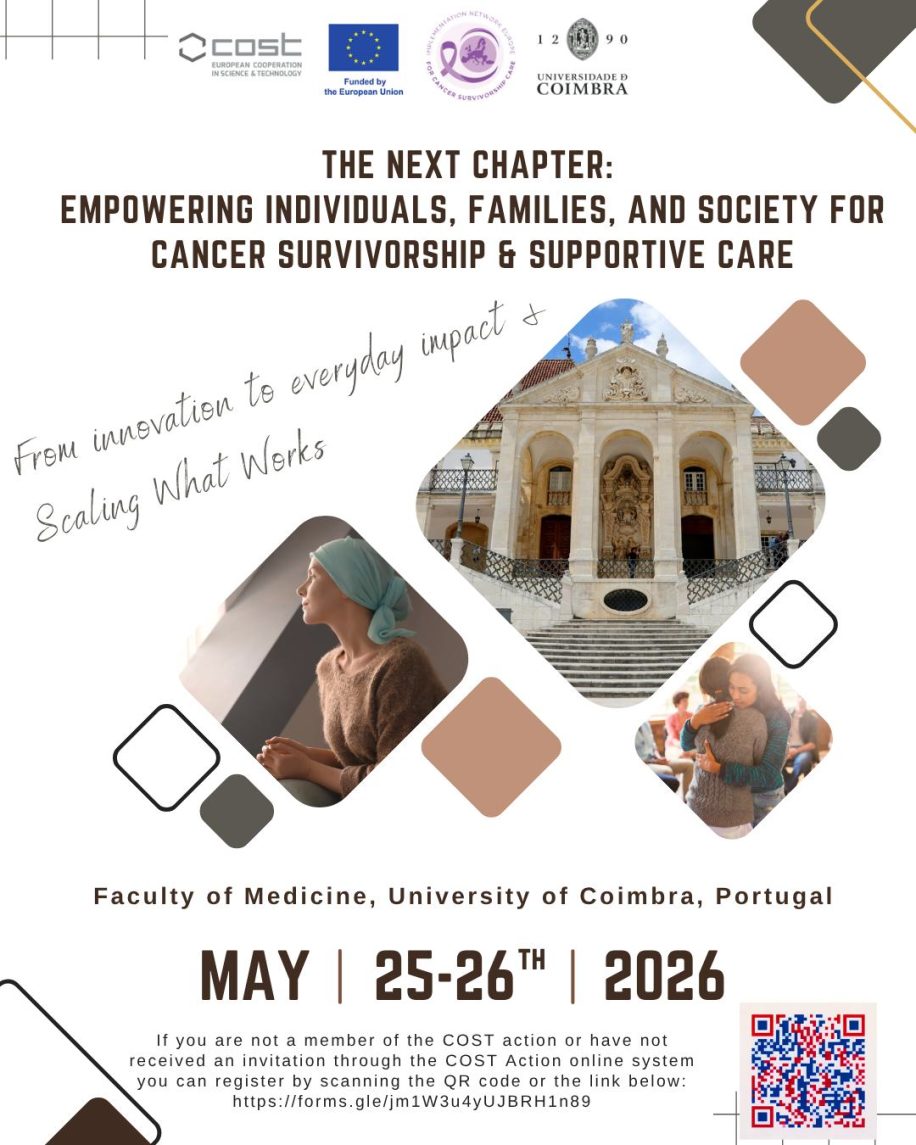
Participation in CA21152 – Implementation Network Europe for Cancer Survivorship Care

Digital Health and Cancer Survivorship: Kapa3 at the INE-CSC 2026 Conference in Coimbra

The Cancer Guidance Center – Kapa3 participated in the INE-CSC 2026 Conference, part of CA21152 – Implementation Network Europe for Cancer Survivorship Care (INE-CSC), held on 25–26 May 2026 at the Faculty of Medicine (Polo III), University of Coimbra, in Coimbra, Portugal.

The conference was held under the theme “The Next Chapter – Empowering Individuals, Families, and Society for Cancer Survivorship & Supportive Care”, highlighting the need for new approaches to cancer survivorship, supportive care and the translation of innovation into real-world impact for people living with and beyond cancer, their families and society.

Kapa3’s presence in Coimbra represents another important step in its European engagement and in its ongoing effort to connect everyday experience in supporting cancer patients in Greece with European knowledge, research, digital innovation and health policy.

A key highlight was the participation in a round table discussion on facilitators and barriers to the implementation of digital health tools in oncology. The discussion was co-organised by Aristea Kyriaki Ladas and Christos Frantzidis and brought together voices from different European countries and organisations, including representatives from Kapa3, Acreditar Portugal, Liga Portuguesa Contra o Cancro, ORCO / Madrid Regional Ministry of Health, as well as participants from Poland, Latvia and the United Kingdom.

Among the participants in the round table were Yannis Kontogiorgis and Despoina Pistiolis from Kapa3, Greece, contributing to the European dialogue on digital health, oncology navigation and the participatory development of solutions that respond to the real needs of patients and caregivers.

One of the key messages of the discussion was that digital innovation in oncology is not only a technological challenge. It is also a matter of policy, implementation, equity, trust and accessibility.

For digital tools to make a meaningful difference in cancer care and survivorship, they cannot remain isolated applications or pilot projects. They need to become part of real care pathways, be supported by appropriate policy environments, connect with interdisciplinary practice and be evaluated in terms of effectiveness, implementation readiness, accessibility, equity, sustainability and value.

The discussion also highlighted that digital tools must be designed around the real needs of patients and survivors, not only around technical possibilities. Accessibility across countries, languages, healthcare systems and levels of digital and health literacy must be built in from the beginning.

The role of patient organisations and cancer support communities was also identified as essential. These organisations can act as a bridge between technological innovation and the everyday reality of people affected by cancer. They understand the questions, barriers, fears and needs that are often not fully captured by formal care systems.

For Kapa3, this participation is directly linked to the development of Myrto, its digital health and rights navigator, designed as a tool for empowerment, guidance and support for cancer patients and their caregivers.

Myrto is not approached as a simple information tool. It is being designed as a participatory intervention built around the real needs of people with lived experience of cancer. It is connected to access to rights, social benefits, services, practical guidance and human escalation whenever needed.

The Coimbra experience strengthened the view that digital health must be human-centred, accessible, trustworthy and integrated into a broader ecosystem of care. Technology can meaningfully support cancer care only when it is designed with participation, trust, clear purpose and an equity-oriented approach.

Cancer survivorship is not only about completing treatment. It is about quality of life, mental health, social reintegration, work, family, everyday life, access to services and the feeling that no person is left alone after diagnosis or treatment.

Through its participation in European networks such as INE-CSC, Kapa3 continues to contribute to the dialogue on more equitable, participatory and person-centred cancer care. Care that uses technology without losing sight of the human being at its centre.

The future of cancer support will not depend only on better digital tools, but on better collaboration between patients, caregivers, healthcare professionals, researchers, technology partners, patient organisations and policymakers.

For Kapa3, this is at the heart of its mission: transforming knowledge into action, technology into support, and the voice of patients into services that respond to their real needs.

More information: INE-CSC – Implementation Network Europe for Cancer Survivorship Care.More information:
https://inecancersurvivorship.com

Mapping the efficiency of cancer care in Greece: findings from the All.Can Greece report

Cancer care efficiency in Greece remains one of the most complex and pressing challenges for the Greek health system — not only in terms of its clinical burden, but also in how care is organized around the patient.

With approximately 63,000 new cancer cases diagnosed annually and more than 32,000 cancer-related deaths each year, Greece faces a steadily increasing oncological burden. Projections suggest that cancer incidence will rise by around 23% by 2040, further intensifying pressure on health services.

Against this backdrop, All.Can Greece has published a landmark report titled “Mapping the Efficiency of Cancer Care in Greece”, based on the pilot implementation of the All.Can Action Guide for Efficient Cancer Care.

Rather than simply describing the current situation, the report aims to measure it — identifying where efficiency is lost across the cancer care pathway and where targeted reforms could make the greatest impact.

Cancer care efficiency in Greece: delays in care delivery

One of the most critical findings of the report relates to delays in the patient journey.

Despite the existence of modern infrastructure and highly specialized oncology centres, significant delays persist between initial suspicion, diagnosis, and the start of treatment.

These delays are not the result of a single bottleneck, but of systemic fragmentation:

  • fragmented referral pathways,
  • limited coordination between levels of care,
  • and the absence of standardized clinical protocols.

A key structural weakness is the lack of systematic monitoring of waiting times and time-to-treatment indicators. As a result, inefficiencies remain partially invisible to the system itself, limiting the ability to implement targeted improvements.

Fragmentation across the care continuum

The report highlights a broader issue of fragmentation in cancer care delivery.

The patient journey from primary care to specialist oncology services is often not clearly structured or consistently coordinated. Referral pathways depend heavily on individual practice rather than standardized national protocols.

A major gap is the absence of structured patient navigation services. In practice, this means that patients and families are often left to navigate a complex system on their own, increasing delays and adding unnecessary psychological burden.

At the same time, multidisciplinary tumor boards represent a positive development, supporting collaborative clinical decision-making across specialties. However, systematic monitoring of their performance remains limited.

The development of Comprehensive Cancer Centers is identified as a promising step forward, although further regulatory strengthening and clearer governance structures are still needed to maximize their impact.

Patient-centered care: progress with remaining gaps

Greece has made notable progress in collecting Patient-Reported Outcome Measures (PROMs) and Patient-Reported Experience Measures (PREMs), reflecting a growing commitment to integrating patient perspectives into care delivery.

However, patients’ access to their own clinical data remains limited, restricting their ability to actively participate in decision-making processes.

In addition, patient education and shared decision-making are not yet systematically embedded across the health system.

Another important gap concerns survivorship care. As cancer survival rates improve, the lack of structured long-term follow-up pathways leaves many patients without continuous support after active treatment ends.

Key policy directions

The report outlines several strategic priorities for improving cancer care efficiency in Greece:

  • Development of a comprehensive national cancer strategy with clear targets and governance mechanisms
  • Strengthening coordination across all levels of care
  • Implementation of standardized clinical pathways with defined time-to-treatment and quality indicators
  • Investment in oncology workforce capacity, particularly in shortage specialties
  • Establishment of structured patient navigation programmes
  • Acceleration of Comprehensive Cancer Center development
  • Systematic use of health data for monitoring performance and accountability
  • Greater patient engagement through PROMs, PREMs, and shared decision-making

Conclusion: a system with strong foundations but limited integration

Greece has many of the essential building blocks for a high-performing cancer care system — including infrastructure, clinical expertise, and emerging digital health capabilities.

However, the key challenge lies not in the existence of these components, but in their integration.

The All.Can Greece report highlights a system that is still operating in silos: strong individual elements that do not yet function as a fully connected care pathway.

In oncology, this lack of integration is not merely an organizational issue. It directly affects timeliness, patient experience, and ultimately outcomes.

The opportunity now lies in moving from fragmented capacity to coordinated care — where patients no longer have to bridge the gaps between system components themselves.

Source: Mapping-the-Efficiency-of-Cancer-Care-in-Greece-FINAL

Text/adaptation: Ifiyenia Anastasiou for Kapa3

Patients’ Rights in Public Administration: Less Bureaucracy and More Transparency

With Law 5293/2026 (Government Gazette A’57), a new framework is introduced for the operation of Public Administration in Greece, directly linked to patients’ rights in public administration, aiming to create a more citizen-friendly, efficient and transparent system.

These changes affect everyday interactions with public services, improving the way citizens are served, informed and supported.

The main provisions of the law can be grouped into three key pillars:

1. Simplification of procedures and reduction of bureaucracy

A central element of the reform is the simplification of administrative processes.

Article 3 – Replacement of supporting documents

According to Article 3, citizens may, in several cases, replace official supporting documents with a solemn declaration, when these documents cannot be directly retrieved by public services.

In practice, this means:

  • fewer documents need to be submitted
  • public authorities are responsible for retrieving the required information
  • procedures can start immediately without delays

At the same time, verification mechanisms are in place, including checks and sanctions in cases of false declarations.

Article 5 – Faster processing of requests

Article 5 strengthens the obligation of public services to process requests within specific deadlines, reducing delays in administrative procedures.

2. Transparency and digital access to information

The second pillar focuses on improving transparency and access to information.

Article 5 – Case tracking

Citizens are given the ability to digitally monitor the progress of their requests.

They can access information such as:

  • the current stage of the process
  • the estimated completion time
  • the responsible department
  • contact details for further communication

Article 6 – Mandatory publication of circulars

All administrative circulars:

  • must be published online
  • are valid only after publication

This ensures that citizens have access to up-to-date and valid information.

Article 7 – Online publication of public service hours

Public authorities are required to publish and regularly update:

  • their operating hours
  • public service hours

This helps reduce unnecessary visits and waiting times.

3. A new way of operating public administration

The law also introduces a new approach to administrative procedures, aiming to increase efficiency.

Article 4 – Certified professionals

Public administration may collaborate with certified professionals who:

  • are registered in official registries
  • meet specific qualification and certification criteria
  • can prepare reports, certificates or draft decisions used in administrative processes

These professionals are subject to:

  • random checks
  • penalties and fines in case of errors
  • removal from the registry if necessary

At the same time, accountability mechanisms (particularly under Article 3) ensure the reliability of the system.

What this means for patients

While these measures apply to all citizens, they are particularly important in relation to patients’ rights in public administration.

Reducing bureaucracy, enabling digital access to information and speeding up procedures can significantly ease the burden for patients, especially in processes related to:

  • healthcare services
  • benefits and allowances
  • administrative approvals

Towards a more accessible public administration

Law 5293/2026 represents an important step towards a more efficient, transparent and accessible public administration.

For patients and their families, every improvement that reduces complexity and uncertainty is not just an administrative change, but a meaningful support in their daily lives.

You can find the Government Gazette A’57 here (Greek Text): ΦΕΚ Α 57 Ν 5293_2026

Text/adaptation: Ifiyenia Anastasiou for Kapa3

The digital transformation of documents

Greece is advancing in digital governance with Law 4727/2020, making it mandatory for public authorities to accept electronic documents bearing an approved electronic signature or electronic stamp. This means citizens and businesses no longer need to submit paper forms or collect physical signatures for documents to be legally recognized.

What are approved electronic signatures and stamps?
Approved signatures and stamps confirm the authenticity and legal validity of documents. Certificates, applications, or contracts with these digital markers are recognized by all public and judicial authorities, as well as by private entities, without additional procedures.

Easy verification and security
Documents issued through the Unified Digital Government Portal (gov.gr) carry a unique verification code and can be checked online using either the verification code or QR code. This provides added security and transparency while reducing the risk of fraudulent documents.

Practical benefits for citizens and businesses
Digital documents simplify administrative processes and save time, enabling citizens and businesses to focus on essential tasks instead of bureaucratic procedures. At the same time, the reliability and legal validity of documents are preserved across public and private sectors.

The new reality
Mandatory acceptance of electronic documents marks another step toward a modern, user-friendly, and transparent administration, where citizens can trust that their documents are recognized, whether digital or printed. The digitalization of documents also promotes efficiency, security, and accessibility, enhancing daily interactions with public authorities.

The adoption of electronic documents is a major step toward a paperless, fast, and secure workflow. It ensures compliance with national laws while making government services more approachable and easier to navigate for everyone.

Text/Adaptation: Ifiyenia Anastasiou for Kapa3