Kapa3 on European Carers Day: Supporting Carers Is an Essential Part of Supporting Patients

The often unseen burden on families, evidence from Kapa3’s everyday practice, and the need for patient navigation, psychosocial support and equitable access to cancer care.

Athens, 6 October 2026

Kapa3 – Cancer Guidance Centre participated in an event organised by the Greek Carers Network EPIONI to mark European Carers Day, held on Tuesday, 6 October 2026, at the European Parliament Liaison Office in Greece, Athens.

In their presentation entitled “The Caregiver as a Key Pillar of Support for Cancer Patients: The Greek Reality,”Evangeli Bista, Co-founder of Kapa3, and Marilia Barka, Psychology student and Kapa3 volunteer, highlighted the multifaceted role of informal carers, the challenges they face and the importance of recognising their contribution to cancer care.

The presentation brought together scientific knowledge and practice-based evidence from Kapa3’s daily operations, highlighting the fact that effective support for people affected by cancer must extend beyond medical treatment.

Cancer care does not end at the hospital. It continues at home, at work, within the family and throughout everyday life.

Informal Carers: The Invisible Coordinators of Cancer Care

Behind many cancer journeys is someone who coordinates appointments, searches for reliable information, manages administrative procedures, organises transportation and provides emotional support.

Informal carers, often family members or people from the patient’s immediate social environment, frequently become the invisible coordinators of care.

Their contribution, however, comes with significant practical, social, financial and psychological demands.

Balancing employment with caregiving responsibilities, losing personal time, facing additional expenses and coping with uncertainty about the course of the disease can substantially affect carers’ quality of life.

These challenges do not necessarily disappear when treatment ends.

Recovery, rehabilitation, returning to everyday routines and adapting to changing family roles may create additional responsibilities and emotional pressures.

Supporting carers is not simply an additional social service. It is an essential component of continuity and quality of care.

What Kapa3’s Data Reveal

Kapa3’s everyday experience demonstrates the important role carers play in seeking information and support.

According to the organisation’s internal telephone activity records, 1,251 telephone contacts were recorded between 27 January and 30 July 2026.

These included 614 incoming and 637 outgoing contacts, with 184 incoming contacts initiated by carers.

In addition, Kapa3’s service records for 2024–2025 indicate that 50.7% of first contacts were initiated by carers. Within the corresponding records, 89.1% of carers who contacted the organisation were first-degree relatives.

These figures describe activity recorded within Kapa3’s services. They should not be interpreted as nationally representative statistics on informal caregiving in Greece.

Nevertheless, they highlight an important reality: the first person seeking guidance is often not the patient, but someone supporting them.

Common requests concern administrative guidance, social rights and benefits, disability certification procedures, employment-related support and access to psychological services.

The challenge is not always a lack of information.

Information is often fragmented across multiple institutions, subject to changing procedures and difficult to translate into practical next steps.

Patients and carers need more than information. They need reliable guidance that helps them take action.

The Psychological Burden of Caregiving Is Not Always Visible

Caregiver burden extends well beyond physical fatigue.

It may involve psychological distress, financial insecurity, changing family dynamics, social isolation and profound existential concerns.

Carers are often expected to remain available and resilient even while experiencing fear, sadness, uncertainty or exhaustion themselves.

Some may hesitate to express their needs, believing that all attention should remain focused on the person living with cancer.

Recognising caregiver distress and ensuring access to psychosocial care, counselling and practical assistance are therefore essential elements of comprehensive cancer support.

Caring for carers is part of caring for patients.

Patient Navigation: Connecting Needs with Support

At Kapa3, patient and social navigation involves much more than answering individual questions.

It is a structured process of identifying needs, recording and prioritising requests, exploring solutions, referring people to appropriate services and reviewing the support provided.

This approach seeks to connect patients and carers with healthcare services, social protection systems and relevant professionals.

Social work and interdisciplinary collaboration are particularly important in addressing practical, financial, administrative and psychological needs in a coordinated way.

Kapa3’s experience highlights that meaningful access to care depends not only on the availability of services, but also on people’s ability to understand, reach and effectively use them.

MYRTO: Digital Innovation Strengthening Human Guidance

The presentation also introduced MYRTO – Kapa3’s AI-Supported Digital Social Navigator, designed to facilitate access to evidence-informed information on social rights, benefits and support services.

MYRTO is being developed in technological collaboration with SimasiaAI, with the valuable support of the TIMA Charitable Foundation.

Using documented information sources, plain language and clarifying questions, the application aims to make complex information easier to access and understand.

Human oversight and referral to appropriate support professionals remain essential aspects of its approach.

According to an administrative dashboard snapshot dated 19 September 2026, MYRTO had recorded 2,220 sessions. This figure refers to application sessions, not necessarily to unique users or beneficiaries.

Topics raised through the application included healthcare benefits, medicines and treatment, disability certification, patient and caregiver rights, employment matters and social protection.

At Kapa3, the value of Artificial Intelligence lies in its ability to strengthen human support rather than replace it.

Technology can organise information. Human relationships make care possible.

Employment and Caregiving: The Need for Institutional Recognition

Supporting someone with cancer frequently affects carers’ professional lives.

Attending appointments, responding to unexpected needs and managing everyday responsibilities require time, flexibility and appropriate employment arrangements.

Accessible information on existing rights and leave entitlements, flexible working arrangements where applicable, return-to-work support and greater awareness among employers and human resources departments can help reduce the burden.

Recognising caregiving responsibilities and preventing workplace exclusion should be part of a broader approach to social protection and inclusive employment.

Five Priorities for More Equitable Cancer Care

Kapa3’s presentation outlined five priorities:

  1. Recognition of informal carers as essential partners in care and social policy.
  2. Integration of patient navigation as a consistent component of organised cancer care.
  3. Access to psychosocial support from diagnosis and throughout the cancer journey.
  4. Responsible digital inclusion, based on plain language, accessibility, transparency and human oversight.
  5. Collaboration and sustainable funding, involving public authorities, local government, healthcare professionals and civil society organisations.

These priorities reflect the need for a healthcare and social support system that recognises the interconnected needs of patients, survivors and carers.

From Recognition to Meaningful Support

Kapa3’s participation in the event organised by EPIONI provided another opportunity to highlight the needs of people who provide care every day, often without sufficient recognition or structured support.

Carers’ lived experiences, systematically documented service needs and scientific evidence can inform more responsive healthcare services and public policies.

For Kapa3, care must be understood as an ongoing process connecting people with reliable information, appropriate services, professionals and their communities.

No cancer journey without navigation.

No digital innovation without human connection.

Because care concerns not only the person living with cancer, but also those standing beside them.


Event Information

European Carers Day 2026

Date: 6 October 2026
Venue: European Parliament Liaison Office in Greece, 8 Vasilissis Amalias Avenue, Athens
Organiser: Greek Carers Network EPIONI

Event information:
https://epioni.gr/εκδήλωση-για-την-ευρωπαϊκή-ημέρα-φρον/

Kapa3 – Cancer Guidance Centre
https://www.kapa3.gr/

Explore MYRTO – Digital Social Navigator
https://kapa3-cag-rag-hybrid-deploy.onrender.com/

Kapa3 at EUPATI Greece: From Knowledge to Meaningful Patient Involvement in Research

Empowering patient representatives through education, recognising the value of lived experience, and promoting co-creation in health research and policy.

21–23 September 2026 | EUPATI Greece Patient Academy

Kapa3 – Cancer Guidance Centre, represented by its associates Aristea Archontidou and Despina Chrysostomidou, participated in the three-day educational programme of the EUPATI Greece Patient Academy, organised by the Greek Patients’ Association from 21 to 23 September 2026.

This participation reflects Kapa3’s ongoing commitment to strengthening scientific knowledge, health literacy, and the skills of its associates and volunteers, with the aim of providing more meaningful support and representation for people living with cancer.

At a time when clinical research, the development of new treatments, and health technologies are continuously evolving, patient involvement is becoming increasingly important.

However, one critical question remains:

Are patients genuinely involved in shaping the decisions that affect them, or are they still too often limited to the role of passive recipients?

The EUPATI training highlighted the importance of moving beyond simply providing information towards active, informed, and meaningful patient involvement in research, the evaluation of therapeutic interventions, and the design of healthcare services.

EUPATI: Scientific Knowledge and the Empowerment of Patient Representatives

The European Patients’ Academy on Therapeutic Innovation (EUPATI) is a European initiative that promotes the education and empowerment of patients and their representatives, enabling them to participate more effectively and confidently in medicines research and development and discussions concerning innovation in healthcare.

The Greek educational programme included presentations, interactive workshops, and opportunities to exchange knowledge and experiences among healthcare professionals, researchers, and patient representatives.

Over the three days, participants explored several key topics, including:

  • Critical reading and understanding of clinical studies.
  • Interpretation of statistical data and research findings.
  • The regulatory framework governing clinical trials and medical devices.
  • Ethical considerations in research.
  • The organisation and design of clinical trials.
  • Patient representation in scientific advisory bodies and decision-making processes.

The practical approach was particularly valuable, as participants were encouraged to analyse scientific data, raise questions, and identify the challenges patients may face when trying to understand a clinical study or evaluate available treatment options.

The programme reinforced an essential principle: scientific knowledge should not remain the exclusive domain of specialists. It should be accessible and understandable to those who are expected to participate in decisions affecting their health and lives.

From Scientific Information to Critical Understanding

One of the main areas addressed during the programme was the critical appraisal of clinical studies and the interpretation of their findings.

Understanding a scientific publication requires more than reading its conclusions.

It involves examining the study design, the population included, the therapeutic interventions investigated, the comparison groups, and the outcomes assessed.

Concepts such as Overall Survival (OS), Progression-Free Survival (PFS), adverse events, quality of life, and statistical significance are particularly important when evaluating the actual benefits of a treatment.

A statistically significant difference does not necessarily translate into an equally meaningful clinical benefit for every patient.

Similarly, measures of treatment effectiveness need to be considered alongside safety data, their impact on everyday life, and individual patient preferences.

Developing these skills strengthens the ability of patient representatives to participate meaningfully in scientific discussions, critically evaluate information, and raise well-informed questions.

Patient Involvement Must Begin Before Research Starts

One of the most important issues highlighted during the educational discussions was the need for meaningful patient involvement from the earliest stages of clinical study design.

Patient and Public Involvement (PPI) is not the same as participating in a clinical trial as a research subject.

Rather, it recognises patients’ lived experiences as a valuable source of knowledge that can contribute to identifying research priorities and shaping the research process itself.

People with lived experience of a condition can provide important insights into which treatment outcomes matter most in everyday life, which research procedures may be excessively burdensome, and what barriers could limit participation in a study.

Moving from research conducted “for patients” to research developed “with patients” represents a fundamental shift in the philosophy of contemporary health research.

Patient Experience Data: When Lived Experience Becomes Part of Scientific Knowledge

Particular importance is attached to Patient Experience Data (PED).

These data capture the experiences, needs, preferences, and priorities of people living with a health condition.

In oncology care, the patient experience extends beyond the clinical response to treatment. It also includes the impact of cancer on employment, family relationships, financial security, daily functioning, and quality of life.

Using such data can contribute to a more comprehensive understanding of treatment needs and the benefit–risk balance.

Informed Consent: From Signing a Document to Genuine Understanding

Informed consent is a fundamental requirement for the ethical conduct of clinical research.

However, signing a document is not enough.

Participants need to understand the purpose of the study, its procedures, potential benefits and risks, available alternatives, and their right to withdraw in accordance with the applicable regulatory framework, without adverse consequences for their standard care.

The use of clear and understandable language, sufficient time to consider the information provided, and the opportunity to ask questions are essential conditions for genuinely informed decision-making.

Health literacy is not solely about what patients know. It is also about the ability of healthcare systems to provide information in ways that are understandable, accessible, and appropriate for informed decision-making.

From Formal Representation to Genuine Influence

The training discussions also highlighted the ongoing challenges surrounding meaningful patient representation.

Limited access to specialised knowledge, lack of time and resources, geographical and social inequalities, and the absence of systematic participation mechanisms can create significant barriers.

At the same time, transparency, independence, and the management of conflicts of interest are essential conditions for credible patient representation.

Strengthening patient involvement in hospitals, scientific advisory bodies, and established healthcare evaluation and decision-making processes is an important step towards a more transparent and inclusive system.

The real challenge is not simply to secure a seat for patients at the decision-making table, but to ensure that they can genuinely influence the decisions being made.

What EUPATI Participation Means for Kapa3

For Kapa3, investing in EUPATI education forms part of a broader effort to connect scientific evidence with the everyday experiences of people living with cancer.

Aristea Archontidou and Despina Chrysostomidou participated in the educational activities and workshops focusing on the critical appraisal of clinical studies and statistical analysis, exchanging knowledge and experiences with patient representatives and professionals from different fields.

The knowledge gained through this experience directly supports Kapa3’s core priorities:

  • Empowering patients and caregivers.
  • Strengthening health and digital literacy.
  • Improving access to reliable and understandable information.
  • Promoting patient involvement in research.
  • Encouraging interdisciplinary collaboration and the co-creation of services.
  • Training associates and volunteers to provide better navigation and support.

This approach is also reflected in the development of MYRTO – Kapa3’s Digital Social Navigator, which uses Artificial Intelligence to facilitate access to evidence-informed information on rights, benefits, and available support services.

Through research, European partnerships, education, and everyday social guidance, Kapa3 seeks to contribute to the development of a more structured and evaluable model of human-centred navigation in oncology care.

For Kapa3, participation in initiatives such as EUPATI represents an investment in the organisation’s collective knowledge and in continuously strengthening its scientific and social contribution.

From Participation to Co-Creation

Kapa3’s participation in the EUPATI Greece Patient Academy reinforces the importance of continuous education and meaningful collaboration between the scientific community and people with lived experience of illness.

Patient involvement should not be reduced to a formal process of representation.

It must be meaningful, evidence-informed, inclusive, and embedded from the earliest stages of research and healthcare service design.

Because patients are not merely recipients of scientific knowledge.

They can and should be active partners in creating it.

At Kapa3, we remain committed to investing in knowledge, education, collaboration, and co-creation.

Because better care is not only designed for people. It is designed with them.


Sources and Further Reading

EUPATI – European Patients’ Academy on Therapeutic Innovation
https://eupati.eu/

Greek Patients’ Association
https://greekpatient.gr/

University of Basel – Patient and Public Involvement: Why and How
https://dkf.unibas.ch/en/scientific-services/patient-and-public-involvement/patient-and-public-involvement-why-and-how/

European Medicines Agency – Patient Experience Data Reflection Paper
https://www.ema.europa.eu/en/scientific-guidelines/patient-experience-data-ped-reflection-paper

Bereczky, T. (2013). The Impatient Patient: A Discussion of Patient Involvement in Novel Forms of Knowledge Production – A Case Study of the European Community Advisory Board on HIV/AIDS.
Socio.hu.
https://socio.hu/uploads/files/english/bereczky.pdf

Kapa3 – Cancer Guidance Centre
https://www.kapa3.gr/

MYRTO evolves: from information to meaningful navigation

The new version of MYRTO, Kapa3’s digital assistant for people affected by cancer and their caregivers, is now live.

This update is more than a technical upgrade. It represents another step towards a different model of digital support: moving from simply providing information to supporting understanding, guidance and navigation.

For people facing cancer, the challenge is not always a lack of information. Very often, the real difficulty is understanding which information applies to them and what they need to do next.

From information to the next step

The cancer journey involves much more than diagnosis and treatment. Patients and families may also need to navigate social rights and benefits, disability assessment, transportation, employment issues, psychosocial support and communication with multiple health and public services.

Information may be available, but it is often fragmented, complex or difficult to turn into action.

This is where navigation becomes essential.

It means supporting people to access, understand, evaluate and use the information they need.

MYRTO was developed with this principle in mind: transforming complex and fragmented information into guidance that is easier to understand and act upon.

What is new in MYRTO

The renewed version offers a more direct and accessible user experience.

Users can interact by text or voice, listen to responses, choose between Greek and English, and adjust text size. Suggested topics also help people who may not know how to begin or how to formulate their question.

Particular attention is given to the sources behind the information. MYRTO follows a source-grounded and human-supervised AI approach: Artificial Intelligence supports the retrieval and organisation of information, while reliability, transparency and human oversight remain central to its design.

Technology does not replace people

MYRTO is not a doctor and does not provide personalised medical advice. It does not replace social workers, psychologists, nurses or other healthcare professionals.

Its role is to reduce complexity, support orientation and help people move closer to the appropriate information, service or human support.

The same approach applies to caregivers, who often become care coordinators, information managers and navigators of rights and services. MYRTO is also designed with their needs in mind, recognising caregivers as an essential part of the cancer journey.

Accessibility, trust and data protection

At Kapa3, we believe that digital innovation is meaningful only when it remains accessible and inclusive.

For this reason, the renewed MYRTO places emphasis on plain language, voice interaction and features that can support people with different levels of digital and health literacy.

Users are also informed about the processing of their data and the use of Artificial Intelligence, with separate consent choices and the possibility to request data deletion.

Trust in a digital health tool is not only about the answers it provides. It is also about how it works, which sources it relies on and how it respects the people who use it.

“What do I need to do next?”

Perhaps this single question best captures the philosophy behind MYRTO:

“What do I need to do next?”

A person facing cancer should not have to know in advance which organisation is responsible, where the right information is located or which administrative process needs to be followed.

They should be able to express their need and receive guidance that is reliable, understandable, accessible and human-supported.

This is the direction of the renewed MYRTO.

From information to understanding.
From understanding to navigation.
And from navigation to the next step.

Find more :

https://kapa3-cag-rag-hybrid-deploy.onrender.com


MYRTO: From Real-World Needs to European Scientific Engagement

MYRTO, the digital Social Rights Navigator developed by Kapa3, is taking an important step from real-world experience to the European scientific community, with two studies accepted for presentation at EONS and ESMO events in 2026.

The first study, “MYRTO as an AI-Supported Navigation Model for Equitable Access to Cancer Care: Real-World Needs from 1,083 Beneficiaries”, will be presented as a poster at EONS19 at ESMO 2026 in Madrid, 24–26 October 2026.

The study draws on the real-world needs of 1,083 Kapa3 beneficiaries, identifying eight key navigation areas: rights and benefits, disability certification and administrative procedures, access to health and social services, transportation and geographical barriers, employment and social protection, health and digital literacy, caregiver support, and referral to human professionals when needed.

The findings highlight that equitable access to cancer care is not only about clinical information. It also depends on people’s ability to find, understand and use reliable information during an exceptionally demanding period of their lives.

From real-world needs to technology evaluation

The second study, “Source-Based Artificial Intelligence (AI) Navigation for Fragmented Nonclinical Cancer-Support Information: Pilot Evaluation of a Human-Supervised System”, has been accepted as an e-Poster at the ESMO AI & Digital Oncology Congress 2026, taking place on 16–18 November 2026.

This study focuses on the operation and evaluation of MYRTO as a source-grounded, human-supervised AI system.

The pilot evaluation drew on 448 authoritative documents and 29,148 indexed excerpts and assessed 100 predefined questions. For all 84 answerable questions, source-supported and actionable responses were generated without modifications following Kapa3 expert review. The system also applied clarification, abstention or redirection mechanisms when evidence was insufficient or when questions involved medical advice or fell outside its intended scope.

Two studies, one shared philosophy

The two studies reflect complementary dimensions of MYRTO: the real-world needs that led to its development and the way technology is being designed to respond to those needs through evidence, clear boundaries and human supervision.

For Kapa3, Artificial Intelligence is not intended to replace human support. Its role is to contribute to more accessible, understandable and trustworthy navigation, while keeping people at the centre.

MYRTO’s presence at two major European scientific events represents another step in bringing Kapa3’s field experience into the European dialogue on equitable access, digital health and the responsible use of Artificial Intelligence.

The MYRTO project is funded by the TIMA Charitable Foundation.

Find more about MYRTO https://kapa3-cag-rag-hybrid-deploy.onrender.com

Kapa3 joins PERIFORMANCE: From Information to Trust in Cancer Care

Kapa3 – Cancer Guidance Centre is pleased to announce that its proposal, “From Information to Trust: MYRTO Patient & Citizen Lab for Equal Access in Cancer Care,” has been selected for funding under the PERIFORMANCE Open Call for Bottom-Up Stakeholder Engagement Initiatives in Cancer Research & Care.

The initiative places patients, caregivers, healthcare and social care professionals, civil society organisations and local communities at the heart of the process, creating a participatory framework for the ethical, trustworthy and inclusive use of AI-enabled cancer navigation.

Putting patients and citizens at the centre

The project is closely linked to MYRTO, Kapa3’s AI-enabled digital social assistant designed to support people affected by cancer in navigating health, social care, administrative procedures and rights-related information.

PERIFORMANCE funding will not support the core technical development of MYRTO. Instead, the project will focus on building the participatory, educational and ethical layer around the tool, ensuring that its future development is shaped by the real needs, experiences and expectations of the people who will use it.

This approach reflects a key principle for Kapa3: technology should not replace human care. When designed responsibly, however, it can become a powerful tool for improving access, empowerment and equality.

From local communities to a national dialogue

The engagement pathway will include regional listening activities, a thematic focus on vulnerable and underrepresented groups, and a central MYRTO Patient & Citizen Lab in Athens.

Particular attention will be given to caregivers, older patients, migrants, people with disabilities, people with low health or digital literacy, socially vulnerable groups and people living far from specialised oncology services.

The Athens Lab will be integrated into Kapa3’s national conference “Equality in Access”, creating a space for synthesising regional experiences, identifying trust criteria and collecting patient and caregiver perspectives on AI-supported navigation.

What does trust in AI-supported cancer navigation mean?

At the heart of the project lies a fundamental question:

What does a person need in order to trust a digital tool during one of the most sensitive periods of their life?

Through co-creation and stakeholder engagement, the initiative will explore issues such as:

  • reliability and clarity of information,
  • data protection and privacy,
  • accessibility and digital inclusion,
  • responsible use of Artificial Intelligence,
  • prevention of bias and exclusion,
  • human oversight,
  • and clear referral pathways to appropriate professionals when human support is needed.

Bringing together science, civil society and lived experience

Kapa3 will coordinate the initiative and lead its design, implementation, facilitation, patient and community outreach, dissemination and reporting.

The project will be supported by a multidisciplinary academic and scientific collaboration network involving the International Hellenic University – Department of Nursing, University of West Attica – Department of Occupational Therapy, Democritus University of Thrace – Department of Social Work, and University of the Peloponnese – Department of Nursing. simasiaAI will provide technical support for MYRTO-related digital materials and the AI navigation environment.

The project is expected to produce practical resources including a Patient Guidance Toolkit, a Trust & Human Escalation Checklist, a Training and Dissemination Package, and an Engagement & Trust Report.

From information to trust

For Kapa3, participation in PERIFORMANCE marks another step towards ensuring that the patient voice is present not only when new services and technologies are evaluated, but from the very beginning of their design.

With MYRTO, the question is no longer simply:

“How can we provide more information?”

It is increasingly:

“How can we turn information into understanding, trust, safety and real access?”

Because responsible digital health innovation begins with people.

The Value of Pause: Why We Need to “Disconnect” Even During Treatment

Summer is often associated with the idea of holidays. Images of the sea, travel, and carefree moments fill our daily lives, creating the impression that rest requires a suitcase, a destination, and distance from obligations.

However, for cancer patients who are undergoing treatment, recovering from surgery, or waiting for test results, holidays are often not possible. Medical appointments, treatments, side effects, physical fatigue, and uncertainty about one’s health can make travelling difficult or even impossible.

And yet, the need for rest does not diminish. On the contrary, it often becomes even more important.

Perhaps, then, it is worth redefining what a “holiday” means. Not as travelling somewhere else, but as the ability to pause, even briefly, the relentless cycle of stress, worry, and constant vigilance that often accompanies serious illness. It can be a reminder that life is not only about the disease.

Rest is not a luxury — it is a need

Recent scientific literature shows that people need periods of recovery in order to maintain psychological and physical balance. Recovery is not simply “resting”; it is a process through which the body reduces the physiological and psychological burden caused by chronic stress.

In psychology, the term psychological detachment is used to describe the mental ability to step away from sources of pressure. This means allowing oneself, even for a short while, not to think constantly about what feels overwhelming.

Research by Sonnentag, Binnewies, and Mojza (2010) showed that psychological detachment is associated with lower emotional exhaustion, better mood, and greater resilience in everyday life. Similarly, Fritz and colleagues (2010) found that people who are able to mentally disengage from stress experience higher levels of well-being, energy, and functioning.

Although these studies were mainly conducted among workers, the underlying mechanism applies to every person: when the brain remains in a constant state of alert, it struggles to recover its strength.

In this sense, these small pauses matter not because they make us “forget” the illness, but because they give the brain an opportunity to step out, even temporarily, of a continuous state of alarm.

When illness takes over every thought

The experience of cancer is not limited to treatment days. It often affects everyday life as a whole. Thoughts about tests, medical decisions, bodily changes, work, family, and the future may accompany a person from morning to night.

This constant mental vigilance is exhausting in itself.

International guidelines from the National Comprehensive Cancer Network (NCCN) recognise that psychological distress is a common part of the cancer experience and recommend integrating psychosocial support into overall patient care. Likewise, guidelines from the American Society of Clinical Oncology (ASCO) and the European Society for Medical Oncology (ESMO) emphasise that mental health care and quality of life are essential parts of cancer management.

Holidays are not always about travelling

It is easy to believe that rest requires a trip. Yet scientific research suggests that the greatest benefit of holidays does not necessarily come from the destination itself, but from a change of pace and temporary distance from stressors.

Nawijn and colleagues (2010) found that people tend to feel greater well-being shortly before and during holidays, but that this feeling often fades relatively soon after they return.

This finding reminds us of something important: psychological renewal does not depend only on a few days of holiday each year, but also on the small moments of relief that we can create in everyday life.

For someone undergoing treatment, these moments may be even more valuable.

What does it mean to “pause” as a cancer patient?

To pause does not mean ignoring reality or neglecting one’s health. It means allowing oneself to remember, even for a little while, that life is not only about illness.

This may include:

  • a few quiet minutes on the balcony or in the garden,
  • a short walk in nature, when possible,
  • listening to favourite music,
  • reading a book,
  • engaging in a creative activity,
  • spending time with people who make us feel safe,
  • a few minutes of relaxation or mindful breathing, when appropriate for one’s health condition.

These moments do not change the diagnosis. But they can change the experience of the day.

The importance of quality of life

In modern oncology, quality of life is now considered a key therapeutic goal. Treating the disease is not enough; it is equally important for the person to maintain as much functionality, autonomy, emotional balance, and sense of meaning as possible.

This importance is also reflected in the value framework for cancer treatments developed by the American Society of Clinical Oncology (ASCO). According to this framework, the value of a treatment is not determined solely by its effectiveness, but also by its toxicity, its impact on quality of life, and the personal priorities and preferences of the patient.

This highlights the importance of personalised, patient-centred care, in which the person’s everyday experience is an essential part of the therapeutic process.

Within this perspective, small moments of pause, the continuation of pleasant activities, and connection with what brings joy are not secondary aspects of life. They are meaningful elements that contribute to preserving quality of life. They are not luxuries, signs of weakness, or attempts to avoid reality. They are forms of self-care.

The same applies to family caregivers, who often experience high levels of emotional and physical burden. Taking some time for their own rest is not selfishness; it is a necessary condition for continuing to support their loved one in a meaningful way.

The value of a small pause

The experience of cancer often extends beyond the limits of the disease itself, affecting a person’s self-image, social roles, and daily life. Intense psychological distress and uncertainty can gradually allow the illness to occupy more and more space in life.

In this context, psycho-oncological education appears particularly important. Its aim is to help patients and family caregivers understand the emotional reactions that naturally accompany diagnosis and treatment, develop more effective coping strategies, and actively participate in treatment decisions.

In this way, the sense of control and self-efficacy is strengthened, while also preserving the sense that a person remains something more than their illness.

When health does not allow for travel, it is easy to feel deprived of something important. Yet perhaps the essence of a holiday lies not in the distance we travel, but in the distance we allow ourselves to take from stress.

To “pause” does not mean to stop being a patient. It means allowing oneself, even for a little while, to be something more than the illness.

Perhaps, in the end, the most meaningful holidays are not those that take us far from home, but those that allow us to rest the body, calm the mind, and turn toward ourselves with greater care.

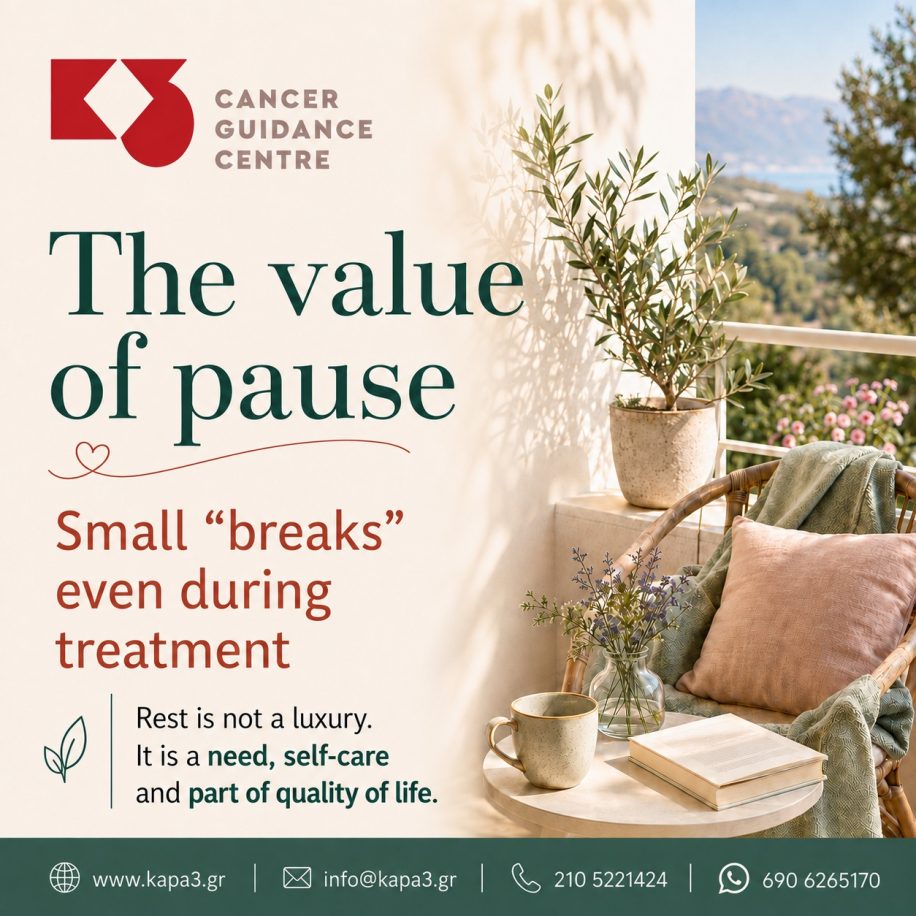
A peaceful sunlit balcony with a chair, a book, a cup, flowers, and an olive tree, illustrating the importance of small moments of rest and self-care during cancer treatment.

By Marilia Barka
Psychology Student
Kapa3 Volunteer

World Self-Care Day (July 24): The Importance of Self-Care on the Journey with Cancer.

  • July 24 has been designated as World Self-Care Day. This symbolic date (7/24) was chosen to remind us all of something very basic: that taking care of ourselves is a process that deserves to continue 24 hours a day, 7 days a week.

    At the Cancer Patient Support Center, this day takes on a deeper and more meaningful significance. Self-care is not merely a luxury or a passing trend, but a valuable tool for physical, mental, and emotional empowerment—both for patients undergoing treatment and for their caregivers.

    What does “self-care” mean?

    According to the World Health Organization (WHO), self-care is defined as the ability of individuals, families, and communities to promote health, prevent disease, maintain well-being, and manage illness with or even without the support of a health professional.

    This is an active commitment to ourselves, which includes:

    1. Healthy daily habits: proper nutrition, adequate sleep, and moderate physical activity (always in consultation with your treating physician)

    2. Prevention and responsibility: consistent medication adherence, regular preventive checkups, and following medical instructions.

    3. Mental and emotional balance: recognizing personal boundaries, managing stress, accepting our emotions, and seeking help wherever and whenever we need it.

    4. Health and health literacy: responsibly staying informed about our health status from reliable sources.

    Self-Care in the Cancer Experience

    For someone who has experienced cancer, self-care takes on a very personal character. It does not mean that “one must do everything on one’s own.” On the contrary, it is essential to:

    • Listen to their body, without feeling guilty about the need for rest

    • Take care of their emotional well-being. Allow themselves to feel every emotion—fear, fatigue, but also hope. Psychological support is considered one of the most important acts of self-care.

    • Build a support network. It is absolutely essential to allow loved ones or specialized professionals to support them.

    Caring for Caregivers

    World Self-Care Day is equally dedicated to those who care for patients—family members, partners, and friends. People who stand by patients often tend to neglect their own needs, thereby driving themselves to physical and mental exhaustion. This day serves as a reminder that caring for caregivers is not selfish but an urgent necessity.

    For caregivers to practice self-care in practice, they must first set boundaries, as they do not need to bear the entire burden alone. At the same time, it is important for them to acknowledge their emotions without judgment, accepting that fatigue, anger, and frustration are normal reactions. It is equally essential to set aside personal time. Fifteen to thirty minutes a day for a walk or to read a book can be beneficial. Finally, seeking psychological support is not a sign of weakness but an act of self-care.

    The Cancer Patient Guidance Center is here for you

    At K3, we believe that no one should have to walk this path alone. Self-care is strengthened when there is guidance, reliable information, and human support.

    On this special day, let’s all take a step back from the fast pace of life and make our health and well-being a priority.

    24 hours a day, 7 days a week: let’s take care of ourselves!

“Myrto” under Scientific Evaluation: Transparency, Evidence and Human Oversight in Social Navigation for Oncology Patients

“Myrto” under Scientific Evaluation: Transparency, Evidence and Human Oversight in Social Navigation for Oncology Patients

The first closed scientific testing workshop of the Digital Health and Social Rights Navigator has been completed

Athens, 6 July 2026

The first closed scientific testing and evaluation workshop of “Myrto”, the Digital Health and Social Rights Navigator developed by the Cancer Patient Guidance Centre – Kapa3, was successfully completed.

The workshop was organised by the Cancer Patient Guidance Centre – Kapa3, with the support of René Descartes – Cnam College and the participation of SimasiaAI. It functioned as a dynamic scientific co-design workshop, bringing together specialised professionals from the fields of healthcare, social care, information technology and personal data protection.

The process was closed and strictly experimental in nature and did not constitute a public presentation of a completed product. Its purpose was to evaluate the behaviour of the application through hypothetical and fully anonymised scenarios, to record correct responses and areas requiring improvement, and to use expert feedback for the next phase of development.

The project “Myrto – Health and Social Rights Navigator” is being developed as a knowledge-based digital social navigation system, guided by the principles of explainable, transparent and human-centred Artificial Intelligence.

Its aim is to transform complex legal, administrative and social information into clear, evidence-based and practically useful guidance for oncology patients, caregivers and citizens.

“Myrto” does not replace professional social, legal, medical or clinical judgement. It operates as a supportive information and navigation tool, with clearly defined functional boundaries, human oversight and the possibility of referral to the competent services and professionals of Kapa3.

The programme is implemented with the support of the TIMA Charitable Foundation.

From Information to Understandable Knowledge

During the workshop, the need that led to the creation of “Myrto” was presented, along with the real barriers faced by patients and caregivers when seeking information on social rights, benefits and administrative procedures.

Particular emphasis was placed on addressing digital and informational exclusion. “Myrto” is designed to transform fragmented and often difficult-to-understand information into simple, structured and comprehensible guidance.

A Thematically Specialised and Curated Knowledge Base

The project’s technical partner, SimasiaAI, presented the operation of the application and the architecture used for information retrieval and synthesis.

“Myrto” uses a hybrid search mechanism that combines text retrieval and semantic search techniques, with the aim of identifying the information most relevant to the user’s question. The application operates on a thematically specialised and curated knowledge base.

A central element of its design is the traceability of information, namely the ability to link an answer to the source on which it is based. The use of validated sources reduces the risk of unsupported responses and enables the identification, review and correction of issues through a process of continuous maintenance, regular updating and adaptation to evolving guidelines and regulatory requirements.

Explainability and Human-Understandable Answers

The evaluation did not focus only on whether “Myrto” retrieves the correct information, but also on whether it can present that information in a clear, understandable and conceptually coherent way.

This approach strengthens trust, responsible use of the tool and the meaningful empowerment of citizens through a response-generation system that supports a transparent, evidence-based and human-supervised knowledge ecosystem, in which every piece of information is understandable, verifiable and connected to its source.

Data Protection and Compliance by Design

Personal data protection and regulatory compliance are embedded from the design stage of the application, in accordance with the principles of data protection by default and by design.

During the workshop, only hypothetical or fully anonymised cases were used. Particular emphasis was placed on the principles of data minimisation, anonymisation and secure processing. These principles are directly linked to contemporary requirements for the responsible development of Artificial Intelligence systems, the protection of special categories of data and compliance with the European regulatory framework.

Live Testing of Hypothetical Scenarios

The professionals who participated in the workshop tested the application individually and in small groups, using only hypothetical and fully anonymised cases. The testing was based on an approach that evaluated the behaviour of the system, examining not only whether the final answer was correct, but also whether the overall operation of the application was safe, understandable and appropriate for the specific request.

Disability Certification through KEPA

In one of the key scenarios, “Myrto” was asked to guide a hypothetical patient who did not know how to start the disability certification procedure through KEPA. The system retrieved the main steps of the process, organised the information in an understandable format and provided relevant references to the sources.

Participants evaluated:

  • the accuracy of the information,
  • the completeness of the steps,
  • the clarity of the language,
  • and the practical usefulness of the answer.

Travel from the Region for Treatment

In a second scenario, the case of an oncology patient who needed to travel from the region to another location for treatment was examined. The application identified relevant categories of socioeconomic support and benefits and presented possible next steps to the user.

The test allowed participants to assess:

  • the correct identification of the request,
  • the connection between different rights and benefits,
  • the completeness of the sources,
  • and the possibility of referral to the appropriate services.

At the same time, cases were also examined in which:

  • the question was unclear or incomplete,
  • the user did not know which right or benefit to look for,
  • clarifying questions were required,
  • medical or personalised legal advice was requested,
  • or immediate human intervention was necessary.

A Continuous Cycle of Scientific Feedback

The meeting concluded with a discussion of the testing results, a review of the technical logs and the presentation of key usage statistics for the application.

The participants’ observations are not treated as isolated comments, but as structured scientific feedback for improvement. In this way, a closed cycle of learning and feedback is created, in which technology, scientific knowledge and the experience of professionals interact continuously.

The continuous involvement of experts and the integration of structured feedback are considered critical for strengthening transparency, reliability and trust in Artificial Intelligence systems used in sensitive fields.

The Interdisciplinary Project Team

The development, scientific documentation and regulatory compliance of “Myrto” are supported by an interdisciplinary team from the fields of health services administration, information technology, personal data protection, language technology and software development. The workshop was attended by:

Evangeli Bista, Co-founder of Kapa3 and Head of Strategic Partnerships; Aristea Archontidou, Industrial Informatics Engineer with postgraduate specialisation in Health Policy and Health Services Planning; Anastasia Vlachopoulou, lawyer and member of the Thessaloniki Bar Association, specialised in personal data protection; Dimitris Papadakis, Co-founder and Sales Manager at SimasiaAI and Project Manager of the “Myrto” project; and Giannis Barous, Co-founder and CTO of SimasiaAI, PhD candidate in Computer Science based in San Francisco, who has undertaken the technical component of the project: how the system identifies the right information, how it connects it with reliable sources and how it provides answers that are evidence-based, useful and safe.

About Kapa3

The Cancer Patient Guidance Centre – Kapa3 is a social support, information and navigation organisation for oncology patients, survivors, caregivers and their families. Its aim is to contribute to equal access to oncology care, social protection and the rights associated with the cancer experience.

Every day, Kapa3 supports people who face not only the disease itself, but also a range of practical, administrative, social and psychosocial challenges. Through personalised social guidance, the organisation helps patients and caregivers learn about their rights, understand available benefits and services, navigate administrative procedures and connect with appropriate support structures.

The main pillars of Kapa3’s work include information on social and insurance rights, support in accessing health and social care services, guidance on benefits and procedures, empowerment of patients and caregivers, and connection with professionals, organisations and communities.

As part of its digital strategy, Kapa3 develops digital empowerment and social navigation tools, such as “Myrto”, the Digital Health and Social Rights Navigator. “Myrto” is designed to transform complex legal, administrative and social information into clear and evidence-based guidance for oncology patients, caregivers and citizens, always with human oversight, transparency and respect for the limits of technology.

Kapa3’s philosophy is based on the principle that care is not limited to medical treatment. It includes access to information, social protection, psychosocial support, dignity, empowerment and the ability of every person to know and claim their rights.

Through collaborations with health and social care professionals, academic and research institutions, civil society organisations, public structures, volunteers and communities, Kapa3 seeks to build bridges between the patient, information, services and real access.

June: Cancer Survivors Month

Survival is a victory — but care must continue

June is dedicated to people living with and beyond cancer. It is a month of recognition, hope and respect for every person who has faced a cancer diagnosis, completed treatment, continues treatment, or lives with cancer as a long-term condition.

Cancer survival is a major victory. However, for many people, it is not the end of the story. Life after cancer often brings a new reality: follow-up appointments, fear of recurrence, fatigue, emotional distress, changes in body image, work-related challenges, financial pressure, family adjustments and the need to rebuild everyday life with confidence and dignity.

Cancer Survivors Month reminds us that survivorship is not only about living longer. It is also about living better.

A cancer survivor is not only a person who has completed treatment and is disease-free. The term also includes people receiving maintenance treatment, people living with cancer as a chronic condition, and those who continue to experience the physical, emotional, social or economic consequences of the disease and its treatment.

In recent years, advances in early diagnosis, targeted therapies, immunotherapy, surgery, radiotherapy and supportive care have increased the number of people living many years after a cancer diagnosis. This is a major achievement for medicine, research and public health. At the same time, it creates a new responsibility: to ensure that survivorship care is organised, person-centred and accessible to all.

For many survivors, the end of active treatment is a moment of relief and gratitude. Yet it may also bring uncertainty. Some people feel that everyone around them expects them to “go back to normal”, while they are still trying to understand what has changed in their body, their emotions, their relationships and their daily life.

The fear of recurrence, anxiety before follow-up tests, persistent fatigue, pain, cognitive difficulties, changes in sexuality, emotional vulnerability and social isolation are real experiences for many people after cancer. These needs should not be underestimated. Survivors need space to speak, reliable information, access to professional support when needed, and connection with communities and organisations that understand their journey.

Long-term follow-up is also essential. Survivorship care should not focus only on recurrence. It should also include prevention, early recognition of late effects, management of treatment-related complications, support for mental health, healthy lifestyle guidance and personalised monitoring according to each person’s cancer type, treatment history, age and individual risk factors.

The message is not fear. The message is awareness, prevention and continuity of care.

Life after cancer is also about rights. It is about returning to work, accessing social benefits, understanding available services, managing financial toxicity, supporting caregivers, protecting dignity and ensuring equal access to care. Survivorship must be seen as a social, psychological and practical issue — not only a medical one.

At Kapa3, we see every day that cancer does not always end with the last treatment. It continues in the questions people ask about their rights, their next steps, their follow-up, their access to benefits, psychological support, work, family life and social reintegration.

This is why people living with and beyond cancer need holistic support. They need information, guidance, psychosocial care, access to rights and services, empowerment and continuity of care. No one should feel alone after treatment. No one should be left to navigate bureaucracy, uncertainty or lack of information without support.

Cancer Survivors Month invites us to change the way we talk about survival. We should not ask only: “Did the person survive cancer?” We should also ask:

Are they living with quality of life?
Do they have access to the care they need?
Do they know their rights?
Do they receive psychological and social support?
Can they return to work and daily life with dignity?
Is there a follow-up plan?
Is there someone to guide them when they do not know where to turn?

Cancer survival is a victory. But the real challenge is to turn this victory into a life with quality, safety, rights, support and hope.

At Kapa3, we continue to stand beside every person living with and beyond cancer. Through information, guidance, empowerment and human-centred support, we believe that care does not stop at treatment.

It continues in life.

January – Cervical Cancer Awareness Month

January is internationally dedicated to raising awareness about cervical cancer. Known as Cervical Cancer Awareness Month, it aims to highlight the importance of prevention, early detection, and vaccination against the human papillomavirus (HPV), which is responsible for nearly all cases of the disease.

Cervical cancer remains a major public health issue worldwide. According to the World Health Organization, approximately 660,000 new cases are diagnosed globally each year, and more than 350,000 women lose their lives to the disease. It is among the most common cancers affecting women, particularly in regions where access to preventive screening and vaccination is limited. At the same time, it is one of the few cancers that can largely be prevented through organized prevention and early detection programmes.

In Greece, available data indicate that around 700 new cases of cervical cancer are diagnosed annually, while more than 280 deaths are attributed to the disease each year. The estimated incidence is approximately 8 cases per 100,000 women. Although this places Greece close to the European average, it also highlights the need for further improvement in prevention and early diagnosis.

Cervical cancer is closely linked to chronic infection with human papillomavirus (HPV), a very common virus transmitted mainly through sexual contact.

HPV vaccination, combined with regular gynaecological screening through Pap tests and HPV tests, can significantly reduce the development of precancerous lesions and cervical cancer. In this context, the World Health Organization has set the goal of eliminating cervical cancer as a public health problem by 2030, through high vaccination coverage, universal screening, and timely treatment.

January serves as an important reminder that information and prevention save lives. Open discussion around women’s health, free from fear and stigma, empowers women to take care of themselves and to claim prevention as a fundamental right.

Special emphasis should be placed on the systematic education of younger generations, as prevention begins long before any symptoms appear. Access to reliable information, preventive screening services, and vaccination programmes is a key factor in reducing health inequalities and protecting future generations.

At KAPA3, we believe that information and prevention are core pillars of care and empowerment. Through the dissemination of reliable information and the support of initiatives that promote public health, we stand alongside every woman who needs knowledge, prevention, and timely care.

Because cervical cancer can be prevented, we encourage everyone to take action. Give a meaningful gift to the women you care about: daughters, sisters, mothers, friends, partners, spouses. Talk openly about women’s health, share information, support initiatives, challenge taboos, and promote early diagnostic screening.

Information and open dialogue are the strongest tools we have.

Sources:

World Health Organization (WHO)
Cervical cancer – Fact sheet

WHO – Global strategy to accelerate the elimination of cervical cancer

International Agency for Research on Cancer (IARC / WHO)
Cervical Cancer Awareness Month

ICO / IARC HPV Information Centre – Greece Factsheet

Ministry of Health – National Immunization Programme

Hellenic National Public Health Organization (EODY)
HPV and cervical cancer

Text/adaptation: Ifiyenia Anastasiou for Kapa3