New Disability Benefits Registry: What’s Changing and How It Will Make Life Easier for Citizens and People with Disabilities.

As part of the digital transformation of social care, the joint ministerial decision on the establishment, maintenance, and operation of the “Disability Benefits Registry.”

This new digital tool on the National Disability Portal promises to put an end to the bureaucracy and the fragmentation of information that both people with disabilities and their families face on a daily basis.

A government-wide initiative.
The scope and significance of this initiative are underscored by the fact that the decision was signed by the overwhelming majority of government members—ranging from the Ministries of Finance, Health, and Labor, all the way to the Ministries of Education, Infrastructure & Transportation, Environment, and Digital Governance. This broad consensus highlights that benefits for people with disabilities are not limited to financial allowances alone, but extend to tax exemptions, transportation assistance, educational
facilities, social services, and special provisions across the entire public sector.

What is the Disability Benefits Registry?

The Registry is a specialized subsystem of the National Disability Portal. Its purpose is to collect, record, and transparently document all accommodations, allowances, benefits, and services to which people with disabilities or their related individuals are entitled.

What does the documentation of each benefit include?

For each available benefit or accommodation, the Registry will document the following in a standardized and clear manner:
• Title & Description: the distinctive title and brief description of the benefit.
• Legal Framework & Competent Authorities: the applicable provisions and the competent agencies
responsible for awarding or granting the benefit.
• Eligibility Requirements: the disability-related and other requirements for receiving the benefit.
• Financial Details & Frequency: the frequency and monetary value (exact amount or range), provided
that it is quantified in monetary terms.
• Application Process: detailed instructions for submitting the application and a direct link to the National Registry of Administrative Procedures “MITOS.”

Who is the Operating Agency, and what are the agencies’ obligations?

The Organization for Welfare Benefits and Social Solidarity (OPEKA) is designated as the operating agency for the Registry. It is responsible for ensuring continuous operation, maintaining the system, verifying the accuracy of entries, and issuing access credentials.
With regard to data entry personnel and data updates, each competent Ministry, Agency, and Municipality shall designate authorized “Data Entry Personnel”; such designations must be made within 10 days of publication.

They are required to complete the initial registration of benefits within one (1) month of the
decision’s publication, to immediately update the system in the event of changes or new benefits, and to annually verify the accuracy of the data.

Public Access and Information.

One of the most significant benefits of the new regulatory framework is that all information in the registry is public and accessible to everyone via the Internet. This provides immediate, accurate, and comprehensive information to those interested, without requiring them to travel or contact multiple public agencies—a process that often causes considerable inconvenience to thousands of people.

The creation of the Disability Benefits Registry is a positive step toward ensuring equal access to information and reducing bureaucratic burdens.

The Right to Be Forgotten: A New Era of Dignity for Cancer Survivors

Life after cancer should not be accompanied by lifelong financial exclusion

For many decades, completing cancer treatment did not always mean the end of obstacles for those who had been diagnosed with the disease. Years after their treatment, many survivors continued to face higher insurance premiums, denied insurance applications, and difficulties accessing financial services.A history of cancer could act as a permanent “stigma,” even many years after treatment had ended.

Thus, medical progress and a return to daily life were not always accompanied by corresponding social and economic rehabilitation.

With Law No. 5317/2026, published on July 10, 2026, Greece is moving forward with the legislative enshrinement of the so-called “Right to Be Forgotten” for cancer survivors, in the context of insurance contracts linked to consumer credit agreements. This specific provision is found in Article 16, paragraph 4, of the law.

What the new provision stipulates

The law prohibits the use of personal data related to a consumer’s cancer diagnosis when such data is to be used for an insurance contract linked to a credit agreement and five years have passed since the completion of treatment.

Simply put, once the five-year period has elapsed, a prior history of a cancer diagnosis cannot be used in this specific context as a factor in assessing the insurance contract accompanying the credit agreement. This represents a significant shift: individuals are no longer assessed indefinitely through the lens of a past
illness, but are given the opportunity to move forward with their lives without their previous diagnosis serving as a permanent obstacle.

The four key points of the new entitlement

The Right to be Forgotten does not mean that the diagnosis is deleted from the medical record. It means that, after the prescribed five-year period, data related to the cancer diagnosis may not be used for that specific insurance purpose.

Fourth, special oversight is provided for.

The Personal Data Protection Authority is responsible for enforcing paragraph 4 of Article 16 and possesses the supervisory and auditing powers provided for by the General Data Protection Regulation.

What the New Regulation Does Not Cover

Accurate information is particularly important so that citizens are aware of both their rights and the actual
limits of the protection provided.

The new legislative provision:

  • does not apply to all forms of private insurance,
  • does not automatically guarantee the approval of a loan or an insurance application,
  • does not cover credit agreements secured by a mortgage on real property,
  • does not cover credit intended for the purchase or retention of rights in real estate,

does not cover professional or business loans, as the law applies to consumers acting outside the
scope of their professional or business activities.

Furthermore, consumer credit agreements already in effect as of November 20, 2026, will, as a general rule, continue to be governed by the previous legal framework until their expiration.
Therefore, the new regulation represents a very important step, but it does not yet provide comprehensive coverage of all the financial and insurance needs of survivors.

From Voluntary Commitment to Legal Enshrinement

The Right to Be Forgotten did not first appear in Greece in 2026. As of March 26, 2024, the Code of Ethics of the Hellenic Association of Insurance Companies has been in effect, to which life insurance companies had adhered.

The Code applied to life insurance policies linked to mortgage, business, or consumer loans, with a maximum total insured amount of 300,000 euros. It provided for a ten-year period following the completion of treatment for those diagnosed as adults and a five-year period for those diagnosed before
turning 18.

The new legislation is particularly significant because protection is no longer based exclusively on the insurance industry’s voluntary commitment. For contracts falling within its scope, the failure to use the oncological diagnosis after the five-year period becomes a legal obligation.

At the same time, there is a need to clarify the relationship between the new law and the existing Code, particularly with regard to mortgage and business loans that are not subject to the new legislative provision.

Additional Safeguards for Consumers

Article 16 includes other important safeguards. When insurance is required for the granting of credit, the creditor must accept equivalent insurance coverage from an insurance company of the consumer’s choice. Choosing a different company must not result in less favorable credit terms.

At the same time, the consumer is given a period of at least three business days to compare insurance quotes, unless the consumer requests in writing that the contract be concluded earlier.

The European Dimension

The Greek regulation transposes Directive (EU) 2023/2225 on consumer credit agreements. The European
Directive requires Member States to establish a time limit beyond which data related to oncological
diagnoses may not be used for insurance policies linked to credit agreements. The European text stipulated that this period must not exceed fifteen years; Greece opted for the significantly shorter period of five years.

This choice has particular social significance. It recognizes that advances in oncology, increased survival rates, and people’s return to family, social, and professional life must be accompanied by corresponding
developments in the law.

When Does It Take Ef ect?

Although Law No. 5317/2026 has already been published, the provisions of Part A, which include the
Right to Be Forgotten, will take effect on November 20, 2026.
Until then, substantial preparation is required on the part of banks, insurance companies, and the relevant
authorities. Clear procedures, understandable information for citizens, appropriate staff training, and an
easily accessible mechanism for submitting reports or complaints are needed.

A Significant Achievement—Not the End of the Journey

The Right to Be Forgotten represents a significant institutional victory for dignity and equality. Cancer
should not be a lifelong social and economic stigma. A person’s medical history should not negate their
right to plan for the future, participate equally in society, and make a fresh start.
At the same time, the new regulation must be viewed as a starting point, not the culmination of our
efforts. The next step must be to extend meaningful protection to more insurance and financial products,
including housing needs, as well as to address the discrimination that continues to occur in the workplace
and other aspects of social life.
Scientific progress has transformed cancer from a terminal diagnosis into an experience of life and
survival for millions of people. Society and the law must follow suit.

Because the Right to Be Forgotten is not a privilege. It is every person’s right not to remain forever
trapped by a past diagnosis—and to move forward into the future without discrimination, without
stigma, and with dignity.

Find more : http://elib.aade.gr/elib/view?
The Active Role of Patient Organizations in Shaping Public Policy: How Our Health Advocacy Ef orts Are Put into Action

At the Cancer Patient Guidance Center, we believe that the voices of patients, their families, and the organizations that represent them must be heard loud and clear where decisions are made.

Improving the quality of life for cancer patients, ensuring access to new treatments, and meeting the needs of caregivers are not just requests but rights that are asserted through organized advocacy. To make this a reality, the right tools are needed.

The new “Guide to Mapping Public Consultation Tools”

As part of the “ENERGO – Toward an Open State” project, HIGGS has created a practical guide that maps the available mechanisms for participation at the local, national, and European levels.

This guide serves as a roadmap for Civil Society Organizations (CSOs), providing a detailed overview of:
• How institutional consultation tools function
• The opportunities for organizations to actively participate in policy-making
• The requirements for accessing these mechanisms
• The challenges and limitations, so that our interventions are well-informed and effective

Why might this be of interest to the beneficiaries of our Center?

Participation in shaping public policy is not an abstract concept. In cancer care, it translates into very specific changes:
1. Equal access to care: advocating for better infrastructure, shorter wait times, and free access to innovative medications.
2. Support for caregivers: establishing leave policies, benefits, and support systems for the people who stand by their side
3. Rights in the workplace: protecting cancer patients from discrimination in the workplace during and after treatment.

Summary & Structure of the Public Consultation Tools Guide

The “Public Consultation Tools Guide” was developed as part of the project “ENERGO – Toward an Open State” (implemented by HIGGS and co-funded by the European Union, the Bodossaki Foundation, and the NGO Support Centre). It is a practical reference tool designed to empower civil society organizations (CSOs) by strengthening their capacity for meaningful, evidence-based participation in public policy-making and strategic advocacy.

The guide is organized into the following sections:

1. Introduction & Institutional Landscape: This section presents the framework for the guide’s development, which was based on research and experiential tools involving dozens of civil society organizations. It analyzes the challenges of the institutional landscape, noting that the main obstacle for organizations is not the absence of tools, but rather the fragmentation, lack of visibility, and complexity of existing mechanisms,

2. National Tools for Public Consultation & Participation: maps and presents in detail the tools available in Greece, such as OpenGov, the KEDE & LocalWatch consultation platform, Vouliwatch, the YPEN Participation Platform, the National Register of Procedures (“Mitos”), Open Council & Crowd Participation, as well as Diafania & POTHEN.

3. European Public Consultation & Participation Tools: presents mechanisms for engagement at the European Union level, such as Have Your Say, the European Citizens’ Initiative (ECI), Consul Democracy, Loomio & Decidim, and others.

4. Tool Selection Guide & Conclusions: Provides consistent evaluation criteria (purpose, implementing body, prerequisites, limitations) so that each organization can select the most appropriate tool based on the objective of its engagement.

About the “ENERGO” Project & the PLATO Program

The “ENERGO: Toward an Open State – Participation, Advocacy, and Empowerment of Civil
Society Organizations” project is being implemented as part of the PLATO program, with HIGGS serving as the implementing partner. The PLATO program (“Protecting democracy, human rights, and the rule of law through an open civic space”) aims to strengthen the fundamental rights and values of the EU in both Greece and Cyprus. It is co-funded by the European Union through the Citizens, Equality, Rights and Values (CERV) program, the Bodossaki Foundation, and the NGO Support Center. The Bodossaki
Foundation serves as the coordinator in partnership with the NGO Support Center.

View and download the guiderZT9sW-Οδηγός Εργαλείων Δημόσιας Διαβούλευσης.


Kapa3 Report for the First Half of 2026

As the first half of 2026 draws to a close, the Cancer Patient Guidance Center (Kapa3) continues to systematically expand its reach, thereby strengthening the system of care and information for both cancer patients and their caregivers.

During the first half of the year, the organization implemented a series of high-level initiatives and forged partnerships at both the national and European levels, thereby solidifying its position.

The organization’s activities got off to a strong start in January with the welcome of its European partners in the MELODIC Consortium project at a productive two-day workshop (January 19–20), hosted by the School of Public Health at the University of West Attica.

In early February, on the occasion of World Cancer Day, Kapa3 played an active role as a partner of René Descartes College in the webinar “Cancer, Patient Navigation & Health Management: From Prevention to Life Coordination.”

At the same time, significant initiatives were carried out in the local community, such as the “Knowledge Workshop in Megara—From Prevention to Life Coordination,” held on February 8 in collaboration with the Municipality of Megara.

In the area of scientific programs, the Cancer Patient Guidance Center, in collaboration with the Laboratory of Basic Health Sciences (EBEY) of the Department of Nursing at the University of the Peloponnese (PA.PEL), launched a series of online meetings running from February through June, focusing on mental health and nutrition.

The month concluded with the organization’s participation in the international conference “Mapping the Unknown in Oncology – From Hospitals to Homes, Mapping the Future of Oncology Care,” held on February 27 and 28.

March marked a strengthening of Kapa3’s “digital presence” with its official membership in the Hellenic Digital Health Cluster (HDHC), a strategic move aimed at linking healthcare with technological advancements. As an extension of this collaboration, the organization participated in a closed-door members’ meeting as part of Athens Digital Health Week 2026.

On March 11, representatives of the organization attended the diaNEOsis event “Facing the Challenge of Artificial Intelligence” at the Lighthouse of the Stavros Niarchos Foundation Cultural Center, while in the middle of the month, Kapa 3 played a prominent role in the scientific conference “Cancer in 2026: Challenges and Disruptions.” Furthermore, on March 19–20, the organization was represented at the 6th Western Macedonia Nursing Conference on the theme “Innovation and Empathy: Balancing Technology with Human Contact in Nursing.”

In parallel, the organization’s co-founder, Ms. Evangelia Bista, gave an interview on the show “All About Health” on Dion TV—which covered a variety of topics related to health, nutrition, autoimmune diseases, and more—the implementation of the free, 8-week Melodic pilot educational program began.

Kapa3’s scientific credibility was reaffirmed by the publication of the research paper “Person-First or Disease-First? Language Choices in Cancer Communication” in the journal *Nursing Reports*, as well as by Kapa3’s participation in the European project associated with Melodic, titled: “Educational Needs Regarding Mental Health of Professionals Working with Young Adults with Cancer: A European Survey,” which was also published; the organization also participated in the MELODIC Online Symposium 2026 on April 24, contributing to the dissemination of results in Greece.

May was marked by a strong outward focus and new collaborations, as the organization joined the European program Service Learning 2: 0:CoLab, was selected as one of six nonprofit organizations to receive financial support from the Alpha Bank-Match For Good initiative, and began its collaboration with the USTEP INSTITUTE.

At the same time, an awareness campaign was held in Soufli to highlight Kapa3’s activities; Ms. Bista gave an interview to iatronet.gr, and representatives of the organization participated in an international conference at the Medical School of the University of Coimbra in Portugal

Within the organization, the new Psychological Support team was established with great enthusiasm, while on the social media front, the Kapa3 team won six medals at the 4th Vouliagmeni Summer Swim.

As the semester came to a close, June began with the signing of an official cooperation agreement with the Department of Occupational Therapy at the University of West Attica, while partnerships were solidified with the non-profit organization “Karkinaki” and the PRAXI Network of the Foundation for Research and Technology – Hellas (FORTH) to strengthen international networking and access to modern funding tools.

Having completed five years of uninterrupted service in supporting cancer patients through digital guidance, Kapa 3 is entering a new era with the development of the innovative “Myrto” project. This is a pioneering Social Artificial Intelligence (Social AI) initiative in the field of care for cancer patients in Greece. “Myrto” will function as an advanced digital health and rights navigator (Patient Empowerment e-Navigator) for patients, caregivers, and healthcare professionals—a project for which the strategic partnership with SimasiaAi for its co-development was crucial. Finally, the first closed workshop of the MYRTO Al Health Innovation Lab was held for the “Myrto” application, with the support of René Descartes College.

The results of this first half-year clearly demonstrate that Kapa 3 serves as a link connecting innovation, scientific research, and the digital age in the field of oncology care. By combining academic knowledge, European partnerships, and technological development, Kappa 3 transforms every challenge into sustainable, people-centered solutions. Partnerships with leading organizations, investors, and partners who share the same values of social responsibility are also essential to realizing this vision, ensuring that every patient has immediate, reliable, and equitable access to healthcare and their rights.

The KAPA3 team stands steadfastly by patients and caregivers to provide guidance and safeguard their rights. For any information or support, please feel free to contact us.

You can contact the KAPA3 team

13 Kostis Palamas Street, 3rd floor (Hours: 9:00 a.m. – 5:00 p.m.).

Phone Numbers: 210 5221424 & 6906265170.

Email: info@kapa3.gr


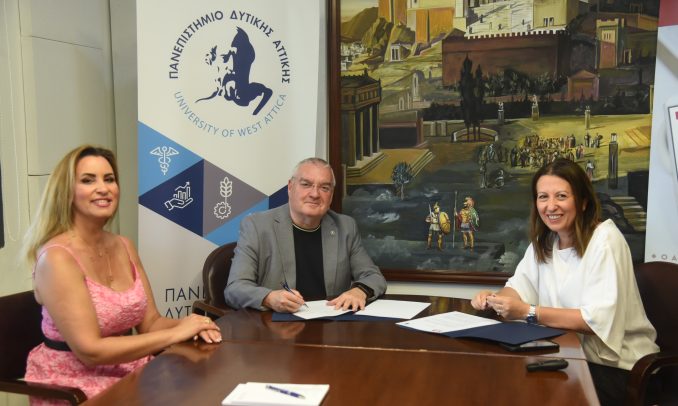
Memorandum of Understanding between the University of West Attica—specifically the Department of Occupational Therapy—and the NGO KAPA3.

On Tuesday, June 9, a meeting was held to sign a Memorandum of Understanding between the University of West Attica—specifically the Department of Occupational Therapy—and the NGO KAPA3.

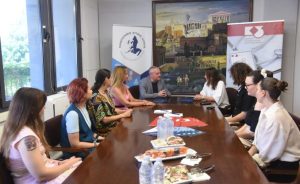
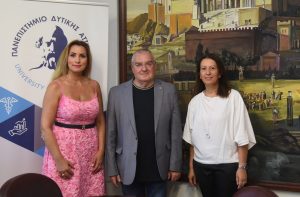
The meeting was attended by the Rector of the University of West Attica, Panagiotis Kaldis Penelope Vlotinou, Assistant Professor in the Department of Occupational Therapy Evangelia Bista, co-founder of the organization, as well as representatives from both organizations, including the interdisciplinary team of KAPA3: Despoina Chrysostomou, Psychologist Katerina Georgiopoulou, Social Worker Yiannis Kontogiorgis, Psychologist, and Eleftheria-Irini Polyzoti, an intern from the Department of Social and Educational Policy, as well as students from the Occupational Therapy Department.

During the meeting, a constructive discussion took place regarding the prospects for cooperation between the two organizations, with the aim of developing joint actions and initiatives that will contribute to strengthening education, research, social contribution, and the connection between the academic community and society.

In this context,  it was decided in April to jointly organize a major scientific conference, which will focus on an interdisciplinary and holistic approach to health, on combating social inequalities in healthcare, as well as on the management of chronic disease. The aim of this initiative is to raise community awareness, facilitate the exchange of expertise among professionals and scientific bodies, and disseminate scientific knowledge and information to the general public.

Special mention was made of the innovative work of KAPA3, the digital Health Navigator “Myrto,” a modern artificial intelligence tool currently under development and designed to support cancer patients, their families, and their caregivers. “Myrto” will function as a digital assistant (Chatbot) and Health and Rights Navigator, providing immediate, reliable, and personalized information on health, social welfare, rights, benefits, and available support services. The project aims to empower patients, improve their access to information, and reduce inequalities in health and social care through the use of digital technologies and artificial intelligence applications. The development of “Myrtos” represents a pioneering application of social artificial intelligence in the field of oncology care in Greece and is part of KAPA3’s strategy to promote innovation, accessibility, and the active participation of patients in managing their own health.

The meeting concluded in a particularly positive atmosphere of mutual appreciation and recognition. In this context, the Department of Occupational Therapy at the University of West Attica made a symbolic gesture toward the representative of KAPA3, Evangelia Bista, presenting her with a commemorative gift as a token of appreciation for her many years of valuable social contribution in the field of support for cancer patients. At the same time, as a gesture of hospitality and appreciation, the team was offered a specially produced wine, which is an original creation of the University of West Attica.


Kapa3 Cancer Patient Support Center and the USTEP Institute announce the launch of their strategic partnership

The Kapa3 Cancer Patient Support Center and the USTEP Institute announce the launch of their strategic partnership, aimed at providing meaningful support to cancer patients and promoting equal opportunities in scientific, social, and educational levels.

The partnership was formalized through the signing of a Memorandum of Understanding, which was signed in Athens on May 26, 2026, by Evangelia Bista, Co-founder and Head of Development and Operations at Kapa3, and Vasileios Stavrou, Co-founder and Scientific Director of the USTEP Institute.

As part of the collaboration, the two organizations will develop joint initiatives that include:

Organizing workshops and conferences focused on patient education, improving the quality of care, and strengthening the relationship of trust between patients and healthcare professionals.

The implementation of information and awareness campaigns on prevention, symptom management, and combating myths and social stigma surrounding cancer.

Collaboration on national and European programs aimed at developing innovative initiatives and actions with a social impact.

Conducting joint research and disseminating the results at the national and European levels.

This partnership reaffirms the two organizations’ commitment to actively contribute to the creation of a more supportive and inclusive environment for people living with cancer, by enhancing access to knowledge, information, and social empowerment.

The Memorandum of Cooperation is valid for one year, with the option to renew upon mutual written agreement by both parties.


Confirmation of AMKA for Child and Parent

A major institutional development is set to simplify the lives of cancer patients and their families by eliminating unnecessary bureaucratic hurdles. The new ministerial decision introduces digital proof of kinship for the dispensing of High-Cost Medications (FCM). The Kapa3 team presents a detailed overview of all the changes affecting insured individuals’ daily access to their essential treatments.

A Digital Leap Toward Equal Access to Care

The new decision provides for the launch of the specialized online service “AMKA Verification for Child-Parent.” This service is directly integrated into the “PLATFORM FOR THE DISTRIBUTION OF PHARMACY-ISSUE MEDICATIONS BY PRIVATE PHARMACIES/EOPYY PHARMACIES” information system.

For the people Kapa3 serves every day, this development translates into an immediate reduction in bureaucracy and hassle. From now on, the verification of family relationships will be performed automatically, ensuring that vulnerable groups and their caregivers do not waste valuable time waiting for approval of their necessary treatment regimens.

 This upgrade is a matter of respect and dignity for the patient who is fighting their own battle. At Kapa3, we continue to stand by every cancer patient and their family, ensuring that information and care reach those who truly need them—quickly and easily. Because when it comes to health, every minute we gain is precious.

What’s Changing in Patients’ Daily Lives

Until now, in order to obtain approval for the dispensing or delivery of an expensive medication for a child or dependent, it was often necessary to submit additional documents (such as family status certificates) or in-person verification of the parent-child relationship. 

What sets Decision 3 of this Government Gazette apart is the following:

Automatic Data Matching: It digitally connects information systems in real time. The EOPYY platform now automatically “reads” the relationship between a parent’s and child’s AMKA numbers through the Interoperability Center.

Immediate Approval of Requests: The parent or close relative logs into the digital “FYK DISPENSATION PLATFORM” using their own credentials and can submit the request immediately, without the process being held up due to a lack of the child’s identification.

Flexibility in Pickup: It facilitates faster scheduling of appointments at EOPYY pharmacies or pickup from private pharmacies, dramatically reducing wait times for vulnerable patients


Reducing bureaucracy is not merely a digital upgrade; it is a matter of respect and dignity for the patient who is fighting their own battle. At Kapa3, we continue to stand by every cancer patient and their family, ensuring that information and care reach those who truly need them—quickly and easily. Because when it comes to health, every minute we save is


New Joint Ministerial Decision on the 2026 Aerotherapy Allowance: A Detailed Guide for KAPA3 Beneficiaries

At the Cancer Patient Guidance Center—KAPA3, we remain committed to providing accurate and timely information to cancer patients and their families regarding the rights and social benefits to which they are entitled. With the aim of making your daily life easier and ensuring you have full access to beneficial legislative provisions, we present a comprehensive guide to the granting of the air therapy allowance, in accordance with the recent Joint Ministerial Decision (No. 89399 EX 2026) published in the Government Gazette, Issue B, No. 3295, dated June 11, 2026.

The air therapy allowance applies to the summer season of 2026.

The amount is set at 250.00 euros and will be paid as a lump sum to the beneficiaries’ bank accounts on July 10, 2026.

The amount is unseizable and fully exempt from any tax or withholding.

  1. Who Are the Beneficiaries

The benefit is granted to disabled retirees of the State and the e-EFKA. Specifically, beneficiaries are those who fall into the following categories:

a) Pensioners referred to in subparagraphs (a) and (b) of paragraph 1 of Article 6 of Legislative Decree 4605/1966.

b) Pensioners under subparagraph (c) of the aforementioned paragraph 1 of Article 6 of Legislative Decree 4605/1966, who, according to 

the opinion of the competent Health Committee for the years 2020 through 2026, have been deemed to be in need of this allowance and belong to the following categories of retirees:

  1. Disabled officers under Law No. 2588/1921 and Law No. 875/1979 on military retirement.
  2. Disabled officers under Law No. 362/1943.

iii. Disabled enlisted personnel under Article 1 of Legislative Decree 1044/1971, as amended by Article 1 of 

Law 1043/1980.

Disabled members of the former Municipal Police who were subject to Legislative Decree 330/1947.

Disabled members of the Security Forces under Law 1579/1950 and those disabled members of the Coast Guard,

the Fire Department, and the Agricultural Police who are treated as equivalent to them.

Disabled members of the National Resistance under Provisional Act 1855/1951, Legislative Decree 412/1970, and Law 1543/1985.

vii. Persons with disabilities under Law 1370/1944 (who sustained their disabilities during peacetime while in service and as a result thereof, and 

receive a disability pension).

viii. Persons with disabilities from the anti-dictatorship struggle under Law 1543/1985.

Disabled civilians under Law 812/1943.

Disabled civilians under Law 1863/1989.

c) Civilian retirees who sustained disabilities as a result of their service (Decision of the Ministry of Labor and Social Security No. 

754.6/117/3912/March 24, 1969) and

d) OSE retirees who left the service and are receiving a pension due to tuberculosis.

3. Who Is Exempt from Payment

According to the Government Gazette, the following categories are not eligible for the air therapy allowance:

Recipients of other benefits: Those who have received or are set to receive a corresponding air therapy allowance from any other source (such as public entities, private entities, public benefit organizations, etc.).

Spa Therapy Beneficiaries: Those who have been deemed eligible for spa therapy for the year 2026 by the Directorate for Reserve Combatants, Veterans, War Victims, and War Disabled (DEPATHA).

New Pensioners: Citizens whose pension is payable after September 30, 2026, or whose order for registration in the Pensioner Registers is issued after October 31, 2026.

  1. What to Do in Case of Non-Payment

If you are eligible but the benefit does not appear in your account by the scheduled date of July 10, 2026, the law entitles you to file a retroactive claim.

You may submit a request by December 31, 2026, at the latest, to the following agencies (depending on your category):

To Section E of the Income Policy Directorate of the General Accounting Office (p. 2) .

To the General Directorate of Public Sector Pensions of e-EFKA (p. 2).

You can contact the Kapa3 team 

13 Kostis Palamas Street, 3rd floor (Hours: 9:00 a.m. – 5:00 p.m.).

Contact Numbers: 210 5221424 & 6906265170.

Email: info@kapa3.gr

Participation in CA21152 – Implementation Network Europe for Cancer Survivorship Care

Digital Health and Cancer Survivorship: Kapa3 at the INE-CSC 2026 Conference in Coimbra

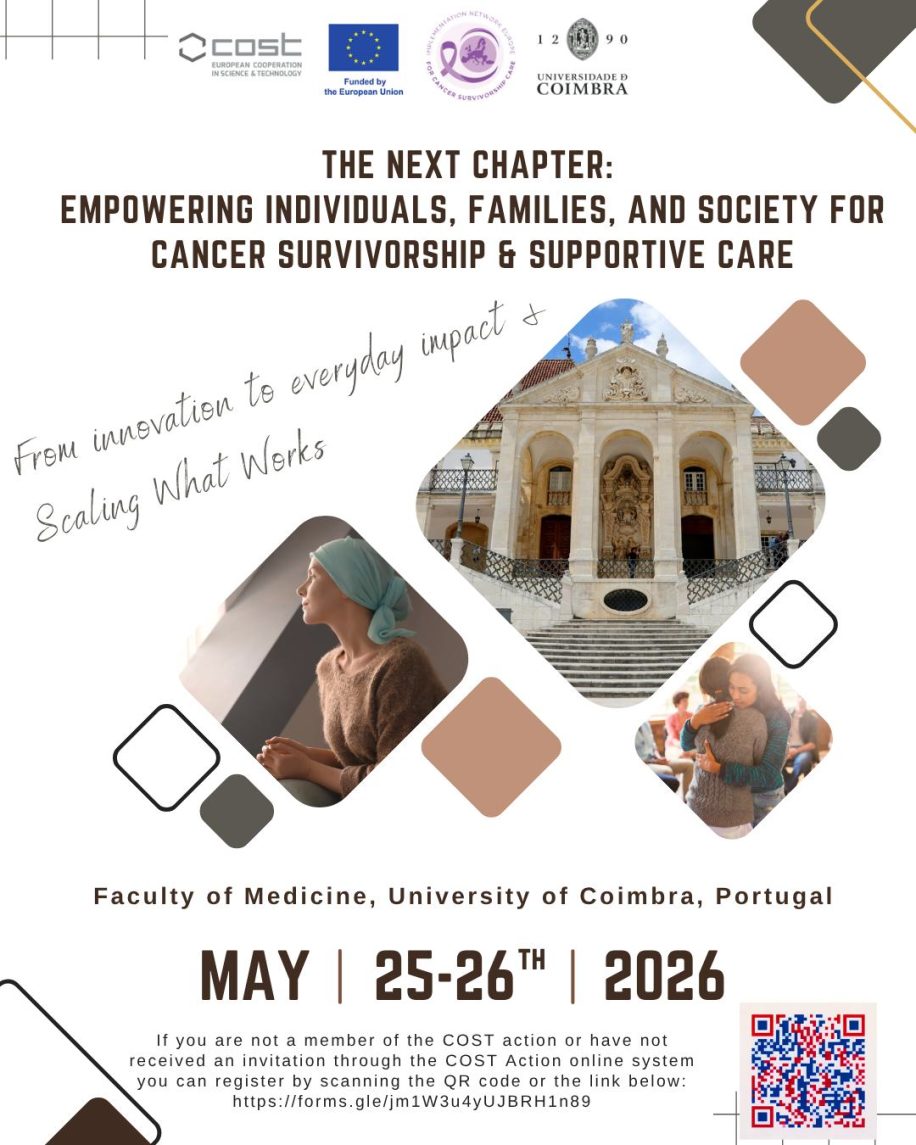
The Cancer Guidance Center – Kapa3 participated in the INE-CSC 2026 Conference, part of CA21152 – Implementation Network Europe for Cancer Survivorship Care (INE-CSC), held on 25–26 May 2026 at the Faculty of Medicine (Polo III), University of Coimbra, in Coimbra, Portugal.

The conference was held under the theme “The Next Chapter – Empowering Individuals, Families, and Society for Cancer Survivorship & Supportive Care”, highlighting the need for new approaches to cancer survivorship, supportive care and the translation of innovation into real-world impact for people living with and beyond cancer, their families and society.

Kapa3’s presence in Coimbra represents another important step in its European engagement and in its ongoing effort to connect everyday experience in supporting cancer patients in Greece with European knowledge, research, digital innovation and health policy.

A key highlight was the participation in a round table discussion on facilitators and barriers to the implementation of digital health tools in oncology. The discussion was co-organised by Aristea Kyriaki Ladas and Christos Frantzidis and brought together voices from different European countries and organisations, including representatives from Kapa3, Acreditar Portugal, Liga Portuguesa Contra o Cancro, ORCO / Madrid Regional Ministry of Health, as well as participants from Poland, Latvia and the United Kingdom.

Among the participants in the round table were Yannis Kontogiorgis and Despoina Pistiolis from Kapa3, Greece, contributing to the European dialogue on digital health, oncology navigation and the participatory development of solutions that respond to the real needs of patients and caregivers.

One of the key messages of the discussion was that digital innovation in oncology is not only a technological challenge. It is also a matter of policy, implementation, equity, trust and accessibility.

For digital tools to make a meaningful difference in cancer care and survivorship, they cannot remain isolated applications or pilot projects. They need to become part of real care pathways, be supported by appropriate policy environments, connect with interdisciplinary practice and be evaluated in terms of effectiveness, implementation readiness, accessibility, equity, sustainability and value.

The discussion also highlighted that digital tools must be designed around the real needs of patients and survivors, not only around technical possibilities. Accessibility across countries, languages, healthcare systems and levels of digital and health literacy must be built in from the beginning.

The role of patient organisations and cancer support communities was also identified as essential. These organisations can act as a bridge between technological innovation and the everyday reality of people affected by cancer. They understand the questions, barriers, fears and needs that are often not fully captured by formal care systems.

For Kapa3, this participation is directly linked to the development of Myrto, its digital health and rights navigator, designed as a tool for empowerment, guidance and support for cancer patients and their caregivers.

Myrto is not approached as a simple information tool. It is being designed as a participatory intervention built around the real needs of people with lived experience of cancer. It is connected to access to rights, social benefits, services, practical guidance and human escalation whenever needed.

The Coimbra experience strengthened the view that digital health must be human-centred, accessible, trustworthy and integrated into a broader ecosystem of care. Technology can meaningfully support cancer care only when it is designed with participation, trust, clear purpose and an equity-oriented approach.

Cancer survivorship is not only about completing treatment. It is about quality of life, mental health, social reintegration, work, family, everyday life, access to services and the feeling that no person is left alone after diagnosis or treatment.

Through its participation in European networks such as INE-CSC, Kapa3 continues to contribute to the dialogue on more equitable, participatory and person-centred cancer care. Care that uses technology without losing sight of the human being at its centre.

The future of cancer support will not depend only on better digital tools, but on better collaboration between patients, caregivers, healthcare professionals, researchers, technology partners, patient organisations and policymakers.

For Kapa3, this is at the heart of its mission: transforming knowledge into action, technology into support, and the voice of patients into services that respond to their real needs.

More information: INE-CSC – Implementation Network Europe for Cancer Survivorship Care.More information:
https://inecancersurvivorship.com

Alpha Bank and Its Employees Support Kapa3 through the Match for Good Initiative

The Cancer Guidance Center – Kapa3 warmly thanks Alpha Bank and its employees for their meaningful support through the Match for Good initiative, through which Alpha Bank doubled the contribution of its employees.

Through this initiative, six non-profit organisations from across Greece received financial support during a special event held at Alpha Bank’s headquarters, in the presence of representatives of the organisations. The event was hosted by the Chairman of Alpha Bank’s Board of Directors, Mr. Dimitris Tsitsiragos, and the Chief Human Resources Officer, Ms. Fragiski Melissa.

Mr. Dimitris Tsitsiragos highlighted that the Match for Good initiative puts into practice Alpha Bank’s commitment to consistently support organisations that create a positive social impact. He underlined that when the individual contribution of employees is combined with the Bank’s support, it becomes a collective force with tangible results.

Ms. Fragiski Melissa noted that Match for Good reflects the Bank’s new culture in practice, giving employees an active role in selecting, participating in and supporting initiatives with social value.

Kapa3 was represented by Ms. Evangeli Bista, co-founder of the Organisation, and Ms. Despoina Chrysostomidou, collaborating psychologist. During the event, they had the opportunity to present Kapa3’s work and discuss the social impact that can be created when corporate responsibility meets the active participation of employees.

For all of us at Kapa3, this support is particularly meaningful. It strengthens our daily effort to stand beside people with lived experience of cancer, as well as their families and caregivers, offering guidance, information, support in accessing rights and services, and practical empowerment tools.

Kapa3 acts as a navigation and support organisation for cancer patients, bridging the gap between need and information, between rights and real access. For many people, especially those living outside major urban centres, the challenge is not only the disease itself. It is uncertainty, bureaucracy, lack of information about available rights, financial burden, transportation difficulties, psychosocial pressure and the need for a reliable companion.

Through initiatives like this, social contribution gains multiplying power and becomes real support for those who need it. The support of Alpha Bank and its employees strengthens Kapa3’s mission: ensuring that no person is left alone when facing cancer, searching for information, navigating procedures or claiming a right they are entitled to.

Health is not only a medical act. It is access, information, dignity, social care and meaningful presence. Every contribution to Kapa3 becomes more guidance, more information, more empowerment and more care for people and families going through a difficult and demanding journey.

We warmly thank Alpha Bank and its employees for their trust, choice and support of Kapa3’s work.

Because when giving becomes collective, it can meaningfully change people’s everyday lives.


20260310 Match For Good Programme Part2 Alpha Bank Via Solid Havas / Thalia Galanopoulou

Match for Good – Alpha Bank (1)