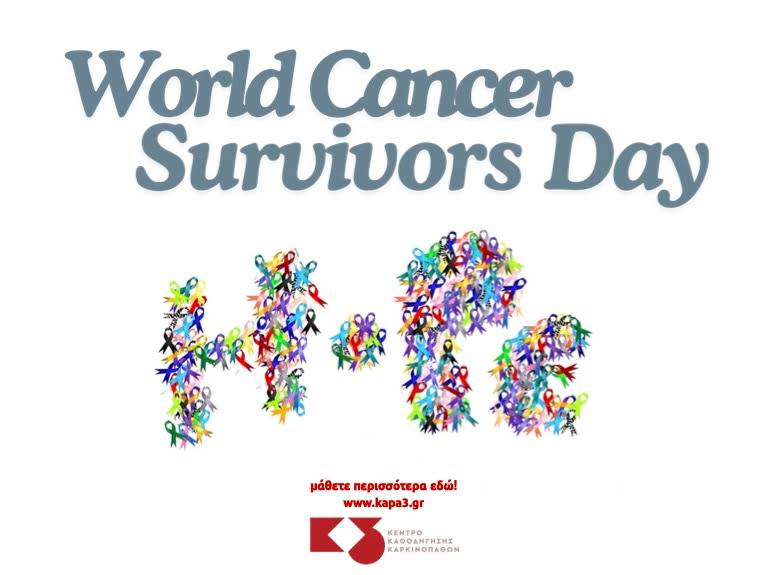
June: Cancer Survivors Month

Survival is a victory — but care must continue

June is dedicated to people living with and beyond cancer. It is a month of recognition, hope and respect for every person who has faced a cancer diagnosis, completed treatment, continues treatment, or lives with cancer as a long-term condition.

Cancer survival is a major victory. However, for many people, it is not the end of the story. Life after cancer often brings a new reality: follow-up appointments, fear of recurrence, fatigue, emotional distress, changes in body image, work-related challenges, financial pressure, family adjustments and the need to rebuild everyday life with confidence and dignity.

Cancer Survivors Month reminds us that survivorship is not only about living longer. It is also about living better.

A cancer survivor is not only a person who has completed treatment and is disease-free. The term also includes people receiving maintenance treatment, people living with cancer as a chronic condition, and those who continue to experience the physical, emotional, social or economic consequences of the disease and its treatment.

In recent years, advances in early diagnosis, targeted therapies, immunotherapy, surgery, radiotherapy and supportive care have increased the number of people living many years after a cancer diagnosis. This is a major achievement for medicine, research and public health. At the same time, it creates a new responsibility: to ensure that survivorship care is organised, person-centred and accessible to all.

For many survivors, the end of active treatment is a moment of relief and gratitude. Yet it may also bring uncertainty. Some people feel that everyone around them expects them to “go back to normal”, while they are still trying to understand what has changed in their body, their emotions, their relationships and their daily life.

The fear of recurrence, anxiety before follow-up tests, persistent fatigue, pain, cognitive difficulties, changes in sexuality, emotional vulnerability and social isolation are real experiences for many people after cancer. These needs should not be underestimated. Survivors need space to speak, reliable information, access to professional support when needed, and connection with communities and organisations that understand their journey.

Long-term follow-up is also essential. Survivorship care should not focus only on recurrence. It should also include prevention, early recognition of late effects, management of treatment-related complications, support for mental health, healthy lifestyle guidance and personalised monitoring according to each person’s cancer type, treatment history, age and individual risk factors.

The message is not fear. The message is awareness, prevention and continuity of care.

Life after cancer is also about rights. It is about returning to work, accessing social benefits, understanding available services, managing financial toxicity, supporting caregivers, protecting dignity and ensuring equal access to care. Survivorship must be seen as a social, psychological and practical issue — not only a medical one.

At Kapa3, we see every day that cancer does not always end with the last treatment. It continues in the questions people ask about their rights, their next steps, their follow-up, their access to benefits, psychological support, work, family life and social reintegration.

This is why people living with and beyond cancer need holistic support. They need information, guidance, psychosocial care, access to rights and services, empowerment and continuity of care. No one should feel alone after treatment. No one should be left to navigate bureaucracy, uncertainty or lack of information without support.

Cancer Survivors Month invites us to change the way we talk about survival. We should not ask only: “Did the person survive cancer?” We should also ask:

Are they living with quality of life?
Do they have access to the care they need?
Do they know their rights?
Do they receive psychological and social support?
Can they return to work and daily life with dignity?
Is there a follow-up plan?
Is there someone to guide them when they do not know where to turn?

Cancer survival is a victory. But the real challenge is to turn this victory into a life with quality, safety, rights, support and hope.

At Kapa3, we continue to stand beside every person living with and beyond cancer. Through information, guidance, empowerment and human-centred support, we believe that care does not stop at treatment.

It continues in life.
Participation in CA21152 – Implementation Network Europe for Cancer Survivorship Care

Digital Health and Cancer Survivorship: Kapa3 at the INE-CSC 2026 Conference in Coimbra

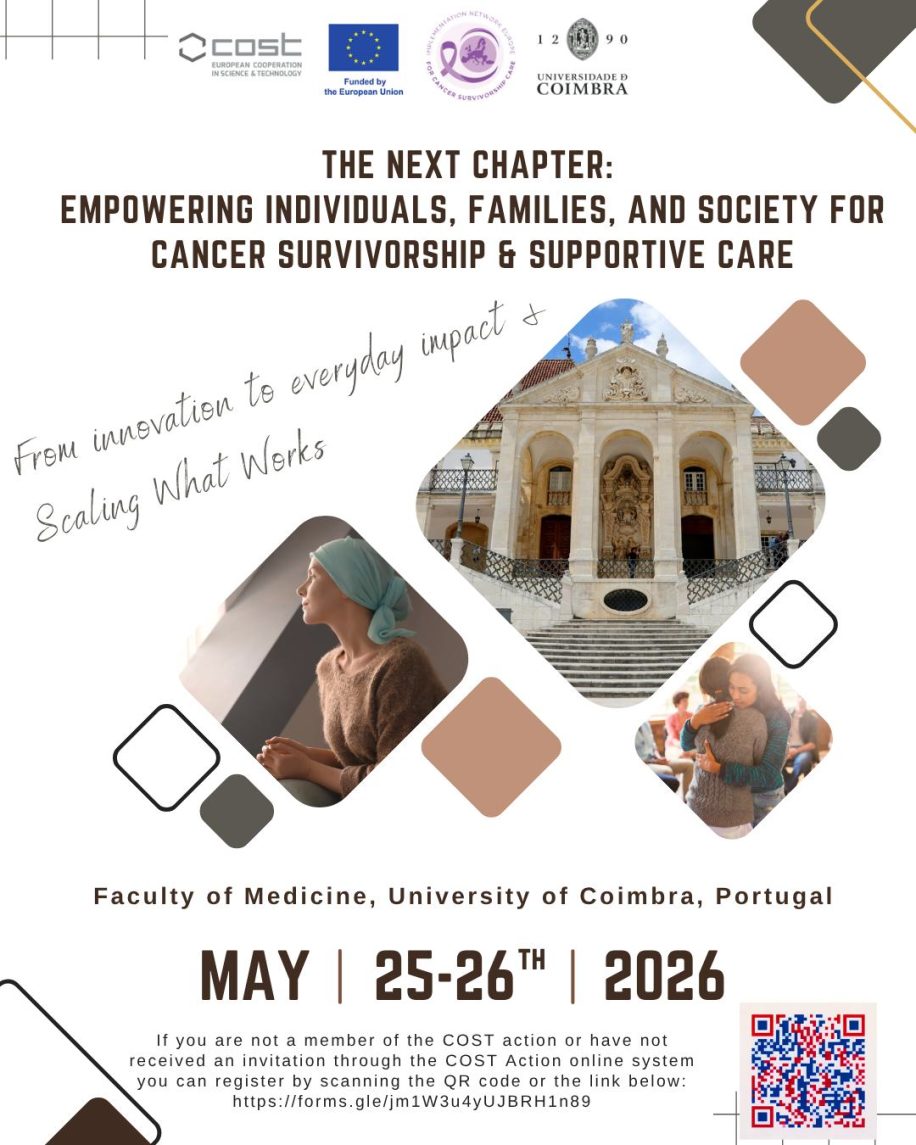
The Cancer Guidance Center – Kapa3 participated in the INE-CSC 2026 Conference, part of CA21152 – Implementation Network Europe for Cancer Survivorship Care (INE-CSC), held on 25–26 May 2026 at the Faculty of Medicine (Polo III), University of Coimbra, in Coimbra, Portugal.

The conference was held under the theme “The Next Chapter – Empowering Individuals, Families, and Society for Cancer Survivorship & Supportive Care”, highlighting the need for new approaches to cancer survivorship, supportive care and the translation of innovation into real-world impact for people living with and beyond cancer, their families and society.

Kapa3’s presence in Coimbra represents another important step in its European engagement and in its ongoing effort to connect everyday experience in supporting cancer patients in Greece with European knowledge, research, digital innovation and health policy.

A key highlight was the participation in a round table discussion on facilitators and barriers to the implementation of digital health tools in oncology. The discussion was co-organised by Aristea Kyriaki Ladas and Christos Frantzidis and brought together voices from different European countries and organisations, including representatives from Kapa3, Acreditar Portugal, Liga Portuguesa Contra o Cancro, ORCO / Madrid Regional Ministry of Health, as well as participants from Poland, Latvia and the United Kingdom.

Among the participants in the round table were Yannis Kontogiorgis and Despoina Pistiolis from Kapa3, Greece, contributing to the European dialogue on digital health, oncology navigation and the participatory development of solutions that respond to the real needs of patients and caregivers.

One of the key messages of the discussion was that digital innovation in oncology is not only a technological challenge. It is also a matter of policy, implementation, equity, trust and accessibility.

For digital tools to make a meaningful difference in cancer care and survivorship, they cannot remain isolated applications or pilot projects. They need to become part of real care pathways, be supported by appropriate policy environments, connect with interdisciplinary practice and be evaluated in terms of effectiveness, implementation readiness, accessibility, equity, sustainability and value.

The discussion also highlighted that digital tools must be designed around the real needs of patients and survivors, not only around technical possibilities. Accessibility across countries, languages, healthcare systems and levels of digital and health literacy must be built in from the beginning.

The role of patient organisations and cancer support communities was also identified as essential. These organisations can act as a bridge between technological innovation and the everyday reality of people affected by cancer. They understand the questions, barriers, fears and needs that are often not fully captured by formal care systems.

For Kapa3, this participation is directly linked to the development of Myrto, its digital health and rights navigator, designed as a tool for empowerment, guidance and support for cancer patients and their caregivers.

Myrto is not approached as a simple information tool. It is being designed as a participatory intervention built around the real needs of people with lived experience of cancer. It is connected to access to rights, social benefits, services, practical guidance and human escalation whenever needed.

The Coimbra experience strengthened the view that digital health must be human-centred, accessible, trustworthy and integrated into a broader ecosystem of care. Technology can meaningfully support cancer care only when it is designed with participation, trust, clear purpose and an equity-oriented approach.

Cancer survivorship is not only about completing treatment. It is about quality of life, mental health, social reintegration, work, family, everyday life, access to services and the feeling that no person is left alone after diagnosis or treatment.

Through its participation in European networks such as INE-CSC, Kapa3 continues to contribute to the dialogue on more equitable, participatory and person-centred cancer care. Care that uses technology without losing sight of the human being at its centre.

The future of cancer support will not depend only on better digital tools, but on better collaboration between patients, caregivers, healthcare professionals, researchers, technology partners, patient organisations and policymakers.

For Kapa3, this is at the heart of its mission: transforming knowledge into action, technology into support, and the voice of patients into services that respond to their real needs.

More information: INE-CSC – Implementation Network Europe for Cancer Survivorship Care.More information:
https://inecancersurvivorship.com

Learning by Doing: Participation in the European Service Learning 2.0: CoLab Programme

Learning by Doing: Participation in the European Service Learning 2.0: CoLab Programme

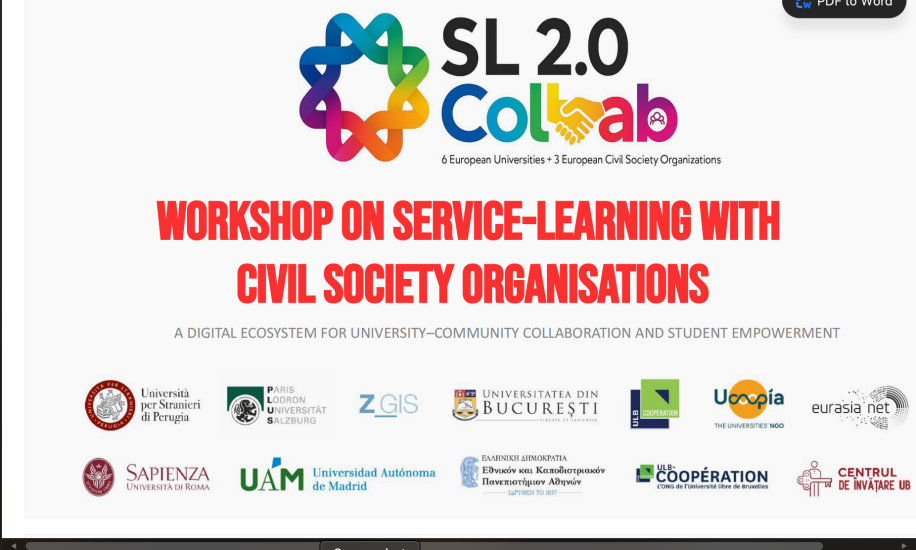
Within the framework of the European programme Service Learning 2.0: CoLab – Erasmus+ Strategic Partnerships KA2, KE: 22707, coordinated by the University of Bucharest, an online workshop and focus group was organised with civil society organisations, focusing on the educational approach of Service-Learning.

Service-Learning is a contemporary experiential learning method that combines academic knowledge with active student engagement in society. Through activities that respond to real social or environmental needs, students develop meaningful skills, strengthen their social awareness and connect theoretical learning with practical action.

The workshop brought together universities and civil society organisations from across Europe, including Université Aix-Marseille, University of Bucharest, University of Salzburg, University of Padova, Sapienza University of Rome, and Eurasianet.eu. The discussion focused on cooperation between universities and NGOs, the exchange of experiences, and the adaptation of practices that can strengthen the social impact of education.

Participation in such initiatives highlights the importance of collaboration between academia, civil society and non-profit organisations.

For Kapa3, the philosophy of Service-Learning is closely aligned with its mission: transforming knowledge into action, empowering people affected by cancer, and building bridges between education, social care and active citizenship.

Through these educational collaborations, the connection between universities and society is strengthened, while new opportunities are created for participatory learning, social innovation and meaningful support for vulnerable groups.

Find more

Flyer – Workshop_ Service Learning (2) Service-learning-key-facts (1)

Service-learning-key-facts (1)

May 27 th 2026 Workshop SL with CSOs

New MELODIC Scientific Publication on the Mental Health of Young Adults with Cancer

Kapa3 participates in the new scientific publication of the European MELODIC project, entitled:

“Educational Needs Regarding Mental Health of Professionals Working with Young Adults with Cancer: A European Survey.”

The publication addresses a highly important issue in contemporary cancer care: the educational needs of healthcare professionals working with young adults with cancer, particularly in relation to recognising and supporting mental health concerns.

Young adults experiencing cancer often face complex psychosocial challenges. Diagnosis, treatment, changes in daily life, impact on studies, work, relationships, body image and future planning can deeply affect their mental health and quality of life.

The European study, involving 271 healthcare professionals from 21 countries, highlighted an important gap between professionals’ willingness to support patients and the systematic use of validated assessment tools. While approximately half of the participating professionals reported feeling confident in identifying mental health issues, only a small percentage reported using validated screening tools.

This finding is particularly important. It shows that awareness and professional experience are valuable, but they are not enough on their own. Targeted education, appropriate tools, interdisciplinary collaboration and clear support pathways are needed so that the needs of young adults with cancer can be recognised early and addressed in a comprehensive way.

The message of the publication is clear: the education of healthcare professionals can make a meaningful difference in the early recognition, support and care of young adults with cancer.

At Kapa3, this approach is a core principle of our work. Before every intervention and every support action, there is education, information and empowerment of the people who stand beside patients.

Kapa3 professionals and collaborators are trained, informed and actively involved in European projects such as MELODIC, ensuring that the support provided is evidence-informed, human-centred and meaningful.

Kapa3’s active participation in such scientific initiatives strengthens its role as an organisation that connects research with practice, European knowledge with real patient needs, and education with everyday care.

We are proud of our participation in the MELODIC project and of our contribution to a European effort that highlights the importance of mental health, early recognition and targeted education in cancer care.

More information: https://lnkd.in/e9Pw4epy

Alpha Bank and Its Employees Support Kapa3 through the Match for Good Initiative

The Cancer Guidance Center – Kapa3 warmly thanks Alpha Bank and its employees for their meaningful support through the Match for Good initiative, through which Alpha Bank doubled the contribution of its employees.

Through this initiative, six non-profit organisations from across Greece received financial support during a special event held at Alpha Bank’s headquarters, in the presence of representatives of the organisations. The event was hosted by the Chairman of Alpha Bank’s Board of Directors, Mr. Dimitris Tsitsiragos, and the Chief Human Resources Officer, Ms. Fragiski Melissa.

Mr. Dimitris Tsitsiragos highlighted that the Match for Good initiative puts into practice Alpha Bank’s commitment to consistently support organisations that create a positive social impact. He underlined that when the individual contribution of employees is combined with the Bank’s support, it becomes a collective force with tangible results.

Ms. Fragiski Melissa noted that Match for Good reflects the Bank’s new culture in practice, giving employees an active role in selecting, participating in and supporting initiatives with social value.

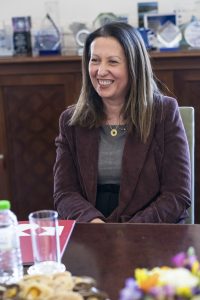
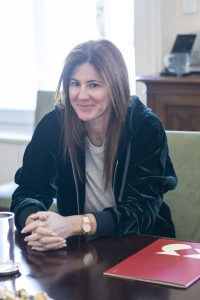
Kapa3 was represented by Ms. Evangeli Bista, co-founder of the Organisation, and Ms. Despoina Chrysostomidou, collaborating psychologist. During the event, they had the opportunity to present Kapa3’s work and discuss the social impact that can be created when corporate responsibility meets the active participation of employees.

For all of us at Kapa3, this support is particularly meaningful. It strengthens our daily effort to stand beside people with lived experience of cancer, as well as their families and caregivers, offering guidance, information, support in accessing rights and services, and practical empowerment tools.

Kapa3 acts as a navigation and support organisation for cancer patients, bridging the gap between need and information, between rights and real access. For many people, especially those living outside major urban centres, the challenge is not only the disease itself. It is uncertainty, bureaucracy, lack of information about available rights, financial burden, transportation difficulties, psychosocial pressure and the need for a reliable companion.

Through initiatives like this, social contribution gains multiplying power and becomes real support for those who need it. The support of Alpha Bank and its employees strengthens Kapa3’s mission: ensuring that no person is left alone when facing cancer, searching for information, navigating procedures or claiming a right they are entitled to.

Health is not only a medical act. It is access, information, dignity, social care and meaningful presence. Every contribution to Kapa3 becomes more guidance, more information, more empowerment and more care for people and families going through a difficult and demanding journey.

We warmly thank Alpha Bank and its employees for their trust, choice and support of Kapa3’s work.

Because when giving becomes collective, it can meaningfully change people’s everyday lives.


20260310 Match For Good Programme Part2 Alpha Bank Via Solid Havas / Thalia Galanopoulou

Match for Good – Alpha Bank (1)

Kapa3 and Karkinaki join forces to support children, adolescents, and families living with cancer

The Cancer Guidance Center – Kapa3 announces its new collaboration with the non-profit organization “Karkinaki”, aiming to strengthen information, psychosocial support, and awareness around childhood and adolescent cancer, as well as to support families experiencing the disease.

Karkinaki is a specialized organization working in the field of childhood and adolescent cancer, focusing on reliable information, empowering parents and caregivers, and fostering a supportive environment around children and teenagers affected by cancer. Through community-based actions and awareness initiatives, it seeks to reduce the sense of isolation that often accompanies diagnosis, while also enhancing understanding, social awareness, and access to available support resources for families.

Within the framework of this collaboration, the two organizations will develop joint initiatives focused on information and awareness-raising, with an emphasis on actions addressing both families and healthcare and support professionals. The partnership will also include the co-organization of informational events, the exchange of good practices, and the exploration of participation in national and European programs that promote a holistic approach to patient care, with an emphasis on continuity of support across all stages of the disease experience.

The Cancer Guidance Center – Kapa3 is dedicated to informing, guiding, and empowering people affected by cancer, providing practical support and access to reliable information and services. At the same time, it develops initiatives that strengthen patients’ active participation in managing their health and promotes a more accessible and human-centered model of care.

In this context, Kapa3 is also involved in European collaborations focusing on the psychosocial dimension of cancer across different stages of life, such as the MELODIC project, which addresses the mental health of young adults with lived experience of cancer. This work further enhances the organization’s ability to recognize needs that emerge throughout the cancer journey, from childhood to adulthood.

This collaboration with Karkinaki reflects the shared vision of both organizations to strengthen a support network that goes beyond medical treatment, extending into families’ daily lives, information access, and psychosocial empowerment, with the aim of providing a more stable and meaningful presence for those who need it most.

Our Press Release here: KARKINAKI PRESS RELEASE

Text: Ifiyenia Anastasiou for Kapa3

Kapa3 Collaboration with the Municipality of Meteora to Establish a Cancer Patient Support Office

Kapa3 launches collaboration with the Municipality of Meteora to establish a support office for cancer patients and their families, strengthening local social services and providing practical assistance to patients and families affected by cancer.

The initiative for this establishment was taken by the Municipality of Meteora and approved by the Municipal Council, aiming to improve access to services and information for patients. The office will operate within the Kalampaka Community Center and will be staffed by a social worker and a psychologist, in collaboration with the “Help at Home” program.

The Cancer Guidance Center – Kapa3 will provide scientific guidance and prepare the tools and methodologies for the office’s operation, including collecting social histories, recording requests, and guiding patients and their families.

This office, as a support office for cancer patients, will offer free services such as:

  • Guidance on rights and benefits (KEPA, social tariffs, work schedule adjustments, allowances).

  • Patient file management to reduce bureaucratic burden.

  • Social and psychosocial support for patients and families.

  • Collaboration with local social and health services.

In addition, the support office will act as an information hub for the local community, providing interested individuals with information on prevention, awareness programs, and solidarity initiatives. In this way, it enhances not only the direct support for patients but also the wider community’s awareness and engagement with the needs of their fellow citizens.

In a statement, Mayor Lefteris Avramopoulos emphasizes:

“The establishment of the Patient Service Office for Neoplastic Diseases is a policy choice focused on people. The Municipality of Meteora takes responsibility to stand truly beside our fellow citizens, ensuring support, dignity, and effective access to their rights.”

The goal of the collaboration is to ensure timely and equitable access for cancer patients and their caregivers to reliable information and supportive services, reducing the stress and psychosocial burden often accompanying the disease.

Kapa3, with experience in patient guidance across Greece and an already functioning similar structure in the Municipality of Megara, continues to expand its network of collaborations with local authorities, strengthening the connection between social services and patients.

The collaboration with the Municipality of Meteora represents another step toward creating a stable framework for supporting cancer patients at a regional level, focusing on people and their real needs.

Download our press release in pdf or word

January 21 – International Hug Day

January 21 has been internationally recognized as International Hug Day, a day dedicated to the power of human touch, emotional connection, and care. Established in 1986, this day serves as a reminder that simple, human gestures can have a meaningful impact on our mental and emotional wellbeing.

Hugs are not merely spontaneous expressions of affection. Various scientific studies have shown that physical contact, such as hugging, is linked to reduced stress levels and increased oxytocin, the so-called “bonding hormone,” which is associated with feelings of safety, trust, and emotional closeness. Physical touch has also been correlated with improvements in psychological wellbeing and emotional regulation, particularly during periods of heightened stress or emotional strain.

For people living with cancer or other serious illnesses, as well as their caregivers, emotional support and human connection are essential elements of care. A hug can act as a silent affirmation that someone is not alone, without the need for words or explanations. While it does not replace medical or psychological support, it can offer relief, comfort, and a sense of companionship.

The need for human connection has also been expressed through social initiatives such as the “Free Hugs” movement, which emerged in the 2000s to symbolically highlight the importance of physical touch in public spaces. Although not a scientific intervention, such actions reflected the collective human desire for closeness, understanding, and emotional contact.

At the same time, it is important to acknowledge that physical touch is not experienced in the same way by everyone. For some individuals, hugs or any form of physical contact may be difficult or unwanted due to personal boundaries, past experiences, or psychological state. International Hug Day is not about imposing closeness, but about reminding us of the importance of respect, consent, and empathy. Care can be expressed in many ways: through presence, conversation, or acts of understanding – and when a hug is welcomed, it can serve as a powerful symbol of support.

In an era where loneliness, isolation, and mental strain are growing challenges, the value of human connection is more relevant than ever. Hugs, as symbols of closeness and care, remind us that even small, simple gestures can carry significant meaning.

At KAPA3, we believe in the power of meaningful support and empathy at every stage of illness and caregiving. We stand alongside individuals who need understanding, respect, and genuine care, promoting emotional empowerment and solidarity.

International Hug Day is an opportunity to remember that, with respect, empathy, and meaningful connection, we can make a real difference.

Sources:

Text/Adaptation: Ifiyenia Anastasiou for Kapa3