
Patients’ Rights in Public Administration: Less Bureaucracy and More Transparency

With Law 5293/2026 (Government Gazette A’57), a new framework is introduced for the operation of Public Administration in Greece, directly linked to patients’ rights in public administration, aiming to create a more citizen-friendly, efficient and transparent system.

These changes affect everyday interactions with public services, improving the way citizens are served, informed and supported.

The main provisions of the law can be grouped into three key pillars:

1. Simplification of procedures and reduction of bureaucracy

A central element of the reform is the simplification of administrative processes.

Article 3 – Replacement of supporting documents

According to Article 3, citizens may, in several cases, replace official supporting documents with a solemn declaration, when these documents cannot be directly retrieved by public services.

In practice, this means:

  • fewer documents need to be submitted
  • public authorities are responsible for retrieving the required information
  • procedures can start immediately without delays

At the same time, verification mechanisms are in place, including checks and sanctions in cases of false declarations.

Article 5 – Faster processing of requests

Article 5 strengthens the obligation of public services to process requests within specific deadlines, reducing delays in administrative procedures.

2. Transparency and digital access to information

The second pillar focuses on improving transparency and access to information.

Article 5 – Case tracking

Citizens are given the ability to digitally monitor the progress of their requests.

They can access information such as:

  • the current stage of the process
  • the estimated completion time
  • the responsible department
  • contact details for further communication

Article 6 – Mandatory publication of circulars

All administrative circulars:

  • must be published online
  • are valid only after publication

This ensures that citizens have access to up-to-date and valid information.

Article 7 – Online publication of public service hours

Public authorities are required to publish and regularly update:

  • their operating hours
  • public service hours

This helps reduce unnecessary visits and waiting times.

3. A new way of operating public administration

The law also introduces a new approach to administrative procedures, aiming to increase efficiency.

Article 4 – Certified professionals

Public administration may collaborate with certified professionals who:

  • are registered in official registries
  • meet specific qualification and certification criteria
  • can prepare reports, certificates or draft decisions used in administrative processes

These professionals are subject to:

  • random checks
  • penalties and fines in case of errors
  • removal from the registry if necessary

At the same time, accountability mechanisms (particularly under Article 3) ensure the reliability of the system.

What this means for patients

While these measures apply to all citizens, they are particularly important in relation to patients’ rights in public administration.

Reducing bureaucracy, enabling digital access to information and speeding up procedures can significantly ease the burden for patients, especially in processes related to:

  • healthcare services
  • benefits and allowances
  • administrative approvals

Towards a more accessible public administration

Law 5293/2026 represents an important step towards a more efficient, transparent and accessible public administration.

For patients and their families, every improvement that reduces complexity and uncertainty is not just an administrative change, but a meaningful support in their daily lives.

You can find the Government Gazette A’57 here (Greek Text): ΦΕΚ Α 57 Ν 5293_2026

Text/adaptation: Ifiyenia Anastasiou for Kapa3
Kapa3 in the First Half of March: Actions, Collaborations, and Updates for Oncology Patients

During the first half of March, Kapa3 continued to highlight important topics concerning the oncology patient support, rights, and daily lives  through initiatives, collaborations, and informational activities.

Efforts focused both on strengthening access to information and services, and on promoting practical and digital tools that make patients’ daily lives easier.

In an environment where patients’ needs remain complex and constantly evolving, reliable information, enhanced collaboration among stakeholders, and the promotion of holistic care are especially important.

Below is a summary of the main developments from the month.

Collaborations

Key partnerships were strengthened with the Sarcoma Fighters Patients Association, the Hellenic Federation of Persons with Multiple Sclerosis (HFoPwMS), and Doctor Homie, aiming to enhance information, support, and quality care for patients.

Actions & Presentations

Kapa3 participated in the scientific meeting “Cancer in 2026: Challenges and Breakthroughs,” emphasizing the pivotal role of supportive care for oncology patients, while also presenting recent developments addressing their evolving needs. Kapa3 also attented the event Facing the Challenge of Artificial Intelligenceas we remain focused on supporting dialogue around the opportunities and challenges of A.I.

Patient Rights

Supporting oncology patients remains a central goal of our initiatives. Focus was given to updates on the 2026 constant attendance allowance and improved digital access for patients to their test results.

Digital Health & Research

A new European Commission report highlights the critical role of digital health technologies in transforming healthcare systems, outlining both opportunities and challenges for the future of care.

Awareness

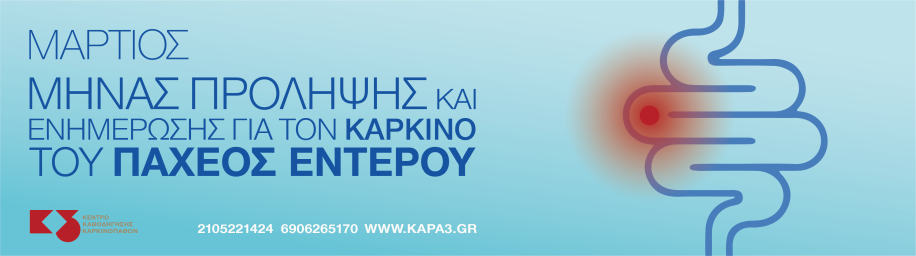
March is Colorectal Cancer Awareness Month, reminding everyone of the importance of prevention and early detection.

Oncology patient support remains our top priority, and we continue to monitor developments — more news will follow.

Colorectal Cancer Awareness Month – March

March is dedicated to raising awareness and promoting prevention of colorectal cancer, one of the most common but also highly treatable cancers when detected early. It is also referred to as colorectal carcinoma.

According to a European Commission report published in March 2021, colorectal cancer accounted for 12.7% of all new cancer diagnoses and 12.4% of all cancer-related deaths in the EU-27 countries in 2020. By 2045, it is estimated that 3.29 million new cases will be diagnosed worldwide, leading to 1.66 million deaths.

The disease occurs more frequently in men than in women, with age being a significant factor. Approximately 90% of people diagnosed with colorectal cancer worldwide are over 50 years old.

Prevention and early detection save lives.

Regular screenings, such as colonoscopy, can detect early lesions or precancerous changes before they develop into serious disease. During a colonoscopy, tissue samples (biopsies) can be taken for histological examination if a suspicious lesion is found, and polyps can be removed to prevent progression to cancer.

Treatment options depend on the stage of the disease, the tumor’s molecular characteristics, and the patient’s overall health. Standard therapies include surgery, chemotherapy, radiotherapy—which plays a key role in rectal cancer—as well as targeted therapies and immunotherapies guided by specific molecular biomarkers.

Through the National Colorectal Cancer Screening Program, the goal is to detect precancerous lesions or the disease itself early, allowing prompt intervention and treatment. Adenomatous polyps or early-stage neoplasms have a 100% cure rate when managed at an early stage, highlighting the critical importance of early detection.

For more information, visit the National Colorectal Cancer Screening Program website: https://colon.gov.gr

For any questions, you can contact the service department at tel. 11401 or via email: prolipsis-helpdesk@idika.gr.

Sources:

Kapa3 at Athens Digital Health Week 2026 – The Role of Patient Digital Navigators in Healthcare Digital Transformation

As part of Athens Digital Health Week 2026, Kapa3, as a new member of the Hellenic Digital Health Cluster (HDHC), participated in the closed members and partners meeting as well as the panel discussion titled “Synergies to Bridge the Needs of Healthcare Services in Digital Transformation,” presenting the role of patient digital navigators and exploring how digital technologies can strengthen a patient-centered healthcare system.

The discussion focused on a key question: how can available digital solutions effectively address the real needs of the healthcare and social care system?

Special emphasis was placed on the importance of interoperability, evidence-based decision-making, transparency, and comparability, as well as connecting research and governance, promoting equality, and considering the impact of artificial intelligence in the modern healthcare ecosystem.

Kapa3 was represented by Evangeli Bista, who highlighted the critical role of patient organizations in successfully integrating digital technologies into the care journey.

As she noted:

“Digital health is not only about developing technological solutions, but about their meaningful integration into the patient’s care journey. Civil society organizations (patients, caregivers, friends, professionals) can play a crucial role as adoption partners, contributing to design, implementation, and evaluation. Through collaboration within the Cluster, an ecosystem is strengthened where innovation translates into real accessibility and continuity of care with maximum social impact. For the Cancer Patients Guidance Center – Kapa3, developing its role as patient digital navigators can only happen through such synergies.”

The panel also included representatives from Affidea Greece, Gnomon Informatics SA, and REA Maternity & Gynecology Clinic, who contributed their expertise to a productive dialogue on aligning technology, clinical practice, and data governance.

During the closed meeting, the need to strengthen joint research initiatives, interoperability, and systematic collaboration among ecosystem members was emphasized, ensuring that innovation translates into measurable value for both patients and the healthcare system.

For Kapa3, developing its role in the digital health ecosystem as patient digital navigators is a strategic priority. Through such collaborations, patient organizations are empowered to actively contribute to a more transparent, equitable, and truly patient-centered healthcare system, where technology serves as a tool for empowerment rather than an end in itself.

Download our Press Release in pdf or word

Continuing the Journey: Online Group Sessions for Mental Health and Nutrition – Third Cycle with Kapa3 and the LB.H.Sc

Following the warm response to the second cycle of meetings (see the related article here ), focusing on Nutritional Guidance and Experiential Psychological Support, Kapa3 and the Laboratory of Basic Health Sciences (LB.H.Sc), Department of Nursing University of Peloponnese are delighted to continue their collaboration with a third series of online group sessions for mental health and nutrition, dedicated to the holistic care of body and mind, designed for people living with cancer and their caregivers.

In this third cycle, mental health and nutrition are approached as two complementary sides of the same care.

The mental health sessions help participants recognize and manage challenging emotions such as anxiety, fear, sadness, or guilt, strengthen resilience, and cultivate a deeper connection with themselves and others.

The nutrition sessions explore how mindful and balanced eating can support the body, improve energy and mood, and become a meaningful act of self-care. Food is not only a necessity but also a way to nurture the body, mind, and spirit.

Program of Online Sessions for Mental Health and Nutrition & Themes

  • Saturday, February 28, 2026, 17:30–19:00
    Myths and truths about “anti-cancer” diets. How to evaluate nutritional information and avoid risky practices.

  • Saturday, March 14, 2026, 17:30–19:00
    Stress and uncertainty: practical ways to manage them during treatments and exams.

  • Saturday, March 21, 2026, 17:30–19:00
    Giving space to emotions without being overwhelmed: recognizing and expressing fear, anger, sadness, and guilt.

  • Saturday, March 28, 2026, 17:30–19:00
    Nutritional support during treatment & the role of cachexia.

  • Saturday, April 25, 2026, 17:30–19:00
    Boundaries without guilt: protecting energy and mental resilience.

  • Saturday, May 9, 2026, 17:30–19:00
    Safe cooking practices & kitchen hygiene.

  • Saturday, May 23, 2026, 17:30–19:00
    Family and illness: changes in relationships and ways to support each other.

  • Saturday, June 6, 2026, 17:30–19:00
    The Tree of Life: who I am beyond the illness.

  • Saturday, June 13, 2026, 17:30–19:00
    What gives meaning to life now: discovering small but meaningful elements that sustain us.

Format & Participation

The meetings are held online, based on dialogue, experiential learning, and the sharing of personal experiences. Everyone participates at their own pace, in a warm environment of acceptance and trust. Consistent attendance helps build safety and confidence within the group.

To express your interest or join the first session of the third cycle (Saturday, February 28, 17:30–19:00): [Registration Link]

Text/adaptation: Ifiyenia Anastasiou for Kapa3
The “Myrto” Health Navigator : A New Era of Digital Support for Oncology Patients

The “Myrto” Health Navigator brings digital and AI-powered care closer to oncology patients, supporting personalization and equitable access to services.

On the occasion of the recent initiatives implemented by Kapa3 in the context of World Cancer Day, our organization once again highlighted the importance of access, empowerment, and meaningful support for oncology patients. Through awareness actions and public engagement, we reaffirmed our commitment to strengthening patients’ voices and improving their everyday reality.

Throughout its journey, Kapa3 has consistently demonstrated its dedication to supporting oncology patients by bridging gaps in information, accessibility, and social care. Building on this experience, we are now taking the next step forward.

After five years of continuous presence in empowering oncology patients through digital guidance, Kapa3 is expanding its footprint in the field of social accessibility by creating an innovative digital assistant: “Myrto.”
“Myrto” addresses the phenomenon of second-level digital exclusion, transforming digital information into a human, accessible, and meaningful experience. It represents the first Social Artificial Intelligence application in the field of social welfare for oncology patients in Greece.

It goes beyond providing information: it converses, guides, and evolves according to users’ real needs, with an emphasis on both accessibility and psychosocial support.

Our aim is to develop a fully functional chatbot integrated into the Kapa3 website, to train social workers and healthcare professionals in its use, and to substantially reduce the digital divide for vulnerable groups.

“Myrto” will offer holistic and personalized guidance to oncology patients as a true Patient Empowerment e-Navigator, through two main pillars:

  • Patient Advocate: Support with legal and administrative procedures (benefits, patient rights), facilitation of access to social welfare services, and guidance within the local healthcare system.

  • Health Navigator: Provision of essential information for health self-management.

At the same time, the platform will enhance communication, highlight available community resources, and incorporate an innovative health literacy assessment tool, enabling full personalization of the services provided.

The project will be developed, tested, and validated by oncology patients as well as by social workers, legal and financial experts, and consultants in health communication and psychology, both in person and online across Greece.

Your participation could substantially contribute to co-creating a personalized Navigator for every oncology patient, as a multidisciplinary perspective is a key factor in the project’s success.

Upon completion, we expect significant social, health, and scientific impact: improved patient quality of life, strengthened self-management, reduced resource requirements, and the creation of a network of experts and informed patients and professionals.

The Founding Sponsor of the “Myrto”Health Navigator is the TIMA Foundation.

We invite organizations, professionals, and stakeholders to become partners in this new chapter of the “Myrto” Health Navigator  by Kapa3 and contribute to building a more accessible, inclusive, and patient-centered healthcare environment.

Evangeli Bista, 

Co-founder Kapa3 – Head of Strategic Partnerships
PhD(c), MBA, MSc, BSc

Text/Adaptation: Ifiyenia Anastasiou for Kapa3

Holistic Cancer Care: Successful Webinar on Cancer, Patient Navigation & Health Management

The webinar “Cancer, Patient Navigation & Health Management: From Prevention to Life Coordination” was successfully completed, presenting contemporary challenges and practices in holistic oncology care, patient navigation, and patients’ digital literacy.

The online educational initiative, organized by René Descartes College in collaboration with the Kapa3 Cancer Patient Guidance Center, highlighted the importance of a human-centered approach to cancer, patient navigation, digital innovation, and the enhancement of patients’ digital literacy, combining scientific knowledge with practical support at every stage of the disease.

Holistic cancer care integrates scientific knowledge with practical support at all stages of the disease, enhancing patient engagement and quality of life.

During the webinar, the speakers shared valuable insights and experiences:

Maria Gazouli, PhD – Professor of Biology-Genetics-Nanomedicine:
She emphasized that cancer is a chronic, multifactorial disease where quality of life is as important as survival. The holistic approach treats the person as a whole—physically, psychologically, socially, and environmentally—and requires an interdisciplinary team with active patient participation in every decision. She highlighted the importance of personalized medicine and the role of family support.

Dr. Christos A. Frantzidis – Assistant Professor, University of Lincoln:
He presented CREATE, a comprehensive digital system that transforms patients’ daily experiences into valuable knowledge for clinicians, supporting timely interventions and personalized care. He stressed that artificial intelligence does not replace humans but assists clinicians in safe decision-making, reduces workload, and improves patients’ quality of life.

Dr. Maria Lavdaniti, PhD – Professor of Clinical Nursing, International Hellenic University (IHU):
She underscored the critical role of the oncology nurse in administering therapies, managing symptoms, and providing psychosocial support to patients and their families. She emphasized the importance of continuous patient education, managing long-term side effects, and interdisciplinary collaboration to improve quality of life.

Dr. Vasiliki Kapaki – Professor of Health Economics, René Descartes College:
She highlighted the role of technology in oncology, from prevention and screening to treatment and post-therapy care. She stressed that digital literacy is a prerequisite for health equity, enabling patients to understand risks, participate in decision-making, and safely follow their therapeutic pathways.

Evangelia Bista, PhD, Co-Founder of Kapa3:
She presented the work and mission of Kapa3, which supports over 7,000 families and 1,500 patients in Greece, offering guidance, information on patients’ rights, psychological support, and personalized digital tools. Her presentation included the main pillars of Kapa3’s work—website, request management, educational programs—as well as the organization’s 2026 action plans, such as Wellness in Motion, Cancer Wellness Open House Day, and digital innovations with AI and personalized service systems.

Ms. Bista highlighted that upgraded digital services with AI tools, such as Myrto, the first digital assistant/chatbot in Greece, part of Kapa3’s 2026 projects, will enable personalized services based on patient profiles, streamline processes, and reduce bureaucracy. It is clear that, combined with human guidance, the development of digital literacy is a key tool for equitable access, quality of life, and active patient engagement throughout the disease.

The webinar concluded with an open discussion and Q&A, giving participants the opportunity to interact with the speakers and exchange experiences. The initiative emphasized that technology and digital literacy do not replace humans but enhance guidance, safety, and equity in care, while holistic care remains at the center of every initiative.

We sincerely thank René Descartes College for hosting and flawlessly organizing the event, as well as all the outstanding speakers for sharing their knowledge and inspiration with the audience.

You can find some screenshots from the webinar below:

You can find the Press Release file here

28 January – Data Protection Day: privacy, health and trust

European Data Protection Day, observed every year on 28 January, was established by the Council of Europe and is linked to Convention 108, the first legally binding international instrument on the protection of personal data. The day serves as a reminder that the right to privacy is a fundamental human right — especially in a time when personal information is increasingly collected, stored and processed digitally.

Personal data are not merely technical entries in databases and systems. They are fragments of people’s lives. They include health information, personal experiences, vulnerable moments and deeply private aspects of identity. When individuals share such information, they do so with the expectation that it will be handled with care, confidentiality and respect.

For organisations such as Kapa3, which work closely with patients and people in vulnerable situations, data protection goes far beyond legal compliance. It is a matter of dignity and trust. Health data — including information related to both physical and mental health — belong to the most sensitive categories of personal data. Inadequate protection or misuse can lead to stigma, discrimination and a profound sense of insecurity.

Within the European Union, the General Data Protection Regulation (GDPR) provides a common framework to ensure that individuals retain control over their personal information. Rights such as informed consent, access to data and the ability to request deletion are not administrative formalities. They are essential safeguards that protect human integrity, particularly in the context of healthcare and social support.

According to the World Health Organization (WHO), confidentiality and ethical governance of health data are fundamental to the provision of safe and high-quality care. Trust between patients and healthcare or support organisations is strengthened when personal information is managed transparently, responsibly and within clearly defined limits.

European Data Protection Day is not only an occasion to reflect on legal obligations or technical safeguards. It is an opportunity to consider how we approach privacy as a core element of respectful and ethical care. Protecting personal data is ultimately not about technology — it is about protecting the people behind the data and the trust that underpins every meaningful human relationship.

Sources:

Text/adaptation: Ifiyenia Anastasiou for Kapa3

January – Cervical Cancer Awareness Month

January is internationally dedicated to raising awareness about cervical cancer. Known as Cervical Cancer Awareness Month, it aims to highlight the importance of prevention, early detection, and vaccination against the human papillomavirus (HPV), which is responsible for nearly all cases of the disease.

Cervical cancer remains a major public health issue worldwide. According to the World Health Organization, approximately 660,000 new cases are diagnosed globally each year, and more than 350,000 women lose their lives to the disease. It is among the most common cancers affecting women, particularly in regions where access to preventive screening and vaccination is limited. At the same time, it is one of the few cancers that can largely be prevented through organized prevention and early detection programmes.

In Greece, available data indicate that around 700 new cases of cervical cancer are diagnosed annually, while more than 280 deaths are attributed to the disease each year. The estimated incidence is approximately 8 cases per 100,000 women. Although this places Greece close to the European average, it also highlights the need for further improvement in prevention and early diagnosis.

Cervical cancer is closely linked to chronic infection with human papillomavirus (HPV), a very common virus transmitted mainly through sexual contact.

HPV vaccination, combined with regular gynaecological screening through Pap tests and HPV tests, can significantly reduce the development of precancerous lesions and cervical cancer. In this context, the World Health Organization has set the goal of eliminating cervical cancer as a public health problem by 2030, through high vaccination coverage, universal screening, and timely treatment.

January serves as an important reminder that information and prevention save lives. Open discussion around women’s health, free from fear and stigma, empowers women to take care of themselves and to claim prevention as a fundamental right.

Special emphasis should be placed on the systematic education of younger generations, as prevention begins long before any symptoms appear. Access to reliable information, preventive screening services, and vaccination programmes is a key factor in reducing health inequalities and protecting future generations.

At KAPA3, we believe that information and prevention are core pillars of care and empowerment. Through the dissemination of reliable information and the support of initiatives that promote public health, we stand alongside every woman who needs knowledge, prevention, and timely care.

Because cervical cancer can be prevented, we encourage everyone to take action. Give a meaningful gift to the women you care about: daughters, sisters, mothers, friends, partners, spouses. Talk openly about women’s health, share information, support initiatives, challenge taboos, and promote early diagnostic screening.

Information and open dialogue are the strongest tools we have.

Sources:

World Health Organization (WHO)
Cervical cancer – Fact sheet

WHO – Global strategy to accelerate the elimination of cervical cancer

International Agency for Research on Cancer (IARC / WHO)
Cervical Cancer Awareness Month

ICO / IARC HPV Information Centre – Greece Factsheet

Ministry of Health – National Immunization Programme

Hellenic National Public Health Organization (EODY)
HPV and cervical cancer

Text/adaptation: Ifiyenia Anastasiou for Kapa3
International Day of Persons with Disabilities — 3 December

A day of awareness, commitment, and action

The International Disability Day, also known as the International Day of Persons with Disabilities (3 December), established by the United Nations in 1992, serves as an annual reminder of the need for full inclusion, equality, and respect for the rights of persons with disabilities across all aspects of social life. Moreover, today, more than ever, promoting accessibility and inclusion is not optional — it is an obligation.

According to the World Health Organization (2024), approximately 1.3 billion people — 16% of the global population — live with some form of disability. Disability is part of human diversity, and the lived experience of it highlights the systemic inequalities that continue to exist in many countries, including Greece. As a result, the need for stronger inclusion policies becomes increasingly evident.

These global figures highlight why International Disability Day remains a vital call to action worldwide.

Challenges and inequalities in Greece

In Greece, persons with disabilities still face significant barriers in their daily lives: inadequate accessibility in public spaces and services, difficulties in mobility, limited access to employment, and persistent social stigma that deeply affects their quality of life. National data confirm that these inequalities have direct consequences on health, education, and participation in social and economic life.

At the same time, improving accessibility is not only about removing barriers — it is about shaping a society that recognizes the real needs of its people. Therefore, from training professionals and changing attitudes, to ensuring universal access to healthcare and psychosocial support, inclusion requires sustained commitment. Only then can we guarantee that every citizen has equal opportunities, dignity, and participation.

Kapa3’s perspective: A world where every voice is heard

At the Cancer Patient Guidance Centre – Kapa3, we support individuals facing serious health challenges every day. We understand how essential the following are:

  • clear and accessible information
  •  timely support
  •  respect
  •  care without exclusions

Learn more about the rights of Persons with Disabilities in the following publications on our website here.

Find information about issuing a disability card here, and about free or reduced public transportation fares here.

The International Day of Persons with Disabilities reminds us that every action and every policy must be built on the principle of inclusion.
No one should be left behind.

Building more inclusive societies: From vision to practice

Creating a truly accessible environment requires:

  • Accessible cities and public services
  •  Training for professionals in health, social care, and customer service
  •  Accessible digital technologies
  •  Employment policies that enable active participation
  •  Awareness-raising and dialogue to combat stigma

Inclusion is not an act of “good will” — it is a prerequisite for social progress.

At the same time, the transition to a genuinely inclusive society is not instantaneous. It requires coordinated efforts from the State, civil society, and persons with disabilities themselves. Continuous evaluation, transparency, and meaningful participation are the foundations of lasting change.

Access is a right.
Every person deserves respect and equal opportunities.

Text/Adaptation: Ifiyenia Anastasiou for Kapa3

Sources