Kapa3 in Brussels: Building European Partnerships for More Human-Centred Cancer Care

Participation in the Cluster 1 Health & Mission Cancer Brokerage Event highlighted the importance of digital innovation, meaningful patient engagement and cross-border collaboration in European health research.

28 September 2026 | Brussels, Belgium

Kapa3 – Cancer Guidance Centre participated in the European “Building Strong Networks in Cluster 1 Health & Mission Cancer” Brokerage Event, held in Brussels on 28 September 2026, focusing on the development of partnerships for the upcoming Horizon Europe 2027 calls, particularly Cluster 1 – Health and the EU Cancer Mission.

Kapa3 was represented by Aristea Archontidou, an associate of the organisation specialising in healthcare information technology, health policy and patient advocacy, as part of the participation of the Hellenic Digital Health Cluster (HDHC).

The event brought together researchers, universities, healthcare organisations, technology companies, innovation stakeholders, patient representatives and policymakers, providing opportunities to establish European research connections and explore future collaborations.

For Kapa3, participation reflects an ongoing commitment to connecting the real needs of people affected by cancer with European developments in research, digital health and more accessible models of care.

From European Research to Meaningful Partnerships

The event provided a valuable platform for exchanging knowledge, presenting research ideas and identifying potential partners for future European projects.

The programme included presentations on Horizon Europe 2027 priorities, thematic pitching sessions and targeted bilateral networking meetings.

Three main areas were addressed:

  • Healthcare Innovation: New approaches to research, prevention, diagnosis and healthcare delivery.
  • Clinical Trials: Research collaboration, clinical studies and the development of innovative therapeutic approaches.
  • Digital Health & Artificial Intelligence: Digital technologies, data-driven solutions and applications of AI in healthcare.

The discussions highlighted the increasing importance of interdisciplinary collaboration and the participation of organisations that understand patients’ needs in real-world settings.

Research, digital innovation and social innovation should not be treated as separate processes. Their impact depends on their ability to address unmet needs, operate effectively in real-life environments and demonstrate meaningful value.

Digital Health and AI: Technology Must Serve People

One of the most important observations emerging from the event was that digital health and Artificial Intelligence are no longer isolated technical topics.

They are increasingly integrated into multiple areas of healthcare research, from scientific data analysis and clinical research support to prevention, information access and the management of complex care needs.

However, technological progress does not automatically translate into social progress.

A digital solution cannot be considered truly successful if the people it is intended to serve cannot understand, trust or use it.

At Kapa3, addressing digital exclusion, strengthening health and digital literacy, improving accessibility and ensuring the responsible use of AI are fundamental priorities.

This approach is reflected in the development of MYRTO – Kapa3’s AI-Supported Digital Social Navigator, designed to facilitate access to evidence-informed, understandable information about social rights, benefits and available support services.

MYRTO is being developed in technological collaboration with SimasiaAI, with the valuable support of the TIMA Charitable Foundation.

The initiative demonstrates how technological innovation can be connected with social navigation and the practical needs of people living with cancer.

Meaningful Patient Engagement as a Foundation for Innovation

Another central message emerging from the discussions and networking activities was the growing importance of meaningful patient involvement in research and digital health development.

Patient organisations can contribute far more than final-stage evaluation or symbolic representation.

They can help identify unmet needs, co-develop research questions, improve the accessibility of digital tools and evaluate solutions in real-world settings.

Patient involvement in real-world pilots, co-creation processes and user-experience evaluation can contribute to more relevant, acceptable and sustainable healthcare innovations.

This approach is closely aligned with Kapa3’s mission.

Experience gained through everyday patient navigation, the identification of administrative and social barriers and the systematic documentation of support needs can provide valuable insights for the development and evaluation of new interventions.

European Networking and Opportunities for Collaboration

Kapa3’s participation in Brussels, through the Hellenic Digital Health Cluster ecosystem, provided opportunities to engage with professionals and organisations active in research, digital health and social innovation.

The event facilitated valuable exchanges with several stakeholders, including George Dimitriou, Cluster Manager of HDHC, alongside George Nikolaidis and Martha Zachariadou from Ergobyte Informatics S.A.

Additional discussions and connections involved Sotiria Tsalamani from KMOP – Social Action and Innovation Centre, Nikolaos Papadopoulos from heeelp!, Angie Fasoula from MIMA Technologies and Ilias Nikolinakos from ELPEN Pharmaceutical Co. Inc.

These initial contacts offer opportunities to explore shared interests and potential future collaborations in digital accessibility, human-centred technology, patient engagement and applied health research.

Special appreciation goes to the PRAXI Network for supporting Greek participation, as well as to the National Contact Points and co-organisers whose efforts created a valuable environment for European networking and collaboration.

Kapa3 as a Partner in Human-Centred Research and Innovation

Kapa3’s presence at this European event strengthens its strategic direction towards partnerships that combine scientific knowledge with lived experience and community-based insights.

Through social and patient navigation, cooperation with healthcare professionals, participation in European research projects and the development of digital tools, the organisation seeks to contribute to the design, implementation and evaluation of interventions that respond to the actual needs of patients and caregivers.

In future European collaborations, Kapa3 can bring expertise in patient and social navigation, patient engagement, health literacy, service co-creation and the evaluation of end-user experiences.

This approach contributes to the organisation’s broader ambition to develop an evidence-informed, human-centred and evaluable model of navigation in oncology care.

From European Connections to Meaningful Social Impact

The Brussels experience reinforced the importance of engaging early in European research networks and building partnerships that connect science, technology and people’s everyday realities.

As consortia and proposals begin to take shape for Horizon Europe 2027, the involvement of civil society organisations and patient representatives remains essential for more inclusive research and innovation.

For Kapa3, European collaboration creates value when it leads to better information, equitable access, stronger support systems and tangible improvements in the lives of people affected by cancer.

Because innovation in healthcare should not be measured solely by what technology can achieve, but also by how many people it can meaningfully include.

Care does not end with treatment. It embraces the whole of life.


Further Information

Cluster Health & Mission Cancer Brokerage Event
https://www.b2match.com/e/cluster-health-mission-cancer-brokerage

Hellenic Digital Health Cluster
https://hdhc.gr/

Kapa3 – Cancer Guidance Centre
https://www.kapa3.gr/

Explore MYRTO – Digital Social Navigator
https://kapa3-cag-rag-hybrid-deploy.onrender.com/
Kapa3 at EPIONI’s 9th “Caring for Caregivers” Event

Putting caregivers at the centre: From psychological burden to integrated support

At the 9th “Caring for Caregivers” event in Thessaloniki, Kapa3 highlighted the need to recognise caregivers as care recipients in their own right.

Thessaloniki, 11 September 2026

In Thessaloniki, Kapa3 contributed with the presentation “Caregiver Burden in Cancer: The Psychological Dimension of Care and the Need for Integrated Psychosocial Support,” delivered by Evangeli Bista and Marilia Barka.

We highlighted the psychological and psychosocial burden of caregiving and the need to recognise caregivers as care recipients in their own right, with access to reliable information, guidance and integrated support.

We also introduced MYRTO, Kapa3’s digital assistant, as an accessible first point of information that complements human support and personalised navigation.

Caring for the caregiver is an essential part of caring for the patient.
Read more: dt -en

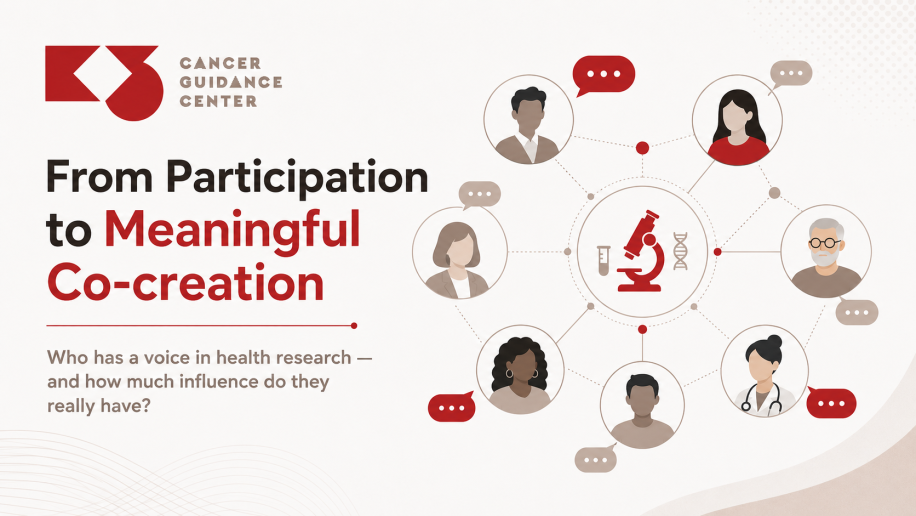
Co-creation in health research: from participation to meaningful influence

Co-creation in health research: from participation to meaningful influence

A new scientific study proposes a framework for understanding who participates in research, when they participate, how they contribute — and how much influence they actually have

Co-creation is becoming increasingly important across public health, research, social innovation and the design of healthcare services. Patients, caregivers, citizens, healthcare professionals, researchers and communities are more frequently being invited to contribute to the development of interventions, services and solutions.

Yet an important question remains:

What does “participation” actually mean?

The presence of a patient or community representative in a meeting does not necessarily mean that they can influence the design, decisions or outcomes of a research project. Similarly, being asked to complete a survey is fundamentally different from helping to design an intervention, interpret findings or determine how results are shared.

A new open-access study, published on 19 August 2026 in the Journal of Public Health, addresses this challenge. Katrina Messiha, Mai J. M. Chinapaw, Johannes C. F. Ket, Renée I. Wink and Teatske M. Altenburg developed the Co-creation Roles Framework, an operational framework designed to systematically describe and classify the roles of different stakeholders in co-creation research.

Moving beyond “who was involved?”

One of the study’s most valuable contributions is its shift away from simply recording whether stakeholders participated towards examining the nature, depth and quality of that participation.

The framework captures eight key dimensions:

  • the research stage at which participation occurs,
  • the target group or stakeholder involved,
  • the aim of involvement,
  • how stakeholder knowledge is used,
  • the level of engagement and influence,
  • the form of co-creation,
  • the platform through which engagement takes place,
  • and the duration of engagement.

The relevant question therefore becomes much more precise than “Were patients or citizens involved?”

Instead, researchers can ask:

When were they involved? What were they asked to contribute? How was their knowledge used? And how much influence did they actually have over decisions?

What did the study find?

To demonstrate the practical application of the framework, the researchers conducted a systematic review following PRISMA guidance.

They analysed 39 scientific articles representing 19 youth-focused public health projects based on co-creation, Youth Participatory Action Research or Community-Based Participatory Research approaches.

The analysis revealed substantial variation in the ways stakeholders were engaged.

One particularly striking finding was that, under the strict definition used in the framework, none of the 19 projects reached the highest level of engagement — “empowerment”, where stakeholders hold genuine decision-making authority.

During the implementation stage, consultation and involvement were the most frequent levels of engagement, while consultation was also the most common approach during evaluation.

This finding matters.

It demonstrates that describing a project as “co-created” does not automatically mean that the people for whom an intervention is being developed have meaningful power to shape it.

Participation should not end when the research ends

Another important finding concerned dissemination and reporting.

Only 4 of the 19 projects included a reporting stage extending beyond conventional academic publication.

In some cases, young stakeholders were involved in presenting findings, communicating results within their communities, or developing dissemination materials and practical tools. Overall, however, stakeholder involvement in the final stages of the research process remained limited.

This is highly relevant to health research.

People who contribute their lived experience, time and knowledge to a study should not be considered merely a source of data. They can also play an important role in interpreting findings, shaping key messages and helping return knowledge to the communities from which it originated.

From patient participant to patient co-creator

This discussion has particular relevance for cancer research and cancer care.

Patients and caregivers hold a form of knowledge that clinical evidence alone cannot provide: the lived experience of illness and care.

They understand what treatment means in everyday life; where administrative, social or practical barriers interfere with care; whether a digital health service is genuinely understandable and accessible; which questions remain unanswered; and which outcomes actually matter to the people living with cancer.

Using this knowledge is not simply a matter of representation.

It is a matter of research quality.

For a patient-support organisation such as Kapa3, co-creation therefore means more than inviting patients into an existing process. It requires creating the conditions in which lived experience can become knowledge, knowledge can shape design, and design can ultimately lead to more relevant, accessible and person-centred services.

A framework for planning future research

The authors emphasise that the Co-creation Roles Framework may be valuable not only for describing completed research, but also for planning and evaluating future projects.

Research teams may use it prospectively to clarify stakeholder roles from the beginning, while funders, ethics committees and scientific journals could potentially use such structured approaches to assess how clearly and meaningfully stakeholder participation has been planned and reported.

At the same time, the framework should not yet be regarded as a definitive standard.

The authors explicitly call for external validation across diverse co-creation settings. They also recognise an important limitation: non-academic stakeholders were not directly involved in developing the framework itself, which may limit its sensitivity to some experiential and contextual understandings of stakeholder roles.

Recognising these limitations is itself an important part of advancing more rigorous participatory research.

The next challenge: not simply more participation, but more meaningful participation

Co-creation should not become another box to tick in a research proposal.

The more important challenge is to be able to demonstrate:

who had a voice, when that voice was heard, how it influenced decisions and what ultimately changed because of that contribution.

As healthcare moves towards more participatory, person-centred and digitally supported models of care, the shift from research about patients to research with patients, and ultimately towards research shaped together with patients, may become one of the defining requirements for research that is both scientifically robust and genuinely relevant to people’s lives.

Scientific source

Messiha K, Chinapaw MJM, Ket JCF, Wink RI, Altenburg TM. Development and application of a framework for classifying stakeholder roles in co-creation research: a Health CASCADE study. Journal of Public Health. Published 19 August 2026. DOI: 10.1007/s10389-026-02881-2.

Messiha_et_al-2026-Journal_of_Public_Health

New Scientific Publication with the Participation of Kapa3: Cancer Survivorship in the Post-COVID-19 Era

New scientific publication involving the Cancer Patient Guidance Center – Kapa3 highlights the significant psychological, social, and functional challenges that people living with and beyond cancer continue to face following the COVID-19 pandemic.

The article, entitled “Cancer Survivorship After COVID-19: Psychological Burden, Symptom Experience, and Social Support,” was published in the international peer-reviewed journal Medicina. It examines psychological distress, symptom experience, quality of life, and the protective role of social support among people affected by cancer.

What Did the Study Examine?

The research involved 162 adults diagnosed with cancer in Greece during the post-COVID-19 period. Participants completed validated questionnaires assessing depression, anxiety, stress, health-related quality of life, and perceived social support.

The results revealed a substantial and persistent psychological burden:

  • 32.1% of participants reported severe or extremely severe depression.
  • 40.1% reported severe or extremely severe anxiety.
  • 29% reported severe or extremely severe stress.

The overall quality of life of participants was found to be moderate. Emotional and social functioning were among the most affected areas, while fatigue, insomnia, breathlessness, and financial difficulties emerged as some of the most significant challenges in everyday life.

The Close Relationship Between Mental Health and Quality of Life

One of the study’s key findings was the strong relationship between psychological distress and poorer quality of life.

Higher levels of depression, anxiety, and stress were associated with:

  • poorer daily and functional performance;
  • lower perceived overall health;
  • greater symptom severity;
  • increased difficulty in emotional and social functioning.

The results demonstrate that psychological well-being cannot be separated from the physical, social, and practical experience of cancer.

Social Support as a Protective Factor

At the same time, the study underlines the important protective role of social support.

Support from family members, friends, and other significant people was associated with better overall health and functioning, lower levels of depression, anxiety, and stress, and reduced symptom burden.

The findings show that social connection is not simply an additional element of care. It is a meaningful component of recovery, adaptation, and quality of life throughout the cancer journey.

Cancer Survivorship Does Not End When Treatment Is Completed

The findings reinforce the need to move beyond a model of oncology care focused exclusively on treating the disease.

Cancer survivorship requires a comprehensive, person-centred approach that addresses the physical, psychological, social, functional, and financial dimensions of life with and after cancer.

Routine psychological assessment, early identification of emotional distress, timely referral to psycho-oncology services, rehabilitation, social support, and the meaningful involvement of families and caregivers should become integral parts of standard oncology care.

The study also points to the potential value of telehealth and digital support services in improving access to supportive care. At the same time, it highlights inequalities related to digital literacy, healthcare accessibility, and the ability of all patients to benefit equally from digital services.

The experience of the COVID-19 pandemic demonstrated that effective cancer care must be resilient, accessible, multidisciplinary, and capable of maintaining continuity even during periods of crisis.

Read more medicina-4429149

DISABILITY CARD OR TRANSPORTATION PASS FOR PEOPLE WITH DISABILITIES 2026. WHAT BENEFICIARIES NEED TO KNOW.

The new explanatory circular regarding transportation for people with disabilities (PWDs) for 2026 has raised several questions among beneficiaries and their families who are trying to understand what the current rules are. The most common question is: “I have the plastic Disability Card. Do I also need to get a PWD Transportation Pass?”

The answer is that the Disability Card has not completely replaced the Transportation Pass. Both of these documents remain valid simultaneously, and the need for one or the
other depends on the mode of transportation used by each eligible person. To make this clearer, here’s what applies in each case.

Athens and Thessaloniki: The Disability Card can be used for urban travel

For travel on OASA transit in Athens and OSETH transit in Thessaloniki, the plastic Disability Card can be used by eligible beneficiaries.

Cardholders can travel by validating their card at the designated machines, without needing to obtain a
separate Travel Pass specifically for these transit services.

The following are required:

  • the Disability Card must be valid,
  • must bear the designated disability level II or III designation,
  • or the beneficiary must receive disability financial assistance from OPEKA,
  • and income criteria must be met where required.

URBAN KTEL BUSES IN THE PROVINCE: THE TRAVEL PASS REMAINS NECESSARY

This is the point that has caused the most confusion. Possession of a Disability Card does not mean that
the Travel Pass is no longer required for all trips.

For urban KTEL buses operated by the Regional Units, as well as by the municipalities of Kos and
Rhodes, a Mobility Card for People with Disabilities is required, even if the beneficiary holds a Disability Card.

Therefore, those who use urban KTEL buses in their area should apply:
– at the Citizen Service Centers (KEP),
– or at the relevant offices of the Regional Unit.

FOR 2026, THE PROCESS BEGINS ON JULY 1, 2026, AND ENDS ON NOVEMBER 30, 2026.
Intercity Buses (KTEL): 50% Discount on Fares

For travel on intercity buses (KTEL)—that is, for trips from one city to another—a 50% discount is available.
The discount can be obtained with:
– A valid Disability Card,
– or a Transportation Pass for People with Disabilities.

Thus, for intercity routes, the beneficiary has more options.

Are there income criteria for free transportation?

One point that often causes confusion concerns income. There are no income criteria for issuing the Disability Card.

The income limits apply to eligibility for free transportation.

For 2026, the limits are as follows:
– individual taxable income up to 23,000 euros,
– declared family income up to 29,000 euros.

The family income limit increases by 5,600 euros for each additional person with a disability of 67% or higher who lives with and is financially dependent on the taxpayer.

It is important to note that: OPEKA disability benefits are not included in the above income limits. A relevant certificate from OPEKA may be required to exclude them.

Who is exempt from the income criteria?

People who are totally blind are exempt from the income criteria.

What applies to the companion?

In many cases, a companion is also entitled to travel.
If the Disability Card is marked with an “S” (Companion):

in Athens and Thessaloniki, the companion travels with the cardholder upon a single validation of the card. For KTEL buses, however, the prescribed procedure and the corresponding Companion Travel Pass are required where necessary.

So, what do beneficiaries need to keep?

The Disability Card is a significant benefit, but it does not mean that the Travel Pass is being
eliminated.
In simple terms:
Disability Card:
✔ Athens and Thessaloniki
✔ Intercity KTEL buses for a 50% discount
Travel Pass:
✔ Provincial KTEL buses
✔ Situations where a companion’s entitlement is required
✔ Those who do not have a Disability Card

At Kapa3, we believe that accurate information can save time, trips, and unnecessary hassle,
especially for people who already face increased challenges due to a disability or a serious illness.

View the circular here: TRANSPORTATION 2026
DISABILITY CIRCULAR

For more information, please don’t hesitate to contact the Kapa3 team:

📍Athens: 13 Kosti Palama, 3rd floor, (9:00 AM – 5:00 PM)
📍13 Kosti Palama, 11141 Athens
☎️210 5221424
📱6906265170
www.kapa3.gr, info@kapa3.gr

The Right to Be Forgotten: A New Era of Dignity for Cancer Survivors

Life after cancer should not be accompanied by lifelong financial exclusion

For many decades, completing cancer treatment did not always mean the end of obstacles for those who had been diagnosed with the disease. Years after their treatment, many survivors continued to face higher insurance premiums, denied insurance applications, and difficulties accessing financial services.A history of cancer could act as a permanent “stigma,” even many years after treatment had ended.

Thus, medical progress and a return to daily life were not always accompanied by corresponding social and economic rehabilitation.

With Law No. 5317/2026, published on July 10, 2026, Greece is moving forward with the legislative enshrinement of the so-called “Right to Be Forgotten” for cancer survivors, in the context of insurance contracts linked to consumer credit agreements. This specific provision is found in Article 16, paragraph 4, of the law.

What the new provision stipulates

The law prohibits the use of personal data related to a consumer’s cancer diagnosis when such data is to be used for an insurance contract linked to a credit agreement and five years have passed since the completion of treatment.

Simply put, once the five-year period has elapsed, a prior history of a cancer diagnosis cannot be used in this specific context as a factor in assessing the insurance contract accompanying the credit agreement. This represents a significant shift: individuals are no longer assessed indefinitely through the lens of a past
illness, but are given the opportunity to move forward with their lives without their previous diagnosis serving as a permanent obstacle.

The four key points of the new entitlement

The Right to be Forgotten does not mean that the diagnosis is deleted from the medical record. It means that, after the prescribed five-year period, data related to the cancer diagnosis may not be used for that specific insurance purpose.

Fourth, special oversight is provided for.

The Personal Data Protection Authority is responsible for enforcing paragraph 4 of Article 16 and possesses the supervisory and auditing powers provided for by the General Data Protection Regulation.

What the New Regulation Does Not Cover

Accurate information is particularly important so that citizens are aware of both their rights and the actual
limits of the protection provided.

The new legislative provision:

  • does not apply to all forms of private insurance,
  • does not automatically guarantee the approval of a loan or an insurance application,
  • does not cover credit agreements secured by a mortgage on real property,
  • does not cover credit intended for the purchase or retention of rights in real estate,

does not cover professional or business loans, as the law applies to consumers acting outside the
scope of their professional or business activities.

Furthermore, consumer credit agreements already in effect as of November 20, 2026, will, as a general rule, continue to be governed by the previous legal framework until their expiration.
Therefore, the new regulation represents a very important step, but it does not yet provide comprehensive coverage of all the financial and insurance needs of survivors.

From Voluntary Commitment to Legal Enshrinement

The Right to Be Forgotten did not first appear in Greece in 2026. As of March 26, 2024, the Code of Ethics of the Hellenic Association of Insurance Companies has been in effect, to which life insurance companies had adhered.

The Code applied to life insurance policies linked to mortgage, business, or consumer loans, with a maximum total insured amount of 300,000 euros. It provided for a ten-year period following the completion of treatment for those diagnosed as adults and a five-year period for those diagnosed before
turning 18.

The new legislation is particularly significant because protection is no longer based exclusively on the insurance industry’s voluntary commitment. For contracts falling within its scope, the failure to use the oncological diagnosis after the five-year period becomes a legal obligation.

At the same time, there is a need to clarify the relationship between the new law and the existing Code, particularly with regard to mortgage and business loans that are not subject to the new legislative provision.

Additional Safeguards for Consumers

Article 16 includes other important safeguards. When insurance is required for the granting of credit, the creditor must accept equivalent insurance coverage from an insurance company of the consumer’s choice. Choosing a different company must not result in less favorable credit terms.

At the same time, the consumer is given a period of at least three business days to compare insurance quotes, unless the consumer requests in writing that the contract be concluded earlier.

The European Dimension

The Greek regulation transposes Directive (EU) 2023/2225 on consumer credit agreements. The European
Directive requires Member States to establish a time limit beyond which data related to oncological
diagnoses may not be used for insurance policies linked to credit agreements. The European text stipulated that this period must not exceed fifteen years; Greece opted for the significantly shorter period of five years.

This choice has particular social significance. It recognizes that advances in oncology, increased survival rates, and people’s return to family, social, and professional life must be accompanied by corresponding
developments in the law.

When Does It Take Ef ect?

Although Law No. 5317/2026 has already been published, the provisions of Part A, which include the
Right to Be Forgotten, will take effect on November 20, 2026.
Until then, substantial preparation is required on the part of banks, insurance companies, and the relevant
authorities. Clear procedures, understandable information for citizens, appropriate staff training, and an
easily accessible mechanism for submitting reports or complaints are needed.

A Significant Achievement—Not the End of the Journey

The Right to Be Forgotten represents a significant institutional victory for dignity and equality. Cancer
should not be a lifelong social and economic stigma. A person’s medical history should not negate their
right to plan for the future, participate equally in society, and make a fresh start.
At the same time, the new regulation must be viewed as a starting point, not the culmination of our
efforts. The next step must be to extend meaningful protection to more insurance and financial products,
including housing needs, as well as to address the discrimination that continues to occur in the workplace
and other aspects of social life.
Scientific progress has transformed cancer from a terminal diagnosis into an experience of life and
survival for millions of people. Society and the law must follow suit.

Because the Right to Be Forgotten is not a privilege. It is every person’s right not to remain forever
trapped by a past diagnosis—and to move forward into the future without discrimination, without
stigma, and with dignity.

Find more : http://elib.aade.gr/elib/view?

Learning by Doing: Participation in the European Service Learning 2.0: CoLab Programme

Learning by Doing: Participation in the European Service Learning 2.0: CoLab Programme

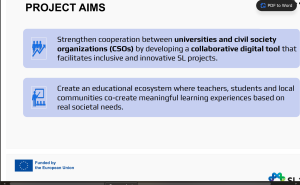
Within the framework of the European programme Service Learning 2.0: CoLab – Erasmus+ Strategic Partnerships KA2, KE: 22707, coordinated by the University of Bucharest, an online workshop and focus group was organised with civil society organisations, focusing on the educational approach of Service-Learning.

Service-Learning is a contemporary experiential learning method that combines academic knowledge with active student engagement in society. Through activities that respond to real social or environmental needs, students develop meaningful skills, strengthen their social awareness and connect theoretical learning with practical action.

The workshop brought together universities and civil society organisations from across Europe, including Université Aix-Marseille, University of Bucharest, University of Salzburg, University of Padova, Sapienza University of Rome, and Eurasianet.eu. The discussion focused on cooperation between universities and NGOs, the exchange of experiences, and the adaptation of practices that can strengthen the social impact of education.

Participation in such initiatives highlights the importance of collaboration between academia, civil society and non-profit organisations.

For Kapa3, the philosophy of Service-Learning is closely aligned with its mission: transforming knowledge into action, empowering people affected by cancer, and building bridges between education, social care and active citizenship.

Through these educational collaborations, the connection between universities and society is strengthened, while new opportunities are created for participatory learning, social innovation and meaningful support for vulnerable groups.

Find more

Flyer – Workshop_ Service Learning (2) Service-learning-key-facts (1)

Service-learning-key-facts (1)

May 27 th 2026 Workshop SL with CSOs

International Migrants Day – 18 December

Health without borders: equal access to care as a human right

International Migrants Day is observed every year on 18 December, marking the date in 1990 when the United Nations General Assembly adopted the International Convention on the Protection of the Rights of All Migrant Workers and Members of Their Families. The day is not only about population movement, but about fundamental rights, dignity, and—above all—equitable access to health care for all, regardless of origin or legal status.

Global Statistics

Globally, more than 281 million people currently live outside their country of birth, representing approximately 3.6% of the world’s population (International Organization for Migration – World Migration Report).

Migrants and refugees consistently face health inequalities driven by barriers such as language, limited health literacy, insecure housing and employment, and fear of exclusion from health systems. According to the World Health Organization, social determinants of health play a decisive role in access to prevention, early diagnosis and treatment, resulting in poorer health outcomes for migrant populations.

These inequalities are further compounded among particularly vulnerable groups, including children and young people, women, and individuals without stable legal status. In cases of serious or chronic illness—such as cancer—delayed diagnosis, interruptions in treatment and lack of psychosocial support can have a profound impact on disease outcomes and quality of life.

Situation in Greece

Within the Greek context, the country continues to serve as both a host and transit point for migrants and refugees. According to data from Eurostat and the Hellenic Statistical Authority, a significant proportion of the population residing in Greece consists of third-country nationals, while access to comprehensive health services remains uneven, particularly for young people and individuals with increased care needs. Despite existing legal provisions, practical barriers persist in prevention, continuity of care and psychosocial support.

In oncology, these challenges become even more pronounced. Cancer does not discriminate, yet access to care is often shaped by social and economic factors. The need for culturally sensitive, accessible and continuous health services is critical to ensure that no person is left unsupported when facing a cancer diagnosis.

In this context, Kapa3 has long worked to highlight social inequalities in health and to promote holistic cancer care for all people, regardless of background. In 2024, a targeted support initiative for refugees and migrants living with cancer was implemented through the programme “Cancer May Control your Body for a While, But Not Your Soul”, with the support of the King Baudouin Foundation.

The action focused on the regions of Macedonia and Thrace, addressing refugees and migrants in the area, with particular emphasis on the 15–24 age group, aiming to provide immediate primary care assistance and continuous support throughout the course of their treatment.

International Migrants Day is a reminder that health is a human right, not a privilege. Ensuring equitable access to care—especially for those most at risk—is a shared responsibility of institutions, health professionals and society as a whole.

A fair and healthy society is one that leaves no one behind.

Sources:

Text/Adaptation: Ifiyenia Anastasiou for Kapa3

International Universal Health Coverage Day – December 12

International Universal Health Coverage (UHC) Day is observed every year on December 12 to remind us that access to quality, affordable healthcare is a fundamental human right and a cornerstone of just and sustainable societies. The United Nations established this day to strengthen global commitment so that all people, everywhere, can access the health services they need without financial hardship. (WHO)

Statistics

Universal health coverage is not just a goal. It is a central element of the United Nations  Sustainable Development Goals for 2030. Despite progress in recent decades, the reality remains challenging. Approximately 4.6 billion people worldwide still lack access to essential health services. At the same time, 2.1 billion face financial hardship in accessing care. Finally 1.6 billion pushed into poverty due to health expenditures.

These statistics demonstrate that universal coverage remains far from fully achieved, with significant inequalities between countries and within societies: poorer populations, rural residents, people with lower education, and other vulnerable groups face much greater barriers to healthcare. (WHO – World Bank Report)

Situation in Greece

In Greece, although universal coverage exists in principle through the National Health System, access to care is not always equitable or complete. Only a small percentage of citizens report high satisfaction with service availability, while around 12.1% of people have unmet healthcare needs, a rate significantly higher than the OECD average. (OECD)

Out-of-pocket healthcare expenses particularly affect lower-income households. Nearly nearly 10% of households facing catastrophic health spending, forcing families to sacrifice essentials such as food or housing. (WHO – Health Care Greece)

These inequalities are not just numbers—they have real consequences for quality of life. For cancer patients, universal coverage means timely diagnosis, access to treatments, continuous monitoring, psychosocial support, and palliative care. Lack of comprehensive, accessible care can worsen disease outcomes and increase psychological and financial burden for patients and their families.

At Kapa3, we strive to ensure that no cancer patient or their loved ones feel alone. Through educational initiatives, experiential programs, psychosocial support, and guidance materials, we advocate for healthcare access that respects human dignity, life, and real needs.

Universal Health Coverage Day is not just a date—it is a call to action for broader access, reduced inequalities, and genuine support for all. Together, we can make meaningful change.

Text/adaptation: Ifiyenia Anastasiou for Kapa3

KAPA3 at the 18th Panhellenic Congress of Nutrition & Dietetics

The 18th Panhellenic Congress of Nutrition & Dietetics took place at the Athens Concert Hall from 4–6 December 2025, bringing together scientists and professionals to discuss the latest developments in nutrition under the central theme “Bridging Research and Practice.”

The Congress covered topics ranging from alternative proteins to eating disorders, through lectures, workshops, and roundtable discussions.

During the session “Co-Creating Health: Participatory Research with Cancer Patients on Nutrition and Mental Resilience”, held on Friday, 5 December in Hall MC3, participants included Andrea Paola Rojas Gil, Associate Professor of Biology – Biochemistry and Director of the Laboratory of Basic Health Sciences at the University of Peloponnese, a close KAPA3 collaborator in the field of nutrition, with the topic “Nutrition as a Tool to Support Treatment and Wellbeing: Comparison of Co-Design Programs for Oncology Patients in Greece and Colombia”; Evagelia Bista on behalf of KAPA3 with “Nutrition as a Social Determinant of Health: Inequalities, Education, Environment and Policies”; and Ioanna Sideri with “Mental Health and Strategies for Empowerment and Resilience”.

Nutrition as a Social Determinant of Health

Evagelia Bista emphasized that nutrition is not merely a personal choice but one of the most critical social determinants of health, directly affecting the prevention, progression, and quality of life of oncology patients. Nearly half of people worldwide lack access to healthy food, and socio-economic inequalities determine who can follow a nutritious diet. Greece is no exception: the economic crisis, the high cost of healthy foods, and the turn towards cheap, highly processed options have worsened the situation.

Key points highlighted in the presentation included:

  • Income, education level, and food availability determine dietary quality, with low-income households experiencing higher rates of obesity and chronic diseases.

  • A shift from the Mediterranean diet towards Western-style options due to economic and social factors.

  • A double burden for vulnerable populations: undernutrition and obesity coexist, particularly affecting those facing food insecurity.

  • Impacts on oncology patients: adequate nutrition is crucial for treatment tolerance, recovery, and quality of life, yet many patients face financial and treatment-related barriers.

Ms. Bista presented KAPA3’s actions with a focus on nutritional support and the participatory approach applied in online Experiential Sessions, conducted in collaboration with the University of Peloponnese. These sessions continue a series dedicated to holistic care for body and mind, emphasizing both nutrition and mental health for oncology patients and their caregivers.

KAPA3 underlines that nutrition cannot be seen as an individual behavior alone but as the result of social, economic, and environmental factors. Reducing inequalities and ensuring access to healthy food for all is essential for better health outcomes, especially in oncology care.

Text/Adaptation: Ifiyenia Anastasiou for Kapa3