Continuing the Journey: Online Group Sessions for Mental Health and Nutrition – Third Cycle with Kapa3 and the LB.H.Sc

Following the warm response to the second cycle of meetings (see the related article here ), focusing on Nutritional Guidance and Experiential Psychological Support, Kapa3 and the Laboratory of Basic Health Sciences (LB.H.Sc), Department of Nursing University of Peloponnese are delighted to continue their collaboration with a third series of online group sessions for mental health and nutrition, dedicated to the holistic care of body and mind, designed for people living with cancer and their caregivers.

In this third cycle, mental health and nutrition are approached as two complementary sides of the same care.

The mental health sessions help participants recognize and manage challenging emotions such as anxiety, fear, sadness, or guilt, strengthen resilience, and cultivate a deeper connection with themselves and others.

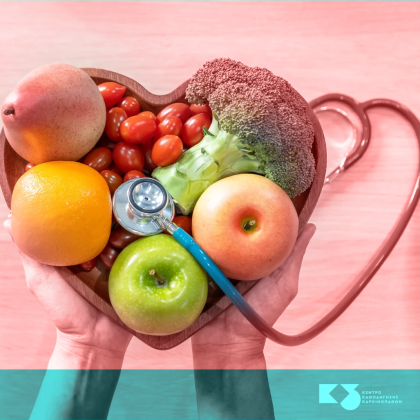
The nutrition sessions explore how mindful and balanced eating can support the body, improve energy and mood, and become a meaningful act of self-care. Food is not only a necessity but also a way to nurture the body, mind, and spirit.

Program of Online Sessions for Mental Health and Nutrition & Themes

  • Saturday, February 28, 2026, 17:30–19:00
    Myths and truths about “anti-cancer” diets. How to evaluate nutritional information and avoid risky practices.

  • Saturday, March 14, 2026, 17:30–19:00
    Stress and uncertainty: practical ways to manage them during treatments and exams.

  • Saturday, March 21, 2026, 17:30–19:00
    Giving space to emotions without being overwhelmed: recognizing and expressing fear, anger, sadness, and guilt.

  • Saturday, March 28, 2026, 17:30–19:00
    Nutritional support during treatment & the role of cachexia.

  • Saturday, April 25, 2026, 17:30–19:00
    Boundaries without guilt: protecting energy and mental resilience.

  • Saturday, May 9, 2026, 17:30–19:00
    Safe cooking practices & kitchen hygiene.

  • Saturday, May 23, 2026, 17:30–19:00
    Family and illness: changes in relationships and ways to support each other.

  • Saturday, June 6, 2026, 17:30–19:00
    The Tree of Life: who I am beyond the illness.

  • Saturday, June 13, 2026, 17:30–19:00
    What gives meaning to life now: discovering small but meaningful elements that sustain us.

Format & Participation

The meetings are held online, based on dialogue, experiential learning, and the sharing of personal experiences. Everyone participates at their own pace, in a warm environment of acceptance and trust. Consistent attendance helps build safety and confidence within the group.

To express your interest or join the first session of the third cycle (Saturday, February 28, 17:30–19:00): [Registration Link]

Text/adaptation: Ifiyenia Anastasiou for Kapa3

2025 – Moving Forward with Vision

The Kapa3 Annual Review 2025 reflects a year of determination and vision, as Kapa3 strengthened its impact through initiatives and collaborations focused on holistic cancer care.During the first half of the year alone, we managed more than 400 individual requests, with support for the process of Disability Certification standing out as a key service—confirming that personalized, hands-on support remains at the core of our mission.

A milestone moment in 2025 was Kapa3’s participation, alongside 13 European partners, in the EU4Health programme MELODIC, which focuses on improving mental health support for young adult cancer patients (18–39 years old). Through research mapping the training needs of healthcare professionals, the project highlights the urgent need for better detection and management of psychological distress among young patients—many of whom still lack access to adequate psychosocial care.

MELODIC promotes innovative wellbeing interventions, such as physical activity in green and blue spaces combined with psychosocial support, emphasizing the healing power of nature and community in mental health recovery. As an active partner, Kapa3 works to ensure that these actions reach patients directly, fostering community engagement and equitable access to quality care.

At the same time, our participation in the second cycle of the SmartHEALTH programme, supported by CERTH, strengthened the digital integration of healthcare services and empowered patients through smart technologies, improving efficiency, accessibility, and transparency.

Our collaboration with FairLife within the BREATH programme for lung cancer patients highlighted the importance of holistic and interdisciplinary care. In parallel, our presence at conferences and scientific events—such as COST Action INECSC CA21125 and the 7th conference “Caregivers and Depression”—consistently brought attention to the needs of caregivers and the empowerment of patients.

At both national and international levels, Kapa3 presented its work at the Lazord International Conference, the Pan-Macedonian Scientific Nursing Conference, and the ESMO World Congress in Berlin. We also participated in major events such as the Patients Summit, Morning Health Talks by EIT Health, and the 18th Panhellenic Conference on Nutrition & Dietetics.

A particularly important moment was our action in the Municipality of Megara, where a new Cancer Patient Guidance and Counselling Station was established, offering direct and personalized support to patients and their families.

Prevention and awareness remain fundamental pillars of our work. Breast self-examination initiatives, participation in the Action4Obesity network, presence at the Thessaloniki Disability Festival, and the launch of new nutrition-related sections on our website all contribute to improving the quality of life of patients and caregivers—combining scientific guidance with lived experience.

Awards 2025

In 2025, Kapa3 received significant recognition for the digital platform Cancer Care Connect, winning a Gold Award at the Diversity, Equity & Inclusion Awards, as well as the Gold Award for “NGO of the Year – Health and Social Care at the Hellenic Responsible Business Awards 2025.
In addition, our collaboration with the University of Peloponnese received a Silver Award at the Healthcare Business Awards 2025 for the programme “Community co-design and implementation of holistic educational practices for nutrition and mental health.”

Every initiative, every partnership, and every participation brings us closer to our vision: holistic, human-centred care where the voices of patients and caregivers truly matter.

To explore our full journey from the foundation of Kapa3 through the end of 2025, you can view our comprehensive activity report here.

The Kapa3 Annual Review 2025 reaffirms our commitment to holistic, human-centred care, where the voices of patients and caregivers truly matter.

As we step into the new year, we move forward with enthusiasm, commitment, and optimism—to continue supporting patients and caregivers, investing in innovation and education, and strengthening care and participation across all our actions.

We wish everyone a year filled with health, strength, and inspiration.

The Kapa3 Team

International Universal Health Coverage Day – December 12

International Universal Health Coverage (UHC) Day is observed every year on December 12 to remind us that access to quality, affordable healthcare is a fundamental human right and a cornerstone of just and sustainable societies. The United Nations established this day to strengthen global commitment so that all people, everywhere, can access the health services they need without financial hardship. (WHO)

Statistics

Universal health coverage is not just a goal. It is a central element of the United Nations  Sustainable Development Goals for 2030. Despite progress in recent decades, the reality remains challenging. Approximately 4.6 billion people worldwide still lack access to essential health services. At the same time, 2.1 billion face financial hardship in accessing care. Finally 1.6 billion pushed into poverty due to health expenditures.

These statistics demonstrate that universal coverage remains far from fully achieved, with significant inequalities between countries and within societies: poorer populations, rural residents, people with lower education, and other vulnerable groups face much greater barriers to healthcare. (WHO – World Bank Report)

Situation in Greece

In Greece, although universal coverage exists in principle through the National Health System, access to care is not always equitable or complete. Only a small percentage of citizens report high satisfaction with service availability, while around 12.1% of people have unmet healthcare needs, a rate significantly higher than the OECD average. (OECD)

Out-of-pocket healthcare expenses particularly affect lower-income households. Nearly nearly 10% of households facing catastrophic health spending, forcing families to sacrifice essentials such as food or housing. (WHO – Health Care Greece)

These inequalities are not just numbers—they have real consequences for quality of life. For cancer patients, universal coverage means timely diagnosis, access to treatments, continuous monitoring, psychosocial support, and palliative care. Lack of comprehensive, accessible care can worsen disease outcomes and increase psychological and financial burden for patients and their families.

At Kapa3, we strive to ensure that no cancer patient or their loved ones feel alone. Through educational initiatives, experiential programs, psychosocial support, and guidance materials, we advocate for healthcare access that respects human dignity, life, and real needs.

Universal Health Coverage Day is not just a date—it is a call to action for broader access, reduced inequalities, and genuine support for all. Together, we can make meaningful change.

Text/adaptation: Ifiyenia Anastasiou for Kapa3

KAPA3 at the 18th Panhellenic Congress of Nutrition & Dietetics

The 18th Panhellenic Congress of Nutrition & Dietetics took place at the Athens Concert Hall from 4–6 December 2025, bringing together scientists and professionals to discuss the latest developments in nutrition under the central theme “Bridging Research and Practice.”

The Congress covered topics ranging from alternative proteins to eating disorders, through lectures, workshops, and roundtable discussions.

During the session “Co-Creating Health: Participatory Research with Cancer Patients on Nutrition and Mental Resilience”, held on Friday, 5 December in Hall MC3, participants included Andrea Paola Rojas Gil, Associate Professor of Biology – Biochemistry and Director of the Laboratory of Basic Health Sciences at the University of Peloponnese, a close KAPA3 collaborator in the field of nutrition, with the topic “Nutrition as a Tool to Support Treatment and Wellbeing: Comparison of Co-Design Programs for Oncology Patients in Greece and Colombia”; Evagelia Bista on behalf of KAPA3 with “Nutrition as a Social Determinant of Health: Inequalities, Education, Environment and Policies”; and Ioanna Sideri with “Mental Health and Strategies for Empowerment and Resilience”.

Nutrition as a Social Determinant of Health

Evagelia Bista emphasized that nutrition is not merely a personal choice but one of the most critical social determinants of health, directly affecting the prevention, progression, and quality of life of oncology patients. Nearly half of people worldwide lack access to healthy food, and socio-economic inequalities determine who can follow a nutritious diet. Greece is no exception: the economic crisis, the high cost of healthy foods, and the turn towards cheap, highly processed options have worsened the situation.

Key points highlighted in the presentation included:

  • Income, education level, and food availability determine dietary quality, with low-income households experiencing higher rates of obesity and chronic diseases.

  • A shift from the Mediterranean diet towards Western-style options due to economic and social factors.

  • A double burden for vulnerable populations: undernutrition and obesity coexist, particularly affecting those facing food insecurity.

  • Impacts on oncology patients: adequate nutrition is crucial for treatment tolerance, recovery, and quality of life, yet many patients face financial and treatment-related barriers.

Ms. Bista presented KAPA3’s actions with a focus on nutritional support and the participatory approach applied in online Experiential Sessions, conducted in collaboration with the University of Peloponnese. These sessions continue a series dedicated to holistic care for body and mind, emphasizing both nutrition and mental health for oncology patients and their caregivers.

KAPA3 underlines that nutrition cannot be seen as an individual behavior alone but as the result of social, economic, and environmental factors. Reducing inequalities and ensuring access to healthy food for all is essential for better health outcomes, especially in oncology care.

Text/Adaptation: Ifiyenia Anastasiou for Kapa3

International Day of Persons with Disabilities — 3 December

A day of awareness, commitment, and action

The International Disability Day, also known as the International Day of Persons with Disabilities (3 December), established by the United Nations in 1992, serves as an annual reminder of the need for full inclusion, equality, and respect for the rights of persons with disabilities across all aspects of social life. Moreover, today, more than ever, promoting accessibility and inclusion is not optional — it is an obligation.

According to the World Health Organization (2024), approximately 1.3 billion people — 16% of the global population — live with some form of disability. Disability is part of human diversity, and the lived experience of it highlights the systemic inequalities that continue to exist in many countries, including Greece. As a result, the need for stronger inclusion policies becomes increasingly evident.

These global figures highlight why International Disability Day remains a vital call to action worldwide.

Challenges and inequalities in Greece

In Greece, persons with disabilities still face significant barriers in their daily lives: inadequate accessibility in public spaces and services, difficulties in mobility, limited access to employment, and persistent social stigma that deeply affects their quality of life. National data confirm that these inequalities have direct consequences on health, education, and participation in social and economic life.

At the same time, improving accessibility is not only about removing barriers — it is about shaping a society that recognizes the real needs of its people. Therefore, from training professionals and changing attitudes, to ensuring universal access to healthcare and psychosocial support, inclusion requires sustained commitment. Only then can we guarantee that every citizen has equal opportunities, dignity, and participation.

Kapa3’s perspective: A world where every voice is heard

At the Cancer Patient Guidance Centre – Kapa3, we support individuals facing serious health challenges every day. We understand how essential the following are:

  • clear and accessible information
  •  timely support
  •  respect
  •  care without exclusions

Learn more about the rights of Persons with Disabilities in the following publications on our website here.

Find information about issuing a disability card here, and about free or reduced public transportation fares here.

The International Day of Persons with Disabilities reminds us that every action and every policy must be built on the principle of inclusion.
No one should be left behind.

Building more inclusive societies: From vision to practice

Creating a truly accessible environment requires:

  • Accessible cities and public services
  •  Training for professionals in health, social care, and customer service
  •  Accessible digital technologies
  •  Employment policies that enable active participation
  •  Awareness-raising and dialogue to combat stigma

Inclusion is not an act of “good will” — it is a prerequisite for social progress.

At the same time, the transition to a genuinely inclusive society is not instantaneous. It requires coordinated efforts from the State, civil society, and persons with disabilities themselves. Continuous evaluation, transparency, and meaningful participation are the foundations of lasting change.

Access is a right.
Every person deserves respect and equal opportunities.

Text/Adaptation: Ifiyenia Anastasiou for Kapa3

Sources


Continuing the Journey: Holistic Body and Mind Care with Kapa3 and the University of the Peloponnese

After the first round of meetings held in April (see the related article here), focusing on Nutritional Guidance and Experiential Psychological Support, Kapa3 and the University of the Peloponnese continue their collaboration with a new series of experiential workshops dedicated to the holistic care of body and mind.

The meetings are open to people living with cancer, caregivers, and healthcare professionals — to anyone seeking a space for genuine communication, understanding, and empowerment.

In this new cycle, mental health and nutrition are approached as two sides of the same care.

In the mental health sessions, participants learn to recognize and manage challenging emotions such as anxiety or fear, strengthen their resilience, and cultivate a deeper connection with themselves and others.

At the same time, the nutrition sessions explore how balanced and mindful eating can support the body, enhance energy and mood, and become an act of self-care and self-respect. Food is not only a necessity but also a way to show love — to the body, the soul, and to life itself.

The meetings are held online and are based on dialogue, experiential learning, and the sharing of personal experiences. Everyone participates at their own pace, in a warm environment of acceptance and trust.

To express your interest: Registration Form for the Support Group for People with Cancer

Text/adaptation: Ifiyenia for Kapa3

New Guide by the Greek Ombudsman on Serving Vulnerable Groups in Public Services

The Greek Ombudsman has released a new, comprehensive Guide addressing the service of vulnerable social groups by public authorities. This important tool for awareness and training aims to improve the quality of service, strengthen equality, and promote respect for the rights of all citizens.

The Guide includes:

  • The main legal framework and legislative provisions concerning different categories of citizens.
  • The difficulties and barriers faced by groups such as Roma communities, persons with disabilities, victims of domestic violence, people living with addictions, or citizens with a migrant background.
  • Practical behavioral guidelines for civil servants to ensure that services are accessible, non-discriminatory, and respectful of each group’s specific needs.
  • Tools and points of reference (such as helplines, support structures, and competent services) for the immediate guidance of citizens in need.

In this way, the Guide serves as a bridge between citizens and Public Administration, promoting transparency, equal treatment, and social cohesion.

Its significance lies not only in providing up-to-date information and an overview of the relevant legislation, but also in offering clear, practical directions for the daily work of public employees. This ensures that every citizen – regardless of origin, gender, age, or social status – enjoys equal access to quality services.

The Guide is available on the website of the Greek Ombudsman and is recommended for use by all public bodies, welfare organizations, hospitals, municipalities, and citizens’ associations.

KAPA3 supports and highlights such initiatives, which contribute to both citizens’ empowerment and the better preparation of the staff who serve them. Disseminating this Guide is another step toward a society free of exclusion.

Read more on the Guide here 


7 October – World Day for Decent Work

World Day for Decent Work was established in 2008 by the International Trade Union Confederation (ITUC) to emphasize everyone’s right to safe, healthy, and dignified working conditions.

It highlights the importance of respect, equality, and social justice in the workplace.

For people living with cancer, work often presents a dilemma: how to balance treatment demands with job responsibilities. Unfortunately, prejudice and lack of awareness can push many patients to the margins.

Access to decent work is not a luxury—it is a right. Support at work, flexible hours, colleague understanding, and elimination of discrimination are crucial steps toward an inclusive society.

Kapa3 supports patients in knowing their rights and advocating for themselves at work. At the same time, we raise awareness about the importance of workplace inclusion.
World Day for Decent Work reminds us that the fight against cancer should never come with social exclusion. A fair society embraces everyone with respect and equal opportunities.