Ηλικία, φύλο και ανοσοποιητικό σύστημα τα στοιχεία που αυξάνουν τον κίνδυνο θανάτου από covid19

Cancer Immunotherapy: A Revolution That Continues to Transform Cancer Care

Over the past fifteen years, cancer immunotherapy has transformed the landscape of oncology, offering new hope and treatment possibilities to patients around the world. What began as a promising scientific concept has evolved into one of the most important pillars of modern cancer treatment.

According to the Cancer Immunotherapy Insights & Impact Report 2026 published by the Cancer Research Institute, a total of 156 immunotherapy approvals were granted by the U.S. Food and Drug Administration (FDA) between 2011 and 2025, reflecting the remarkable growth and impact of this field. Many of these therapies are based on immune checkpoint inhibitors, which help the immune system recognize and attack cancer cells more effectively.

Unlike traditional treatments such as chemotherapy and radiation therapy, immunotherapy works by empowering the body’s own immune system to fight cancer. By enhancing natural immune responses, these therapies can help the body identify and destroy cancer cells that might otherwise evade detection. For many patients, immunotherapy has led to longer survival, improved disease control, and a better quality of life.

The year 2025 marked another milestone in the advancement of cancer immunotherapy, with thirteen new FDA approvals. Notably, patients with anal cancer gained access to their first approved immunotherapy option, highlighting the expanding reach of these innovative treatments. New methods of administration, including subcutaneous therapies, are also making treatment more convenient and accessible for patients.

Research in cancer immunotherapy continues to progress at an extraordinary pace. Scientists are developing new strategies to overcome the mechanisms that allow cancer to hide from the immune system, while exploring novel therapeutic targets, combination treatments, and personalized approaches to care. These advances aim to increase the number of patients who can benefit from immunotherapy and improve outcomes across a wider range of cancers.

While challenges remain and not all patients respond equally to treatment, immunotherapy represents one of the most significant breakthroughs in the history of cancer care. Ongoing scientific innovation continues to bring hope that more effective, personalized, and accessible treatments will become available in the years ahead.

At KAPA3, we recognize the importance of raising awareness about advances in cancer treatment and supporting informed decision-making. Knowledge empowers patients, families, caregivers, and healthcare professionals, helping them navigate the cancer journey with greater confidence and hope.

Source: https://www.cancerresearch.org/cancer-immunotherapy-report-2026


Newsletter Kapa3| June 2026,From survivorship to quality of life — from information to support — from technology to human-centred care.

May was a month of important developments, scientific outreach and service enhancement for Kapa3. From the new European scientific publication of the MELODIC project and educational participation in international networks, to the development of “Myrto”, the creation of a new Psychological Support Team and support through social and corporate initiatives, Kapa3 continues to bring together knowledge, technology, human care and social action.

Our mission remains focused on equal access for cancer patients and their caregivers to information, rights, services and meaningful support.

1. June: Cancer Survivors Month

June is dedicated to people living with and beyond cancer. Survivorship is not only the end of treatment; it is continuity, adaptation, reintegration, psychosocial support, quality of life and the right to care beyond therapy.

EN: https://www.kapa3.gr/en/june-cancer-survivors-month-title-sep-sitename/

2. Kapa3 Introduces Its New Psychological Support Team

On the occasion of Mental Health Awareness Month and Cancer Survivors Month, Kapa3 introduces its new Psychological Support Team: a safe space for listening, support and empowerment for patients, survivors, caregivers and families.

CONTACT US  https://www.kapa3.gr/en/kapa3-introduces-its-new-psychological-support-team/

3. New MELODIC Scientific Publication on the Mental Health of Young Adults with Cancer

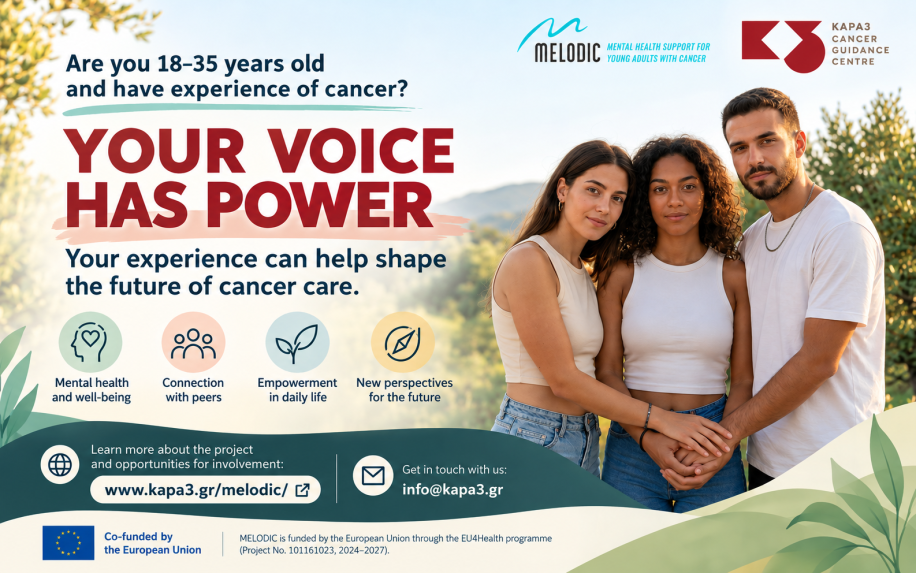
Mental health is an integral part of cancer care, particularly for young adults facing the complex challenges of a cancer diagnosis. Kapa3 contributes to the new scientific publication of the European MELODIC project, highlighting the educational needs of healthcare professionals.

READ THE ARTICLE

4. Digital Health and Cancer Survivorship: Kapa3 at the INE-CSC 2026 Conference in Coimbra

Kapa3 participated in the INE-CSC 2026 Conference in Coimbra, contributing to the European dialogue on cancer survivorship, supportive care, digital health and participatory solutions that respond to the real needs of patients and caregivers.

READ THE ARTICL Ehttps://www.kapa3.gr/en/participation-in-ca21152-implementation-network-europe-for-cancer-survivorship-care/

5. Co-creating Myrto: A Digital Health and Rights Navigator for Oncology Patients

Myrto is designed as a digital health and rights navigator — a Patient Empowerment e-Navigator — that goes beyond information provision to guide, support and evolve according to users’ real needs.

READ THE ARTICLE https://www.kapa3.gr/en/myrto-health-navigator-oncology-patients-greece/

6. Learning by Doing: Participation in the European Service Learning 2.0: CoLab Programme

Kapa3 participated in the European programme Service Learning 2.0: CoLab, an initiative connecting academic knowledge with meaningful social action and highlighting collaboration between universities, civil society organisations and community actors.

FIND OUT MOREhttps://www.kapa3.gr/en/learning-by-doing-participation-in-the-european-service-learning-2-0-colab-programme/

7. Alpha Bank and Its Employees Support Kapa3 through the Match for Good Initiative

Through the Match for Good initiative, Alpha Bank and its employees supported Kapa3, strengthening our mission to stand alongside people affected by cancer, their families and caregivers.

FIND OUT MORE https://www.kapa3.gr/en/i-alpha-bank-kai-oi-ergazomenoi-tis-stirizoyn-to-kapa3-kai-tin-isotimi-prosvasi-stin-ypostirixi-ton-ogkologikon-asthenon/

8. 6 Awards for Kapa3 at the 4th Vouliagmeni Summer Crossing: Is There Such a Thing as a “Lonely Race”?

Kapa3 took part in the 4th Vouliagmeni Summer Crossing, sharing a strong message of participation, resilience, empowerment and solidarity. Even when a race seems individual, it does not have to be lonely.

READ MOREhttps://www.kapa3.gr/en/kapa3-6-vraveia-diaplous-vouliagmenis/

Newsletter closing note

If this newsletter reached you through forwarding or another source, subscribe today to receive reliable updates, news and useful information directly in your inbox.

Support our work and help us continue to provide information, guidance and support to patients and their families.

SUBSCRIBE TO NEWSLETTER

SUPPORT US

New MELODIC Scientific Publication on the Mental Health of Young Adults with Cancer

Kapa3 participates in the new scientific publication of the European MELODIC project, entitled:

“Educational Needs Regarding Mental Health of Professionals Working with Young Adults with Cancer: A European Survey.”

The publication addresses a highly important issue in contemporary cancer care: the educational needs of healthcare professionals working with young adults with cancer, particularly in relation to recognising and supporting mental health concerns.

Young adults experiencing cancer often face complex psychosocial challenges. Diagnosis, treatment, changes in daily life, impact on studies, work, relationships, body image and future planning can deeply affect their mental health and quality of life.

The European study, involving 271 healthcare professionals from 21 countries, highlighted an important gap between professionals’ willingness to support patients and the systematic use of validated assessment tools. While approximately half of the participating professionals reported feeling confident in identifying mental health issues, only a small percentage reported using validated screening tools.

This finding is particularly important. It shows that awareness and professional experience are valuable, but they are not enough on their own. Targeted education, appropriate tools, interdisciplinary collaboration and clear support pathways are needed so that the needs of young adults with cancer can be recognised early and addressed in a comprehensive way.

The message of the publication is clear: the education of healthcare professionals can make a meaningful difference in the early recognition, support and care of young adults with cancer.

At Kapa3, this approach is a core principle of our work. Before every intervention and every support action, there is education, information and empowerment of the people who stand beside patients.

Kapa3 professionals and collaborators are trained, informed and actively involved in European projects such as MELODIC, ensuring that the support provided is evidence-informed, human-centred and meaningful.

Kapa3’s active participation in such scientific initiatives strengthens its role as an organisation that connects research with practice, European knowledge with real patient needs, and education with everyday care.

We are proud of our participation in the MELODIC project and of our contribution to a European effort that highlights the importance of mental health, early recognition and targeted education in cancer care.

More information: https://lnkd.in/e9Pw4epy

Bladder Cancer Awareness Month: Awareness, prevention and early diagnosis

May is internationally recognized as Bladder Cancer Awareness Month, an important initiative led by health organizations and patient advocacy groups worldwide to promote public awareness, prevention, and early diagnosis.

Bladder cancer is among the most common types of cancer globally, with hundreds of thousands of new cases diagnosed each year. In Europe, it is considered one of the most common urological cancers, affecting men significantly more often than women.

In Greece, the data remains particularly concerning. The country records the highest incidence rate in Southern Europe, with approximately 39.7 new cases per 100,000 men annually. In terms of mortality, an estimated 7–8 men per 100,000 lose their lives to the disease every year, placing Greece among the countries with the highest mortality rates in the region. These figures highlight the importance of prevention, awareness, and timely medical intervention.

Behind every statistic are people — patients and families facing the emotional, physical, and practical challenges that accompany a cancer diagnosis. Raising awareness is therefore not only about numbers, but also about supporting individuals throughout their journey.

Smoking remains the most significant risk factor for bladder cancer and is linked to a large percentage of cases. Long-term exposure to certain chemicals, especially in specific occupational environments, as well as chronic inflammation of the urinary tract, may also increase the risk of developing the disease.

Recognizing the symptoms early can make a critical difference. The most common warning sign is blood in the urine (hematuria), even when no pain is present. Other symptoms may include frequent urination, burning during urination, or a sudden urge to urinate. Although these symptoms may also be associated with less serious conditions, they should never be ignored.

When bladder cancer is diagnosed at an early stage, survival rates are significantly higher, underlining the importance of early detection. However, the disease is also known for its high recurrence rates, making long-term follow-up and monitoring essential even after treatment.

Prevention remains a key pillar in reducing the burden of the disease. Quitting smoking, limiting exposure to harmful chemicals, and increasing awareness of the symptoms can all contribute to lowering the risk.

In Greece, awareness initiatives are also supported by scientific organizations such as the Hellenic Genito-Urinary Cancer Group (HGUCG), contributing to public education and the promotion of early symptom recognition.

Bladder Cancer Awareness Month is an important opportunity to encourage open discussion around the disease. Awareness is more than information — it is a tool that can lead to earlier diagnosis, improved treatment outcomes, and ultimately, more lives saved.

Sources:

Text/adaptation: Ifiyenia Anastasiou for Kapa3

Mapping the efficiency of cancer care in Greece: findings from the All.Can Greece report

Cancer care efficiency in Greece remains one of the most complex and pressing challenges for the Greek health system — not only in terms of its clinical burden, but also in how care is organized around the patient.

With approximately 63,000 new cancer cases diagnosed annually and more than 32,000 cancer-related deaths each year, Greece faces a steadily increasing oncological burden. Projections suggest that cancer incidence will rise by around 23% by 2040, further intensifying pressure on health services.

Against this backdrop, All.Can Greece has published a landmark report titled “Mapping the Efficiency of Cancer Care in Greece”, based on the pilot implementation of the All.Can Action Guide for Efficient Cancer Care.

Rather than simply describing the current situation, the report aims to measure it — identifying where efficiency is lost across the cancer care pathway and where targeted reforms could make the greatest impact.

Cancer care efficiency in Greece: delays in care delivery

One of the most critical findings of the report relates to delays in the patient journey.

Despite the existence of modern infrastructure and highly specialized oncology centres, significant delays persist between initial suspicion, diagnosis, and the start of treatment.

These delays are not the result of a single bottleneck, but of systemic fragmentation:

  • fragmented referral pathways,
  • limited coordination between levels of care,
  • and the absence of standardized clinical protocols.

A key structural weakness is the lack of systematic monitoring of waiting times and time-to-treatment indicators. As a result, inefficiencies remain partially invisible to the system itself, limiting the ability to implement targeted improvements.

Fragmentation across the care continuum

The report highlights a broader issue of fragmentation in cancer care delivery.

The patient journey from primary care to specialist oncology services is often not clearly structured or consistently coordinated. Referral pathways depend heavily on individual practice rather than standardized national protocols.

A major gap is the absence of structured patient navigation services. In practice, this means that patients and families are often left to navigate a complex system on their own, increasing delays and adding unnecessary psychological burden.

At the same time, multidisciplinary tumor boards represent a positive development, supporting collaborative clinical decision-making across specialties. However, systematic monitoring of their performance remains limited.

The development of Comprehensive Cancer Centers is identified as a promising step forward, although further regulatory strengthening and clearer governance structures are still needed to maximize their impact.

Patient-centered care: progress with remaining gaps

Greece has made notable progress in collecting Patient-Reported Outcome Measures (PROMs) and Patient-Reported Experience Measures (PREMs), reflecting a growing commitment to integrating patient perspectives into care delivery.

However, patients’ access to their own clinical data remains limited, restricting their ability to actively participate in decision-making processes.

In addition, patient education and shared decision-making are not yet systematically embedded across the health system.

Another important gap concerns survivorship care. As cancer survival rates improve, the lack of structured long-term follow-up pathways leaves many patients without continuous support after active treatment ends.

Key policy directions

The report outlines several strategic priorities for improving cancer care efficiency in Greece:

  • Development of a comprehensive national cancer strategy with clear targets and governance mechanisms
  • Strengthening coordination across all levels of care
  • Implementation of standardized clinical pathways with defined time-to-treatment and quality indicators
  • Investment in oncology workforce capacity, particularly in shortage specialties
  • Establishment of structured patient navigation programmes
  • Acceleration of Comprehensive Cancer Center development
  • Systematic use of health data for monitoring performance and accountability
  • Greater patient engagement through PROMs, PREMs, and shared decision-making

Conclusion: a system with strong foundations but limited integration

Greece has many of the essential building blocks for a high-performing cancer care system — including infrastructure, clinical expertise, and emerging digital health capabilities.

However, the key challenge lies not in the existence of these components, but in their integration.

The All.Can Greece report highlights a system that is still operating in silos: strong individual elements that do not yet function as a fully connected care pathway.

In oncology, this lack of integration is not merely an organizational issue. It directly affects timeliness, patient experience, and ultimately outcomes.

The opportunity now lies in moving from fragmented capacity to coordinated care — where patients no longer have to bridge the gaps between system components themselves.

Source: Mapping-the-Efficiency-of-Cancer-Care-in-Greece-FINAL

Text/adaptation: Ifiyenia Anastasiou for Kapa3

Kapa3 in the second half of April: Information, collaborations and strengthening patient care

Kapa3 in April

Throughout April, Kapa3 continued to develop actions and initiatives aimed at improving access to care for oncology patients and their families, with a strong focus on information, prevention, and the development of innovative collaborations.

This period’s activities focused on raising awareness about key cancer types, improving patients’ daily lives through policy and systemic developments, and expanding partnerships that enhance the quality of care and services provided.

In an ever-evolving healthcare environment, the connection between reliable information, human support, and technology remains a key pillar for a more accessible and effective care system.

Below are the main initiatives and developments that marked the second half of the month.

Awareness

April is an awareness month for head and neck cancer as well as testicular cancer, highlighting the importance of prevention and early diagnosis. Although these types of cancer are often underrepresented in public discourse, awareness plays a crucial role in reducing late diagnoses and improving patients’ quality of life.

Patients’ rights

Important developments took place in the field of patients’ rights, including the establishment of the National Registry for Hospital-at-Home Care (NOSPI), aiming to better organise and ensure the safety of home-based care.

At the same time, the new framework for Public Administration introduces changes that directly affect citizens’ daily lives, enhancing transparency, reducing bureaucracy, and improving access to public services.

Collaborations

During April, Kapa3 further strengthened its network of collaborations through significant partnerships.

The collaboration with the PRAXI Network/FORTH, within the European smartHEALTH hub, enhances participation in innovation and health policy initiatives, opening new opportunities at European level.

In addition, the partnership with Karkinaki focuses on supporting children, adolescents, and families living with cancer, promoting a holistic approach to care.

Furthermore, the collaboration with SimasiaAI for the development of “Myrto”, an AI-powered digital assistant, highlights the importance of technology in empowering patients and improving access to reliable information and services.

Research & knowledge

A new international report on person-centred cancer care highlights the need for a holistic model that places the patient at the centre. This approach recognises not only clinical needs but also psychosocial dimensions, reinforcing the importance of patient involvement in decision-making.

Patients & society

On the occasion of European Patients’ Rights Day (18 April), Kapa3 highlighted the importance of equal access to quality care. Despite progress, challenges such as inequalities and delays remain, making the continued strengthening of support structures essential.

Supporting our work

Kapa3’s collection of handmade scarves continues to serve as a creative way of supporting the organisation’s mission, combining aesthetics with meaningful contribution to people living with cancer.

We continue to monitor developments and work towards improving patients’ daily lives — more news coming soon.

Text/adaptation: Ifigenia Anastasiou for Kapa3

Kapa3 and Karkinaki join forces to support children, adolescents, and families living with cancer

The Cancer Guidance Center – Kapa3 announces its new collaboration with the non-profit organization “Karkinaki”, aiming to strengthen information, psychosocial support, and awareness around childhood and adolescent cancer, as well as to support families experiencing the disease.

Karkinaki is a specialized organization working in the field of childhood and adolescent cancer, focusing on reliable information, empowering parents and caregivers, and fostering a supportive environment around children and teenagers affected by cancer. Through community-based actions and awareness initiatives, it seeks to reduce the sense of isolation that often accompanies diagnosis, while also enhancing understanding, social awareness, and access to available support resources for families.

Within the framework of this collaboration, the two organizations will develop joint initiatives focused on information and awareness-raising, with an emphasis on actions addressing both families and healthcare and support professionals. The partnership will also include the co-organization of informational events, the exchange of good practices, and the exploration of participation in national and European programs that promote a holistic approach to patient care, with an emphasis on continuity of support across all stages of the disease experience.

The Cancer Guidance Center – Kapa3 is dedicated to informing, guiding, and empowering people affected by cancer, providing practical support and access to reliable information and services. At the same time, it develops initiatives that strengthen patients’ active participation in managing their health and promotes a more accessible and human-centered model of care.

In this context, Kapa3 is also involved in European collaborations focusing on the psychosocial dimension of cancer across different stages of life, such as the MELODIC project, which addresses the mental health of young adults with lived experience of cancer. This work further enhances the organization’s ability to recognize needs that emerge throughout the cancer journey, from childhood to adulthood.

This collaboration with Karkinaki reflects the shared vision of both organizations to strengthen a support network that goes beyond medical treatment, extending into families’ daily lives, information access, and psychosocial empowerment, with the aim of providing a more stable and meaningful presence for those who need it most.

Our Press Release here: KARKINAKI PRESS RELEASE

Text: Ifiyenia Anastasiou for Kapa3

Colorectal Cancer Awareness Month – March

March is dedicated to raising awareness and promoting prevention of colorectal cancer, one of the most common but also highly treatable cancers when detected early. It is also referred to as colorectal carcinoma.

According to a European Commission report published in March 2021, colorectal cancer accounted for 12.7% of all new cancer diagnoses and 12.4% of all cancer-related deaths in the EU-27 countries in 2020. By 2045, it is estimated that 3.29 million new cases will be diagnosed worldwide, leading to 1.66 million deaths.

The disease occurs more frequently in men than in women, with age being a significant factor. Approximately 90% of people diagnosed with colorectal cancer worldwide are over 50 years old.

Prevention and early detection save lives.

Regular screenings, such as colonoscopy, can detect early lesions or precancerous changes before they develop into serious disease. During a colonoscopy, tissue samples (biopsies) can be taken for histological examination if a suspicious lesion is found, and polyps can be removed to prevent progression to cancer.

Treatment options depend on the stage of the disease, the tumor’s molecular characteristics, and the patient’s overall health. Standard therapies include surgery, chemotherapy, radiotherapy—which plays a key role in rectal cancer—as well as targeted therapies and immunotherapies guided by specific molecular biomarkers.

Through the National Colorectal Cancer Screening Program, the goal is to detect precancerous lesions or the disease itself early, allowing prompt intervention and treatment. Adenomatous polyps or early-stage neoplasms have a 100% cure rate when managed at an early stage, highlighting the critical importance of early detection.

For more information, visit the National Colorectal Cancer Screening Program website: https://colon.gov.gr

For any questions, you can contact the service department at tel. 11401 or via email: prolipsis-helpdesk@idika.gr.

Sources:

Kapa3 and Doctorhomie: Joining Forces to Support Cancer Patients

Kapa3 is pleased to announce the signing of a memorandum of cooperation with the digital home-care platform Doctorhomie. The Kapa3–Doctorhomie collaboration aims to strengthen support for cancer patients and their families across Greece.

Since its establishment, the Cancer Guidance Center – Kapa3 has been actively working to provide meaningful guidance to people living with cancer and their caregivers, with a strong focus on access to benefits and services, information about patients’ rights, and psychosocial support. Through Mobile Units, digital tools and educational initiatives, the organization promotes patient-centred care, creates channels of communication with beneficiaries and strengthens their participation in decisions concerning their health. Kapa3’s philosophy is grounded in building partnerships, leveraging technology and fostering collaborations with organizations that share the same vision.

Doctorhomie, on the other hand, is redefining home-based care in Greece by offering an integrated digital platform that connects patients with physicians, nurses, psychologists, physiotherapists and caregivers. Through tools that enhance monitoring and management of care at home, Doctorhomie contributes to strengthening Primary Health Care, promoting prevention, supporting families and improving both the safety and quality of care.

The new collaboration between Kapa3 and Doctorhomie opens opportunities for joint initiatives at multiple levels, including:

  • the organization of workshops, conferences and webinars aimed at informing patients, promoting quality of care and strengthening trust between patients and their treating physicians, particularly within the context of home-based care and Primary Health Care,

  • awareness and information campaigns focusing on prevention, the fight against myths and stigma, and a better understanding of patients’ symptoms and needs,

  • participation and collaboration in national and European programmes that promote innovation in oncology care and strengthen digital tools for patients and caregivers,

  • joint research initiatives on topics of shared interest, with the aim of supporting scientific evidence, disseminating knowledge and contributing to health policy development at both national and European level.

This partnership is founded on the shared belief that patient care begins with information and support, is strengthened through education and collaboration, and evolves through the combined use of technology and patient-centred practices.

Kapa3 and Doctorhomie are committed to making the most of this collaboration in order to strengthen patients’ participation in decisions regarding their health, reduce inequalities and provide timely and effective support to those who need it.

With a shared vision of quality and accessible care, Kapa3 and Doctorhomie are opening a new chapter of cooperation in support of cancer patients in Greece.

Download our Press Release in pdf or word

March – Multiple Myeloma Awareness Month

March – Multiple Myeloma Awareness Month

March is internationally recognized as Multiple Myeloma Awareness Month, a type of blood cancer that affects plasma cells – immune system cells responsible for producing antibodies and defending the body against infections.

This period provides an important opportunity to raise public awareness, highlight the challenges faced by patients, and enhance understanding of the disease, early diagnosis, and the importance of access to modern treatments.

What is Multiple Myeloma

Multiple myeloma develops in the bone marrow, when plasma cells grow uncontrollably and produce abnormal proteins. The presence of these cells can affect the production of healthy blood cells, cause bone damage, and impair the function of vital organs such as the kidneys. Although relatively rare, it is the second most common blood cancer worldwide.

The disease’s symptoms may be initially nonspecific and develop gradually. Fatigue, bone pain – especially in the spine or ribs – frequent infections, anemia, or kidney problems are some of the signs that may prompt further investigation. Early awareness and timely medical evaluation are therefore crucial for diagnosis and disease management.

Multiple Myeloma by the Numbers

Globally, the disease affects a significant number of people. According to international epidemiological data:

  • 188,000 new cases were reported worldwide in 2022

  • Approximately 121,000 people died from the disease the same year

  • It is estimated that more than 540,000 people are currently living with multiple myeloma worldwide

The disease occurs more often in older adults. Most diagnoses occur in people over 60–65 years old, and around 80% of cases are reported in individuals over 65. Experts predict that the disease’s incidence may rise in the coming decades, largely due to the aging population in many countries.

The Situation in Greece

In Greece, the exact epidemiological picture of multiple myeloma is not fully clear, as there is no comprehensive national cancer registry recording all cases systematically.

However, according to available international estimates for 2022:

  • About 763 new multiple myeloma cases were reported in the country

  • Approximately 579 deaths were attributed to the disease

  • It is estimated that around 2,154 people in Greece are living with the disease over a five-year period

These figures highlight the importance of improving health data collection and continuously supporting patients living with the disease.

Advances in Treatments

In recent years, scientific progress has significantly changed the course of the disease.

Modern therapies include:

  • Immunotherapies

  • Monoclonal antibodies

  • Proteasome inhibitors

  • Immunomodulatory drugs

  • CAR‑T cell therapies (for advanced stages of the disease)

New therapeutic combinations and ongoing clinical studies are providing more treatment options, reinforcing hope for even more effective therapies in the future.

The Importance of Awareness and Support

Despite these advancements, public awareness and support for people living with the disease remain crucial. Early diagnosis, access to specialized medical care, and equitable access to modern therapies are key factors in improving disease outcomes and patients’ quality of life.

Multiple Myeloma Awareness Month serves as a reminder that knowledge, research, and collective effort can make a difference. Through education, support for scientific research, and assistance to patients and their families, we can help create an environment where no one faces cancer alone.

Sources:

https://gco.iarc.fr
(Global Cancer Observatory – International Agency for Research on Cancer)

https://pubmed.ncbi.nlm.nih.gov/39658225/
(Global burden and projections of multiple myeloma)

https://www.oecd.org/health/cancer-profiles/greece.html
(EU Country Cancer Profile – Greece)

https://ehoonline.biomedcentral.com/articles/10.1186/s40164-025-00684-x
(Global epidemiology of multiple myeloma)

https://pmc.ncbi.nlm.nih.gov/articles/PMC3627436/
(Multiple myeloma epidemiology study)

Text/adaptation: Ifiyenia Anastasiou for Kapa3