Kapa3 swims for life, hope and strength

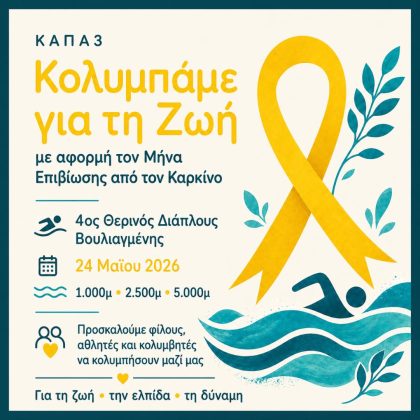
On May 24, 2026, Kapa3 will participate in the 4th Vouliagmeni Summer Open Water Swim, organized by the Nautical Club of Vouliagmeni, inviting friends, athletes, and swimmers to join the team and swim together for an important cause.

In light of June being recognized worldwide as Cancer Survivors Month, and Cancer Survivors Day being observed every year on the first Sunday of June, we come together in an initiative dedicated to life, hope, remembrance, and support.

We swim for those who survived.
We swim for those currently facing cancer.
We swim in memory of those we have lost.
We swim to remind everyone that no one is alone in the cancer journey.

Cancer survivorship is not only a medical outcome. It is an ongoing journey closely connected to prevention, early diagnosis, equal access to oncology care, rehabilitation, psychosocial support, and quality of life.

Recognizing the positive impact of physical activity on wellbeing, empowerment, and the smooth reintegration of people with cancer experience into social, family, and professional life, Kapa3 proudly takes part in a celebration of sports, the sea, and community participation.

Participants may choose one of the following swimming routes:

  • 1,000 m
  • 2,500 m
  • 5,000 m

We invite you to become part of our team.
To swim together.
To turn every meter in the sea into a message of strength, care, and hope.

On May 24, we swim with Kapa3 for life.

INFORMATION – REGISTRATIONS

Katerina Georgiopoulou
Social Worker

CANCER GUIDANCE CENTER, KAPA 3,
13 Kosti Palama Street, Athens 11141, Greece – 3rd Floor
Tel: +30 210 52 21 424 & +30 6906265170 (09:00–17:00)
Email: info@kapa3.gr

Kapa3 in the second half of April: Information, collaborations and strengthening patient care

Kapa3 in April

Throughout April, Kapa3 continued to develop actions and initiatives aimed at improving access to care for oncology patients and their families, with a strong focus on information, prevention, and the development of innovative collaborations.

This period’s activities focused on raising awareness about key cancer types, improving patients’ daily lives through policy and systemic developments, and expanding partnerships that enhance the quality of care and services provided.

In an ever-evolving healthcare environment, the connection between reliable information, human support, and technology remains a key pillar for a more accessible and effective care system.

Below are the main initiatives and developments that marked the second half of the month.

Awareness

April is an awareness month for head and neck cancer as well as testicular cancer, highlighting the importance of prevention and early diagnosis. Although these types of cancer are often underrepresented in public discourse, awareness plays a crucial role in reducing late diagnoses and improving patients’ quality of life.

Patients’ rights

Important developments took place in the field of patients’ rights, including the establishment of the National Registry for Hospital-at-Home Care (NOSPI), aiming to better organise and ensure the safety of home-based care.

At the same time, the new framework for Public Administration introduces changes that directly affect citizens’ daily lives, enhancing transparency, reducing bureaucracy, and improving access to public services.

Collaborations

During April, Kapa3 further strengthened its network of collaborations through significant partnerships.

The collaboration with the PRAXI Network/FORTH, within the European smartHEALTH hub, enhances participation in innovation and health policy initiatives, opening new opportunities at European level.

In addition, the partnership with Karkinaki focuses on supporting children, adolescents, and families living with cancer, promoting a holistic approach to care.

Furthermore, the collaboration with SimasiaAI for the development of “Myrto”, an AI-powered digital assistant, highlights the importance of technology in empowering patients and improving access to reliable information and services.

Research & knowledge

A new international report on person-centred cancer care highlights the need for a holistic model that places the patient at the centre. This approach recognises not only clinical needs but also psychosocial dimensions, reinforcing the importance of patient involvement in decision-making.

Patients & society

On the occasion of European Patients’ Rights Day (18 April), Kapa3 highlighted the importance of equal access to quality care. Despite progress, challenges such as inequalities and delays remain, making the continued strengthening of support structures essential.

Supporting our work

Kapa3’s collection of handmade scarves continues to serve as a creative way of supporting the organisation’s mission, combining aesthetics with meaningful contribution to people living with cancer.

We continue to monitor developments and work towards improving patients’ daily lives — more news coming soon.

Text/adaptation: Ifigenia Anastasiou for Kapa3

Kapa3 in the First Half of March: Actions, Collaborations, and Updates for Oncology Patients

During the first half of March, Kapa3 continued to highlight important topics concerning the oncology patient support, rights, and daily lives  through initiatives, collaborations, and informational activities.

Efforts focused both on strengthening access to information and services, and on promoting practical and digital tools that make patients’ daily lives easier.

In an environment where patients’ needs remain complex and constantly evolving, reliable information, enhanced collaboration among stakeholders, and the promotion of holistic care are especially important.

Below is a summary of the main developments from the month.

Collaborations

Key partnerships were strengthened with the Sarcoma Fighters Patients Association, the Hellenic Federation of Persons with Multiple Sclerosis (HFoPwMS), and Doctor Homie, aiming to enhance information, support, and quality care for patients.

Actions & Presentations

Kapa3 participated in the scientific meeting “Cancer in 2026: Challenges and Breakthroughs,” emphasizing the pivotal role of supportive care for oncology patients, while also presenting recent developments addressing their evolving needs. Kapa3 also attented the event Facing the Challenge of Artificial Intelligenceas we remain focused on supporting dialogue around the opportunities and challenges of A.I.

Patient Rights

Supporting oncology patients remains a central goal of our initiatives. Focus was given to updates on the 2026 constant attendance allowance and improved digital access for patients to their test results.

Digital Health & Research

A new European Commission report highlights the critical role of digital health technologies in transforming healthcare systems, outlining both opportunities and challenges for the future of care.

Awareness

March is Colorectal Cancer Awareness Month, reminding everyone of the importance of prevention and early detection.

Oncology patient support remains our top priority, and we continue to monitor developments — more news will follow.

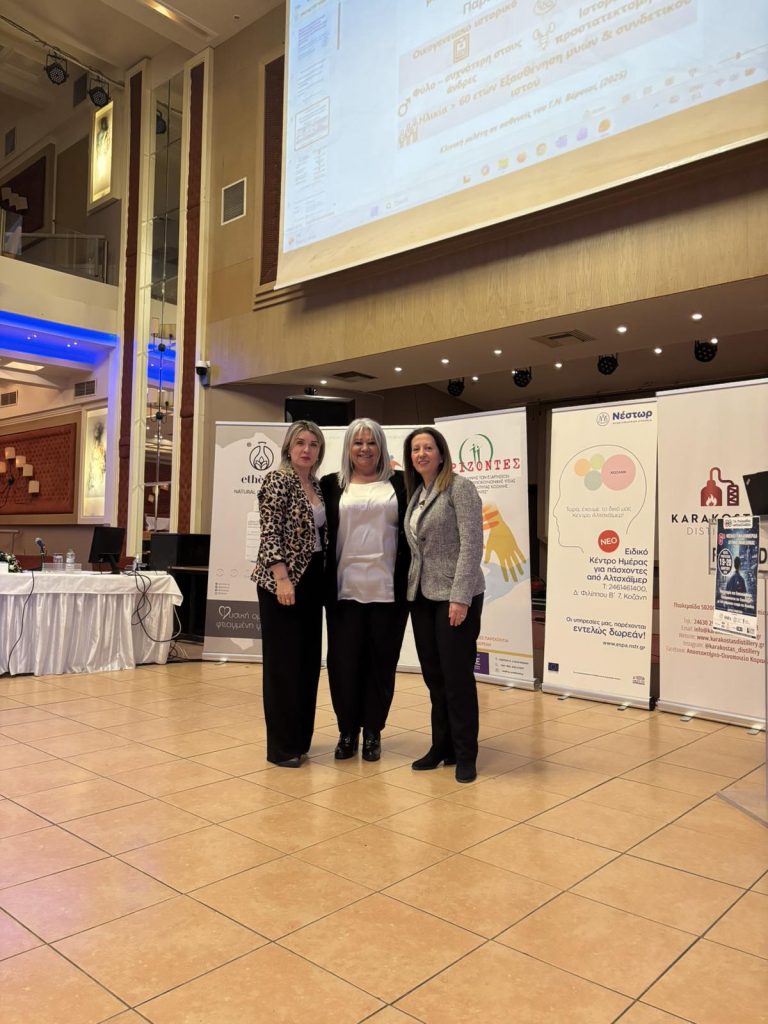
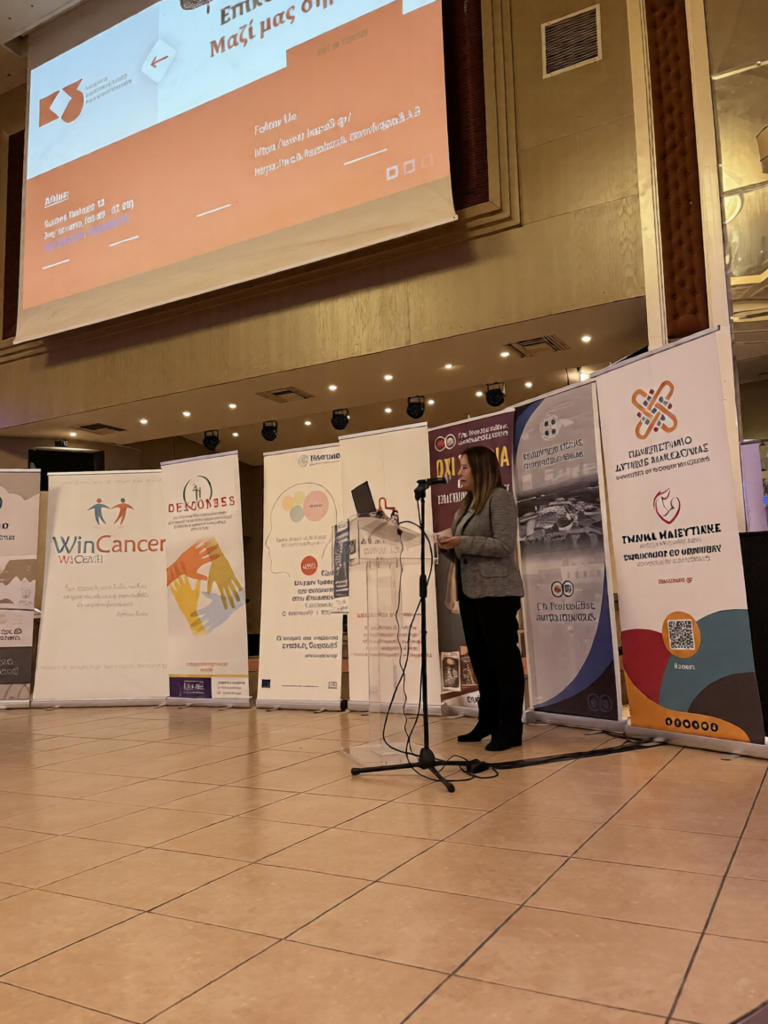
Kapa3’s Contribution to the 6th Nursing Symposium of Western Macedonia: Digital Health, Empathy, and Patient Navigation

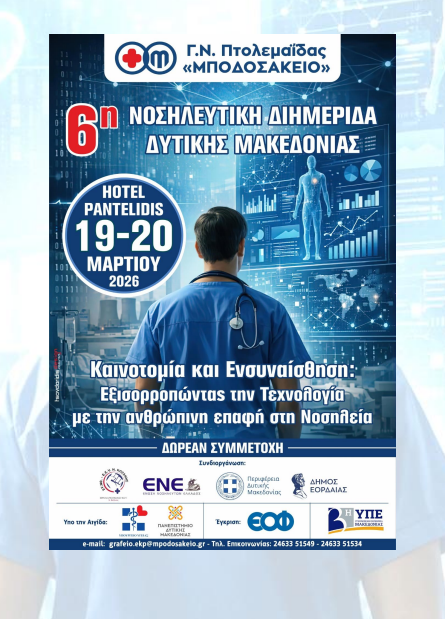
With active participation in a well-established scientific meeting on contemporary nursing issues, Kapa3 took part in the 6th Nursing Symposium of Western Macedonia on “Innovation and Empathy: Balancing Technology with Human Contact in Nursing”, held on March 19–20, 2026, in Ptolemaida.

The Symposium, now a key annual event for the nursing community, serves as a platform for dialogue, knowledge exchange, and highlighting the multifaceted role of nurses in modern healthcare.

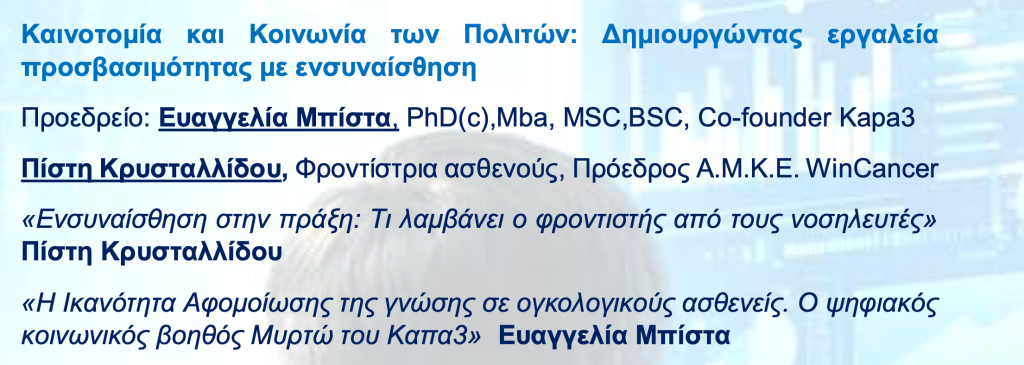
As part of the thematic session “Innovation and Citizen Engagement: Creating Accessible Tools with Empathy”, Ms. Evangeli Bista, co-founder of Kapa3, joined the panel along with Ms. Pisti Krystallidou, President of the NGO WinCancer, showcasing the role of civil society in shaping contemporary, accessible healthcare services.

On March 20, Ms. Evangeli Bista and Ms. Pisti Krystallidou actively participated in the Round Table on the same theme. Ms. Krystallidou presented “Empathy in Practice: What the Caregiver Gains from Health Professionals”, highlighting the daily challenges and support needs of people caring for patients. Ms. Bista emphasized Kapa3’s role and the use of digital tools in guiding patients effectively.

During her presentation, Ms. Bista outlined how the healthcare system is transforming: from episodic care to continuous support, from hospital-centered services to daily-life integration, and from the healthcare professional as the sole source of knowledge to the patient as an active participant. In this new environment, digital health and patient navigation go beyond mere tools, focusing on the citizen’s ability to use them meaningfully in everyday life.

Special attention was given to the needs of oncology patients, who require not only access to information but also guidance through a complex healthcare system—knowing where to turn, what they are entitled to, and how to manage critical decisions in daily life. In this context, the importance of patient navigation was highlighted, a model that Kapa3 has implemented since its foundation, acting as a bridge between available services and patients’ real needs.

Finally, the digital social assistant “Myrto was presented, serving as a single reference point for patients, facilitating access to information and services, and translating knowledge into practical, everyday support.

Kapa3’s participation in the Symposium highlighted the importance of combining technological innovation with empathy, confirming that the future of oncology care is not only about personalized treatment but also about personalized understanding of each patient’s needs.

Download our Press Release here 

Text/Adaptation: Ifiyenia Anastasiou for Kapa3

MELODIC: Advancing Mental Health Support for Young Adults with Cancer

The MELODIC project, a European programme focused on the mental health of young adults with lived experience of cancer, launched in September 2024 with the aim of strengthening the mental wellbeing of people aged 18–35, as well as their families. Through collaboration among six European countries, MELODIC combines research, educational activities, and the development of future interventions, promoting a more supportive and personalised approach to care.

MELODIC has already delivered significant outcomes, including outputs related to project management, needs assessment, interview-based research, and the training of healthcare professionals, while preparing upcoming intervention actions and communication and policy strategies.

KEY DELIVERABLES – WHAT HAS BEEN COMPLETED SO FAR

WP1 – Project Management & Quality Assurance

Deliverable 1.1 – Project Implementation Manual:
A management and quality monitoring guide defining implementation requirements, organisational structures, and partner roles.

Deliverable 1.2 – Quality Report:
A quality assurance report outlining procedures to ensure clarity, consistency, and timely delivery of project outputs.

WP2 – Needs Assessment

Deliverable 2.1 – Data Management Plan:
Assessment of the mental health and educational needs of young adults and healthcare professionals, in full compliance with data protection requirements.

Deliverable 2.3 – Interview Study Report:
A comprehensive interview-based study involving young adults, family members, and healthcare professionals across six countries, conducted with ethical approval and presenting key findings.

WP3 – Co-design Guide & Training

Deliverable 3.1 – MELODIC Curriculum:
A training programme for healthcare professionals at EQF level 7, focusing on the identification and support of the psychosocial and mental health needs of young adults with cancer. The curriculum includes learning objectives, training materials, assessment methods, and certification.

WHAT’S NEXT – UPCOMING DELIVERABLES AND ACTIONS

WP4 – Intervention Study

Deliverable D4.1 – Ethical Review:
Ethical approval for the intervention study aiming to improve the mental health and wellbeing of young adults with cancer and their families. The intervention will combine physical activity in natural environments with psychoeducation and informational support.

WP5 – Communication & Policy

Deliverable 5.1 – Communication Strategy:
A communication strategy outlining channels, target audiences, and publication plans for the internal and external dissemination of project results.

Deliverable 5.2 – Policy Outreach Strategy:
A policy engagement strategy at European and national level, including policy and stakeholder mapping and three intervention pillars (European, National, and Project-specific). The aim is to integrate MELODIC training into curricula and to enhance the project’s visibility at European level.

OUR PARTICIPATION IN MELODIC

As part of our active involvement, we have contributed to the production of key deliverables, particularly in data collection through interviews and in the development of the training curriculum for healthcare professionals. Our engagement ensures that the voices of young adults with lived experience of cancer and their families are taken into account at every stage of the project.

For more information and full access to MELODIC deliverables, please visit the project’s official website here.

Text/adaptation: Ifiyenia Anastasiou for Kapa3